An iron frame can bring fine lines, age, and a sense of permanence to a bedroom. It can also hide practical problems beneath an attractive finish. Before you fall for scrollwork or patina, confirm what the frame is made from, whether it is complete, and how it will support a modern mattress.
The useful distinction is not simply old or new. A sound vintage frame and a well made modern reproduction can both work beautifully. The better choice is the one with reliable joints, compatible dimensions, a safe finish, and a silhouette that fits your room.
Learn what iron means in the listing
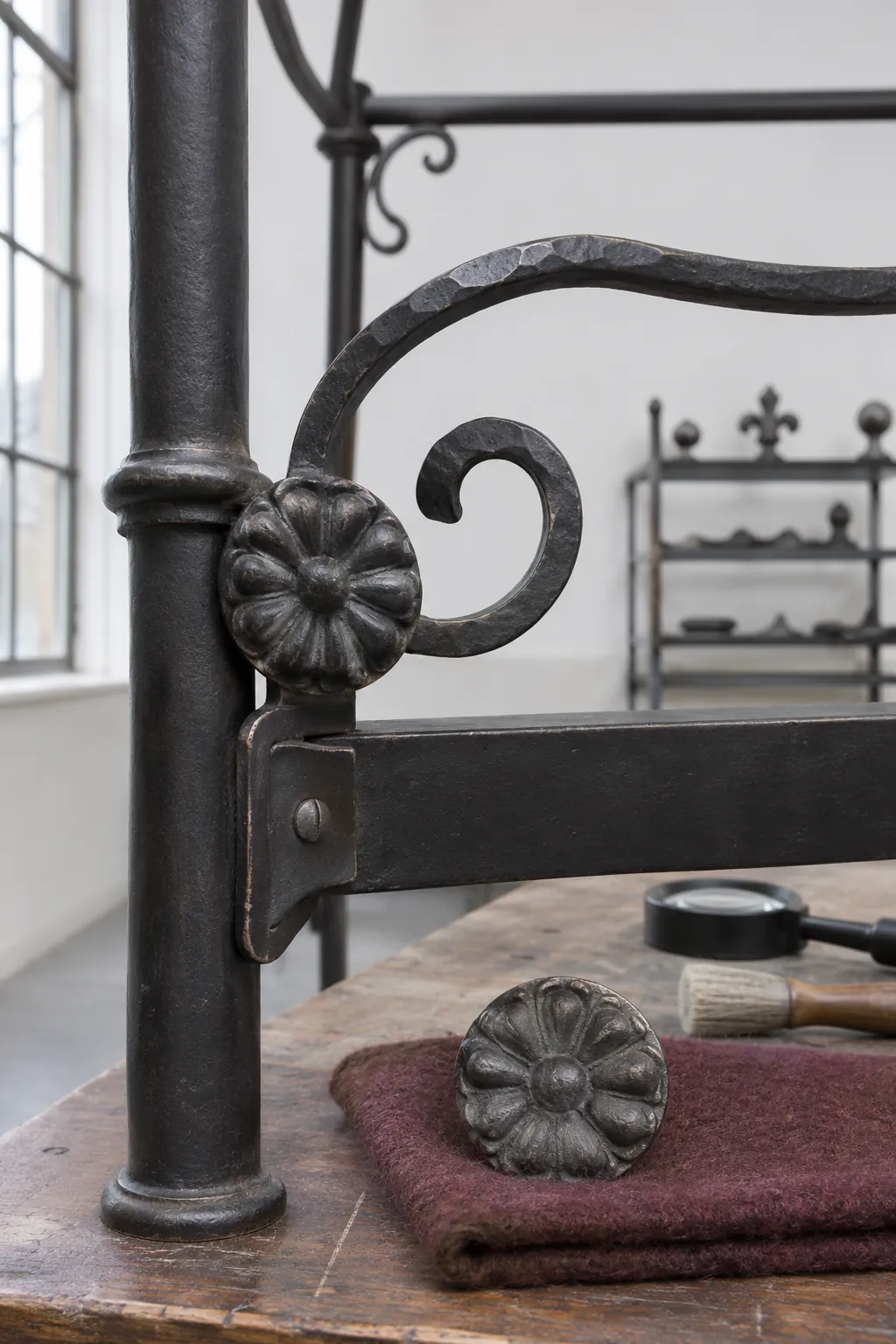
Furniture sellers often use iron to describe an appearance rather than an exact material. A new iron canopy bed may use steel tube with cast decorative pieces, while an older frame may combine forged, cast, and rolled components. Ask for the material, construction method, age estimate, and any repair history.
Look closely at repeated ornaments and joints. Cast pieces often have mold seams and a consistent texture. Forged parts may show subtle differences and tool marks. Those clues help you understand the object, but they do not prove age or value on their own.
For an antique purchase, request clear photographs of every corner, rail end, bracket, foot, and altered section. A lovely headboard is not enough if the side rails are missing or adapted poorly.
Measure the frame and the room separately
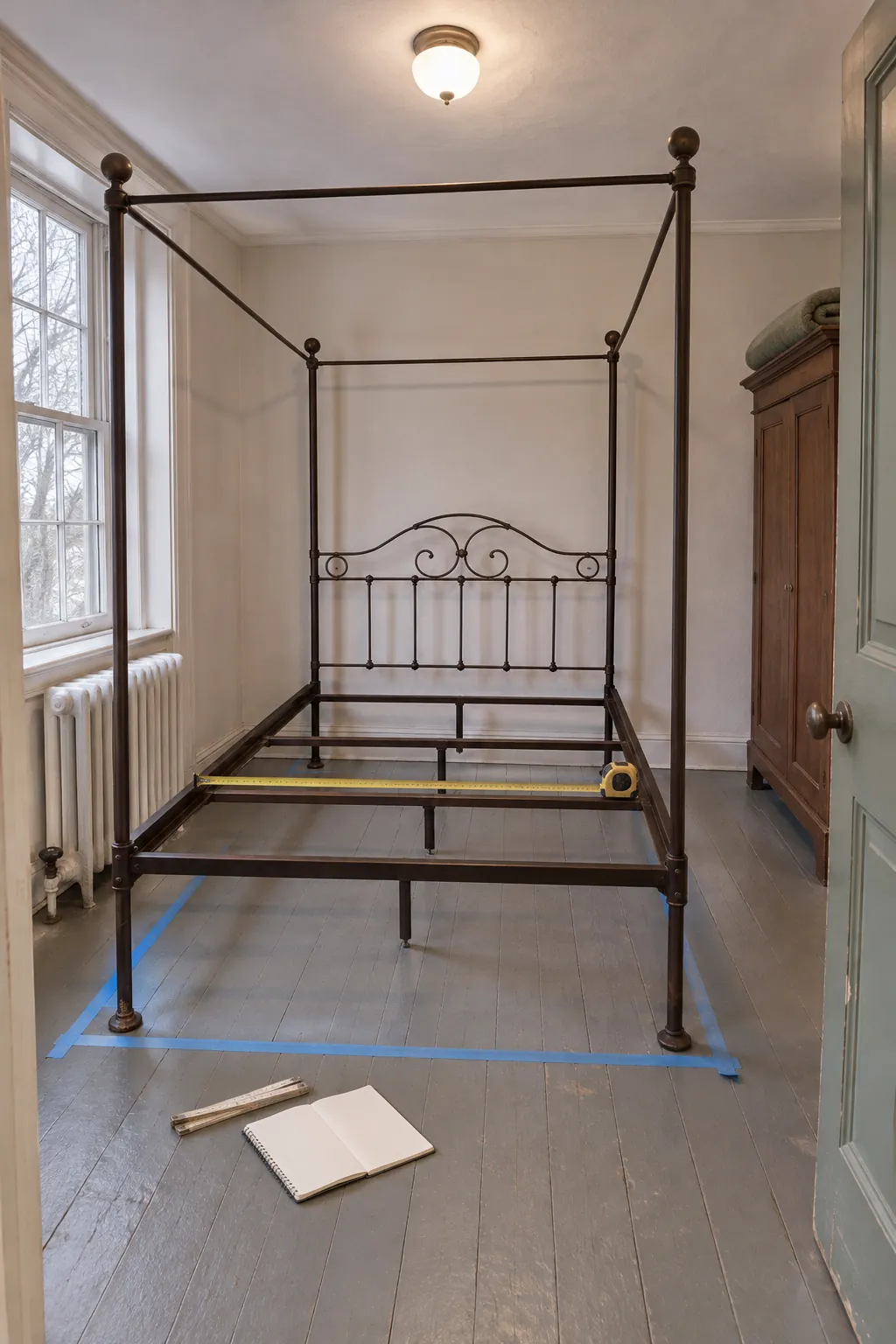
Old bed sizes do not always match current mattress standards. Measure the clear space inside the rails as well as the outside post dimensions. Confirm how the foundation rests, how much weight the supports carry, and whether a safe adapter is already installed.
In the room, mark the full post footprint and the highest finial. Check doors, wardrobes, windows, fans, lights, and sloped ceilings. Decorative iron can look visually light, yet a dark outline still defines a strong volume around the bed.
A canopy bed small room layout works best with narrow posts, open sides, and limited drapery. If the full upper frame crowds the ceiling, a half canopy bed or an iron headboard with tall posts may be more convincing.
Inspect corrosion repairs and load paths
Surface oxidation is different from deep corrosion. Light discoloration may be manageable, but flaking metal, swelling seams, perforation, or loss around a joint can weaken the frame. Check hidden lower areas where damp cleaning, floor contact, or old storage may have affected the finish.
Study welds and brazed repairs for cracks or movement. A repaired joint can be safe when the work is appropriate, but a thick cosmetic bead does not guarantee strength. If the condition is uncertain, ask a qualified metal furniture restorer to inspect it before use.
Trace the load from mattress supports through rails and legs to the floor. The center support should be intentional, level, and compatible with the foundation. Decorative top rails should not be treated as climbing bars or storage racks.
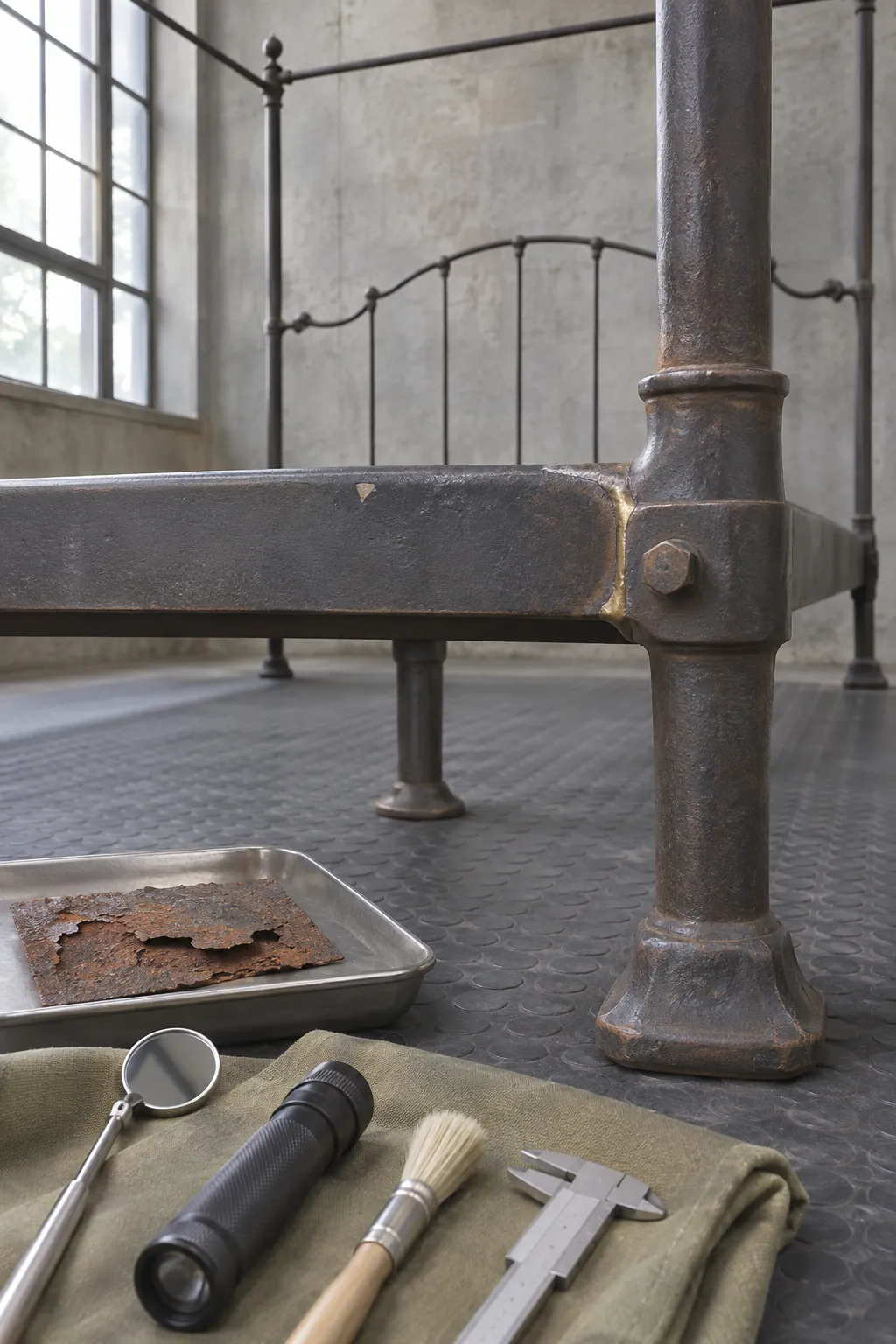
Restore the finish without erasing character
Begin with the least aggressive method that suits the condition. Dust, gentle cleaning, and a professional assessment may be enough for a stable historic finish. Do not sand, strip, or coat an older frame until you understand whether the surface has value and whether old coatings require special handling.
A modern frame with chipped powder coat needs a different approach. Document damage before assembly and follow the maker’s repair instructions. Treat active corrosion promptly, especially near joints and floor contacts.
Choose restoration goals before work begins. A fully refinished black frame can suit a modern canopy bedroom, while a conserved aged surface may better support vintage canopy bed character. Safety and stability come before decorative patina.
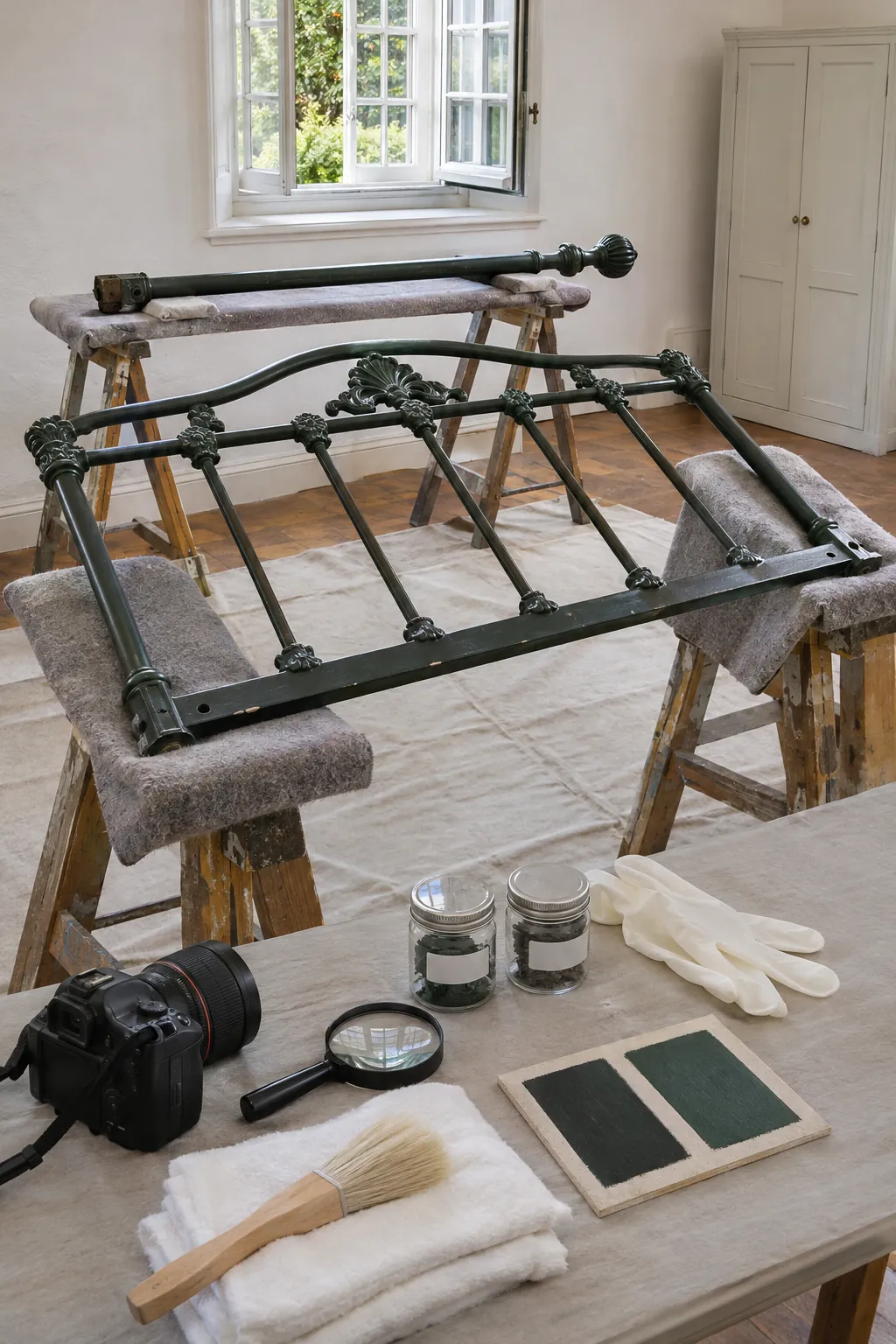
Balance ornament with simple bedroom layers
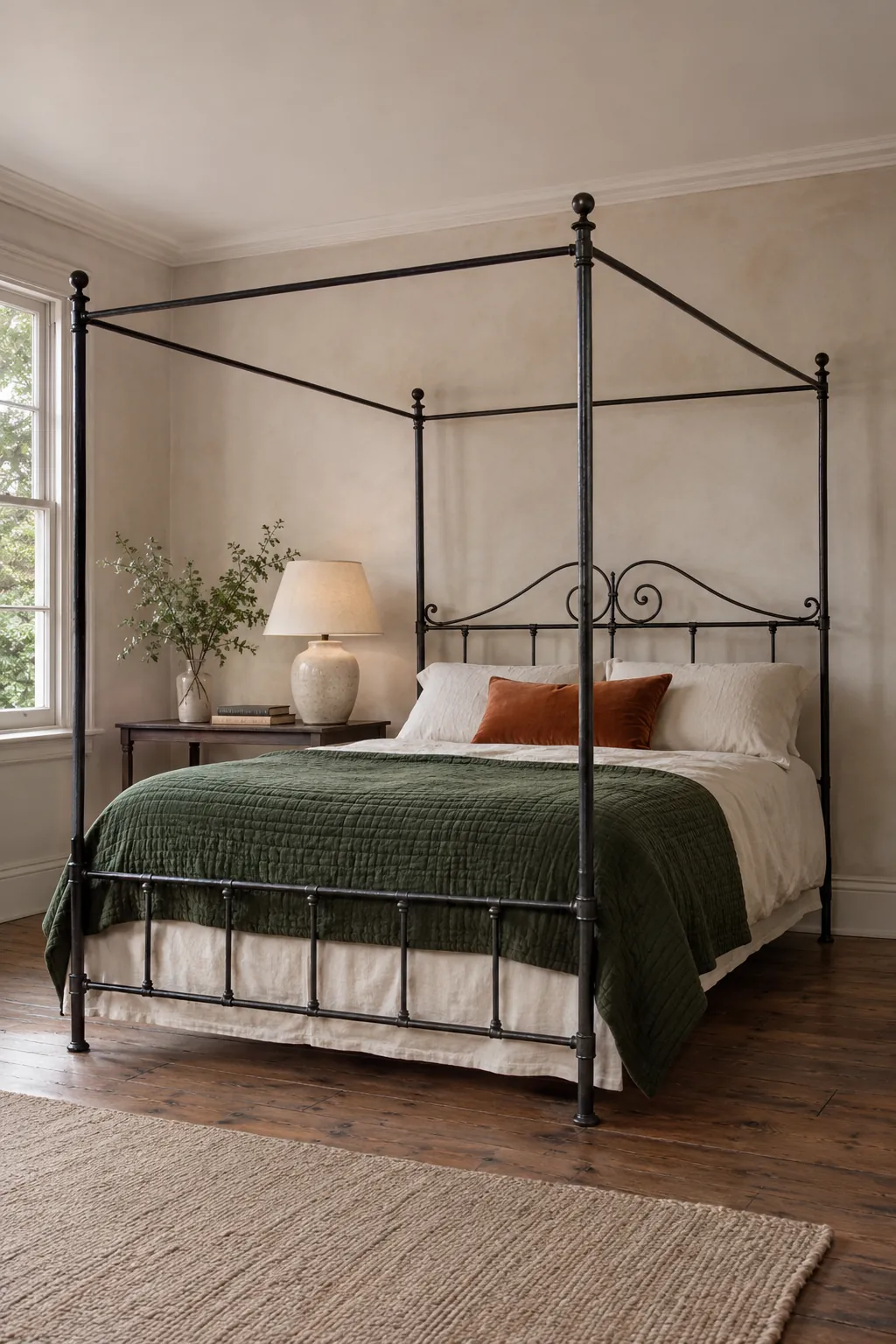
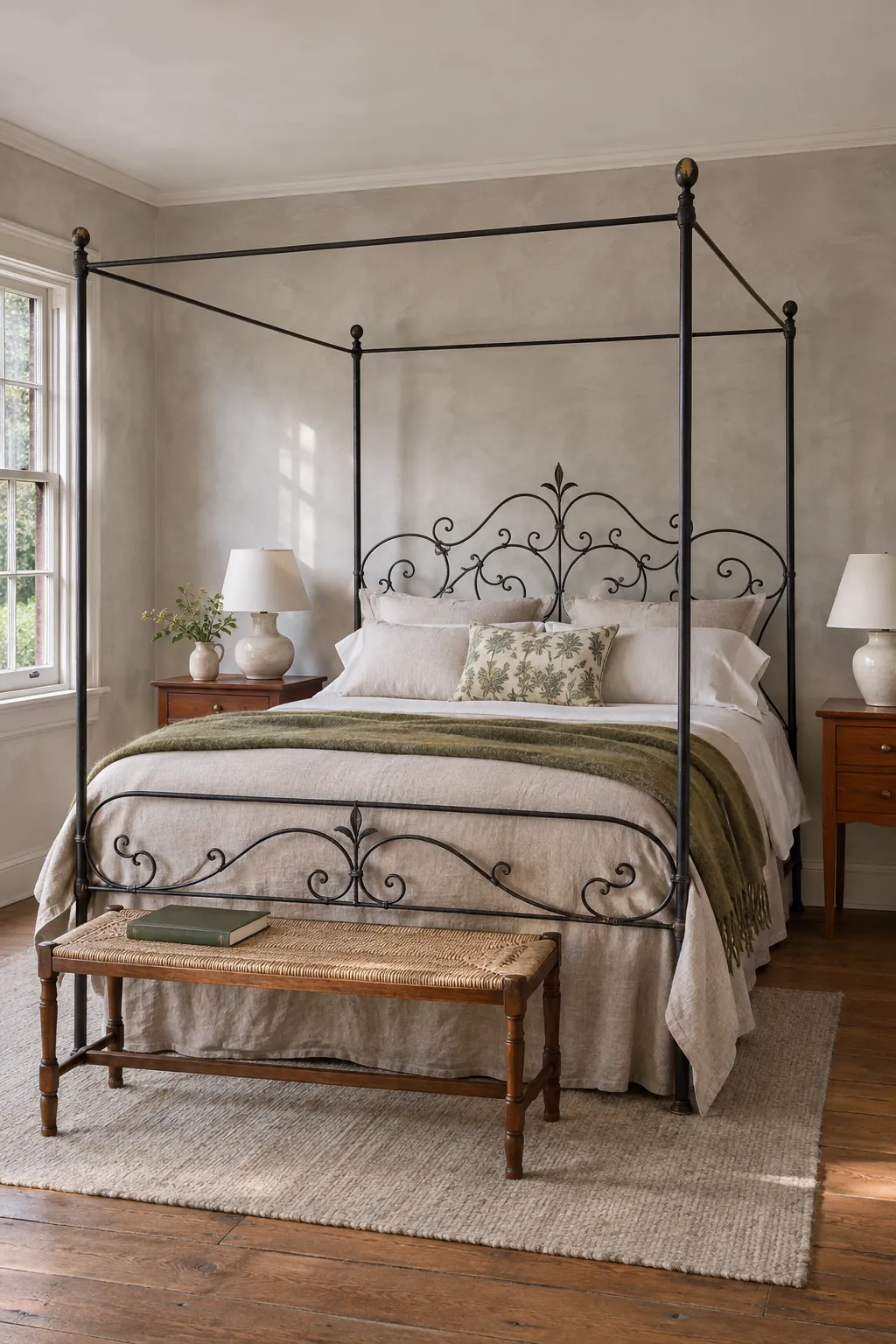
An ornate frame already supplies rhythm and pattern. Plain linen, a quiet rug, and simple bedside tables allow its outline to remain clear. Repeating every curl in lamps and textiles can make the room feel themed rather than collected.
A restrained iron frame accepts more pattern. Botanical bedding, warm wood, and a woven bench can soften black metal. For four poster bed ideas with mixed materials, repeat one finish elsewhere instead of matching every object.
Use contrast deliberately. Dark iron reads sharply against pale plaster, while bronze or cream metal creates a gentler canopy bed aesthetic. Leave visual space around finials and scrollwork so the details do not disappear into busy walls.
Use drapes lightly and maintain the frame
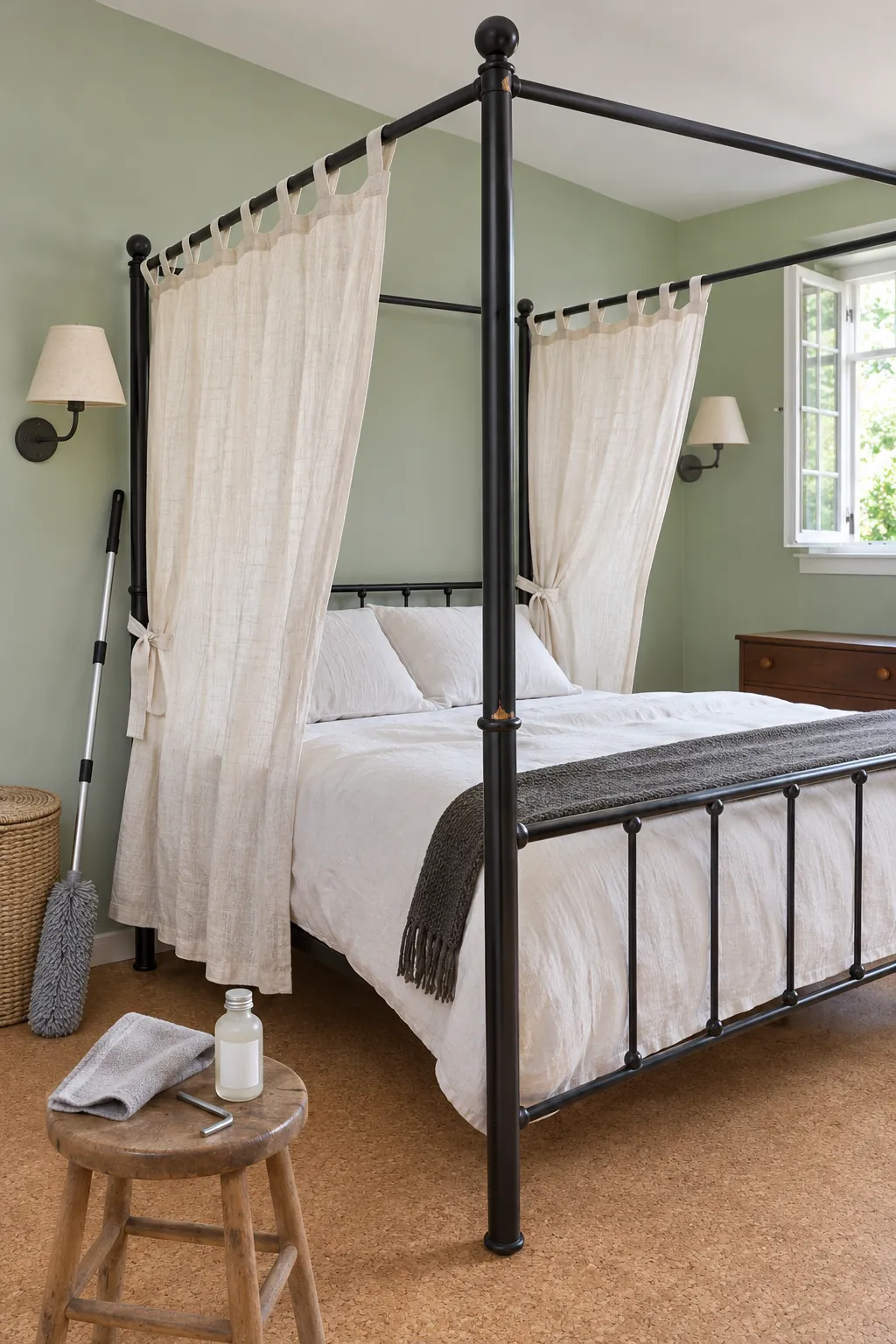
Canopy bed drapes should match the rail’s intended load. Use light washable panels and smooth ties that will not abrade the finish. Keep fabric away from lamps, outlets, heaters, candles, and fans, and avoid hems that collect dust on the floor.
Dust joints and upper rails with a soft tool, then inspect for new chips, orange staining, looseness, or noise. Correct hardware only with suitable parts and methods. A squeak can indicate simple movement at a connection, but it can also reveal a damaged or mismatched component.
With measured fit and honest condition, an iron canopy bed can serve as both structure and decoration. Its age should add interest, not uncertainty, and its beauty should never depend on ignoring a weak joint or unsafe finish.