
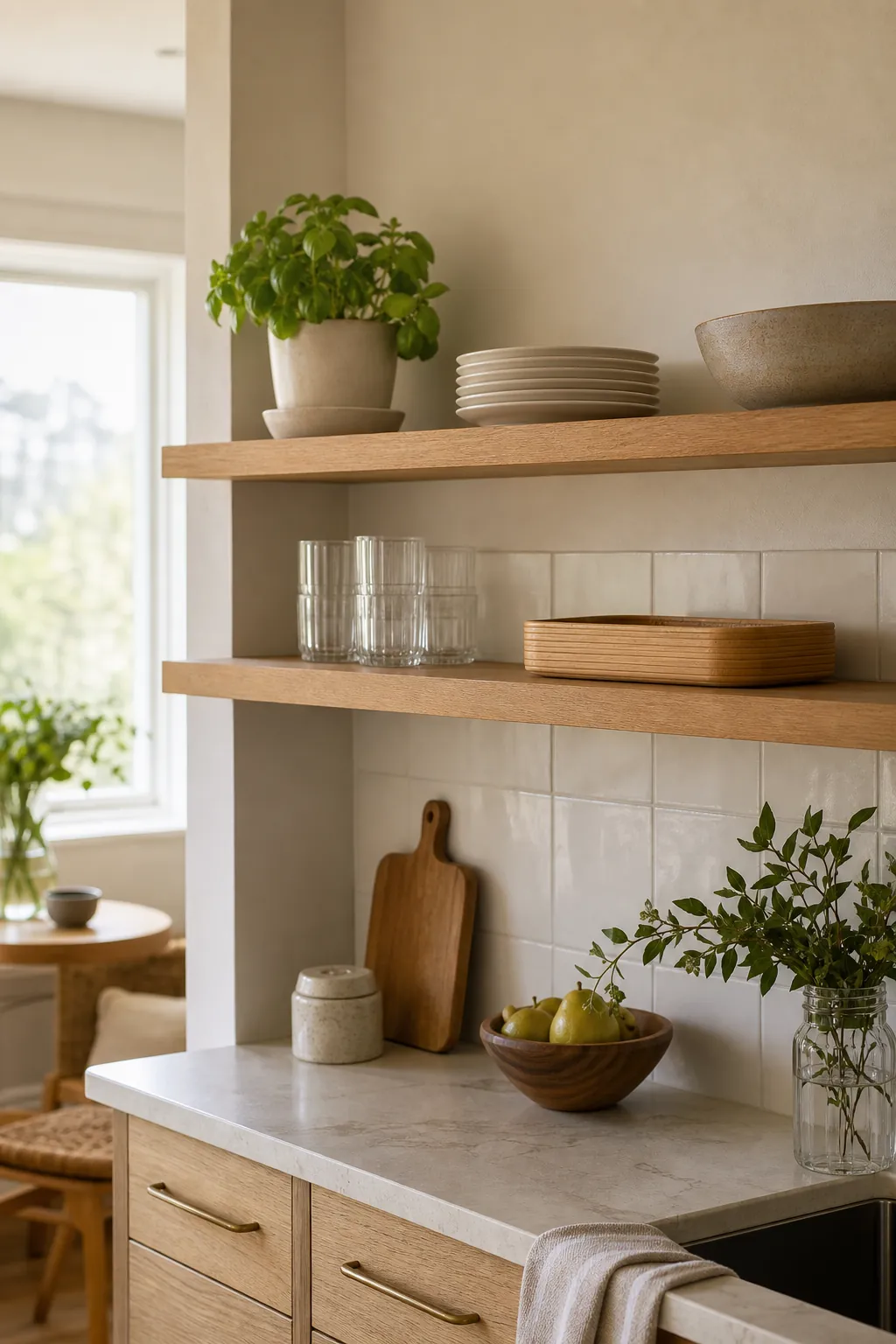
Open kitchen shelves look best when they feel useful first and styled second. The mistake that makes them look crowded is usually not the shelf itself. It is the belief that every visible inch has to prove something: personality, storage, color, seasonality, or taste. Once that happens, open shelving stops feeling airy and starts feeling like a counter that moved up the wall.
The better approach is quieter. Treat the shelves as a small, edited working zone. Put the pieces you reach for often in the easiest spots, choose a few natural textures that support the room, and leave enough open space for the eye to rest. The goal is not to make the shelves look empty. The goal is to make every object earn its place.
Start With the Shelf Edit, Not More Decor
Before buying baskets, plants, jars, or art, take everything off the shelves and sort it on the counter. This step matters because overcrowding often hides in categories. One mug looks harmless. Seven mugs, four bowls, a pitcher, two vases, and a leaning cutting board become visual noise when they sit together at eye level.
Make three small piles: daily use, occasional use, and display only. Daily-use pieces can stay because they will be washed often and will not sit long enough to collect much dust. Occasional-use pieces should work harder to justify the spot. Display-only pieces need the strictest edit. If an object is neither useful nor beautiful from across the room, it probably belongs behind a cabinet door.
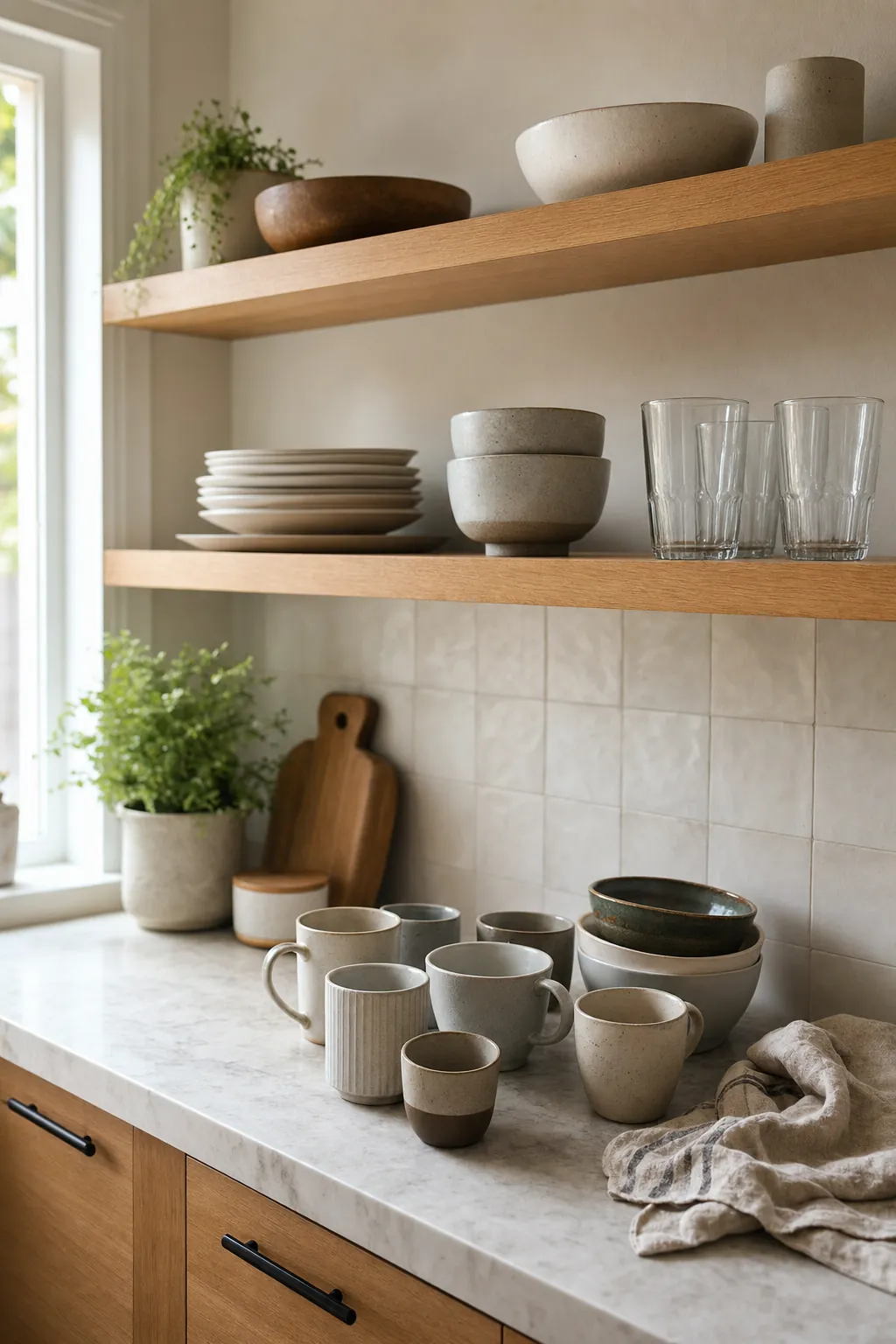
A good first reset is to style only half of what you originally planned to display. Live with that version for a day. If the shelves still feel too bare, add one useful item at a time. This forces the shelf styling to grow from the kitchen’s real rhythm instead of from a shopping list.
Group Pieces in Small Families and Leave Air Around Them
Open shelving becomes chaotic when every item is spaced as an individual. Instead, build small families. Stack bowls with bowls. Keep short glasses together. Let one tray, framed card, or small vessel act as a background piece. Then stop. The empty wall between those groups is not wasted space; it is what makes the arrangement readable.
For most kitchen shelf decor, groups of two to five pieces are enough. A stack of plates counts as one visual group. A pair of mugs can count as one group. A jar and a folded towel can count as one group. When the shelf reads as three calm shapes instead of twenty small objects, it stops looking overcrowded.
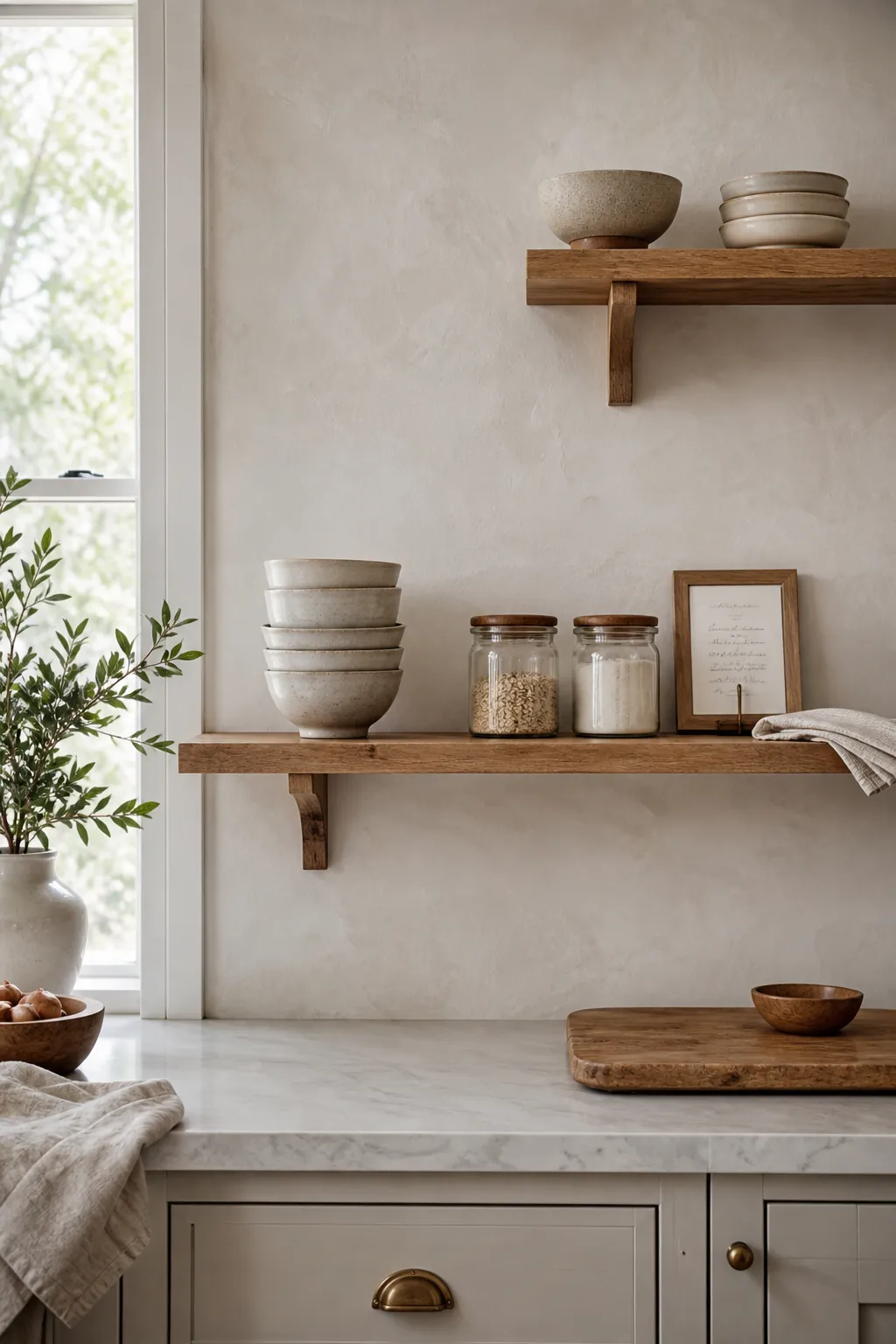
Negative space is especially important in a small kitchen. A crowded shelf can make the whole room feel narrower because the eye has no pause. Keeping blank wall around your favorite pieces lets the shelf contribute to the room instead of competing with the backsplash, counters, and dining room decor nearby.
Use Natural Texture as the Quiet Backdrop
If your shelves are carrying a lot of function, texture can do more than color. Bamboo, wood, stoneware, glass, linen, and woven baskets bring warmth without demanding extra objects. This is where a natural kitchen style can feel layered rather than busy. The shelf can have depth even when the item count stays low.
Choose one dominant material and two supporting materials. For example, let bamboo or oak be the main warmth, then add cream ceramic and clear glass. Or use white dishware as the main calm note, then add a woven basket and one wood tray. Repeating a small material palette makes different objects feel intentional instead of random.
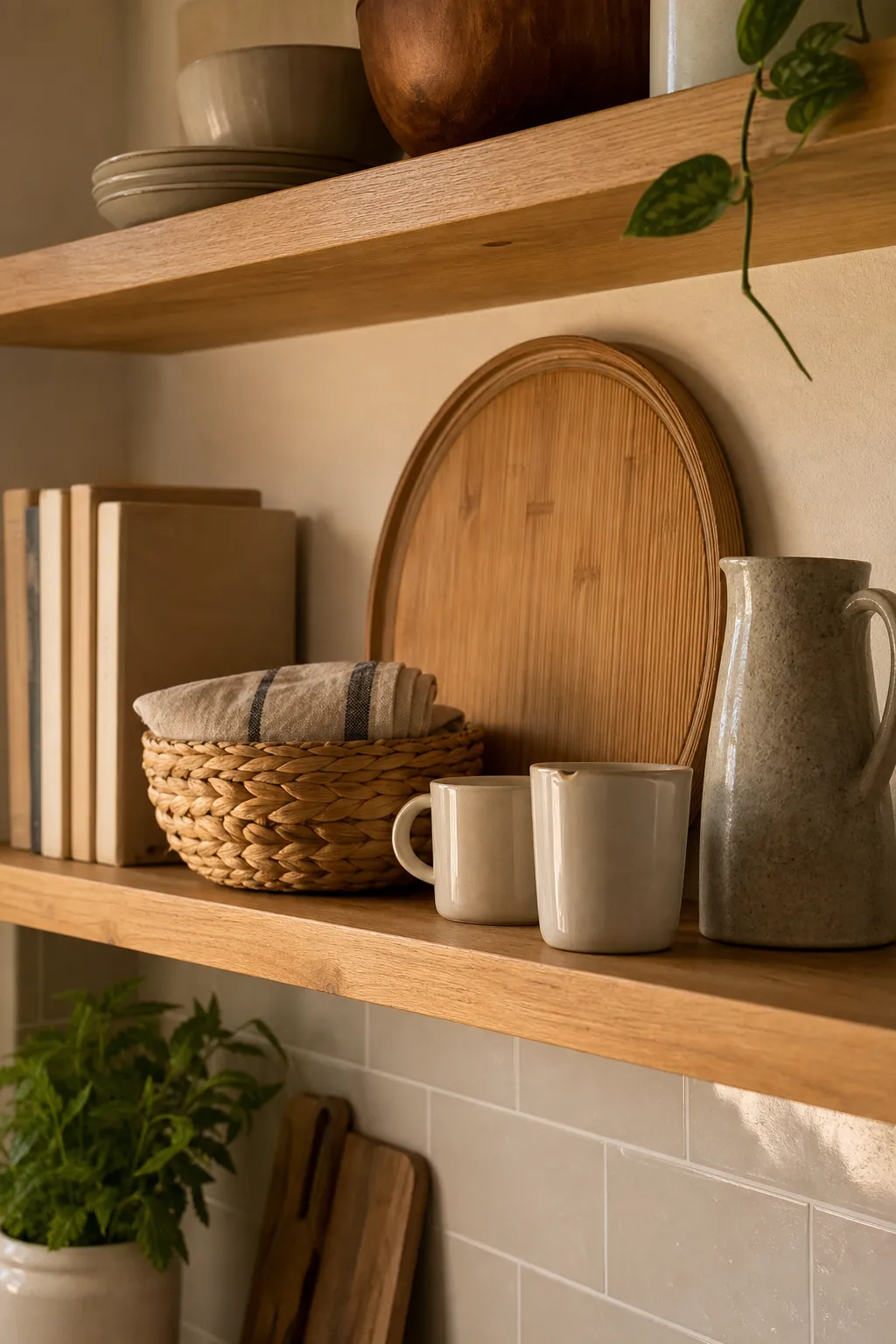
Be careful with too many small decorative textures at once. Rattan, patterned bowls, bright cookbooks, carved boards, trailing plants, and colorful glass can all be beautiful, but together they create the same problem as clutter. Pick the texture you want people to notice first and let the rest support it.
Let One Living Detail Soften the Shelf
Kitchen plants can make open shelving feel softer, especially near a breakfast nook or sunny corner. The key is restraint. One healthy herb pot, trailing pothos, or small olive branch arrangement can break up the hard lines of plates and glassware. Five plants can make the shelf feel like another maintenance project.
Place the living detail where it helps the composition, not where it steals the shelf. A plant near the end of a shelf can soften a corner. A small herb pot beside everyday bowls can connect the shelf to cooking. A branch in a glass jar can add height without adding visual weight. The plant should support the open shelving, not become the entire story.
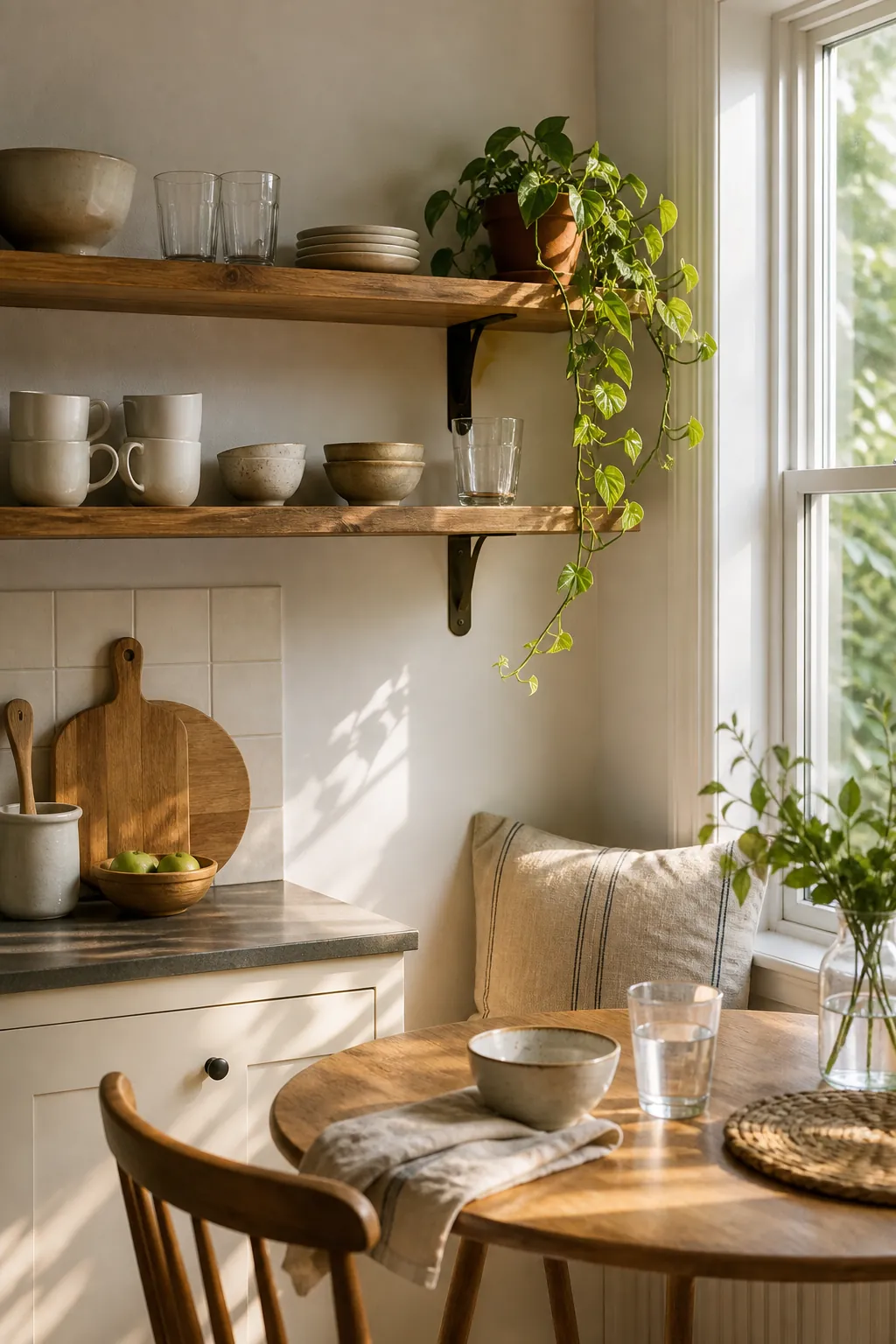
If your kitchen is low-light, skip fragile plants and use a durable cutting board, a small bowl of fruit, or a single branch instead. The principle is the same: add one organic shape to keep the shelf from feeling stiff, then give it room.
Make Daily Reach Decide the Layout
Open shelving works best when it is assigned to the way you actually move through the kitchen. Put coffee mugs close to the coffee maker. Keep breakfast bowls near the cereal or oats. Store water glasses near the sink or the dining path. When items sit where your hand naturally goes, the shelf looks styled because it is organized by use.
This is also the simplest answer to dust and grease worries. Items used every day cycle through washing. Items used once a month sit exposed. That does not mean every open shelf has to be purely practical, but it does mean the lowest and easiest shelf should usually hold the highest-use pieces. Decor belongs in the leftover space after the function is solved.
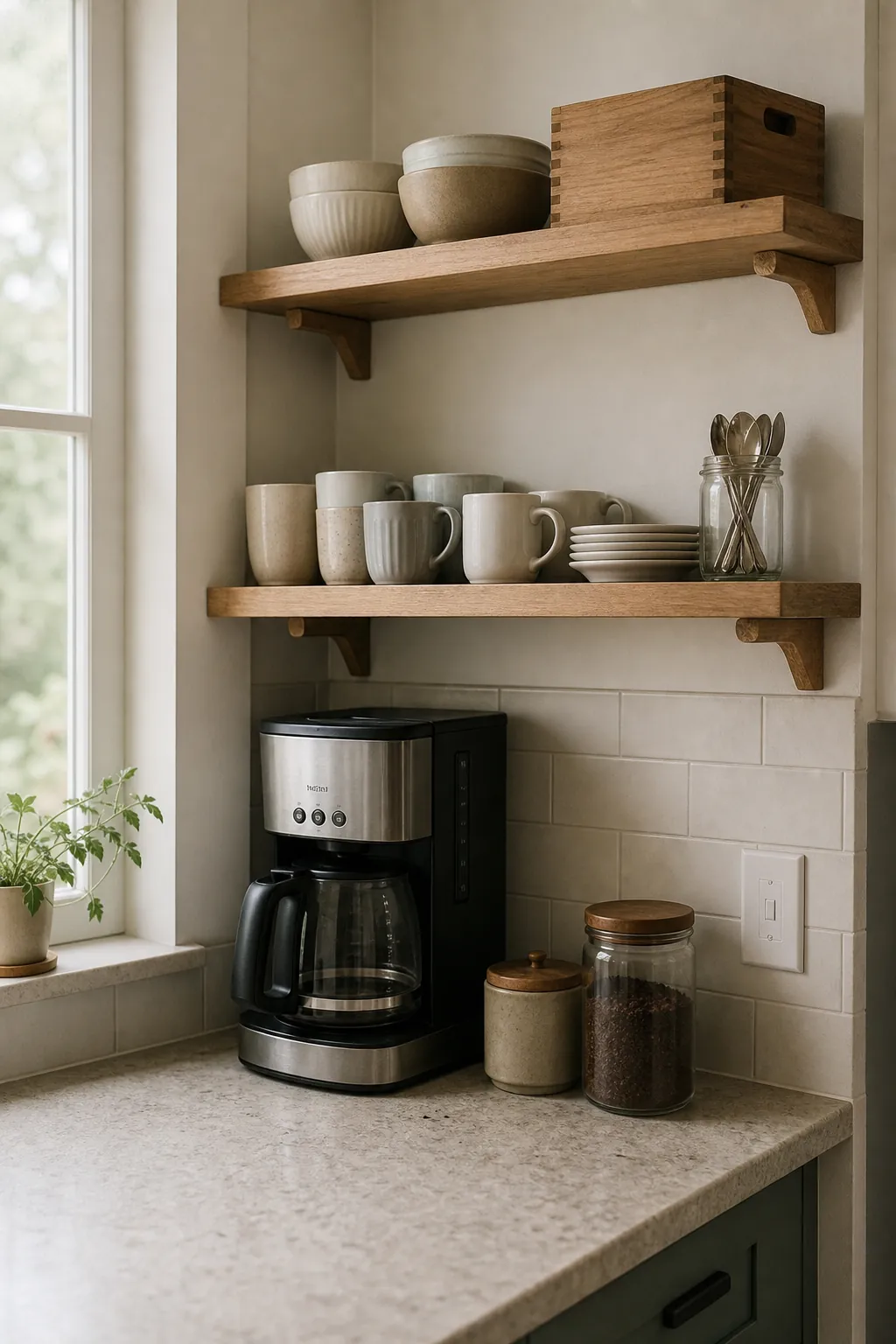
A practical shelf can still be beautiful. Keep the visible daily pieces in a narrow color range, turn labels away from the room, and avoid keeping one-off extras in the front row. If a mug is chipped, a jar is half-empty, or a stack is awkward to lift, the shelf will remind you every time you walk past it.
Use Closed Storage to Protect the Open Look
The cleanest open shelves usually have backup storage nearby. That may sound obvious, but it is the part many people skip. Open shelving should not carry every duplicate dish, seasonal mug, appliance manual, spice overflow, and random kitchen tool. It should carry the edited layer that looks good because the overflow has somewhere else to go.
Use drawers, closed cabinets, baskets, or pantry bins for the pieces that make shelves look crowded: mismatched extras, plastic containers, backup glassware, party dishes, and anything with loud packaging. Then let the open shelves hold the calm front layer. Open storage looks intentional only when closed storage is doing part of the work.
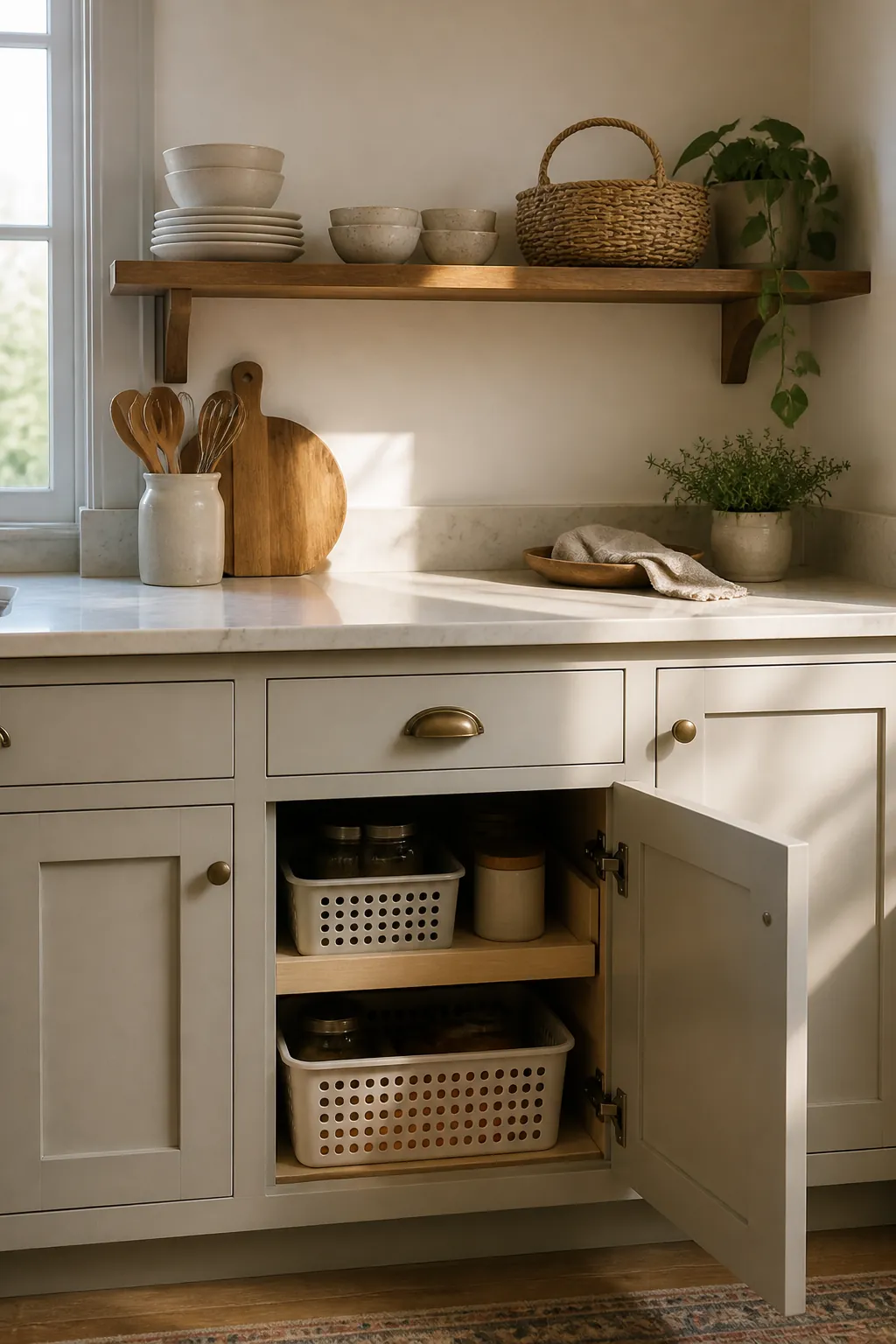
Once the backup system is in place, create a simple shelf reset. Wipe the shelf before grocery day, return only the daily-use pieces, and move anything extra back to its closed home. This keeps open shelving from slowly becoming a drop zone.
A Simple Formula for Shelves That Stay Calm
If you want a quick rule, style each shelf with one useful stack, one practical loose group, and one softening detail. A useful stack might be plates or bowls. A practical loose group might be glasses, mugs, or jars. The softening detail might be a plant, linen towel, wood board, or bamboo tray.
- Keep the easiest shelf for daily-use pieces.
- Limit color to a small palette of dishes, wood, glass, and one accent.
- Leave visible wall space between object groups.
- Move duplicates and packaging into closed storage.
- Use one natural texture or plant detail, not every decor idea at once.
The best open kitchen shelves do not look perfect because someone arranged them once. They stay good because the system is forgiving. Fewer objects, clearer groups, daily-use placement, and a natural material palette let the shelves breathe even in a working kitchen.