
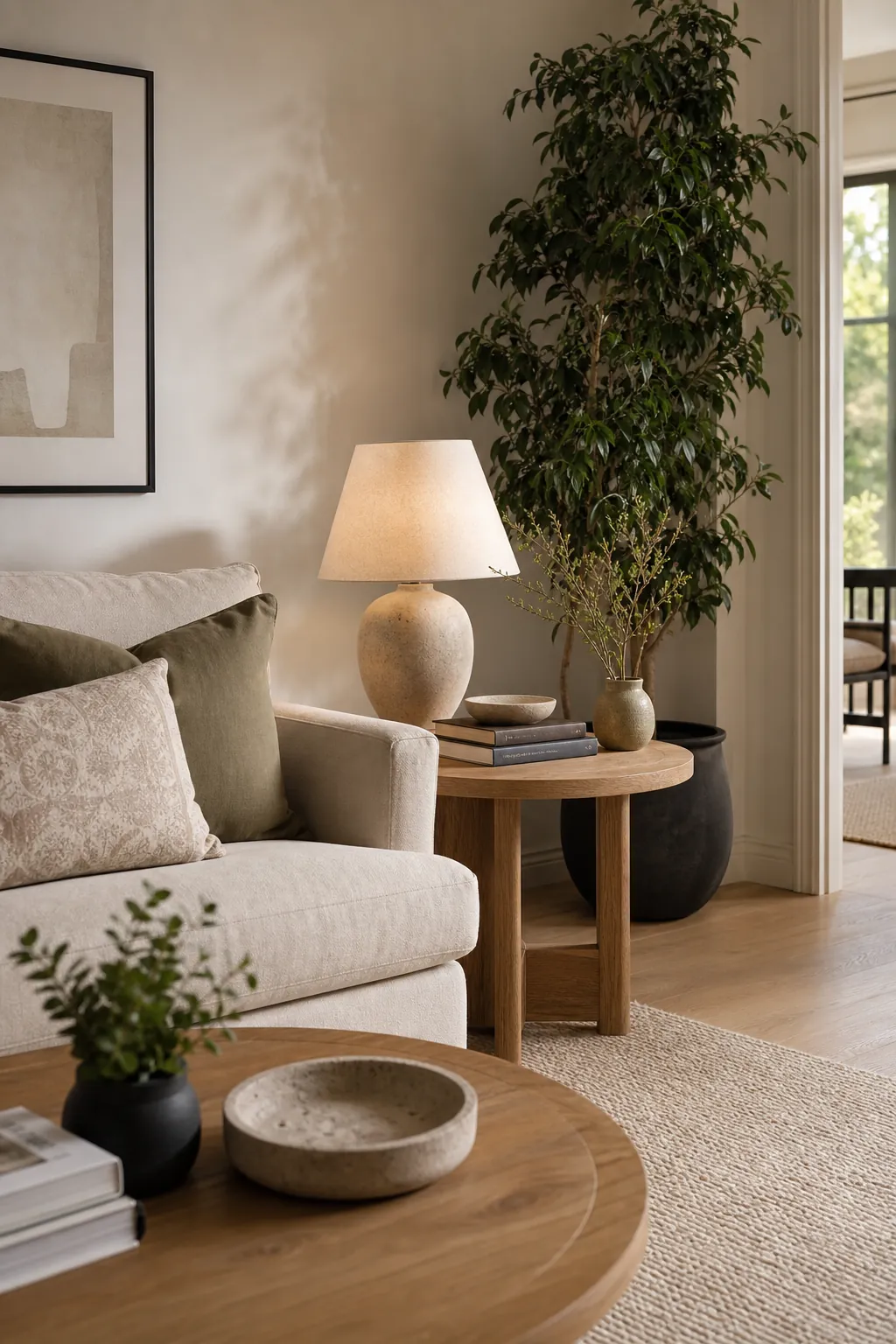
The space beside the sofa is where many living rooms start to feel unfinished. It is usually too visible to ignore, too small for another chair, and too useful to fill with random decor. The fix is not to add more things. The fix is to give that side zone a job, then choose pieces with the right scale.
That is the pattern people run into again and again when asking for help with awkward living room corners: the table is too tiny, the lamp is floating in the wrong place, the plant is too small for the wall, or the sofa is pushed so tightly into the corner that everything beside it looks accidental. Once you solve those basics, side table decor and sofa styling become much easier.
Start With the Function, Not the Accessories
Before buying a tray, vase, basket, or plant stand, decide what the space beside the sofa needs to do. In a small apartment, it may need to hold a drink and hide remotes. In a family room, it may need a drawer for chargers, tissues, and game controllers. In a quiet reading corner, the priority may be a proper lamp and a place for one book.
A good sofa side table is not just decoration; it is the anchor that tells the corner why it exists. If the table is too small, every object on it looks like clutter. If the table is close to the sofa arm height, wide enough to balance the empty wall, and useful enough for daily life, the same few objects suddenly look intentional.
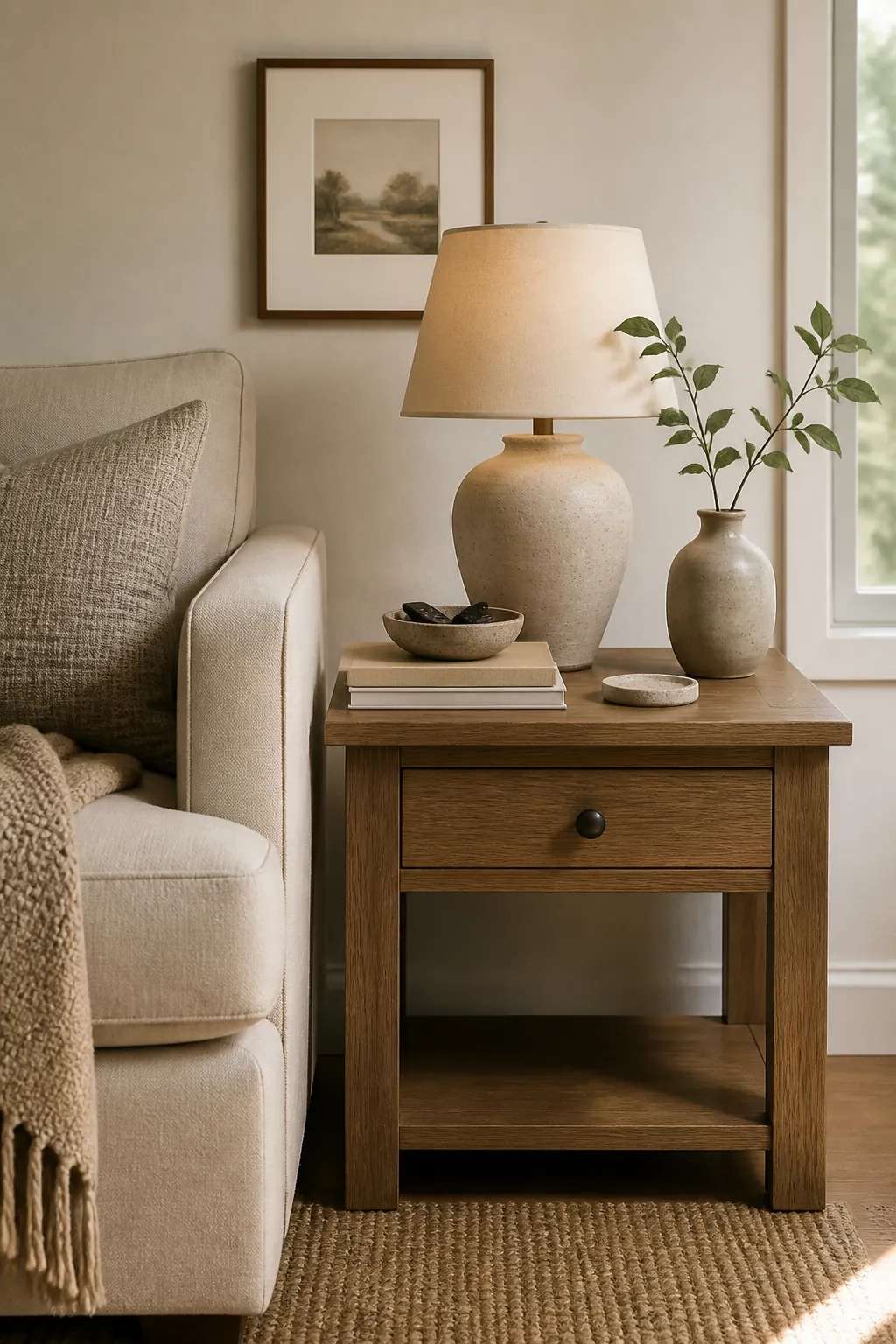
Choose a Side Table That Matches the Sofa’s Visual Weight
The most common mistake is using a small, delicate end table next to a full sofa. The table may be technically useful, but visually it cannot carry the corner. A better rule is to look at the sofa arm, the wall behind it, and the empty floor around it together. If the sofa is deep, chunky, or long, the side table should have enough width, material weight, or storage to hold its own.
Round tables soften boxy rooms and work well when walkways are tight. Square or rectangular tables feel cleaner when the sofa sits against a straight wall. A pedestal table can make a small room feel lighter, while a closed cabinet or drawer table is better when the area collects everyday clutter.
- For a narrow gap: use a slim C-table, nesting table, or petite round table with a floor lamp nearby.
- For a wide empty corner: use a larger round side table, cabinet-style end table, or side table plus tall plant.
- For a family living room: choose a table with a drawer, shelf, or lidded basket below.
Layer Lighting So the Corner Feels Useful at Night
A sofa corner without lighting often disappears after sunset, which makes the entire living room feel flatter. Table lamps are best when you have enough surface area. Floor lamps are better when the table needs to stay clear for drinks, books, or a laptop.
The lamp should feel connected to the seating, not stranded against the wall. When seated, the shade should sit near eye level so the light is comfortable instead of glaring. If the table is small, let the floor lamp provide height and keep the table decor minimal.

Use Plant Decor for Height, Not Just Color
Plant decor works especially well beside a sofa because it can fill vertical space without making the floor feel crowded. The key is scale. A tiny plant on a tiny table usually makes a living room corner look more awkward, not less. A taller plant, a plant on a stand, or a hanging plant dropped to the right height can connect the sofa, table, and wall.
Choose the plant based on the corner’s light and the room’s mood. A fiddle leaf fig, rubber plant, or olive tree gives a clean modern shape. A trailing pothos or philodendron softens shelves. A snake plant works well when the space is narrow and vertical. In neutral decor, greenery is often the easiest way to add life without adding visual noise.
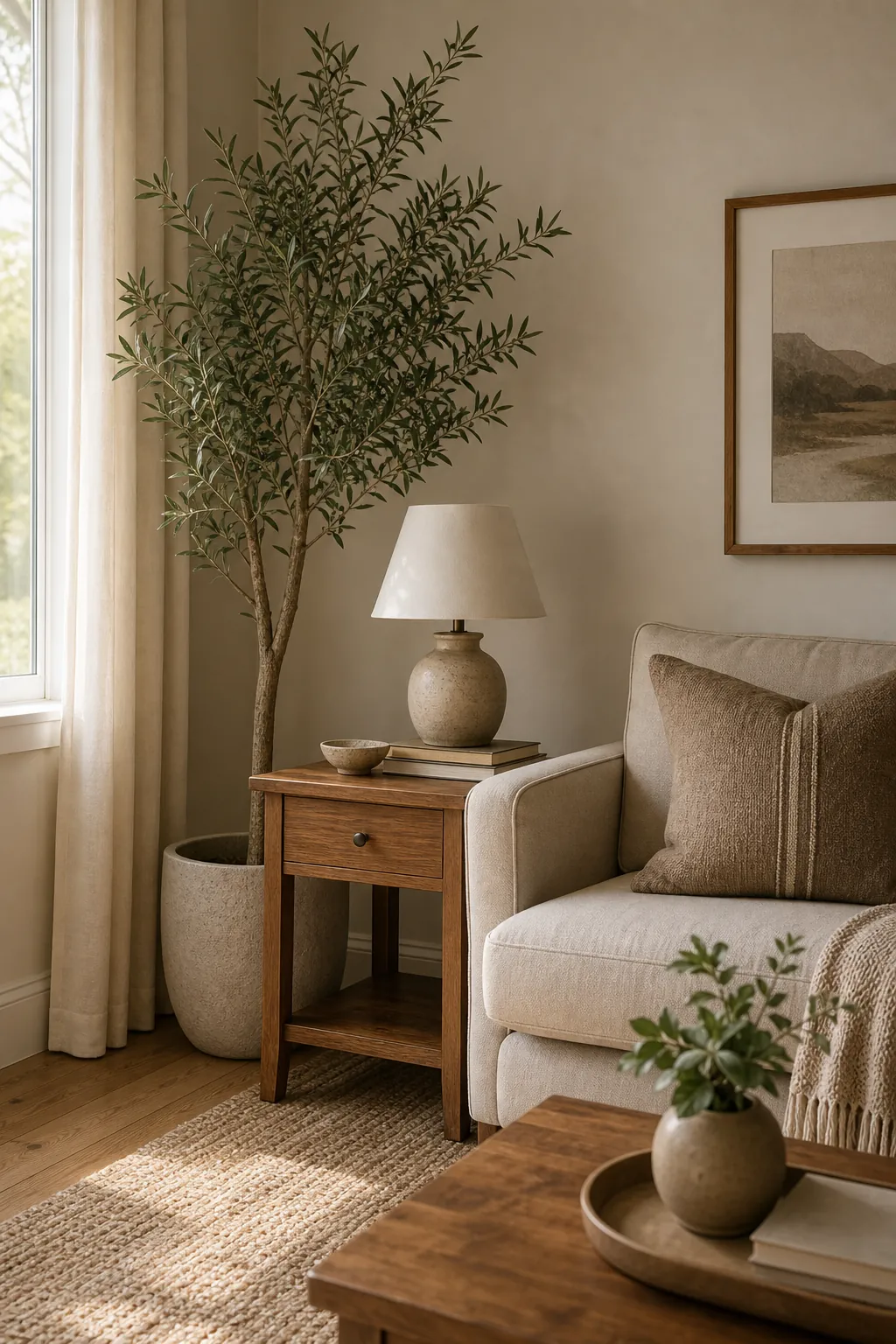
Style the Table in Three Heights
The best side table decor is usually simple: one tall item, one medium item, and one low item. The tall item might be a lamp, branch arrangement, or plant. The medium item might be a framed photo, small vase, or candle. The low item might be a book stack, tray, bowl, or coaster set.
This works because the eye has somewhere to move. Coffee table decor often uses the same principle, but a sofa side table has less surface area, so restraint matters more. Leave enough empty space for real life, or the table will look styled in photos and annoying every day.
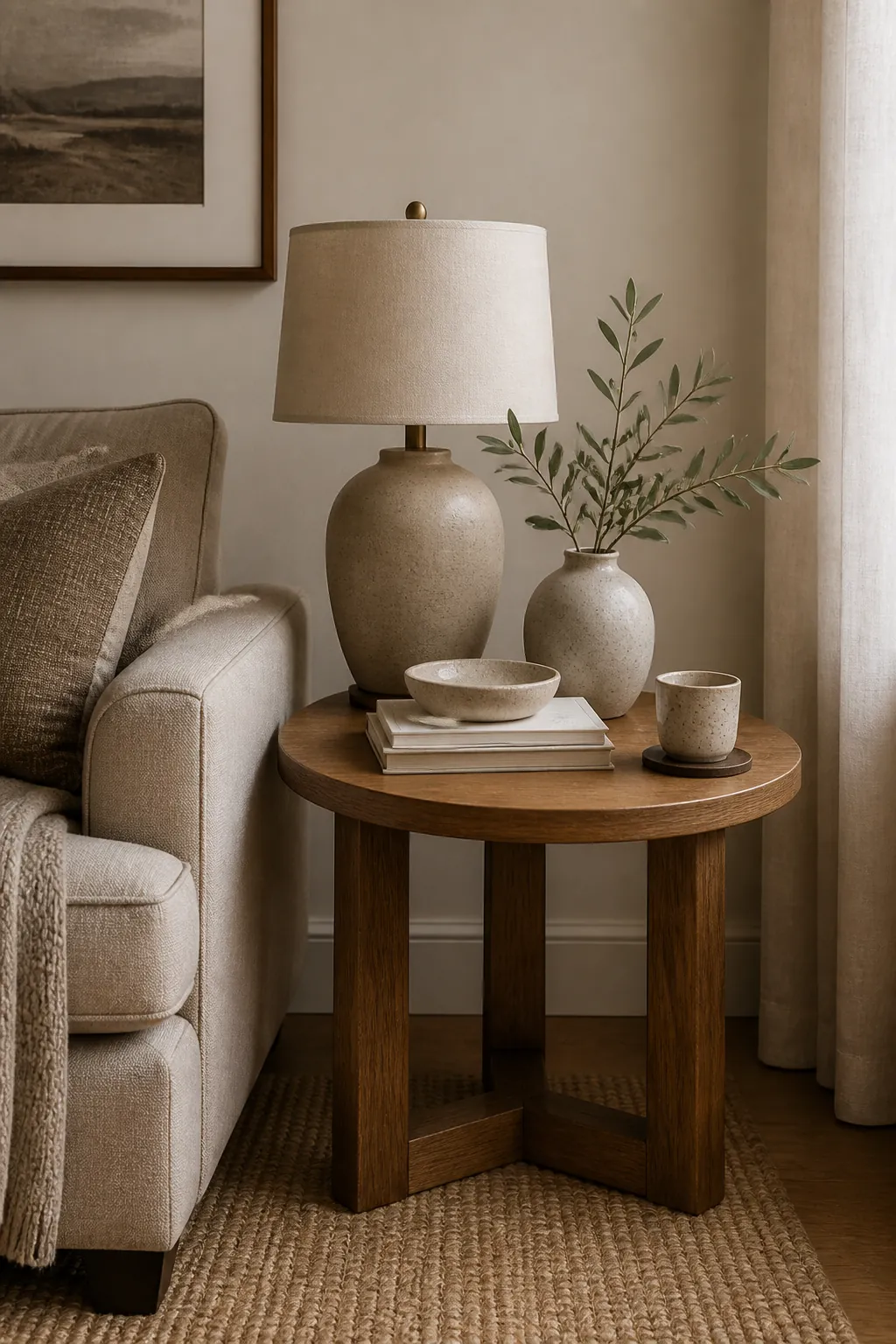
Make the Wall Above the Corner Part of the Composition
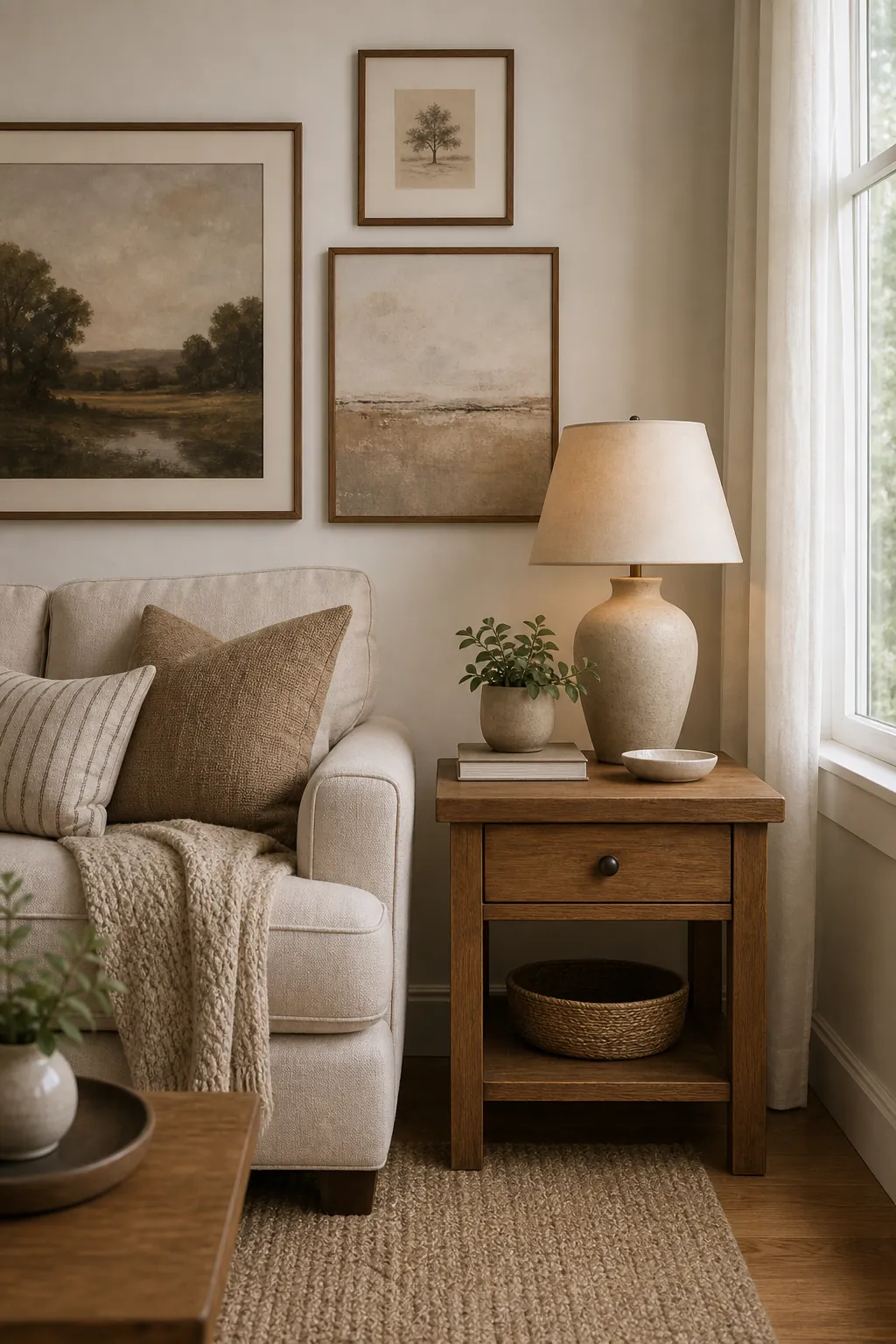
If the wall beside or above the sofa looks blank, the furniture below can feel disconnected no matter how nice the table is. Art, a mirror, a pair of small frames, or floating shelves can help, but the placement has to relate to the sofa. Art that is too high reads as random wall filler. Art that is too small makes the sofa look heavier.
As a practical starting point, keep wall decor visually tied to the furniture below it. For art above a sofa, many designers use roughly two-thirds of the sofa width as a proportion guide, with the bottom edge close enough to feel connected. For the side area, the same idea applies at a smaller scale: center the art over the table, lamp, or plant grouping, not over the empty corner.
Let Storage Hide the Things That Ruin the Look
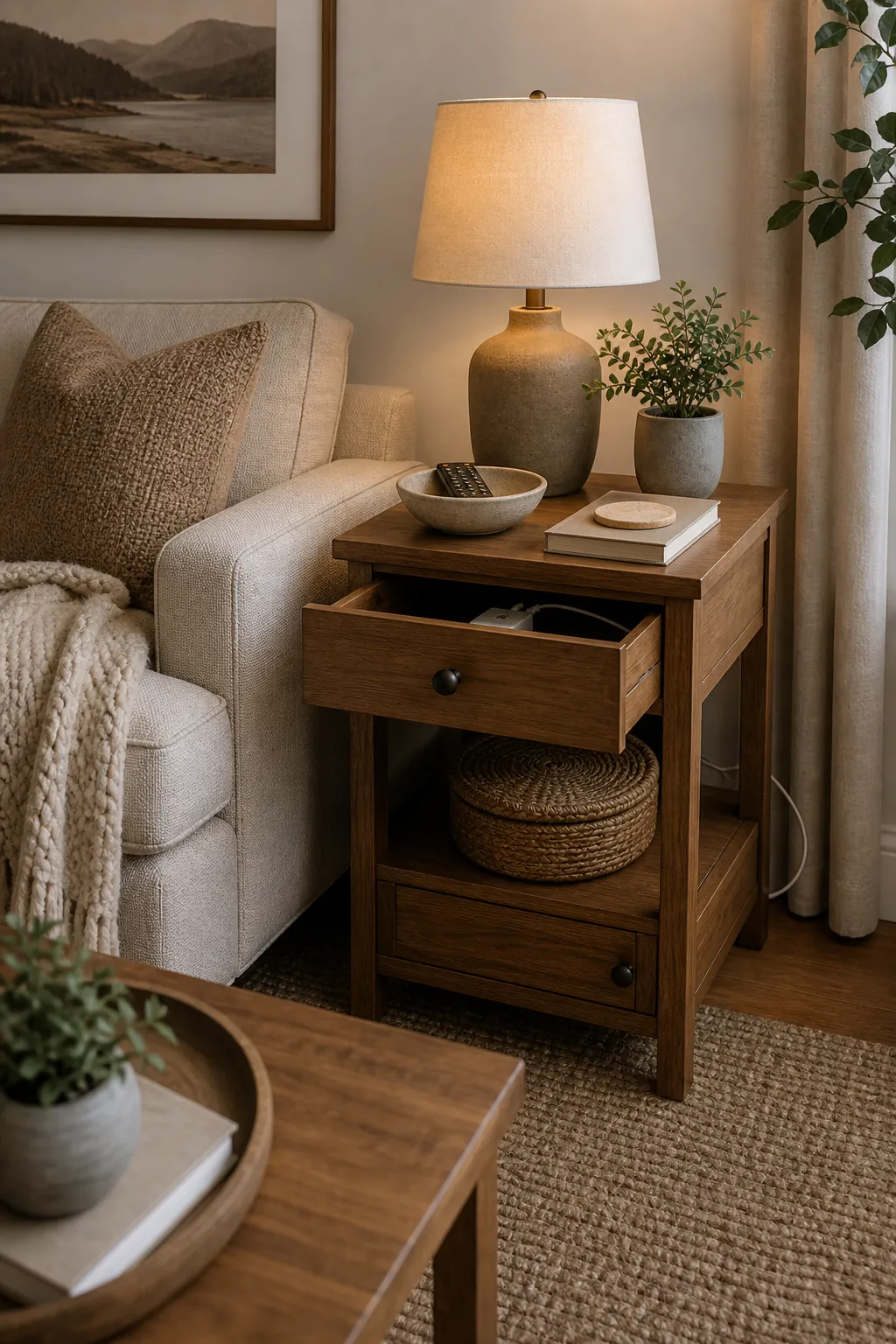
A living room can be beautifully styled and still fail because the corner becomes a drop zone. Remotes, chargers, tissue boxes, glasses, kids’ items, and pet supplies are not design problems; they are storage problems. If those things naturally land beside the sofa, plan for them.
A drawer table is the cleanest fix. A lidded basket under an open table also works. If you prefer an airy table, use a tray to corral the items that stay visible. The goal is not a perfect showroom corner. The goal is a corner that still looks good on a normal Tuesday night.
When the Space Is Wide, Create a Small Zone
If the area beside the sofa is more than a narrow gap, a single side table may look undersized. That is when you can build a small living room corner instead of treating it like an end table moment. Try a side table, tall lamp, and plant; a console table behind the sofa; or a small accent chair with a drink table if the walkway allows it.
Rugs matter here too. A rug that connects the sofa, coffee table, and nearby chair will make the whole arrangement feel deliberate. Without that connection, the side area can look like a separate afterthought. Think in zones: seating, surface, light, softness, and one vertical element.
What to Avoid Beside the Sofa
- A table that is much lower than the sofa arm unless it is intentionally paired with a floor lamp.
- Too many tiny objects that make the corner feel busy without adding function.
- A lamp with the wrong shade height that shines into your eyes when seated.
- Wall art hung far above the furniture with no visual relationship to the sofa or table.
- Plants that block the walkway or need more light than the corner receives.
A Simple Formula That Works in Most Living Rooms
If you want the fastest reliable setup, use this formula: a side table close to sofa-arm height, one warm lamp or floor lamp, one plant or natural texture, one low tray or book stack, and one piece of wall decor that relates to the grouping. Keep the palette calm, repeat one material from the coffee table decor, and leave part of the surface empty.
That is enough. The side of the sofa does not need to become a display shelf. When the scale is right and the corner has a job, even quiet neutral decor can make the whole living room feel finished.