
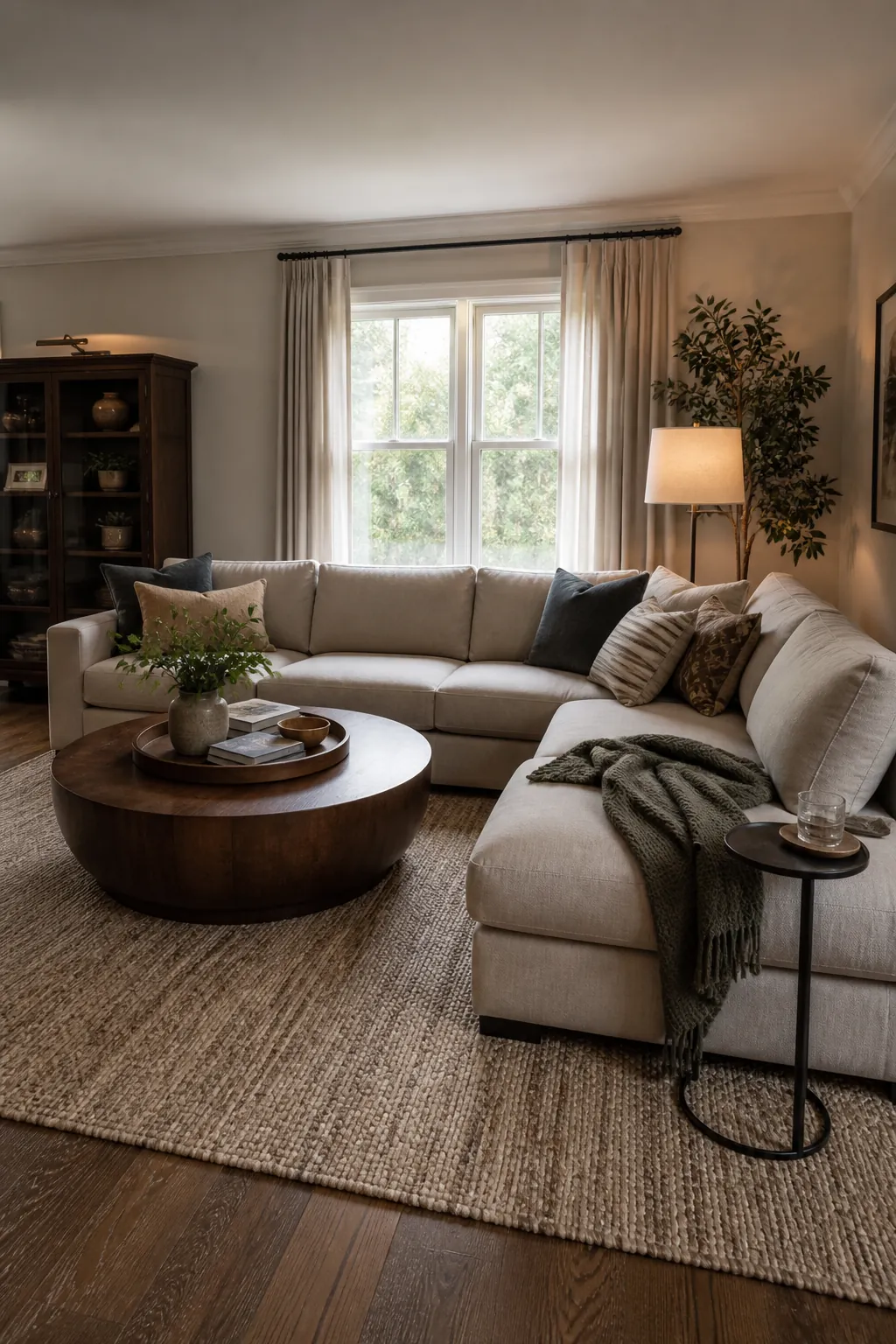
A sectional can make a living room feel instantly comfortable, but it also exposes every weak spot around it. If the rug is floating, the coffee table is too far away, the back corner is empty, or every pillow is the same size, the whole room starts to feel unfinished even when the sofa itself is expensive.
The fix is not to keep adding random accessories. The area around a sectional works best when every piece solves one of three jobs: anchoring the seating zone, making the sofa easier to use, or breaking up the visual weight of one large block of upholstery. Start there, and the styling choices become much easier.
Anchor the sectional before you decorate it
The most common sectional problem is a room that looks lopsided. People often blame the sofa, but the real issue is usually the rug. A large sofa needs a rug that reaches far enough under the front legs and far enough into the room to define the full conversation area.
If the rug stops at the edge of the chaise or barely catches one side of the sectional, the sofa looks like it is sliding off the room. Pull the rug under the front legs, then center the visible part of the rug on the seating area rather than on the empty floor. With a sectional, the “center” is usually the negative space inside the L, not the exact center of the room.
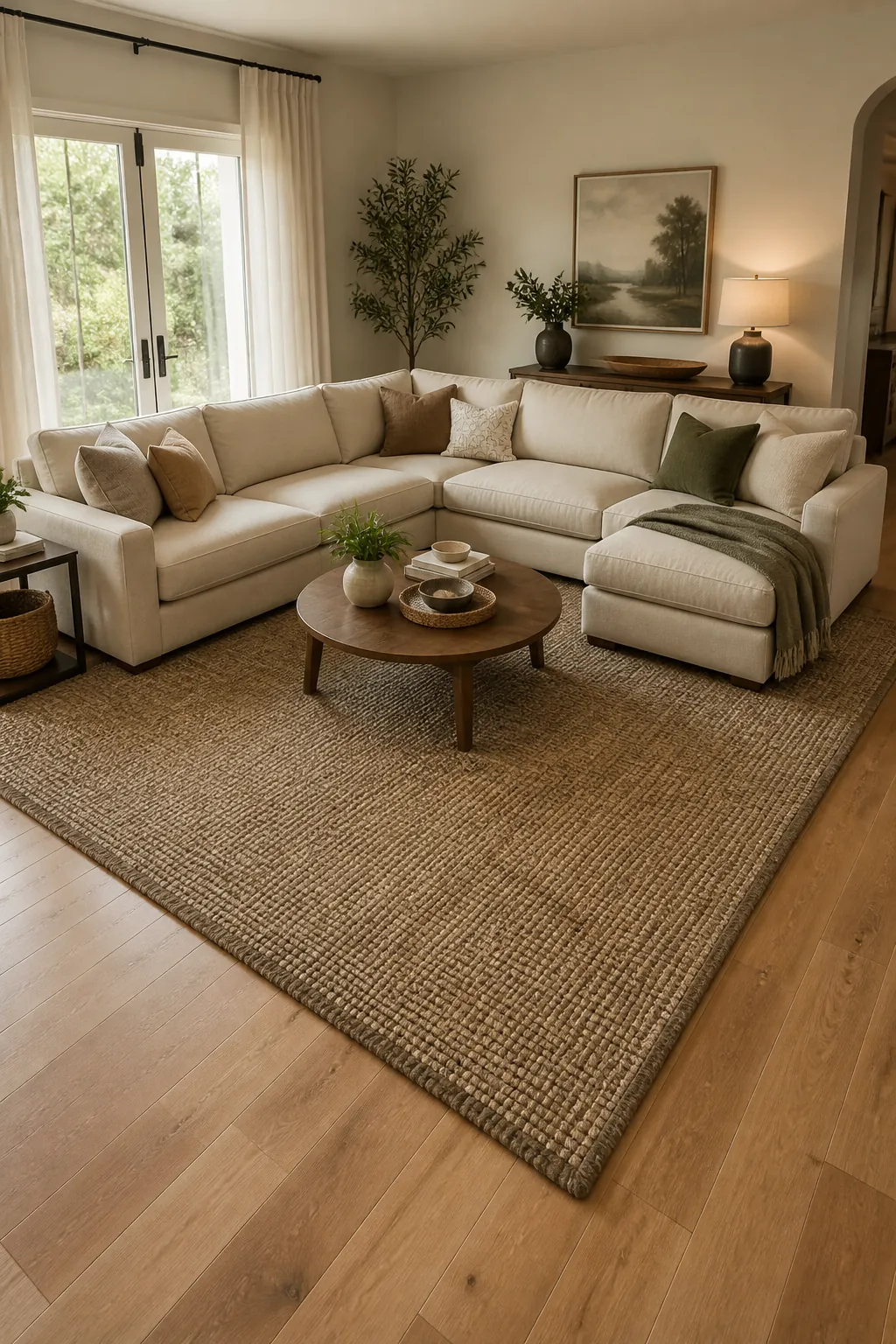
Choose the coffee table by reach, not by trend
A coffee table around a sectional should be close enough to use from the main seats without blocking the walk path. The sweet spot is usually a narrow oval, soft rectangle, round coffee table, nesting pair, or upholstered ottoman depending on the shape of the sofa.
For a tight L-shaped sectional, curved edges are forgiving because people move around the inner corner constantly. For a deep U-shaped sectional, a larger square or round table can make more sense because more seats need access to the surface. If one side of the sofa has a chaise, avoid pushing the table so far toward the chaise that the regular seats lose function. The best table is the one that people can actually reach without twisting, standing, or setting drinks on the arm.
Fill the corners with height, not clutter
The empty area beside a sectional often becomes a dumping zone: a small side table, a basket, a plant, a lamp, and then another basket because the first arrangement still feels wrong. The better move is to pick one vertical anchor and let it do the heavy lifting.
A floor lamp, tall plant, slim side table with a lamp, or arched reading light can soften the end of the sectional while adding a useful layer of light. If the sofa sits against two walls, this vertical piece keeps the corner from feeling flat. If the sectional floats in an open plan, it helps mark where the living room decor zone begins and ends.
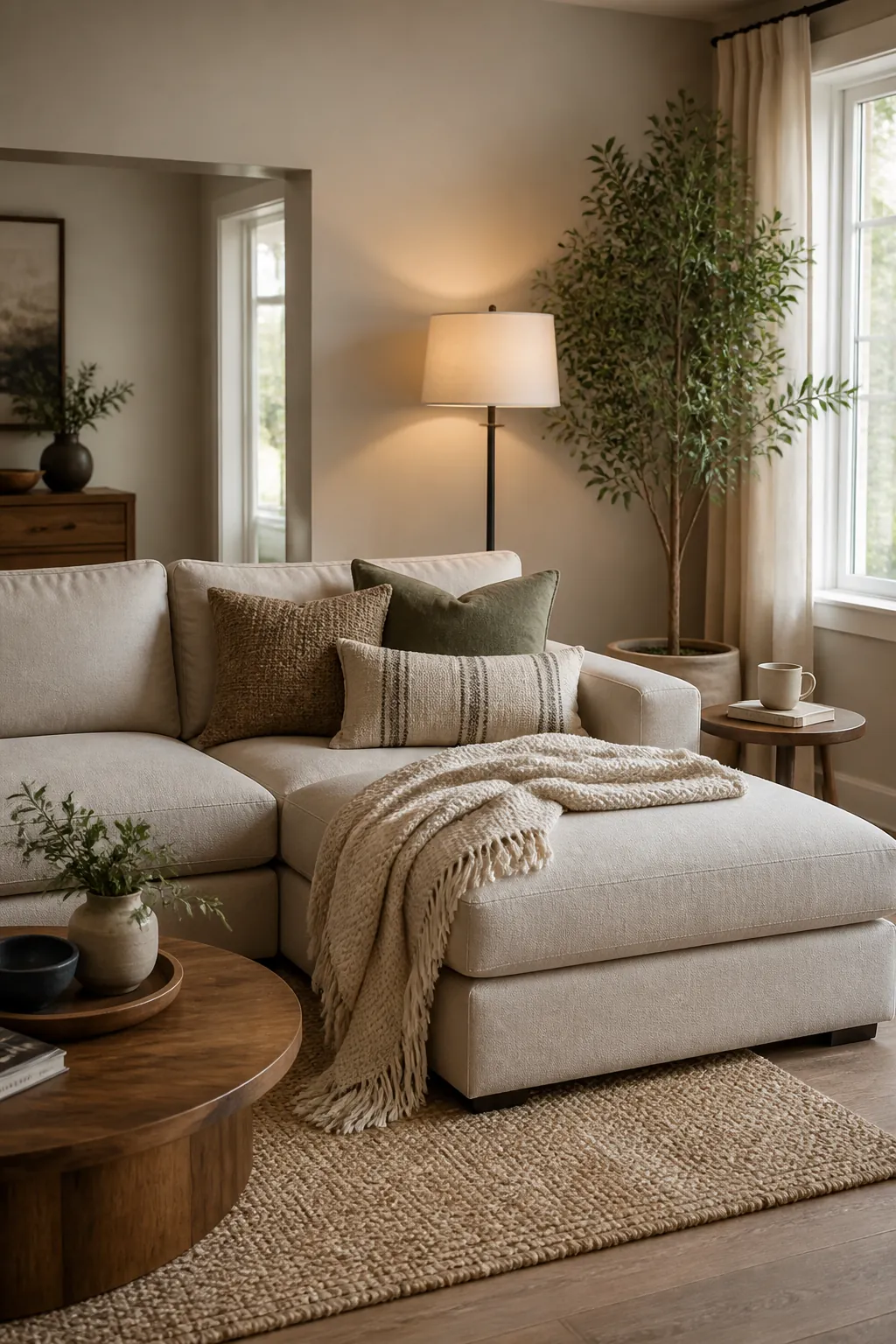
Break up the sofa with pillows and throws that have a job
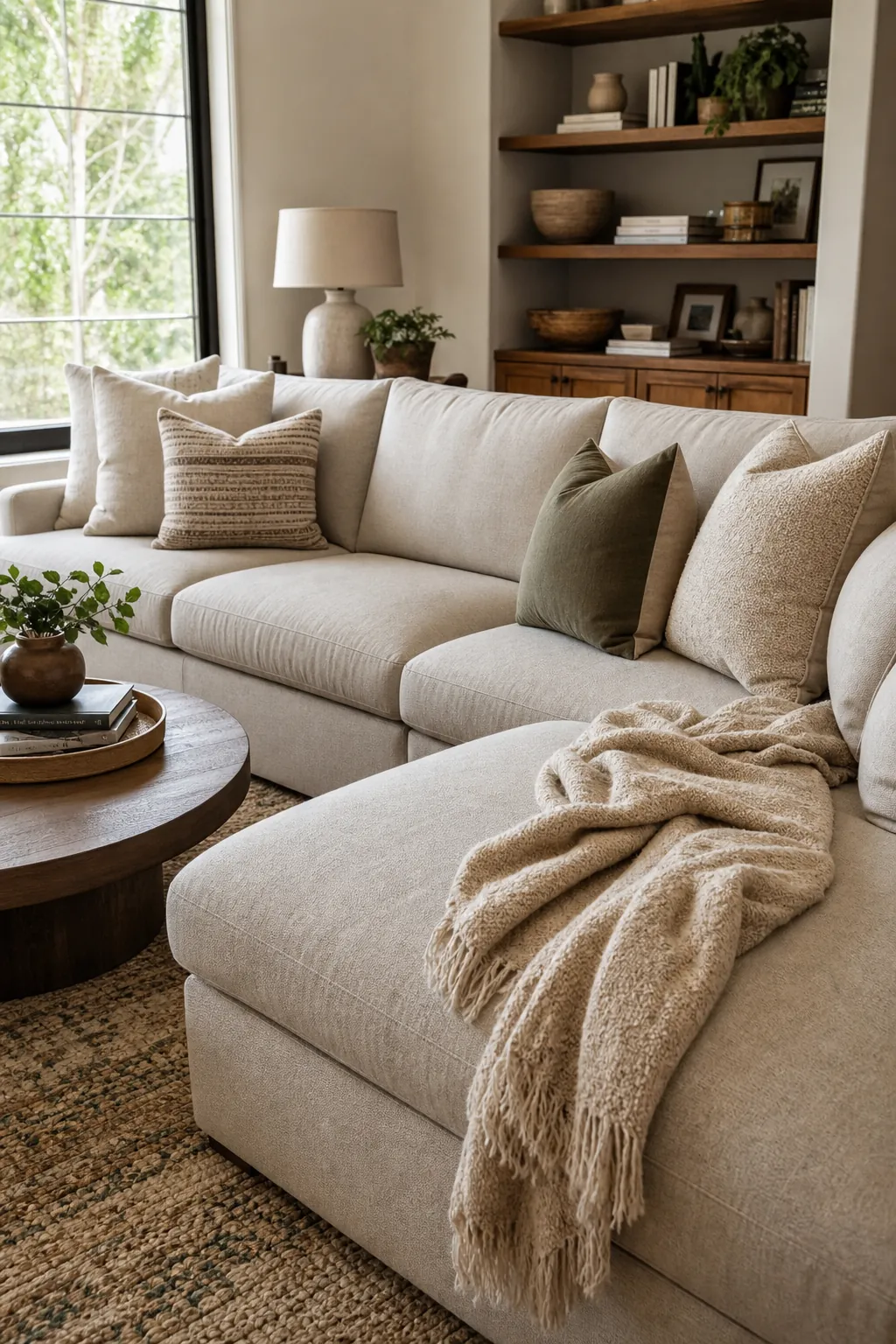
Large sofa decor can go wrong fast when every pillow is the same color, size, and fabric. A sectional already has repetition built into it, so the styling needs contrast: one larger back pillow, one smaller patterned pillow, one textured pillow, and a throw that drapes naturally rather than sitting folded like a showroom prop.
Instead of spreading pillows evenly across every seat, build two or three intentional clusters. Put one at the main corner, one at the end of the chaise, and one near the opposite arm if the sofa needs balance. Leave some empty seat space visible so the sectional still looks usable, not staged for a catalog photo.
Use the back of the sectional if the room allows it
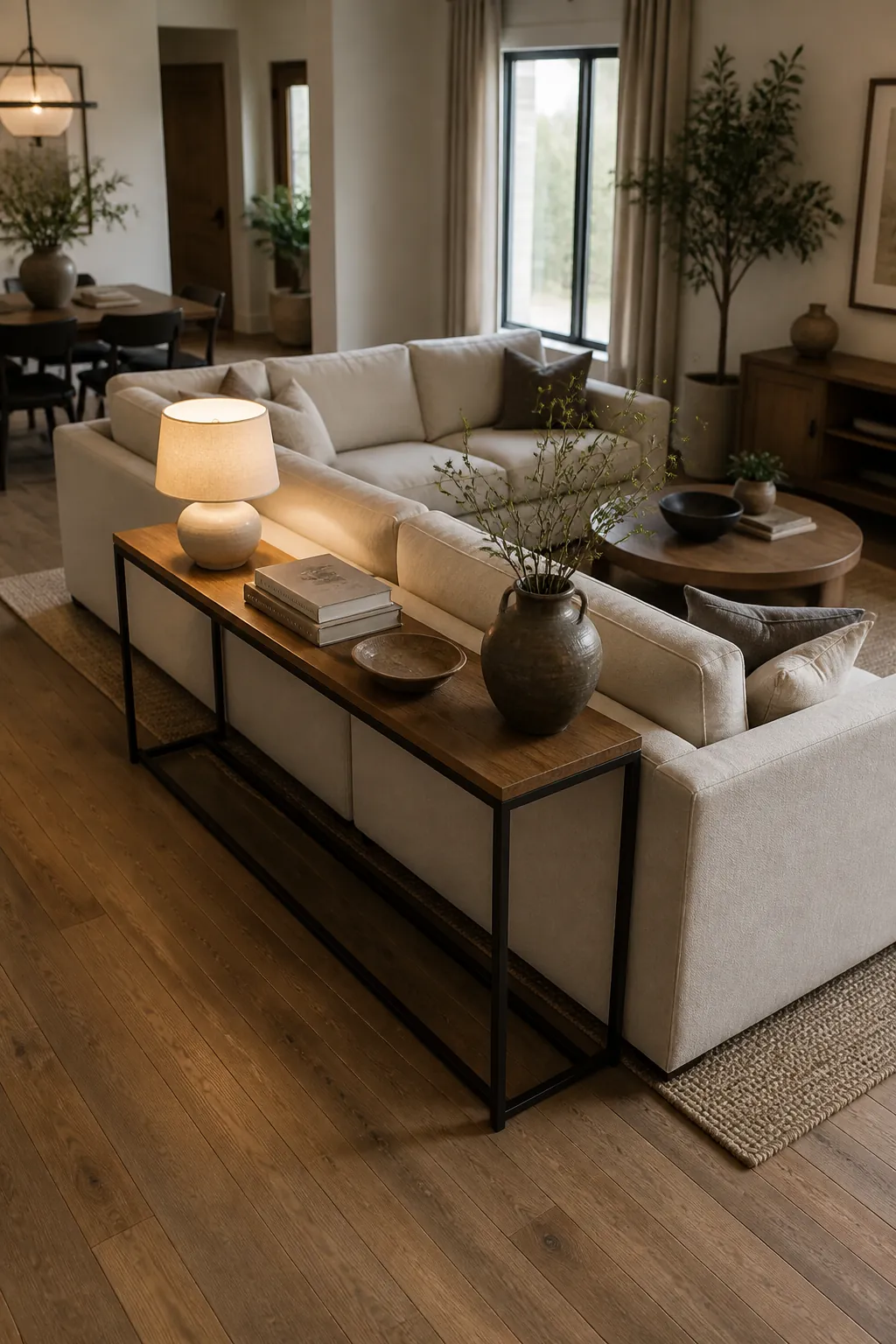
When a sectional floats away from the wall, the back can either look like dead space or become one of the best styling opportunities in the room. A narrow console table behind the sofa can hold a lamp, books, a bowl for remotes, or a small vase without crowding the seating area.
This is especially helpful in open-concept living rooms because the console creates a soft boundary between the sofa and the walkway. Keep the table slim enough that people can pass behind it comfortably. If there is no room for a console, leave breathing space and use a single floor lamp or plant instead. Forcing furniture into the walkway will make the sectional feel bigger, not better.
Style the table in layers that still leave room for real life
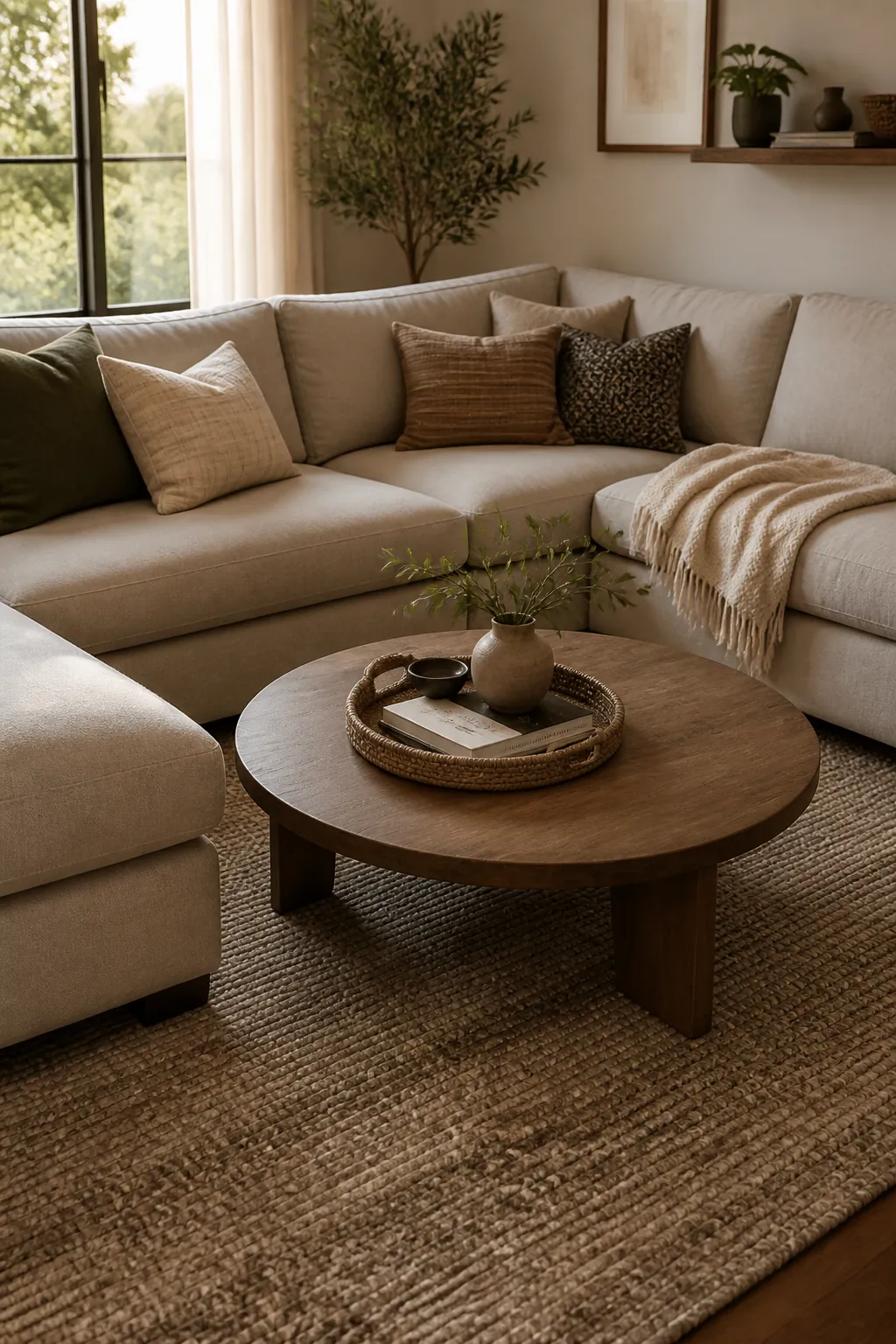
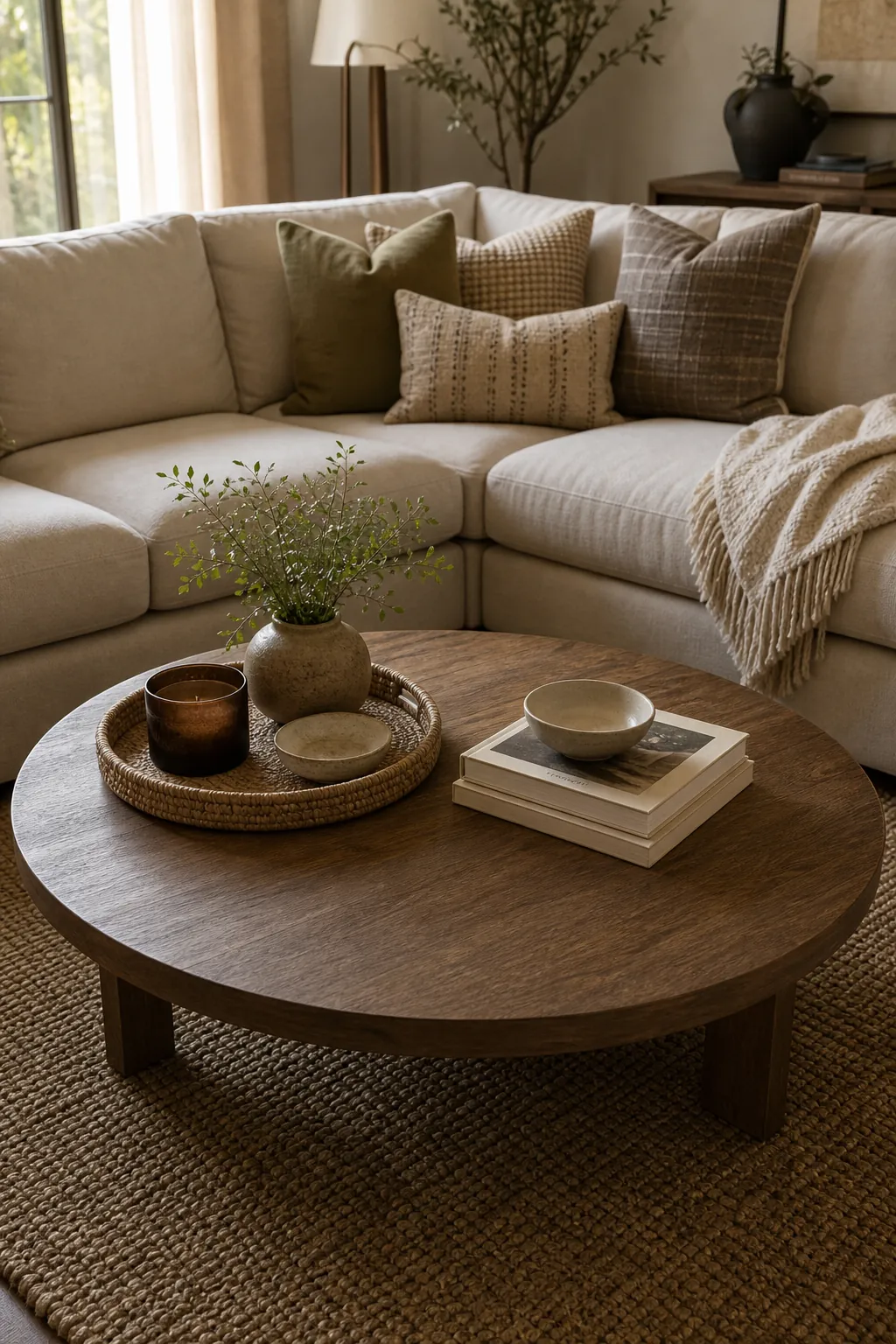
Coffee table decor should not take over the only reachable surface in the room. A sectional usually serves movie nights, snacks, guests, laptops, and feet-up lounging, so the table styling has to be attractive and easy to clear.
A simple formula works: one tray, one low stack of books, one natural element, and one small object with shape. On a round coffee table, keep the arrangement slightly off-center so the curve still shows. On a rectangle, place the tray toward the seat people use most and leave a clean landing zone on the other side. The goal is table styling that looks finished without making the table unusable.
Make the whole area feel intentional
Once the main pieces are working, step back and check the full living room furniture arrangement. Does the rug hold the sectional, coffee table, and any accent chairs together? Can every seat reach a surface? Is there at least one warm light source near the sofa? Is the corner visually balanced with height? Does the coffee table have enough empty space for everyday use?
That checklist matters more than buying one perfect decor item. A sectional is already a strong anchor. When the surrounding area has the right scale, clear walking paths, useful surfaces, and a few tactile details, the room starts to feel cozy rather than crowded. Decorating around a sectional is really about making a big piece of furniture feel like it belongs to the whole room.