
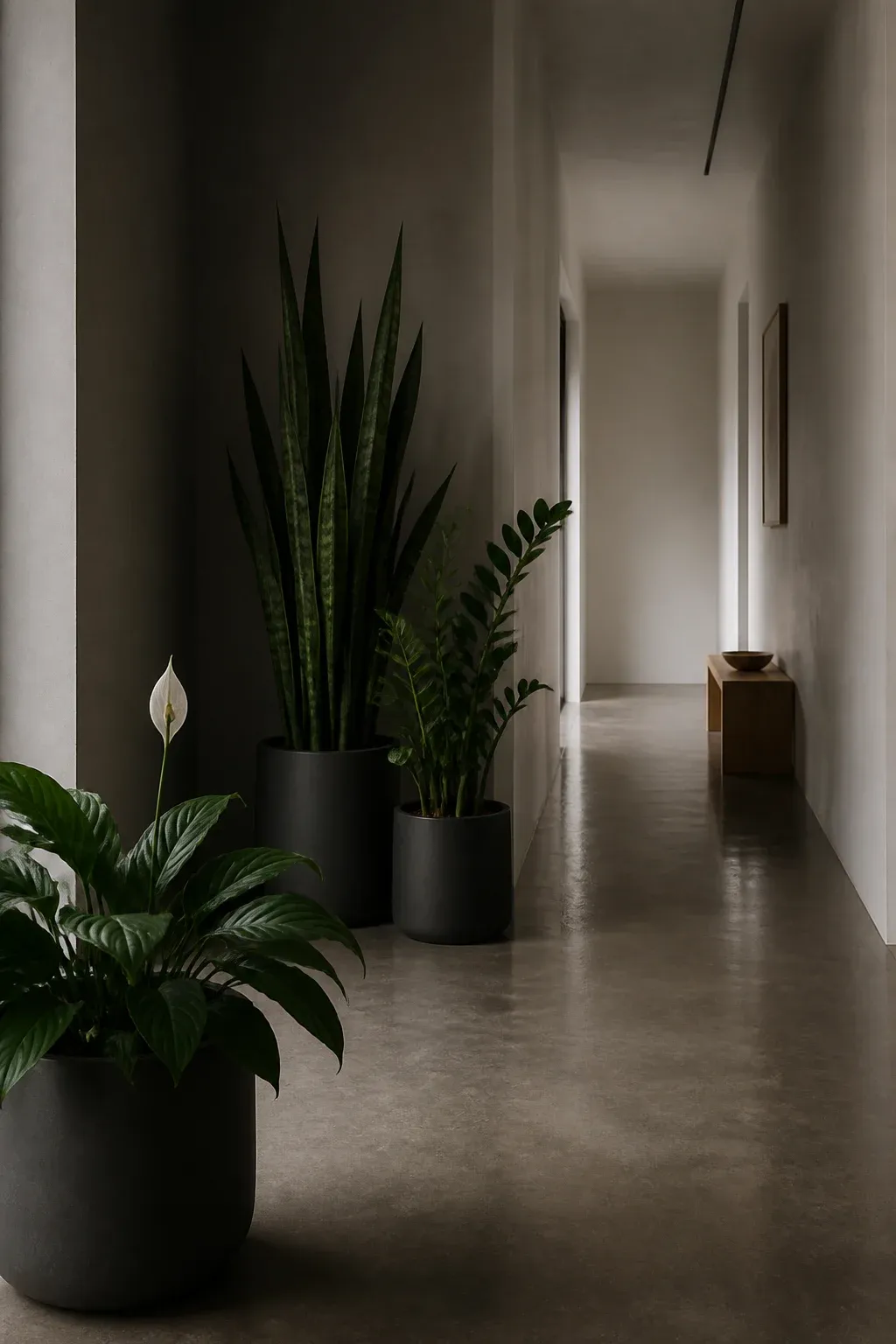
Minimalism often focuses on clean lines and neutral palettes, but sometimes these spaces can feel a bit cold or static. Bringing in living plants is one of the easiest ways to soften those sharp edges and add organic texture without ruining the simplicity of your design. Plants breathe life into a room, literally and figuratively, making a house feel like a home.
In this guide, we will look at how to integrate greenery into your minimalist lifestyle. You will learn how to choose plants for low-light areas, how to use vertical space to keep your floors clear, and how to maintain your indoor garden without it becoming a full-time job. The goal is to enhance your space while keeping it functional and calm.
Choosing the Right Plants for Darker Corners and Hallways
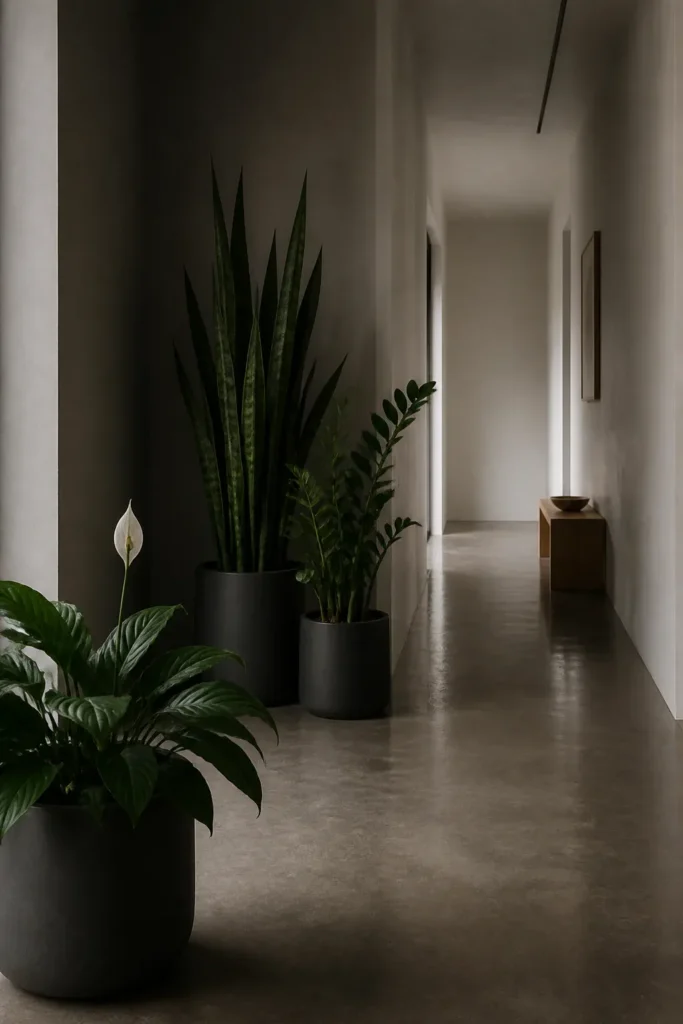
Not every part of a minimalist home is flooded with natural light. Hallways and corners often sit in the shadows, but they are great spots for a splash of green. Instead of trying to force a sun-loving plant to survive there, choose species that naturally thrive in low light. Snake plants and ZZ plants are excellent choices because they are tough and can handle dim conditions for long periods. Peace lilies also do well in shade and will tell you exactly when they need water by drooping slightly. By matching the plant to the light levels of your specific room, you ensure the greenery stays vibrant rather than turning yellow and adding visual clutter.
Using Vertical Space to Keep Floors Clear and Open
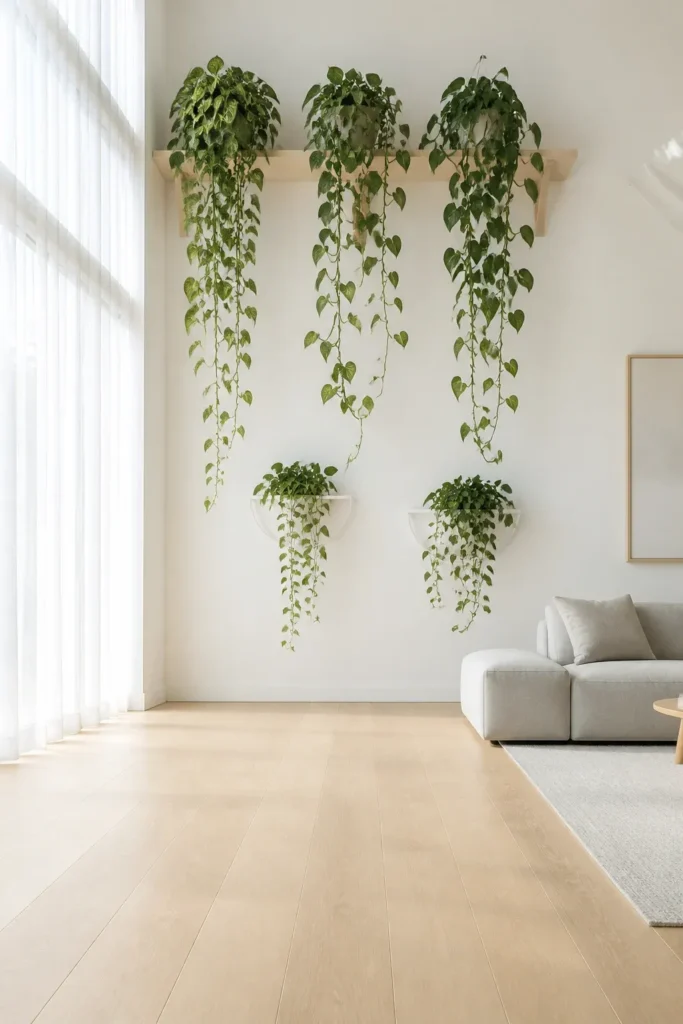
A key rule in minimalism is keeping floor surfaces as clear as possible to maintain a sense of openness. If you have a small apartment, floor-standing pots might make the room feel cramped. Instead, look upward. Wall-mounted planters or ceiling hooks allow you to enjoy greenery without sacrificing square footage. Vining plants like Pothos or Heartleaf Philodendron are great for this. You can place them on a high shelf and let the leaves drape down naturally. This creates a 'living wall' effect that draws the eye upward, making your ceilings feel higher and your floor plan more spacious.
Selecting Pots and Planters That Match Your Existing Decor
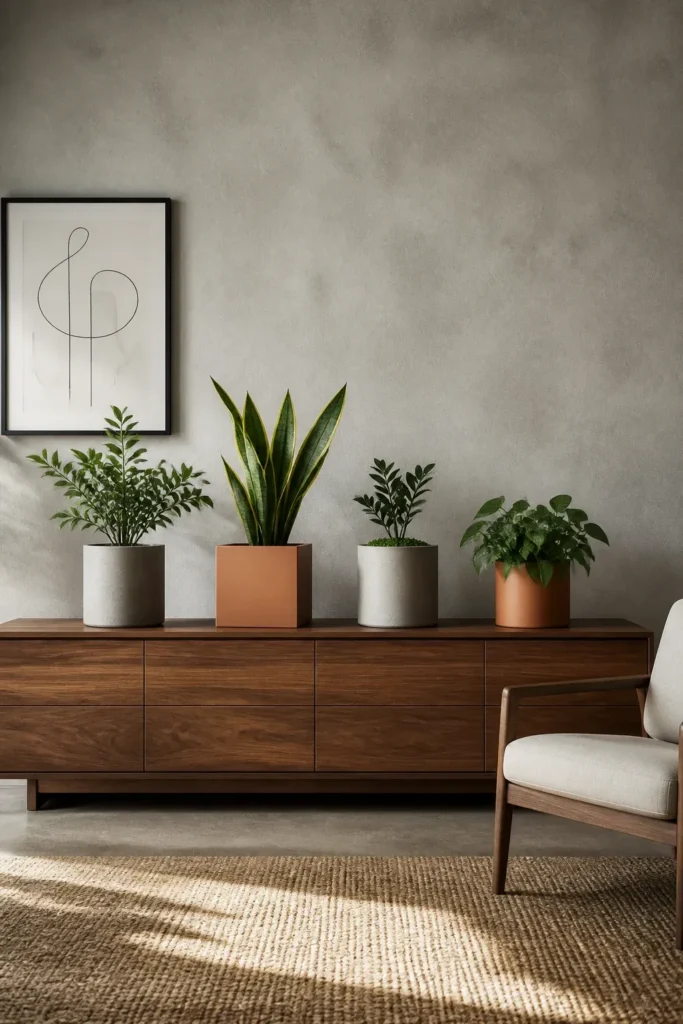
The container is just as important as the plant when it comes to interior design. To keep a minimalist look, stick to a consistent color palette and material. If your home features a lot of wood and warm tones, terracotta or matte clay pots work well. For a more modern, industrial feel, look for concrete or powder-coated metal planters in gray, black, or white. Avoid busy patterns or overly ornate designs that compete for attention. Simple geometric shapes help the plant remain the star of the show while the pot blends seamlessly into your furniture and shelving.
Grouping Small Plants Together for a More Significant Visual Impact
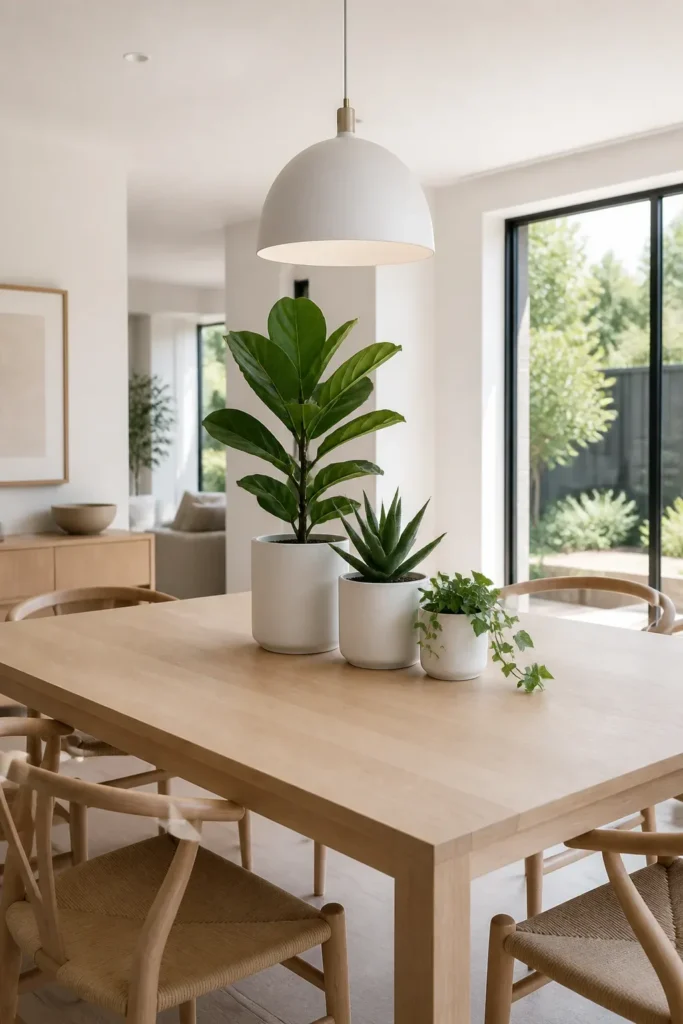
Sometimes a single small succulent can look lost on a large dining table or sideboard. To create a focal point without creating a mess, try grouping three plants of varying heights together. This follows the 'rule of three' in design, which is naturally pleasing to the eye. Use plants with different leaf shapes—perhaps one with broad leaves, one that is spiky, and one that trails—but keep them in matching or complementary pots. This creates a curated look that feels intentional rather than accidental. It provides a concentrated burst of color that feels much more significant than scattered individual pots.
Caring for Your New Greenery Without Spending Hours Each Week
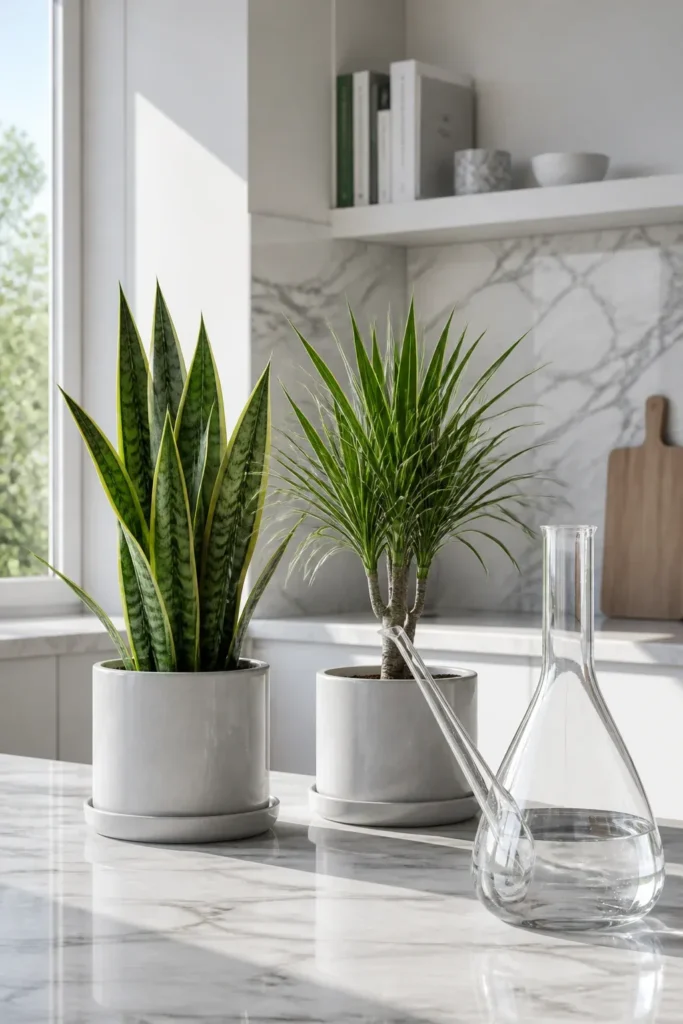
You don't need to be a professional gardener to keep your indoor plants alive. The biggest mistake most people make is overwatering. Most indoor plants prefer to dry out slightly between waterings. A simple trick is to poke your finger an inch into the soil; if it feels dry, it is time for water. Setting a specific day of the week for a quick check-up helps build a routine that takes less than ten minutes. Choosing low-maintenance varieties like Sansevieria or Dracaena means you can even go on vacation for a week or two without coming home to dead leaves. Minimalism is about ease, and your plant care should reflect that.
Moving Plants Around to Change the Feel of Your Rooms
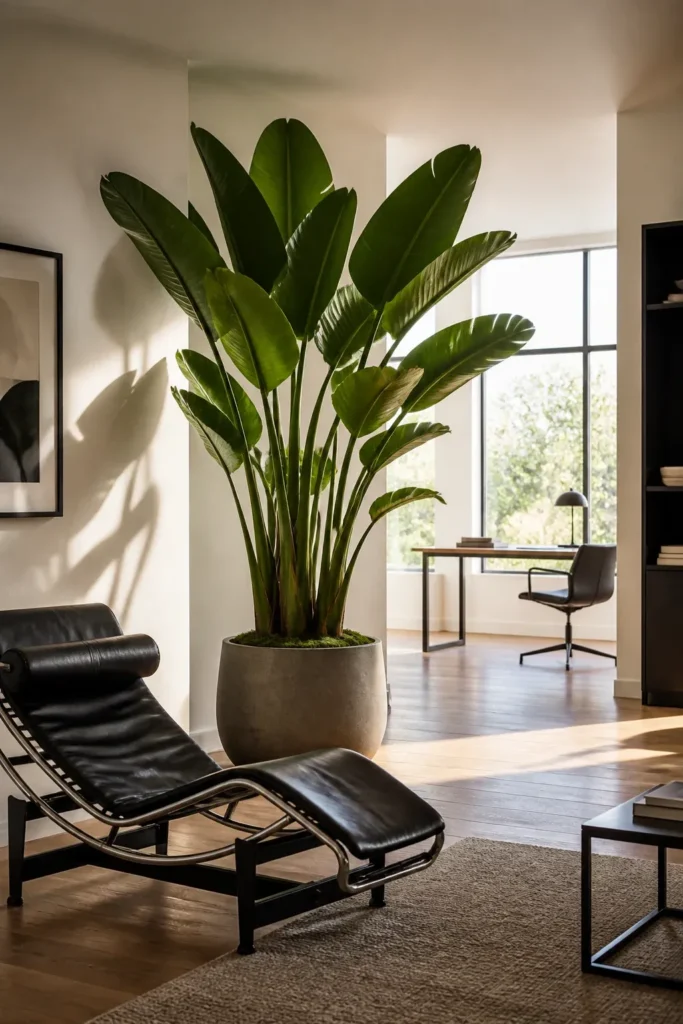
One of the best things about plants is that they aren't permanent fixtures like a sofa or a kitchen island. If a room starts to feel stale, try swapping plants between the bedroom and the living room. A tall bird of paradise can act as a natural screen in a corner, while a small fern can soften the look of a home office desk. Moving your plants around also helps you understand where they grow best. If a plant isn't thriving in one spot, a new location with slightly different light might be all it needs. This flexibility allows you to refresh your home’s energy without buying anything new.
Adding plants to a minimalist home doesn't have to be complicated or overwhelming. By focusing on a few well-placed, healthy specimens and choosing containers that match your style, you can create a space that feels both clean and full of life. Start with one or two hardy varieties and see how they change the mood of your room. You might find that a little bit of nature is exactly what your minimalist space was missing.