
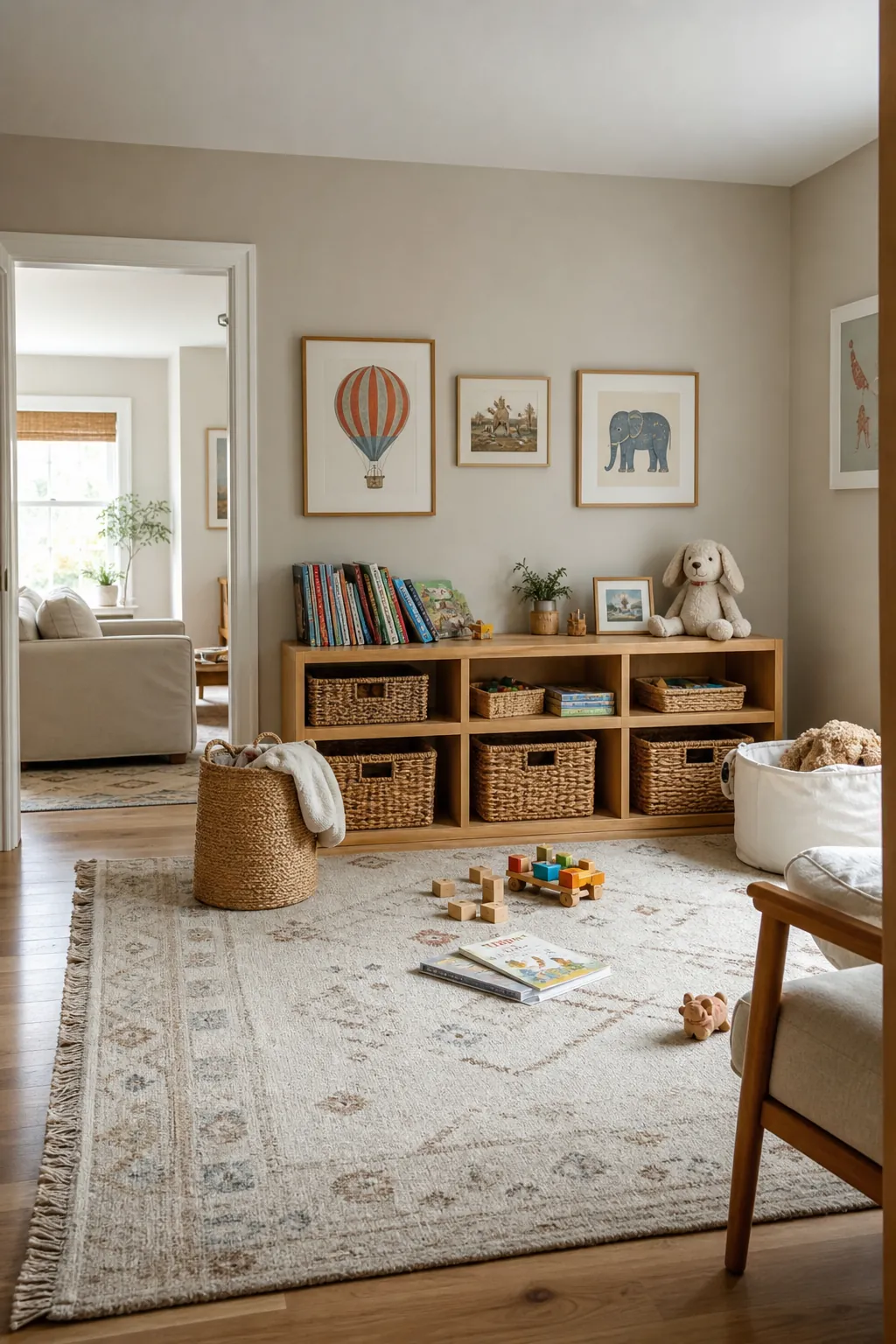
A neutral playroom works best when it feels calm to adults and still looks like a room a child can actually use. The goal is not to remove color, toys, or personality. The goal is to give the busy parts of play a softer frame: warm walls, washable textures, low storage, and a few cheerful details that can change as quickly as your child’s interests do.
The most common mistake is making the room so edited that every toy feels like visual clutter. A better neutral playroom starts with practical zones, then lets the fun show up in smaller, movable pieces. Think soft colors, natural textures, easy toy storage, and enough open floor space for real play.
Start With Warm Neutrals Instead of Blank White
White walls can work, but a playroom usually feels friendlier with a little warmth. Oatmeal, mushroom, warm gray, ivory, flax, clay beige, or pale greige gives the room a finished look without making it feel themed. These shades also handle the visual noise of blocks, stuffed animals, books, and art supplies better than a stark white backdrop.
If the room gets strong daylight, test paint samples at different times of day. A color that looks cozy in the morning can turn yellow in the afternoon. For a softer result, pair neutral walls with one gentle accent color, such as muted sage, dusty blue, faded coral, buttercream, or terracotta.
Use Low Storage That Children Can Maintain
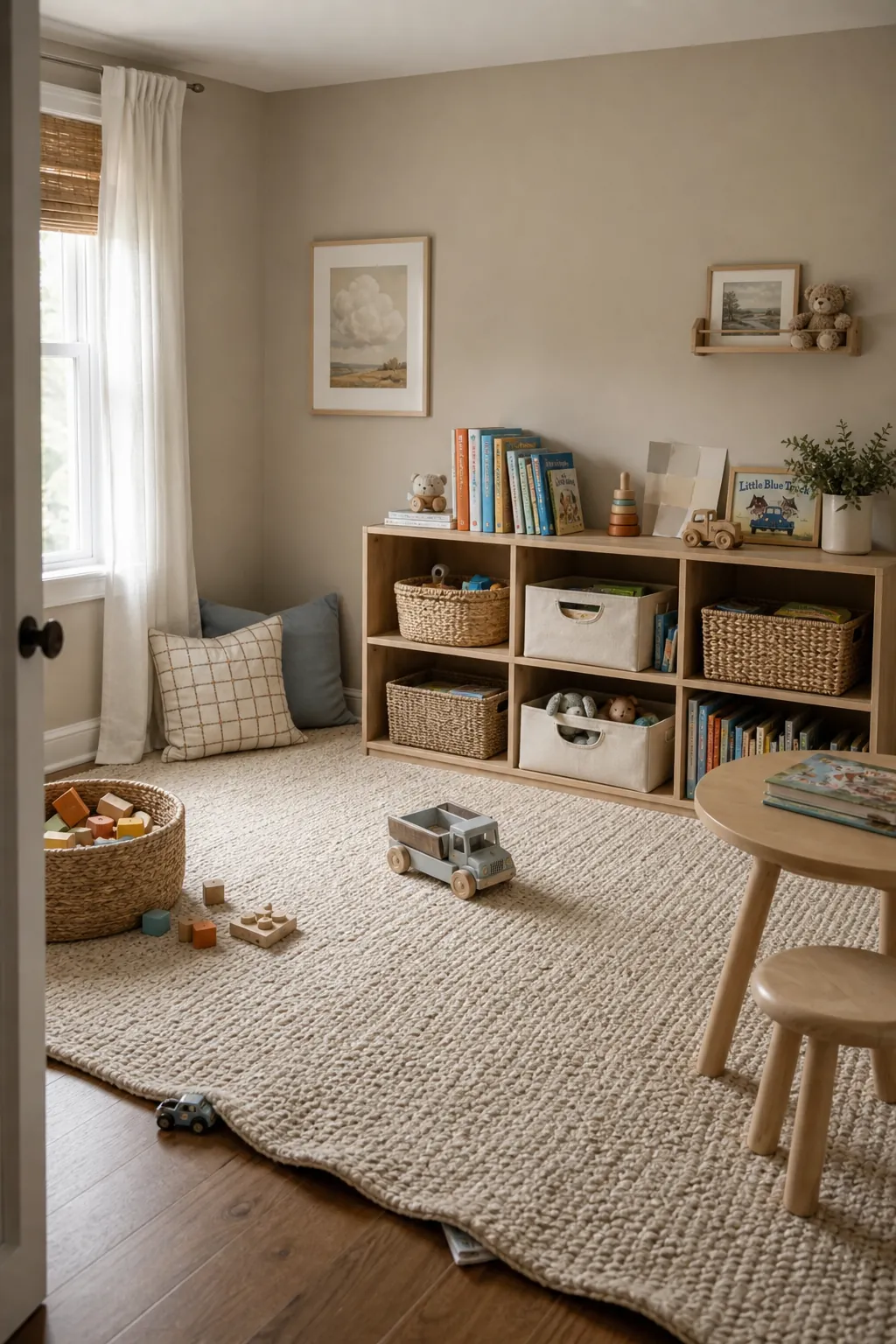
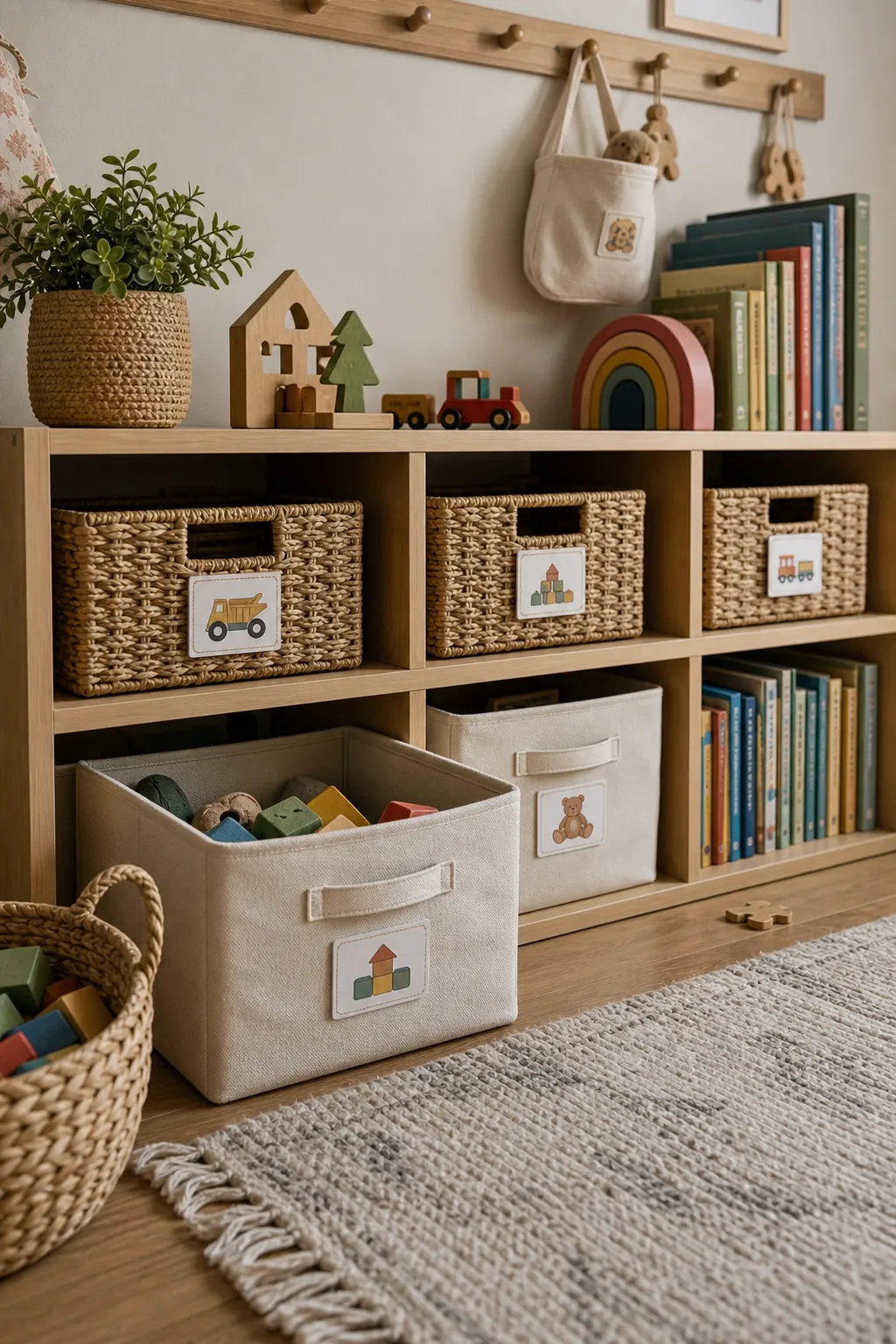
The prettiest playroom decor will not last if children cannot put things away. Low cubbies, open baskets, shallow bins, and labeled shelves make cleanup feel possible. Keep the heaviest toys near the floor, store small pieces in lidded containers, and leave a few empty spots so the room does not become packed from day one.
- Baskets soften the look of toy storage and hide mixed items.
- Open cubbies help children see what they own without dumping every bin.
- Clear or picture labels work better than text labels for younger kids.
- One catchall bin gives you a place for fast cleanup before bedtime.
Let Toys Bring the Brightest Color
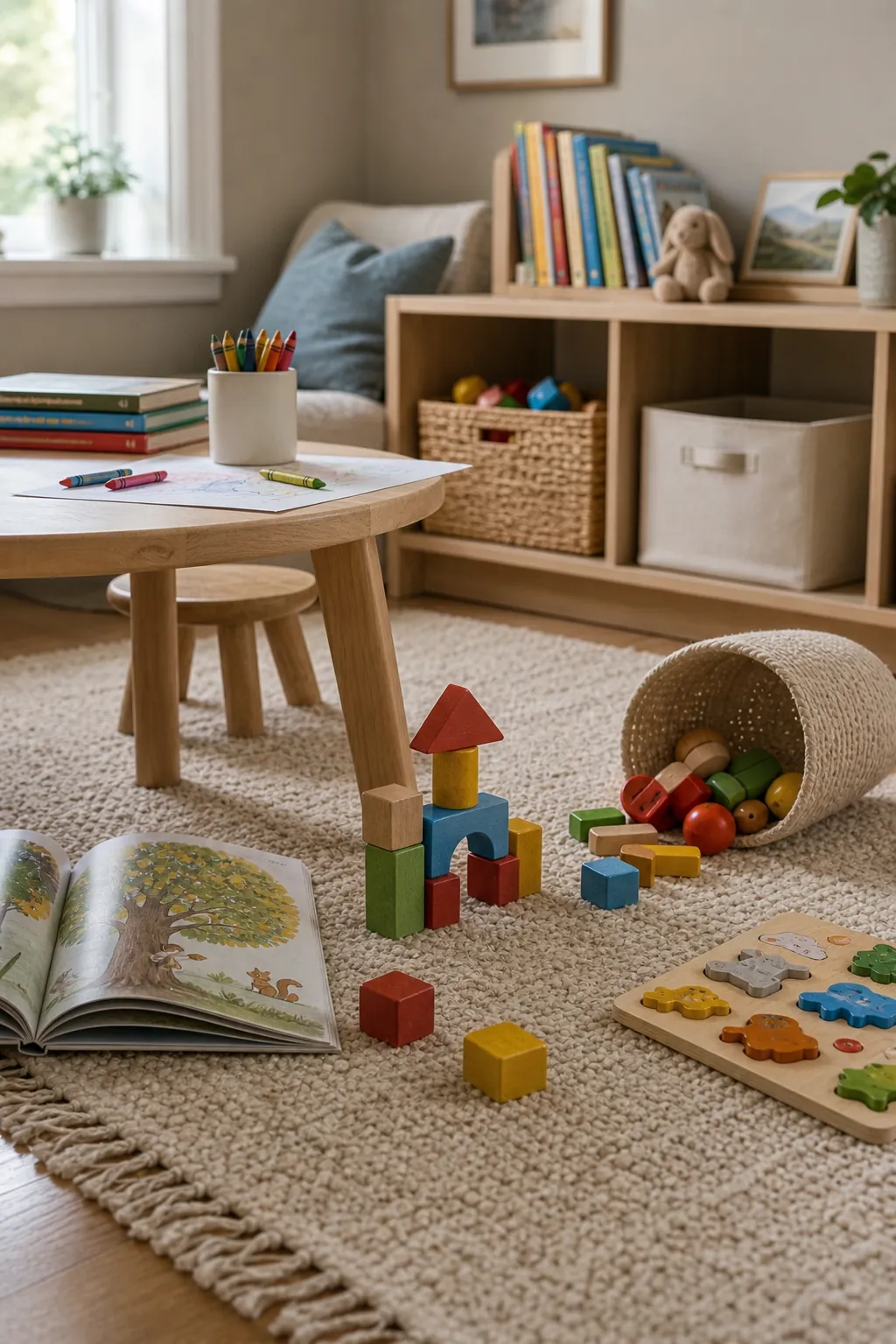
A neutral playroom does not need to be colorless. In fact, it usually feels more natural when the walls, rug, and storage stay quiet while the toys bring the brightness. Wooden blocks, picture books, puzzles, art supplies, costumes, and dolls add enough color on their own, especially when they are displayed in small groups instead of scattered everywhere.
This approach also keeps the room from aging too quickly. When your child moves from dinosaurs to drawing, or from pretend kitchen play to building sets, you can change the visible toys without repainting, replacing wallpaper, or buying a new rug.
Make One Cozy Corner Feel Special
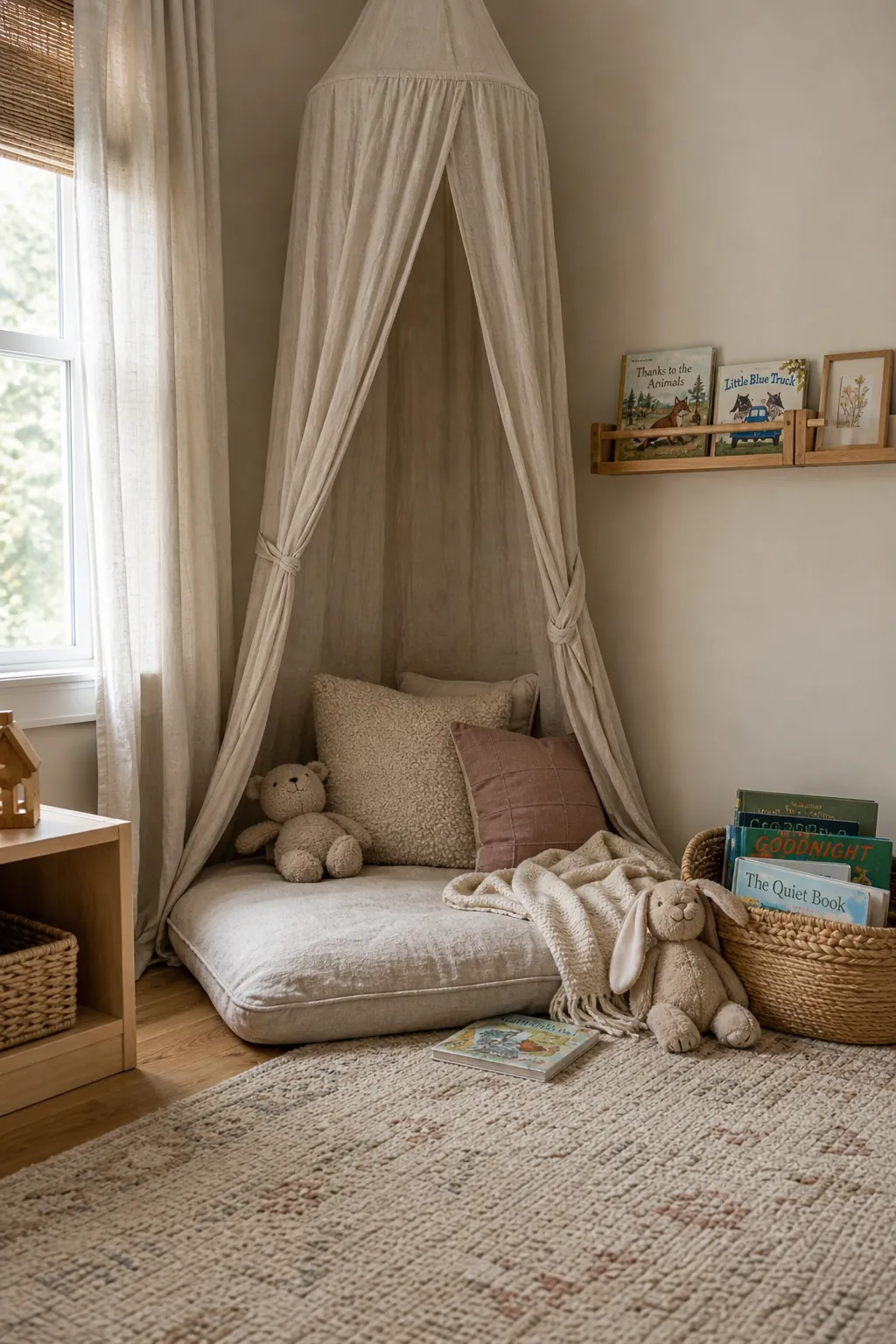
A playroom needs open space, but it also benefits from one small spot that feels tucked in. A floor cushion, small canopy, reading chair, beanbag, or low mattress can turn an unused corner into a quiet place for books, stuffed animals, or calm-down time. Keep the palette soft, then add texture with a washable rug, quilted cushion, boucle pillow, or cotton throw.
The trick is to make the corner inviting without overfilling it. Two or three pillows, a basket of books, and a small wall shelf are enough. A cozy playroom still needs room for trains, towers, crawling, dancing, and whatever the floor becomes that day.
Choose Wall Decor That Can Change Easily
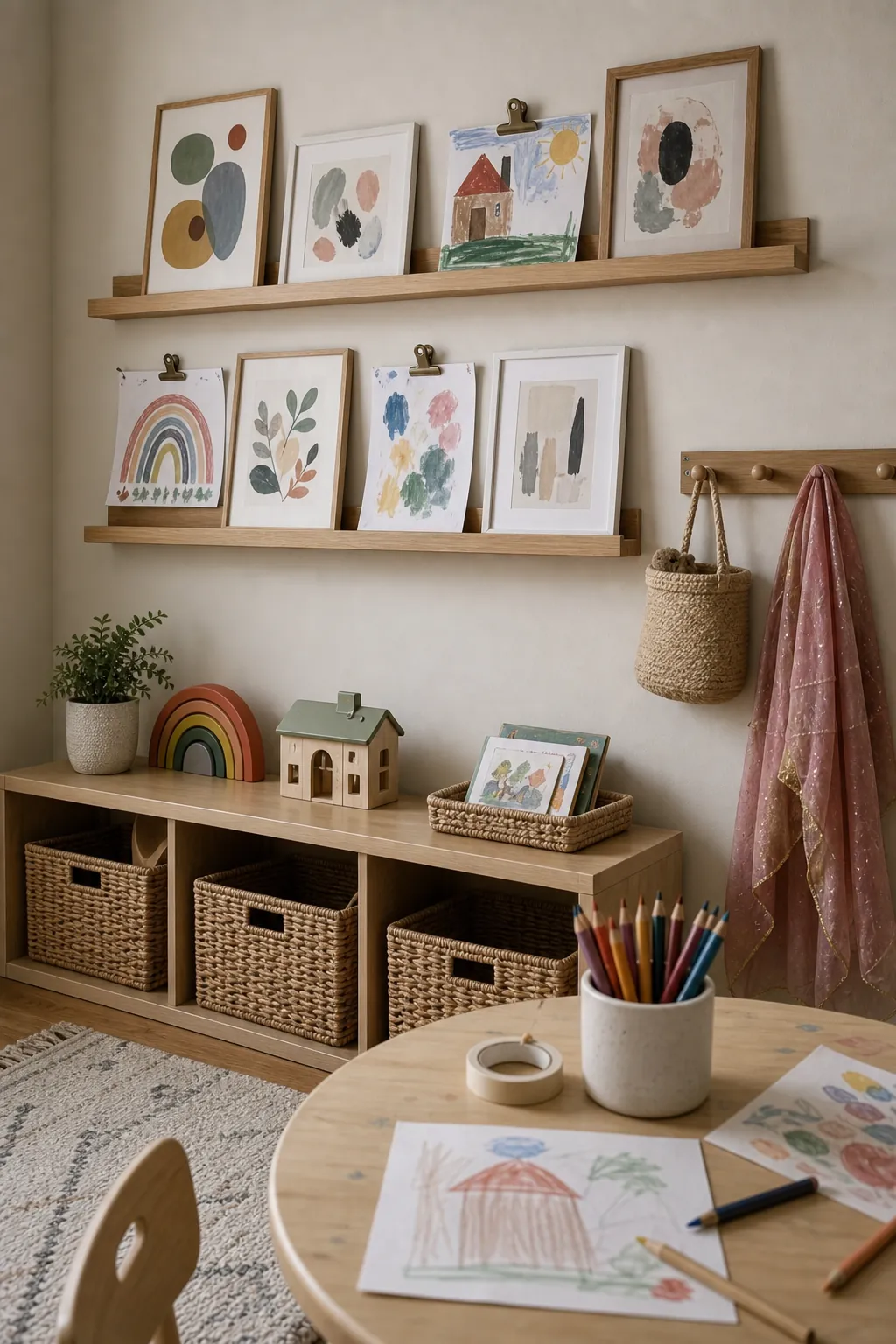
Wall decor is where a neutral kids room can feel personal without becoming permanent. Framed prints, clip rails, peg rails, removable decals, fabric banners, and simple shelves are easier to update than murals or built-ins. They also let you show your child’s artwork without taping paper to every surface.
For a cleaner look, limit the wall decor to one main area. A small gallery wall over a play table, a picture ledge above book storage, or a peg rail near dress-up clothes gives the room a clear focal point while the rest of the playroom stays calm.
Keep the Center Open for Real Play
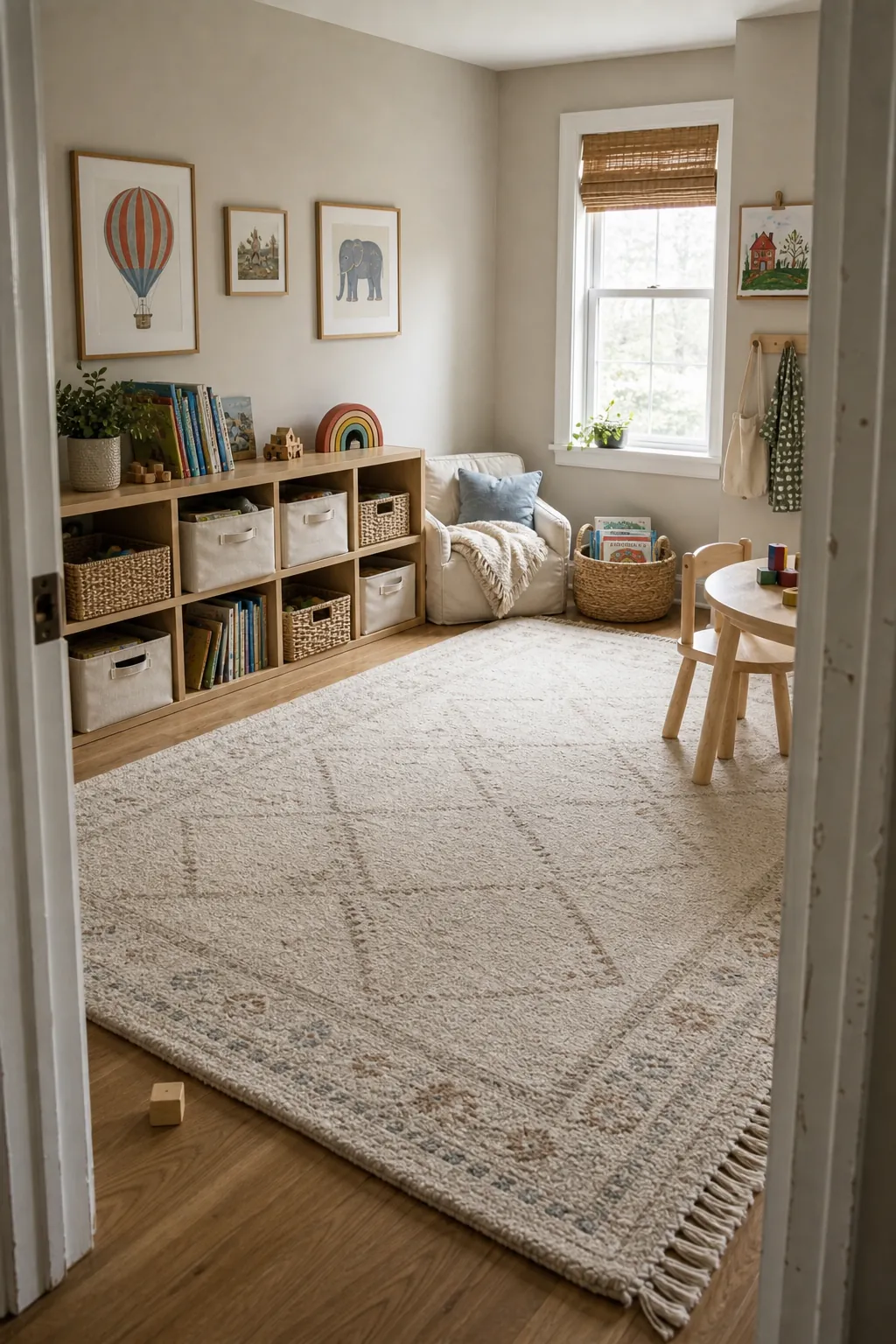
The room will feel more fun if the middle is not filled with furniture. Push storage to the walls, use a soft rug to define the play zone, and keep small tables light enough to move. Children often need a clear patch of floor more than another decorative piece.
This is also where neutral playroom styling becomes practical. When the floor is open and the storage is simple, the room can handle different kinds of play in the same day: puzzles in the morning, pretend shops after lunch, a blanket fort before dinner, and a quick reset at night.
A neutral playroom should make daily life easier, not quieter at your child’s expense. If the room has easy storage, soft surfaces, visible favorite toys, and one or two playful color moments, it can feel calm from the doorway and still feel fun once your child is inside it.