
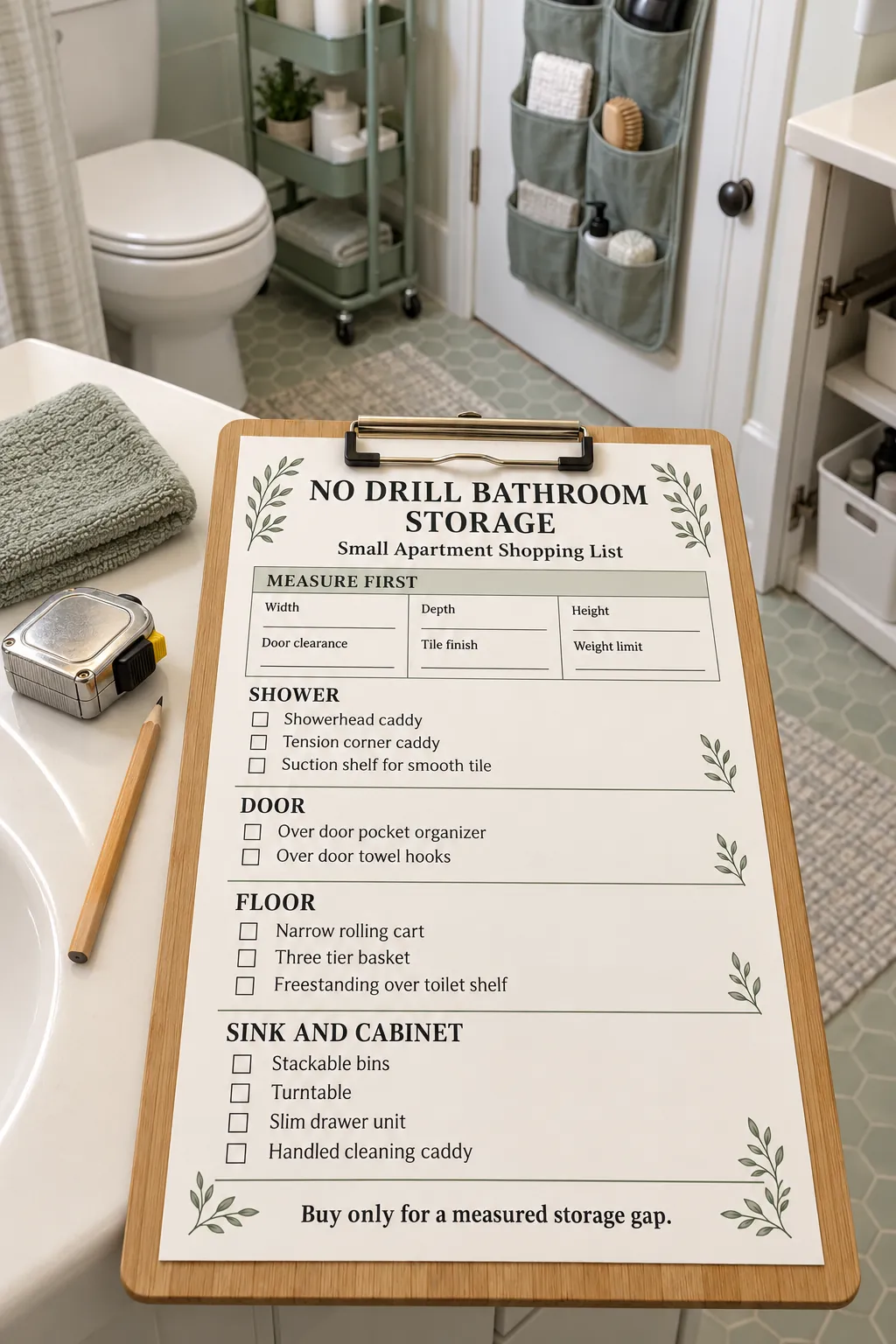
A tiny bathroom does not need every organizer sold for tiny bathrooms. It needs a few pieces that fit the exact gaps, clear the door, tolerate moisture, and store what you actually use. Buying before measuring often replaces countertop clutter with a cart that blocks your knees or a rack that stops the door from closing.
The printable below turns that problem into a short room audit. Click the preview to open the full size image, or use the download button to open it in a new tab. Save it from there, print it, and check only the products that solve a measured storage gap.
Printable Bathroom Storage Shopping List
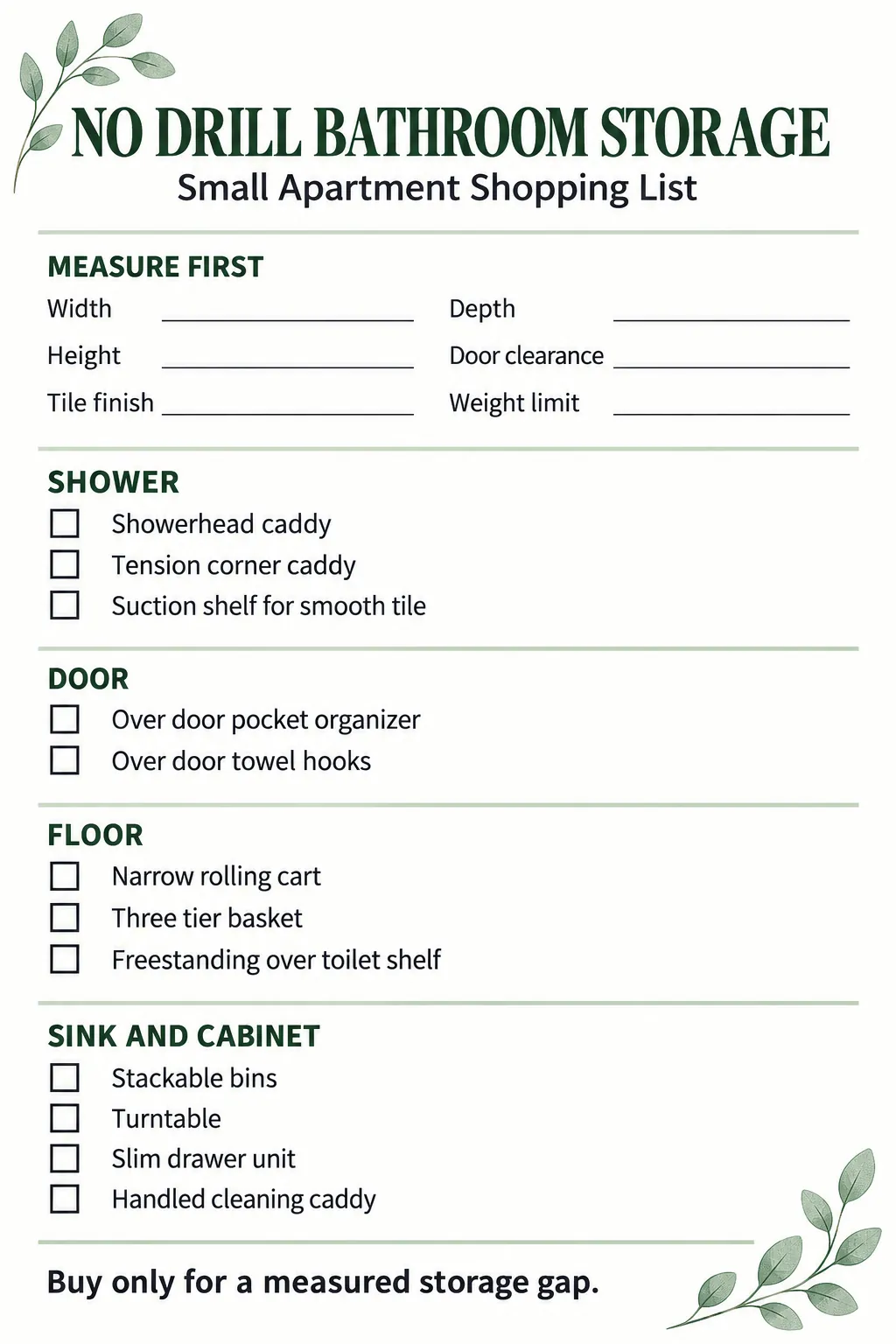
Download high-resolution printable
Audit the Room Before You Shop
Measure usable width, depth, and height at every possible storage zone. Open the bathroom door, cabinet door, shower door, and toilet lid while you measure. Record the narrowest clearance, because a product that technically fits the floor can still interrupt movement.
Check the wall finish before choosing a suction or adhesive organizer. Smooth glazed tile can suit a locking suction mount, while textured tile and grout lines can prevent a reliable seal. Keep heavy backups on supported furniture, not on a removable wall shelf.
Match Each Product to One Storage Zone
Use the shower section for daily wet products only. A showerhead caddy avoids wall contact, a tension corner caddy uses vertical pressure, and a suction shelf is suitable only when the tile and load allow it. Choose one system rather than layering several baskets into the same narrow enclosure.
The door can hold light, flat items when an over door organizer clears the frame. The floor can support towels, toilet paper, and backups in a narrow rolling cart or tiered basket. An over toilet unit can add volume, but it needs enough wall, tank, and plumbing clearance to stand safely.
Under the sink, stackable bins use height while a turntable makes small bottles easier to reach. A slim drawer unit can separate grooming items from first aid supplies. A handled cleaning caddy keeps cleaners together and makes the whole group easy to move when you need the pipes.
Buy for Daily Use, Not Maximum Capacity
Indexed Reddit snippets show a common split between daily supplies and bulky backups. Keep one active pack of cotton swabs, one spare roll, and current toiletries in the bathroom. Store large refill quantities elsewhere when possible, because crowding makes every container harder to clean and reach.
Prefer washable surfaces, drainage, rounded edges, and open visibility for items used every day. Opaque bins can hide visual clutter, but label them outside the wet zone or give each bin one clear category. Leave a little empty capacity so the system can absorb a new product without collapsing.
Keep the Final Setup Easy to Remove
Save product instructions, release tabs, spare parts, and proof of the wall condition. Test removable mounts with a light load before trusting them with bottles or glass. If the lease limits adhesive products, choose freestanding, over door, showerhead, or tension supported storage instead.
A useful shopping list should become shorter as you work through it. Cross out any organizer that duplicates another zone or does not solve a measured problem. The result is a bathroom that feels adult, calm, and practical because every product has a clear job.