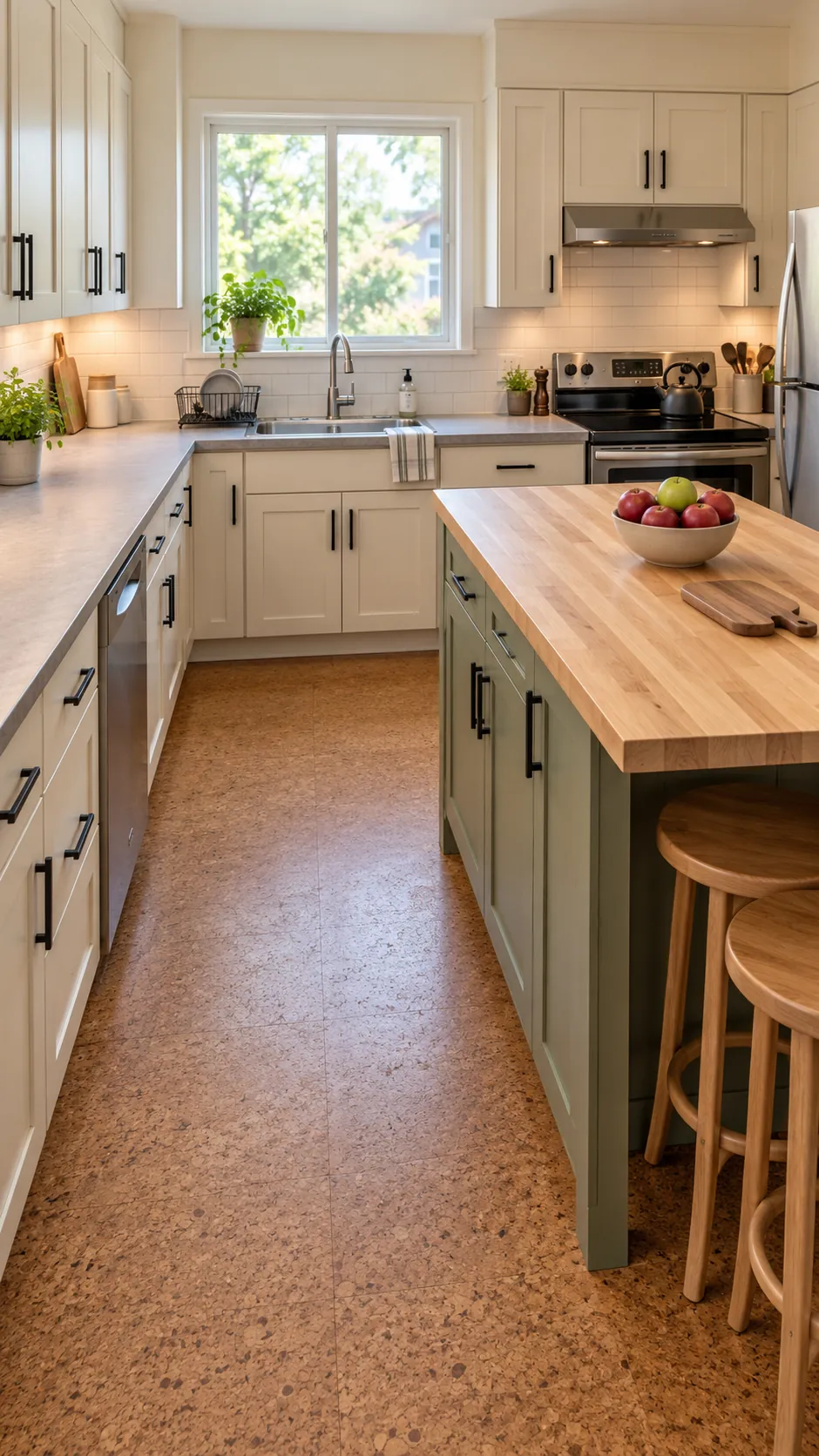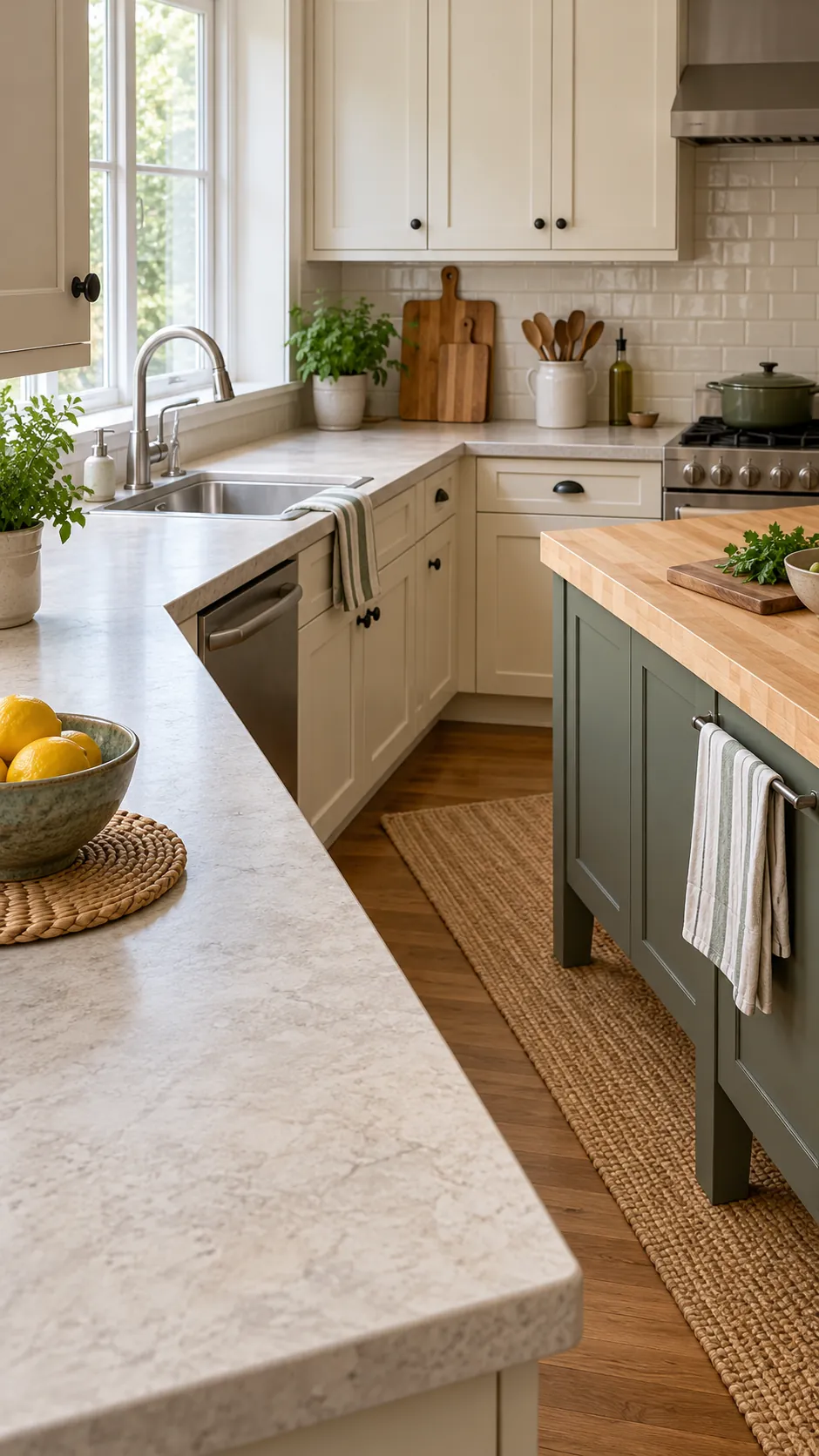
The lower purchase price is only one part of a budget countertop decision. Water habits, heat protection, edge repairs, and willingness to maintain wood can change which surface costs less over time.
Compare the installed cost, not the shelf price
Laminate countertop cost is often lower when a standard length and a simple edge fit the room. Butcher block countertop cost can remain competitive when unfinished stock sizes need only straight cuts. Sink cutouts, corner joints, delivery, edge strips, finish products, and hired labor can erase a simple price advantage.
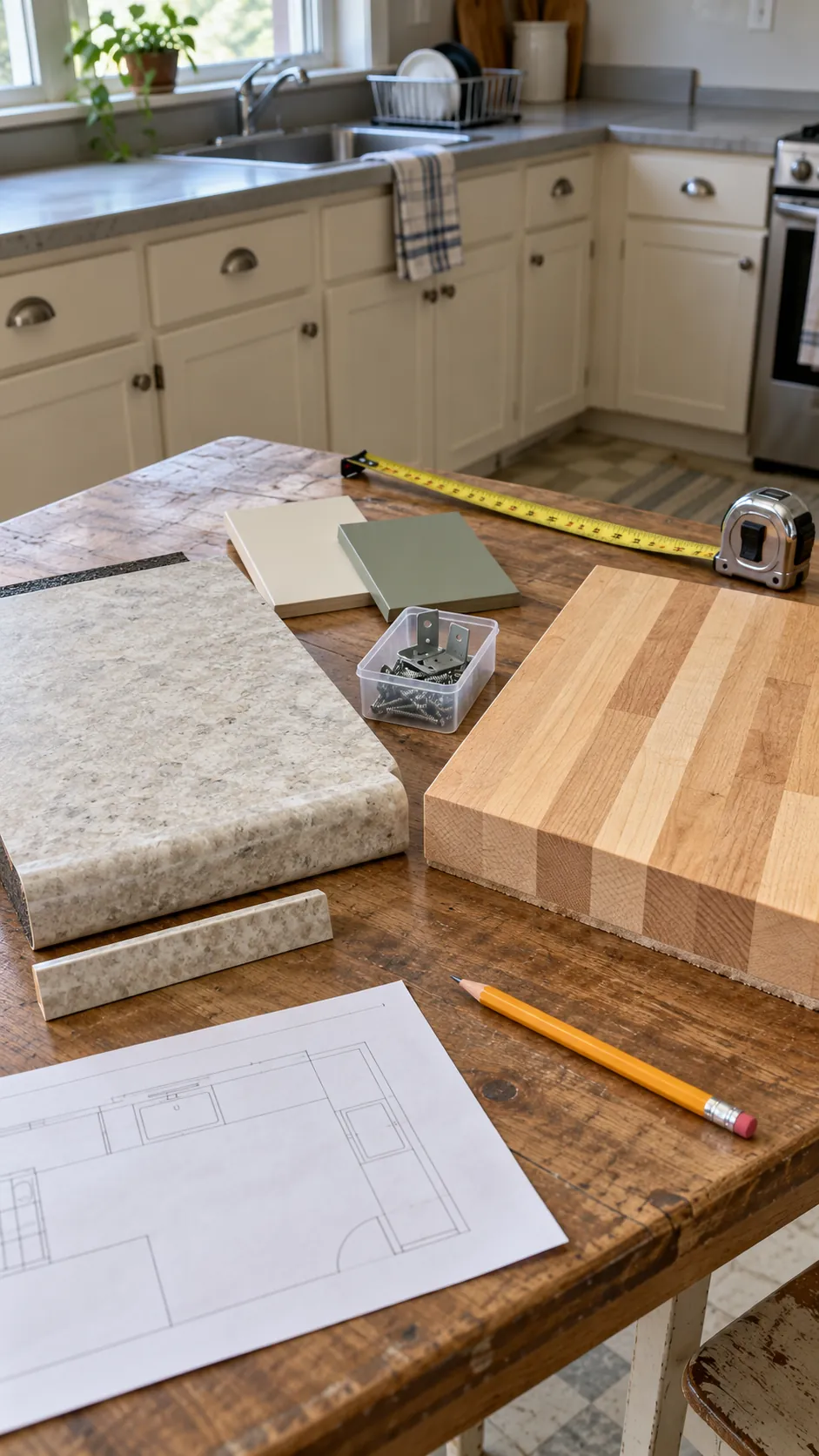
Price the same layout in both materials and include every supporting item. Laminate may need end caps, seam adhesive, and a suitable substrate. Wood needs finish for all faces, sanding supplies, and future maintenance material.
Judge water resistance around the sink
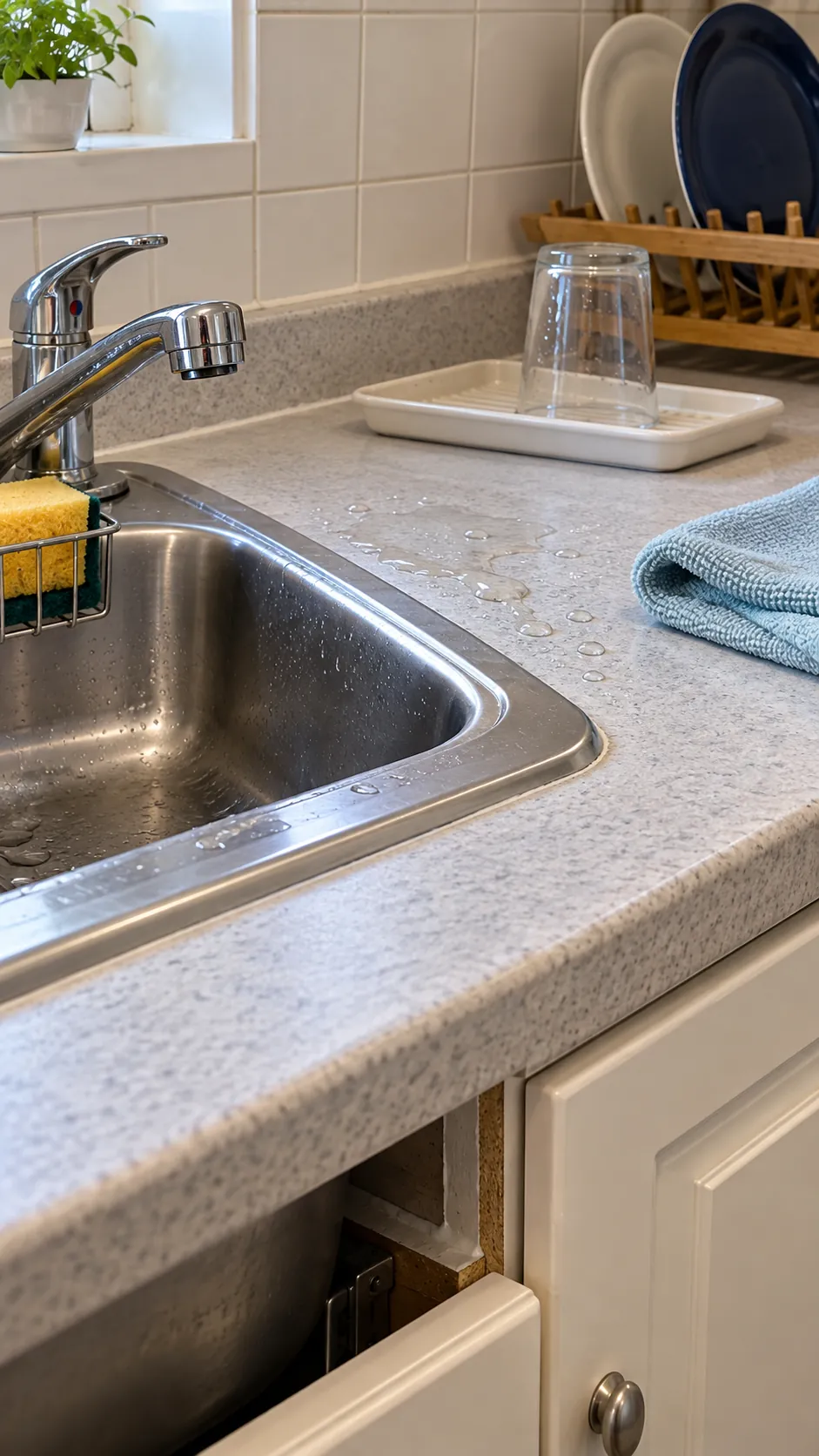
The decorative face of laminate resists routine splashes, but water can damage exposed seams, cutouts, and the particleboard core. Good installation seals those vulnerable edges, yet standing water should still be wiped up. A swollen core is difficult to repair invisibly.
Butcher block also needs careful sink detailing. Finish every cut edge and the underside near the sink, then renew the finish according to its condition and product directions. Homes where puddles sit for hours may find laminate easier, provided its seams stay sound.
Be honest about butcher block maintenance
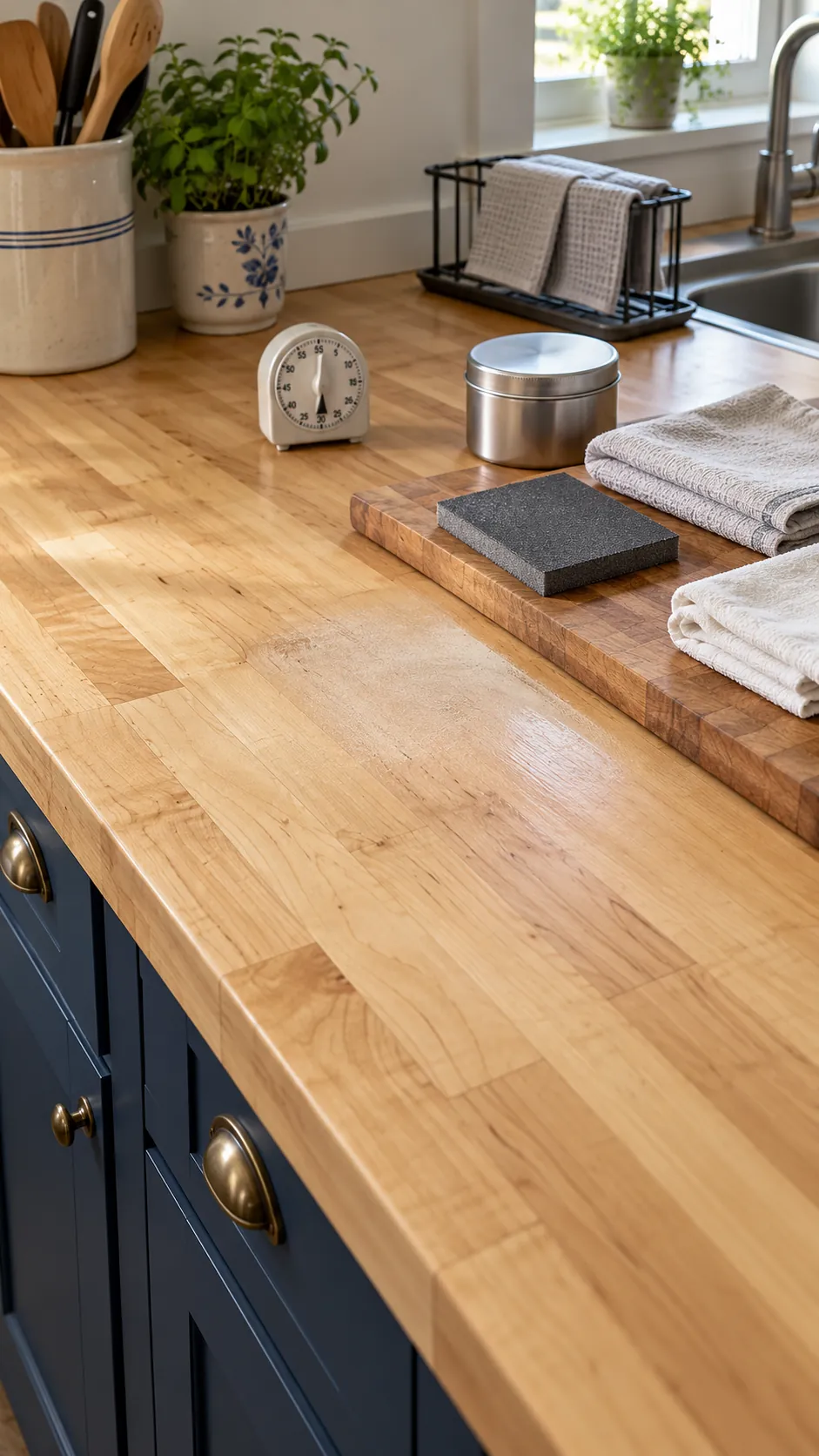
Wood brings warmth and can be sanded when scratches become distracting. That repair advantage comes with regular inspection, especially near sinks, dishwashers, and seams. The correct finish schedule depends on the product, use, and cleaning routine.
Do not assume every butcher block finish is suitable for direct food preparation. Follow the finish maker’s curing and care instructions, and use cutting boards unless the complete system is designed for direct cutting. Promptly dry spills and wet cloths.
Plan for heat, scratches, and stains
Neither surface should receive a hot pan directly. Laminate can scorch or separate under high heat, and a deep cut through its top layer is hard to disguise. Use trivets and cutting boards every day.
Wood dents and scratches more readily, but many marks can be sanded during refinishing. Dark stains can penetrate if spills remain. A family that accepts gradual patina may enjoy wood, while someone who wants a steady appearance may prefer patterned laminate.
Match the material to your installation skills
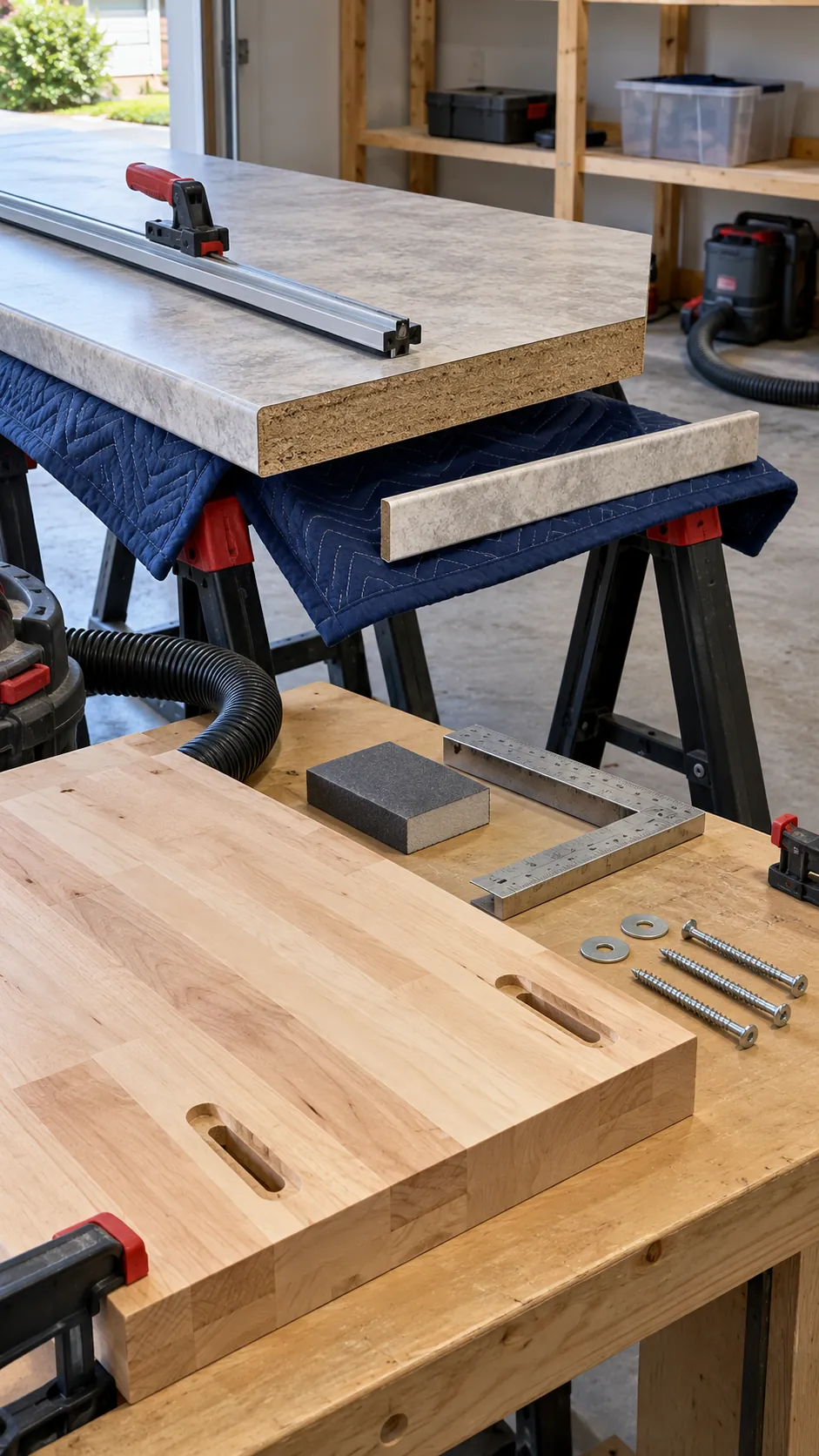
DIY countertop installation is most manageable when the walls are straight and the layout has few seams. Prefabricated laminate can arrive with a formed front edge and backsplash, but a clean corner joint and sink opening still require care. Damage to the thin face layer is not forgiving.
Butcher block cuts with common woodworking tools and allows gradual sanding to fit an uneven wall. Its weight, seasonal movement, and need for finish on every face must be respected. Follow the supplier’s fastening method instead of locking the wood rigidly.
Use each surface where it performs best
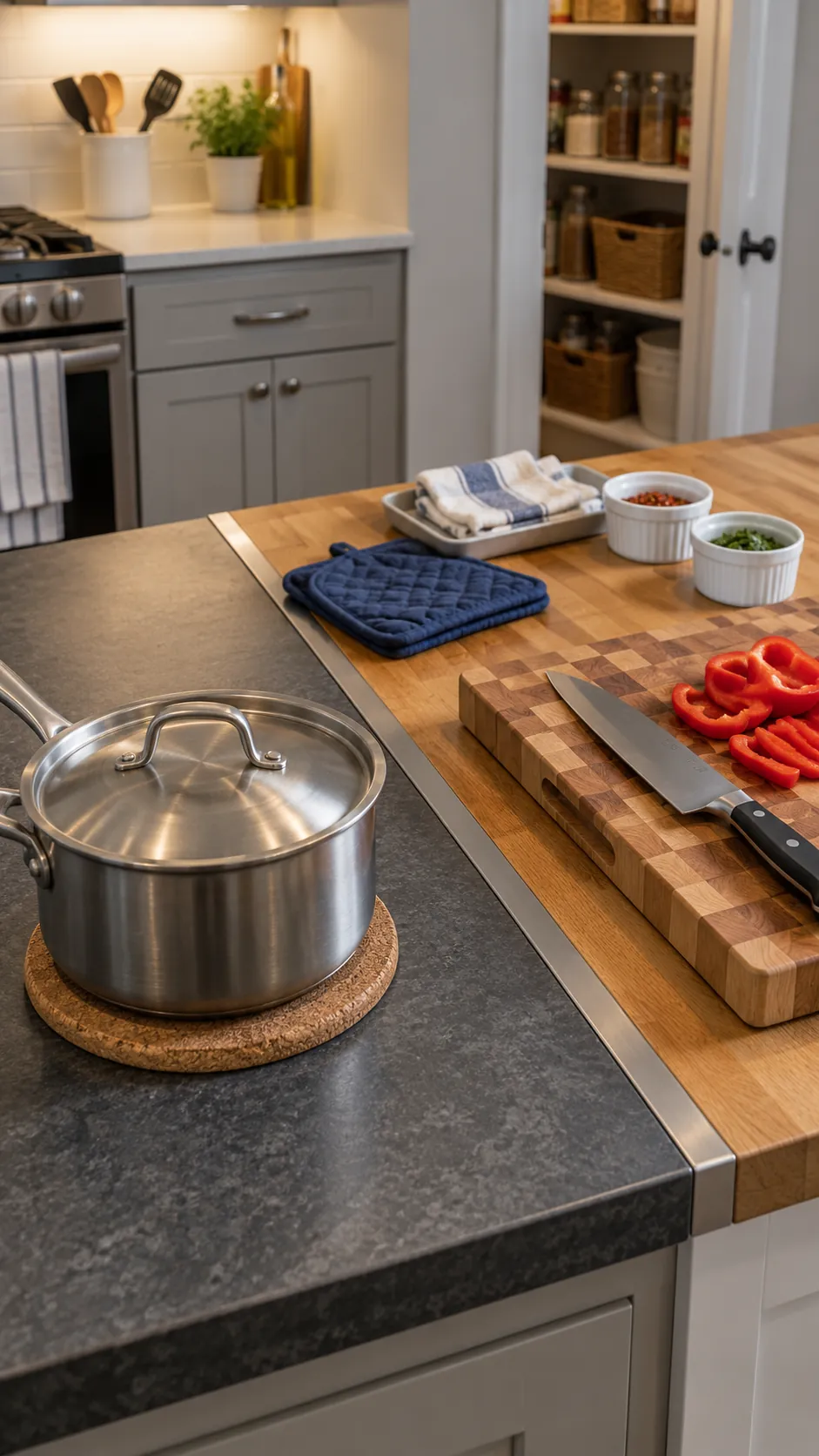
The best budget countertop material comparison does not always produce one winner for the whole room. Laminate can serve the sink and cooking run, while butcher block adds warmth to a dry island or breakfast bar. This mixed plan protects wood from the wettest zone and limits the quantity that needs maintenance.
Keep the transition deliberate by repeating cabinet color, hardware finish, or edge thickness. Request samples and live with them for several days under morning and evening light. Choose the surface that matches daily habits, not the material that looks best in one photograph.