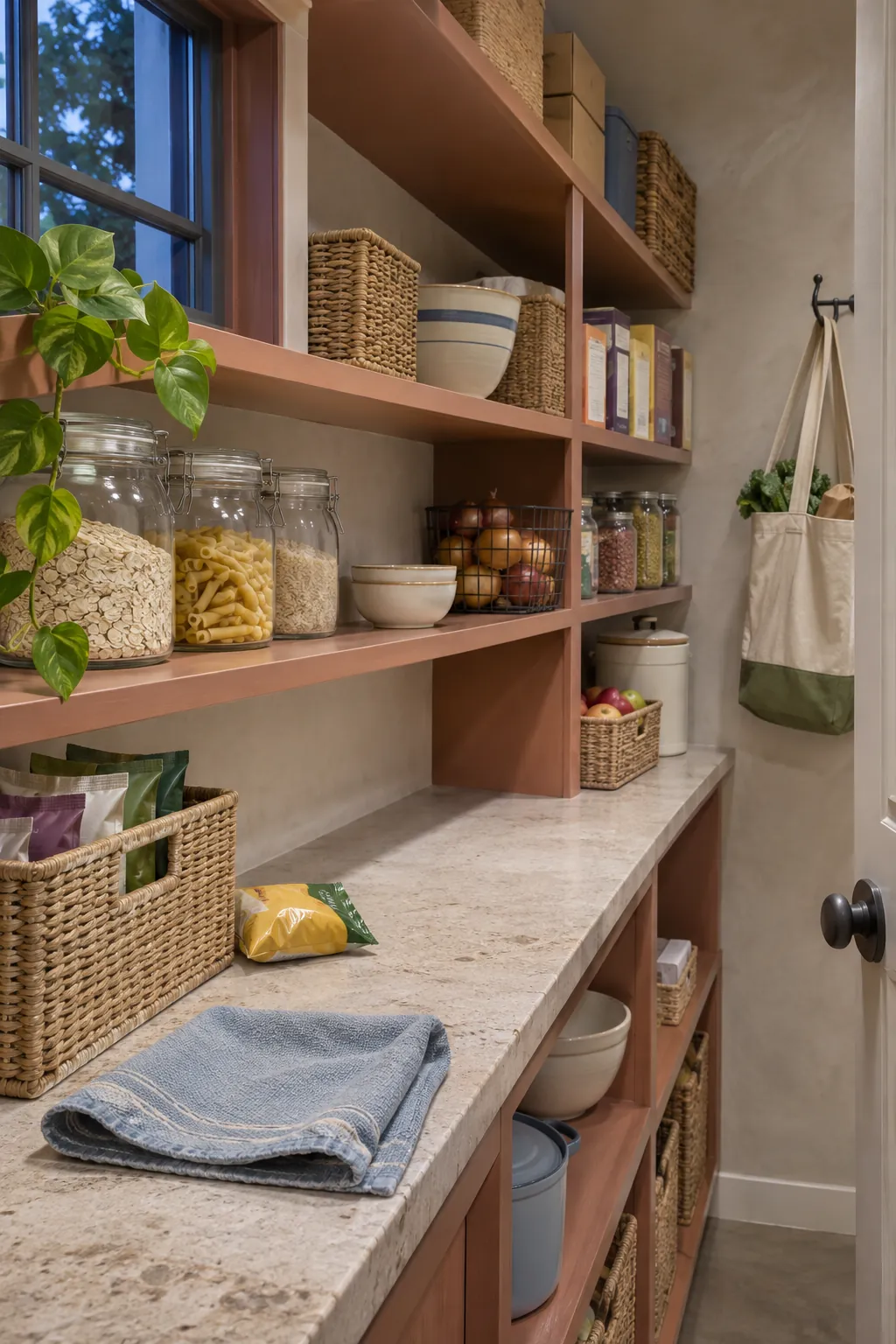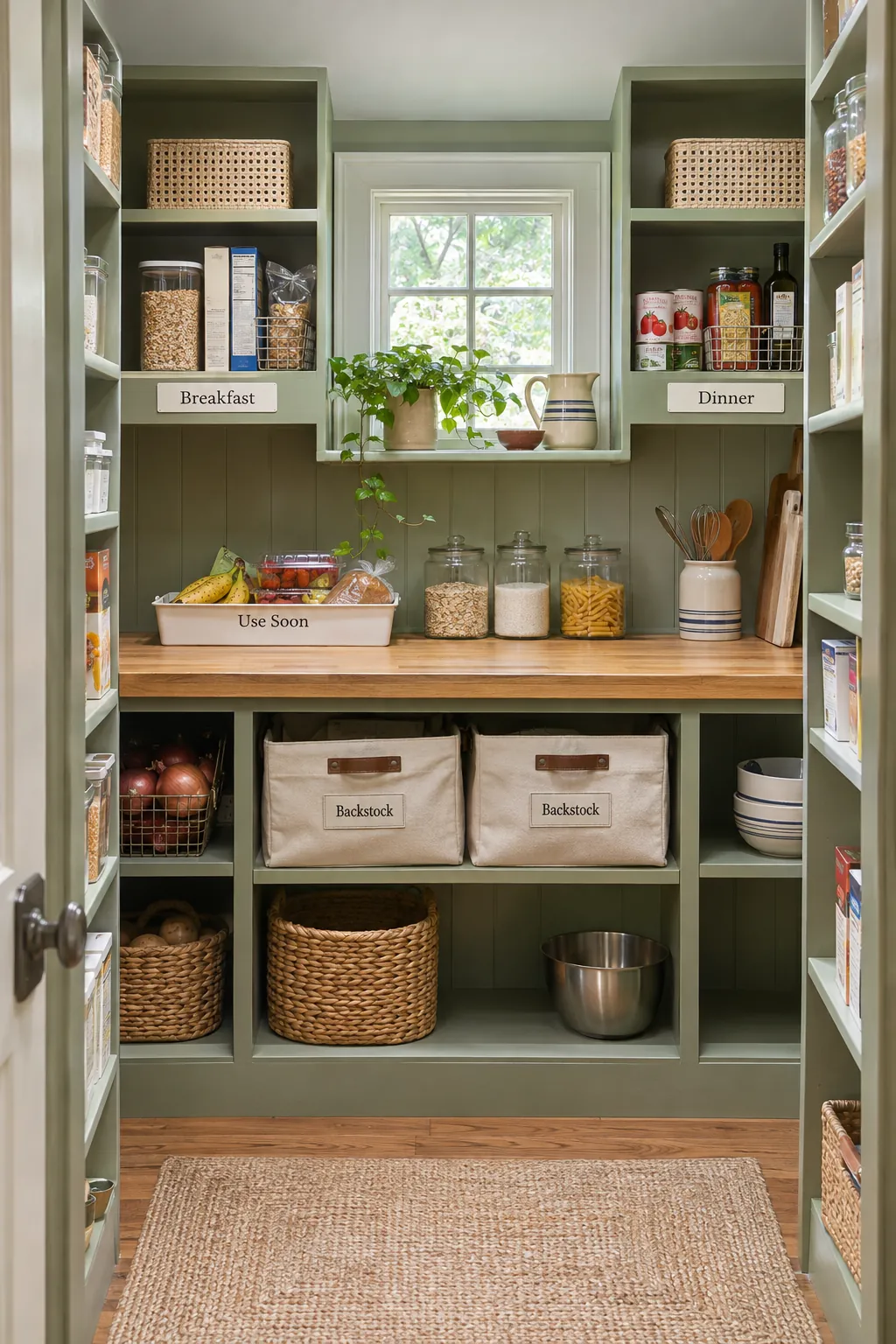
A pantry becomes difficult when the system asks for more effort than cooking does. If every grocery must be decanted, every label updated, and every bin moved, the tidy result will not last. A reliable plan reduces decisions and makes the next useful action obvious.
Organize Around Meals and Routines
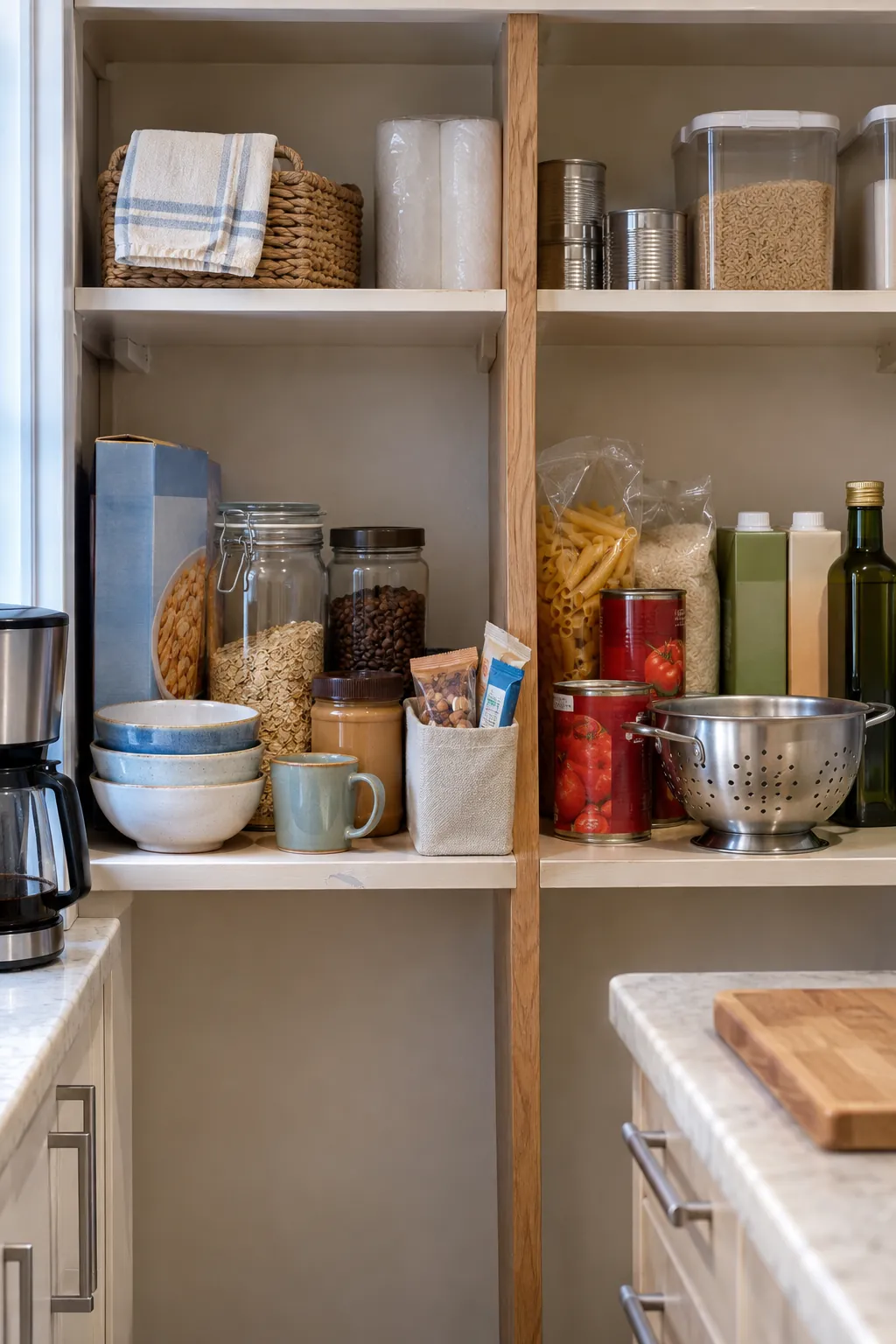
Group food by the way your household reaches for it. Breakfast can include cereal, oats, coffee, and spreads. A dinner starter zone can hold pasta, rice, canned tomatoes, and stock. Snacks, baking, packed lunches, and unopened extras can form other broad groups.
These categories are easier to remember than a perfect row for every product. Put the busiest zone where the busiest cook can reach it. In a shared home, keep common food in clear view and personal items in separate small bins.
Decant Only the Essentials
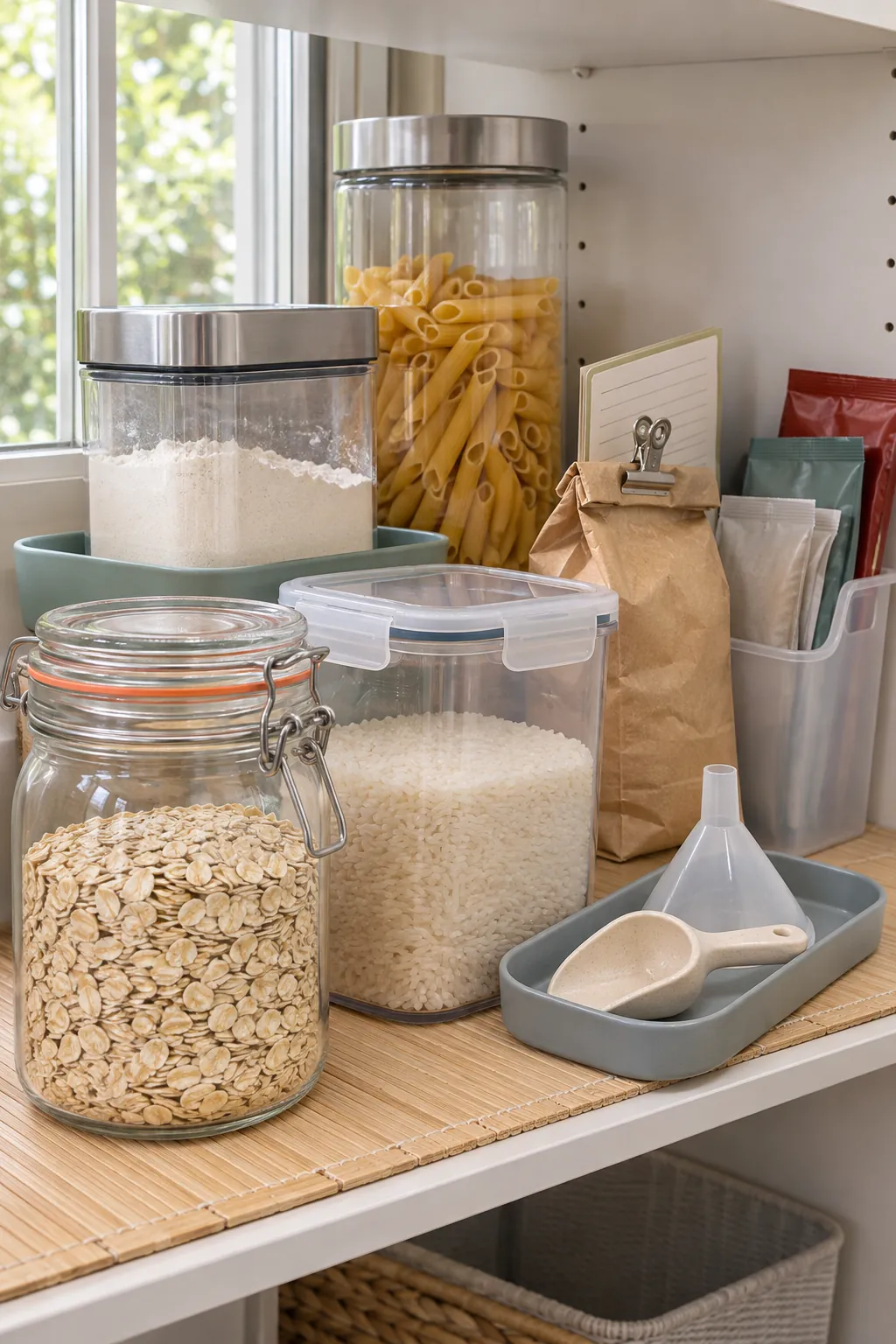
Transfer a staple only when a container solves a repeated issue. Airtight jars can protect flour, rice, oats, and pasta from spills or stale air. Original packages often work better for changing snacks, specialty ingredients, and foods with important directions.
Write the date or keep the package information with the food when needed. Leave enough room to pour a new supply into the vessel without creating leftover fragments. Selective containers support organization without adding a second chore after every shop.
Create a Use Soon Area
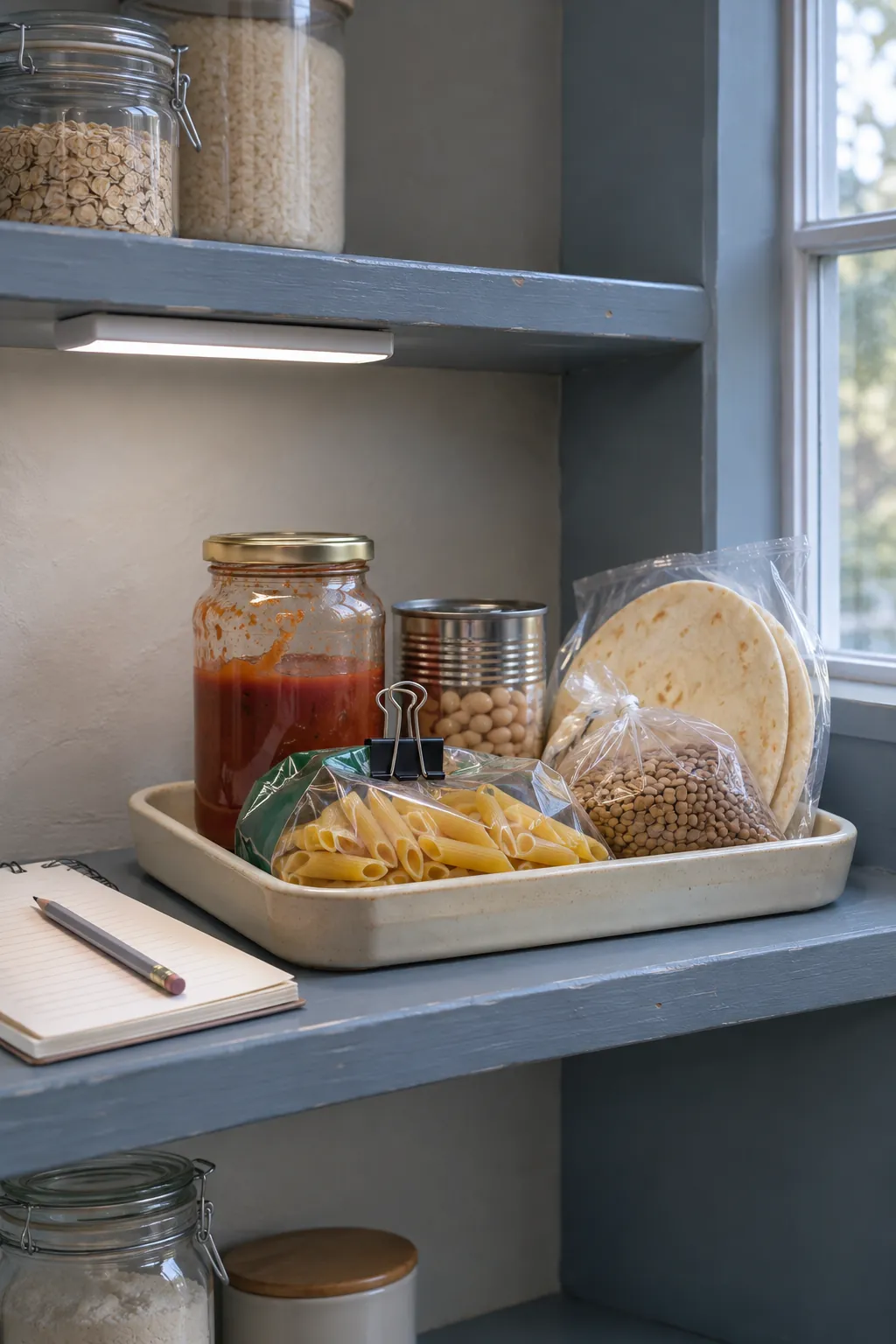
Give opened packages and food nearing its date a small tray at eye level. Check it before meal planning or ordering groceries. A few visible ingredients can suggest soup, pasta, tacos, or baking and prevent another forgotten duplicate.
Keep the area small enough to review in seconds. If it overflows, plan several meals from what you own before buying more. This habit connects decluttering ideas with the shopping decisions that created the excess.
Make Deep Storage Move as One Unit
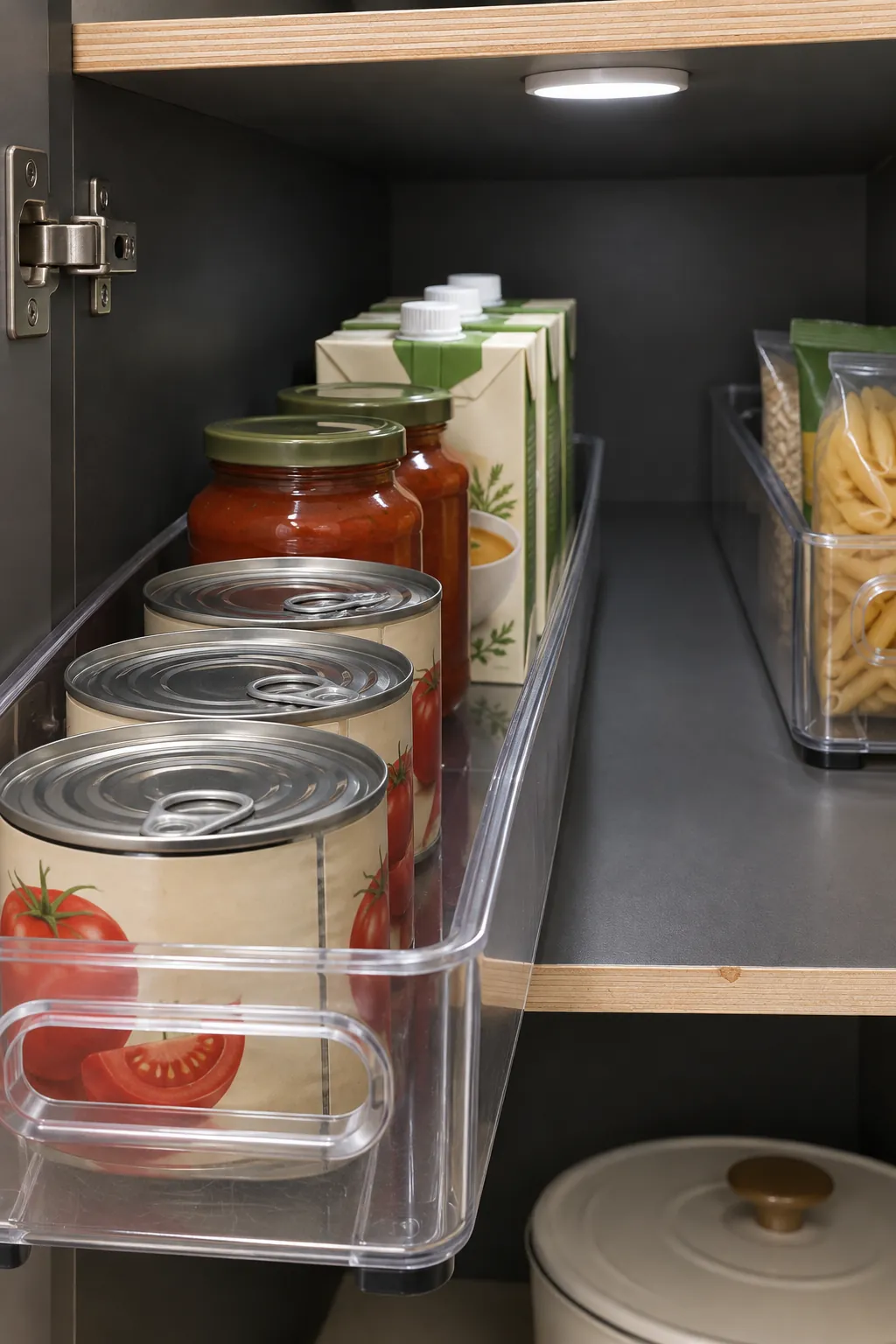
Deep pantry organization ideas work when the rear food comes forward easily. Use one long tray for cans, one handled bin for packets, or one turntable for bottles. Do not create several loose front rows that must be unloaded to reach the back.
Keep the heaviest goods at the front of low shelves. Use a riser only when it reveals the rear row without making the front unstable. If a solution feels tedious during a normal dinner rush, simplify it.
Set a Simple Grocery Boundary
Assign one shelf or a fixed number of bins to unopened extras. The available space becomes the buying limit. Check that zone before a store visit and place new food behind the older supply when you return.
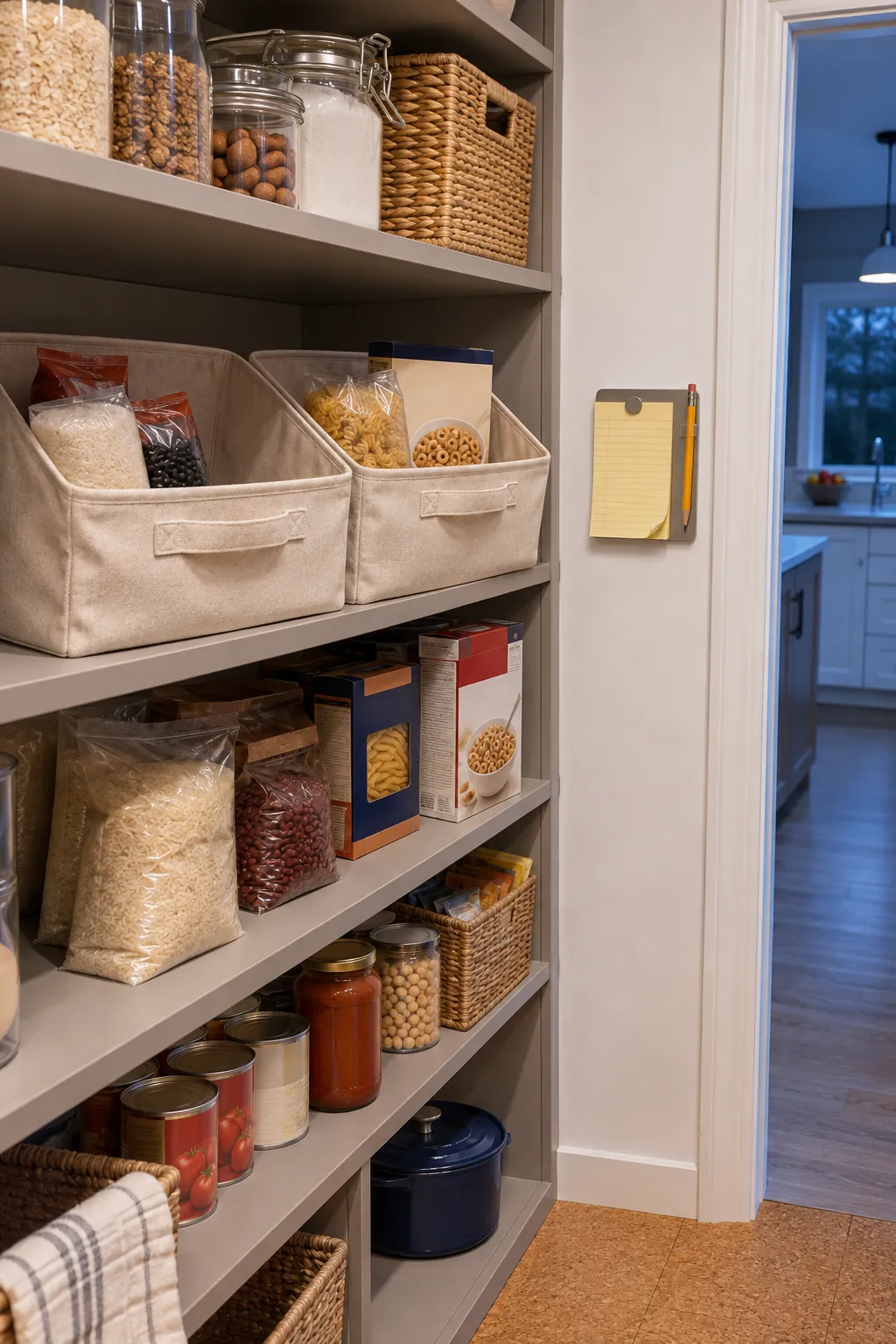
A short note near the door can list only missing staples. This method is easier to maintain than a detailed inventory for many households. It also reveals when shopping habits, not pantry design, are causing waste.
Reset the Pantry in Small Moments
Return misplaced food before putting away new groceries. Wipe a shelf when it becomes empty, straighten one zone while water heats, and review the use soon tray before planning meals. Ask everyone who uses the pantry to follow the same broad categories. When a zone repeatedly fails, change its size or location instead of blaming the household. A flexible five minute reset protects the system better than an occasional complete makeover.