
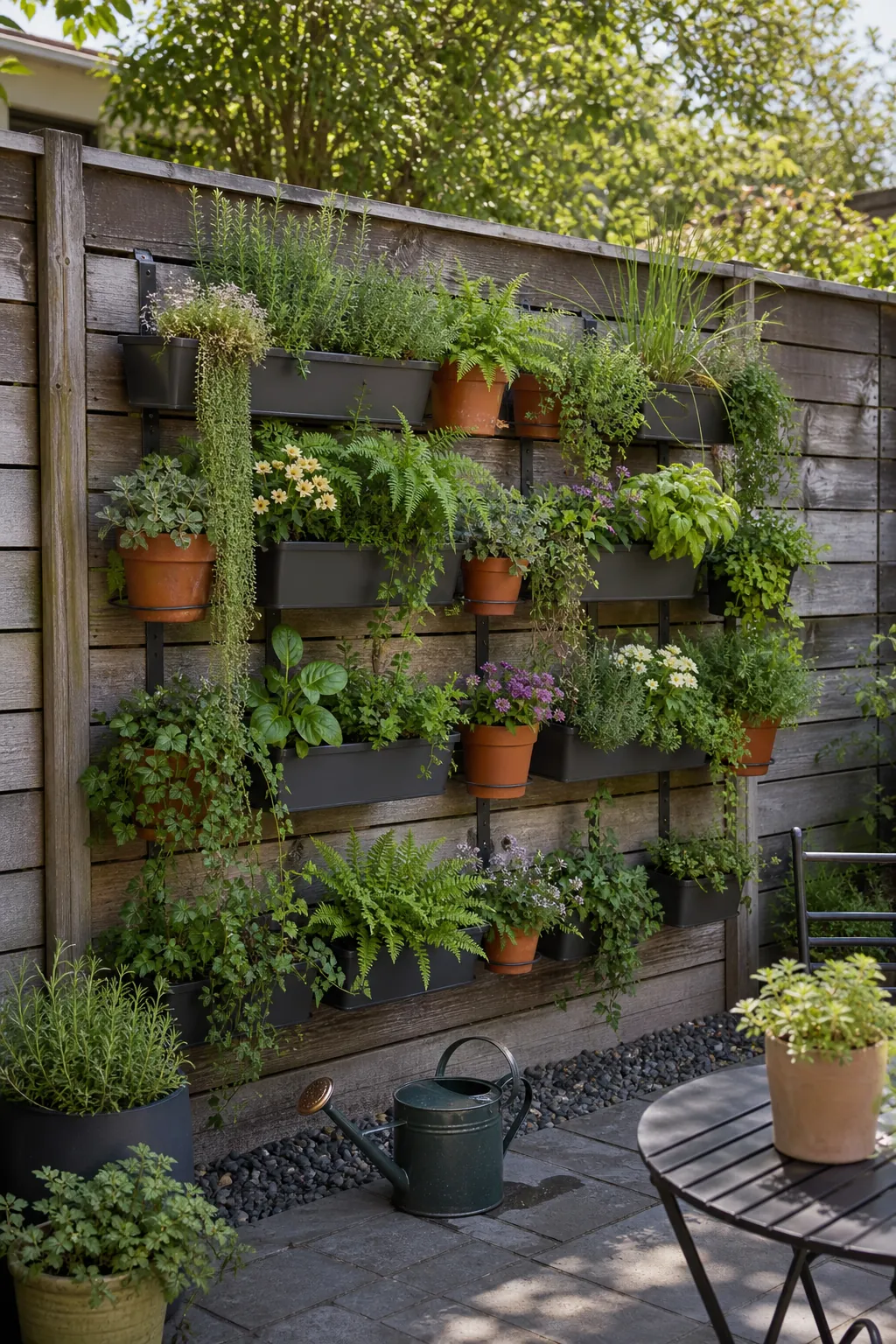
An outdoor plant wall works best when it is designed like a small garden first and a wall decoration second. The successful ones are not just a few pretty pots hung on a fence. They have a sturdy support, a way for water to leave, plants with similar sun and moisture needs, and enough access that pruning or replacing one tired plant does not become a weekend project.
If you are saving outdoor plant wall ideas for a patio, balcony, side yard, or garden wall, start by choosing the kind of vertical garden you can realistically maintain. A trellis covered with climbers is simple and forgiving. A modular living wall gives the lush, finished look people search for in living walls outdoor, but it needs more planning around weight, irrigation, and drainage. A pocket wall or herb wall sits in the middle: high impact, DIY-friendly, and easier to change season by season.
Start With the Wall, Not the Plants
The first question is not which fern, succulent, or trailing vine looks best. It is whether the wall can handle water, weight, and fasteners. Soil gets heavy after rain. Small planters dry out quickly, but large troughs can strain fences, stucco, brick veneer, and balcony railings if they are attached casually. For any vertical garden wall design, leave an air gap where possible, use exterior-rated hardware, and avoid trapping moisture directly against siding.
A good outdoor setup also needs a drainage path. Planters should have drainage holes, trays, gravel zones, or a runoff channel that sends water somewhere harmless. If the plant wall is above a patio, check where the drips land before you fill every pocket. If it is beside a house, keep water from sitting against the foundation. This is the difference between a garden feature and a slow leak problem.
Pocket Planters for a Fast Garden Wall
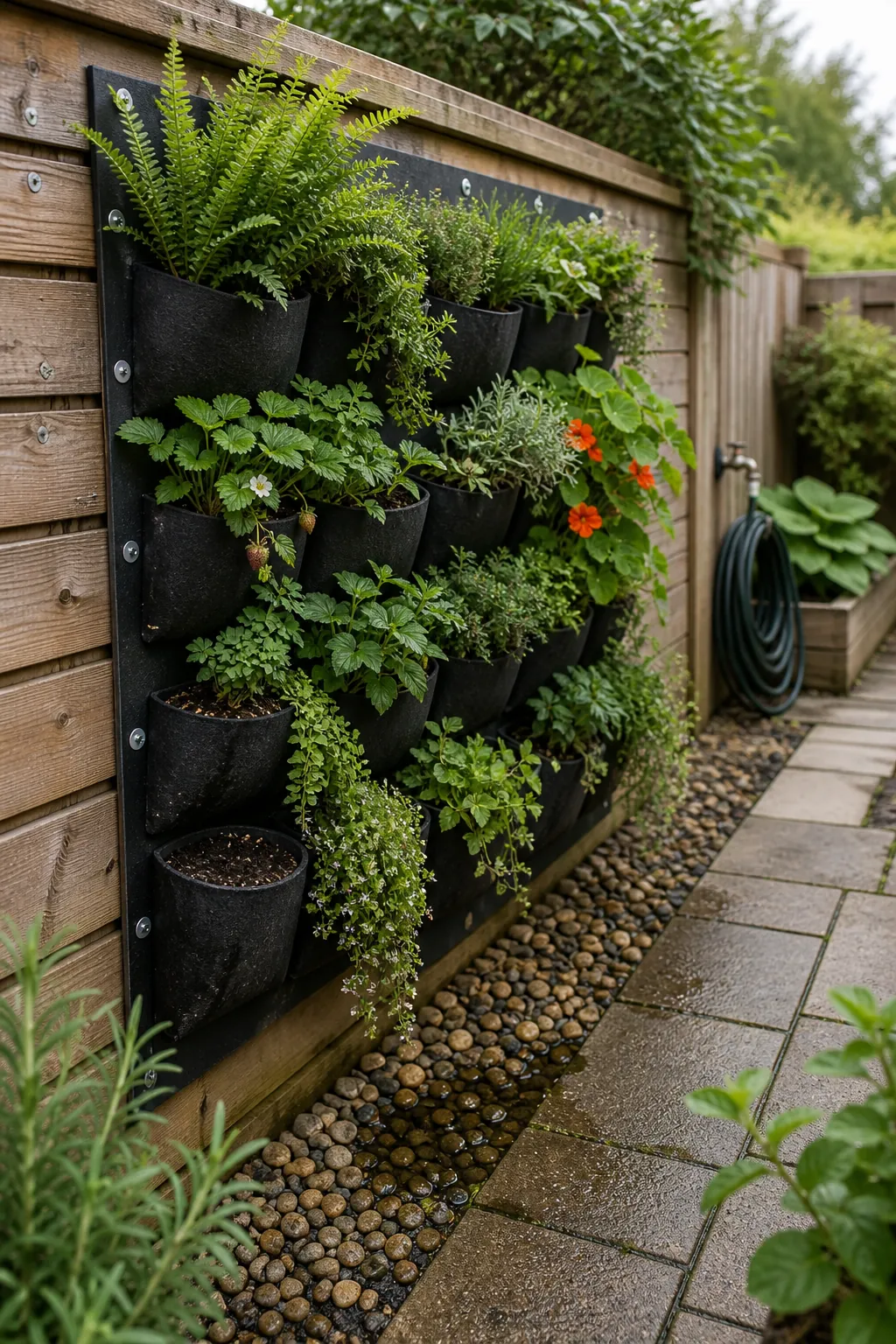
Pocket planters are one of the easiest wall garden ideas outdoor because they give you instant vertical coverage without building a full living wall system. Fabric pockets, recycled plastic pockets, and slim modular trays can all work if they are rated for outdoor use. They are especially useful on fences, privacy screens, and blank garden walls where you want dense greenery without giving up floor space.
The trick is to plant pockets by moisture zone. Put thirstier herbs, ferns, and flowering annuals together where watering is easiest. Put tougher, drought-tolerant plants in the warmer upper rows. Mix upright plants, trailing plants, and small mounding plants so the wall fills in without looking flat. A pocket wall with rosemary, thyme, oregano, strawberries, nasturtiums, and trailing alyssum can feel abundant while still being practical.
For renters or anyone nervous about drilling, mount the pocket system to a freestanding outdoor frame instead of the wall itself. That gives you a decorative garden wall decor outdoor moment that can move later, and it protects the permanent surface behind it.
A Drip-Watered Herb Wall Beside the Patio
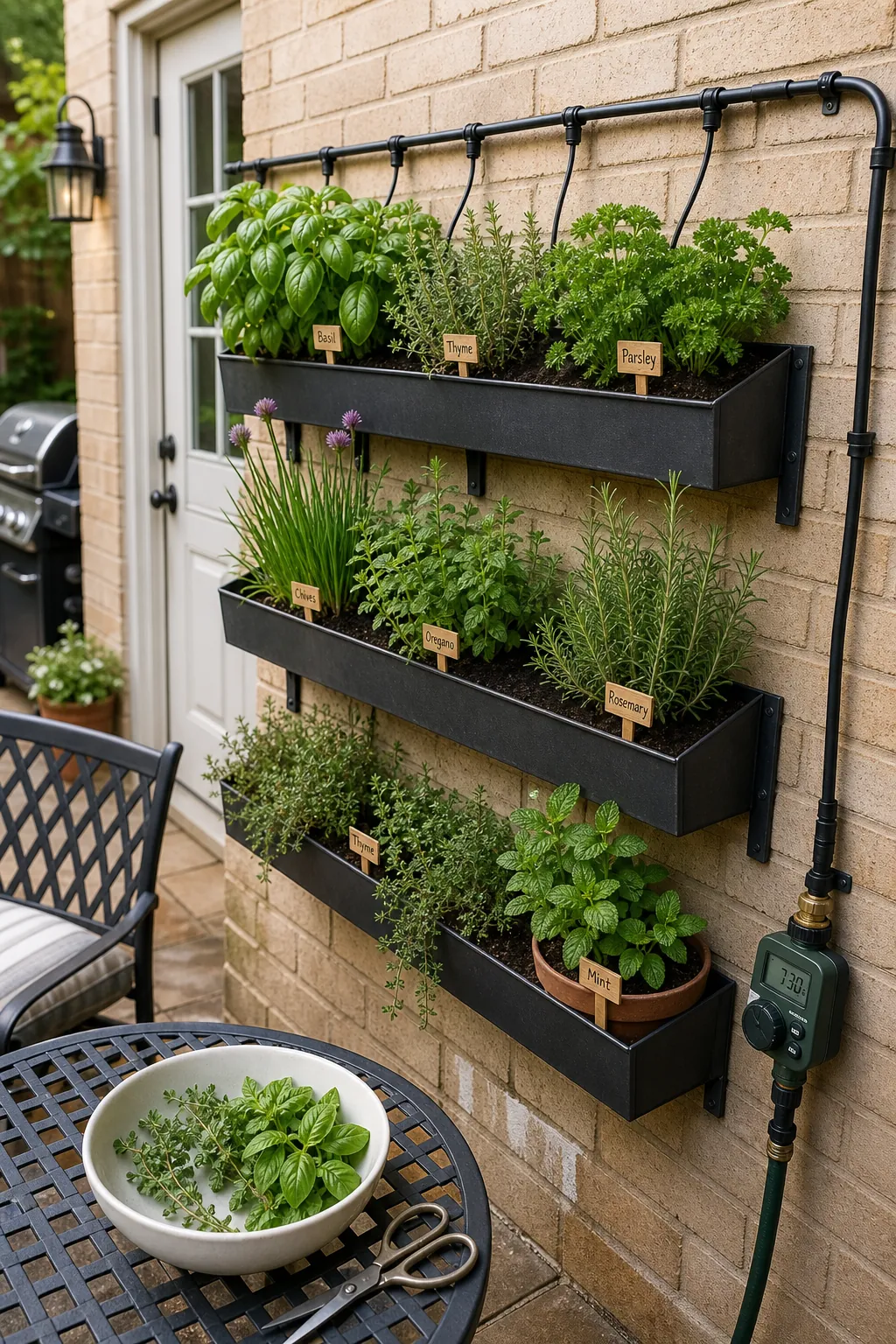
An herb wall outdoor is one of the most useful plant wall ideas because it earns its space every time you cook. It works well near a grill, kitchen door, or dining patio where basil, parsley, chives, thyme, mint, and oregano are easy to reach. Give mint its own container so it does not bully the rest of the planting.
Hand watering can work for a small display, but a drip line makes the wall much more forgiving. A simple line across the top, with emitters feeding each pot or pocket, prevents the top row from getting soaked while the lower plants stay thirsty. Add a timer if the wall faces afternoon sun or if you travel often. The goal is not a complicated system; it is consistent moisture without waterlogging.
Trellis and Climber Walls for Lower Maintenance
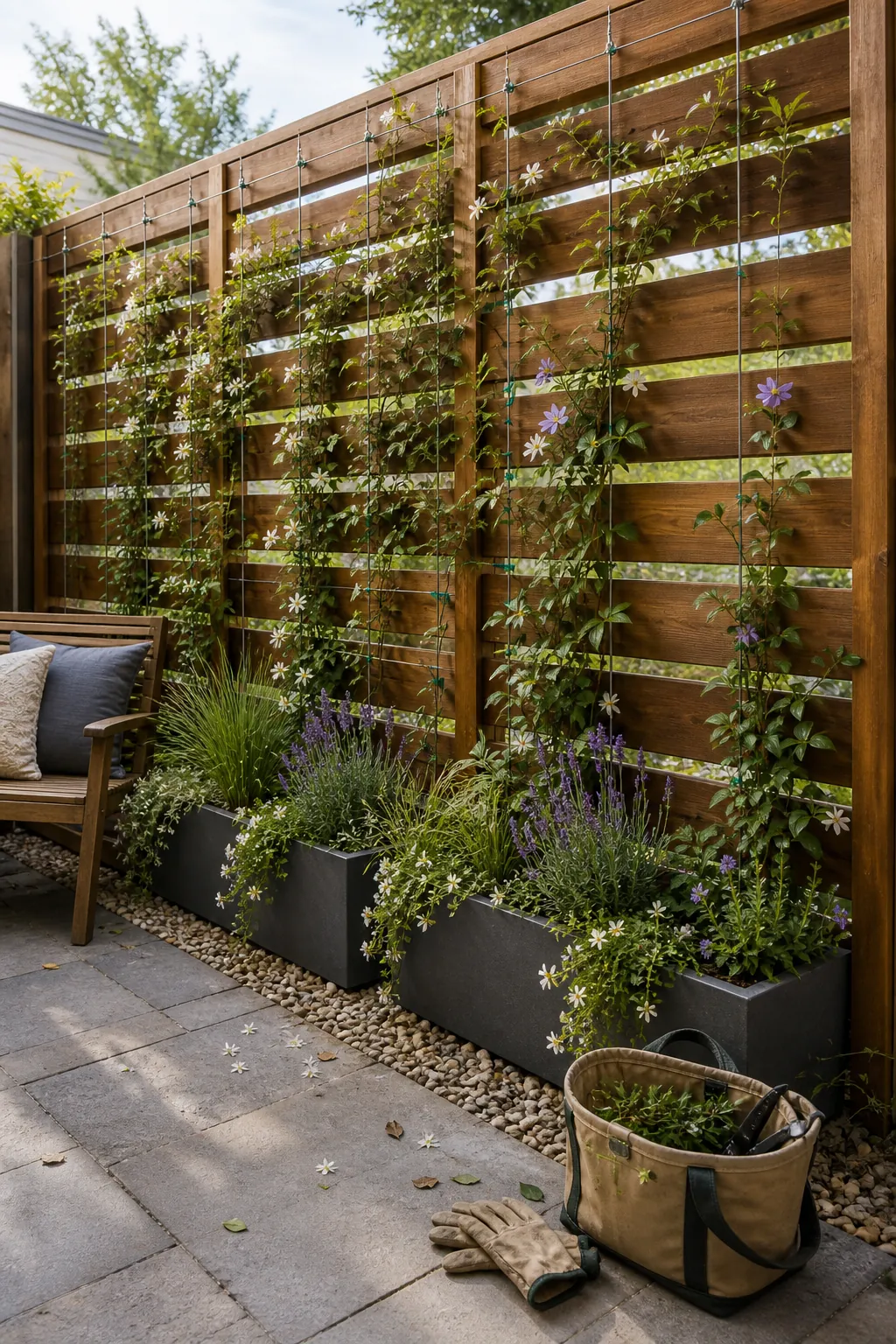
If you want the look of a green wall with less irrigation hardware, use a trellis, wires, or a slatted screen and let climbing plants do the vertical work. This approach is ideal for many outdoor patio ideas because it softens hard boundaries, improves privacy, and does not require dozens of small soil pockets.
Choose the climber for the light and climate, then choose the support. Jasmine, clematis, climbing roses, star jasmine, passionflower, and ornamental grape can all be beautiful in the right location. In hot dry climates, drought-tolerant vines and careful mulching matter more than a trendy plant list. In shady courtyards, use plants that actually tolerate shade instead of forcing sun lovers to struggle.
A trellis wall also pairs well with containers at the base. The containers hide bare stems, add seasonal color, and make the whole garden wall design outdoor feel layered instead of flat.
Modular Living Wall for a Lush Finished Look
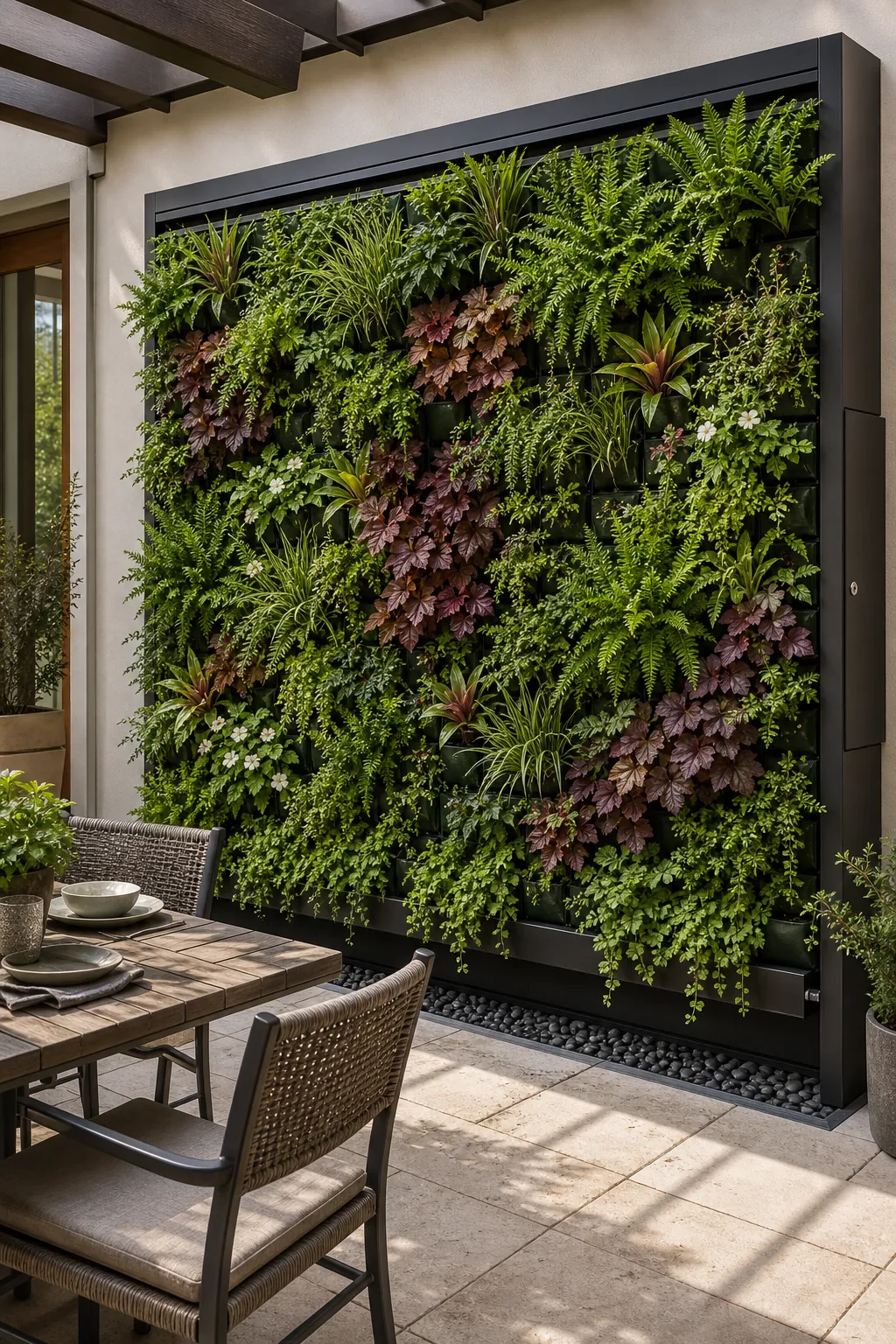
A modular living wall is the polished version of the idea: trays, cells, or planter boxes mounted in a planned grid. This is the route to choose when you want the plant wall to read as an intentional garden feature, not a collection of separate pots. It is also the route that demands the most discipline.
Before you buy panels, decide how you will water, drain, and service them. Group plants with similar light and moisture needs. Use small starter plants so their roots establish inside the system instead of fighting a cramped transplant. Keep spare plants in mind too. Even a well-built wall will need occasional replacements after heat waves, cold snaps, pest damage, or simple crowding.
For outdoor modules, foliage texture usually matters more than flowers. Combine fine leaves, broad leaves, trailing stems, and a few color accents. Ferns, heuchera, sedges, ornamental grasses, succulents, strawberries, and compact herbs can all work depending on climate and exposure. The best plant wall design looks alive from across the patio but still makes sense up close.
Succulent Frames for Sunny Walls
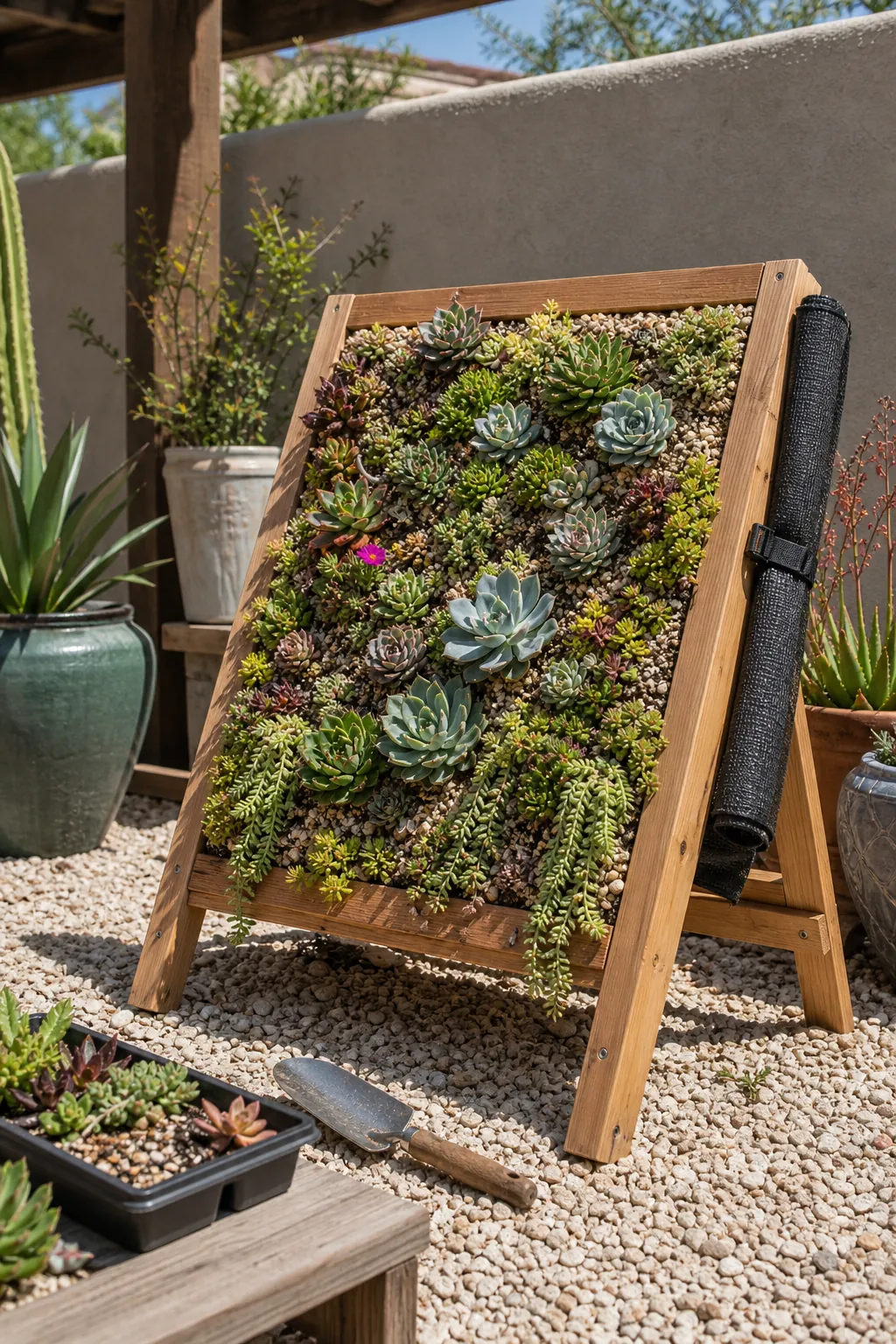
Succulent plant walls are best for bright, exposed areas where leafy plants would wilt or need constant watering. They suit small courtyards, pool fences, sunny patios, and side yards with reflected heat. The design can be a framed panel, a shallow vertical box, or a semi-mobile wall that moves under cover during extreme weather.
This idea works only when the plant choice matches the climate. Sedums, sempervivums, portulaca, and other tough options are often better than tender succulents in cold or wet regions. In humid areas, airflow and gritty soil are critical. In very hot areas, afternoon shade can keep the wall from baking. A succulent wall should look sculptural, but it should still drain like a container garden.
Freestanding Plant Walls for Flexible Outdoor Rooms
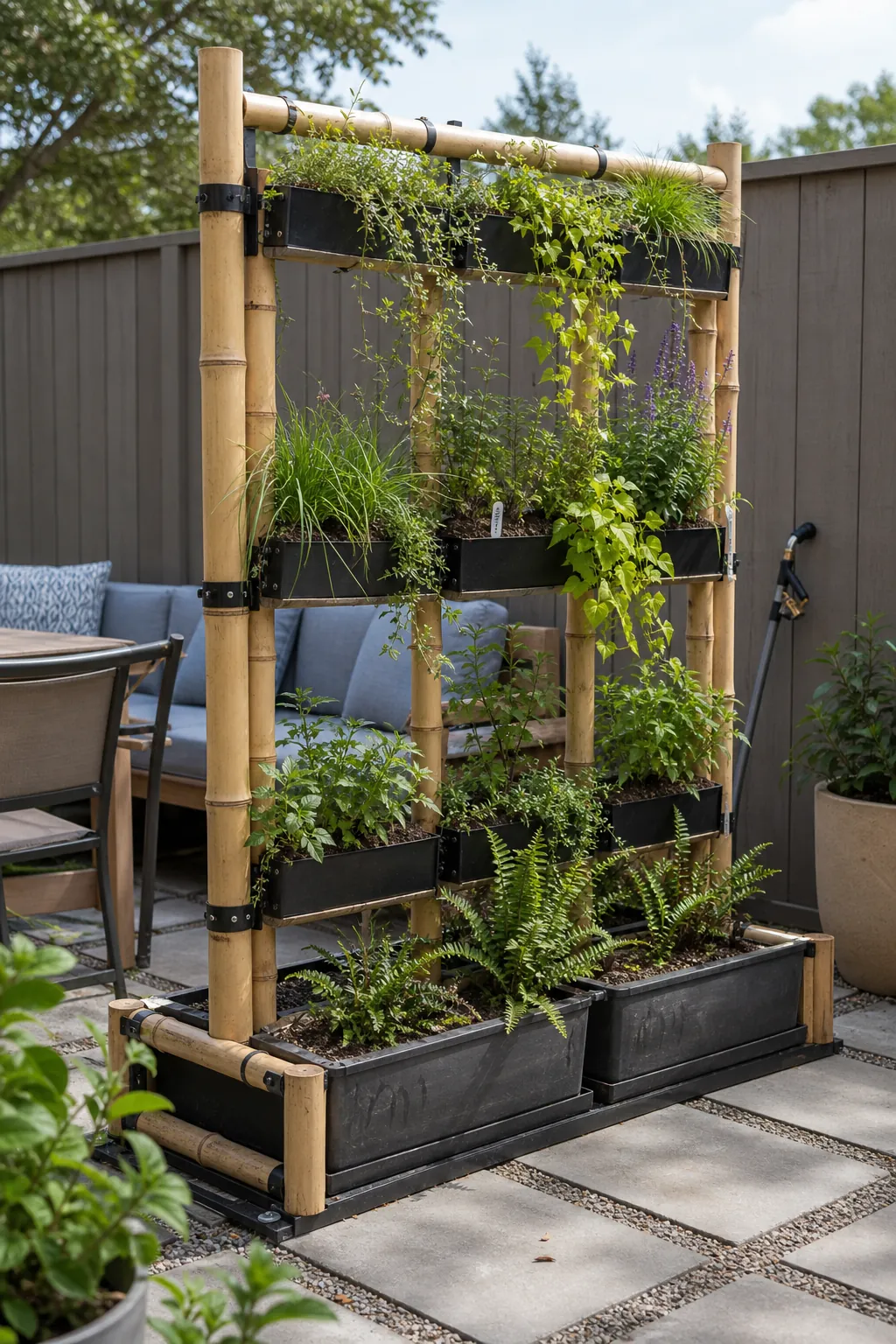
A plant wall does not have to be permanently attached to a fence, masonry wall, or house. A freestanding frame can divide a patio, soften a dining corner, or create a renter-friendly backdrop without drilling into a shared boundary. This is especially useful when the best sun is not where the blank wall is, or when you want a plant feature that can shift as seasons change.
Use a frame with a wide base, outdoor-rated casters or leveling feet, and planters that sit securely inside the structure instead of hanging from thin decorative rails. Bamboo, cedar, powder-coated steel, and recycled composite can all work when the joints are strong and the bottom is weighted. Keep the tallest plants low enough that wind cannot turn the whole piece into a sail.
Make the Plant Wall Easy to Maintain
The most beautiful outdoor plant wall is the one you can keep alive. Put the neediest plants where you can reach them. Leave space for a hose, watering can, or drip timer. Avoid mixing cactus, ferns, herbs, and tropical foliage in the same tiny pockets unless they truly share the same conditions. A plant wall with one clear maintenance rhythm will always age better than a wall built from impulse buys.
Check the wall weekly during the first season. Look for dry corners, clogged emitters, sagging fasteners, pests, and plants that are shading their neighbors. Prune lightly and often instead of waiting until the wall is overgrown. If one plant fails, replace it quickly so the gap does not become the only thing you see.
When in doubt, start smaller. A narrow herb wall, one trellis panel, or a three-panel pocket system teaches you how your light, water, and wall surface behave. Once that small version thrives, expanding into a fuller outdoor plant wall becomes a design decision instead of a gamble.