
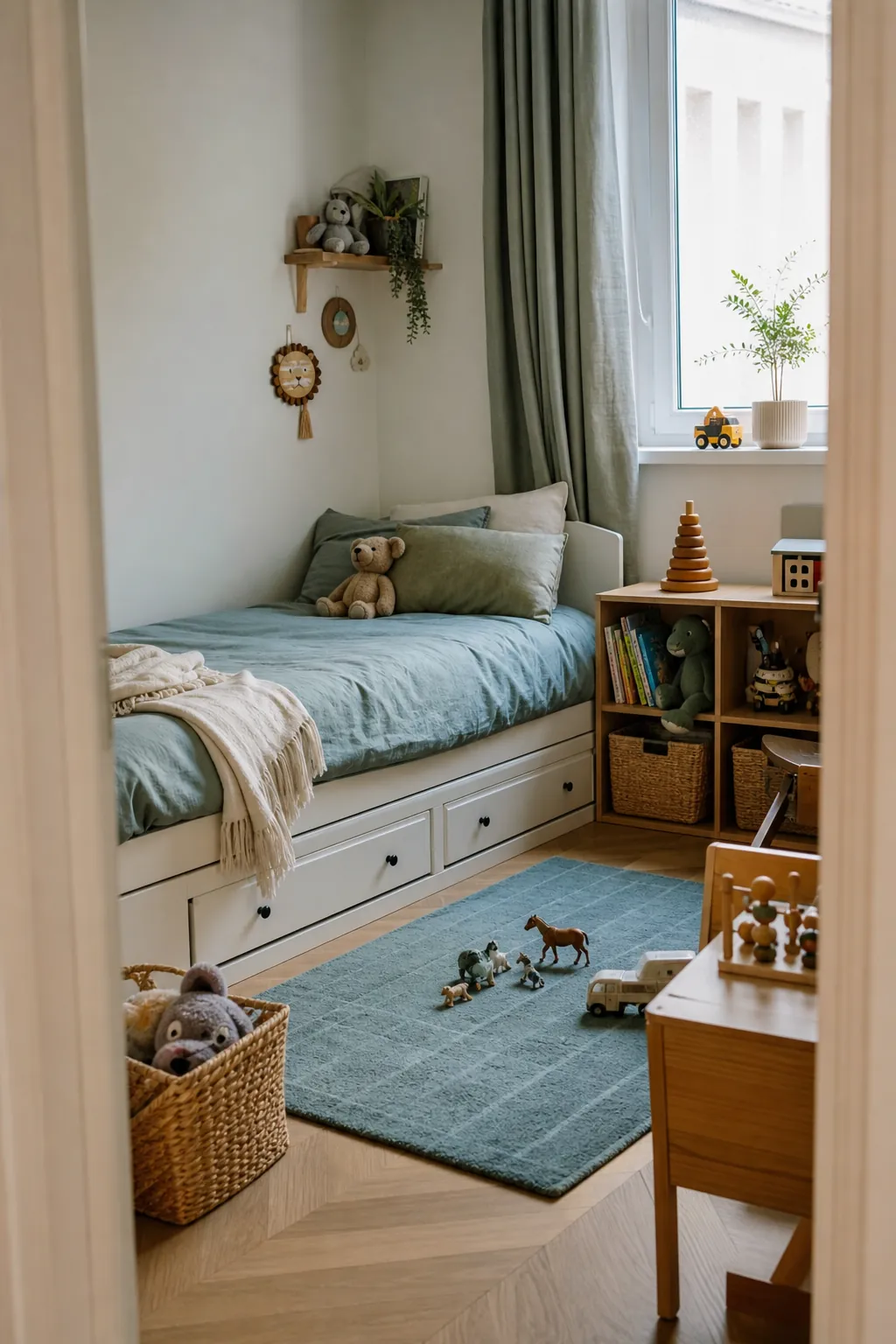
A small kids room becomes easier to live with when the design does not ask the room to do too much. The goal is not a perfect bedroom that never has toys on the floor. The goal is a room where the loudest things have a place to land, the walls feel calm at bedtime, and the child can help reset the space without needing an adult to decode the system.
The parents asking for help with small kids rooms usually have the same frustration: the room looks crowded even after they clean it. Big bins swallow floor space, stuffed animals drift onto the bed, and bright toys fight with every paint color. The fix is a combination of soft color control, reachable storage, and fewer visual decisions.
Choose a Calm Base That Can Handle Real Toys
Start with the surfaces that take up the most visual space: walls, curtains, rug, bedding, and the largest storage piece. A calm kids room does not have to be beige or plain. It simply needs a limited background palette so books, blocks, art supplies, and stuffed animals can look intentional instead of chaotic.
Soft blue, muted green, warm white, pale clay, mushroom, dusty rose, and gentle gray-blue all work well in a small kids bedroom because they sit back visually. Then add one clearer accent color in small doses: a rust lamp, navy drawer pulls, sage labels, berry pillows, or a patterned quilt. This keeps the room childlike without making every surface compete.
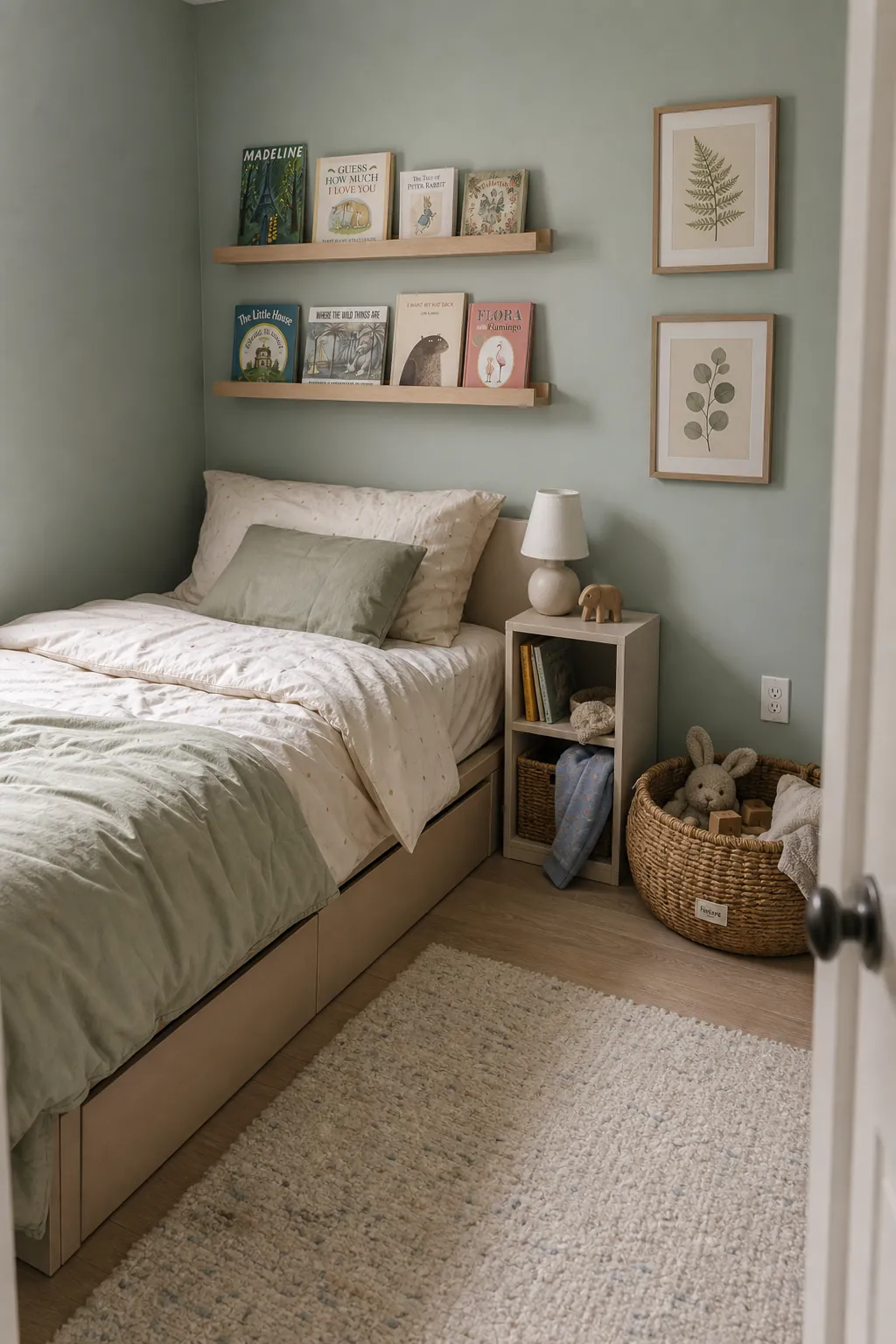
The practical test is simple: if all the toys were out for ten minutes, would the room still have a visual anchor? A steady wall color, one grounded rug, and bedding in two or three repeating tones give the room that anchor. Calm colors work best when storage is doing its job; color alone cannot organize a bedroom.
Turn the Bed Into the Main Storage Zone
In a small kids room, the bed already owns the most floor area. Use that footprint before adding another dresser, cube unit, or freestanding toy chest. Under-bed drawers, shallow rolling bins, a low trundle-style storage box, or a bed frame with built-in drawers can hold pajamas, extra bedding, dress-up clothes, stuffed animals, or rotating toys.
Keep the most-used items in the easiest drawer and the occasional items deeper under the bed. Label each bin with words, pictures, or a small color tab. The point is not to create a complicated filing system. The point is to make cleanup so obvious that a tired child can help.
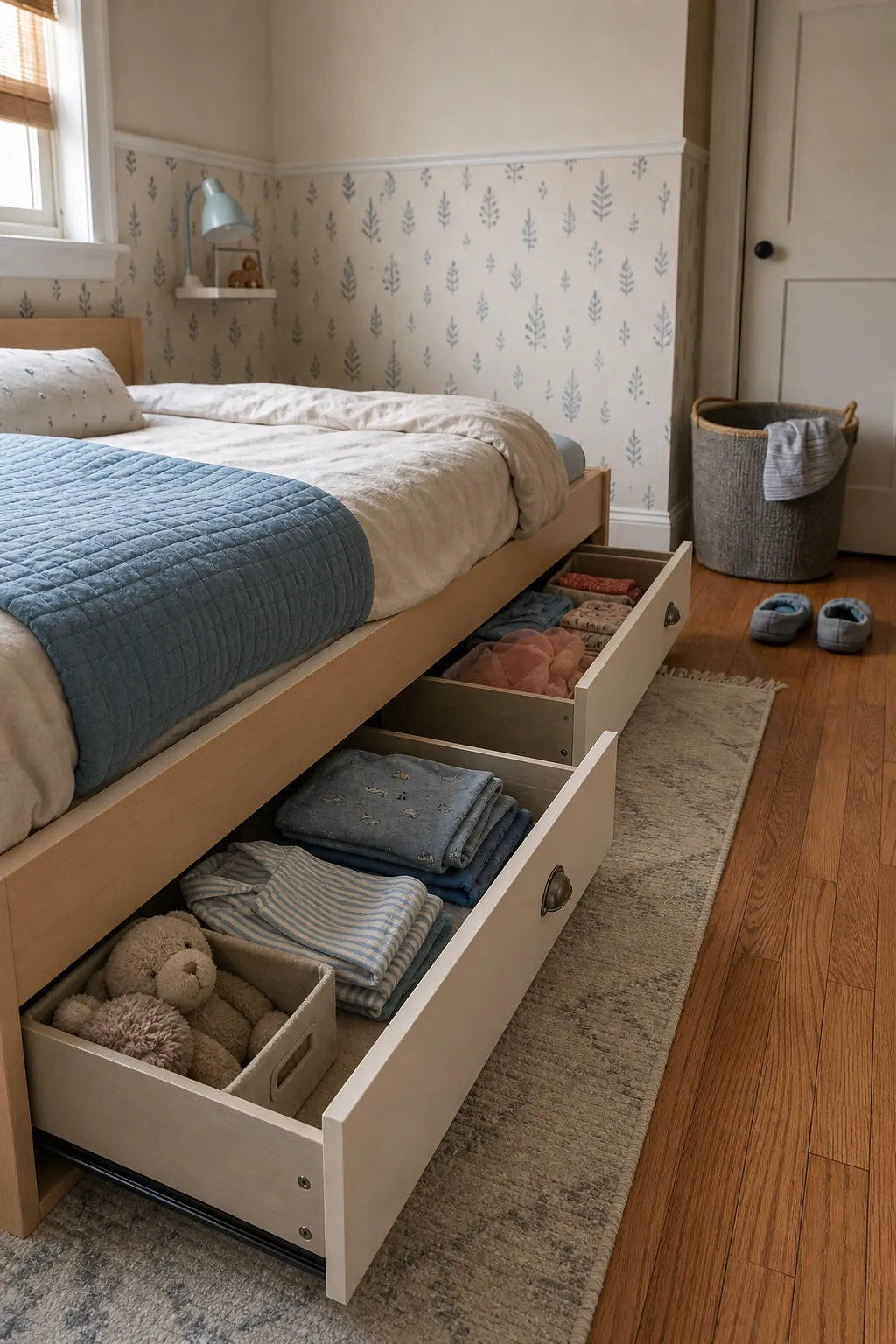
If you raise the bed, keep proportions in mind. A slightly taller bed can create useful storage. A bed that feels too high can make the room look crowded and make nighttime harder. For younger kids, prioritize safe access, rounded edges, and anchored nearby furniture over squeezing in one more bin.
Use Low Open Storage for Everyday Toys
The toy storage that looks best in a photo is not always the toy storage that works on a Wednesday night. Deep lidded boxes hide clutter, but they also encourage dumping. In a small room, everyday toys usually do better in low open bins, divided baskets, shallow drawers, or cube storage that shows just enough of what is inside.
Group by how the child actually plays, not by adult categories. Blocks and animals may belong together if they build zoos every day. Doll clothes may need a small drawer instead of a mixed toy bin. Art supplies may need a caddy that leaves the bedroom during messy play. A useful system follows the mess pattern.
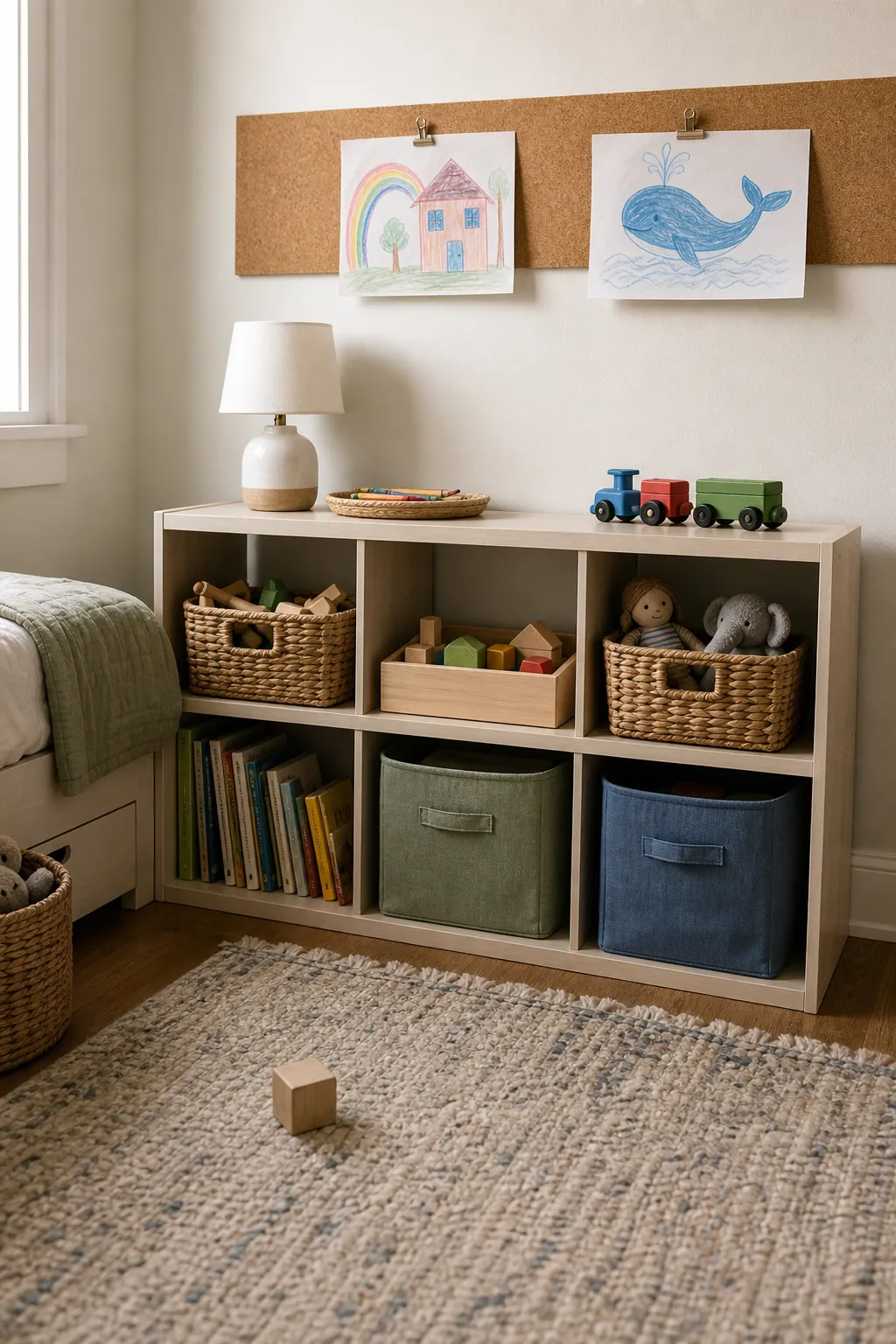
For visual calm, repeat the same bin style across the room. If the toys are bright, choose quieter baskets. If the room is very soft, one or two colored bins can add energy. What matters most is that each container has a limit. When the animal basket is full, a few animals move to rotation or donation.
Give Clothes, Toys, and School Items Separate Homes
Small rooms become stressful when every category lands in the same corner. Clothes, toys, and school supplies need separate homes even if the homes are tiny. A narrow dresser can handle folded clothes. A low shelf can handle toys. A wall pocket, rolling cart, or slim desk drawer can handle school papers, library books, headphones, and pencils.
The separation matters because the cleanup rhythm is different. Clothes get reset during laundry. Toys get reset daily. School supplies get reset before or after homework. When those rhythms share one surface, the room looks messy even when nothing is technically out of place.
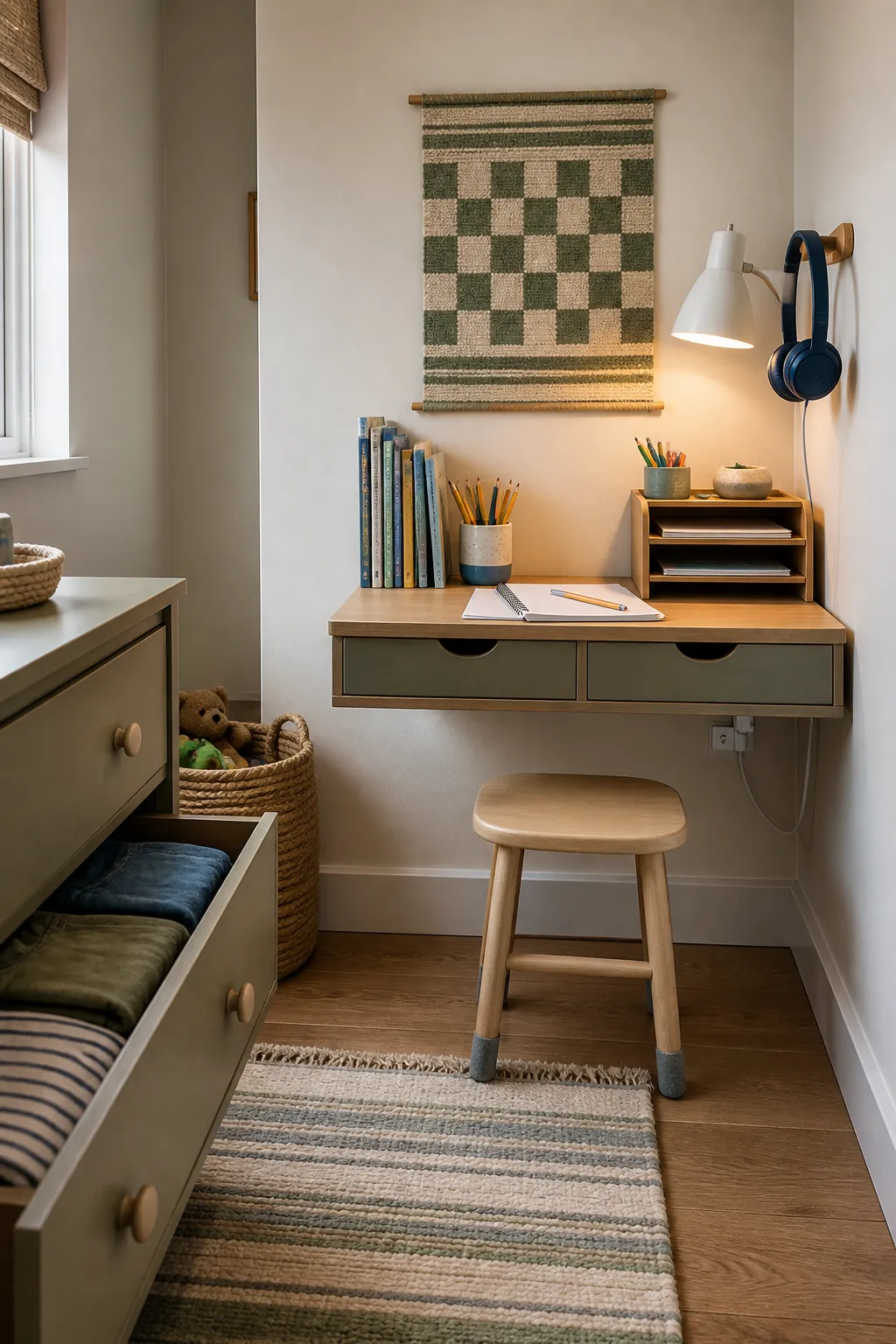
Use the smallest furniture that solves the real problem. A wall-mounted rail with cups may be better than a full desk for a young child. A three-drawer unit in the closet may beat a second dresser. A book ledge above a homework shelf can replace a bulky bookcase if the collection is edited often.
Use the Walls Without Making Them Busy
Wall storage is powerful in a small kids bedroom, but it can quickly become visual noise. The best wall storage is shallow, repeated, and placed where the child actually uses it. Think peg rails for tomorrow’s outfit, picture ledges for front-facing books, wall pockets for small school papers, and a few sturdy hooks for bags or dress-up clothes.
Keep heavy storage low and anchored. Tall dressers, bookcases, and wardrobes should be secured to the wall with appropriate anti-tip hardware. The U.S. Consumer Product Safety Commission’s Anchor It guidance is worth taking seriously in any kids bedroom, especially when storage is being added vertically.
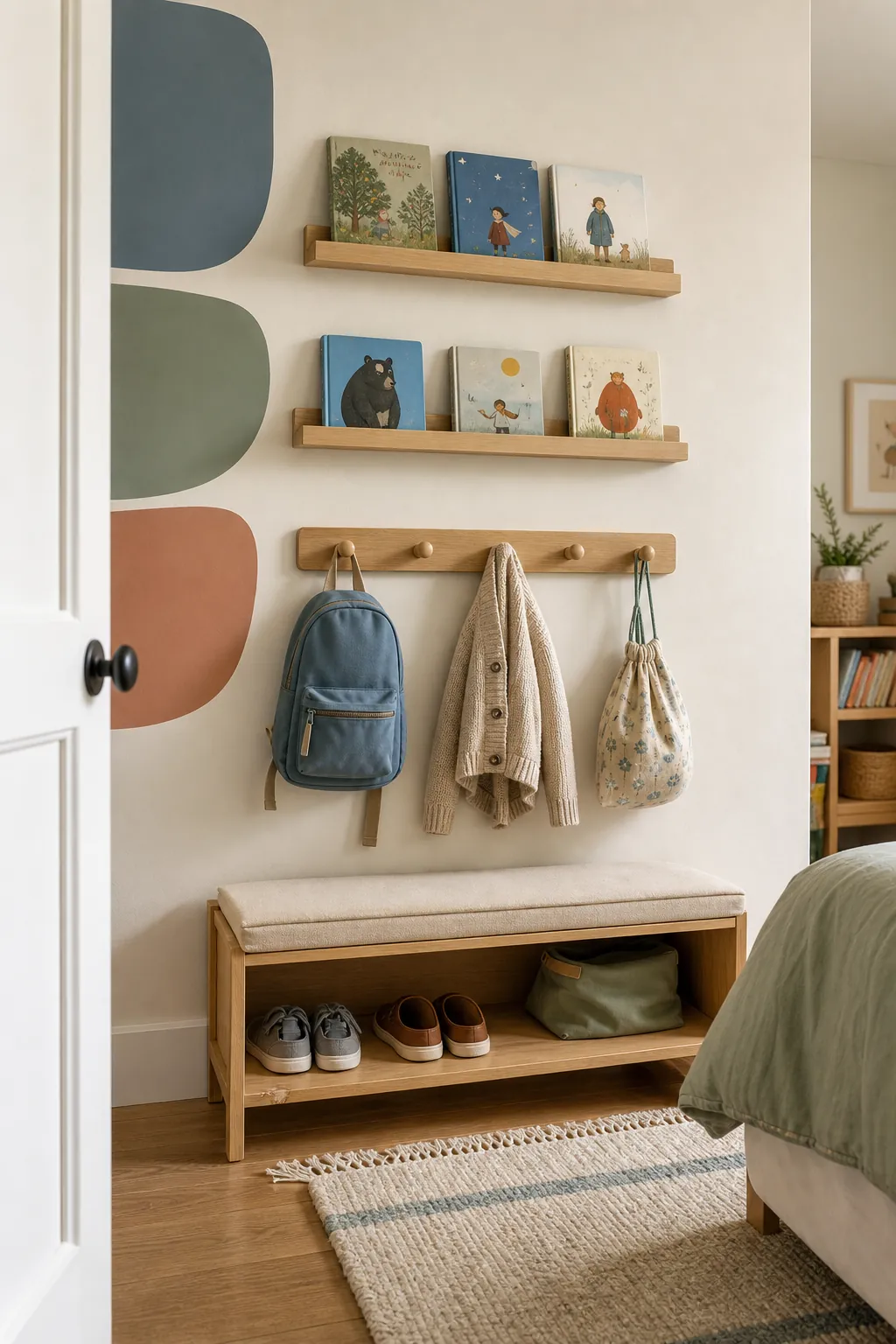
For decoration, choose one wall moment instead of scattering small pieces everywhere. A pair of botanical prints, a fabric banner, a cork strip for rotating art, or one peel-and-stick decal can give the room personality while leaving enough quiet space for the eye to rest.
Protect One Open Floor Zone
Every small kids room needs a clear patch of floor. It may only be the size of a small rug, but it changes how the room functions. Children need a place to build, read, sort, stretch, and empty a backpack. Parents need a place to stand without stepping on tiny pieces.
Choose the floor zone first, then arrange furniture around it. Push storage against one wall. Use a bed placement that leaves a walkway. Avoid adding a chair unless someone truly uses it. If the room is shared, the open zone may sit between two beds or at the foot of bunks. The floor is not leftover space; it is the room’s working surface.
A washable rug helps define the zone and adds softness without adding clutter. In a calm color scheme, the rug can carry a small pattern: check, stripe, soft geometric, or scattered dots. Pattern on the rug often feels less busy than pattern on every wall.
Build a Five-Minute Reset Routine Into the Room
The best small kids room ideas fail when they require a long cleanup. Design the room around a five-minute reset. Put a return basket near the door for items that belong elsewhere. Keep one laundry hamper visible. Give books one front-facing ledge or basket. Let toys return to broad categories instead of tiny perfect groups.
The bedtime reset can be simple: clothes in hamper, books back, floor pieces into bins, tomorrow’s outfit on a hook, one comfort item on the bed. A calm bedroom supports sleep when the final view of the room feels settled. Mayo Clinic sleep guidance also points toward a consistent, calming bedtime routine and a comfortable environment, which is easier when the room is not visually shouting at the child.
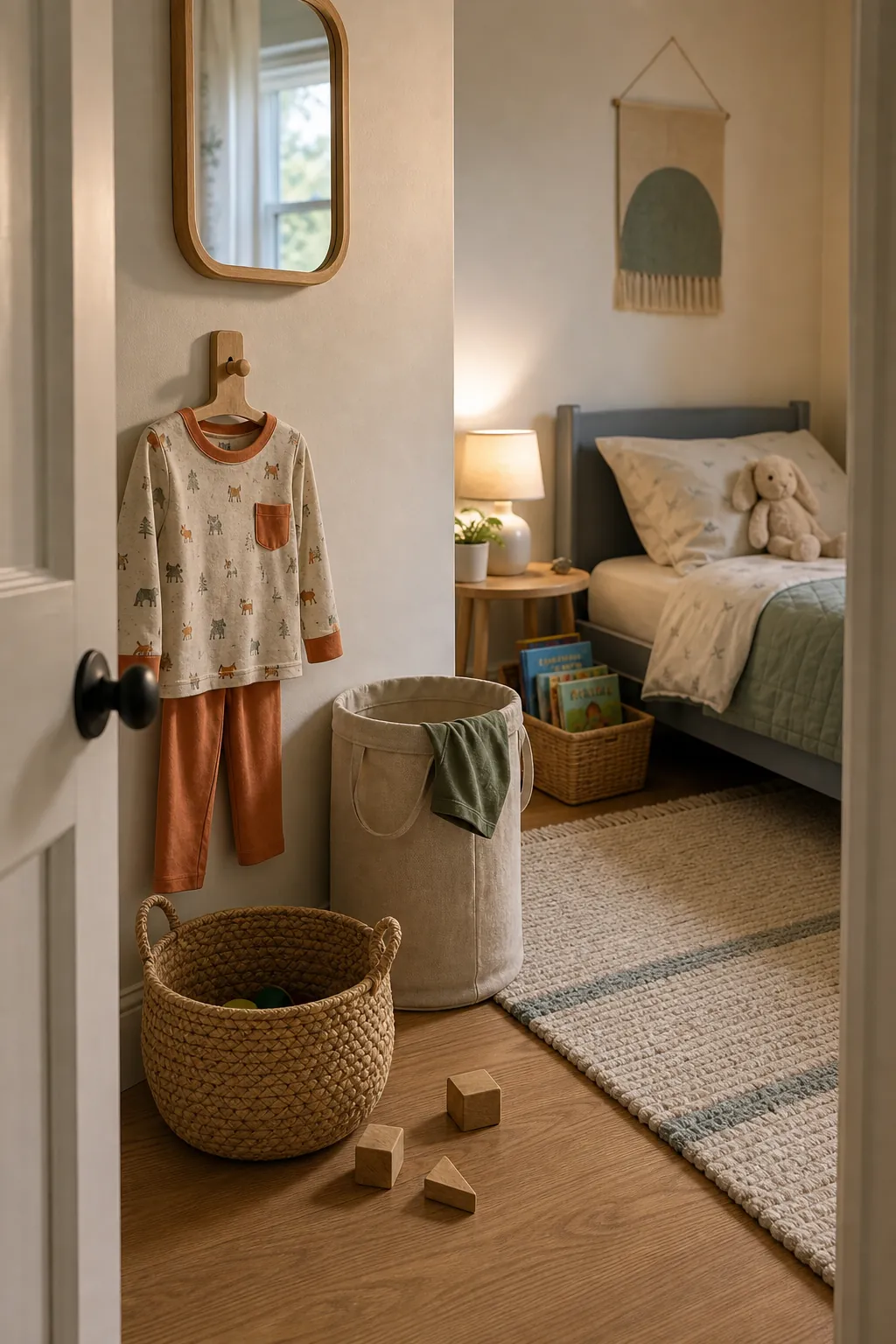
Small kids rooms do not need more clever ideas as much as they need fewer decisions. Pick a calm base, use the bed footprint, keep storage reachable, protect the floor, and make reset visible. When the child can see where things go, the room starts working with daily life instead of against it.