
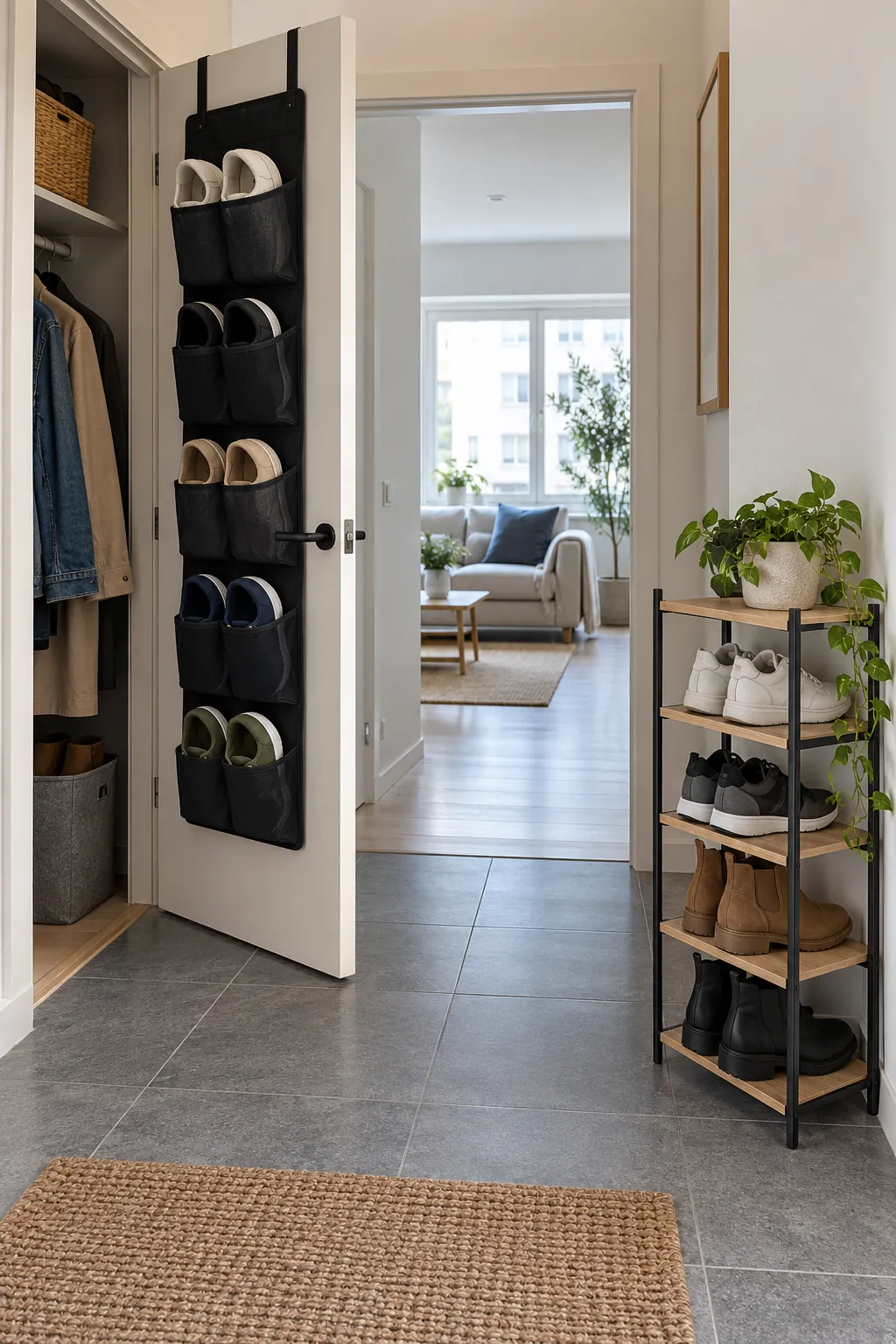
An over door shoe rack saves floor area, but it can interfere with the one object it depends on: the door. A freestanding rack uses precious floor space, yet it accepts more shoe shapes and does not add weight to hinges. The better choice depends on clearance, footwear, and the way your apartment entry works each day.
Compare both formats in the exact place you plan to use them. A product that looks compact online may block trim, strike a wall, scrape a door, or narrow a hallway. The checks below help renters choose storage without drilling and without trading one clutter problem for another.
Start with door clearance and movement
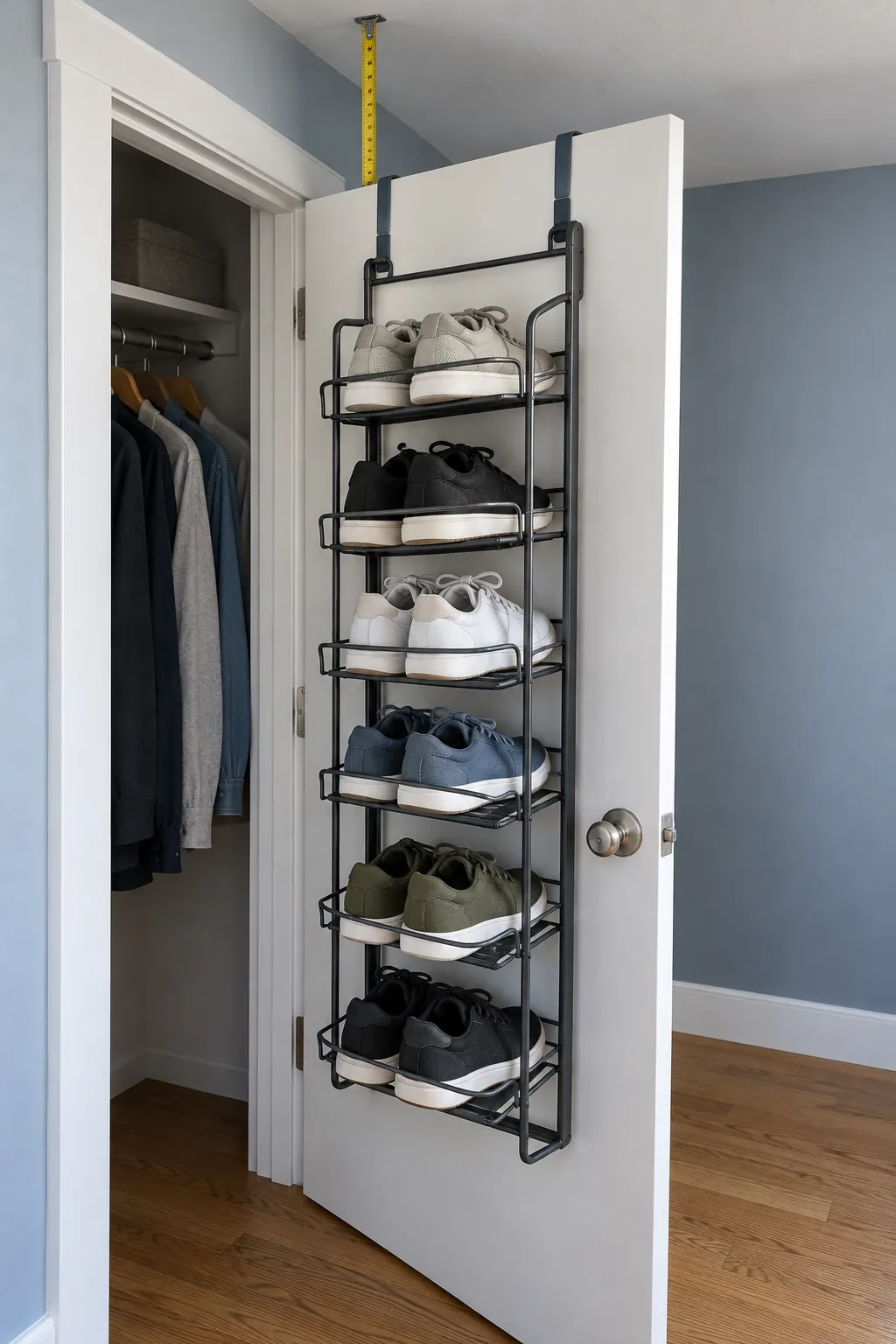
An over door organizer needs clearance above the door, beside the casing, and behind the door when it opens. Measure the gap between the door top and frame with the door moving, because a hook that fits while still may scrape during use. Also check the added thickness behind the door. Shoes can hit a wall, a hook, or items inside a closet before the door reaches its normal stopping point.
Compare vertical space with floor space
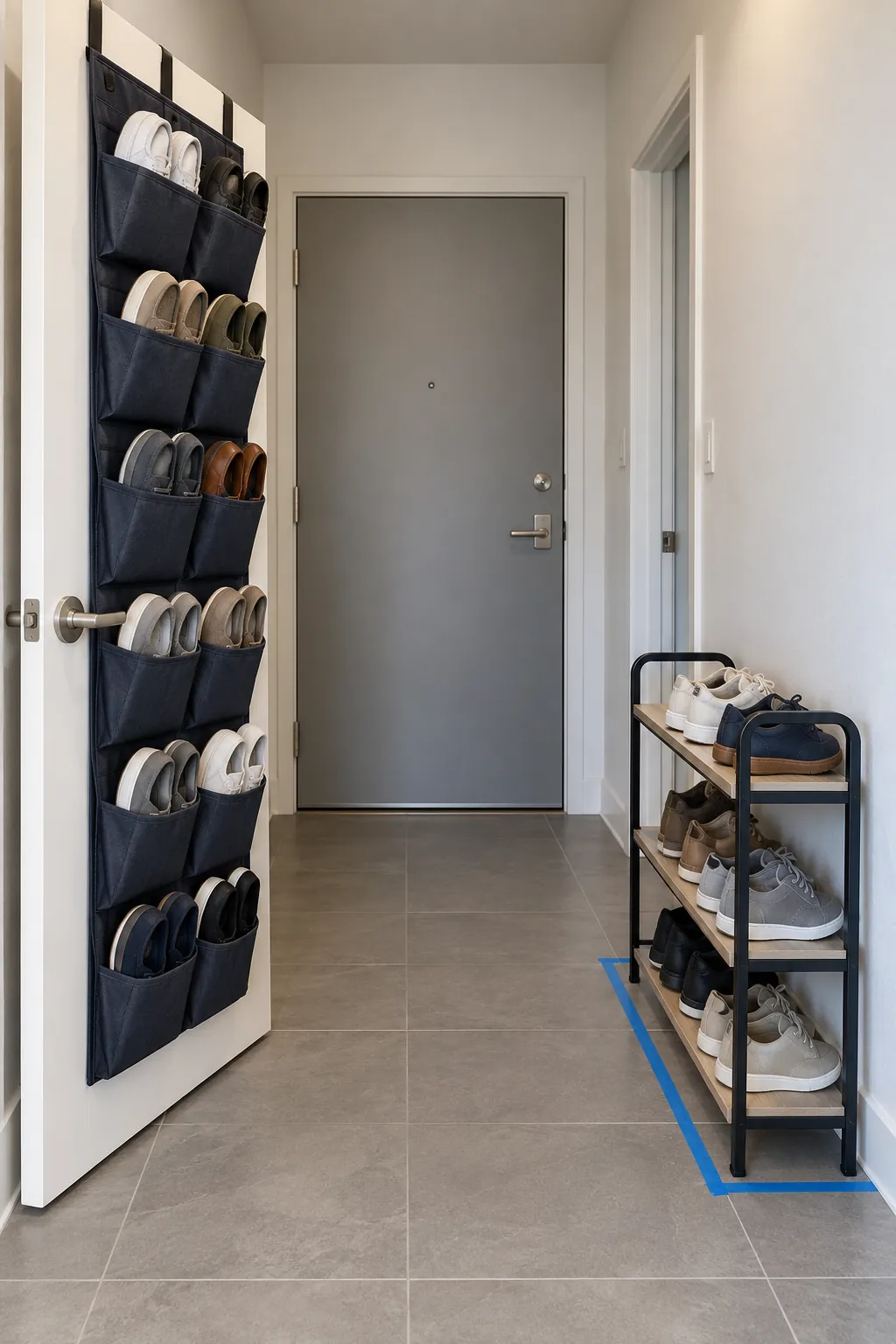
Door storage uses an area that often goes unused, which makes it valuable in a room with almost no open floor. A freestanding rack needs a measured footprint and a clear walking strip in front of it. Mark that footprint with removable tape before buying. If the rack creates a pinch point or catches bags and coats, the saved organization will not improve the entry.
Vertical door storage can also make a small door feel visually busy. A narrow floor rack may look calmer when it stays below switch height and matches the wall. Choose the format that preserves movement first, then consider appearance.
Match the rack to your actual shoes
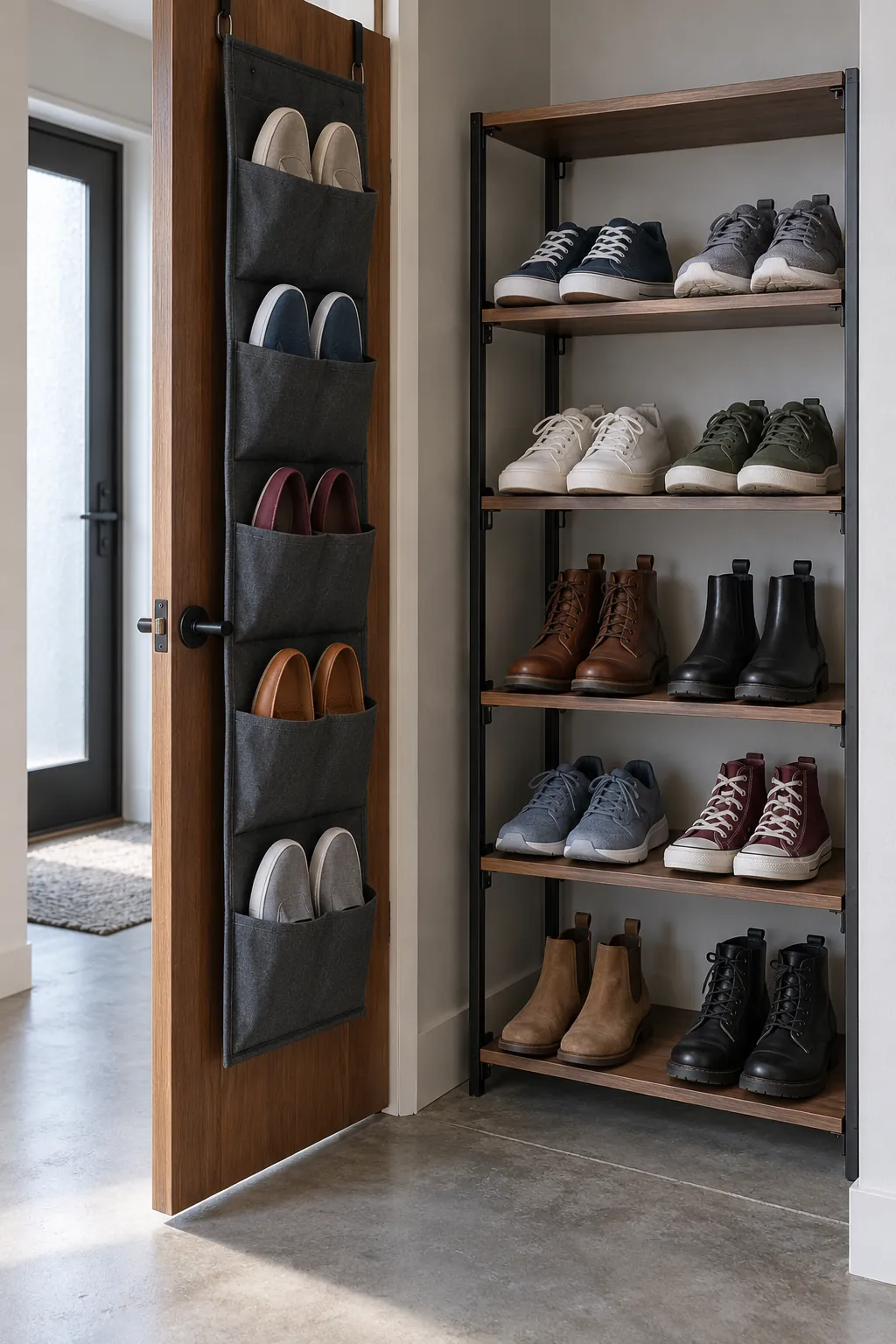
Many door racks work best with low shoes that fit their pockets, loops, or wire supports. Thick soles, wide trainers, and boots may project too far or fail to sit securely. Freestanding shelves usually accept a broader mix, especially when shelf height is adjustable or one bay is left open.
Count the pairs used each week instead of every pair owned. Daily shoes need easy access and enough air to dry. Occasional footwear can stay elsewhere, which may let a smaller and less intrusive rack solve the entry problem.
Check noise, stability, and surface contact
A loaded door rack moves whenever the door moves. Loose metal can rattle, and hard supports can mark paint. Look for padded hooks, secure lower attachment points, and enough clearance around the handle. Do not overload a door or use an organizer if the manufacturer excludes that door type.
A freestanding rack should sit level and resist side movement. Adjustable feet help on uneven floors, while wall bumpers protect paint. If its instructions require an anti tip connection, ask the landlord about an approved method rather than replacing safety hardware with adhesive.
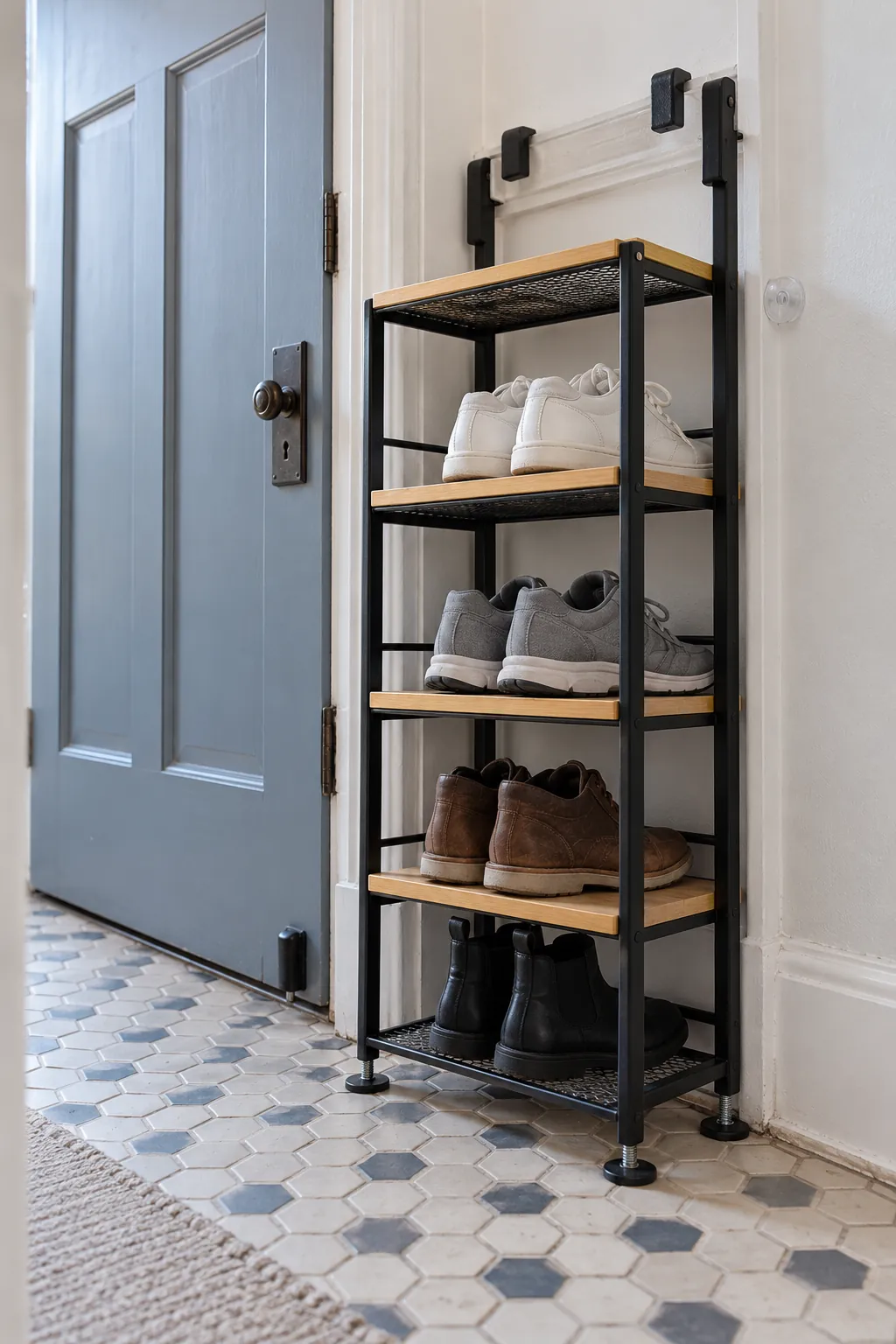
Plan for cleaning and damp footwear
Door organizers keep shoes above the floor, so sweeping is simple, but dirt can fall down the door surface. Fabric pockets may hold moisture and require washing. Wire styles are easier to wipe, although they can leave pressure marks on soft shoes.
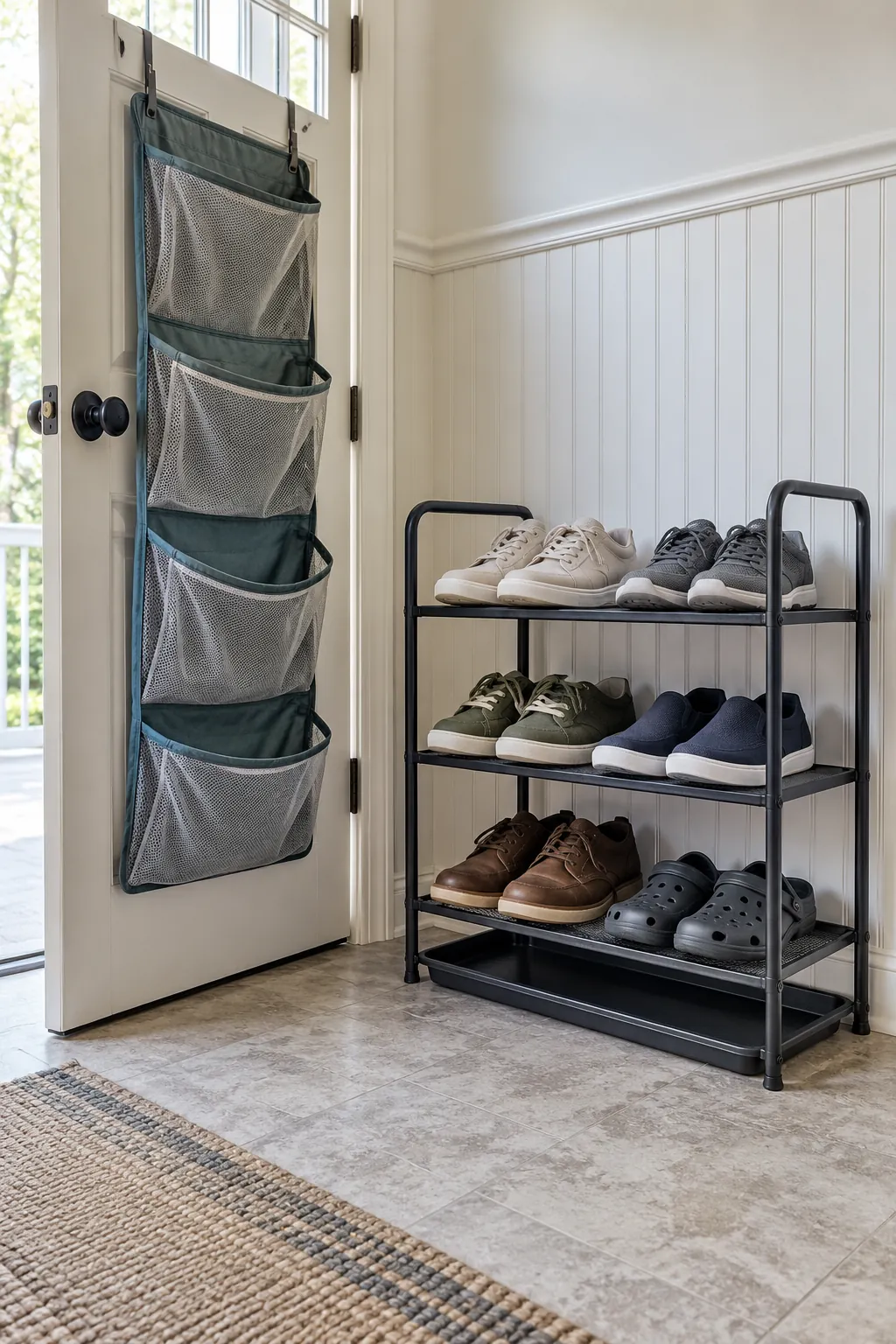
Open floor racks allow airflow and can sit above a removable drip tray. Make sure the tray slides out without moving the whole unit. In wet weather, whichever system lets shoes dry and lets you clean surrounding surfaces with little effort will be easier to live with.
Choose the option with fewer daily conflicts
Choose an over door shoe rack when floor area is the main constraint, the door has verified clearance, and most shoes are light and low. Choose a freestanding rack when footwear varies in size, the door must open freely, or you want storage that can move to another room. A narrow rack can also serve an open hallway where no suitable closet door exists.
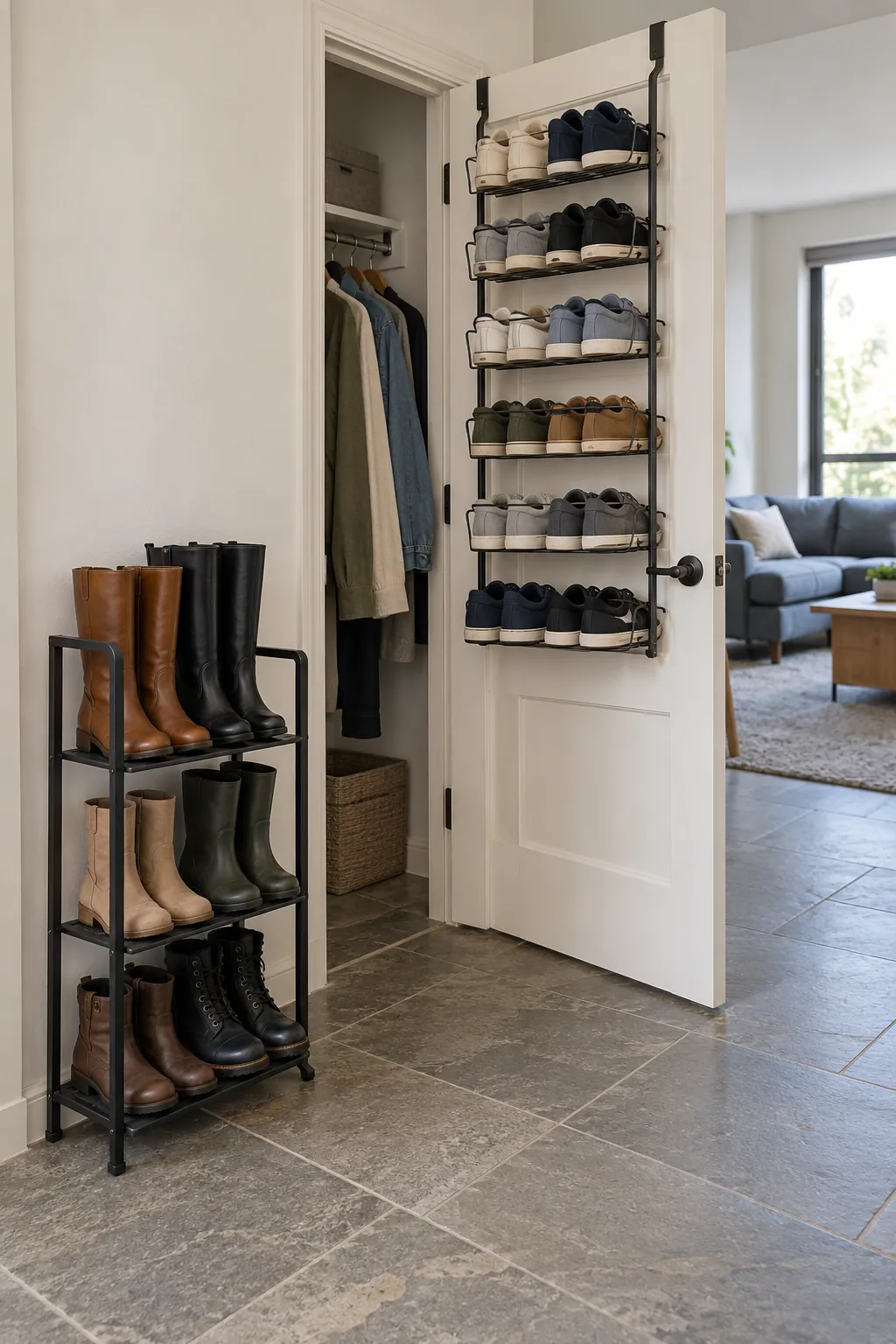
Test the location with the door, closet, and walking route in use. Then compare the rack with the shoes you wear most often. The right choice is the one you can reach, clean, and pass every day without noise, scraping, or rearranging the entry.