
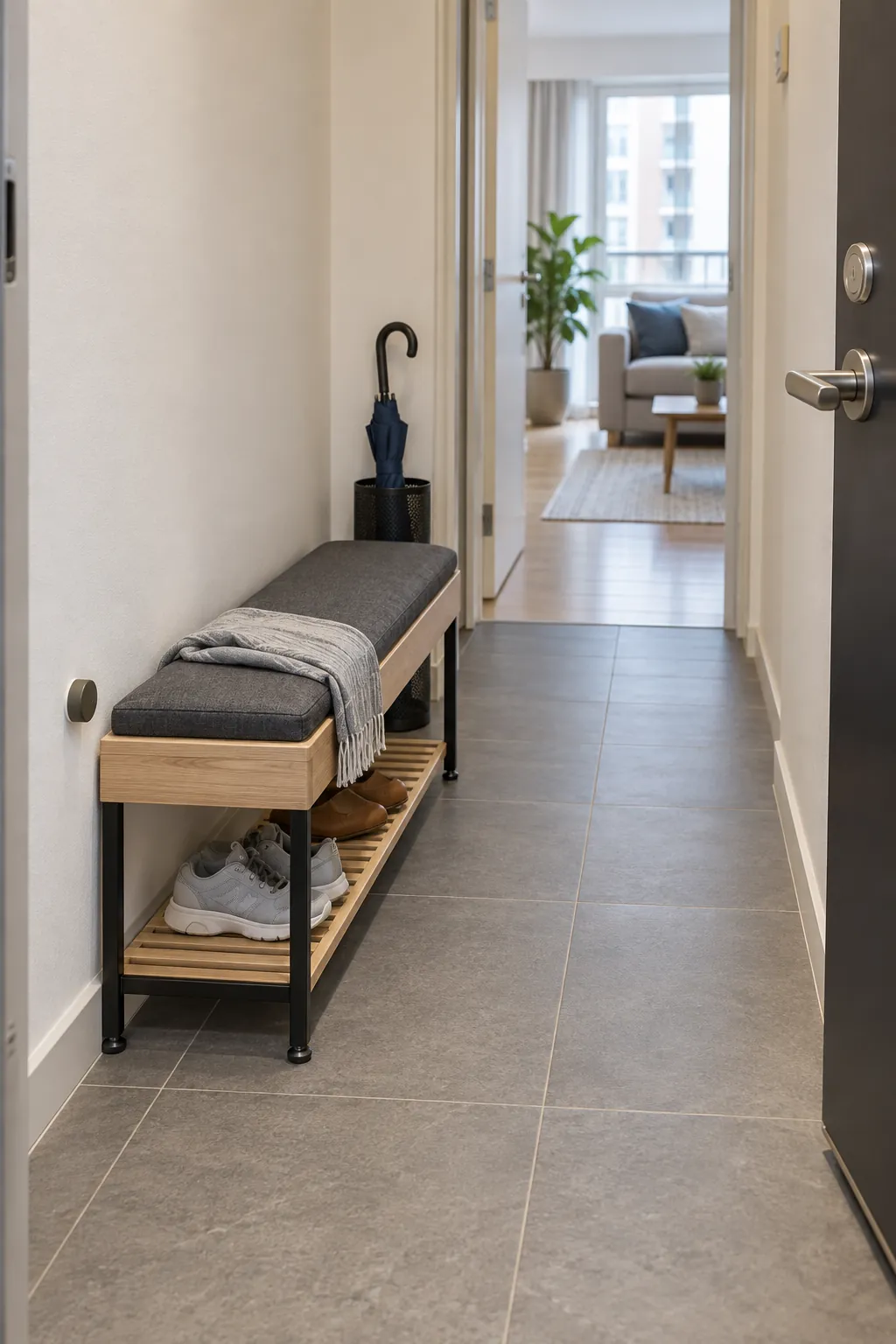
A shoe bench can solve two problems at once, but only when it leaves enough room to walk and enough space to open the door. In a narrow apartment entryway, a few extra inches of depth can turn useful storage into a daily obstacle. The right choice starts with the path through the space, not with the number of shoes shown in a product photo.
This guide explains how to compare compact benches by real dimensions, shoe fit, sitting comfort, stability, and price. It also covers renter friendly details such as freestanding construction and removable wall protection. Use these checks before buying, because a bench that fits on paper can still block trim, switches, vents, or the swing of a nearby door.
Measure the walking path before the wall
Measure the clear floor area with the entry door fully open, then measure it again with any closet door open. Mark the proposed bench depth on the floor with removable painter tape. Walk through the entry while carrying a bag, wearing a coat, and opening each door. This simple test reveals whether the remaining passage feels natural or forces you to turn sideways.
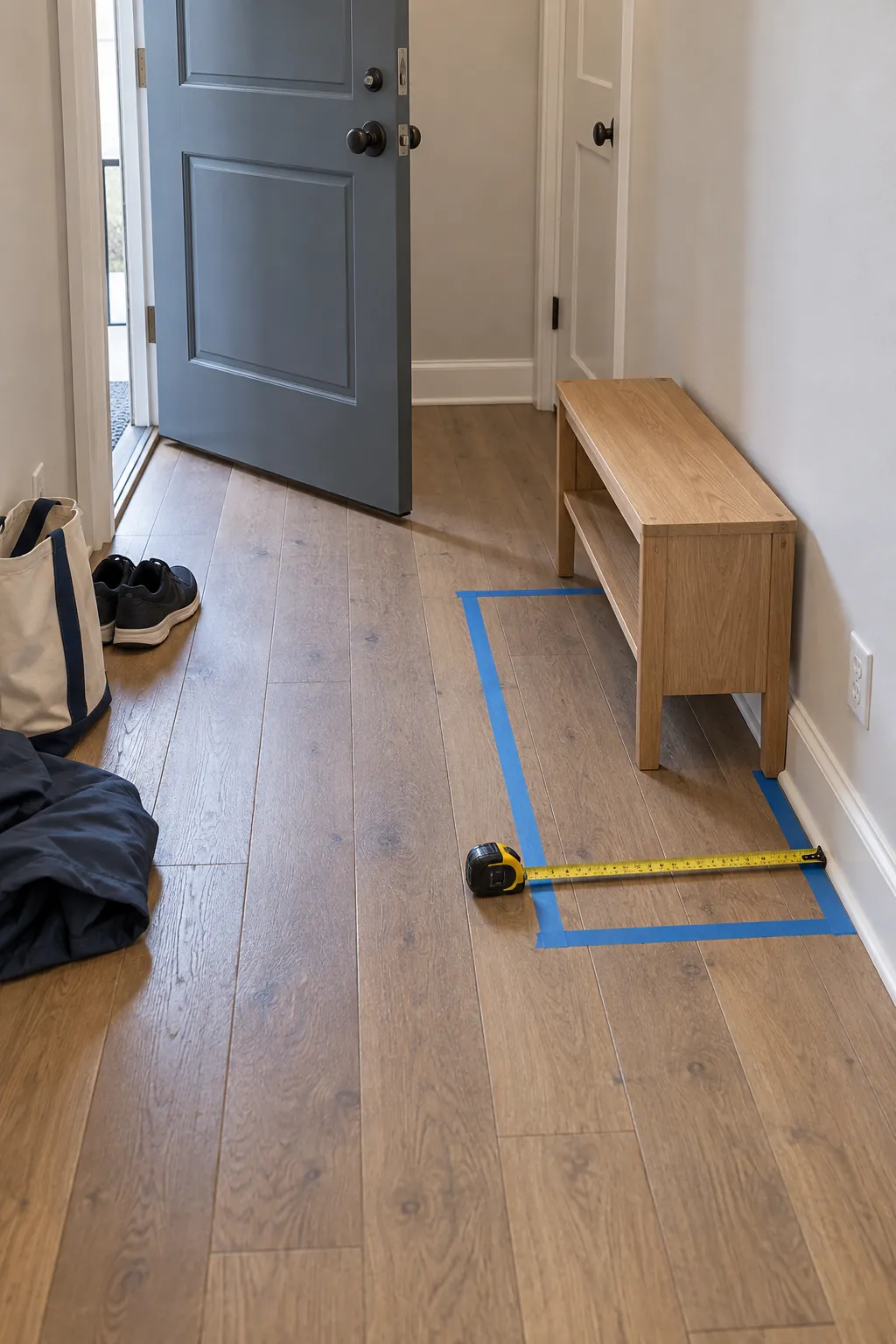
Do not use the wall length as the only size limit. Baseboard trim can keep a bench from sitting flush, while a radiator or return vent may require open space around it. Record the maximum width, depth, and height separately. Also note the location of outlets and switches so the furniture does not hide something you use every day.
Choose depth before counting shoe pairs
A low profile shoe bench usually works best when its depth stays close to the actual length needed for the shoes you store most often. Product capacity claims often assume small shoes placed tightly together. Measure one everyday pair from heel to toe and compare that number with the usable shelf depth, not only the overall furniture depth.
Open slatted shelves can let toes or heels extend slightly, which may help with longer footwear. Closed cubbies need more exact dimensions because both ends of the shoe must fit inside. If the hall is extremely tight, a bench with a shallow frame and an open lower shelf often preserves more visual and physical space than a boxy cabinet.
Match the shelf layout to real footwear
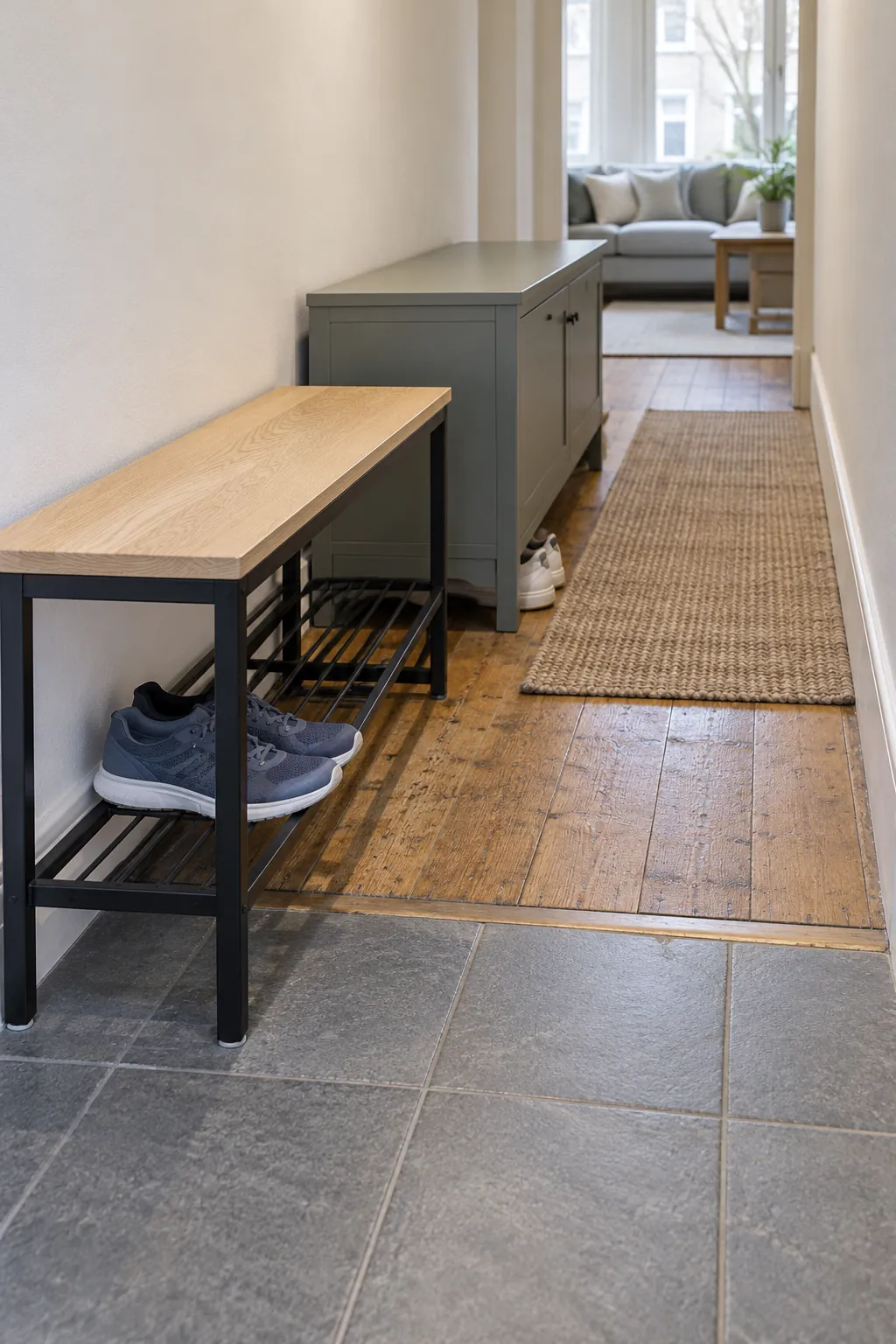
Think about the shoes that actually collect near the door. Low shelves suit flats, sneakers, and slippers, but they may not accept ankle boots or high top shoes. An adjustable shelf gives you more control, although the brackets and frame can reduce the usable width. A completely open lower bay is flexible for mixed footwear and easier to sweep beneath.
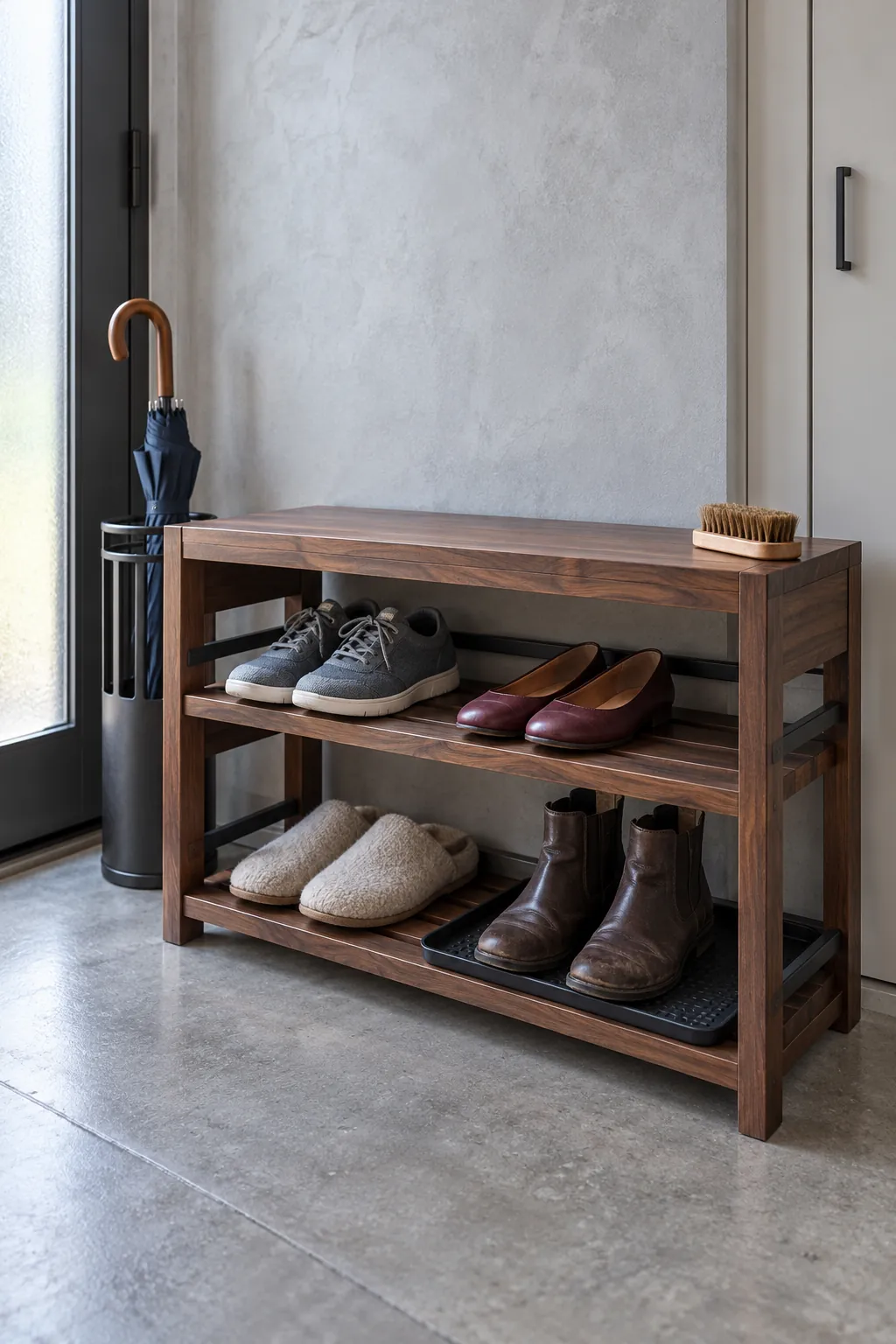
Leave breathing room instead of filling every inch. Crowded shoes are harder to remove and more likely to fall into the walking path. If wet footwear is common, choose a shelf that allows air movement and a surface that tolerates damp soles. A removable tray beneath the bench can protect rental flooring without attaching anything to the wall.
Treat the seat as furniture, not decoration
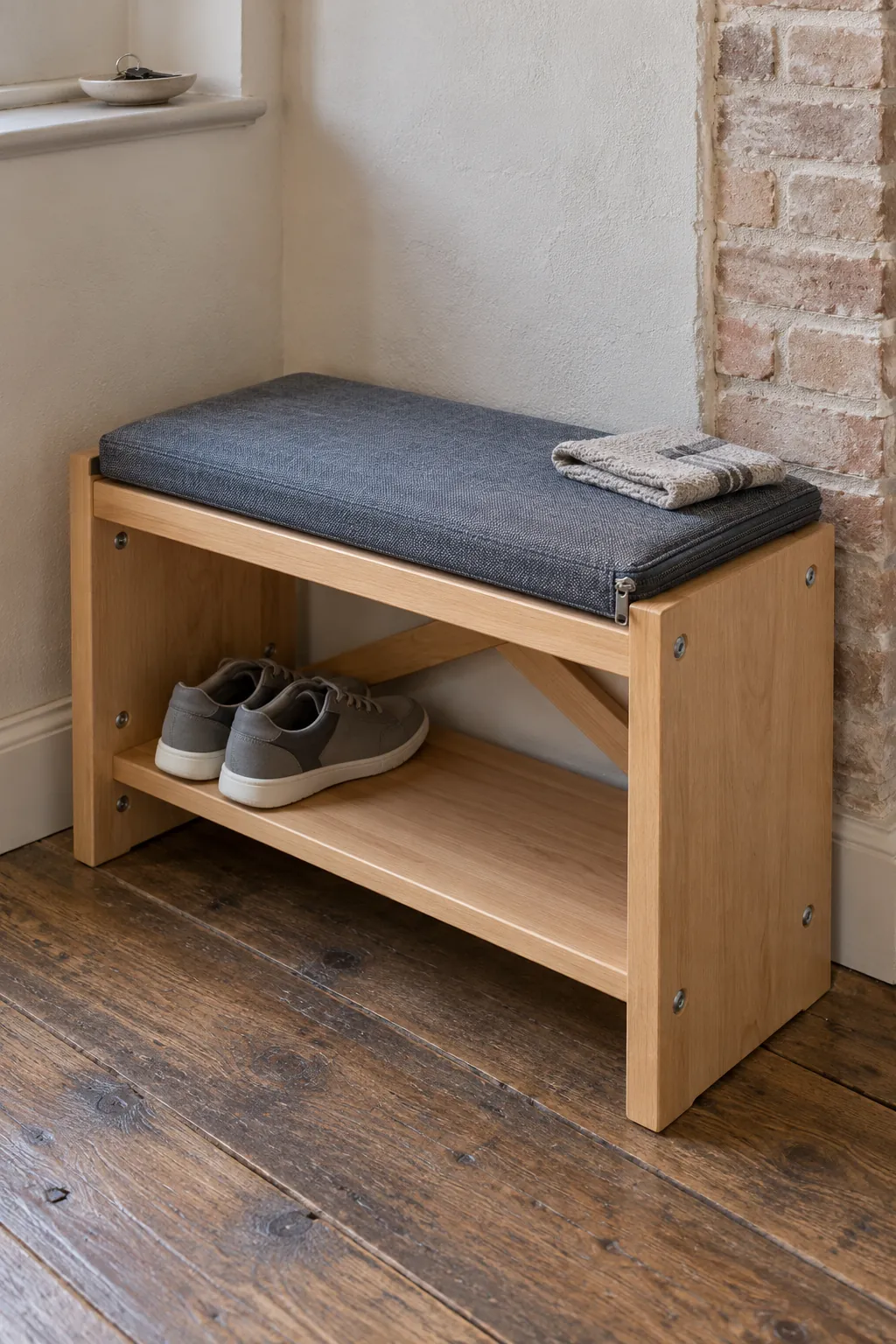
A bench should feel steady when someone sits near either end. Check the stated weight limit, the way the legs join the frame, and whether the seat flexes in customer photos or reviews. Cross braces and full side panels usually resist side movement better than thin legs with minimal support. Tighten accessible hardware after assembly and check it again after the first few weeks.
Seat height matters as much as seat width. A very low seat can be awkward for adults who need support while putting on shoes, while a tall seat can leave shorter users without stable foot contact. A modest cushion improves comfort, but thick loose padding can shift or make the seat feel less secure. Removable, washable covers are practical in an entry where rain and street dust are normal.
Protect rental walls and uneven floors
Freestanding does not always mean stable. Narrow furniture can rock on uneven floors, and a hard frame can rub paint when it shifts. Adjustable feet are useful on old tile or sloped wood floors. Felt pads protect the floor, while small clear bumpers can prevent the upper edge from marking the wall.
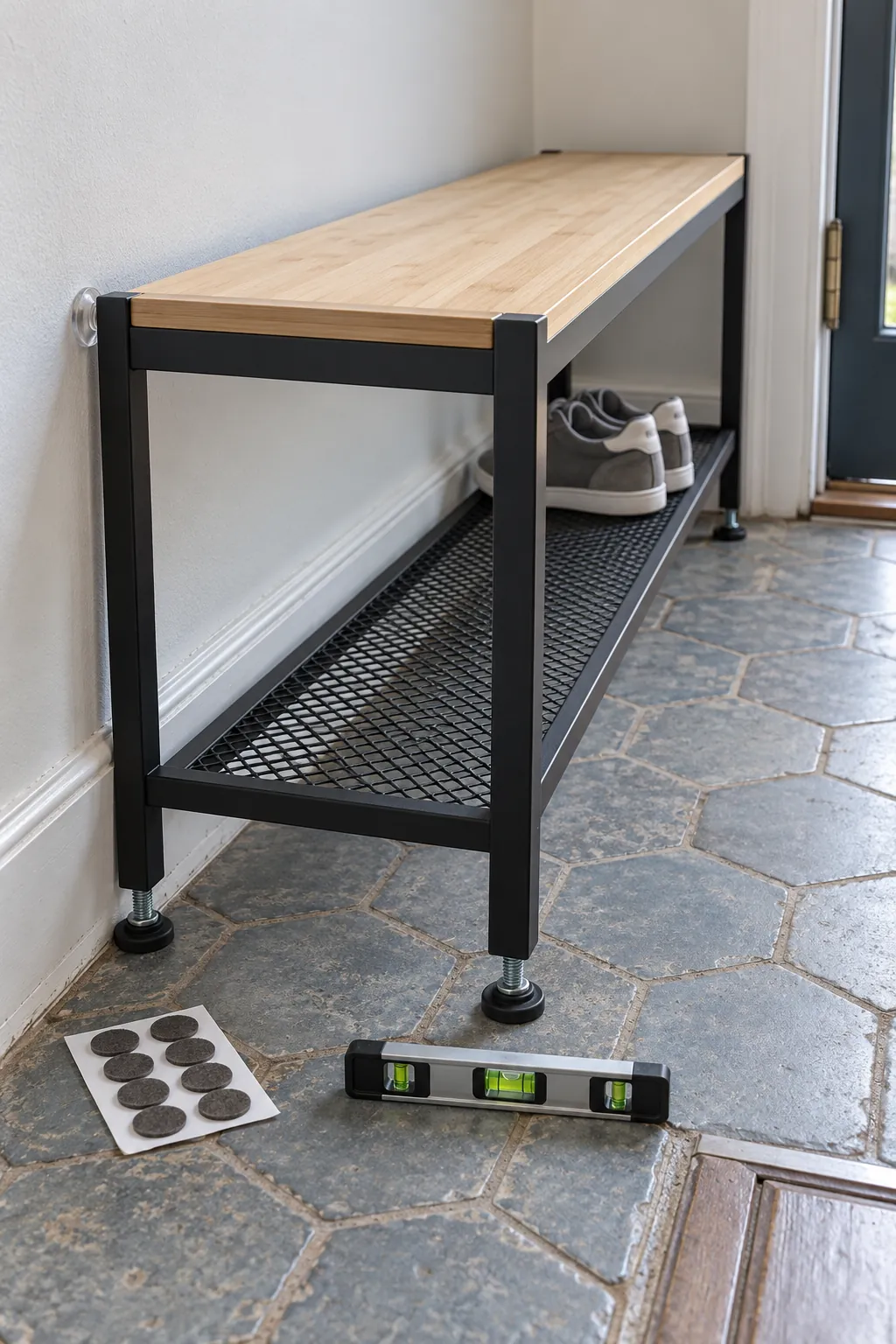
If the manufacturer requires an anti tip attachment, follow that instruction and ask the landlord which approved fastener method to use. Do not assume adhesive strips can replace required safety hardware. In a home with children, pets, or adults who use the bench for balance, stability is more important than avoiding a small, properly approved wall repair.
Spend on fit, strength, and easy cleaning
A budget compact shoe bench can be a good choice when the dimensions are accurate and the frame is well braced. Spend more only when the upgrade solves a real problem, such as an adjustable shelf for boots, a stronger seat, washable upholstery, or feet that level on an uneven floor. Decorative panels and extra compartments are less valuable if they add depth or make the unit difficult to clean.
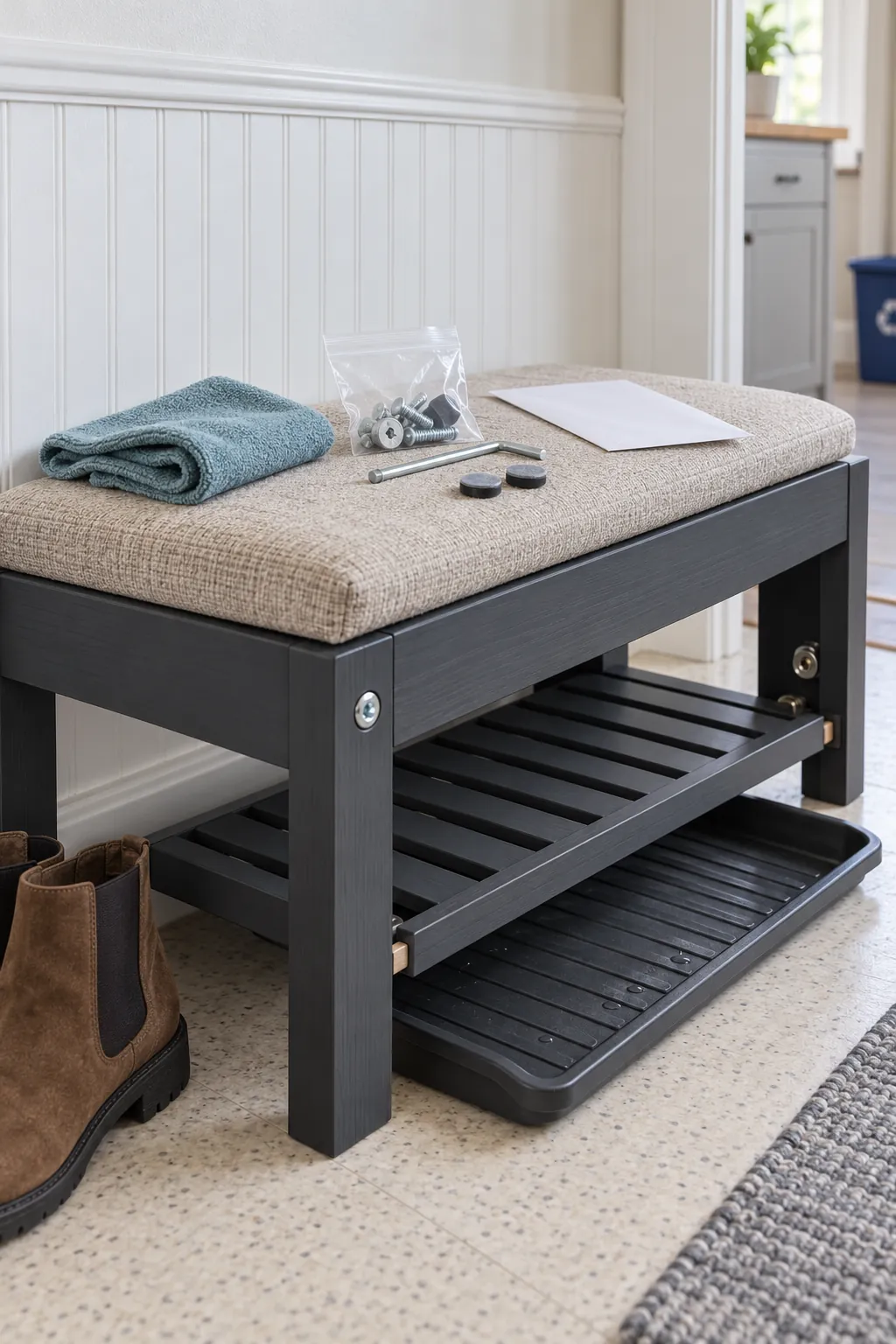
Compare the final assembled dimensions, return policy, replacement parts, and weight limit before ordering. Then repeat the taped floor test using the exact product depth. The best bench is not the model that holds the most pairs in a listing. It is the one that keeps daily shoes contained while the doorway and walking path still work without thought.