
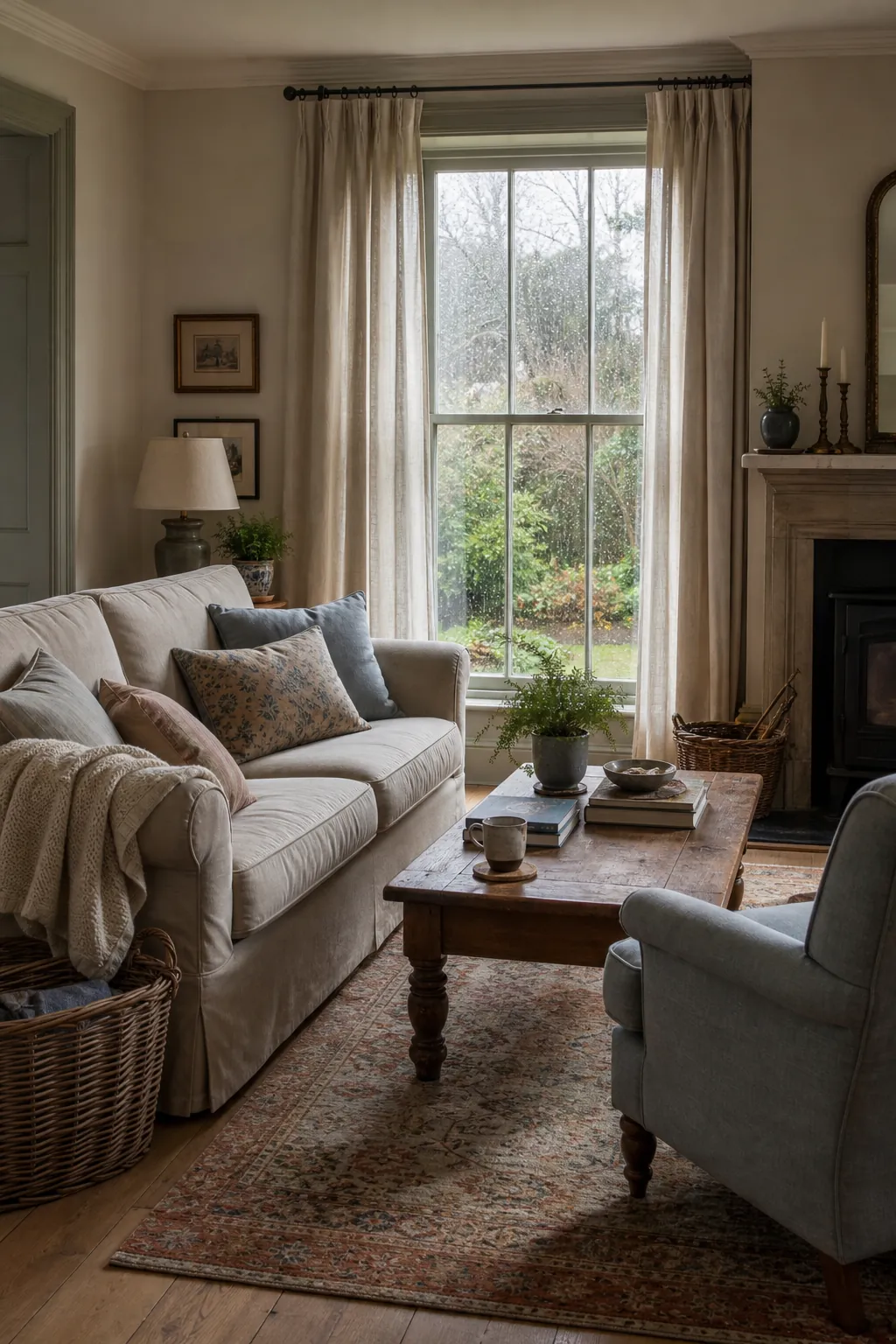
A cozy cottage home is not built by buying a matching set of “cottage” furniture. It comes from soft light, useful layers, honest materials, and objects that look as though they arrived at different moments. That is good news if your sofa is modern, your budget is modest, or you are decorating a rental. You can make everyday rooms feel warmer without turning them into a stage set—or filling every surface with clutter.
The most convincing cottage decor also works hard. Curtains control glare. A rug makes a seating area quieter. A basket gathers the blanket you actually use. A small lamp makes reading comfortable after dinner. Start with those lived-in functions, and the old house charm follows naturally.
Begin With Warm Light, Not More Decor
If a room feels cold, the problem is often overhead lighting rather than a shortage of accessories. Use two or three smaller light sources at different heights: a shaded table lamp beside the sofa, a reading lamp near a chair, and perhaps a small lamp on a kitchen counter. Choose warm bulbs with the same color temperature so the room does not alternate between orange and blue pools of light.
During the day, replace bare windows or stiff blinds with washable linen-look curtains. Hang them wide enough to uncover the glass when open. Softness at the window changes the entire room before you buy a single decorative object. In a rental, tension rods or removable brackets can create the effect without a permanent renovation.
Let One Rug Establish the Room’s Palette
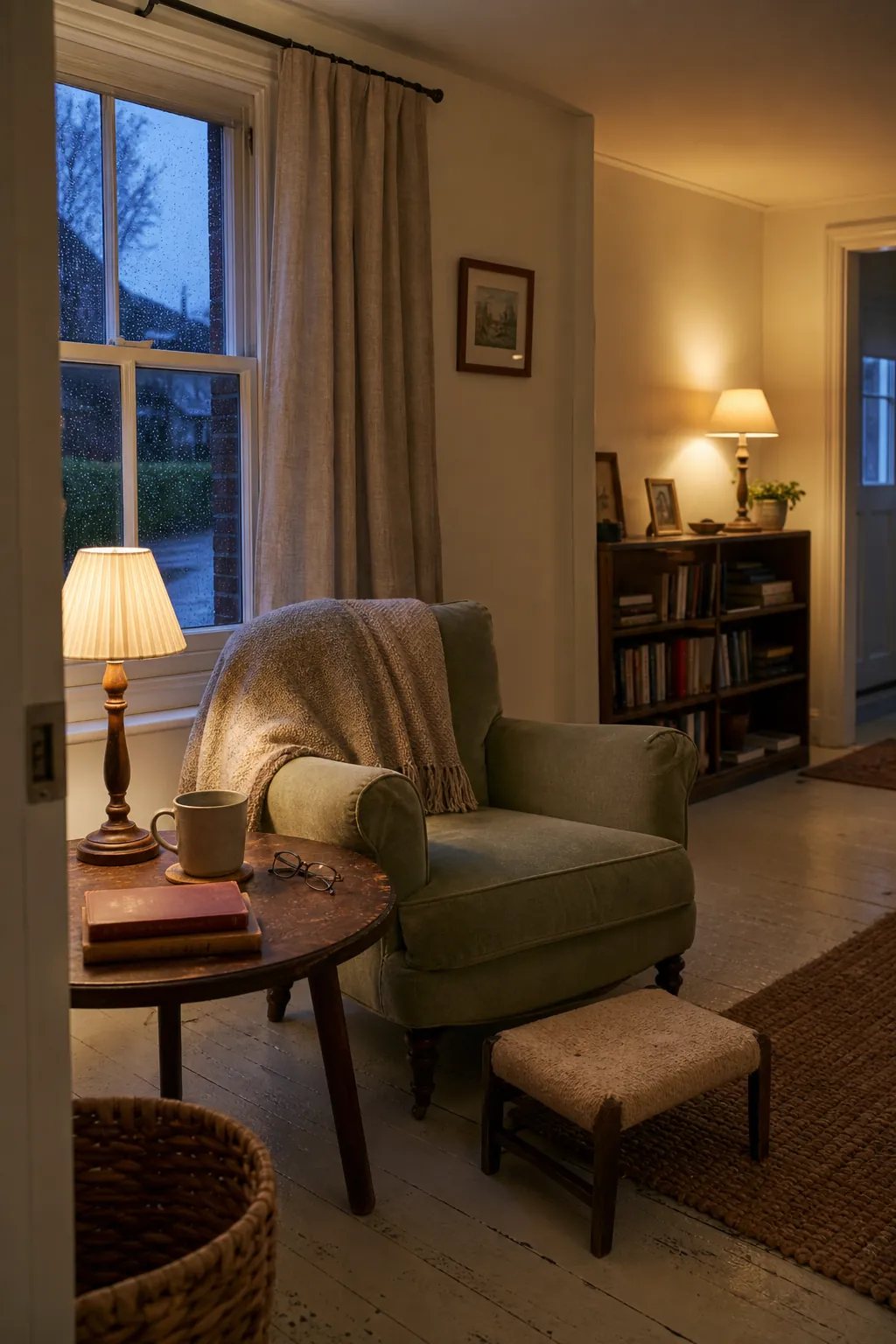
A rug is the fastest way to connect furniture that came from different eras. Look for a faded pattern with several forgiving colors—brick, moss, dusty blue, tobacco, cream—rather than a high-contrast motif that demands attention. The rug should be large enough for at least the front legs of the main seating to rest on it. A small “floating” rug makes even a generous room feel disconnected.
Use the rug as a color map. Repeat one quiet tone in a cushion, another in a curtain stripe, and a third in pottery. You do not need exact matches. Slight variation is what keeps a cottage living room from feeling like a retail display.
Mix Patterns Through Scale and Color
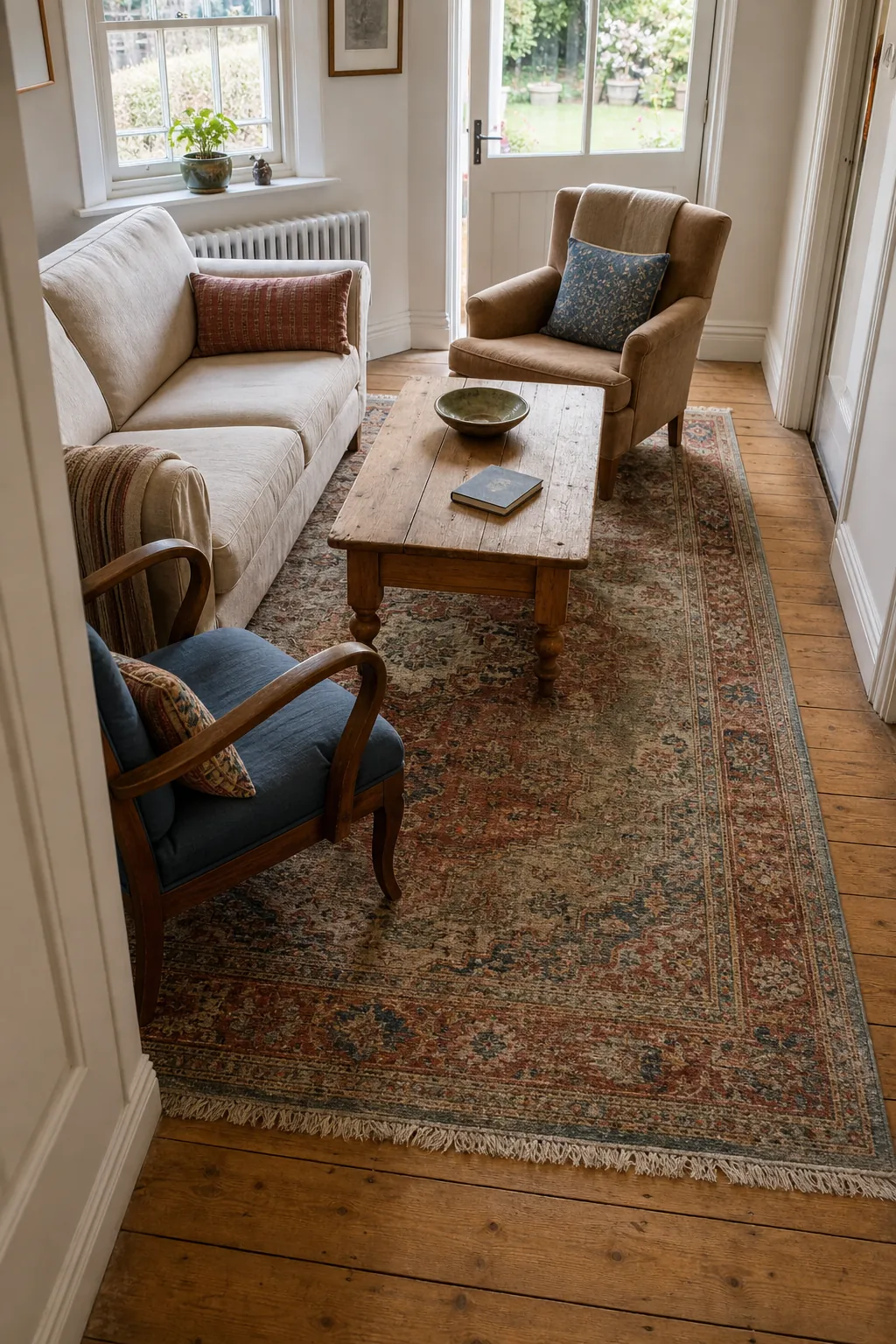
Pattern gives cozy cottage decor its energy, but random pattern creates visual noise. A reliable mix uses one medium botanical, one small check or stripe, and one mostly solid texture. Keep at least one color running through all three. A floral cushion, a narrow ticking-stripe curtain, and a nubby wool throw can coexist because their scales do not compete.
Put the busiest fabric where it is easiest to change. Cushion covers and table linens are safer experiments than an upholstered sofa. Washable, replaceable textiles also make sense in homes with children, pets, or frequent guests.
Add Aged Wood Where Modern Lines Feel Sharp
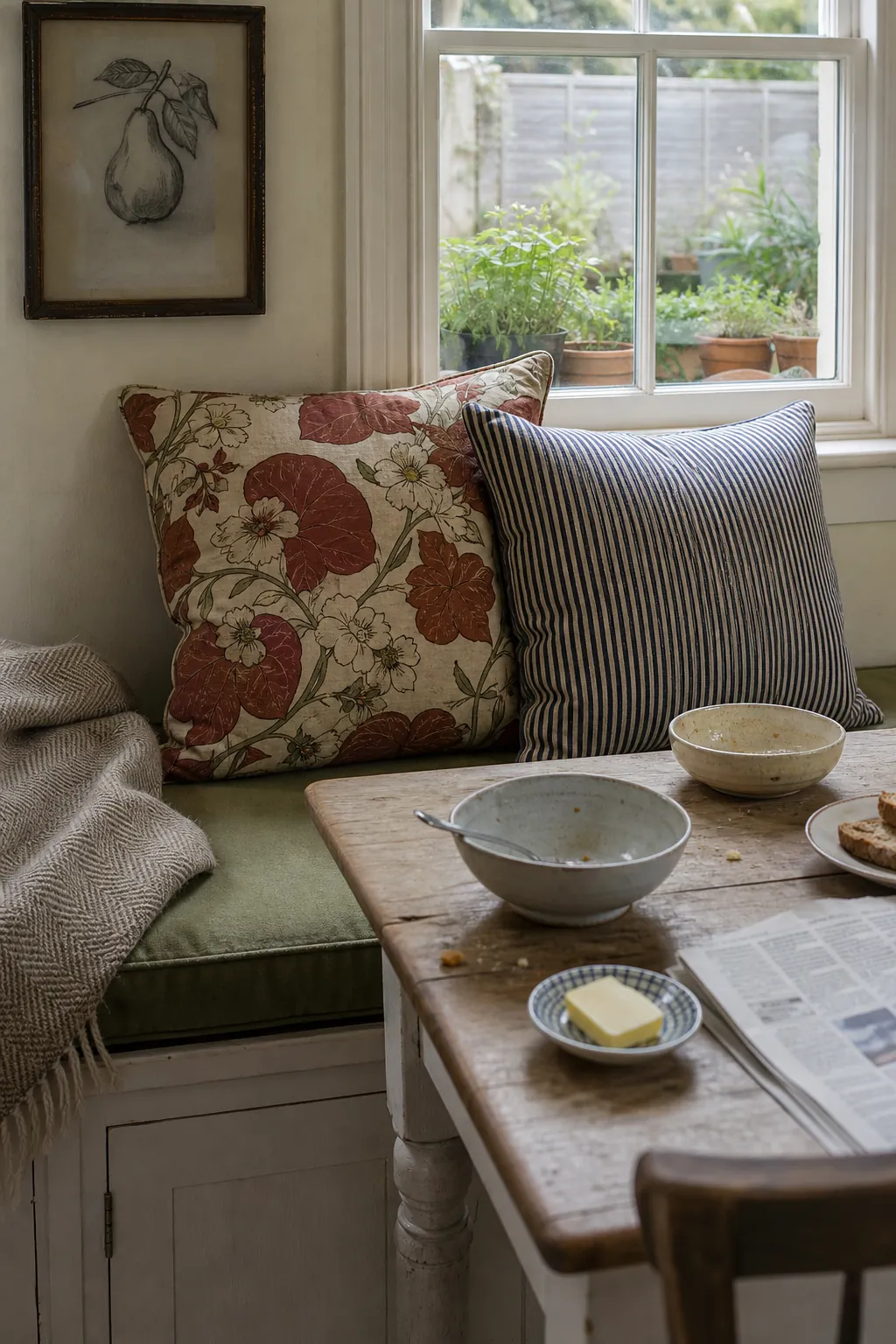
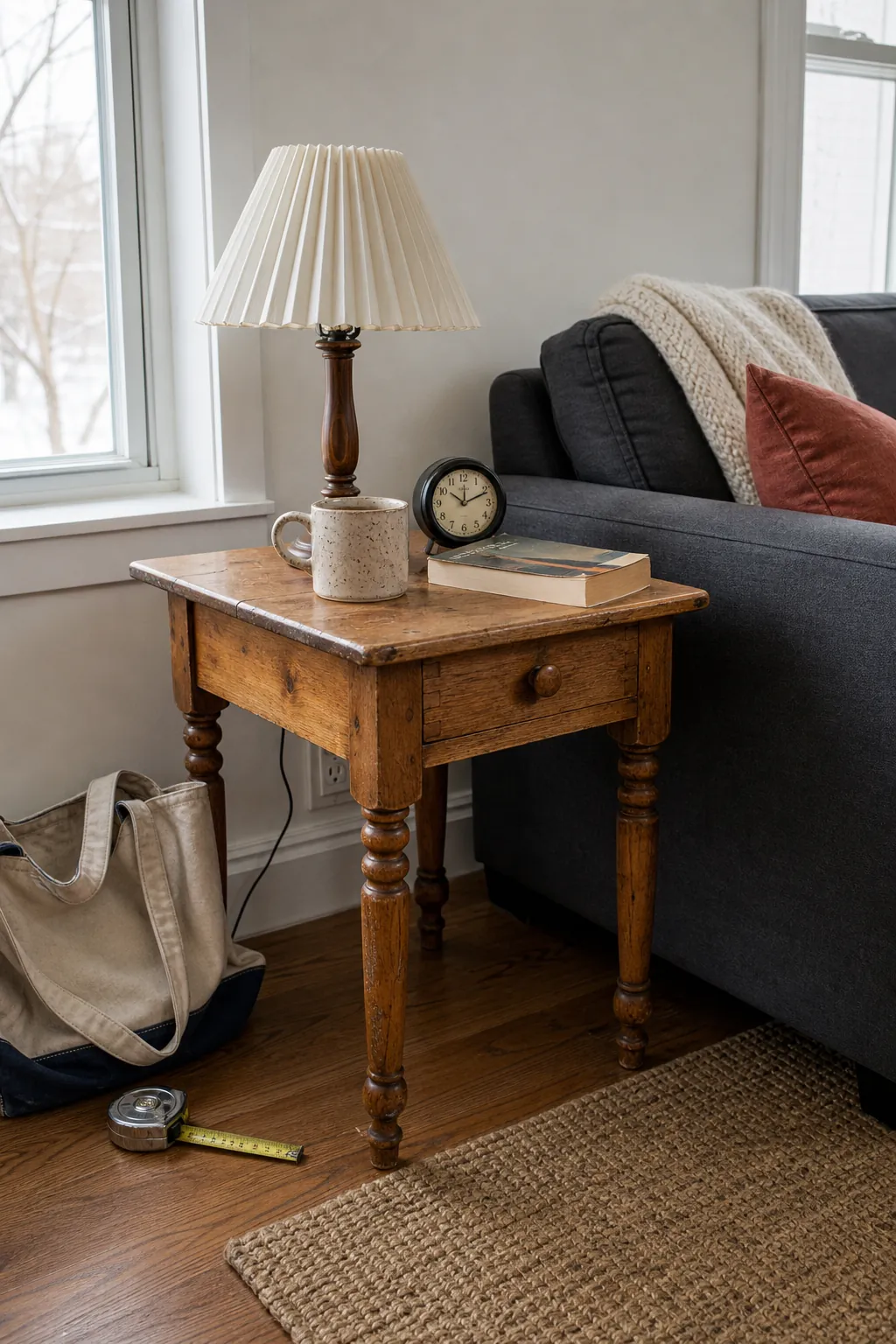
You do not need to replace every contemporary piece. Instead, identify the item with the coldest finish or sharpest silhouette and balance it with one older wood piece. A pine stool beside a streamlined sofa, a small turned-leg table between plain chairs, or an old blanket chest used as a coffee table can shift the room’s character.
Shop by dimensions and function before style. Measure the available space, save the numbers on your phone, and check thrift stores, estate sales, and local resale listings. Scratches, rubbed edges, and uneven color can be assets; wobbling joints, strong odors, and active wood damage are not. Patina should show use, not prevent it.
Make Storage Part of the Cottage Look
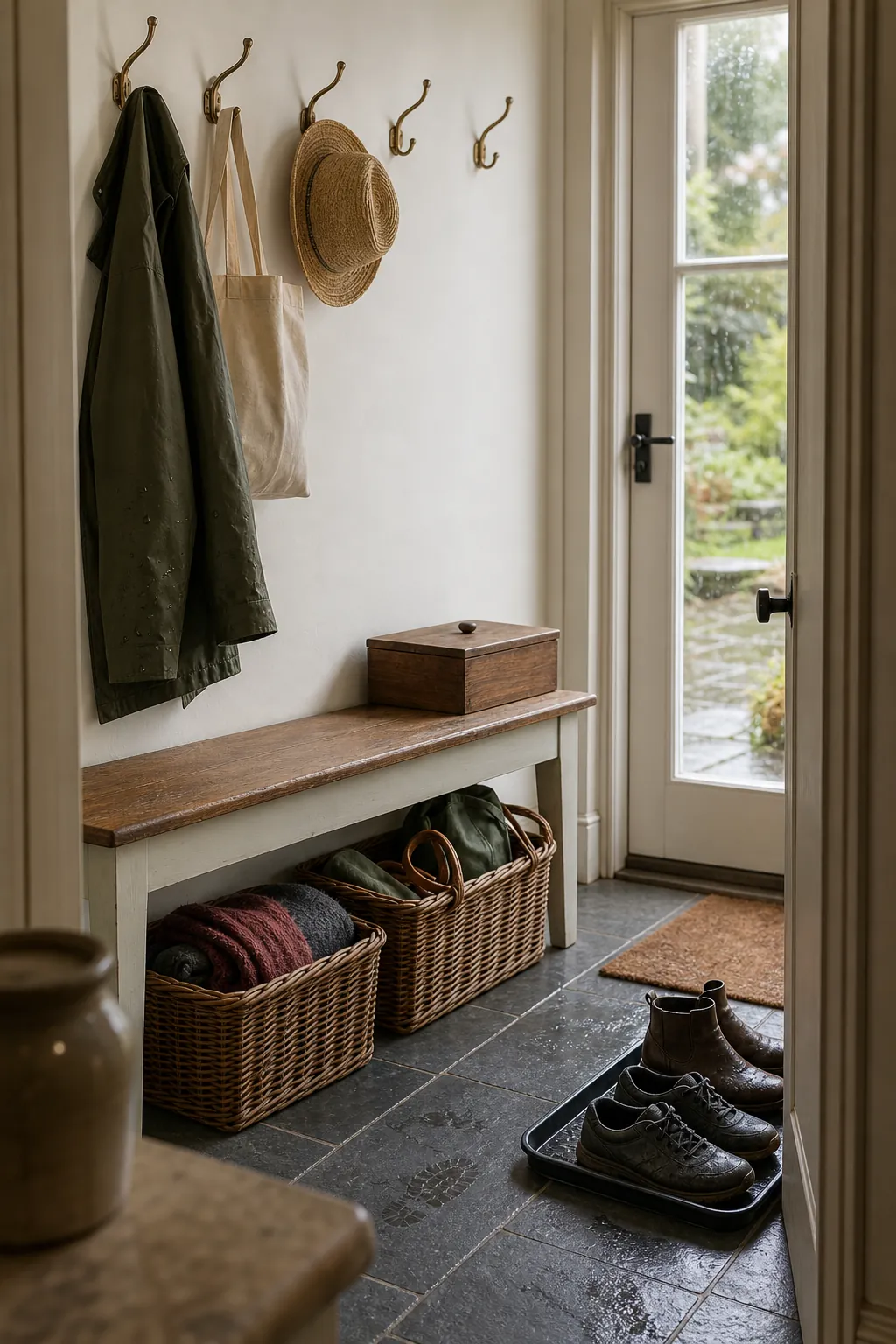
The difference between a collected home and a cluttered one is usually storage. Give everyday things attractive, reachable homes: remote controls in a lidded box, charging cables in a drawer, throws in a floor basket, and mail in one small tray. Open storage should hold items that are either used often or genuinely enjoyed.
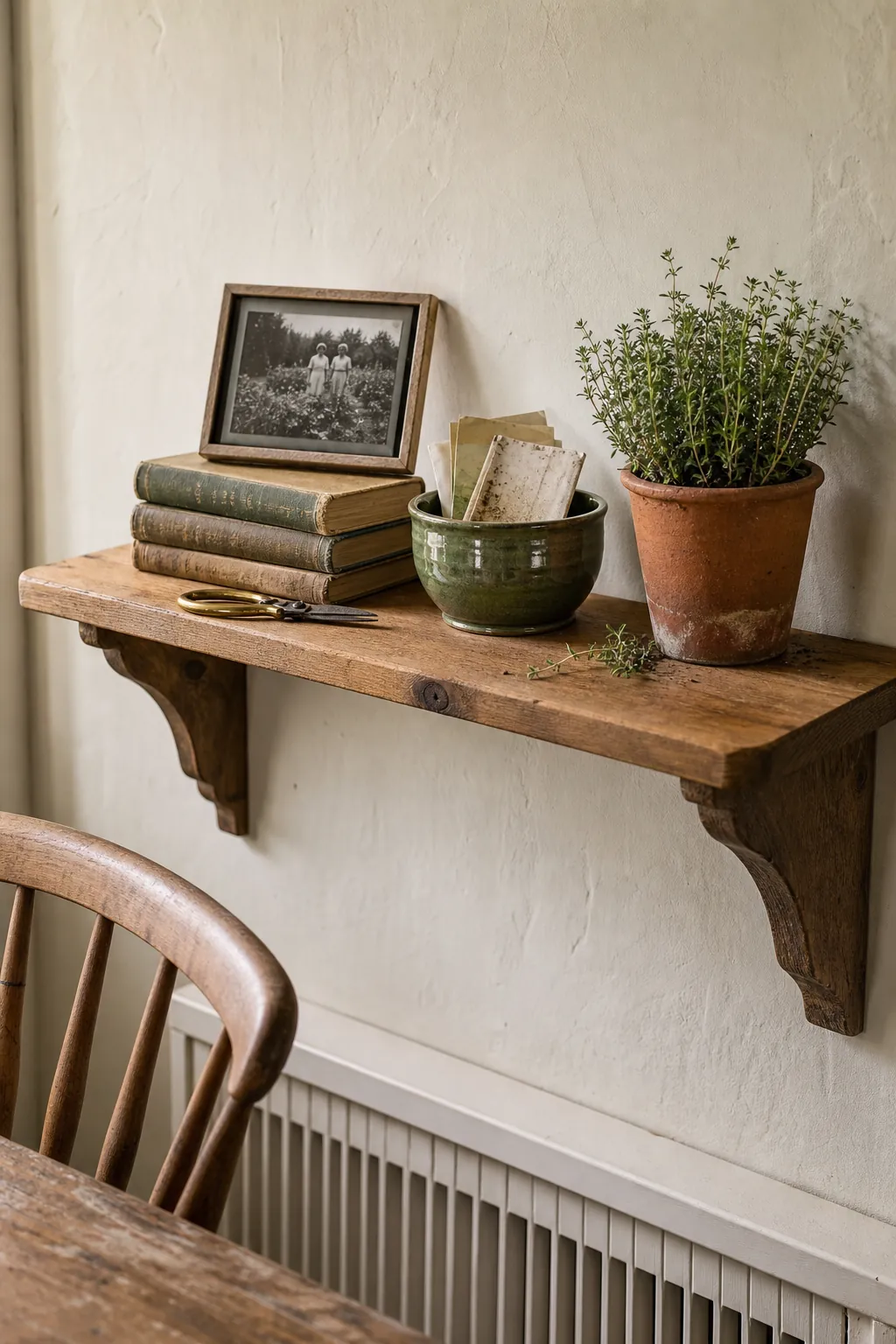
Leave breathing room on shelves. A stack of books, a handmade bowl, and a framed family photograph say more than twelve unrelated ornaments. If cleaning a surface requires moving a crowd of objects, edit until the daily routine feels easy again.
Display Personal Things in Small Stories
Vintage decor feels authentic when it connects to a person or habit. Frame a handwritten recipe near the dining table, keep gardening books beside a terracotta pot, or place a travel sketch with a shell brought home from the same trip. These pairings create meaning without requiring valuable antiques.
For wall displays, choose a clear boundary: above a console, inside the width of a sofa, or along one stair wall. Mix frame finishes, but repeat a material or tone so the arrangement holds together. Lay everything on the floor first, begin with the largest piece, and keep the gaps intentionally varied rather than accidentally cramped.
Use Nature in Ways You Can Maintain
A bowl of windfall apples, clipped branches in a stoneware jug, dried seed heads, and herbs on a sunny sill bring nature indoors without making the room precious. Choose plants that suit the actual light and your care habits. One healthy plant is more inviting than six struggling ones.
Natural materials also count: woven willow, linen, wool, clay, unlacquered brass, and visible wood grain. Spread them through the room instead of concentrating them in one themed corner. Their irregular surfaces soften flat-pack furniture and clean new construction.
Edit for Comfort Every Season
Cottage style should change with ordinary life. In warm months, store heavy blankets and let cotton, pale pottery, and garden clippings carry the room. In winter, bring back wool, deeper colors, lamplight, and the books or games your household reaches for. This is not a seasonal shopping assignment; it is a rotation of things you already own.
Before adding anything, ask three questions: Will we use it? Does it improve the room’s texture, color, or story? Where will it live when the surface needs cleaning? The best cozy cottage is not the fullest one. It is the home that makes daily rituals—tea, reading, meals, conversation, coming in from the rain—feel a little easier and warmer.