
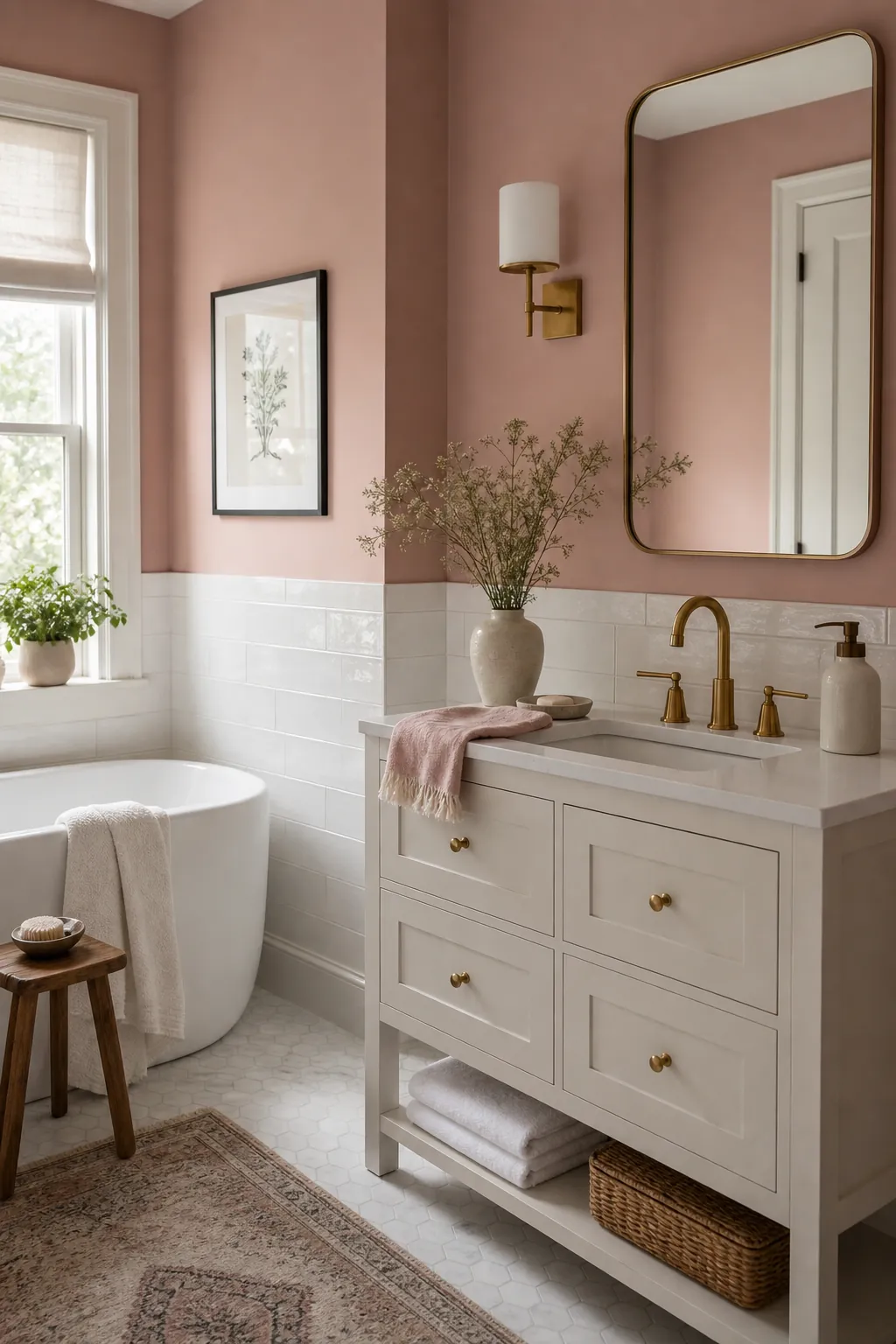
A pink bathroom can go wrong in two predictable ways: it either becomes too sweet, or the pink gets reduced to one nervous towel because the room feels hard to control. The better answer is more deliberate. Treat pink as the room’s color story, then use brass accents for warmth and white details for discipline.
That balance is what makes this look work in real homes. Blush decor softens tile, paint, and vanity decor, brass keeps the palette from feeling cold, and a clean white bathroom base gives the eye a place to rest. The goal is not a themed room. It is an elegant bathroom that happens to use soft pink decor with confidence.
Start with warm white so the pink feels intentional
The easiest way to make pink look grown-up is to place it against warm white instead of stark blue-white. Warm white paint, ivory towels, white grout, a white shower curtain, or a white vanity top can all keep blush tile and pink paint from reading too sugary.
Think of white as the frame. If the floor, trim, ceiling, tub, sink, and towels are quiet, the pink wall or tile can become the main design move instead of a risk. This is especially useful in a small bathroom where every color feels louder.
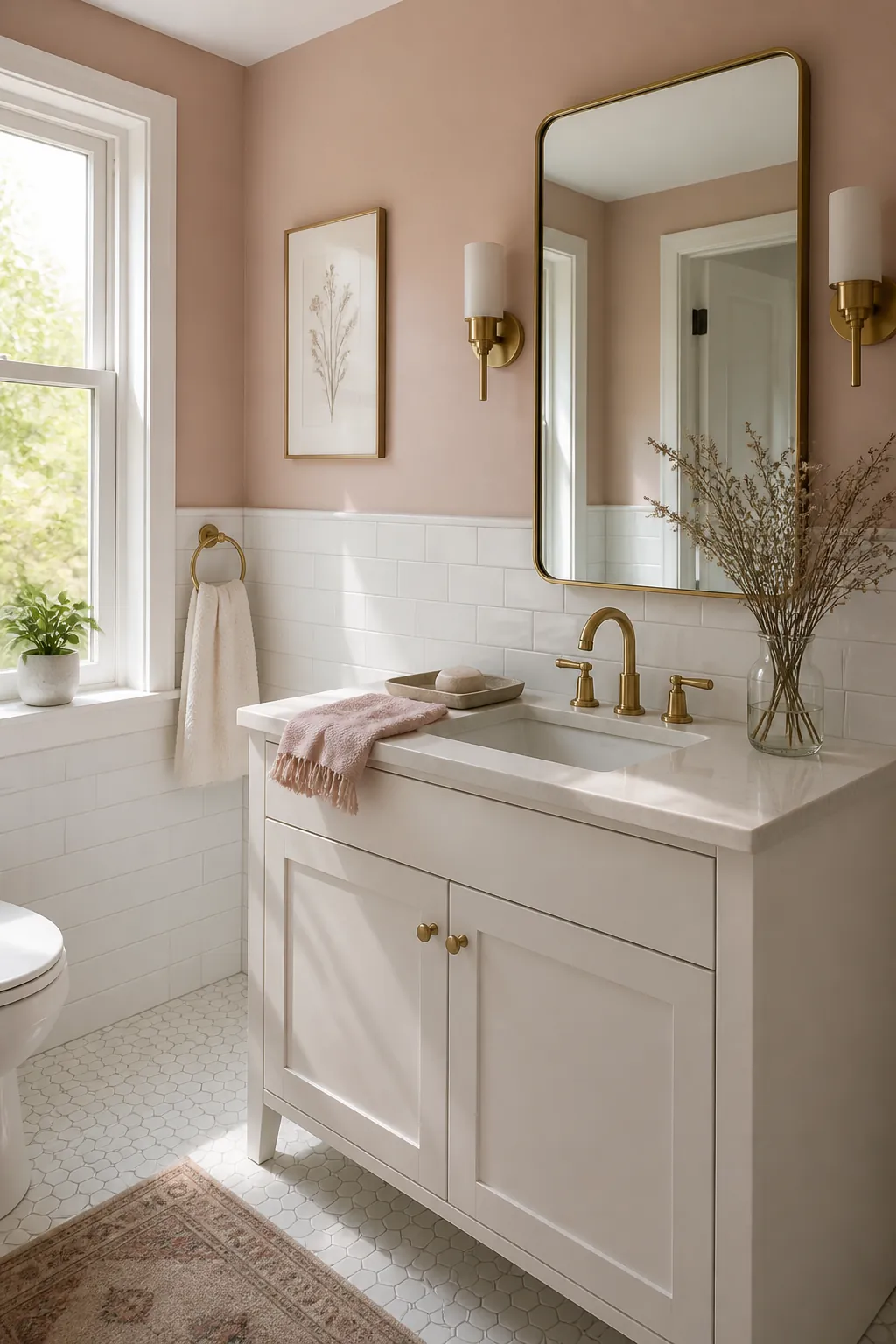
Repeat brass accents, but keep them controlled
Brass works because it adds warmth to pink without competing with it. The mistake is using a different metal finish in every corner. Choose one brass tone, then repeat it in three to five places: faucet, mirror, towel hook, cabinet pull, sconce, or shower trim.
Repetition is what makes gold hardware look designed instead of random. If the faucet is satin brass, let the mirror frame and towel ring stay close to that same finish. Avoid mixing bright yellow brass with antique brass unless the room already has enough age and texture to make the variation look intentional.
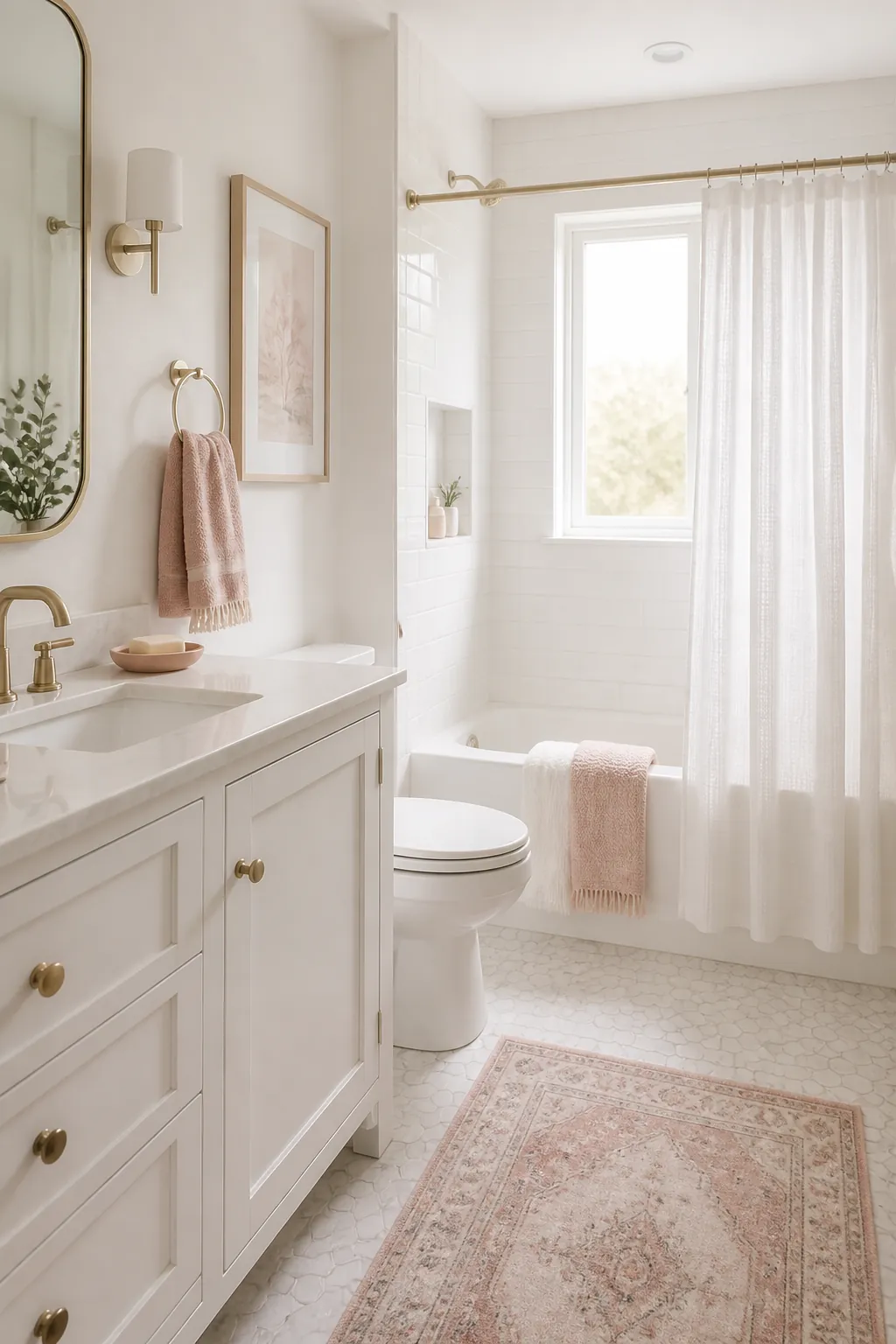
Use white details to calm blush decor
When the walls or tile are pink, the supporting pieces should not all fight for attention. White towels, a white cotton shower curtain, white ceramic trays, white grout, and a white bath mat keep the room fresh. They also make the pink easier to live with every day.
This is the difference between a pink bathroom and a cluttered pink bathroom. Let pink carry the mood, let brass add shine, then use white bathroom decor as the visual reset. If you are nervous about color, start by switching only the textiles and countertop pieces to white before changing tile or paint.
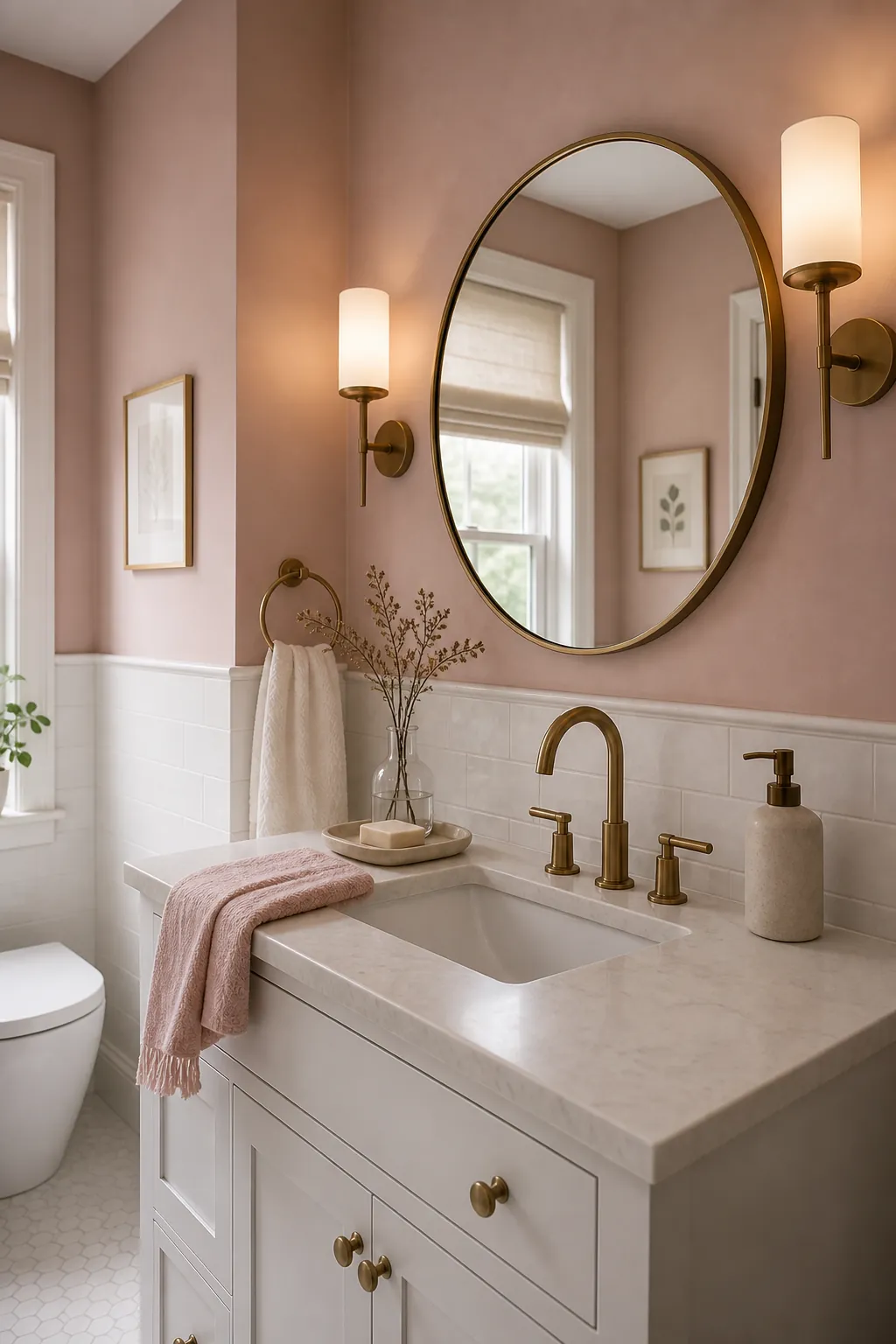
Let the vanity set the elegant bathroom mood
If you want one high-impact place to use pink, choose the vanity wall. A blush vanity, pink backsplash, or pink paint behind the mirror can make the room feel styled without covering every surface. This is also where brass accents are easiest to repeat in a natural way.
Pair a pink vanity moment with a white stone top, white sink, brass faucet, brass mirror, and one warm sconce. Keep vanity decor edited: a tray, soap dispenser, folded hand towel, and a small vase are enough. Open counter space is part of the styling.
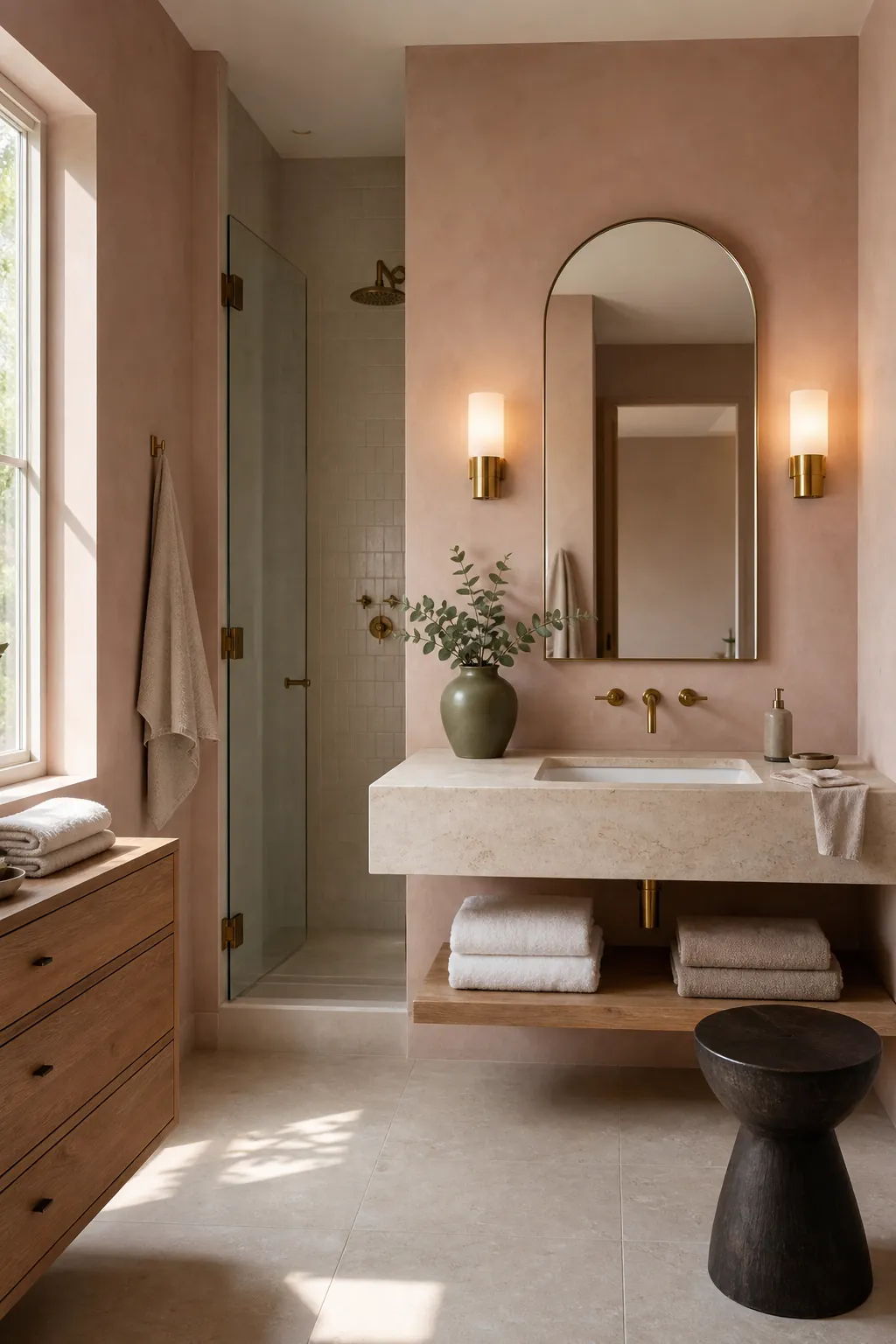
Add texture so the room does not feel flat
Pink, brass, and white can look beautiful, but they still need texture. Without it, the room may feel too polished or too new. Bring in woven baskets, linen window shades, ribbed glass, zellige-style tile, a soft bath mat, a wood stool, or a small plant.
Texture is also the easiest way to make soft pink decor feel more relaxed. A woven hamper, rolled white towels, and a pale wood stool can soften the shine of brass and tile. Use natural pieces sparingly so the bathroom still feels clean.
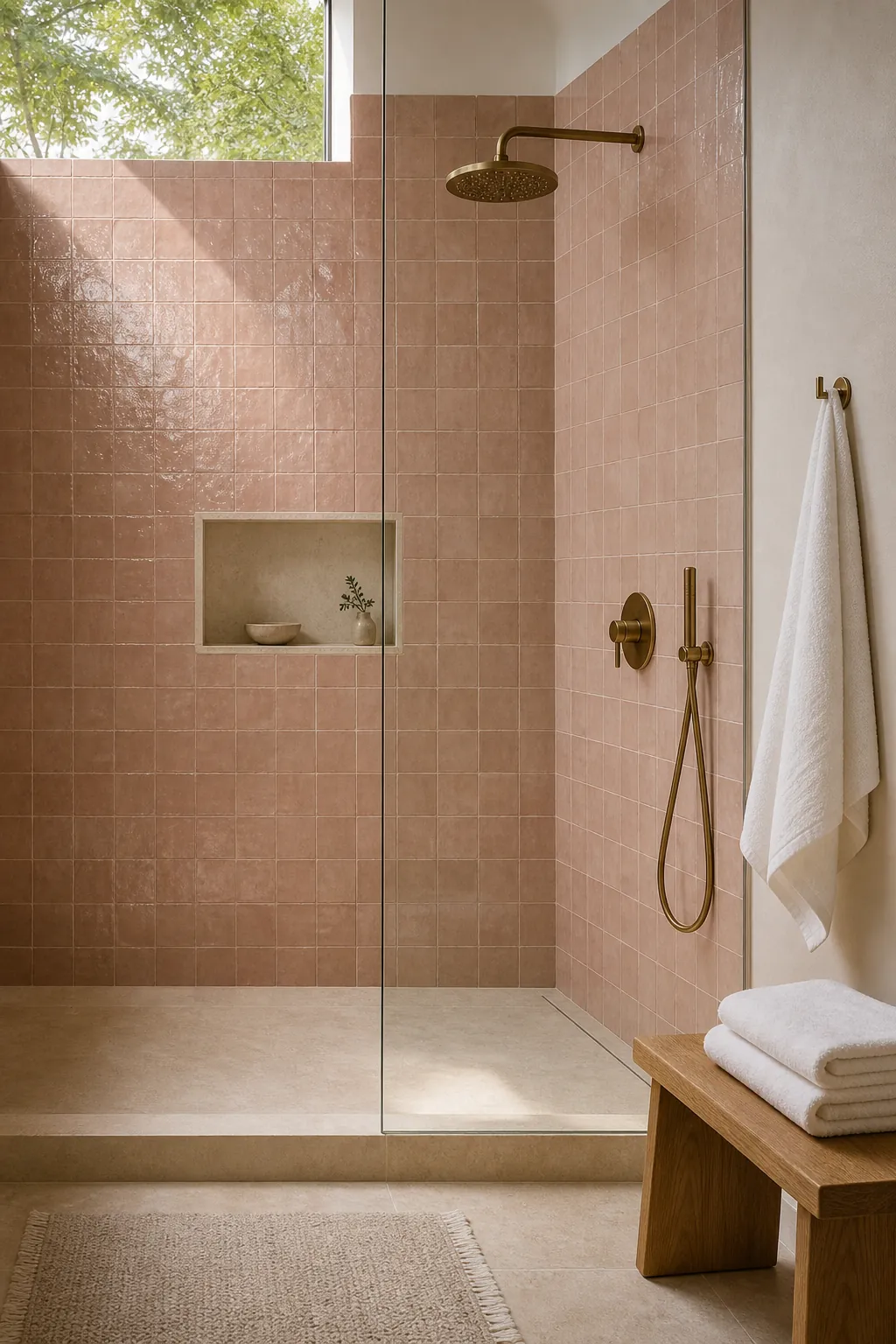
Choose lighting that makes pink look soft, not harsh
Lighting decides whether a pink bathroom feels flattering or flat. Warm sconces near the mirror, soft bulbs, and natural daylight will usually make blush tones look richer. Cold overhead light can make the same paint or tile feel chalky.
For bathroom styling, brass sconces are useful because they repeat the metal finish and add glow exactly where the room needs it. If you can, place light on both sides of the mirror or use a warm picture light above it. Pink looks best when the light is layered.
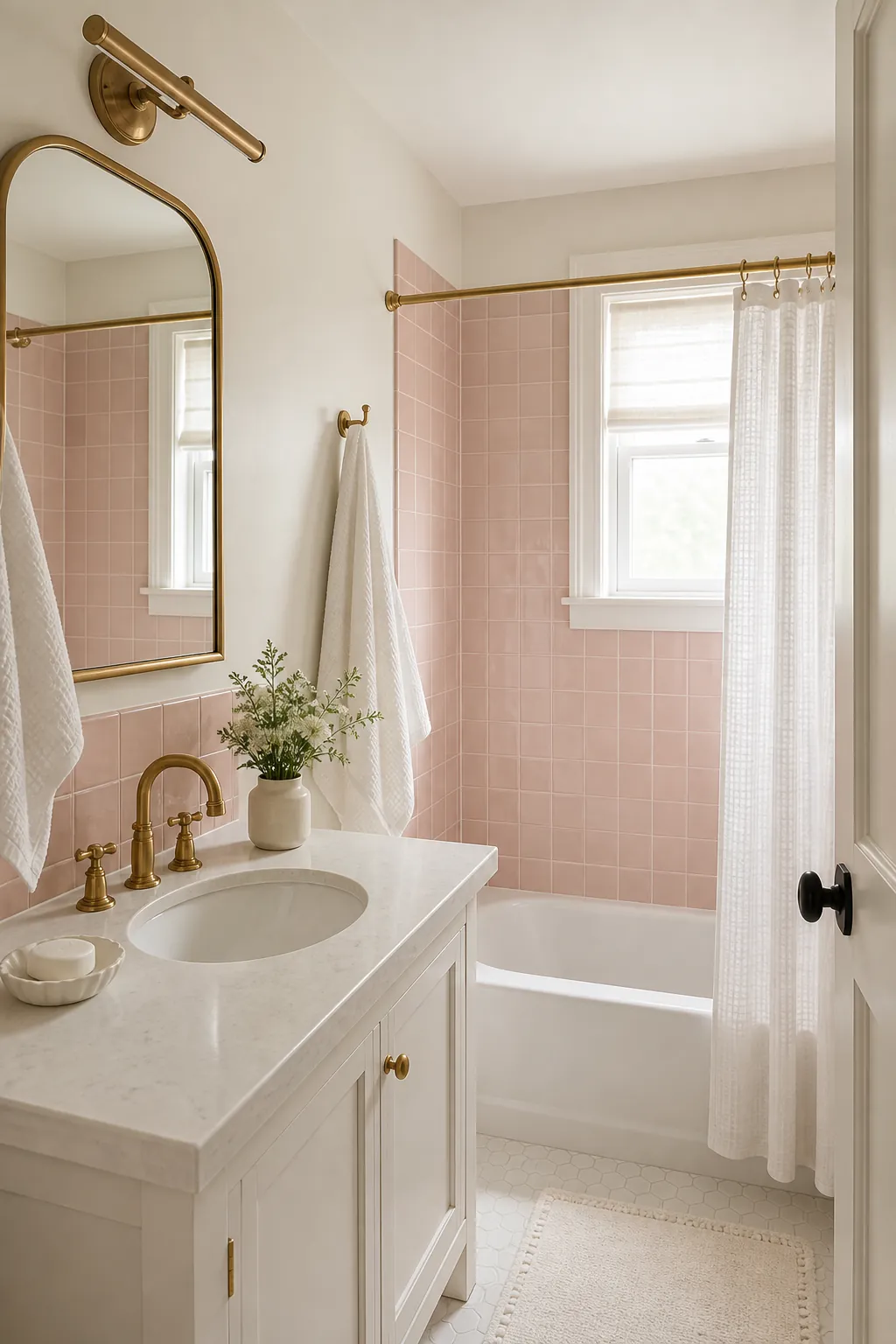
Use a simple styling formula at the end
Once the main finishes are set, keep the final layer simple. Use one pink surface or accessory, two or three white pieces, and two or three brass details. That formula keeps the room coordinated without turning every item into a matching set.
- One pink anchor: wall color, tile, vanity, towel, or tray.
- Two white resets: towels, curtain, bath mat, sink, or countertop.
- Three brass repeats: faucet, mirror, sconce, hook, or cabinet pull.
- One natural texture: basket, linen shade, wood stool, or small plant.
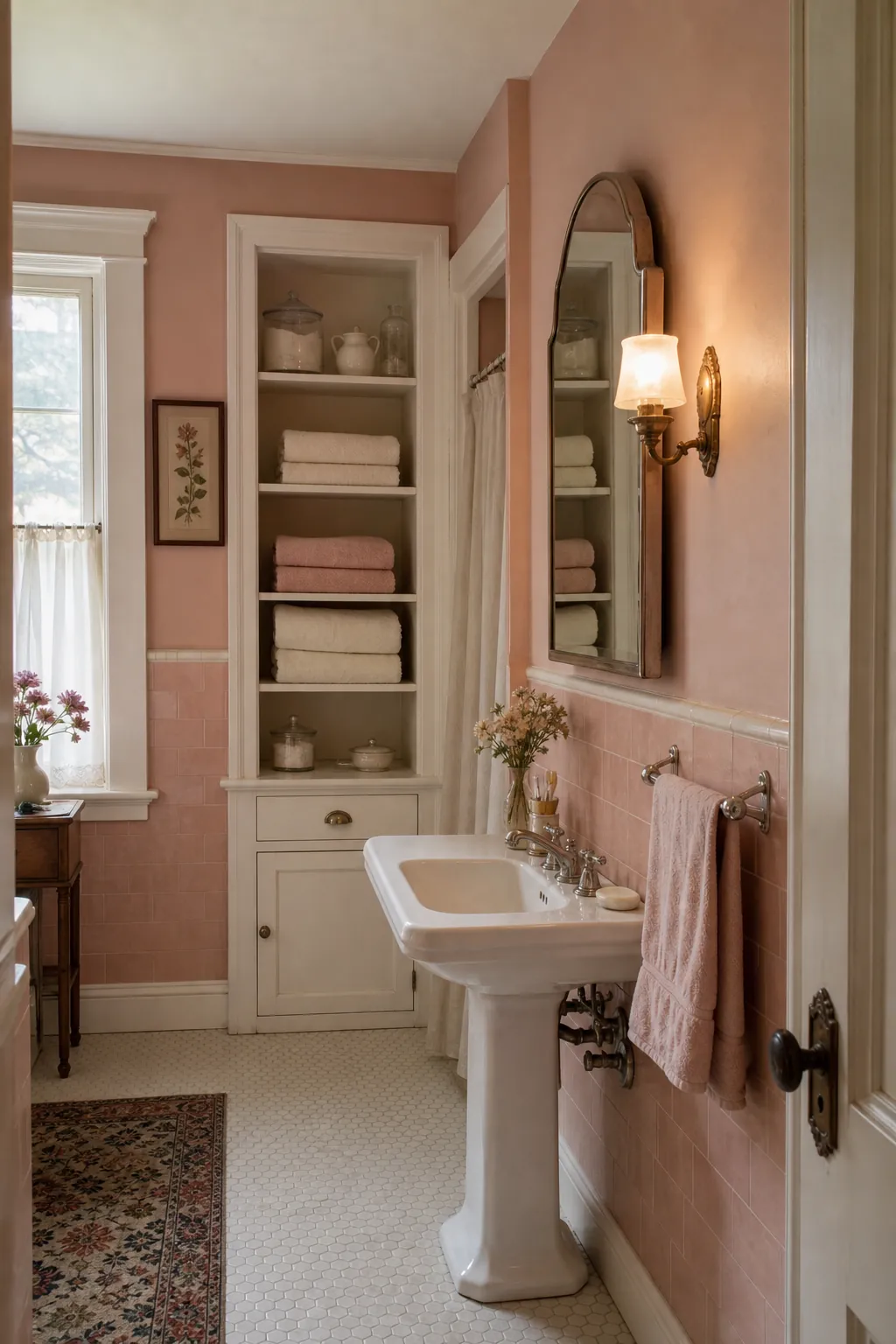
The cleanest version is edited, not empty
A pink bathroom with brass and white details should feel warm, bright, and easy to maintain. The trick is not to remove personality. It is to give every piece a job: pink for softness, brass for warmth, white for clarity, and texture for depth.
If the room starts to feel too sweet, add more white. If it feels too plain, repeat brass or bring in texture. If it feels busy, remove one pink accessory. That small editing loop is what turns a pretty idea into a bathroom that still works on an ordinary morning.