
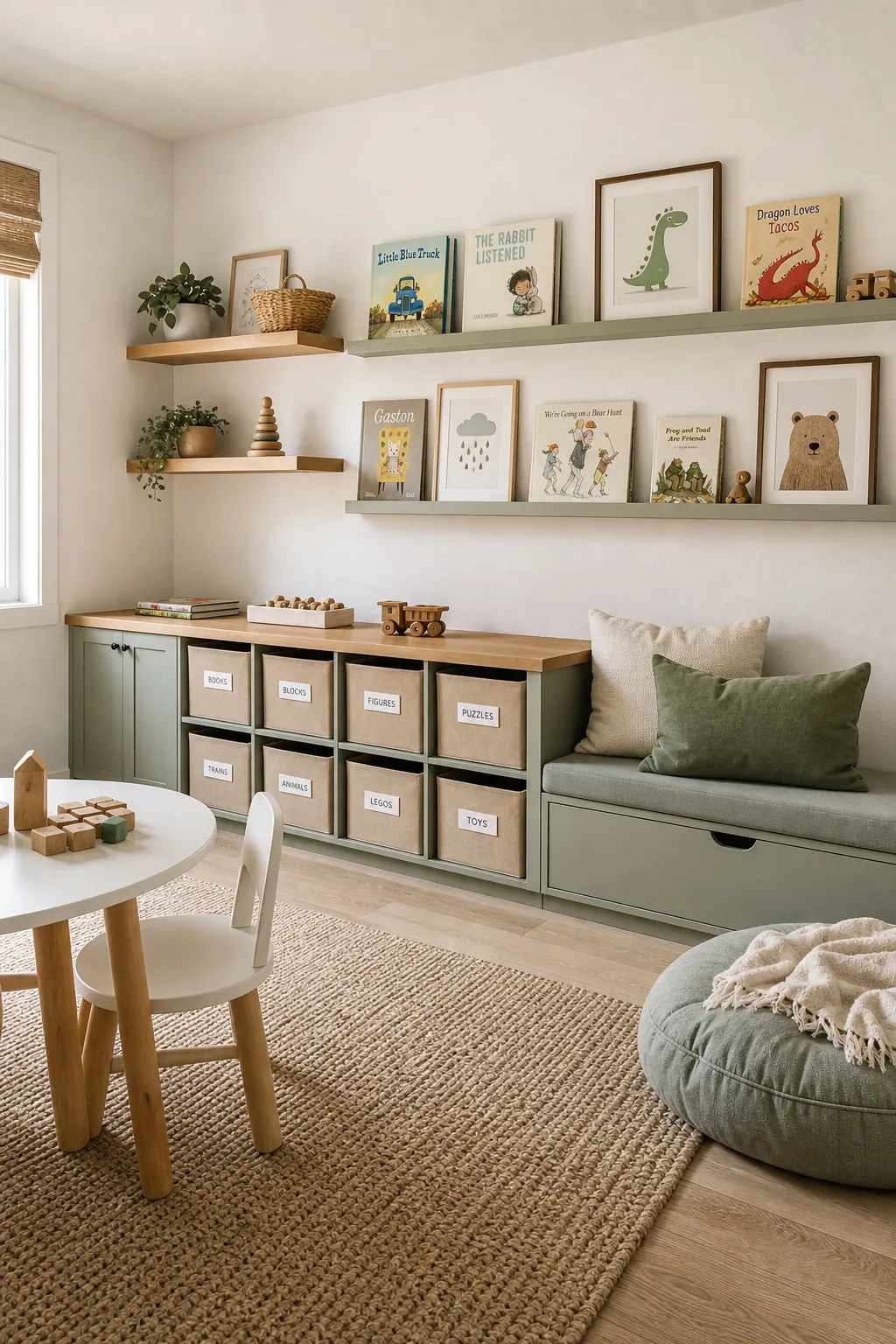
The best Playroom Wall Decor does more than make the room cute. It gives toys, books, art supplies, costumes, and small collections a place to land without stealing the open floor space kids actually need for play. The trick is to treat the walls as a working layer: a little display, a little Playroom Storage, and enough closed or contained space that the room still looks calm after cleanup.
Parents usually run into the same problem. Open shelves look beautiful on day one, then they become a parking lot for half-built blocks, random plastic pieces, and baskets that get dumped out because one toy is missing. A better wall plan mixes visible favorites with hidden or labeled storage. That way the room still has personality, but Kids Organization does not depend on every toy being perfectly styled.
Picture Ledges That Turn Books Into Wall Art
Forward-facing book ledges are one of the easiest Playroom Ideas because the covers become instant color and pattern. Instead of a tall bookcase that eats floor space, run two or three slim ledges above a low bench, play mat, or storage cube unit. Keep the lowest row reachable for everyday books and use the upper row for seasonal favorites, keepsake books, or display-only pieces.
The real styling move is restraint. A ledge looks better with one row of books facing out than with stacks jammed behind each other. If your child owns more books than the wall can handle, rotate them by theme: animals this week, vehicles next week, bedtime books after that. This keeps the display fresh and stops the ledges from becoming cluttered.
Low Cubbies With A Styled Shelf Above
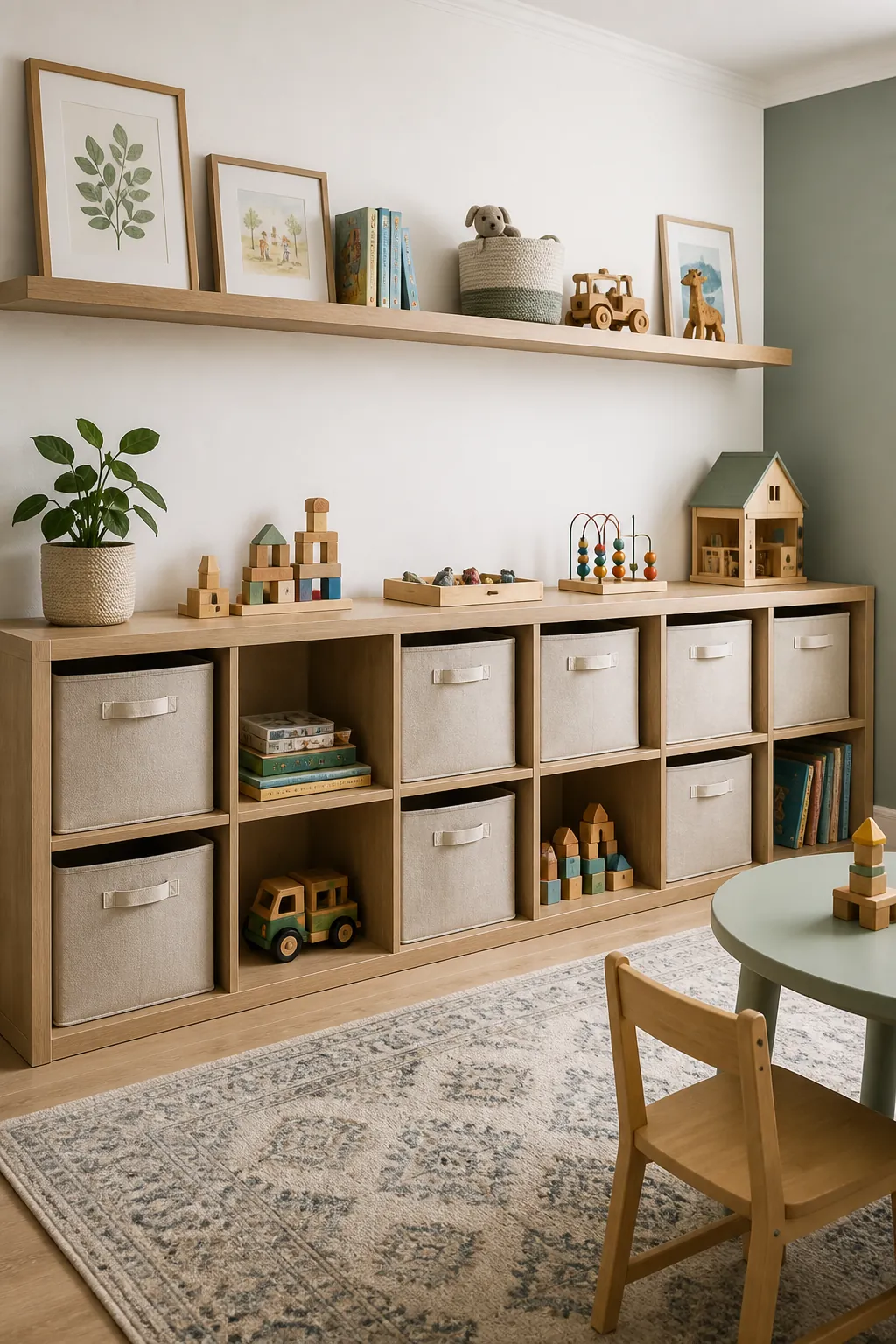
Low cubbies work because kids can reach them, but a wall of identical bins can feel heavy if it is the only design element in the room. Give the cubbies a calmer top edge by adding one long Wall Shelves layer above them. The bins handle the messy Toy Storage; the shelf carries the room styling.
Use the shelf for three types of objects only: framed art, a few favorite books, and one or two toys that are beautiful enough to display. Keep heavy items low, anchor tall storage to the wall, and avoid placing tempting heavy baskets above a child’s reach. The lower half should be practical; the upper half should be edited. That balance is what keeps cubbies from looking like a warehouse.
A Pegboard Art Station That Cleans Up Fast
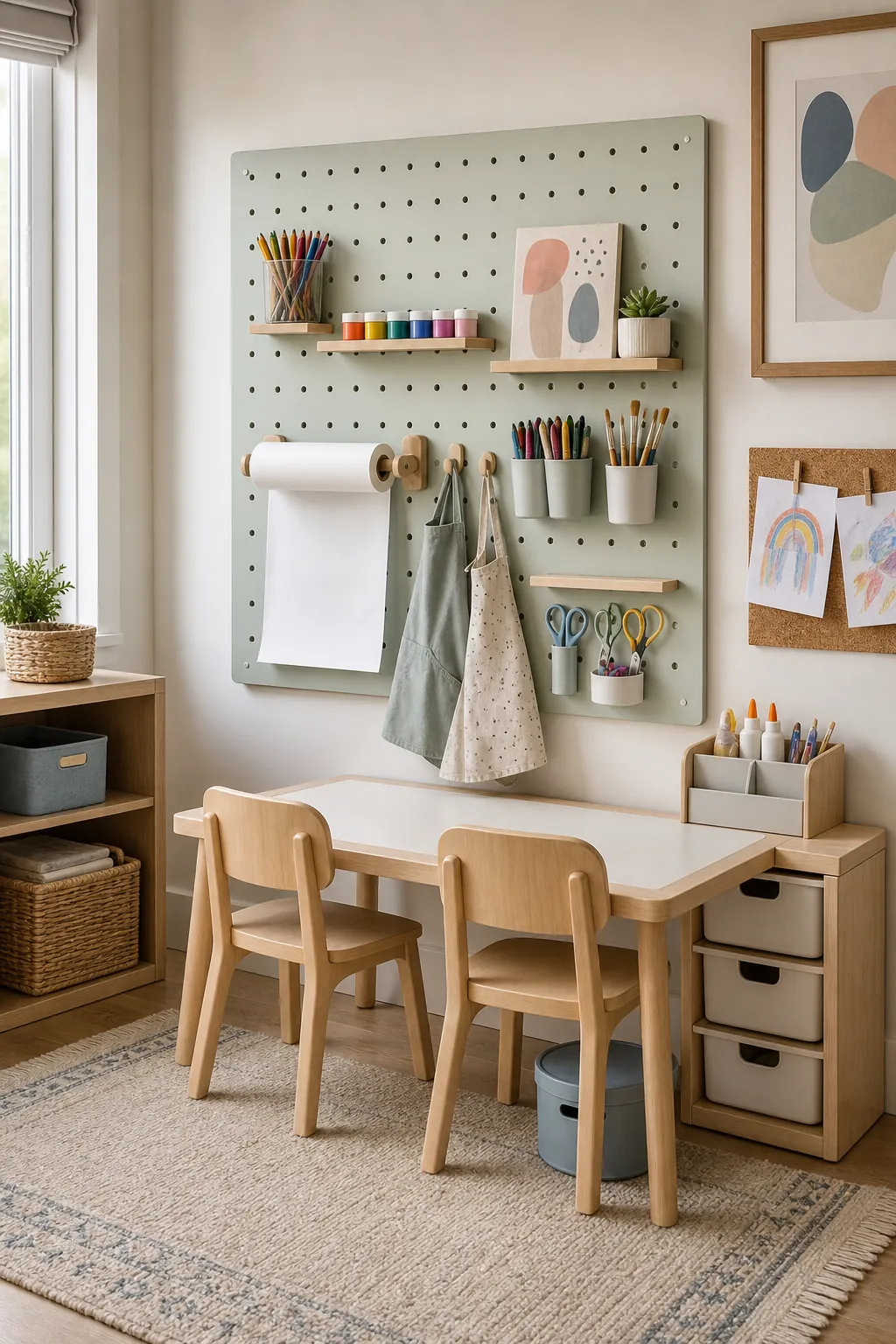
Art supplies are hard to store because kids need to see them, but the room looks chaotic when every marker, brush, and roll of tape sits on the table. A wall-mounted pegboard gives the art zone a clear boundary. Add small cups for crayons, shallow shelves for paint jars, hooks for scissors, and a paper roll or clipboard rail for current projects.
The key is not filling every peg. Leave breathing room around the supplies so cleanup is obvious. Picture labels help younger kids return items without reading, and a small lidded bin below the board can hold glitter, glue, and anything you do not want freely available. This is Kids Room Decor that also teaches where things belong.
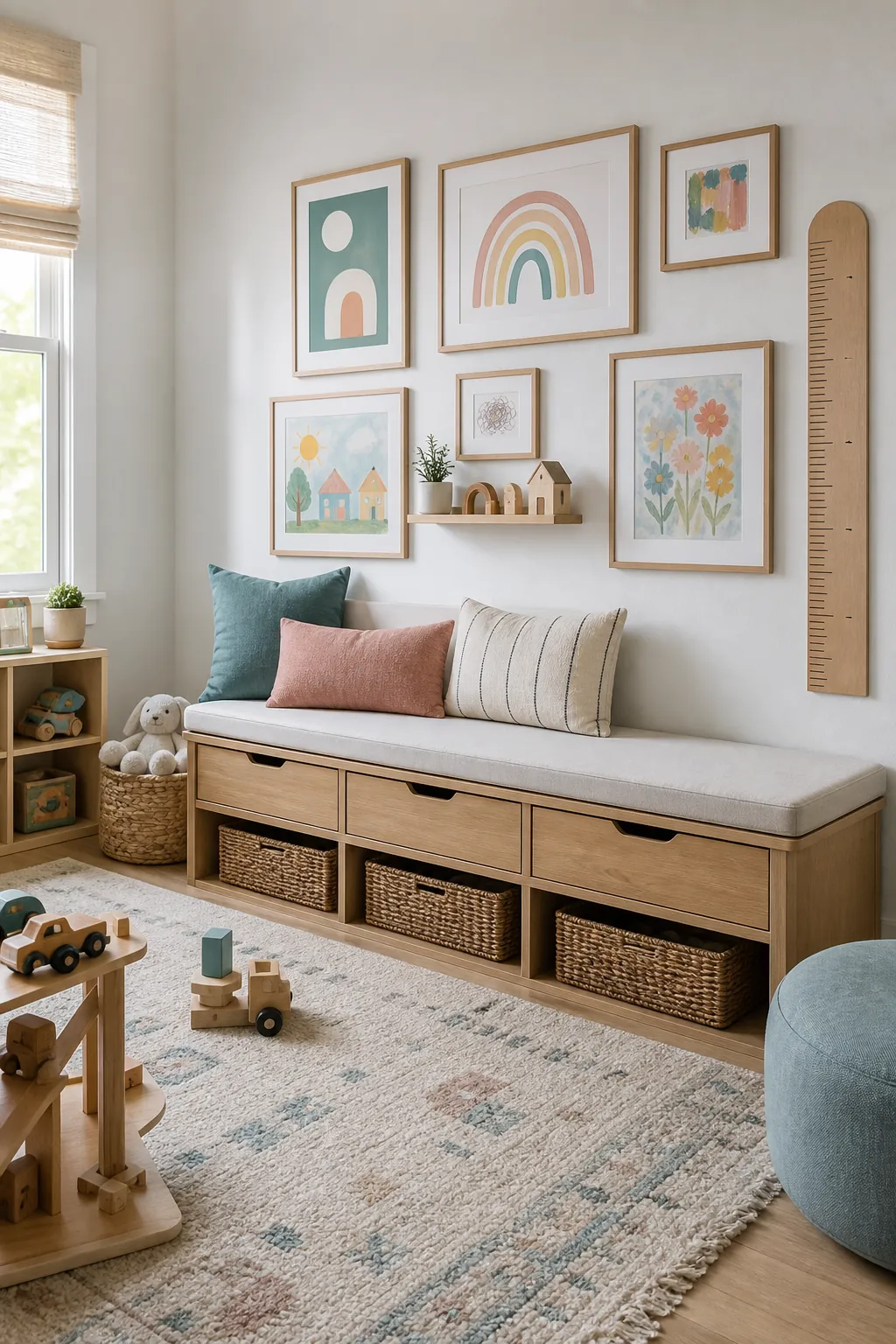
A Gallery Wall Above Hidden Toy Storage
If the playroom opens to a living room, basement lounge, or guest space, hidden storage matters. A storage bench, closed cabinet, or lidded toy chest can hide the visual noise, while the wall above it carries the personality. Try a small gallery wall with child artwork, playful prints, a height chart, or framed fabric in colors that repeat in the rug and bins.
This works especially well when you are trying to make Storage Ideas feel intentional instead of purely functional. The bench creates a clean horizontal line, and the framed pieces above it make the zone look designed. Keep the gallery tight rather than scattering frames across the wall. A compact arrangement feels calmer and makes cleanup look more complete.
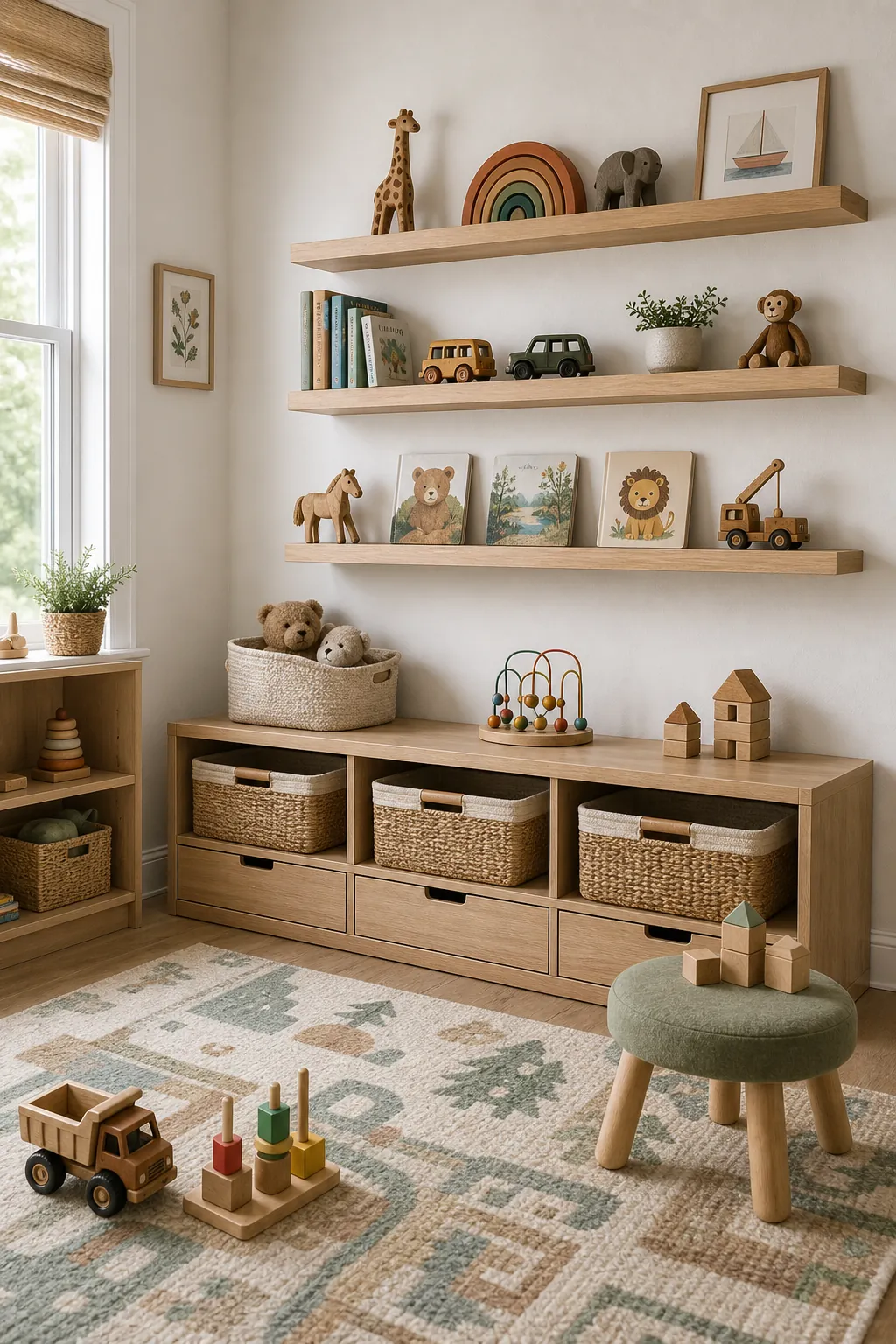
Floating Shelves For Favorites, Closed Baskets For The Rest
Open shelving is best for favorites, not for everything. If you want floating shelves in a playroom, give them a narrow job: display the wooden animals, pretty puzzles, favorite vehicles, or a small rotating collection. Then put the loose pieces, duplicates, and noisy toys in closed baskets or drawers below.
This solves the classic open-shelf problem: technically tidy, visually messy. Choose baskets with lids or deep handles so kids can move them, but avoid oversized bins that require dumping to find anything. Small categories beat giant catchalls. Blocks in one basket, trains in another, pretend food in another. The wall still reads as Wall Art, while the storage stays useful.
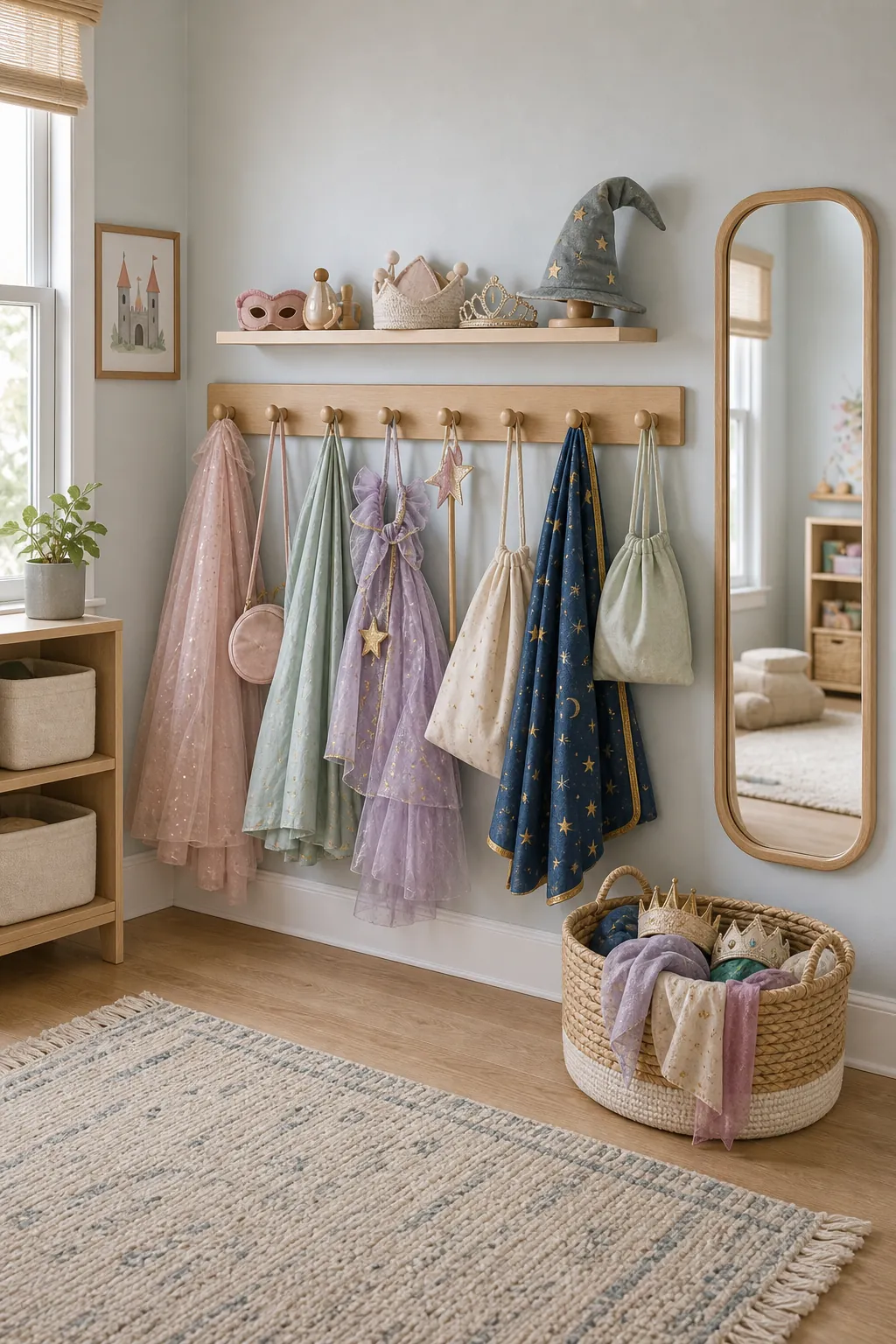
Dress-Up Hooks That Double As Wall Decor
Costumes, capes, hats, and bags are too bulky for small bins, and kids use them more when they can see them. A row of sturdy hooks turns dress-up storage into a playful wall moment. Add a mirror nearby, a shallow basket for crowns and accessories, and one small shelf for shoes or props.
Keep the hooks low enough for independence but spaced far enough apart that costumes do not become one tangled pile. If the playroom is also a bedroom, mount the hooks behind the door or beside a wardrobe so the color stays contained. This is one of the most forgiving Playroom Storage upgrades because fabric naturally adds softness and movement to the room.
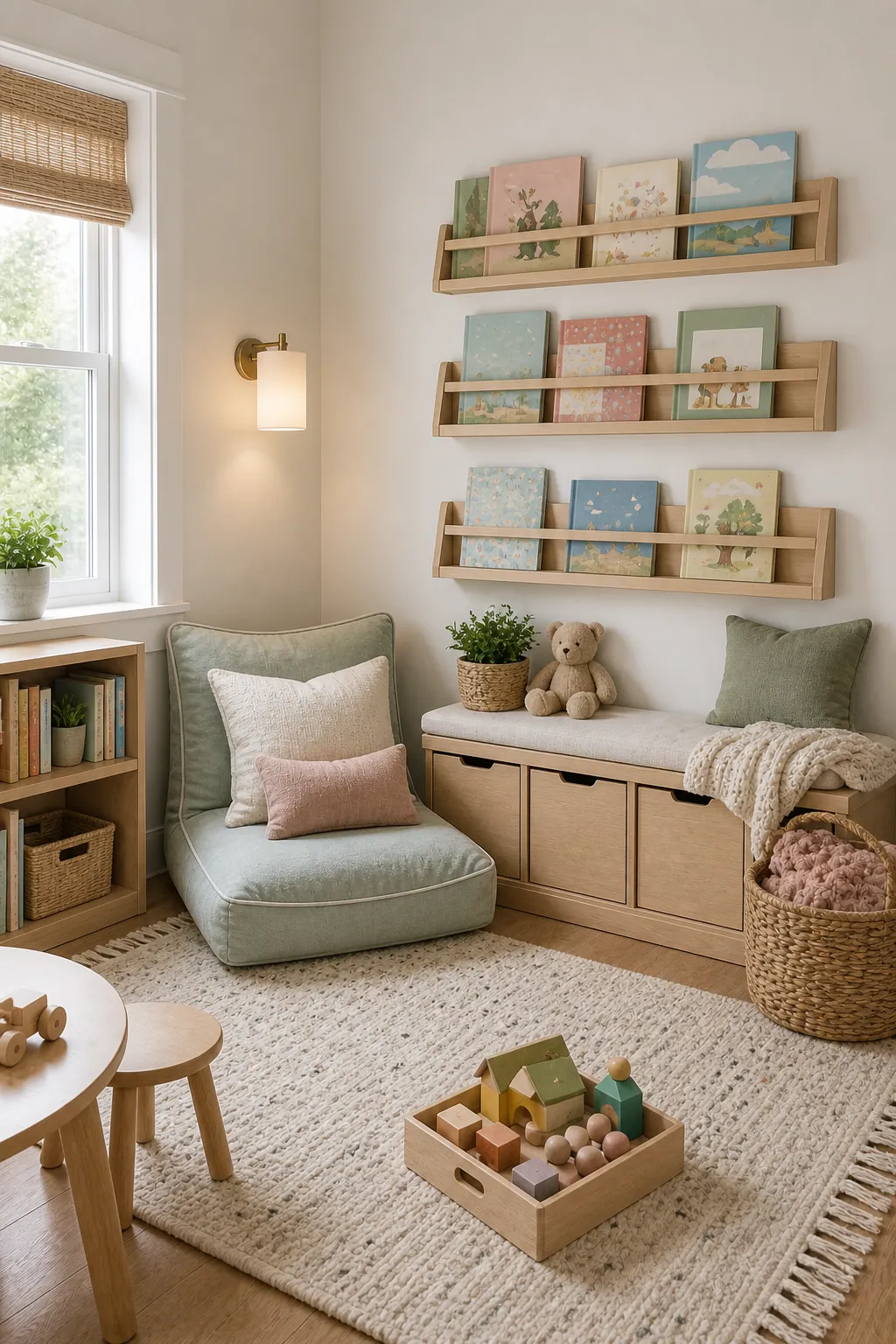
A Reading Nook With Book Rails And Soft Storage
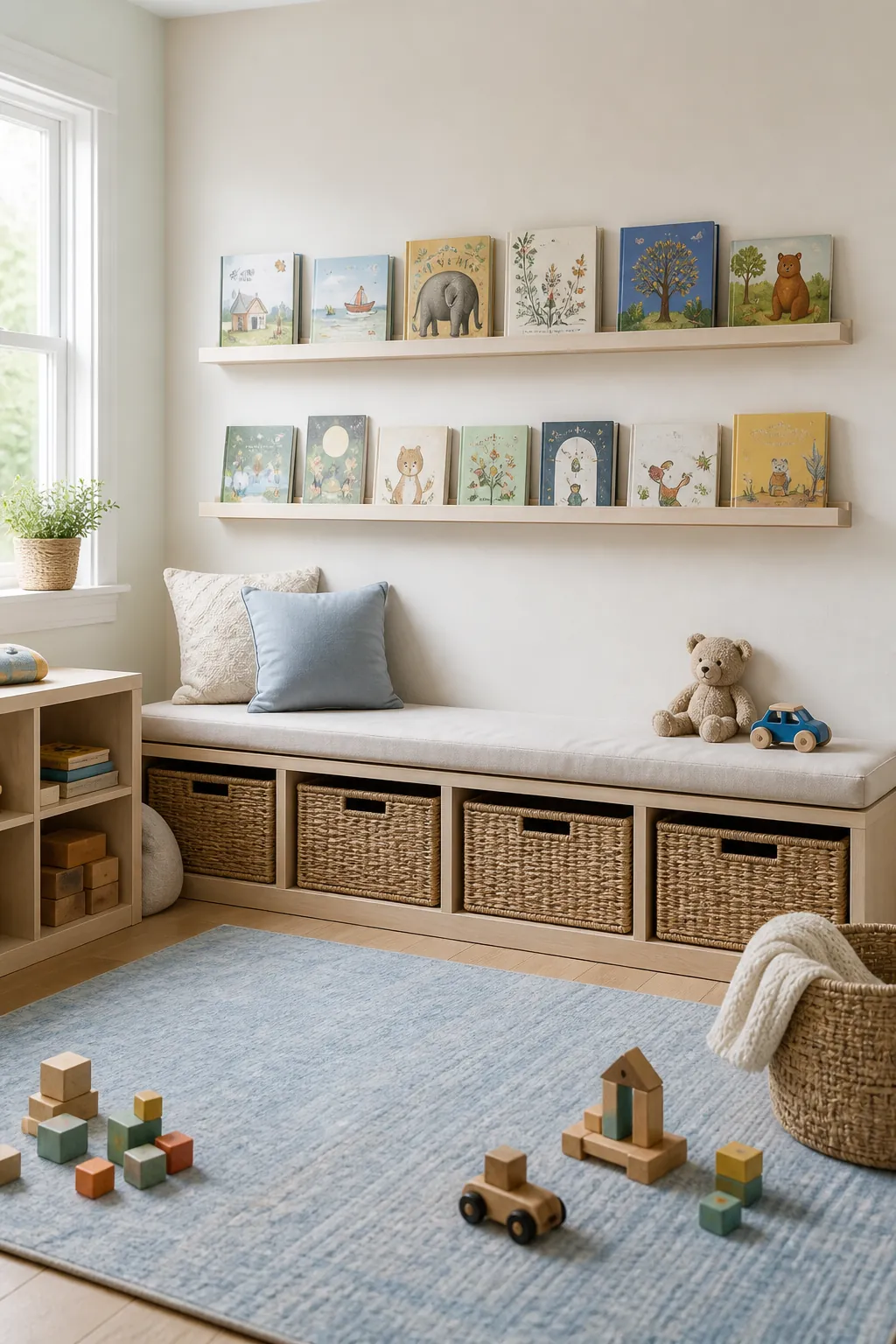
A reading nook does not need much furniture. A soft rug, floor cushion, wall-mounted book rails, and one small storage bench can make a corner feel finished. The book rails keep covers visible, while the bench can hide extra books, plush toys, or blankets. If the room is narrow, this approach keeps the center open for floor play.
For stronger Room Styling, repeat one color from the books in the cushion, art, or storage bins. That small repetition makes the nook look designed without locking you into a theme. Add a wall light only if cords can be fully managed and out of reach; otherwise, rely on natural light or a safe ceiling fixture.
A Toy Rotation Display That Keeps The Room Styled
The most stylish playrooms usually have fewer toys visible at one time. A toy rotation wall gives you a place to display a small set of current favorites while the rest stays in a closet, cabinet, or labeled bins. Use a low shelf for active toys, a slim wall shelf for books or figures, and closed storage nearby for the next rotation.
Rotate by activity rather than randomly. One week might feature building toys, animal books, and blocks. Another week might show pretend food, dolls, and a small play kitchen setup. When the wall tells kids what kind of play is available, they are less likely to empty every bin looking for inspiration.
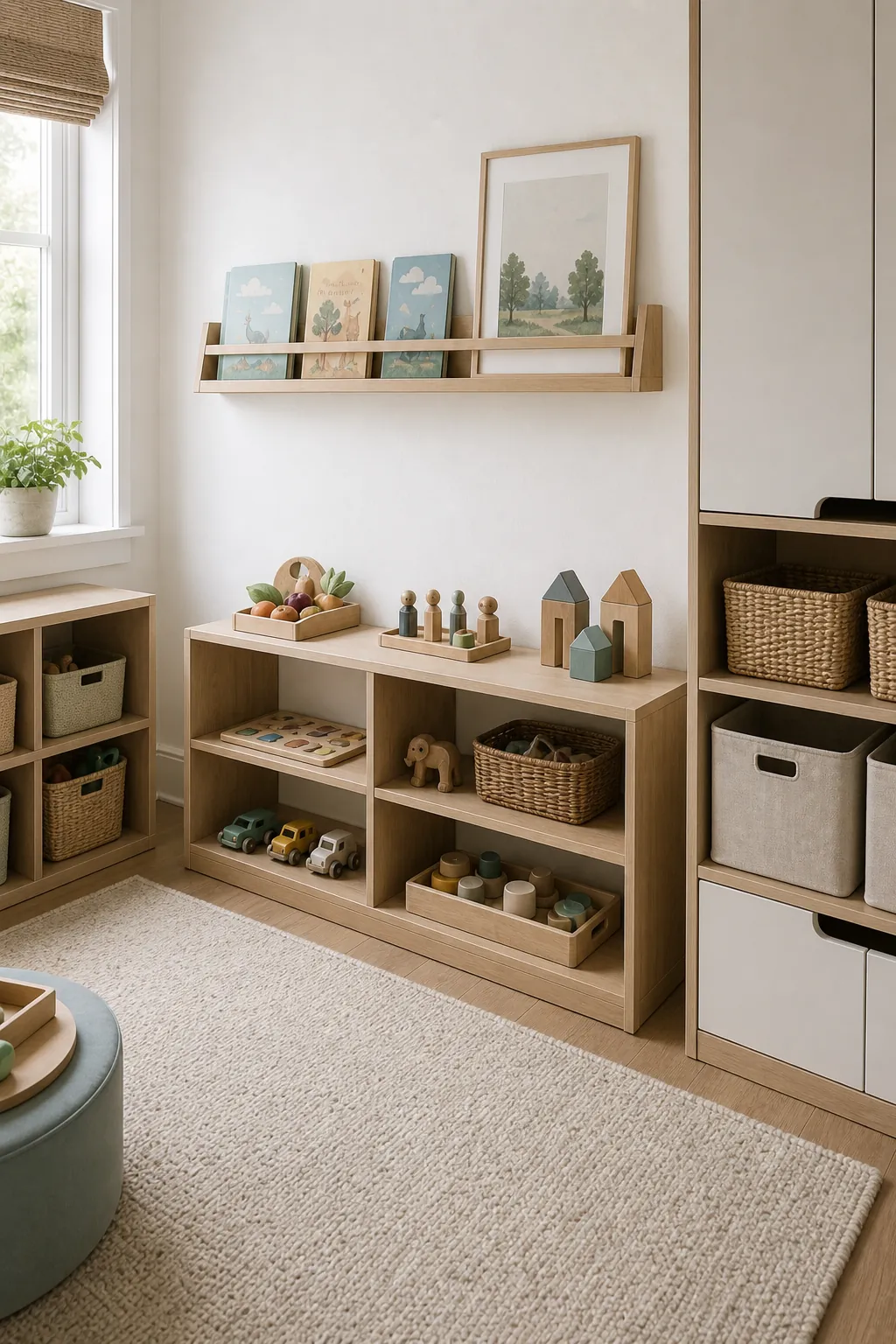
The strongest wall plan is not the one with the most shelves. It is the one with a job for every layer: low storage kids can use, higher display that stays edited, and enough closed space to hide the pieces that never look pretty. Start with the toys that cause the biggest mess, give those a real home, then let the decor grow from that system.