
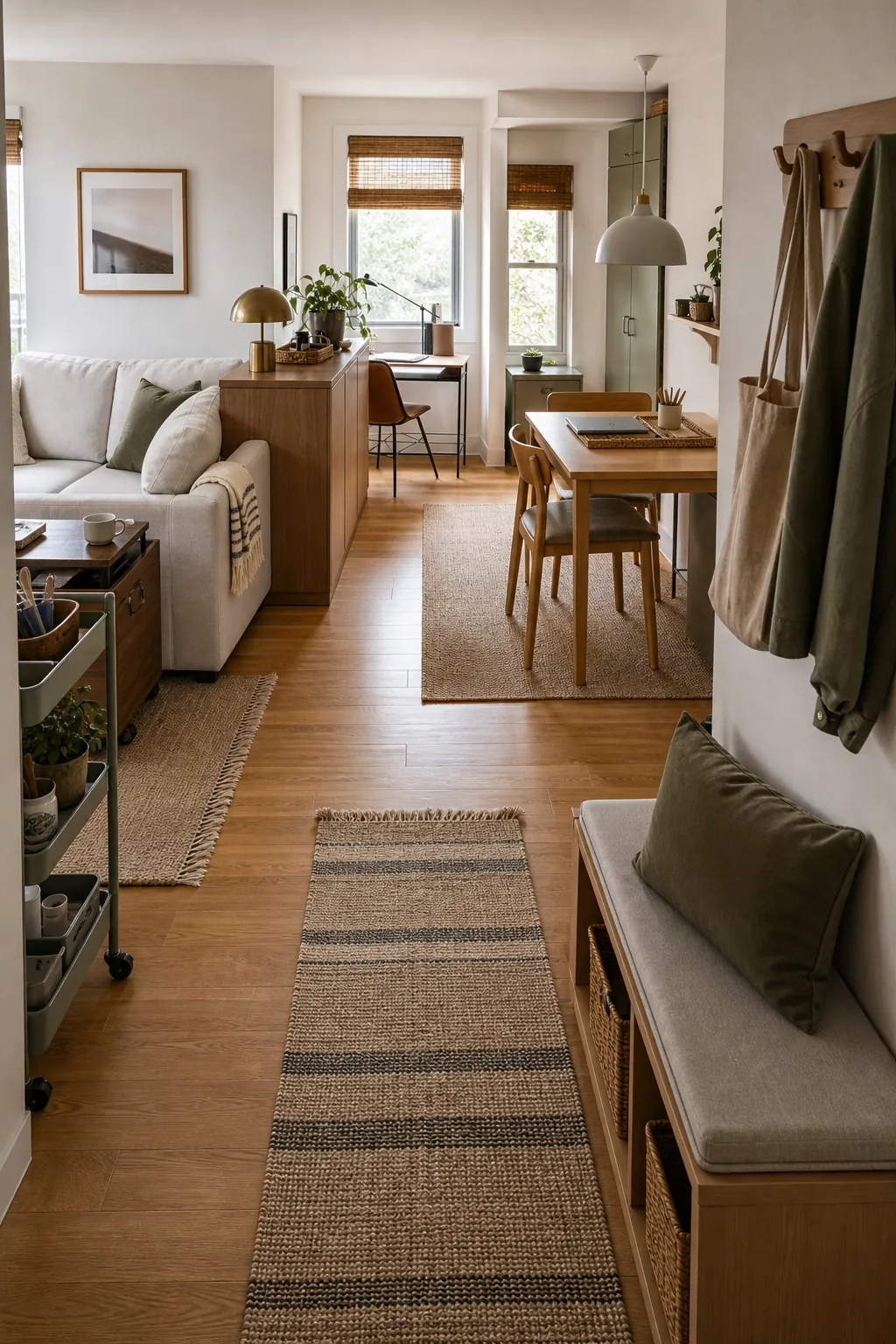
A small home usually becomes frustrating at the handoff points: the keys land on the counter, the laptop slides to the sofa, the laundry waits in the bedroom, and the hobby supplies never quite make it back into a closet. The fix is not to buy a bigger set of bins. The fix is to organize the home by activity zone, so every routine has a clear place to start, pause, and reset.
Activity zones work because they match how you actually move through the day. Instead of asking, “Which room does this item belong in?”, ask, “Which activity does this item support?” That one shift turns small home organization into a practical system instead of a constant cleanup project.
Map the Activity Zones You Actually Use
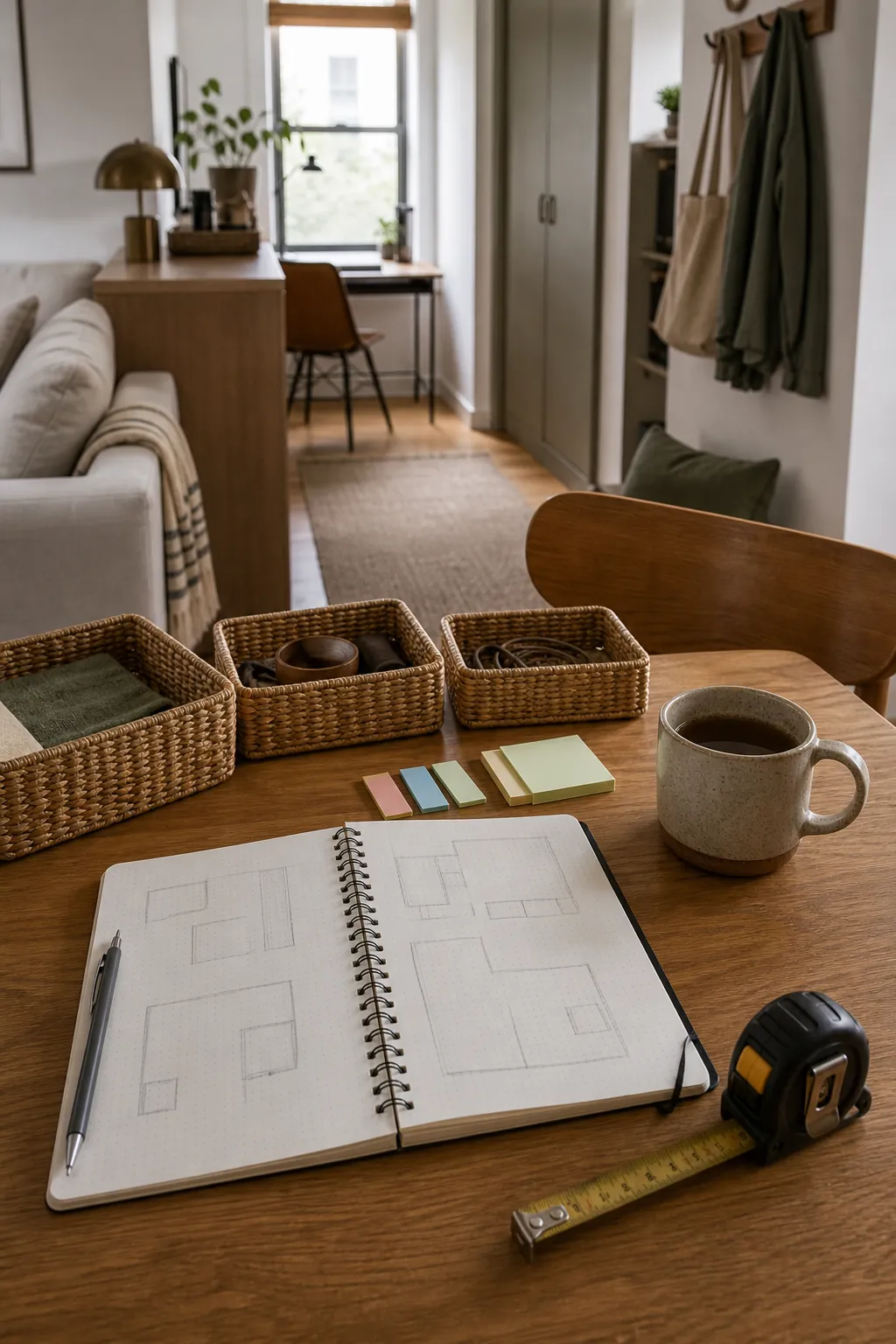
Start with the activities that happen every day, not the furniture you own. In a small home, one room may need to support cooking, working, reading, exercising, laundry, and hosting. If those routines share the same surface, the room will always look unfinished.
Walk through one normal weekday and write down the repeated loops: leaving the house, making coffee, working from home, eating, relaxing, getting dressed, laundry, cleaning, hobbies, and charging devices. Then give each loop a zone, even if that zone is only a drawer, tray, hook rail, shelf, or basket.
- Daily activities get the easiest reach. Put the items where your hand already goes.
- Occasional activities can live higher, lower, or behind doors. They should not steal prime space.
- Anything without a zone becomes roaming clutter. It will move from table to chair to floor until you decide where it resets.
Build a Small Entry Launch Zone
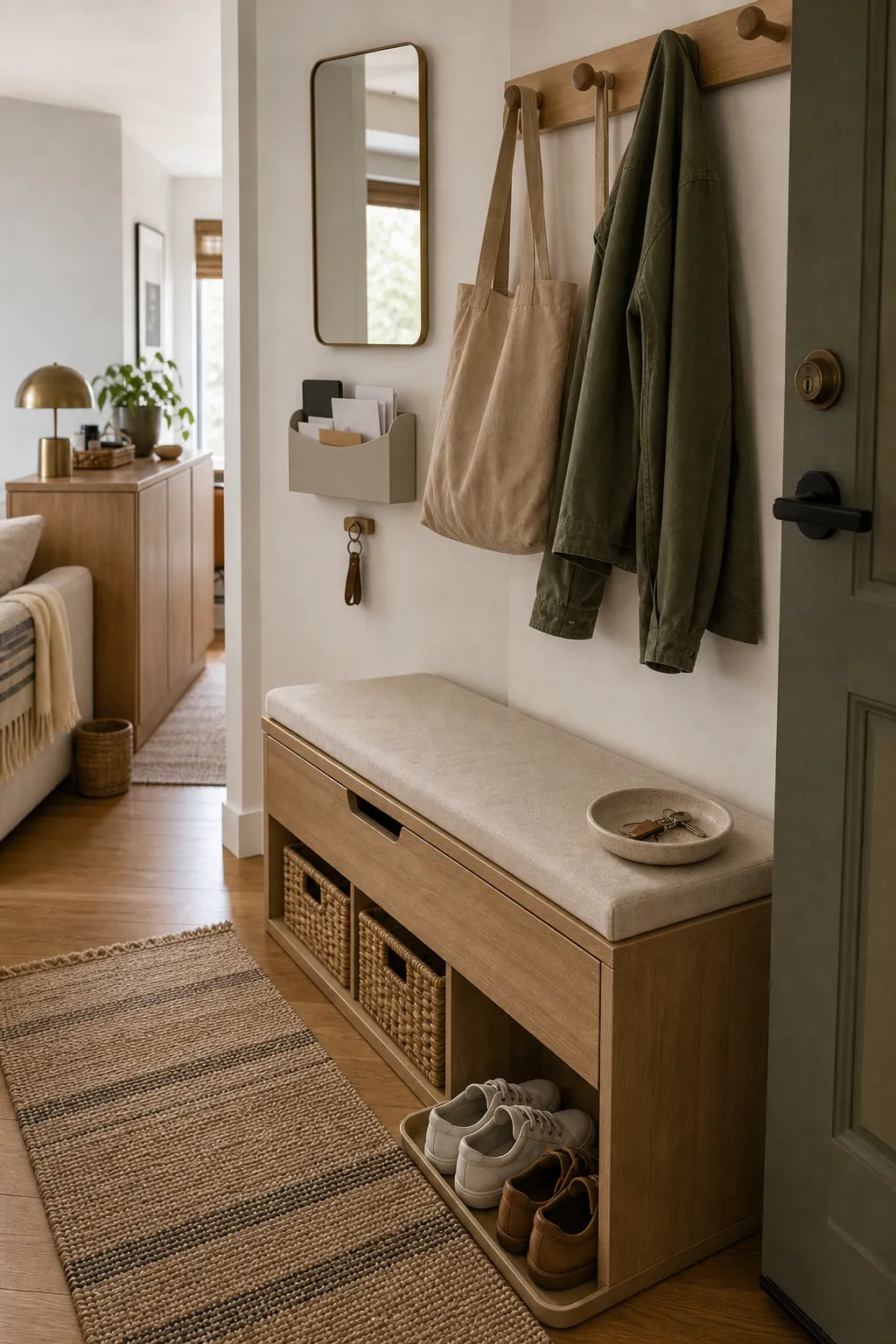
The entry is usually the first zone to fix because it controls what spreads through the rest of the home. If shoes, bags, mail, keys, and jackets do not have a landing place near the door, they will borrow the kitchen counter, dining chair, sofa arm, or floor.
You do not need a full mudroom. A strong entry zone can be a narrow bench, a wall rail, a shoe tray, and one small dish for pocket items. Keep it tight. The goal is not to store every coat and every pair of shoes here; the goal is to catch the current day before it becomes whole-home clutter.
- One hook per everyday bag or jacket
- A shoe tray or slim cubby for the pairs in active rotation
- A shallow dish, drawer, or wall pocket for keys, earbuds, sunglasses, and mail
- A small donation bag or return basket if outgoing items pile up
If the entry is part of the living room, choose closed or visually quiet storage. Open piles near the door make the whole home feel busy before you even sit down.
Keep Meal Prep in One Kitchen Footprint
Small kitchens fail fast when categories are organized by type but not by action. Coffee mugs live in one cabinet, filters in another, sweetener on the counter, and the kettle wherever it fits. The routine is simple, but the items are scattered.
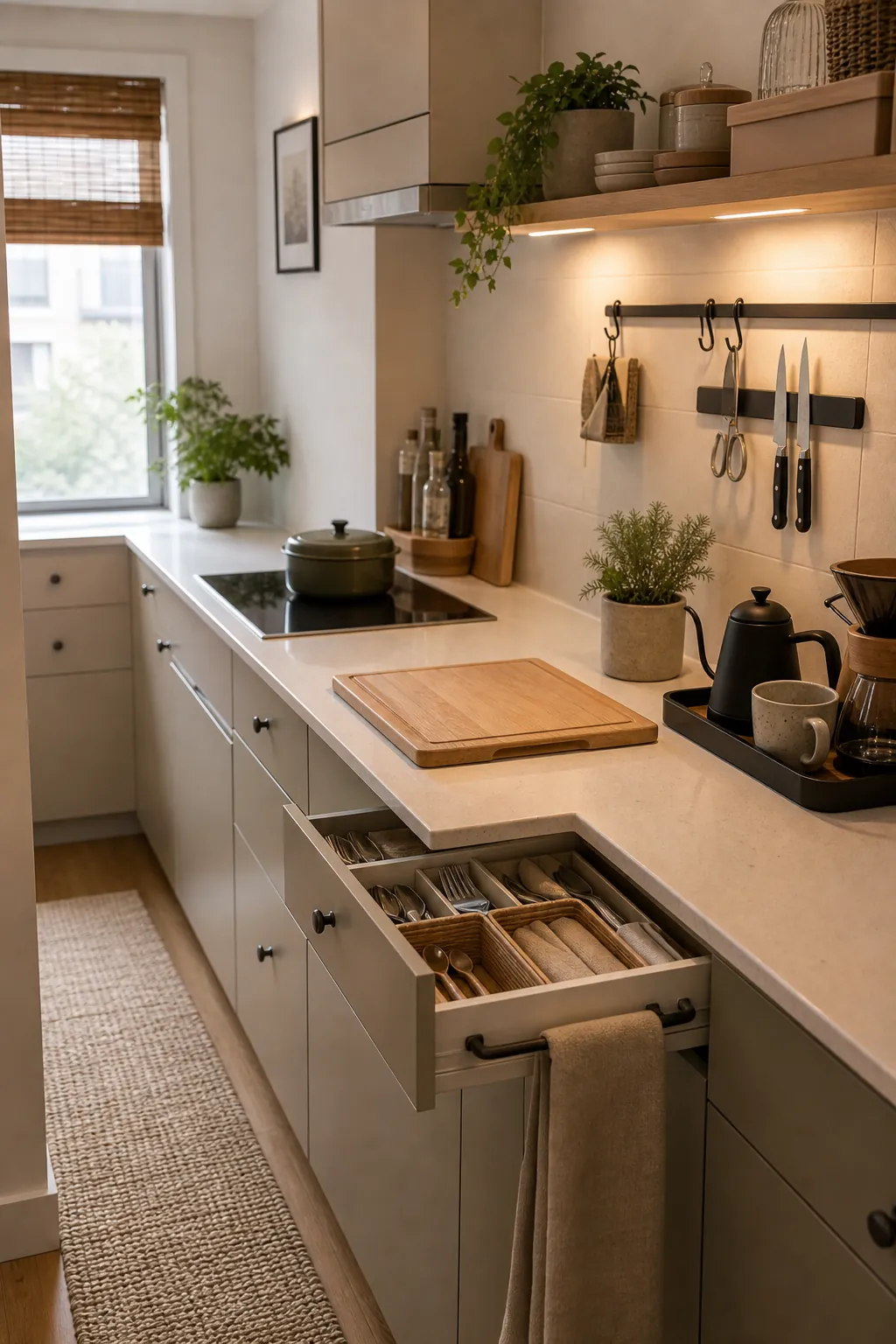
Set up kitchen activity zones around the way you cook and eat: coffee or breakfast, prep, cooking, cleanup, leftovers, and lunch packing. Store the tools for each routine together, then protect at least one clear work surface. A two-foot quiet counter can do more for a small kitchen than another organizer that leaves no room to work.
- Use one tray for coffee or tea so the whole routine lifts and resets at once.
- Put prep tools near the cutting board area, not wherever there is an empty drawer.
- Use vertical or magnetic storage for tools that crowd drawers.
- Move rarely used appliances to a less convenient shelf so daily prep gets the best space.
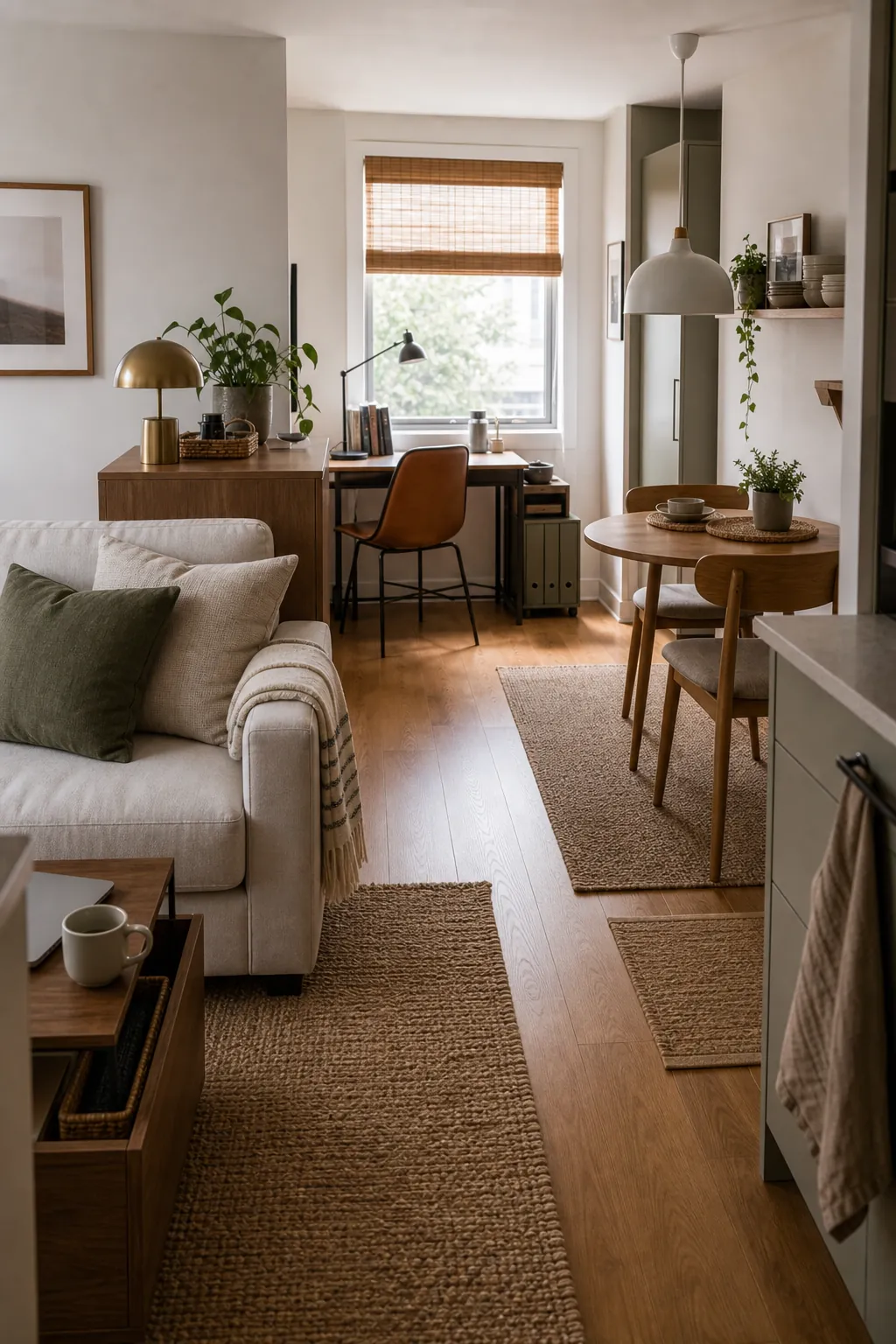
Divide One Room Into Living Work and Dining Zones
In a studio or small open-plan home, the same room may have to act like three rooms. The answer is not always a divider. Often, a rug, lighting change, furniture direction, or narrow shelf can tell your eye where one activity stops and another starts.
Give each zone a boundary and a reset point. The living zone needs a place for remotes, blankets, and reading material. The work zone needs charging, papers, headphones, and a way to close the day. The dining zone needs a table that can return to empty, even if it also doubles as a project surface.
- Use furniture direction as a boundary. A sofa facing away from a desk quietly separates rest from work.
- Use lighting to change the room’s mode. A task lamp makes a desk feel intentional; a floor lamp makes a chair feel like a reading zone.
- Use one closed container per flexible surface. If the table hosts work, meals, and crafts, each activity needs a fast way to leave.
Give Hobbies Workouts and Chores a Reset Station
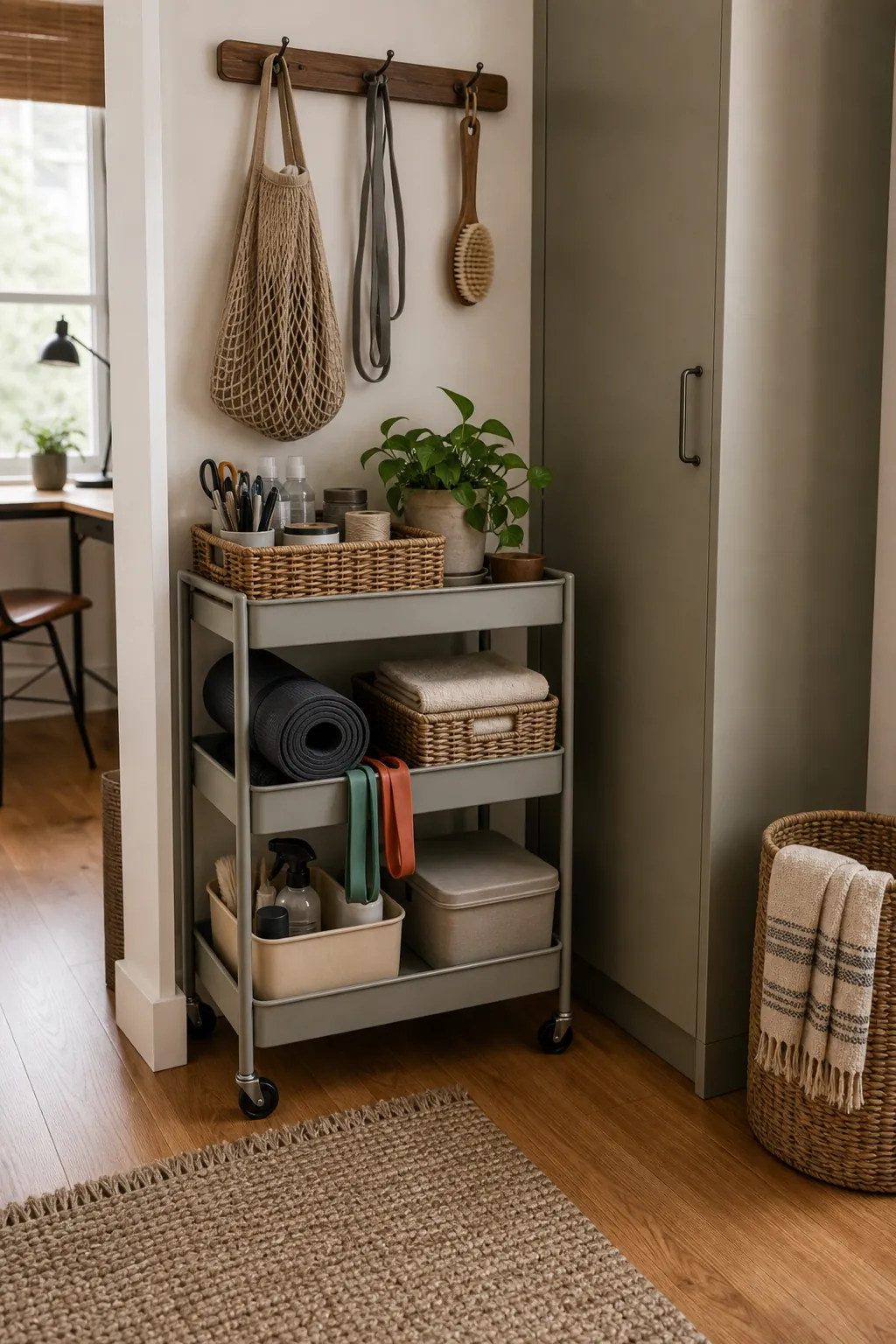
Small space living gets harder when an activity has many small parts: craft supplies, tools, fitness bands, cleaning products, pet gear, cables, paperwork, or repair items. These are the categories that look messy even when they are useful.
Instead of spreading them through several rooms, create a reset station for each recurring activity. This can be a rolling cart, lidded basket, cabinet shelf, drawer, or tote. The station should be small enough to limit the category, but complete enough that you do not have to hunt before starting.
- A workout zone can be one mat, one basket for bands, and one hook for a towel.
- A cleaning zone can be one caddy per wet area instead of one overloaded closet.
- A hobby zone can be a cart that rolls out, then rolls back behind a chair or into a closet.
- A paperwork zone can be a tray for active papers and one folder for items that must be kept.
This is where decluttering matters. If the station cannot close, slide away, or reset in a few minutes, the activity owns more space than the home can comfortably give it.
Use Vertical Storage Without Filling Every Wall
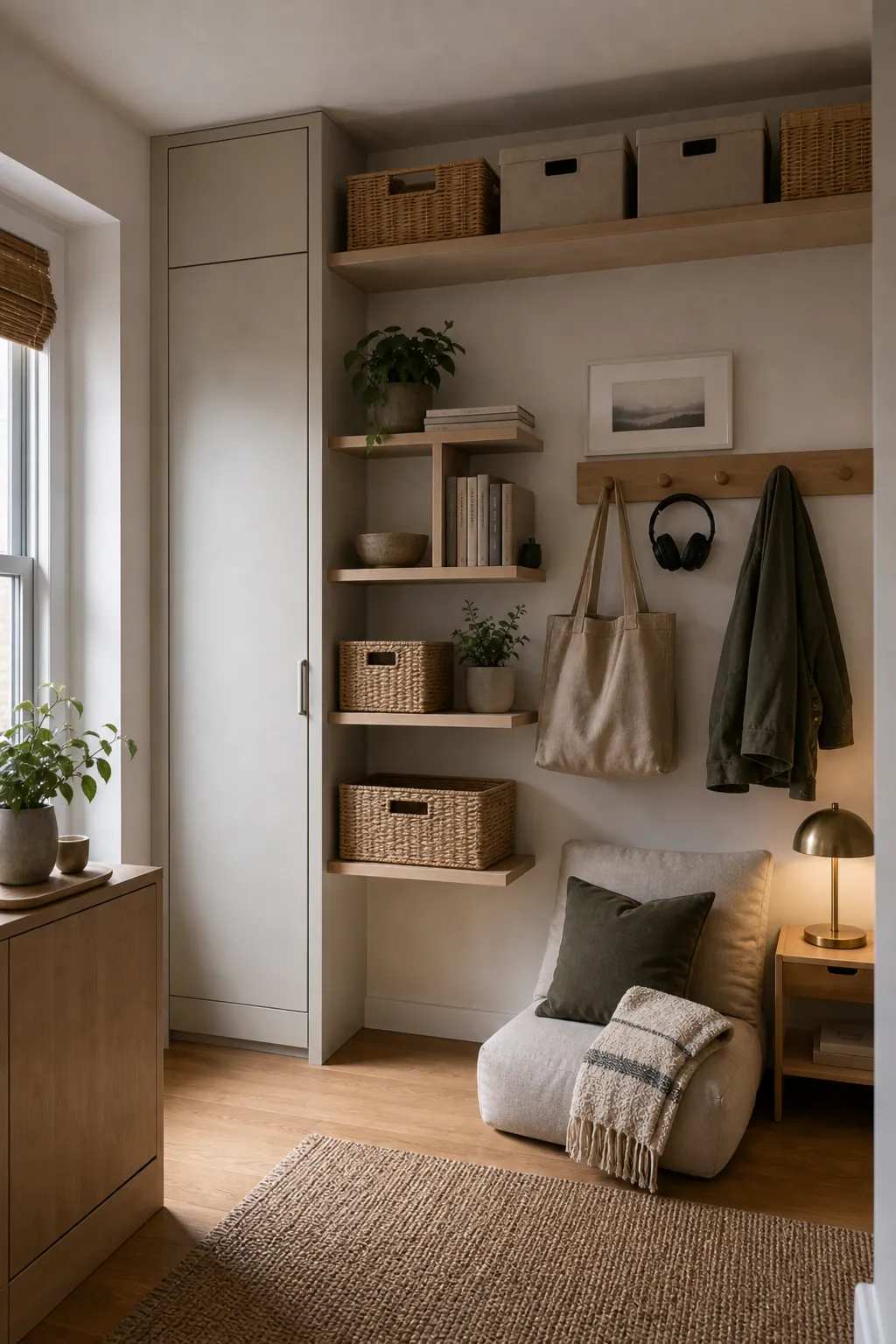
Vertical storage is powerful in a small home, but it can also make a room feel like a storage aisle. The difference is intention. Use walls for the zones that need fast access, and use closed or matching storage for anything visually busy.
Think in layers. The most-used items belong between shoulder and waist height. Occasional items can go above eye level. Bulky or seasonal items can go under the bed, behind cabinet doors, or in the least convenient corner. Prime storage should serve daily life, not the items you touch twice a year.
- Use wall hooks for bags, headphones, aprons, and daily tools.
- Use tall bookcases with doors or baskets when visual clutter is the problem.
- Use the backs of doors for light items, not heavy overflow.
- Use high shelves for seasonal pieces, extra linens, and rarely used appliances.
Keep Each Zone Capped and Easy to Reset
The most useful activity zones have limits. A coffee zone does not need every mug. A reading zone does not need every book. A work zone does not need the whole office supply drawer. The smaller the home, the more every zone needs a cap.
Use the container as the boundary. If the entry tray is full, process the mail. If the hobby cart is full, finish, donate, or store something elsewhere before adding more. If the workout basket will not close, the routine has outgrown its zone.
- Reset daily zones every day. Entry, kitchen counter, sofa, desk, and dining table should return to ready.
- Reset weekly zones once a week. Laundry, paperwork, pantry overflow, and hobby supplies need a slower rhythm.
- Review seasonal zones before adding storage. If you forgot what was inside, the category probably needs editing before it needs another bin.
A small home feels organized when the next activity can begin without clearing the last one away. That is the real promise of activity zones: not perfection, not minimalism, and not a home that looks unused. Just a functional home where the routines you repeat every day have enough structure to reset quickly.