

A reading corner does not need a window seat, a custom built-in, or a spare room. If you only have one chair, you can still make a small nook feel deliberate, comfortable, and finished. The trick is to stop thinking of the chair as the whole design. The chair is only the anchor.
Most awkward reading nook attempts fail because the corner has a seat, but nothing else tells your body, “stay here for a while.” There is no place to put a mug, the lamp is in the wrong spot, the wall behind the chair feels blank, or the nearby book storage is so bulky that the small nook starts feeling crowded. A one-chair reading corner works when it has three clear signals: comfort, light, and a tiny landing zone.
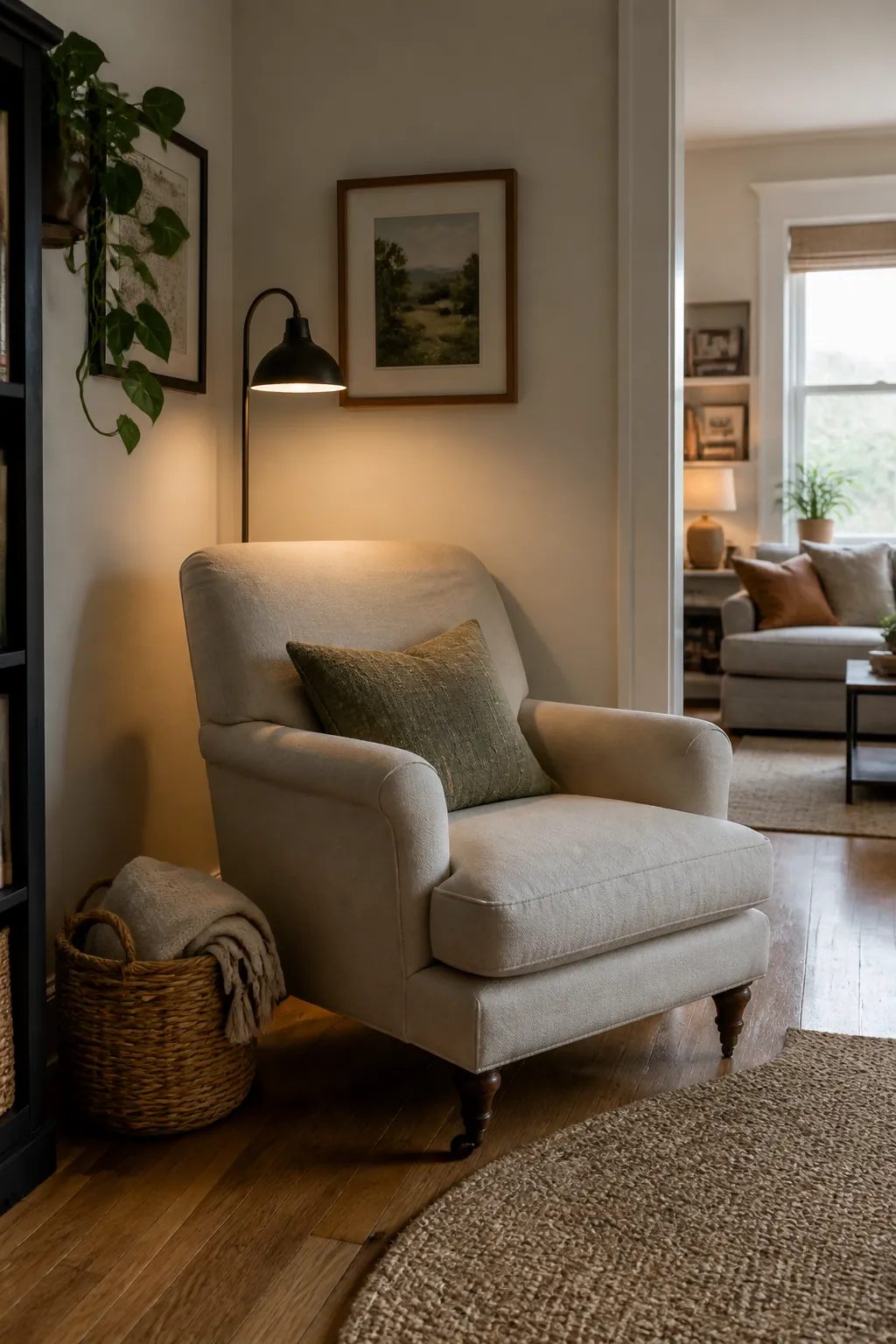
Angle the Chair So the Corner Feels Protected, Not Trapped
The fastest improvement is usually the chair angle. Push the back near a wall or corner, then turn the chair slightly toward the room instead of straight into a wall. That small rotation makes the reading corner feel sheltered without making the person sitting there feel boxed in.
This is especially important in a living room where the reading chair shares space with a sofa, TV area, or walkway. A chair corner should feel like a pause inside the room, not like a seat that was parked wherever it fit. Try a diagonal angle first, then adjust until you can sit down, look out into the room, and still reach the lamp or table beside you.
If your accent chair is oversized, leave a few inches of breathing room around it. If the room is very tight, a slimmer high-back chair or compact swivel chair can work better than a deep lounge chair. Comfort matters, but scale matters more in a small nook.

Add a Landing Surface Before You Add More Decor
A cozy corner becomes usable when there is a place for the book you are reading, a drink, glasses, a phone, or a candle. Without that landing surface, the chair looks decorative instead of practical.
You do not need a full-size side table. In a narrow chair corner, a small round table, a C-table, a low stool, or even a wall shelf can do the job. The best choice is the one you can reach without leaning forward too far. If you already have a short bookcase nearby, use the top as the landing surface and let the shelves hold the current reading stack.
Keep this surface edited. One lamp, one small tray, and one stack of books is usually enough. Too many decorative objects can make a reading nook feel styled for a photo but annoying to use.

Use a Rug to Make One Chair Feel Like Its Own Zone
A single chair can look lonely when it floats on bare floor. A rug fixes that by giving the reading corner a visual boundary. It tells the eye that this is a small destination, not leftover space.
For one-chair reading corner ideas, round and oval rugs are often easier than rectangles. They soften the geometry of a tight corner, leave walkways open, and make the chair feel gathered instead of wedged in. If you prefer a rectangular rug, place at least the front legs of the chair on it so the chair and rug read as one unit.
The rug does not have to be thick. A flatweave, jute, wool blend, or low-pile patterned rug can still create that cozy corner effect. If the rest of the room is plain, this is a good place to bring in a muted color, quiet stripe, or natural texture.
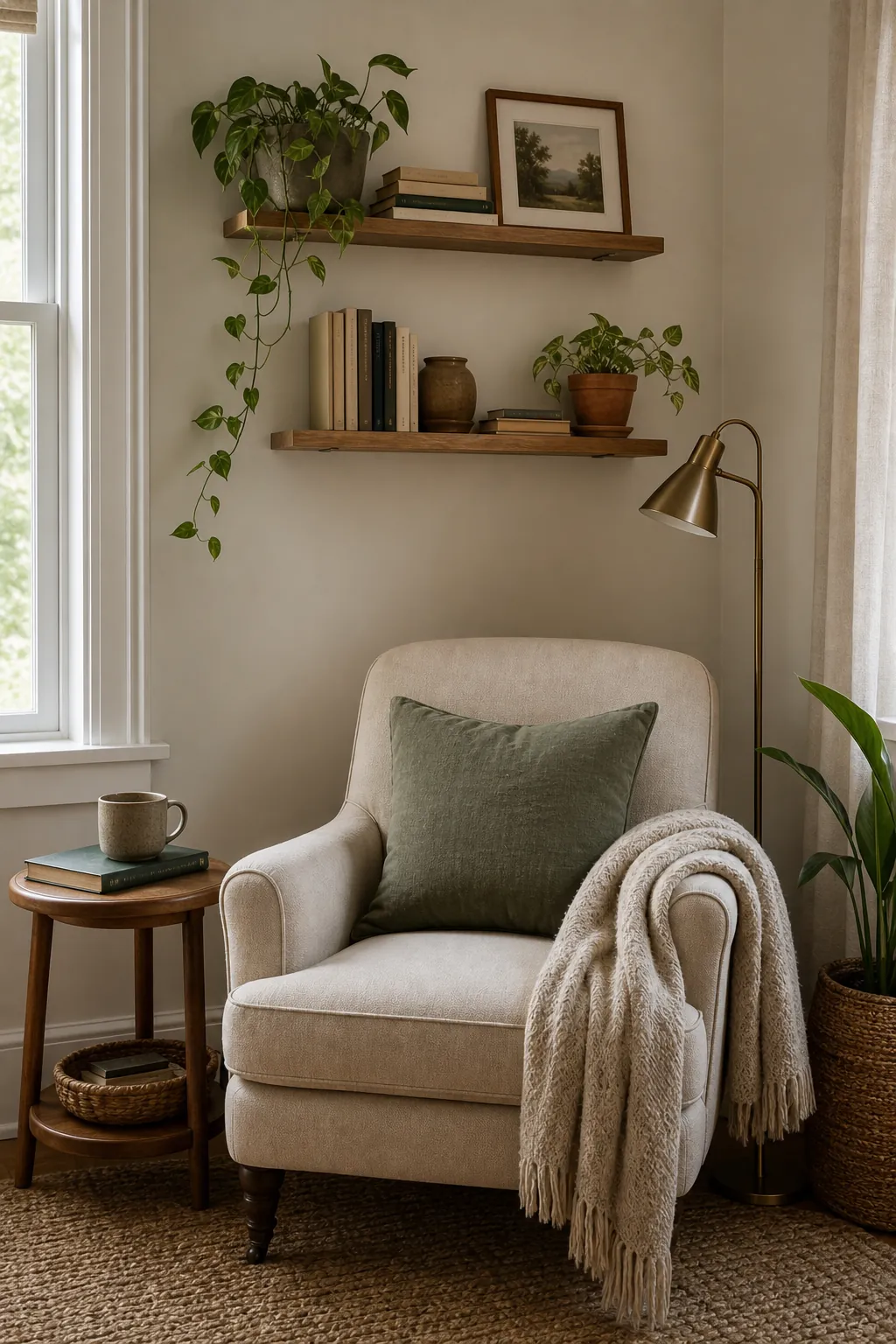
Go Vertical With Books, But Keep the Wall Light
When you only have one chair, book storage should support the nook without swallowing it. A tall, heavy bookcase can overwhelm a small nook, especially if the chair is already bulky. Lighter wall storage often works better.
Try one or two narrow wall shelves above or beside the chair. Stack a few books horizontally, lean a framed print, and add a trailing plant if the light allows it. The goal is not to store your entire home library in that corner. The goal is to make the reading habit visible.
If you do use a bookcase, keep the lower shelves more visually grounded and the upper shelves airier. Put baskets, heavier books, or closed storage near the bottom. Leave space around art, plants, or smaller objects near the top. That balance helps bookshelf decor feel calm instead of top-heavy.
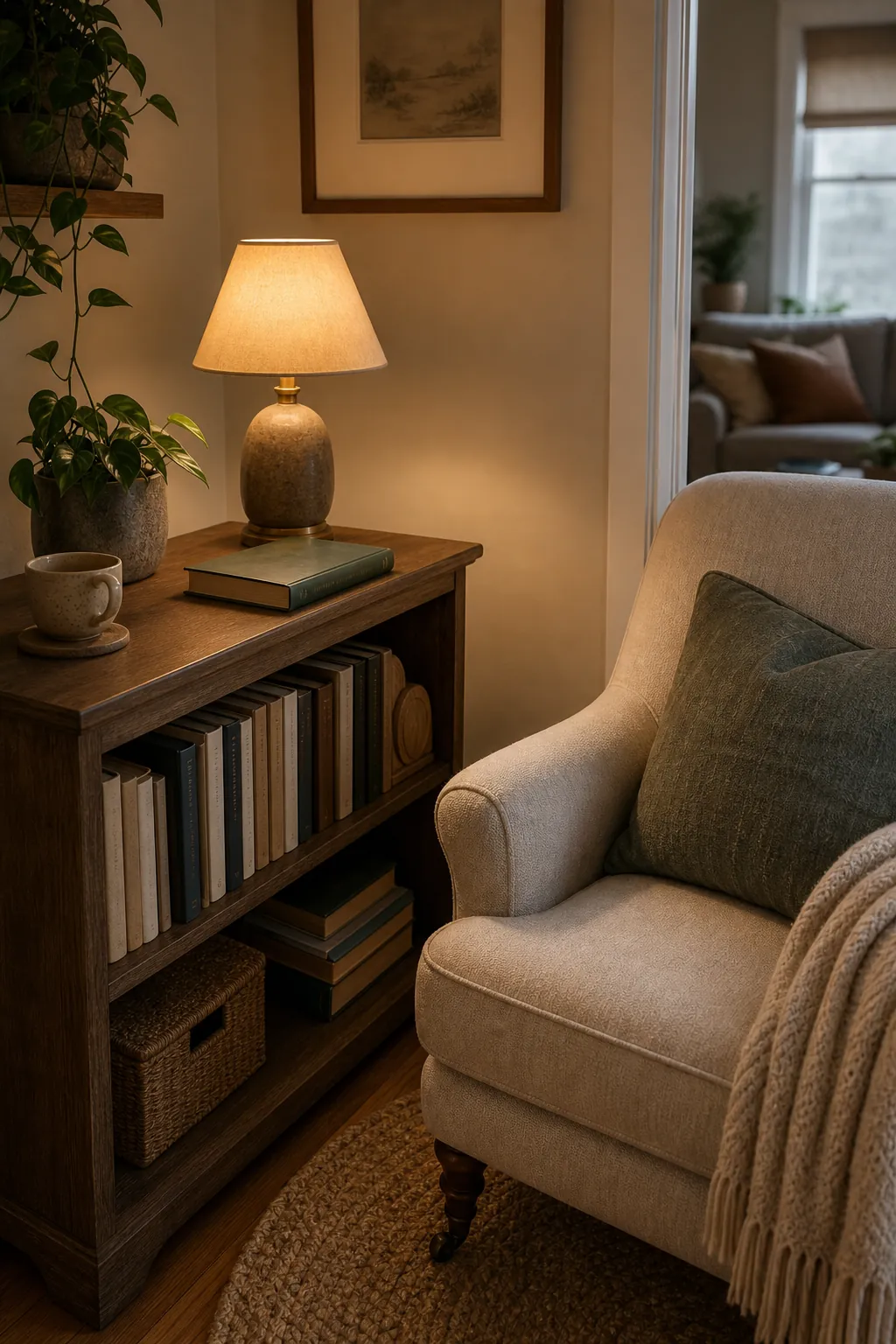
Let a Low Bookcase Double as a Side Table
If floor space is the problem, combine jobs. A low bookcase beside the chair can hold books below and act as a side table on top. This is one of the easiest ways to create a home library feeling without needing a built-in.
Choose a bookcase that sits near arm height when you are in the chair. Too tall, and it blocks light or makes the chair feel squeezed. Too low, and it becomes a storage box instead of a usable surface. In a very small nook, even a two-shelf unit can be enough.
Style the top like a working surface: a warm lamp, a coaster, and the book you are reading now. Let the shelves handle overflow. If you need hidden storage, use one basket on the lower shelf for chargers, bookmarks, notebooks, or extra throws.
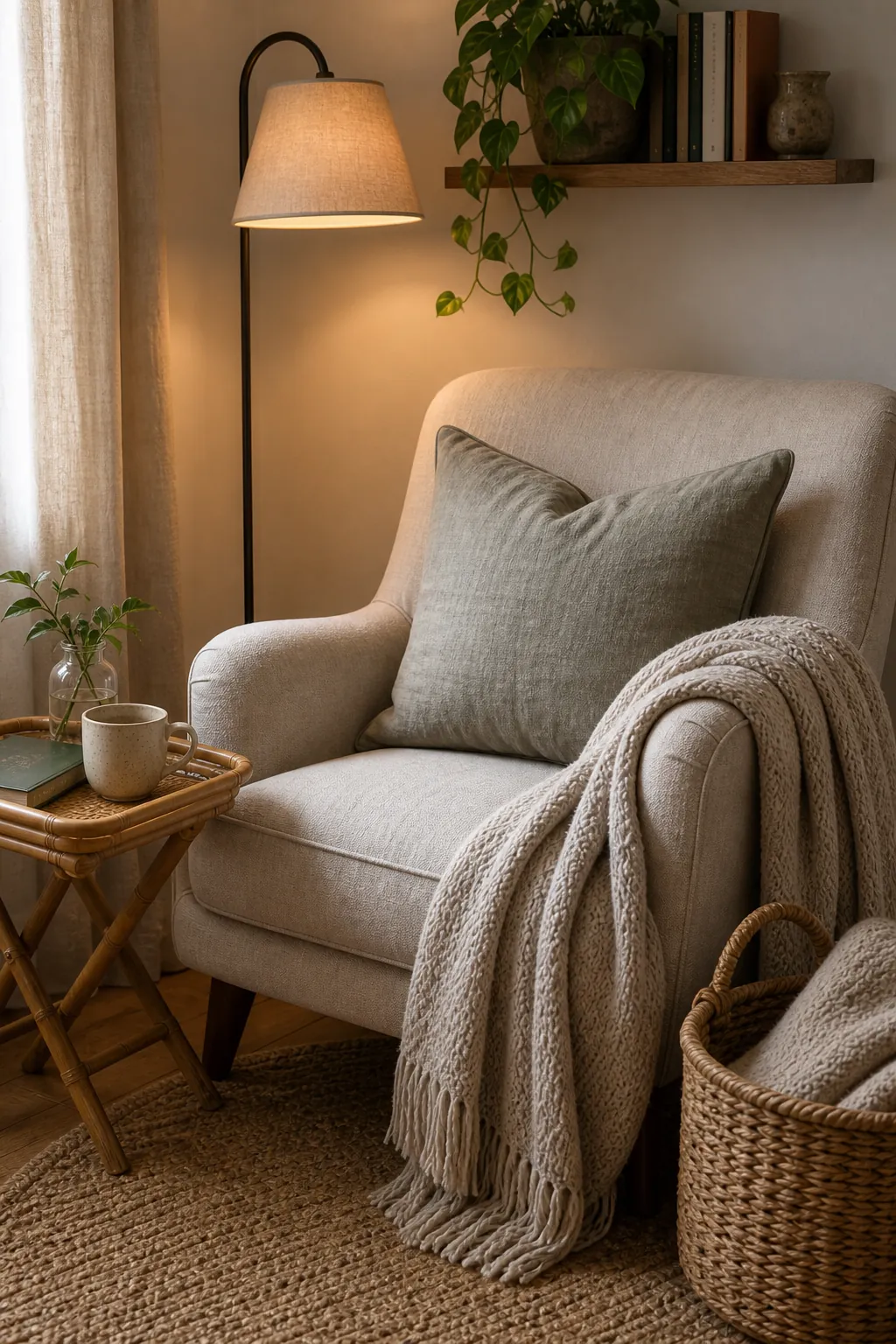
Layer Softness Where Your Body Actually Touches
Cozy home styling works best when the softness is practical. Add a pillow if the chair needs back support. Add a throw if you actually reach for one. Add an ottoman, pouf, or padded stool if you like to read with your feet up.
Texture matters more than quantity. A linen pillow, cotton throw, woven basket, bamboo tray, wool rug, or wood side table can make the corner feel warm without cluttering it. Choose two or three textures and repeat them quietly instead of filling every surface.
This is also where color can enter the reading nook. If the room is mostly neutral, use the chair corner for one accent: olive, clay, ochre, muted blue, plum, or warm terracotta. One color story is easier to live with than a pile of unrelated accessories.
Use Warm, Directed Light Instead of General Room Light
A reading corner should have its own light source. Overhead lighting may brighten the room, but it rarely makes a chair feel inviting. A floor lamp, plug-in wall sconce, pendant, or table lamp gives the nook a separate mood and makes reading easier at night.
Place the light slightly behind or beside your shoulder so it falls onto the page without shining into your eyes. Warm bulbs usually feel better in a cozy corner than cool white light. If you use a wall sconce or pendant, make sure the switch is easy to reach from the chair.
A Simple One-Chair Formula
If you are stuck, build the reading corner in this order: chair, light, landing surface, rug, books, softness, wall detail. Stop after each step and ask whether the corner feels more useful. You may not need every possible accessory.
- Chair: comfortable, scaled to the room, angled toward the space.
- Light: warm and directed toward the page.
- Landing surface: a table, stool, shelf, or low bookcase within reach.
- Boundary: a rug or floor basket that makes the small nook feel intentional.
- Books: enough visible book storage to signal the habit, not so much that the corner feels crowded.
- Texture: one pillow, one throw, or one natural material that makes the seat feel lived-in.
The best reading corner ideas are not the ones with the most furniture. They are the ones that make one chair feel like a place you would choose on purpose. Start with what your corner is missing functionally, then add just enough style to make the habit feel easy.