
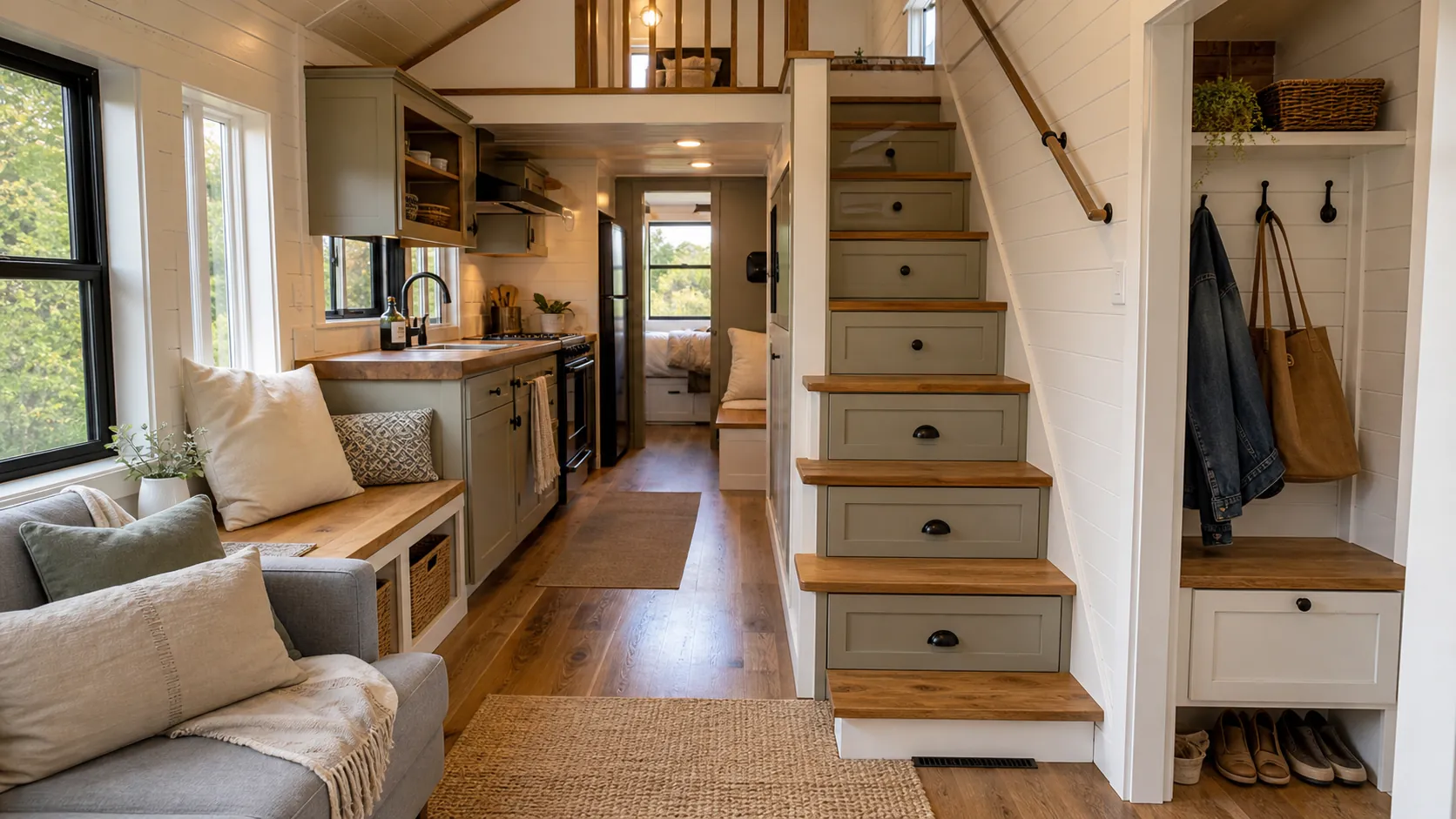
Tiny house storage works best when it looks like it was planned with the walls, not squeezed in after the furniture arrived. The goal is not to hide every object. The goal is to give each daily item a specific, reachable home so the tiny house still feels open after real life starts happening.
A useful test is simple: if you use something every day, it should live where your hand naturally reaches for it. If you use it monthly, it can go higher, lower, deeper, or under something. That one rule makes built in storage feel calmer than a house full of bins.
Start With Storage That Belongs to a Daily Zone
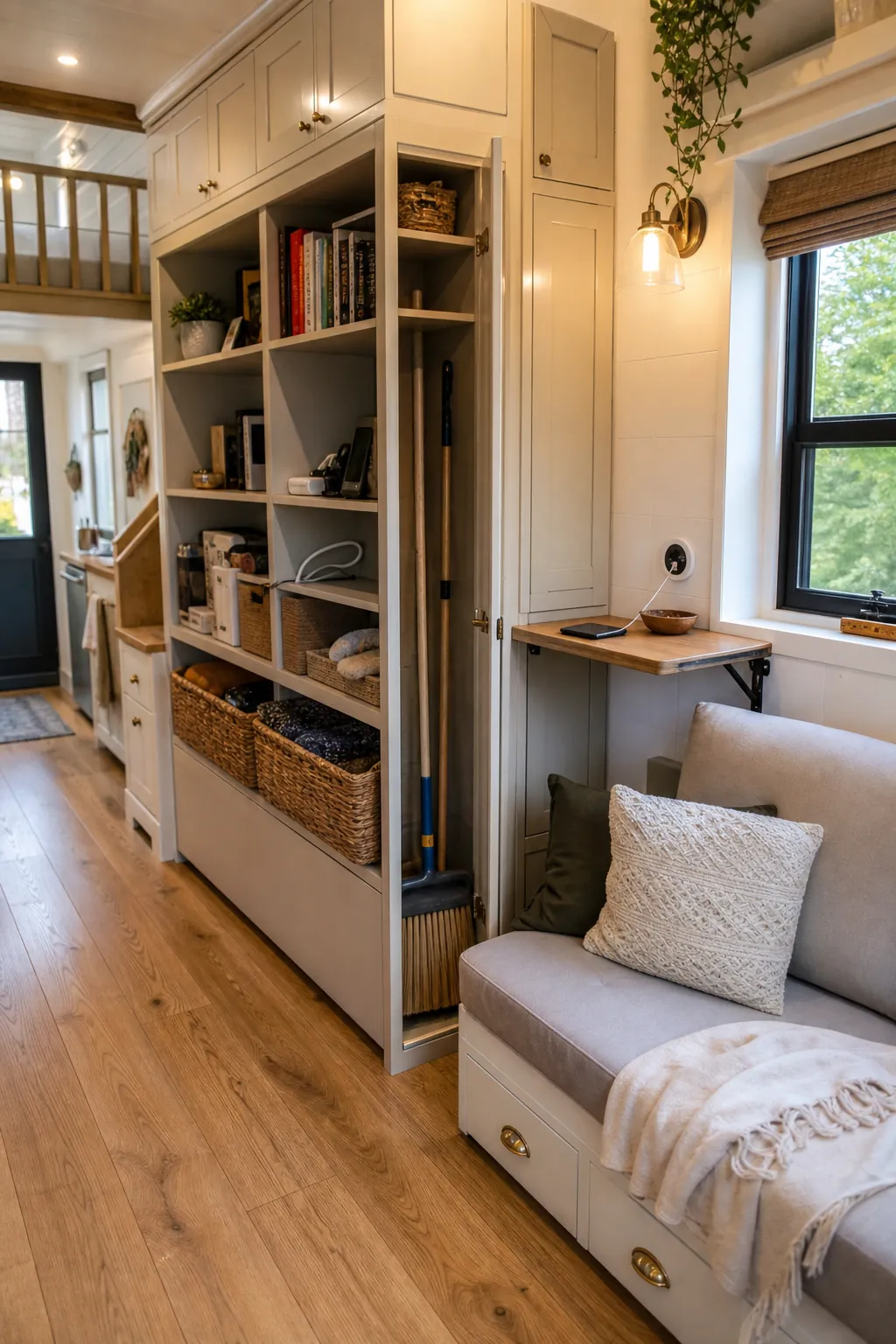
Before choosing clever storage furniture, divide the tiny house into working zones: cooking, dressing, cleaning, relaxing, sleeping, entry, and overflow. Built in storage feels intentional when the storage wall answers those zones instead of becoming one mystery cabinet where everything disappears.
Put chargers, throws, books, and remotes near the seating area. Keep cleaning tools in a slim vertical cabinet close to the door or kitchen. Reserve the highest closed cabinets for items you rarely need. This keeps the most visible storage from becoming the most chaotic storage.
Turn Seating Into Quiet Hidden Storage
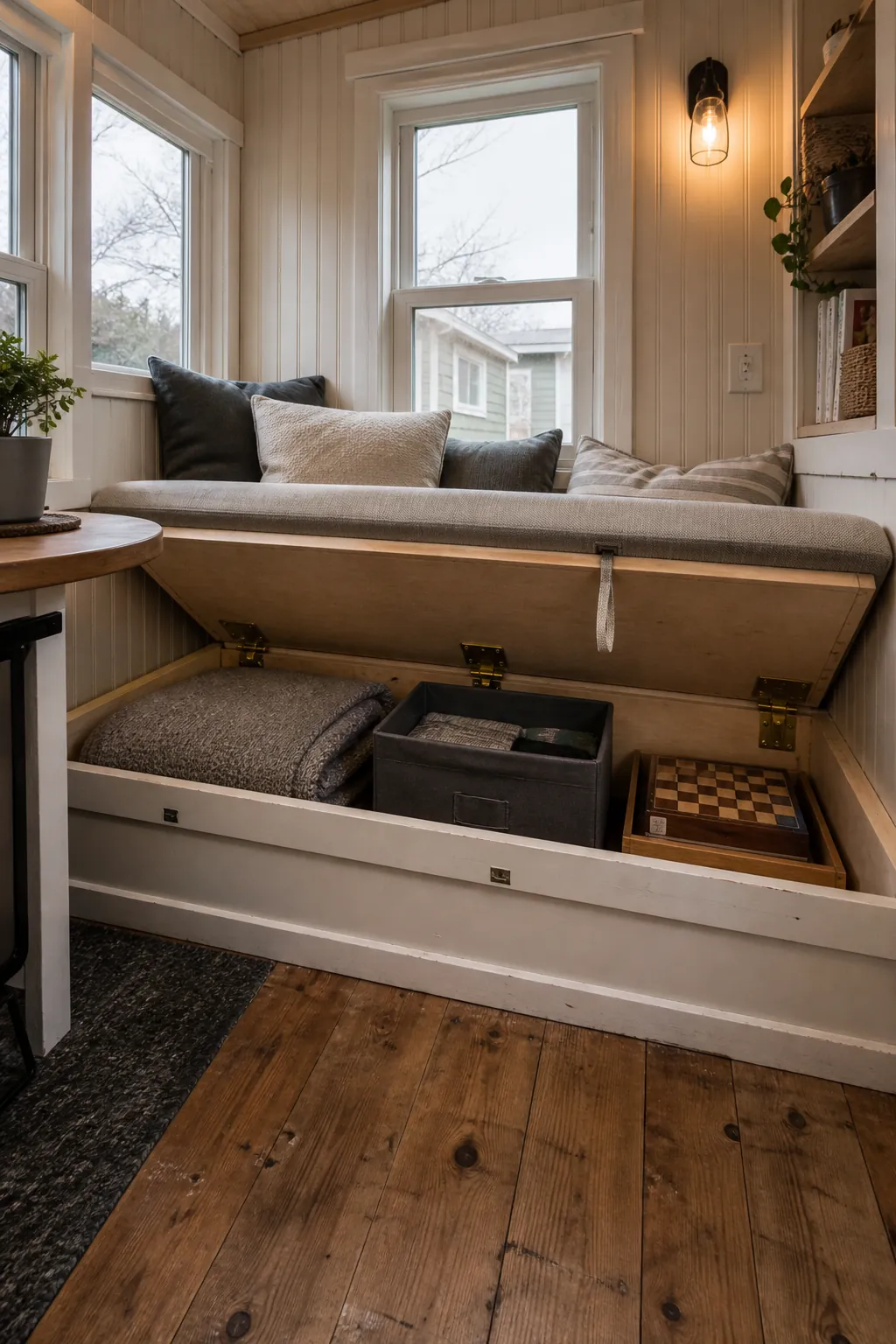
A bench, banquette, or window seat can hold bulky things without making the room look like a storage unit. The trick is to avoid treating the bench as a junk drawer. Give it one purpose: linens, guest bedding, board games, off-season cushions, or pet supplies.
Lift-up seats work well for large soft items, while front drawers are better for things you need often. In a tiny home, access style matters as much as capacity. If opening the storage requires moving pillows, a table, and three bags, it will not stay useful.
Use Stairs, Toe Kicks, and Dead Corners
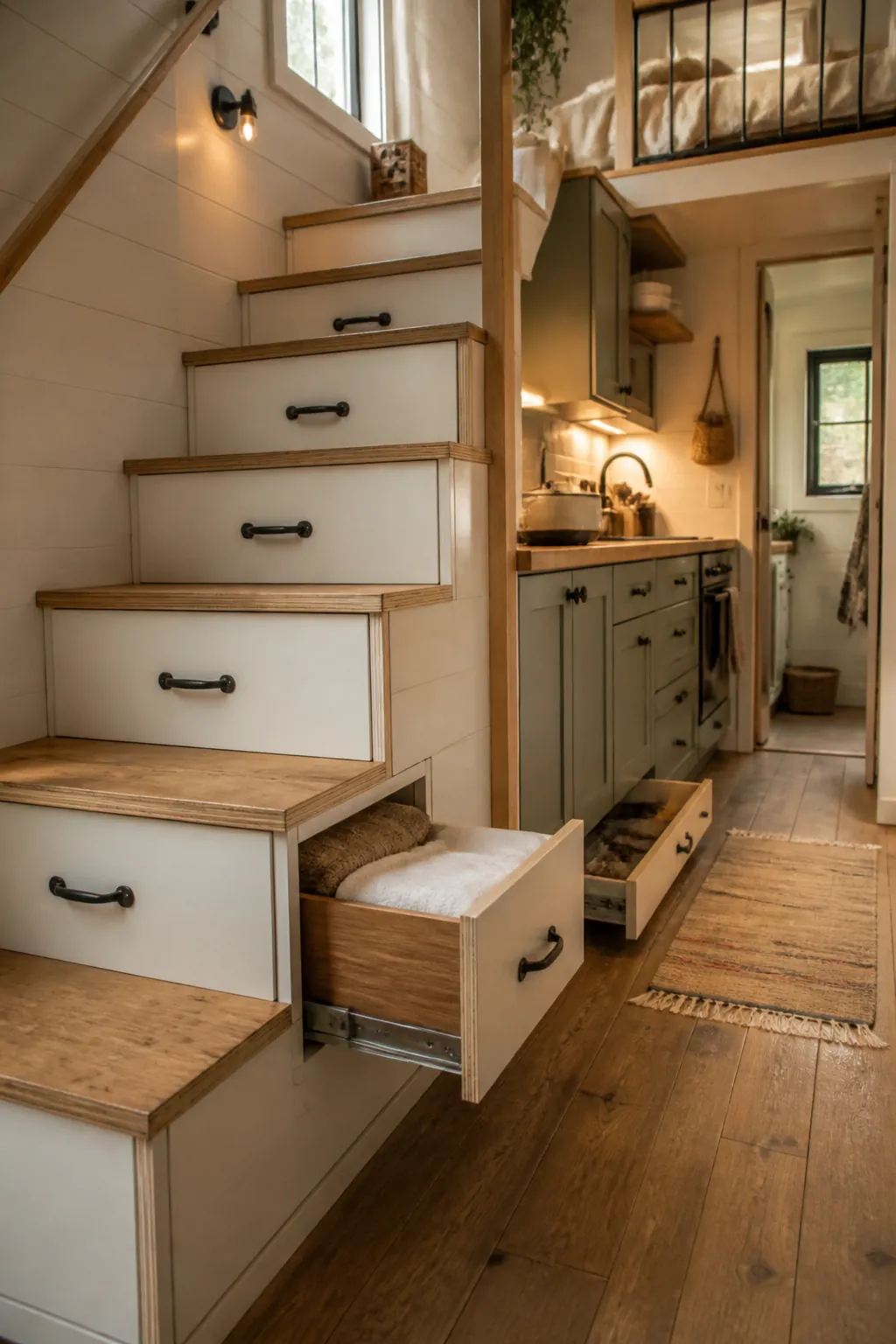
Stairs are one of the easiest places to make storage feel built in because the volume already exists. Drawers in risers, side-access cabinets, and a tall closet under the upper run can store towels, shoes, tools, pantry overflow, or folded clothing without adding a freestanding piece.
Toe-kick drawers are smaller, but they are excellent for flat items: baking sheets, placemats, cleaning cloths, spare hardware, pet bowls, and folded reusable bags. These hidden storage spots work because they protect the walking path, which is often more valuable than another deep cabinet.
Make Kitchen Storage Look Like Architecture
Tiny kitchens get messy fast when every solution sits on the counter. A built in pantry column, a shallow shelf run, a rail for daily tools, and closed base cabinets can make the kitchen look designed instead of crowded. Use the wall height, but keep the counter as a working surface.
The best small space storage is not always deeper. Sometimes it is shallower, more visible, and easier to reset. A narrow pantry where you can see every jar beats a deep cabinet where food disappears behind food.

Build Storage Around the Bed Without Crowding It
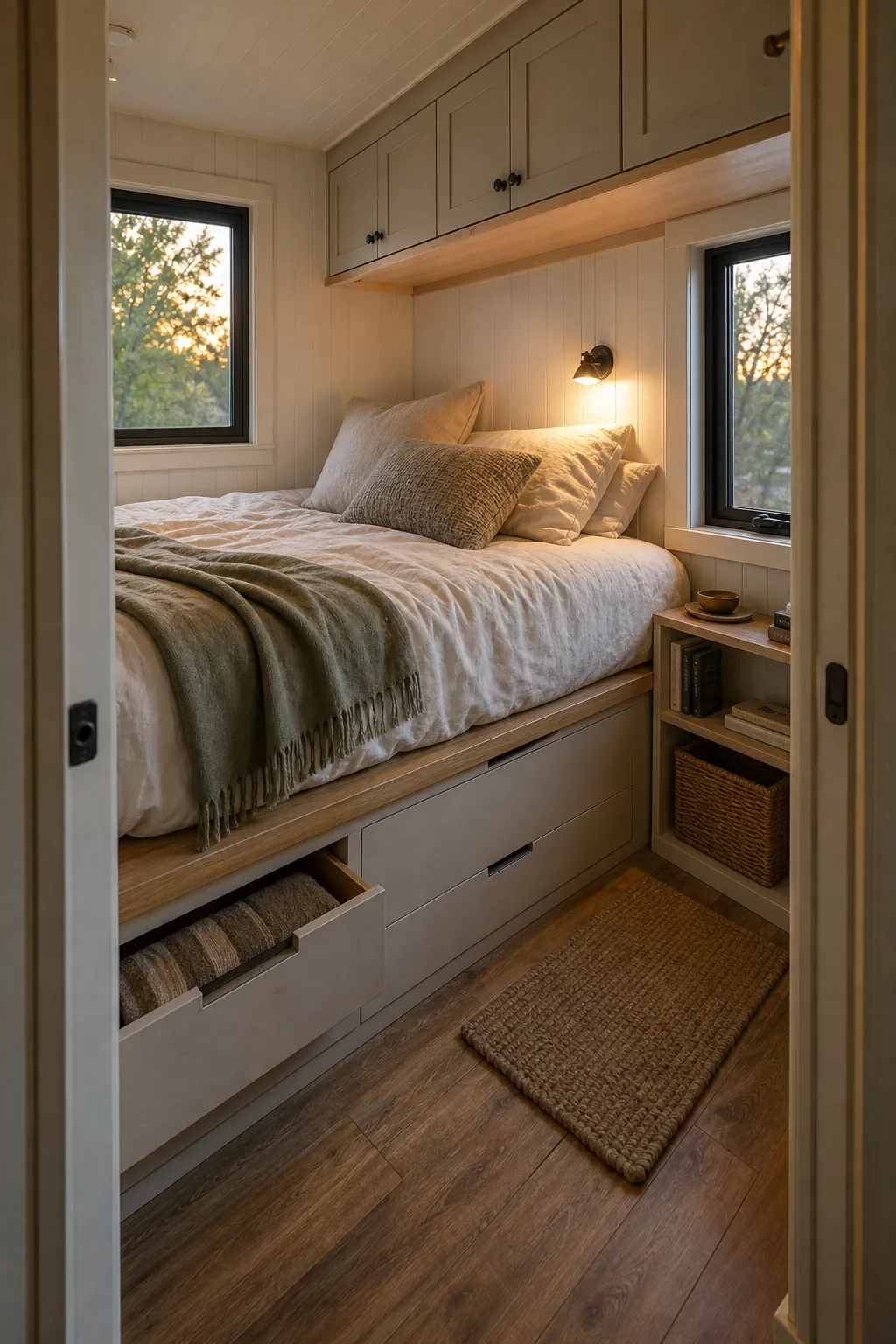
A tiny bedroom can lose its calm when the bed, dresser, hamper, nightstand, and spare baskets all compete for the same few feet. A platform bed with drawers, overhead cabinets, and a narrow shelf can replace several loose pieces while keeping the walkway clear.
Keep the storage closest to the mattress for soft, quiet items: clothes, bedding, sleepwear, and books. Avoid storing heavy tools or awkward bins where you have to kneel beside the bed every week. Built in bedroom storage should make the room easier to use when you are tired.
Give the Entry a Real Drop Zone
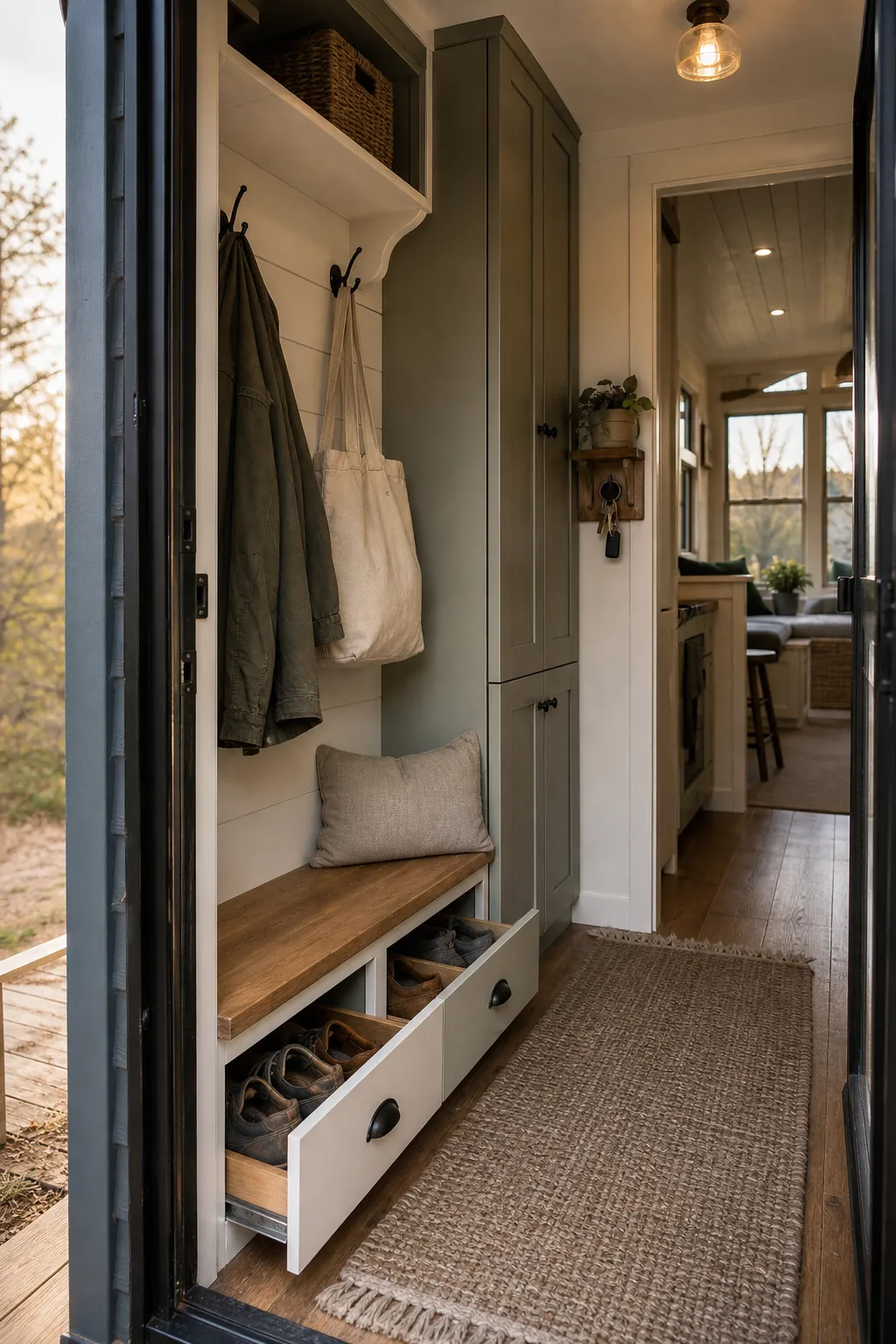
The entry is usually where tiny house clutter starts. Shoes, jackets, keys, tote bags, dog leashes, and mail need a landing place before they spread into the living area. Even a 30-inch wall can become a built in drop zone with a bench, hooks, shoe drawers, and one small shelf.
This is where home organization becomes daily flow. If you can put things away while stepping inside, the rest of the tiny house has a better chance of staying clear. A good entry zone is small, but it does the job of a mudroom.
Built in tiny house storage should feel boring in the best way: predictable, reachable, and easy to reset. When every cabinet has a job and every daily object belongs near its routine, compact living feels less like constant tidying and more like a home that supports how you actually move.