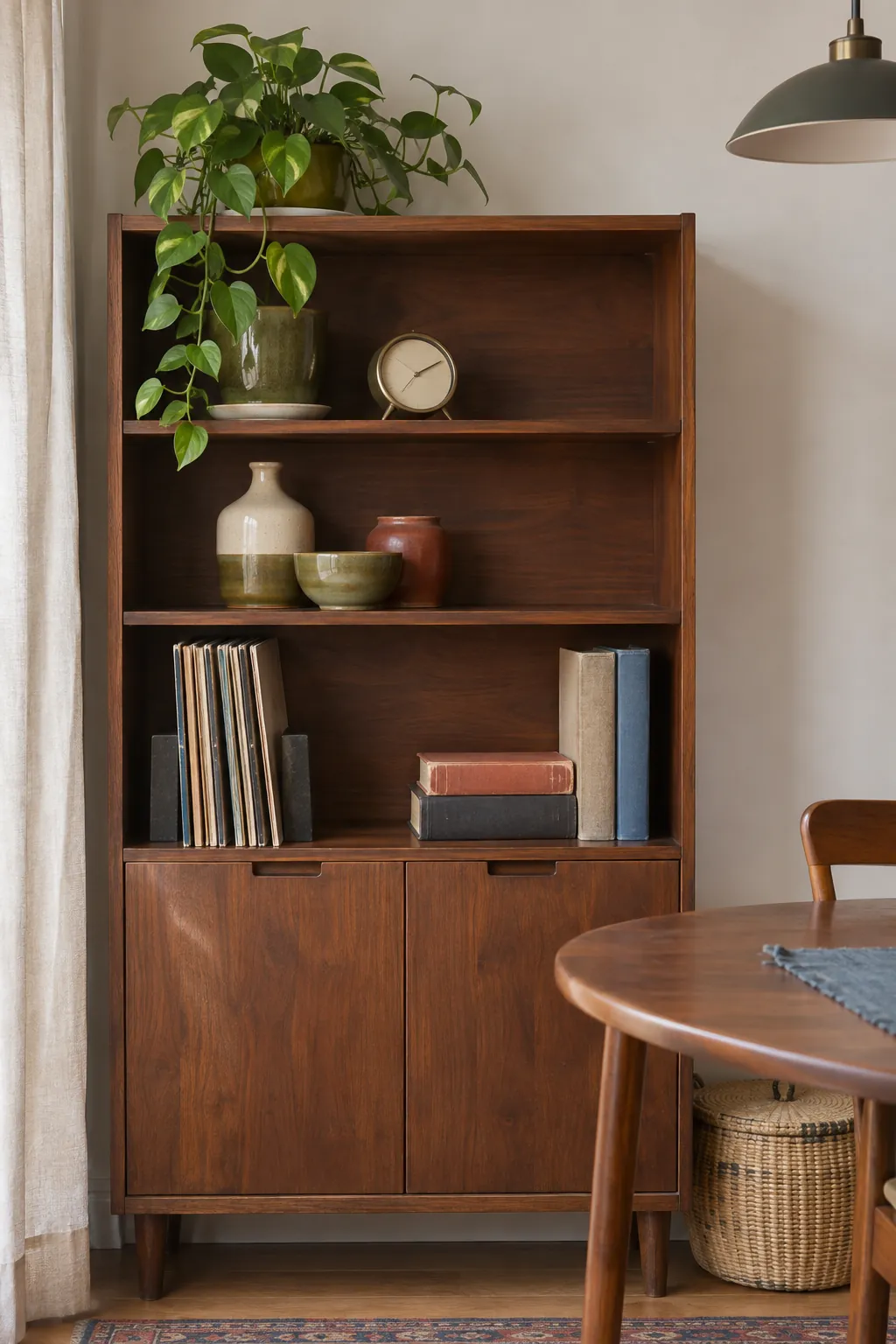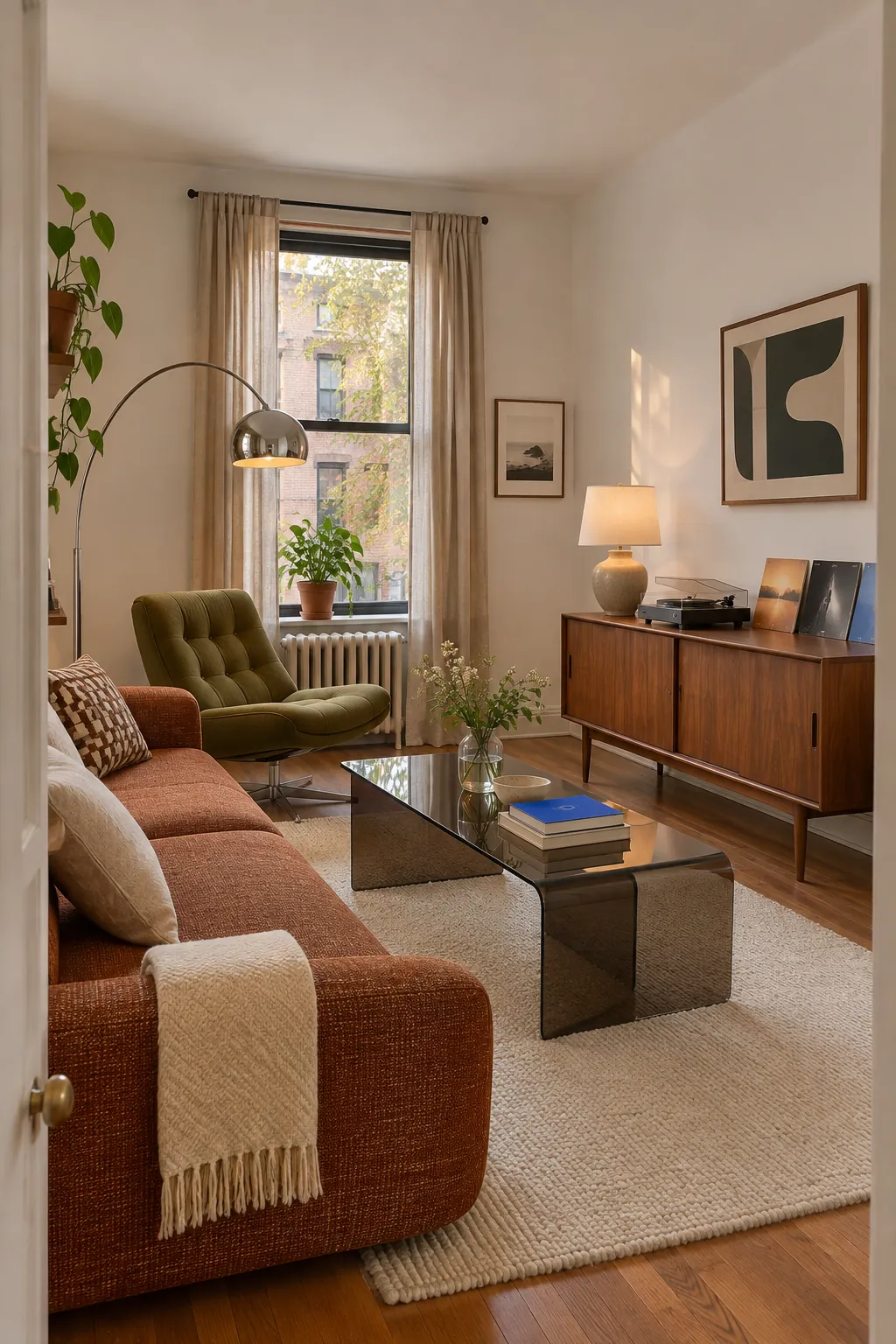
A retro room can feel collected and personal, yet a small rental can become crowded after only a few bold purchases. The useful goal is not to copy one decade perfectly. It is to choose a clear visual rhythm, protect walking space, and add pieces that can move with you.
Apartment renters often worry that temporary wall products may cause more damage than expected. They also need storage, comfortable lighting, and furniture that fits the room instead of fighting it. The approach below starts with those practical limits, then builds the character through color, texture, shape, and a few memorable objects.
Choose one era as the visual anchor
Begin with one decade that supplies the main shapes and materials. A nineteen seventies direction might use low seating, smoked glass, walnut, chrome, and rounded forms, while a nineteen nineties direction can lean toward clear acrylic, playful color, and simple graphic accents. Let about two thirds of the visible statement pieces follow that anchor, then use later or earlier finds as contrast.
This decision prevents a vintage apartment aesthetic from becoming a random collection. It also makes shopping easier because every possible item has to support the same room story. Keep modern necessities quiet in color and shape so the older pieces remain the focus.
Build a warm limited color palette
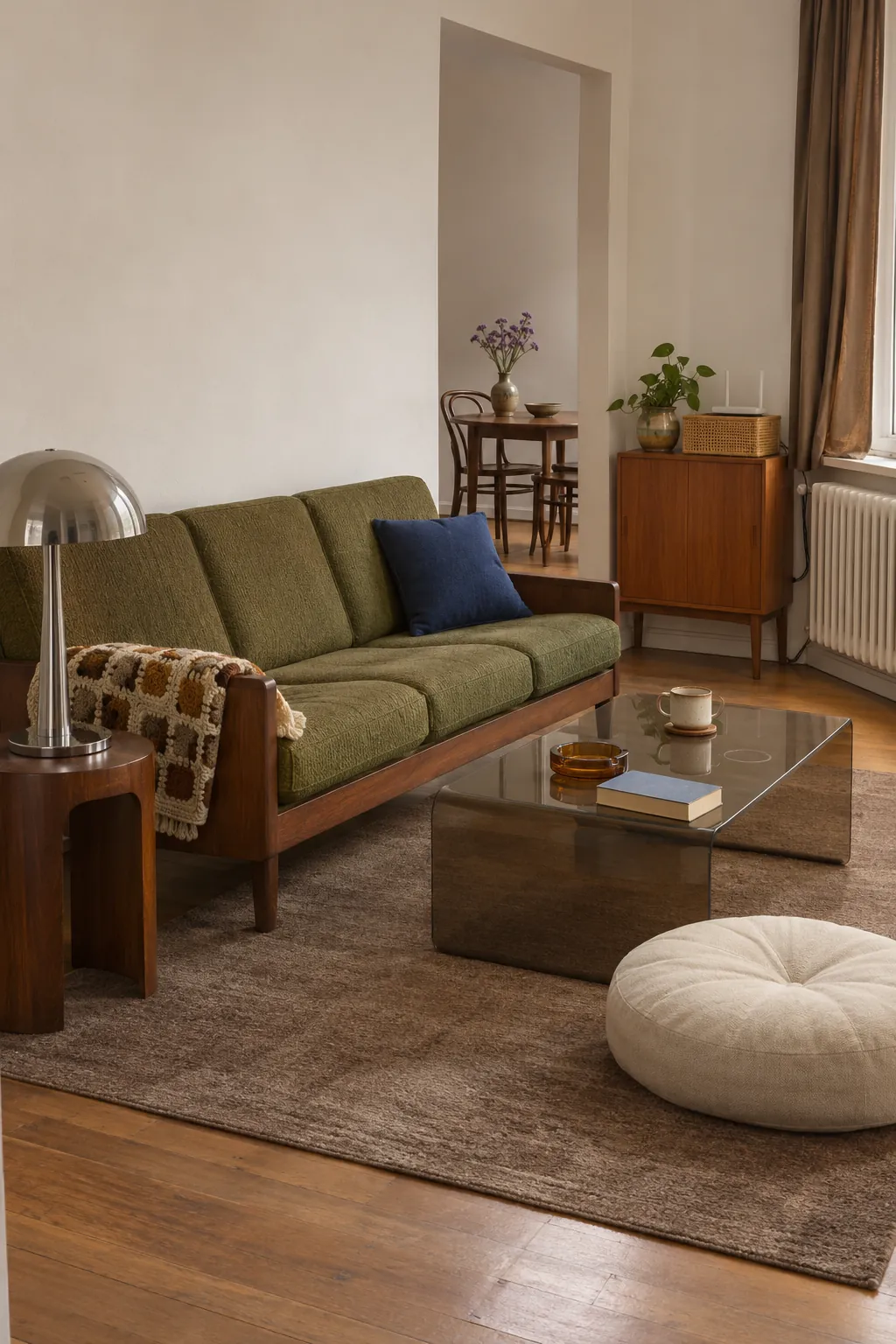
Pick one warm base, one grounded neutral, and one brighter accent before buying decor. Rust with cream and olive creates a calm seventies apartment aesthetic, while cobalt with warm gray and cherry red gives a sharper late century mood. Repeat each color in at least two places so the room looks intentional rather than patched together.
Large surfaces should usually carry the quieter colors. A rug, sofa cover, curtains, or bedding can establish the base, while lamps, cushions, books, and ceramics deliver the stronger note. If the apartment has cold white walls, warm timber and amber light can soften them without requiring paint.
Protect the walking path with compact furniture
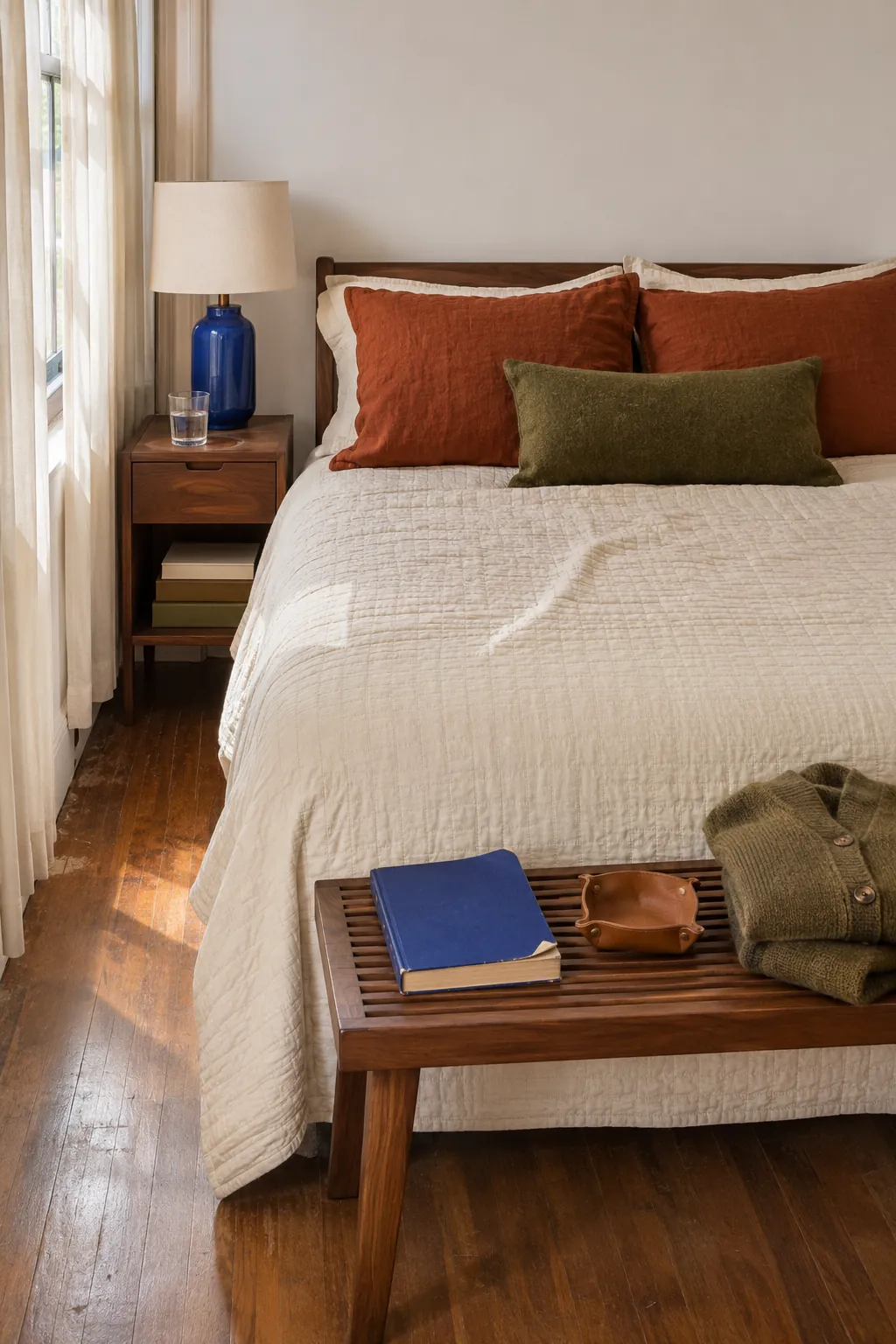
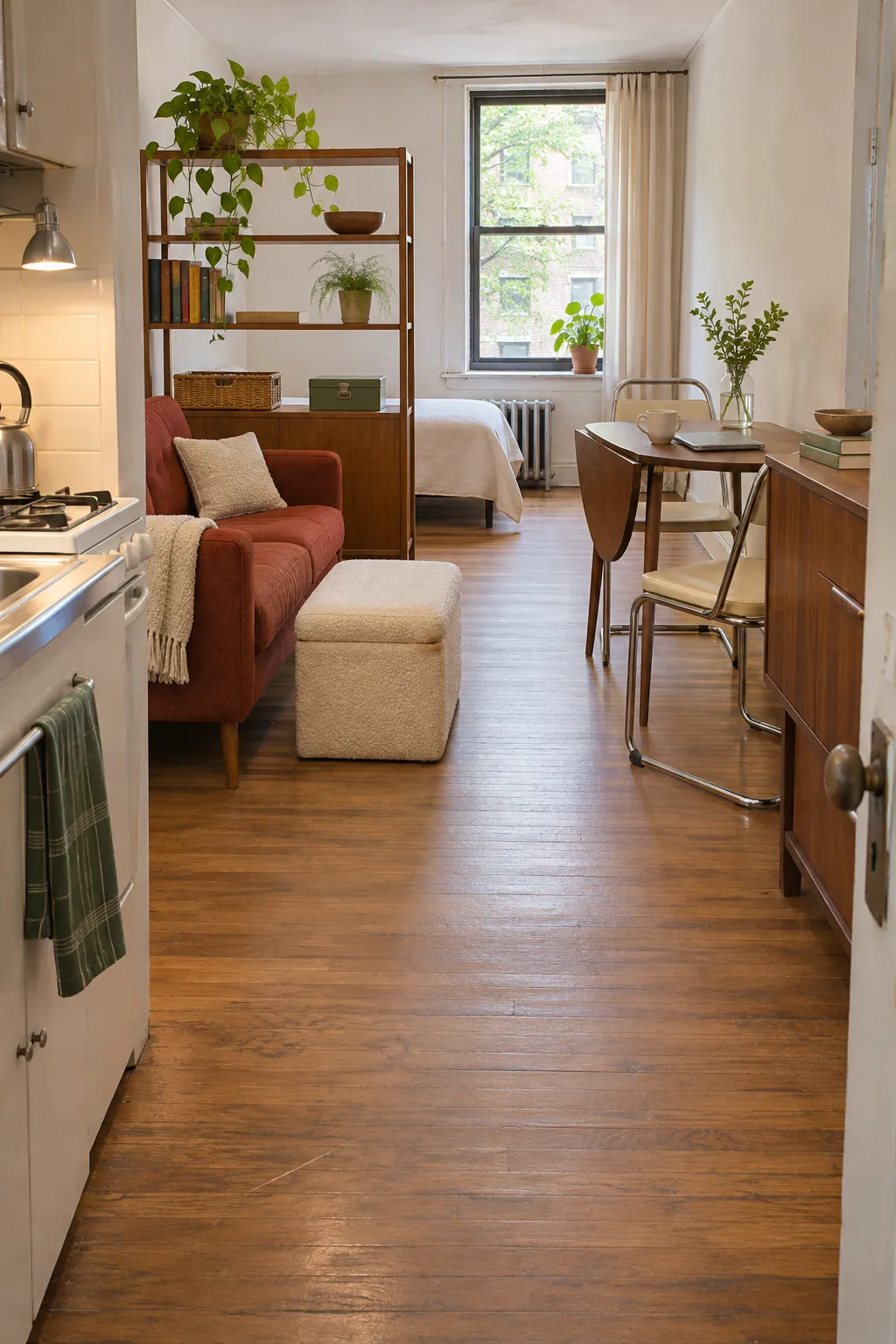
A small apartment needs visible floor around its largest objects. Measure the route from the entry to the main seat, window, kitchen, and bed, then keep that route open before adding accent furniture. Sofas and cabinets raised on legs reveal more floor and make a compact room feel less blocked.
Choose fewer pieces that perform more than one job. A narrow drop leaf table can serve meals and work, a storage ottoman can replace a bulky coffee table, and a vintage sideboard can hide daily clutter while supporting a record player or lamp. Real room measurements matter more than the visual scale suggested by an online product photo.
Use layered light and tactile materials
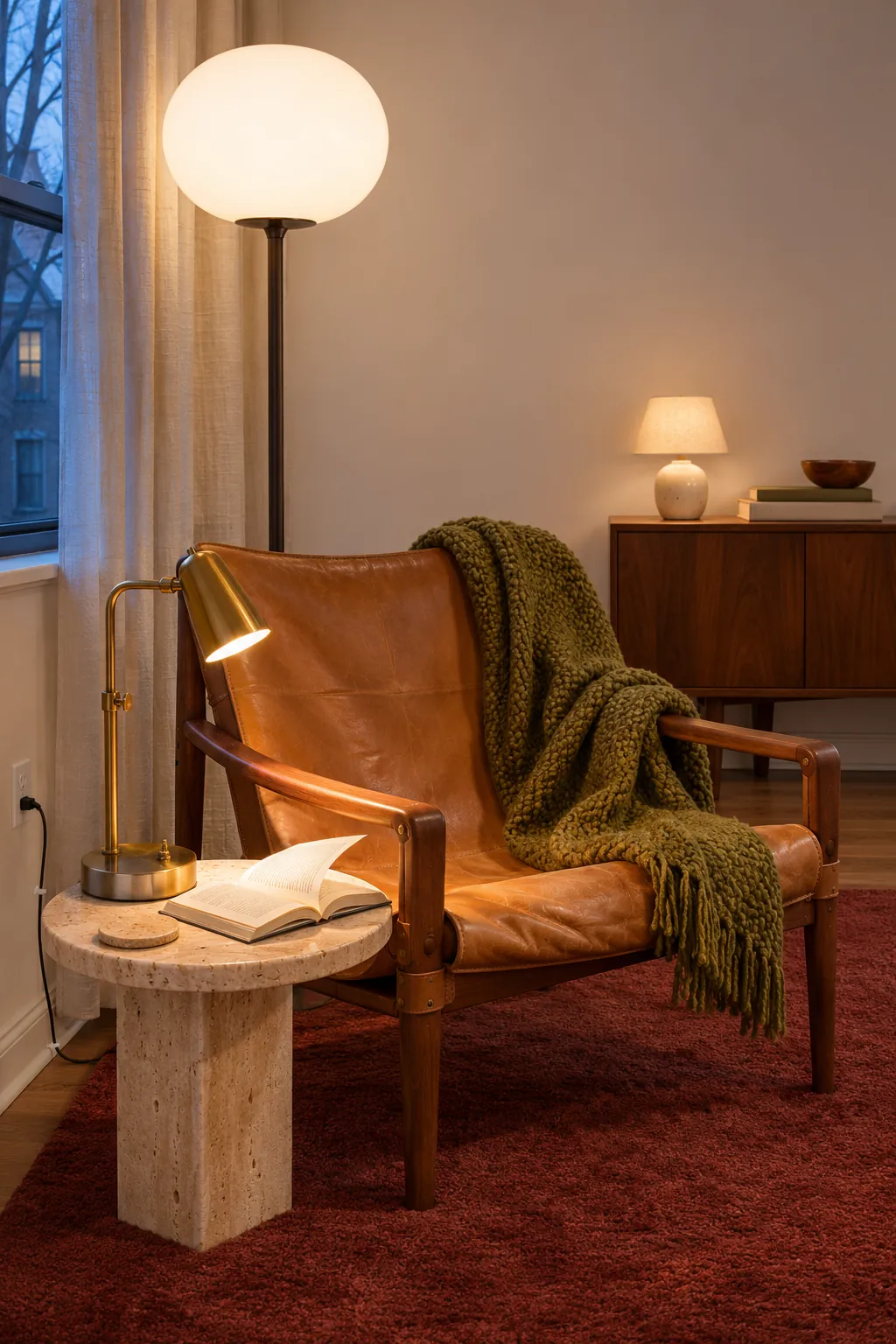
One bright ceiling fixture flattens color and makes a cozy room feel exposed. Use a floor lamp for broad light, a table lamp for a warm pool near seating, and a smaller task light for reading or work. Bulbs with a warm appearance help walnut, brick red, tan leather, and olive fabric look rich rather than muddy.
Texture supplies much of the retro feeling without taking up extra space. Combine a nubby woven cushion, a smooth glass table, a dense wool rug, and one polished metal detail. Limit the material mix to a few repeats so a colorful apartment aesthetic still feels restful.
Treat rental walls with caution
Do not assume that every removable product is safe for every wall. Paint age, humidity, surface texture, and installation time can change how adhesive behaves. Ask the property manager what is allowed, read the product instructions, and test a small hidden area before covering a visible wall.
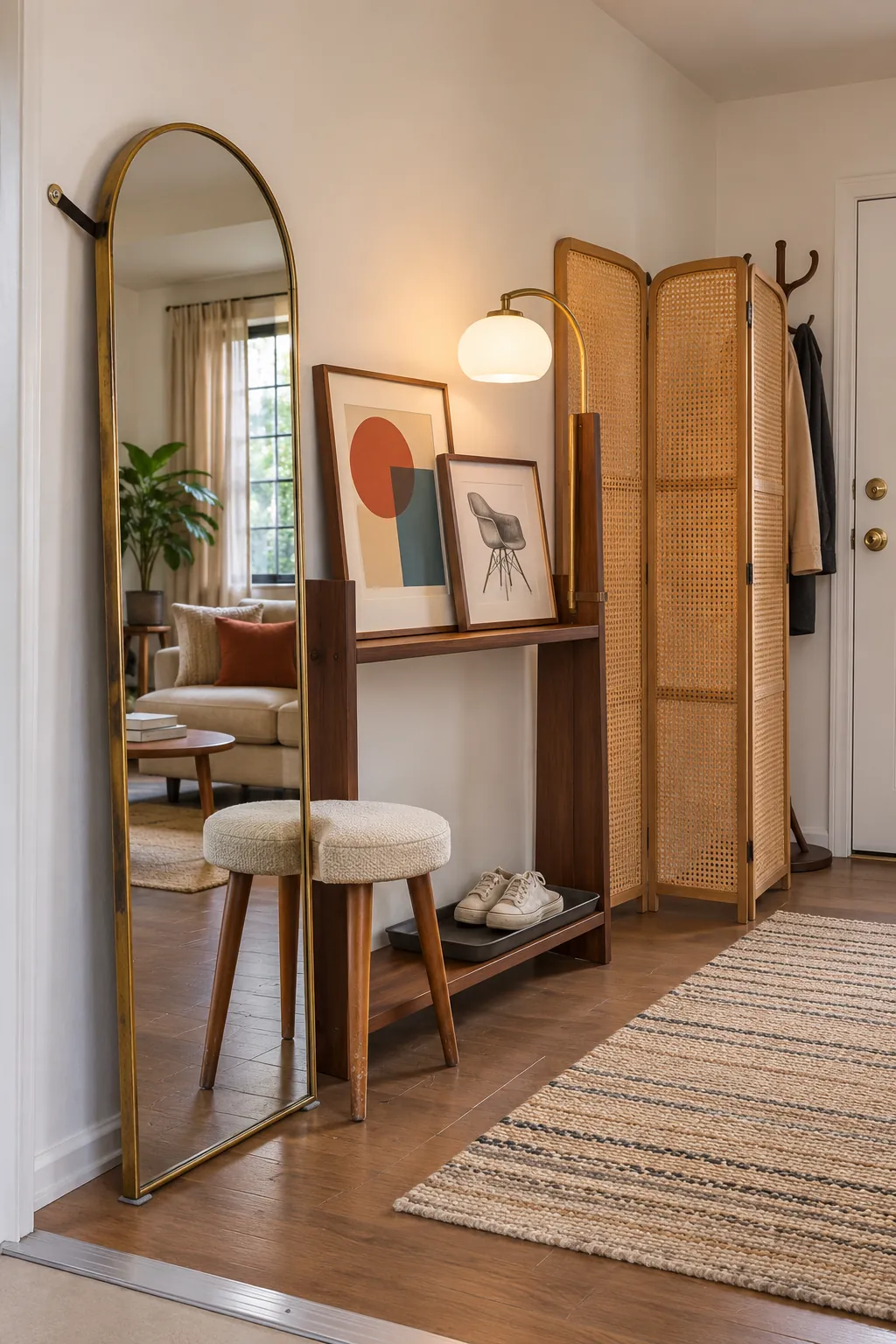
Freestanding choices provide a lower risk path to character. Lean a tall mirror securely against a suitable wall, display framed prints on a picture ledge that uses approved fixings, or place a textile panel on a folding screen. A plug in wall lamp with a covered cord can add period shape without electrical work, provided the cord does not create a trip risk.
Edit collections before the room feels crowded
Retro style gains personality from records, books, ceramics, lamps, and art, but every object does not need to be visible at once. Group a small collection by color, material, or function, then leave clear space around it. The empty area gives the objects enough contrast to be noticed.
Store practical items near the place where they are used and rotate decorative finds when the room starts to feel busy. Take one photo from the doorway because the camera often reveals crowded corners that feel normal in daily life. Keep the pieces that make the apartment useful or tell a real story, and let the rest wait out of sight.