
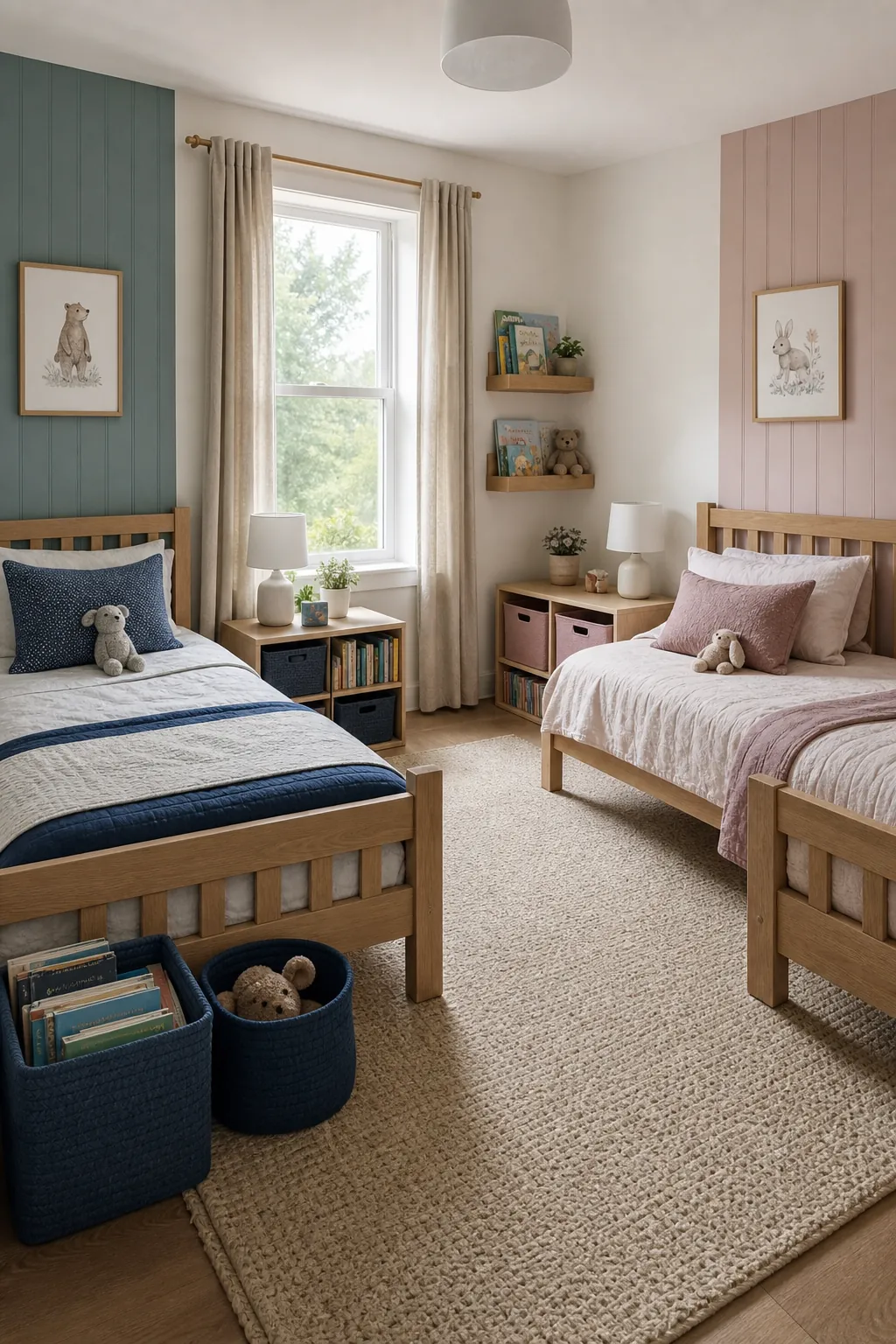
A shared sibling bedroom works better when each child can tell which parts are theirs without the room feeling split in half. The trick is to use color zones as a quiet organizing system: one palette cue for each child, one shared neutral thread, and storage that makes the boundaries easy to maintain on a regular school night.
Parents usually run into the same problems with a shared kids room: one child wants pink, another wants blue, the floor becomes neutral territory for everyone, and the bedroom layout has to fit sleep, play, homework, books, clothes, and toys. Color zoning helps because it gives the room a rule. It says, “this side belongs to you,” while still letting the sibling room decor feel intentional.
Anchor Each Bed With a Clear Color Boundary
The easiest starting point is the wall behind each bed. Paint, peel-and-stick wallpaper, a half-wall, or a large fabric panel can mark each sleep zone without adding furniture. Keep the shape simple: a rectangle behind the bed, a painted arch, or a color-blocked corner reads cleanly and is easy to repeat.
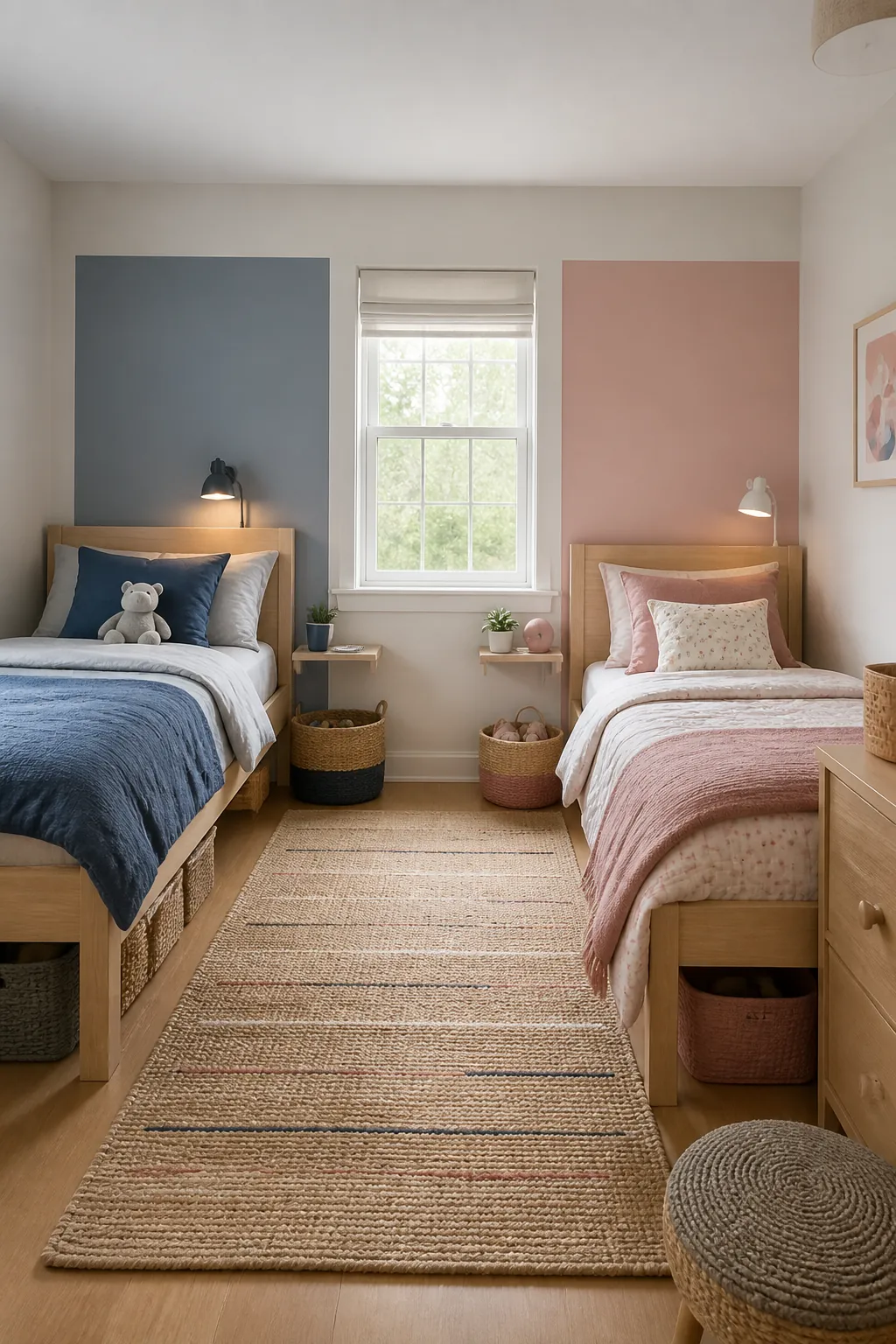
For a small shared sibling bedroom, stop the color at the bed width plus a few inches. That keeps the wall decor from taking over the whole room. For a larger room, carry each shade onto the bedside shelf, reading light, rug edge, or storage bin so the zone feels complete.
- Best for: twin beds, side-by-side beds, and kids who want obvious personal space.
- Keep it calm: choose softened versions of favorite colors instead of the brightest crayon shade.
Use One Shared Neutral to Hold the Room Together
Color zones can become chaotic if every item belongs to a different palette. Choose one shared neutral, such as warm white, soft gray, pale wood, linen, or muted sage, and repeat it across both sides. This is the part that makes the kids bedroom look designed instead of divided by argument.
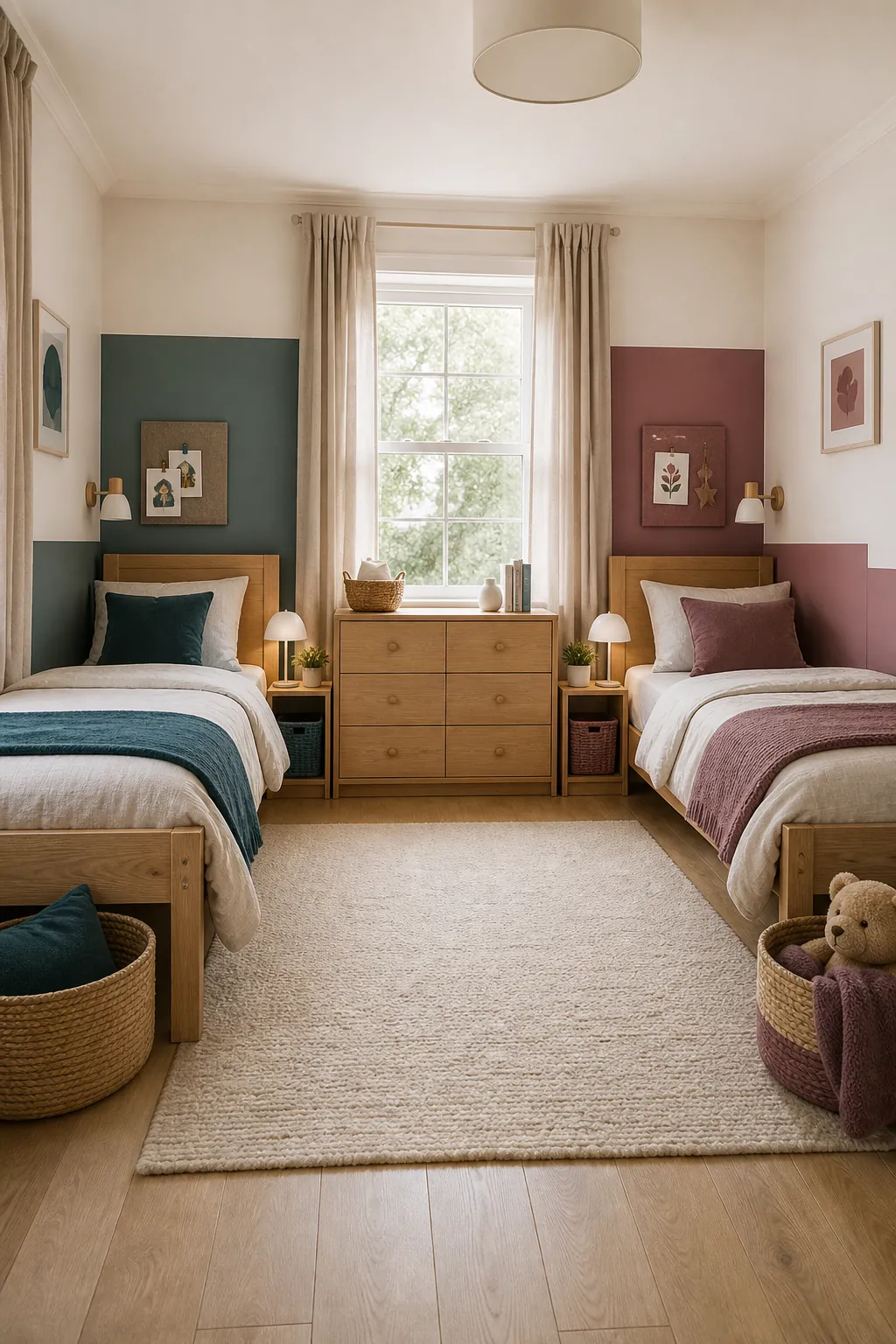
The neutral can show up in the beds, dresser, curtains, ceiling light, and main rug. Then each child gets a color zone in bedding, pinboards, art frames, and small storage. The shared neutral is the peacekeeper: it lets the room flex as kids change interests without needing a full redesign.
Turn Storage Into the Soft Divider
Room dividers do not have to be screens. In many shared kids room layouts, storage does a better job because it solves privacy and clutter at the same time. A low bookcase between beds, two back-to-back cubbies, or a dresser used as a midpoint gives each child a side while keeping sight lines open.
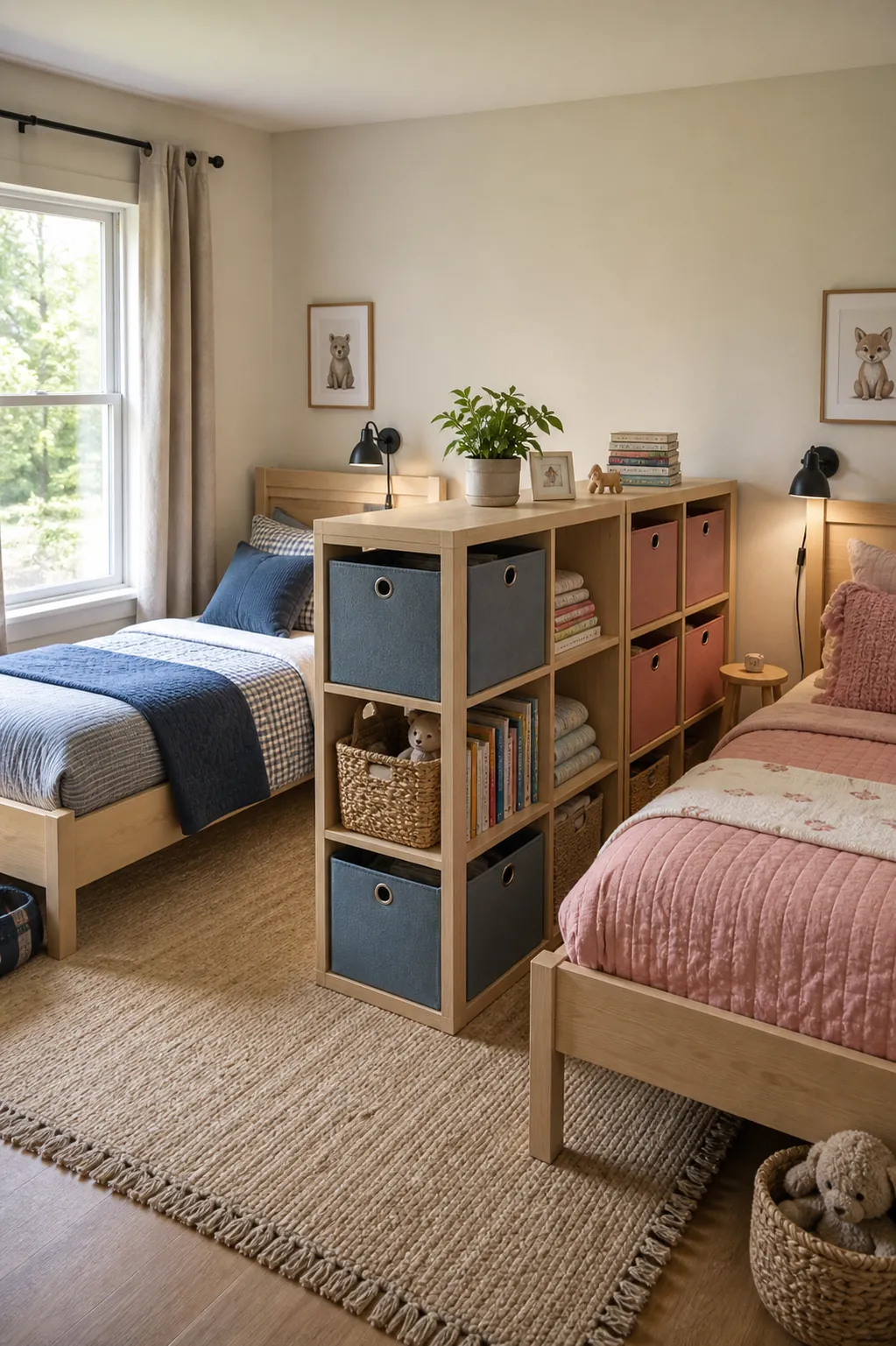
Color code the storage ideas so ownership is obvious: navy bins on one side, dusty rose bins on the other, and matching labels or handles across both. The goal is not to make the room rigid. It is to make cleanup faster because every toy, book, hoodie, and art supply has a visible home.
- Use low pieces near windows so daylight still reaches both beds.
- Anchor tall shelves to the wall and keep heavy items low for a safer kids bedroom.
Give Each Child a Personal Wall Moment
A color zone gets stronger when it includes a place for self-expression. Instead of letting every poster and drawing scatter across the room, give each child a defined wall moment: a framed art rail, cork board, peg rail, photo ledge, or small gallery grid above their bed or desk.
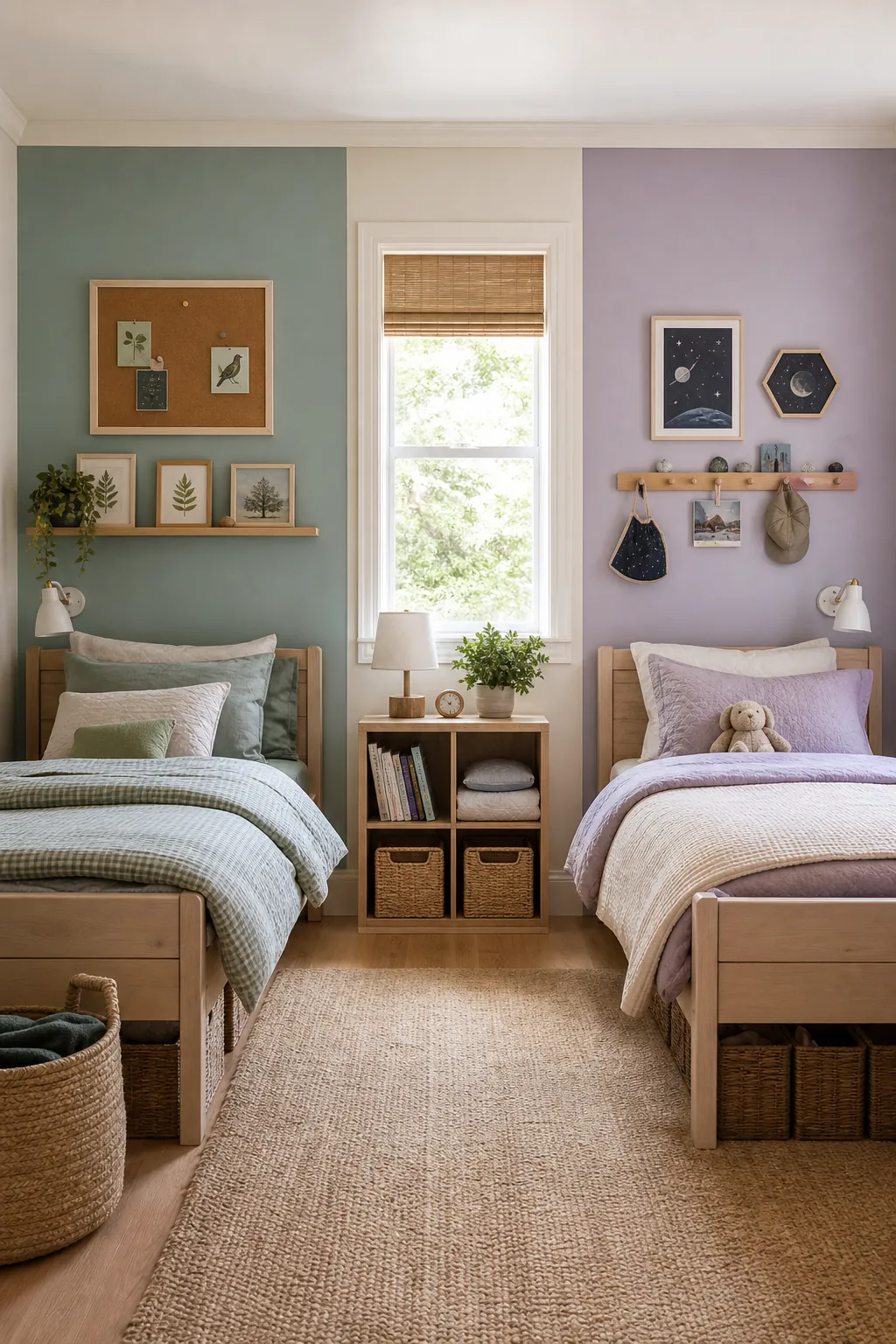
This keeps sibling room decor fair. One child can have dinosaurs, the other can have stars, but the frames, shelf height, and layout stay consistent. If the children are different ages, this is especially helpful because the older child can have a more mature wall decor area without the younger child’s side looking like an afterthought.
Keep the Shared Middle Zone Visually Quiet
The center of the room is where color zones often fall apart. It becomes a mixed pile of laundry, toys, craft supplies, and bedtime books. Treat the middle as a shared zone with quieter color, softer texture, and fewer personal items. That makes it easier for both siblings to use without feeling like one child has taken over.
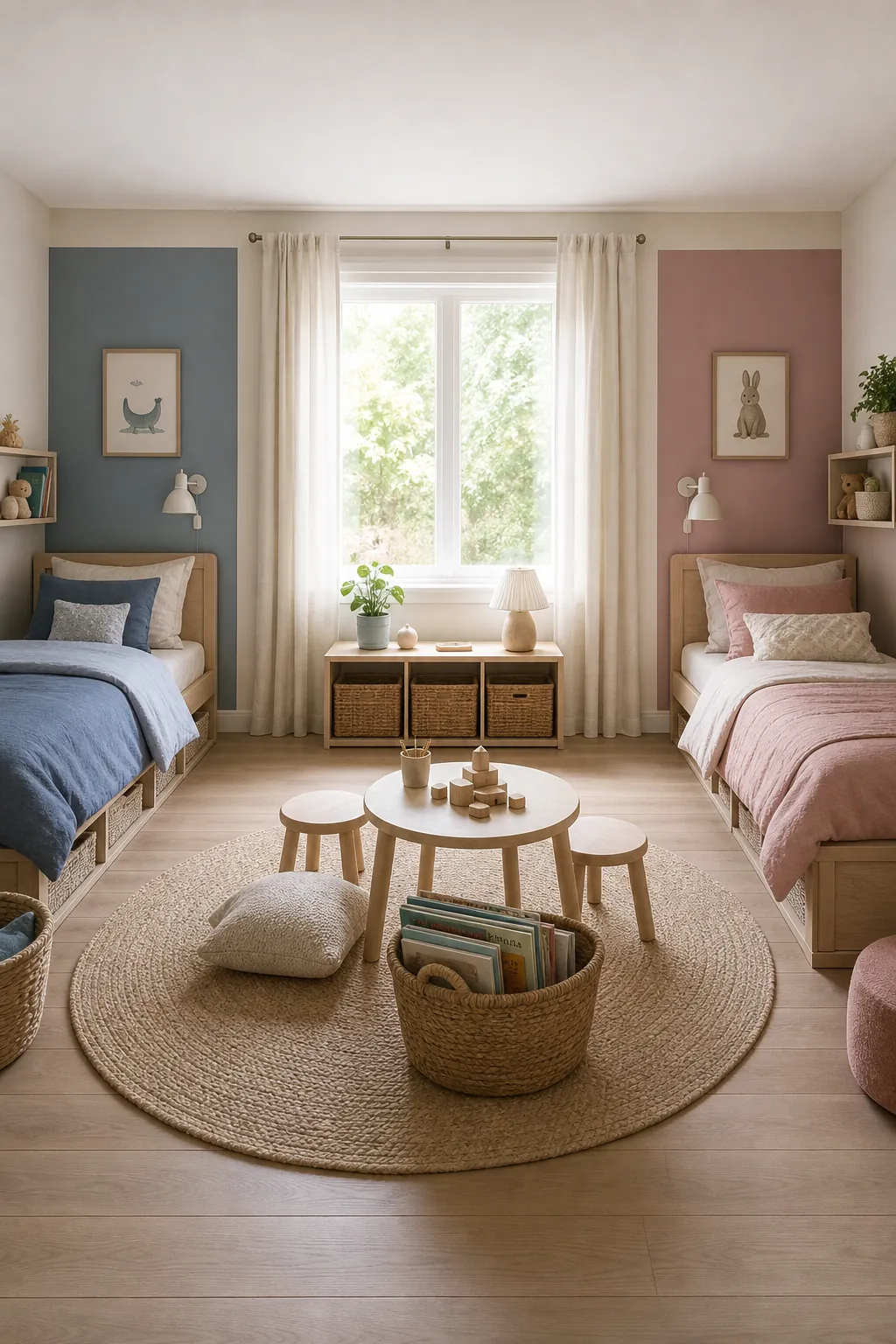
A small round rug, a shared book basket, a simple floor cushion, or one neutral play table can be enough. Keep the color temperature balanced here. If one side is blue and the other is blush, the middle might use oatmeal, ivory, pale green, or natural wood. Shared does not mean undecorated; it means no one has to defend it.
Separate Study Corners Without Crowding the Layout
If the bedroom also needs homework space, make the desk area part of the color zoning plan. Two narrow desks can sit side by side with different pinboards above them, or one long desktop can be divided with color-backed shelving. In a tight bedroom layout, even two wall-mounted fold-down desks can give each child a defined work spot.
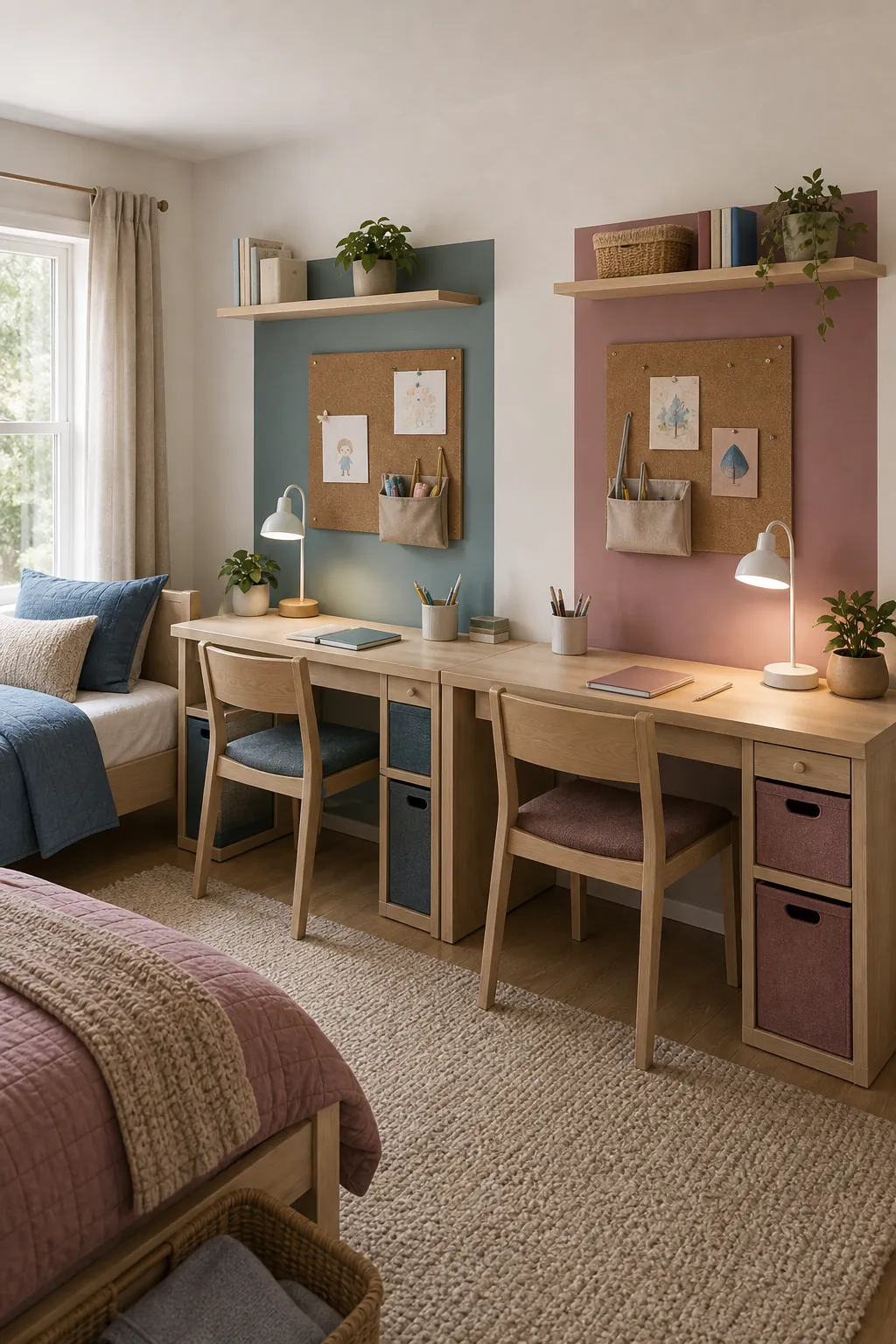
Keep the desk surfaces neutral and let color live in the chair cushion, task lamp, wall pocket, or cork board. This gives the room flexibility. When homework seasons change, the furniture still works, and the color zones can be refreshed with small accessories instead of new furniture.
Use Vertical Color in a Small Shared Bedroom
Small rooms need color zones that do not eat floor space. Vertical treatments work well: painted stripes behind bunk beds, two-toned wardrobe doors, color-backed wall shelves, or matching bedside sconces in different finishes. These moves make the room feel organized without adding another freestanding divider.
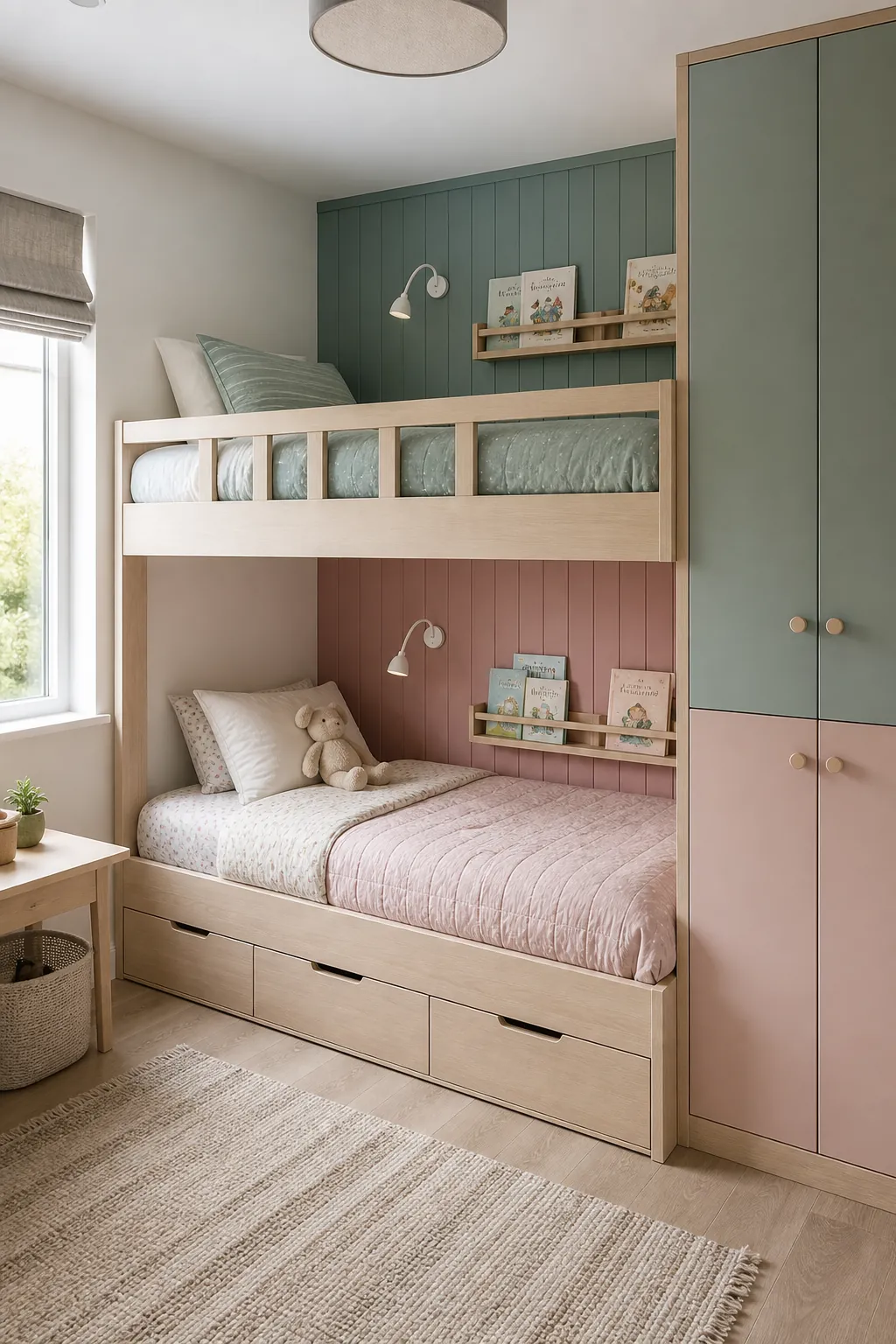
For bunk beds, assign the top bunk and lower bunk their own color cues. The top might get a muted teal reading nook with a clip-on light and book rail; the lower bunk might get clay pink bedding and a small curtain panel. The important part is that both zones feel equally finished, even when the furniture is stacked.
Add Flexible Privacy for Older Siblings
As kids get older, color zones alone may not be enough. They may want a place to change, read, or decompress without being watched. Flexible privacy can be simple: ceiling-mounted curtains, a folding screen, a canopy edge, or a bookcase that blocks the pillow area while leaving the room open.
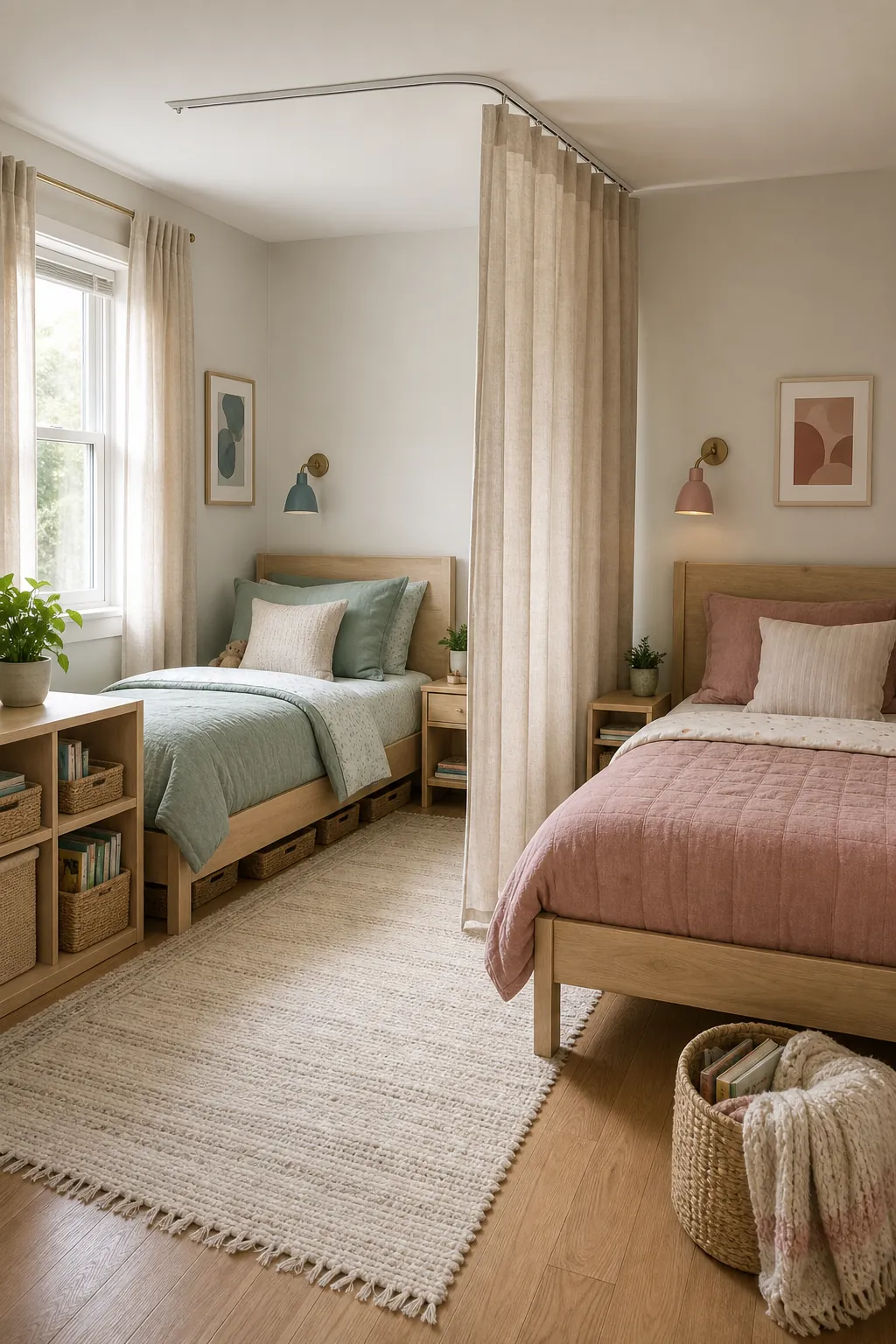
Use the divider as part of the color story. A linen curtain in the shared neutral keeps the room calm, while trim, tiebacks, or nearby wall decor can connect to each child’s palette. This is a good compromise when one sibling wants strong separation and the other still wants the bedroom to feel open.
The best shared sibling bedroom ideas are not about making both sides identical. They are about creating fairness that kids can see. When color zones, storage, wall decor, and room dividers all follow the same simple rules, a shared kids room feels less like a negotiation and more like a bedroom that belongs to both children.