
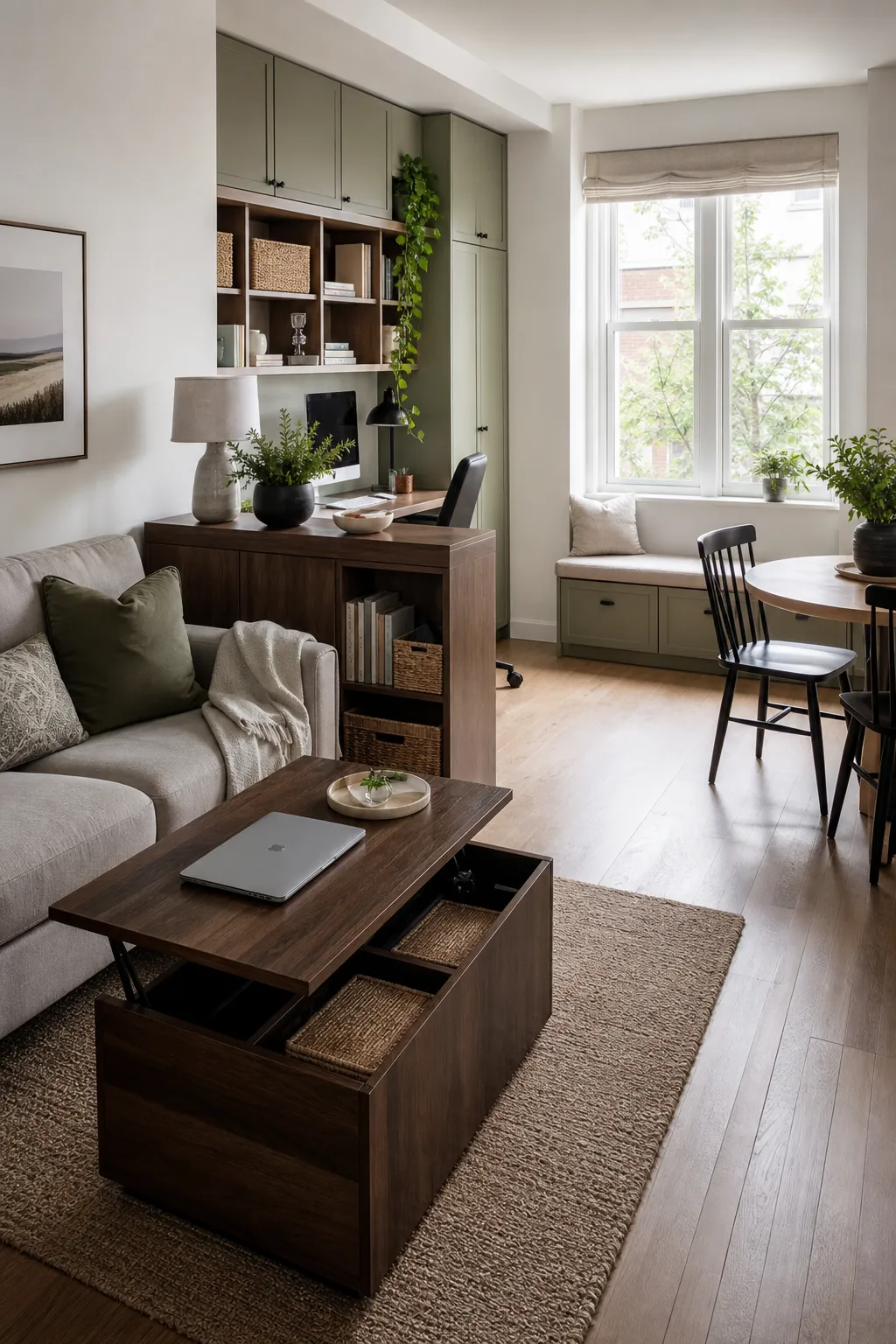
A multi-use room gets messy faster than a single-purpose room because every task leaves something behind. Work papers land near the sofa. Guest bedding waits for a closet that is already full. Hobby supplies drift into the dining zone. The fix is not more random bins. The best small space storage ideas start by giving every room zone a short, obvious place to put things away.
For a studio apartment, small apartment living room, or compact spare room that works as an office, guest room, and lounge, storage has to do three jobs at once. It should hide visual clutter, protect walkways, and help the room switch functions without a full reset every night. Use these ideas as a practical framework before buying another basket.
Map Room Zones Before You Buy Storage
Start with the activities, not the furniture. A multi use room might need a sleep zone, desk zone, TV zone, dining corner, workout area, craft spot, or guest landing area. Each zone should have storage within arm’s reach for the things used there. This keeps the room from becoming one big catchall.
Walk through a normal day and notice where clutter actually starts. If laptop chargers pile up on the coffee table, the desk zone needs a cable drawer. If blankets end up on the floor, the lounge zone needs a storage ottoman or lidded bench. If mail lands on the dining table, the entry or work zone needs a narrow drop station.
Good home organization in a small room is mostly about distance. The easier the storage is to reach, the more likely it is to be used. A beautiful cabinet across the room will not solve clutter that appears next to the sofa every evening.
Use Closed Storage Where the Eye Lands First
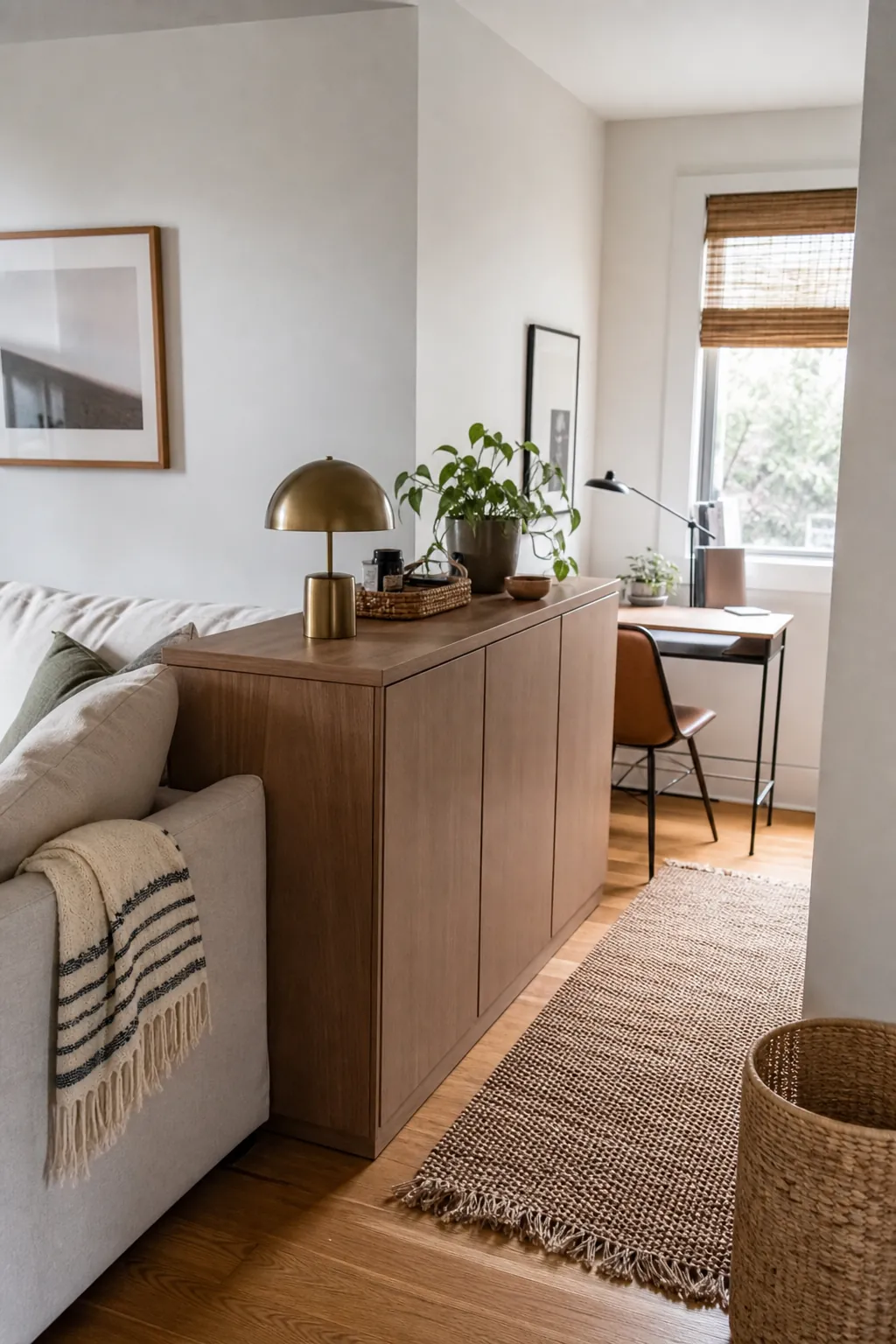
Open shelving can look airy in photos, but in real small space living it often turns everyday objects into background noise. In the view you see first from the doorway, choose storage furniture with doors, drawers, fabric panels, or matching boxes. This is especially useful in a room that doubles as a home office because cables, notebooks, printer paper, and spare tech can quickly make the whole space feel unfinished.
A closed console behind a sofa can act as a soft room divider. A sideboard can separate a dining table from the living area while holding placemats, office supplies, games, or guest linens. A bookcase with lower doors and upper open shelves gives you display space without exposing every small item.
- Hide small visual clutter: remotes, cords, chargers, craft tools, medicine, and paperwork.
- Display only the calm items: books, ceramics, framed art, a lamp, or one plant.
- Keep finishes simple: storage fronts that match the wall or nearby furniture feel quieter than several mixed materials.
Build Upward Instead of Spreading Outward
When floor space is limited, the storage ratio of each piece matters. A short shelf and a low basket may take the same footprint as a tall cabinet, but the cabinet stores far more while leaving space for a chair, walkway, or desk. Vertical storage is one of the strongest small space storage moves because it uses wall height instead of floor width.
Look for narrow towers, wall cabinets, peg rails, high shelves above doorways, and closet organizers that use the full height of the closet. In a studio apartment, tall storage can also help define room zones without blocking all the light. Keep the deepest and least-used items high, and keep daily items between knee and shoulder height.
The goal is not to fill every wall. Choose one strong vertical storage wall and let the rest of the room breathe. Too many open vertical systems can make a small room feel busy, even if they technically add capacity.

Pick Flexible Furniture That Earns Its Footprint
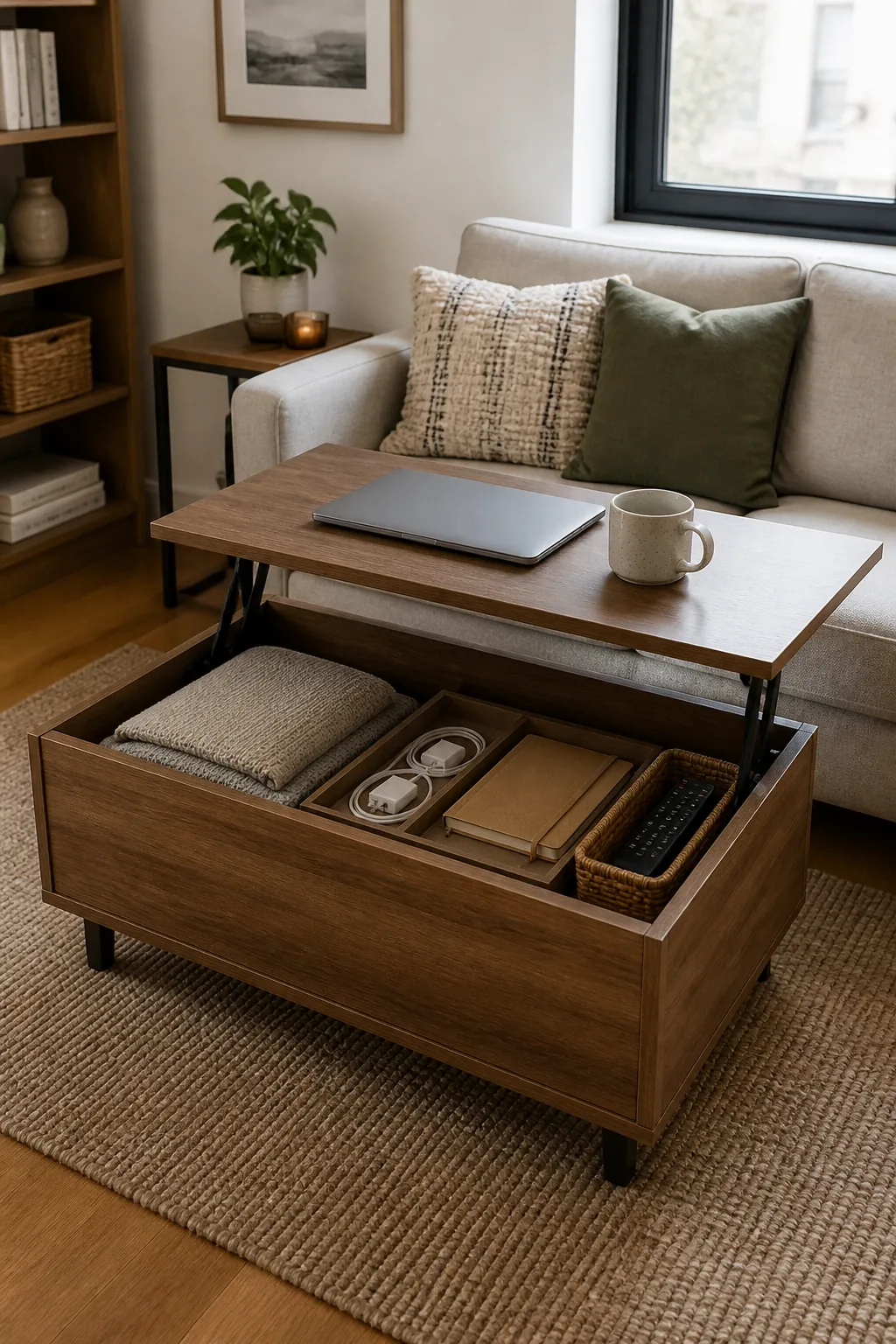
In a multi-use room, every large piece should answer one question: what else does it do? The best flexible furniture does not just fold, lift, or roll. It supports the room’s daily rhythm. A storage ottoman can hold blankets, act as a coffee table with a tray, and become extra seating. A lift-top coffee table can turn the sofa into a laptop zone. A sleeper chair or sofa can make a guest room possible without dedicating the entire room to a bed.
Flexible does not always mean complicated. Nesting tables, stackable stools, a rolling drawer unit, a drop-leaf table, or a compact bench with storage can be more useful than a dramatic transforming piece that is annoying to move every day. Choose pieces that make the most common switch easier, not the rarest switch more impressive.
Give Work and Dining Supplies a Shared Landing Zone
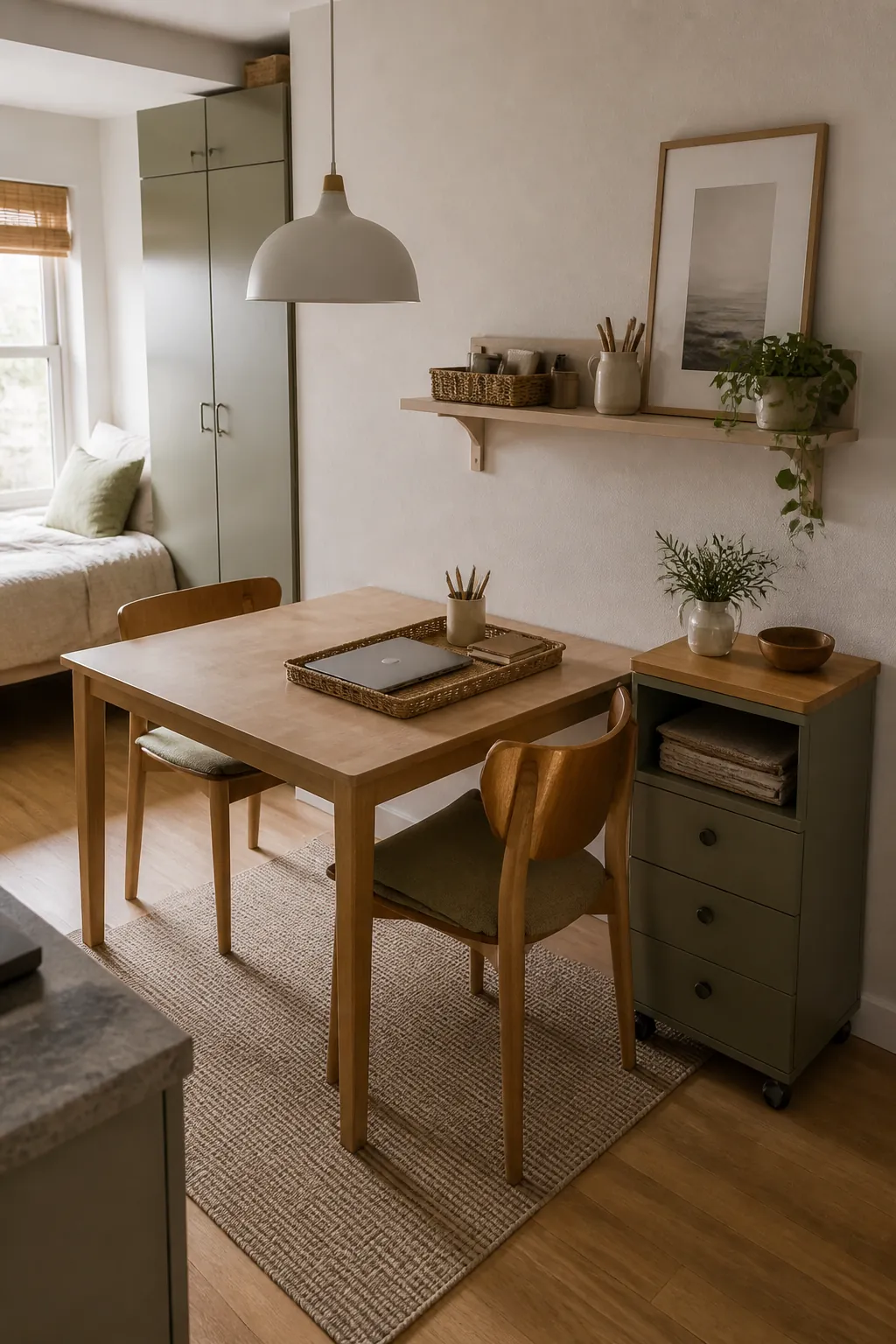
The dining table is often the first surface to become a desk, craft table, mail station, folding zone, and dumping ground. Instead of fighting that reality, give the table a nearby storage system that supports fast clearing. A slim cabinet, rolling cart, wall shelf, or bench with drawers can hold laptop gear, placemats, notebooks, chargers, and small tools.
Use one tray or shallow box for each function. When dinner starts, the work tray leaves the table in one move. When work starts, the dining tray moves away just as quickly. This works better than deep mixed bins because the whole category moves together.
For renters, a freestanding kitchen island can be a smart divider if there is enough clearance. It can add prep space, hidden storage, and a visual line between kitchen, dining, and living zones. Keep it narrow enough that it does not force people to sidestep through the room.
Hide Bulky Items in Low-Use Spaces
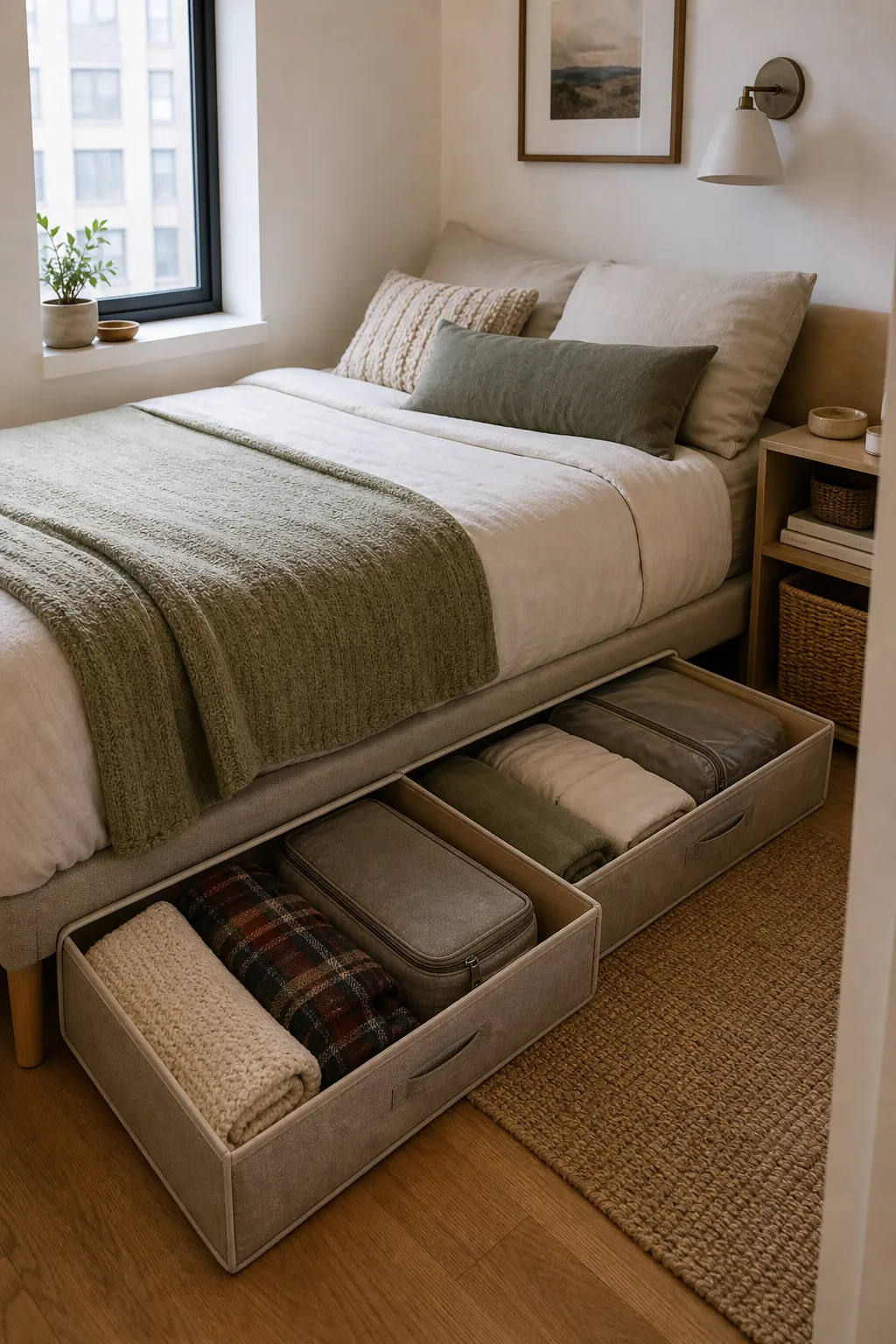
Bulky storage should not steal prime daily access. Guest bedding, seasonal clothes, luggage, extra pillows, and holiday decor can live under the bed, inside a lift-up bed base, in vacuum bags, on the top closet shelf, or behind cabinet doors above eye level. These are not items you need every hour, so they do not deserve the easiest drawer in the room.
Under-bed storage is especially useful in a studio apartment because the bed already takes a large footprint. Use clear boxes, soft zip bags, or labeled fabric bins that slide out easily. If the bed is too low, simple risers can create enough height for seasonal storage without adding another piece of furniture.
Keep daily storage separate from deep storage. Mixing the two is what makes people tear apart an entire room to find one charger, one scarf, or one set of sheets.
Turn Awkward Edges Into Storage Furniture
Small apartments often have odd edges that are too shallow for normal furniture but too useful to ignore. A window wall, alcove, entry strip, bed end, or short hallway can become a storage bench, narrow shoe cabinet, wall-mounted shelf, or lidded basket zone. These pieces work because they use space that was already visually quiet.
A bench with drawers can store guest bedding near a sleeper sofa. A window seat can hold blankets and create a reading nook. A narrow cabinet behind a door can hold cleaning supplies. A shallow shoe cabinet in the entry can stop bags and shoes from spreading into the living room.

Keep the System Easy to Reset
The real test of small space storage is not how the room looks after a weekend cleanout. It is how fast the room resets on a normal weeknight. If putting something away requires moving three boxes, opening a hard-to-reach lid, or remembering a complicated category, the system will fail.
Use labels where more than one person uses the room. Leave a little empty space inside drawers so they are not hard to close. Put a donation bag or outbox near the closet so unused items leave before they become permanent storage problems. Most important, protect one clear surface in each zone. A clear desk, clear table, or clear ottoman makes the whole room feel more organized even when storage is working hard behind the scenes.
A multi-use room feels bigger when every function has a home and every home is easy to close. Start with the zones, hide the small clutter, build upward, and let flexible furniture do the daily heavy lifting.