
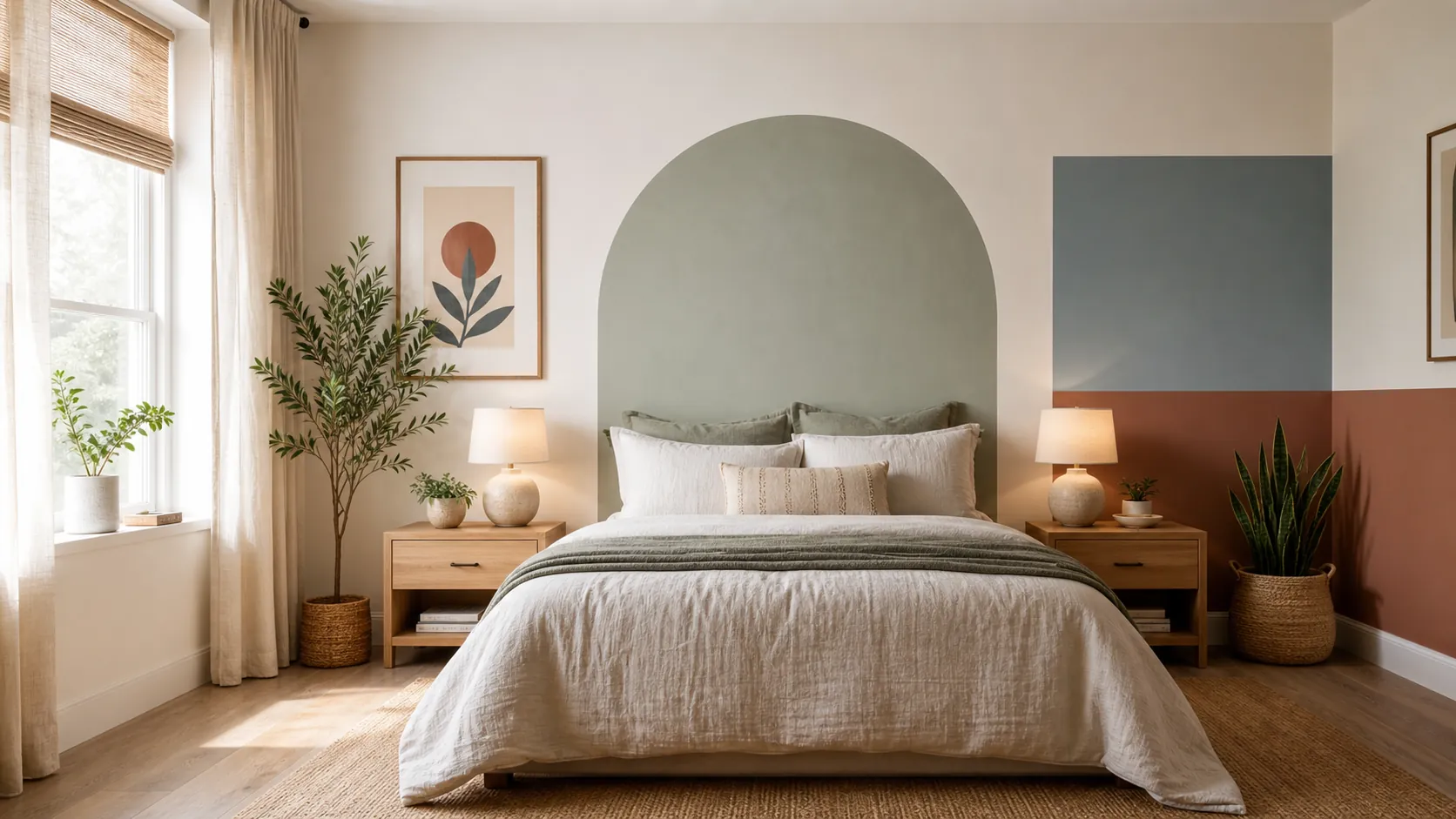
Simple wall painting ideas for bedrooms work best when they solve one clear problem: the room feels plain, but you do not want a weekend project that looks dated in six months. That is the tension most people run into. They want color, softness, and personality, but they also worry about choosing the wrong wall, making a small room feel tighter, or ending up with a loud pattern behind the bed.
The safest way to make bedroom paint feel intentional is to pick one visual job for the wall. It can frame the bed, make the ceiling feel taller, create a softer sleeping zone, or add a little character around existing furniture. When the idea has a job, it stops looking like a random accent wall.
These room wall painting ideas are simple enough for a DIY weekend, but they still look designed. Most use painter’s tape, one or two colors, and a finish you can live with every day.
Start With the Wall That Already Has a Reason
Before choosing a color, choose the wall. In most bedrooms, the best wall painting idea is the one behind the headboard because the bed already creates a focal point. Painting a random side wall can make the room feel chopped up. Painting the bed wall makes the color look planned.
If your bedroom has a sloped ceiling, a niche, built-ins, or a window centered over the bed, let that architecture guide the paint. A simple painted shape that follows the feature usually looks better than forcing a trend onto the room.
1. Paint a Wide Headboard Block
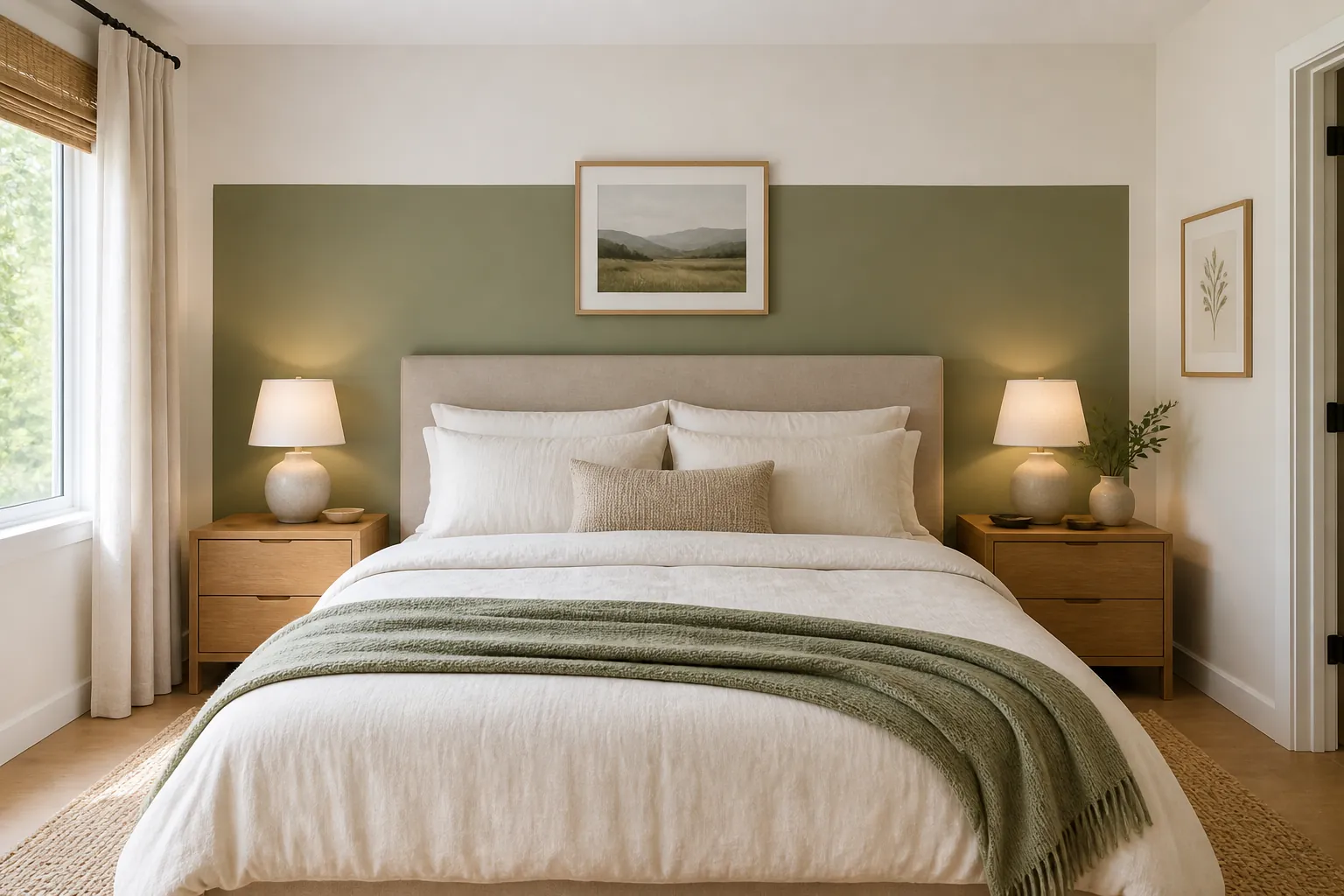
A wide painted block behind the bed is one of the easiest wall painting ideas for a bedroom because it gives you the effect of a headboard, wall art, and an accent wall in one step. The trick is to make the shape wider than the bed, not exactly the same width. That small overhang on each side makes the bed feel anchored instead of boxed in.
Try muted olive, clay, dusty blue, warm taupe, or soft charcoal. If the rest of the room is white, avoid a harsh rectangle with a sharp color jump. A softened shade will look calmer at night and less trendy during the day.
For a cleaner finish, line the bottom edge up with the top of the baseboard and take the block to the ceiling. For a renter-friendly version, paint only a large panel behind the bed and leave at least 12 inches of wall showing around it.
2. Use a Soft Painted Arch
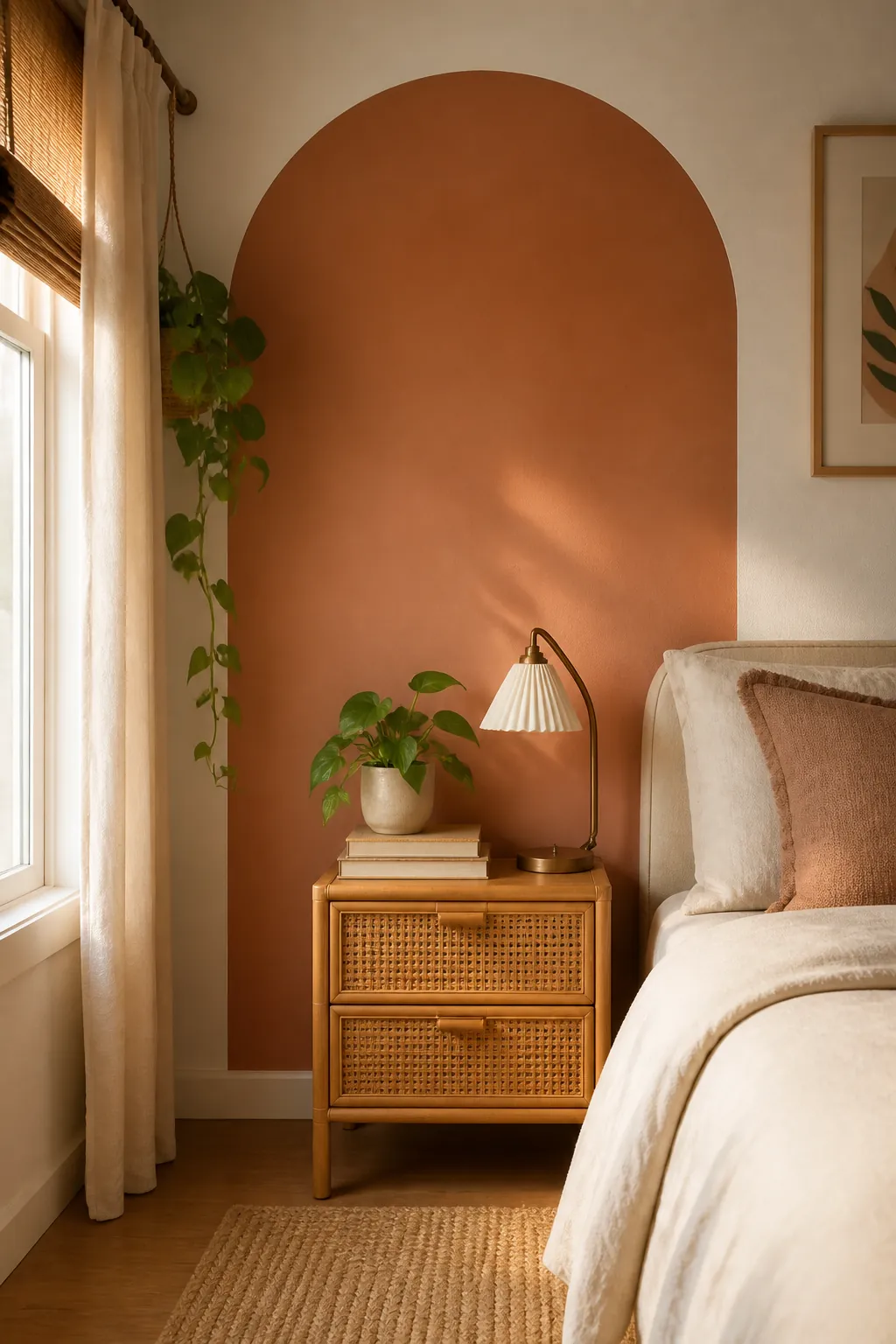
A painted arch is a cute wall painting idea that still feels calm when the color is quiet. It works especially well beside a bed, around a vanity, behind a reading chair, or behind a nightstand when the bedroom has no strong architectural feature.
The key is scale. A tiny arch can look crafty. A taller arch that starts near the baseboard and rises above eye level feels more intentional. Keep the curve simple and avoid adding too many extra stripes or dots unless the room already has a playful style.
For a gentle bedroom look, try plaster pink, warm beige, sage, mushroom, or pale terracotta. These colors bring in personality without making the sleeping area feel busy.
3. Try a Half-Height Color Block
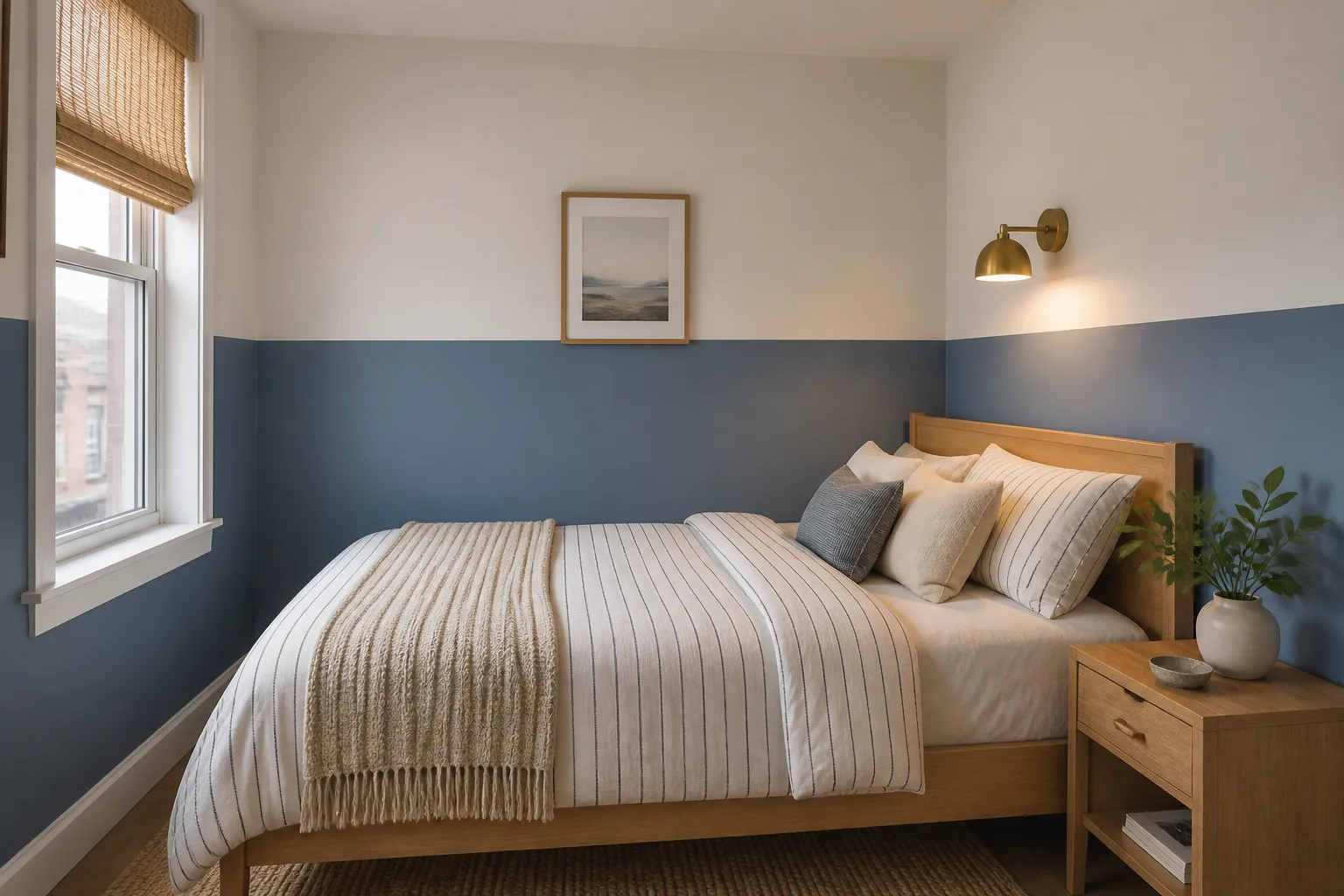
A half-height painted wall is a good choice when you want color but do not want the whole room to feel dark. Paint the lower third or lower half of the wall and leave the top lighter. This gives the bed area weight while keeping the eye line open.
This idea is especially useful in small bedrooms because it adds contrast near the furniture instead of surrounding the entire room with a heavy shade. It also works with simple wall painting designs like a thin painted line at the top edge or a slightly darker trim color.
Measure from the floor, not from the ceiling. Floors and ceilings are often slightly uneven, and a line that follows the floor usually looks straighter next to the bed, dresser, and baseboards.
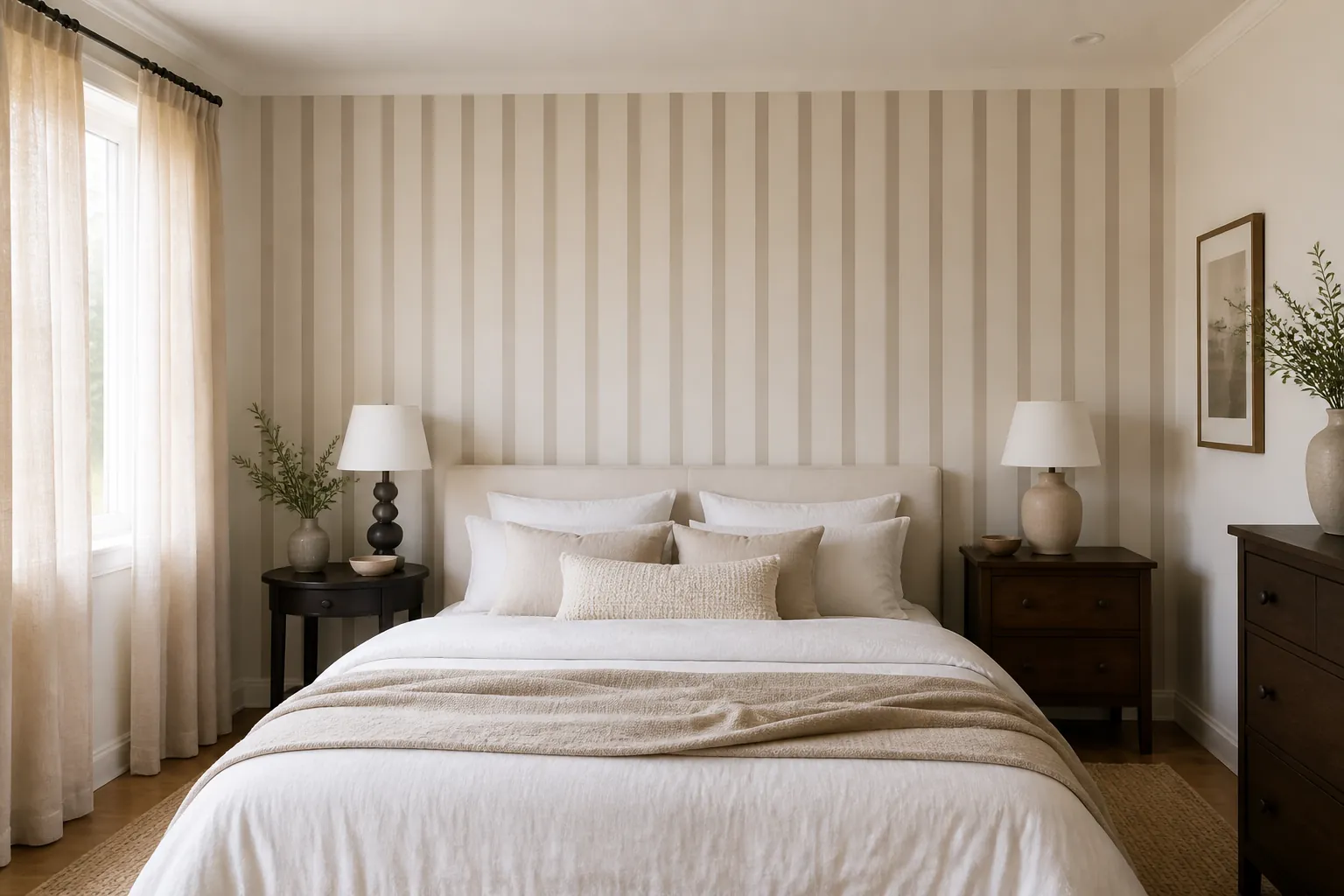
4. Add Thin Stripes Instead of a Full Pattern
If you like creative room wall painting ideas but do not want a loud geometric mural, use thin stripes. Vertical stripes can make a low bedroom feel taller. A single horizontal band can make a narrow wall feel wider. The look is simple, but it gives the wall a finished rhythm.
Keep the contrast low for a bedroom. Cream on warm white, dusty blue on pale blue, or taupe on beige will feel more relaxed than black-and-white stripes. Save high contrast stripes for a small zone, such as the wall behind a desk or reading nook.
For the easiest layout, use one stripe width and repeat it evenly. If the wall has outlets or switches, let the stripe spacing work around them instead of trying to make every edge perfect.
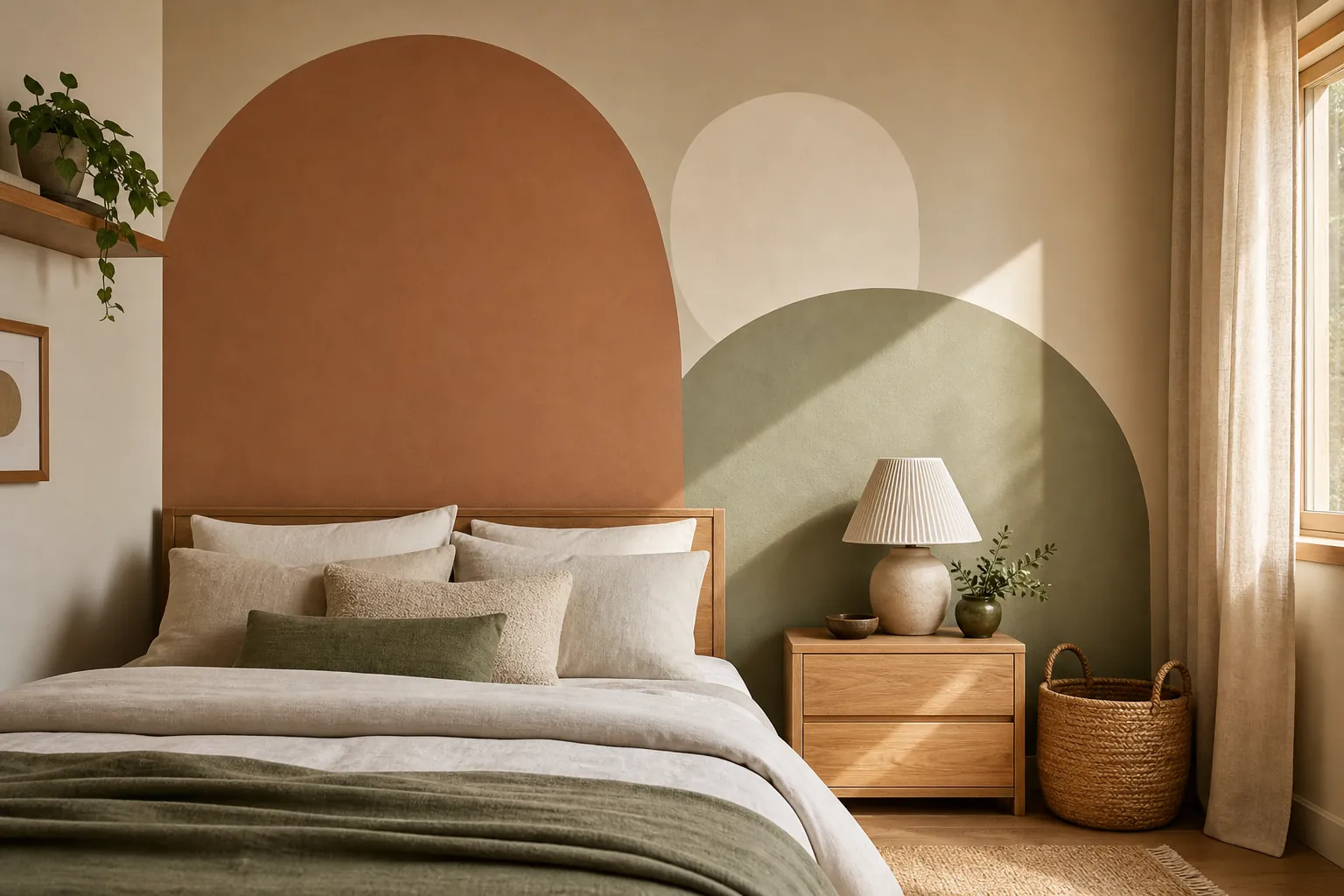
5. Keep Geometric Paint Muted and Large
Geometric paint can look great in a bedroom, but it is easy to push too far. The most livable version uses fewer shapes, larger sections, and colors that share the same softness. Think clay, oatmeal, sage, cream, and muted brown instead of a full rainbow.
Large shapes look more grown-up than a wall filled with tiny triangles. They are also easier to tape and touch up. If you want a wall painting idea for a bedroom that feels unique, make the design asymmetrical but balanced: one large shape near the headboard, one smaller shape near a lamp or shelf, and enough blank wall for the room to breathe.
This is a good place to include related colors from the bedding or rug. When the wall repeats colors already in the room, it feels connected instead of pasted on.
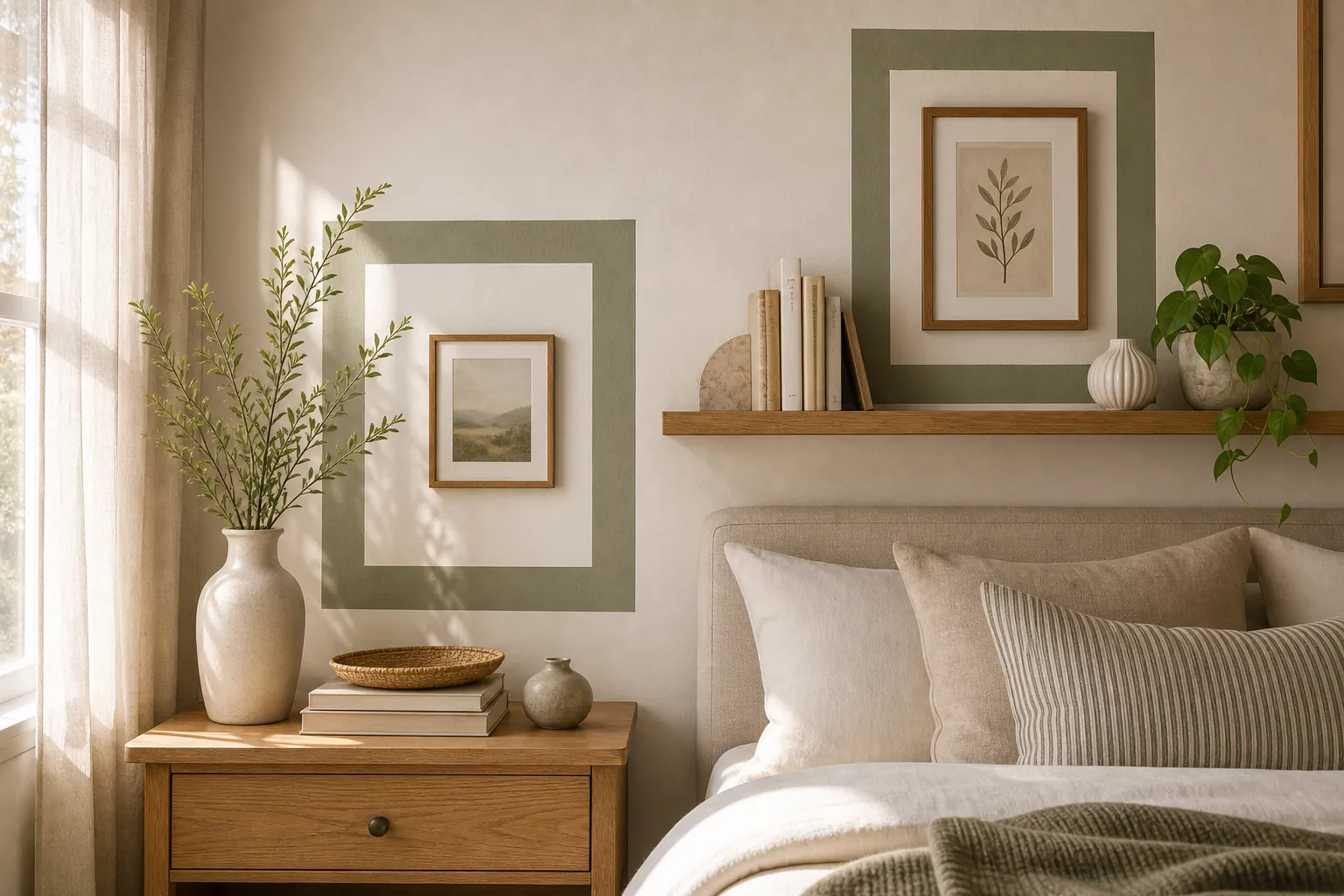
6. Paint Frames Around Art or Shelves
If you do not want to paint a full accent wall, paint frames. A painted rectangle around a pair of prints, a slim border behind floating shelves, or a soft block behind a mirror can make plain decor look more deliberate. This is one of the easiest wall painting ideas for bedrooms because it uses very little paint and can be changed quickly.
Painted frames work well in apartments and guest rooms where you want impact without committing to a dark wall. Use them to connect mismatched art, make a small nightstand area feel finished, or give a blank corner a little structure.
Keep the edges crisp and the palette restrained. One frame color repeated two or three times will look more polished than several unrelated blocks around the room.
Paint Color Rules That Keep Bedroom Walls Calm
The best bedroom wall painting designs usually have less contrast than living room or hallway ideas. Bedrooms need to feel restful in low light, so colors with a little gray, brown, or cream mixed in often work better than bright clear colors.
If you love dark paint, do not assume one black wall is the only option. Sometimes a softer dark shade on more than one wall looks calmer than a single high-contrast accent wall. Balance it with light bedding, warm lamps, natural texture, and window treatments that filter light instead of blocking it completely.
If you love playful color, keep the shape simple. If you love a complex pattern, keep the colors quiet. That tradeoff is what makes wall painting ideas bedroom unique without making the room hard to sleep in.
A Simple Weekend Painting Plan
Start by taping a paper version of the shape on the wall. Live with it for a day and look at it in morning light, afternoon light, and with lamps on. A shape that looks balanced at noon may feel too high once you are lying in bed.
Next, test the color on poster board instead of directly on the wall. Move the sample around the room and hold it near bedding, wood furniture, and curtains. Bedroom paint changes quickly under warm bulbs, so the sample needs to be seen where you actually use the room.
When you paint, press the tape edges down firmly, use two thin coats, and remove the tape while the final coat is still slightly wet. Keep a small brush nearby for touch-ups. The clean edge is what makes even easy wall painting ideas look expensive.
The Easiest Idea to Choose
If you are unsure, start with the wide headboard block or the half-height color block. Both are simple, forgiving, and easy to repaint later. They give a bedroom structure without demanding perfect decor around them.
A good painted bedroom wall should not fight the bed, lamps, curtains, and art. It should make those pieces look more connected. That is the real test: when the paint makes the room feel calmer and more finished, the idea is working.