
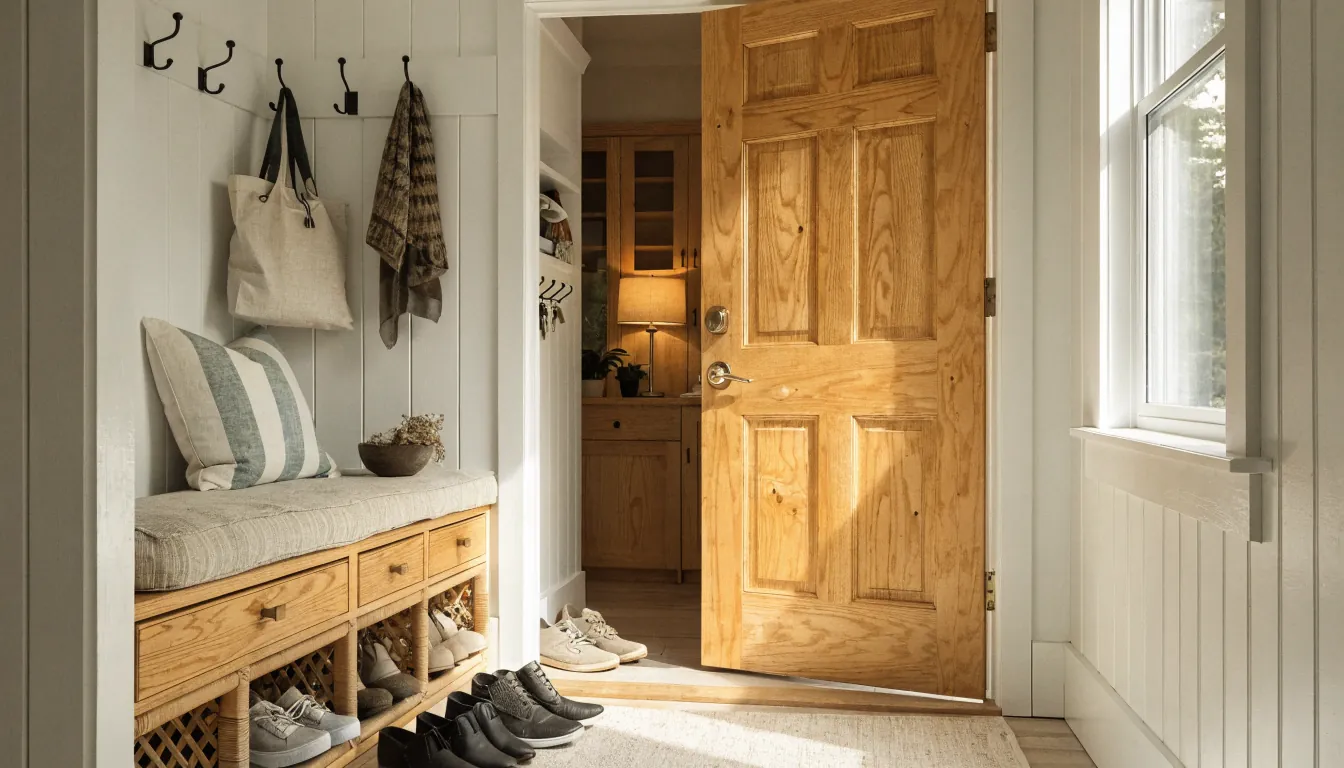
A tiny house entryway does not need to be big, but it does need to be real. Without an entry zone, the front door becomes a leak: shoes drift into the kitchen, keys land on the table, coats hang on chairs, and every bag seems to block the narrowest part of the tiny house layout.
A real entry zone gives arrival items a place to stop. It can be a 24-inch bench, a row of hooks, a small shelf, a shoe tray, or a narrow cabinet. The point is not to imitate a full-size mudroom. The point is to protect the rest of the tiny house interior from everyday clutter.
These tiny house ideas focus on small entryway details that work hard: drop zones, tiny house storage, washable surfaces, compact hooks, and visual boundaries that make the doorway feel intentional.
Start With the First Three Things You Drop
Before buying storage, name the first three things you drop when you walk in. For many people, that list is keys, shoes, and a bag. For others, it is a dog leash, jacket, mail, work tote, umbrella, or wet boots. The entry zone should be designed around those real objects, not around a pretty bench photo.
In compact living, every inch near the door is expensive. Do not fill it with storage for things that belong somewhere else. The entry zone should hold arrival and departure items only. That one rule keeps it from turning into another general clutter shelf.
Use a Narrow Bench to Create the Zone
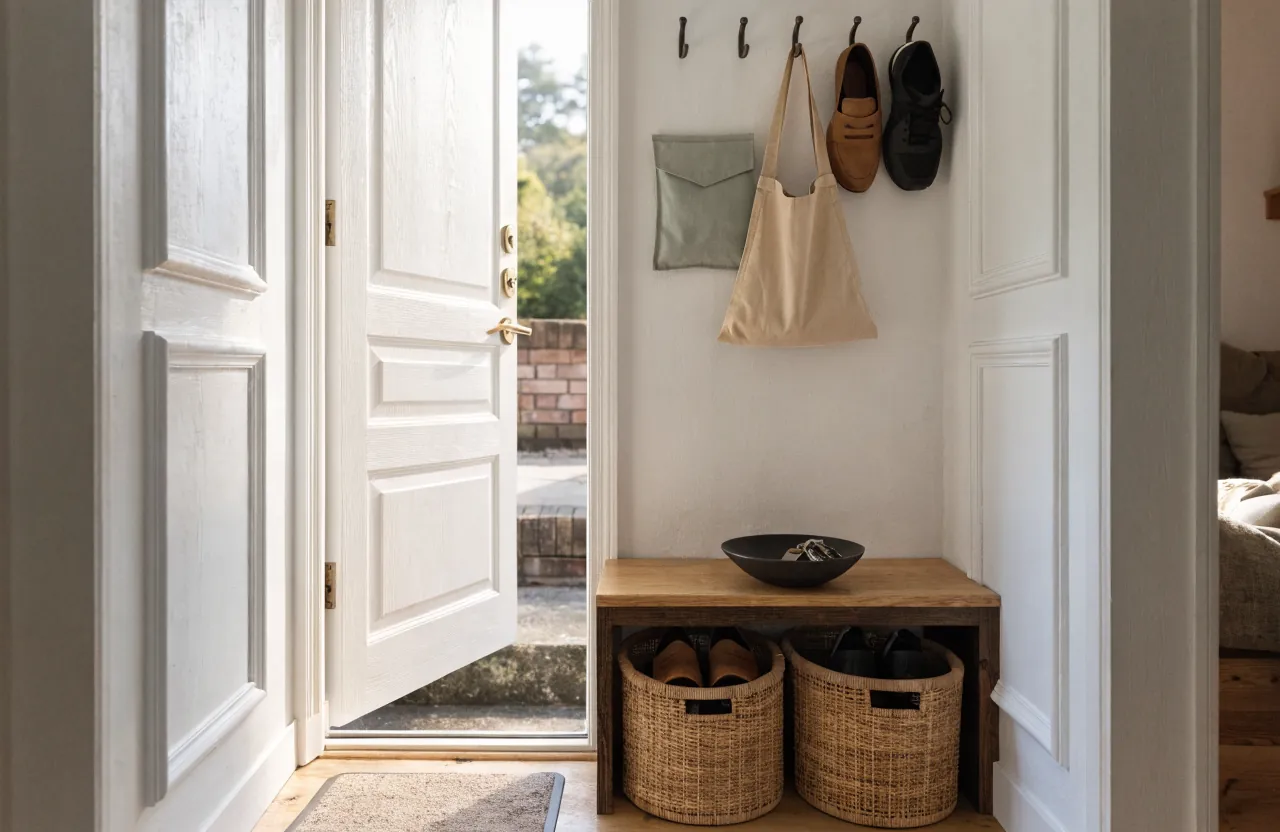
A bench is useful because it makes the entry zone feel like a place, not just a wall with hooks. It gives you a spot to sit while putting on shoes, a surface for a bag, and storage underneath. In a tiny house, the bench can be very shallow. Even a slim perch can change how the doorway works.
Look for a bench that leaves the walkway clear. A floating bench, built-in ledge, or narrow storage bench can work better than a freestanding piece with bulky legs. If the door swings inward, test the swing before committing to depth.
Control Shoes Before They Spread
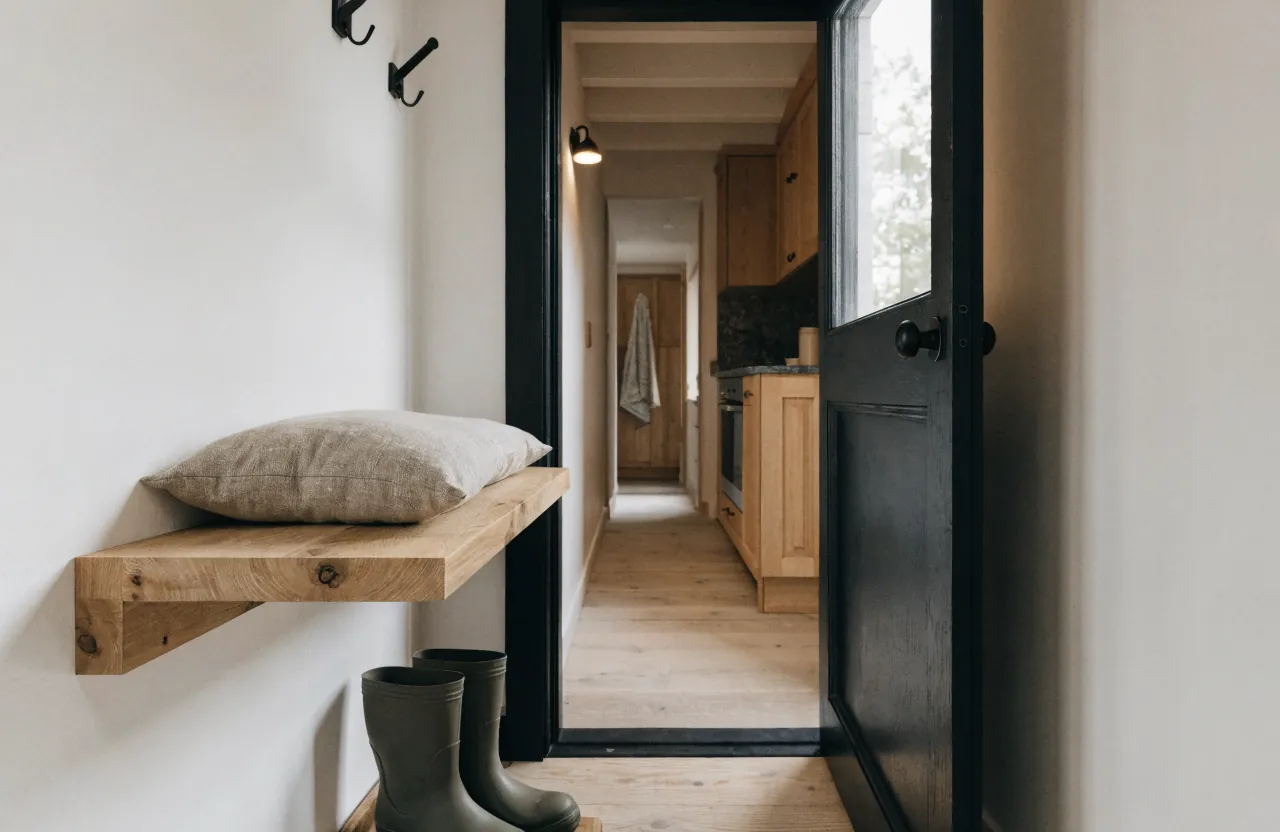
Shoes are usually the first entryway problem because they multiply visually. One pair by the door looks normal. Four pairs make the whole tiny home feel messy. The fix is not always a big cabinet. Sometimes the best tiny house storage is a divided tray, two cubbies, or one low drawer under the bench.
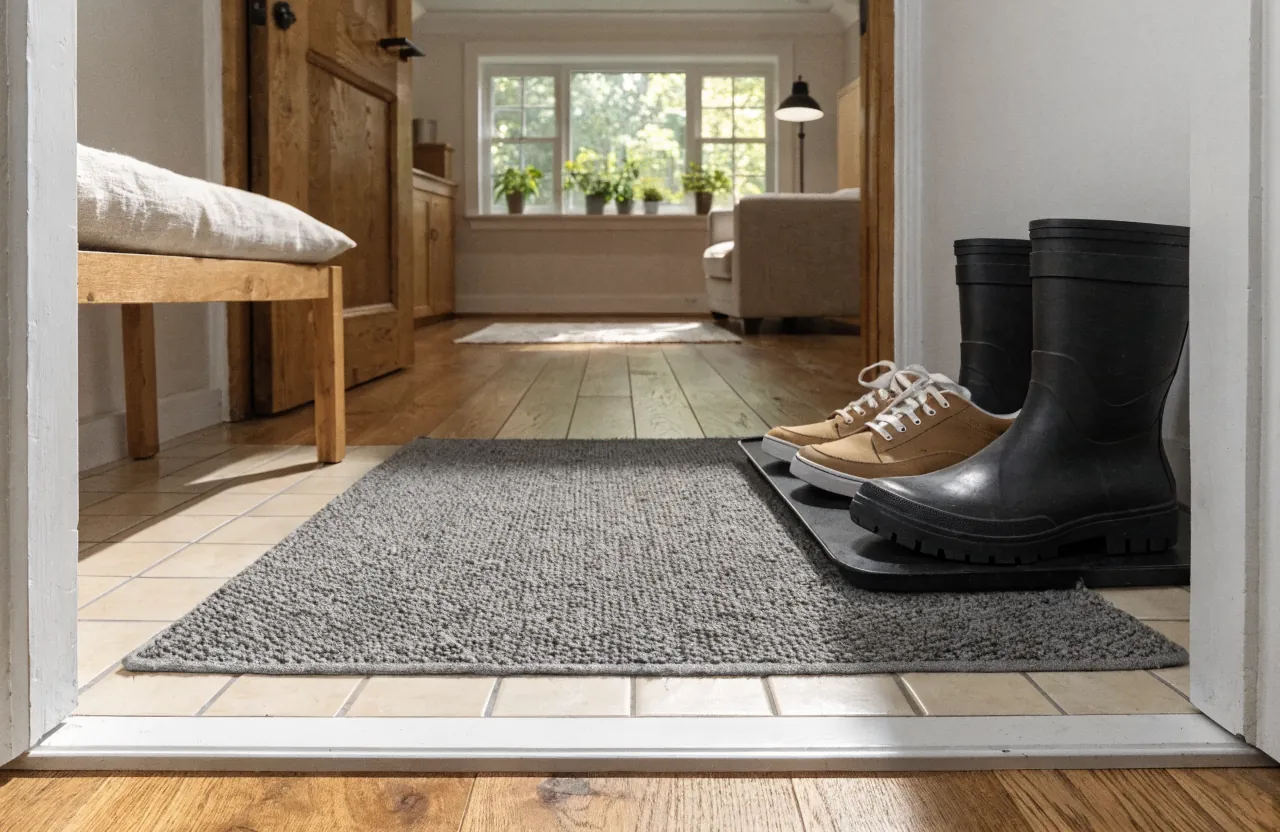
If you live with wet shoes or garden shoes, keep the bottom surface washable. A boot tray, rubber mat, or tile inset protects wood floors and makes the entry zone feel planned instead of temporary. Store only the active shoes here. Seasonal pairs should live deeper in the house.
Make Hooks Useful, Not Decorative
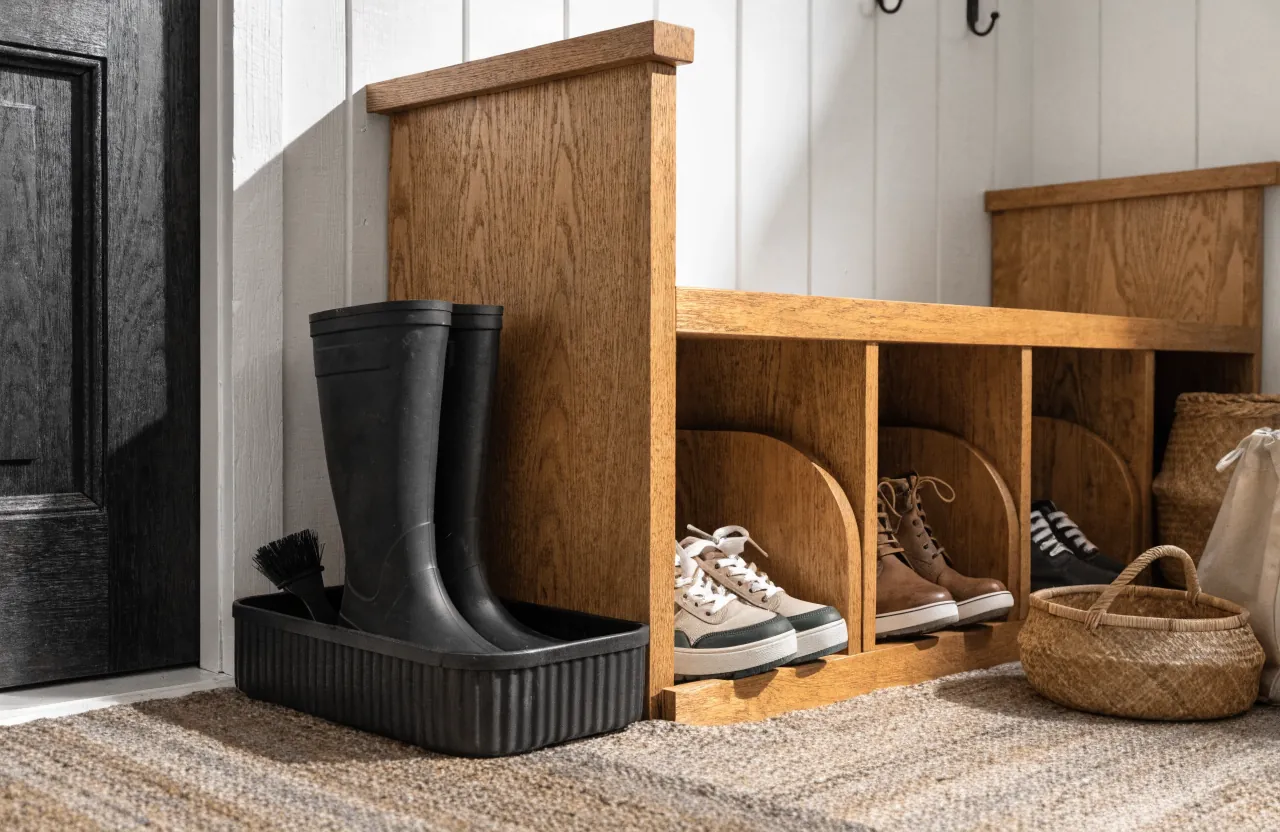
Hooks are the fastest entry storage, but they can overwhelm a small wall if everything hangs in plain view. Use hooks for the few items that need to be grabbed daily: one jacket, one bag, one leash, one hat. Put overflow somewhere else.
A peg rail works well because it feels lighter than a bulky coat rack. In a narrow tiny house entryway, mount hooks where hanging items will not hit your shoulder as you pass. If coats are thick, stagger hooks vertically or use a shallow closet just beyond the entry zone.

Add a Tiny Landing Surface
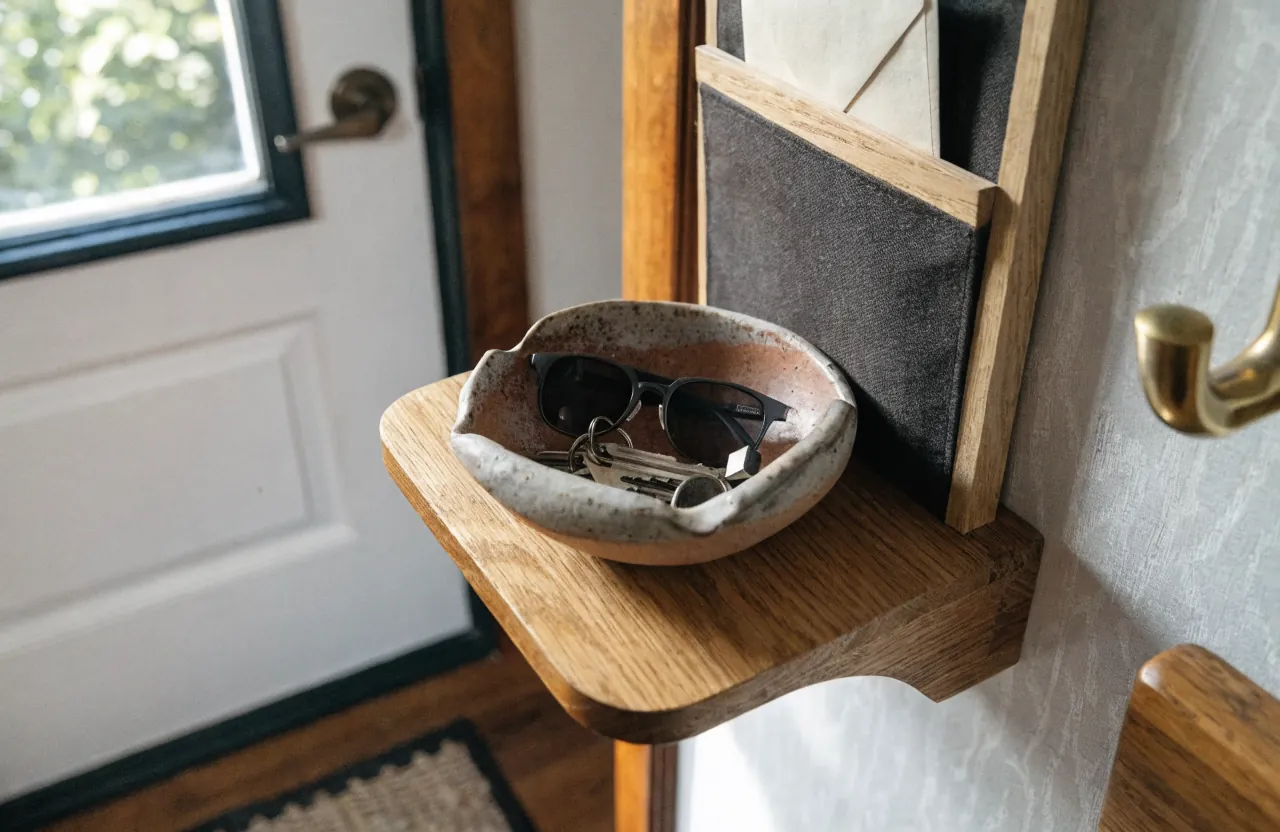
A drop zone needs one small landing surface. It can be a shelf, wall pocket, ledge, tray, or the end of a built-in bench. Without it, keys and mail usually migrate to the dining table or kitchen counter.
Keep the surface intentionally small. A tiny shelf forces quick decisions. A large console invites piles. For a compact entry, pair a small shelf with a bowl for keys, a slot for mail, and maybe a charging point for one device.
Use the Floor to Mark the Entry
A real entry zone often starts underfoot. A washable mat, tile patch, cork strip, or darker runner can signal where outside ends and inside begins. This is especially useful when the door opens directly into the kitchen or living area.
The floor boundary does not need to be dramatic. A durable mat cut to the width of the door, a narrow tile landing, or a different runner can make the entry feel intentional. It also solves the practical problem of mud, grit, and wet soles.
Create a Visual Boundary Without Blocking the Door
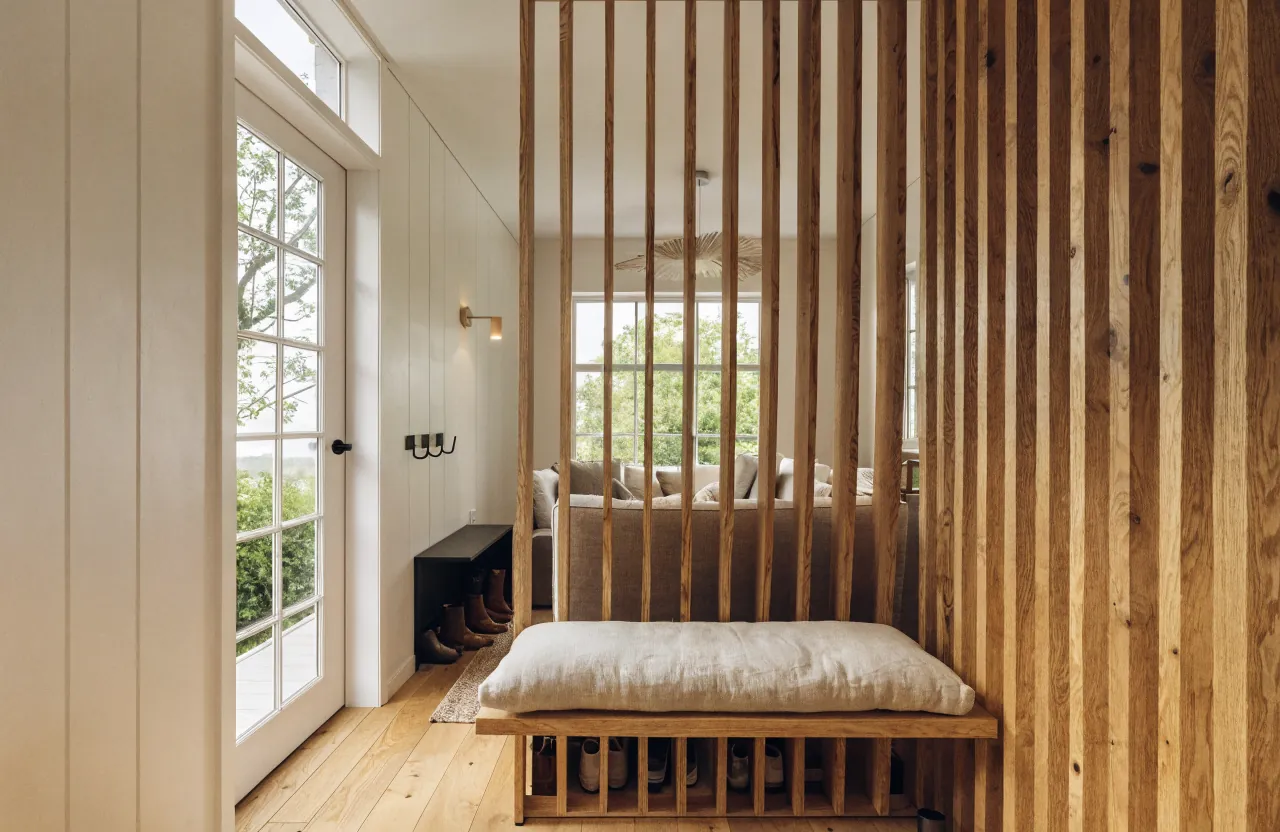
Some tiny houses need a boundary cue near the entry so the door does not open straight into the whole home. A short cabinet, narrow slatted screen, peg rail, curtain, or change in wall treatment can make the entry zone feel separate without creating a cramped hallway.
Keep this boundary light. The entry needs airflow, daylight, and enough clearance to carry groceries inside. A partial divider should tell the eye where the entry ends, not make the doorway feel boxed in.
Small Entry Zone Layouts That Work
| Entry situation | Best tiny house idea | Why it works |
|---|---|---|
| Door opens into kitchen | Runner, wall shelf, two hooks | Creates a pause without blocking cabinets |
| Door opens into living area | Narrow bench and rug boundary | Defines arrival before clutter reaches the sofa |
| No wall beside the door | Short cabinet or slatted screen | Adds a visual edge while keeping light open |
| Wet climate | Boot tray, wipeable drawer, durable mat | Contains mud and moisture before it spreads |
| Very narrow walkway | Floating shelf, peg rail, shallow shoe cubby | Keeps storage off the floor and out of the path |
Keep the Entry Zone Edited
The smallest entry zone can work if it stays edited. Limit visible hooks, rotate shoes, empty mail daily, and give every object a specific place. If the entry becomes a catchall, the tiny house will feel cluttered before you even step inside.
A real entry zone is not about having more square footage. It is about making arrival predictable. When keys, shoes, coats, and bags stop at the door, the rest of the tiny home feels calmer, cleaner, and much easier to live in.