
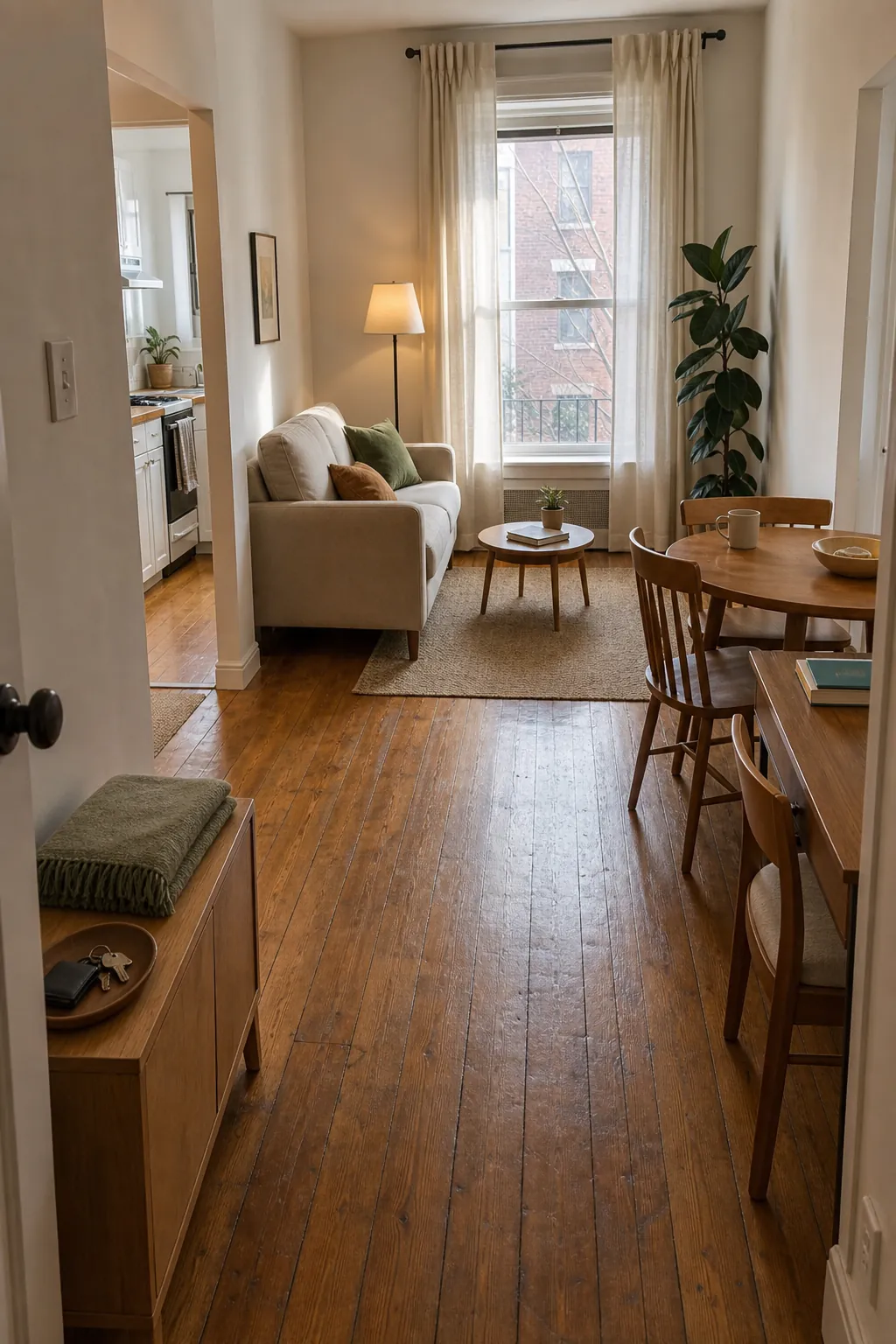
A small apartment rarely feels cramped because it lacks one clever organizer. It feels cramped when furniture interrupts the route you walk every day, storage has no relationship to where things are used, and every corner is asked to perform three jobs at once. The most useful small apartments ideas begin with function: protect movement, give each activity a clear zone, and let a few hardworking pieces replace an entire roomful of furniture.
Map Your Daily Routes Before Buying Furniture
Start with the paths you cannot negotiate: front door to kitchen, bed to bathroom, sofa to window, and closet door to open floor. Mark those routes with painter’s tape or simply walk them while carrying groceries and laundry. A layout that looks efficient on paper can fail the first time an open drawer blocks the only passage.
Give main walkways roughly the width of your shoulders plus whatever you normally carry. Check door swings, cabinet fronts, pull-out beds, dining chairs, and the space required to make the bed. Clear circulation creates more visual calm than squeezing in one extra cabinet. If a full sofa pinches the route, a compact loveseat and movable ottoman may provide better comfort without turning the room into an obstacle course.
Create Zones Without Building Visual Walls
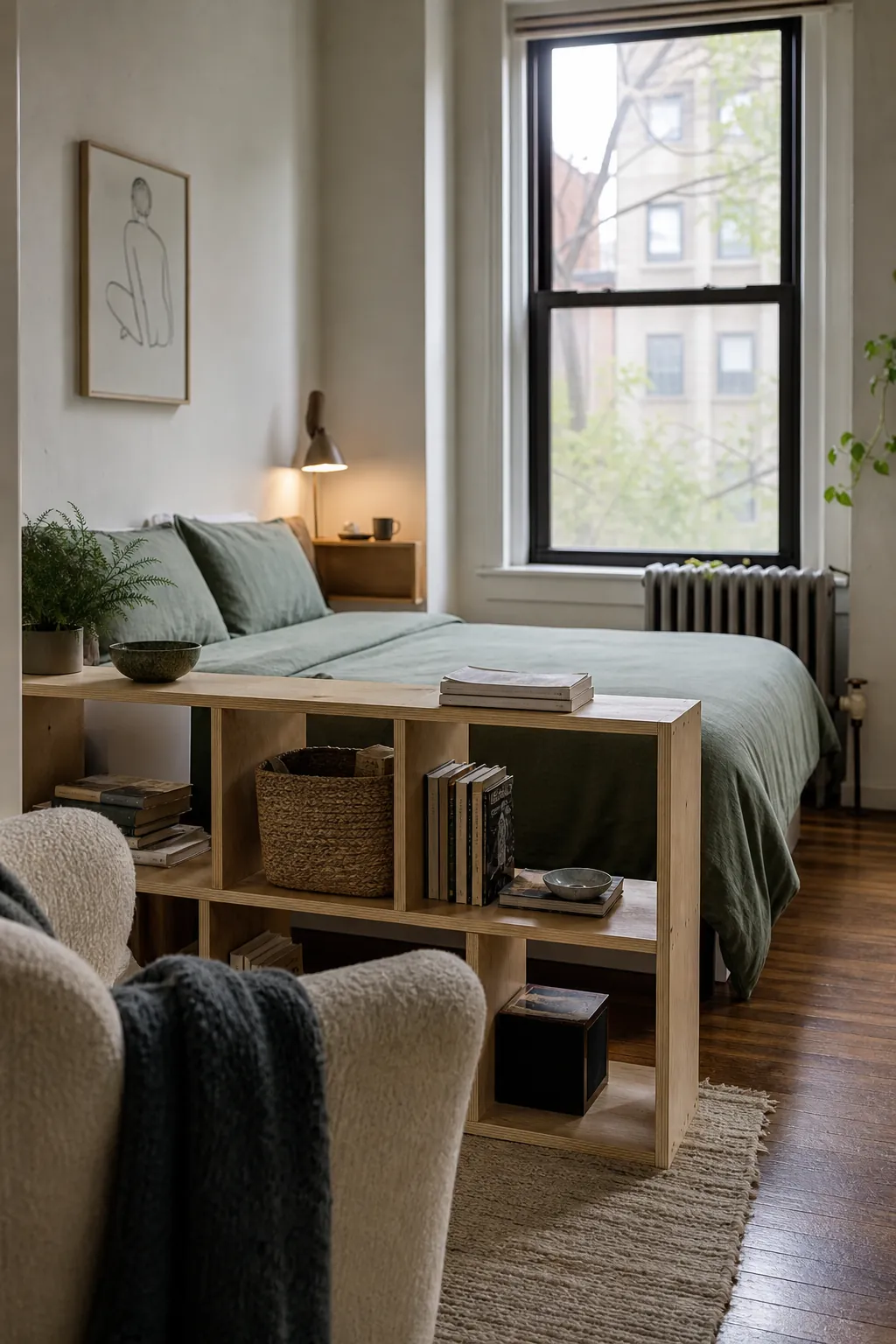
A studio still needs psychological boundaries between sleeping, working, eating, and relaxing. The mistake is using tall, heavy dividers that steal daylight and make each side feel smaller. Instead, define zones with a rug, a change in lighting, the back of a low sofa, an open shelf, or a curtain that can disappear when you want the room to breathe.
Keep the tallest pieces near solid walls and the lowest pieces near windows. Turn the bed so it is not the first thing visible from the entry when the floor plan allows. A narrow open bookcase can provide partial privacy while letting light and sightlines pass through. This is the difference between a very small apartment that feels organized and one that feels divided into boxes.
Choose Furniture by Footprint and Function
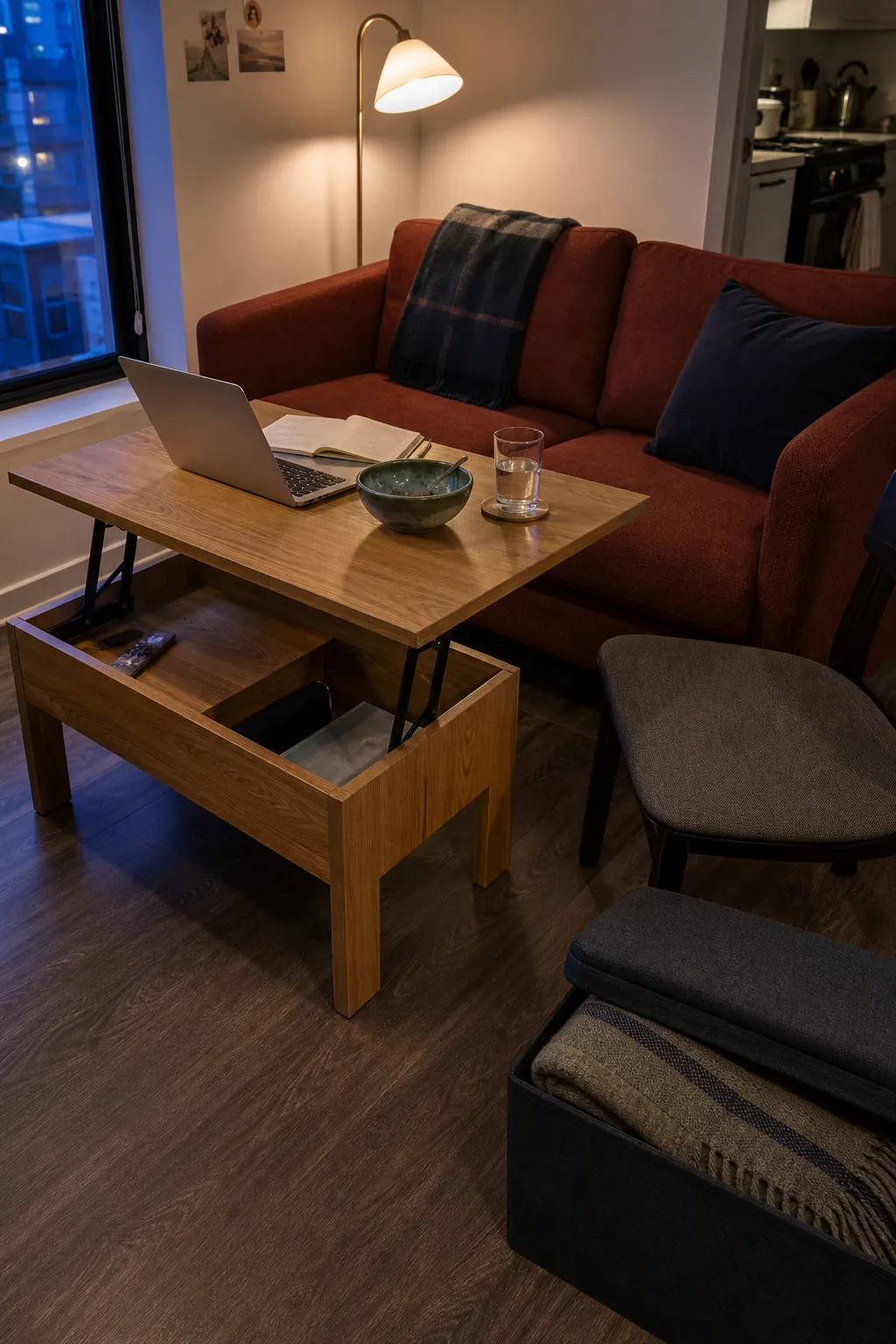
Small-space furniture is not automatically good furniture. A transforming table that is annoying to open will stay closed; a storage bed with drawers that hit the wall is wasted volume. Measure the usable footprint in every state, including chair pullback, cabinet access, and the arc of a folding leaf.
- A lift-top coffee table can replace a separate dining desk for occasional laptop work.
- A storage ottoman can hold blankets, become a footrest, and offer an extra seat.
- A narrow-arm loveseat preserves more sitting width within a smaller exterior dimension.
- A round or drop-leaf table softens circulation in a tight kitchen corner.
Buy for the life you actually lead. If you rarely host, a large couch should not consume a third of the room out of obligation. If you work from home every day, a genuinely supportive chair and a shallow desk deserve more space than a decorative console.
Build Storage Around the Point of Use
Storage works when putting something away is easier than leaving it out. Keep shoes, keys, umbrellas, and bags at the entry; cooking tools within reach of their task; chargers beside the seat where devices are used; and spare linens close to the bed. Random bins only relocate clutter.
Use vertical space for low-frequency items while keeping daily essentials between knee and eye level. Fit labeled boxes above wardrobes, add a shelf over a doorway where permitted, and use the full height of a pantry. Under-bed storage is best for seasonal clothing or spare bedding, not items you need every morning. The goal is fewer visible decisions, not the maximum number of containers.
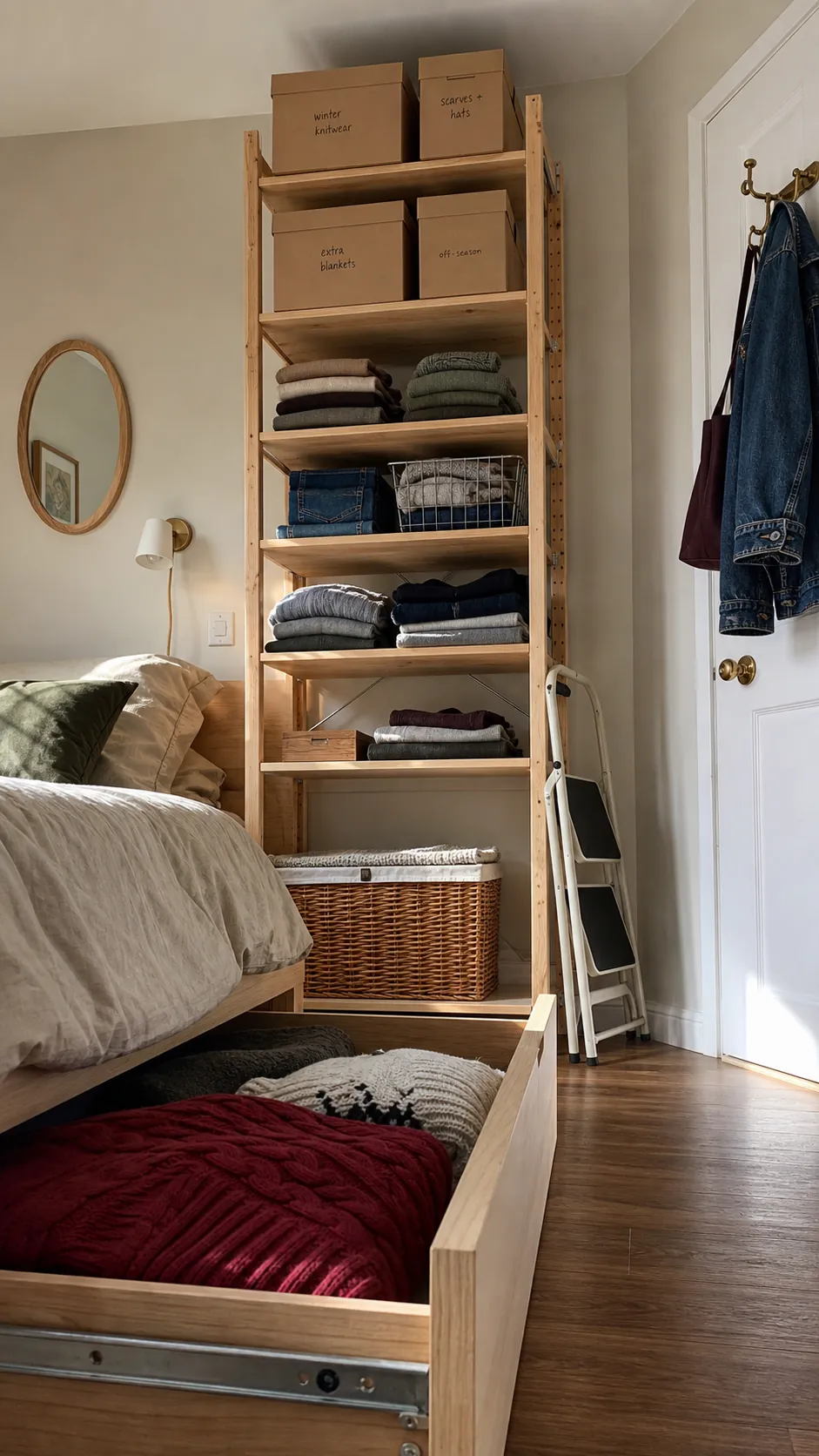
Make the Kitchen and Entry Earn Their Space
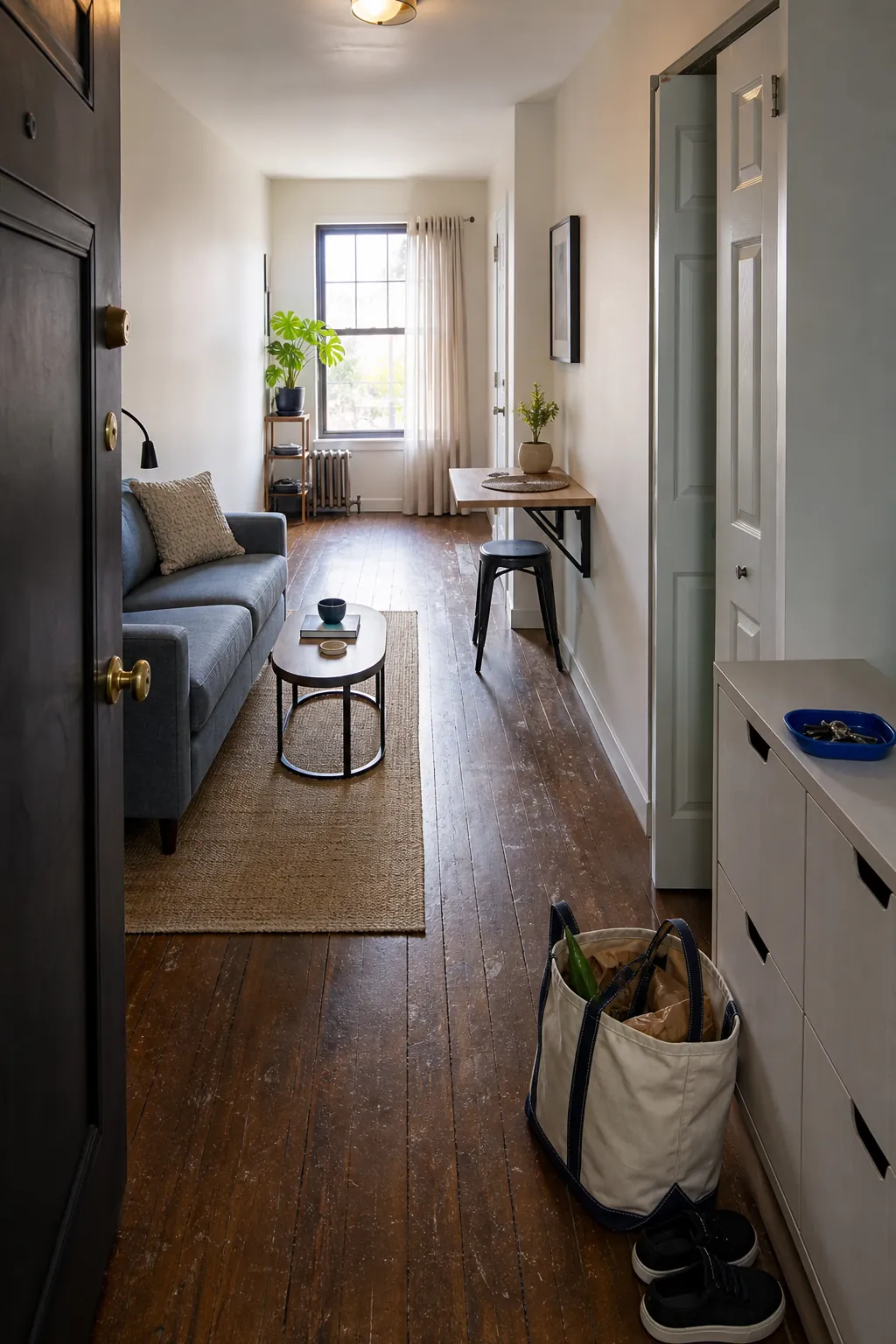
The entry and kitchen are where clutter becomes visible fastest. Give the doorway a shallow landing zone: wall hooks, a slim shoe cabinet, a tray for keys, and one basket for items that need to leave the apartment. This creates an entryway even when the floor plan does not provide one.
In a mini apartment kitchen, clear counters are working space. Put only the appliance used most days on display. Add removable shelf risers inside cabinets, magnetic or adhesive organizers where safe, and a rolling cart only if it can park without narrowing circulation. A board that fits over the sink can create temporary prep room, but it should store easily when washing dishes.
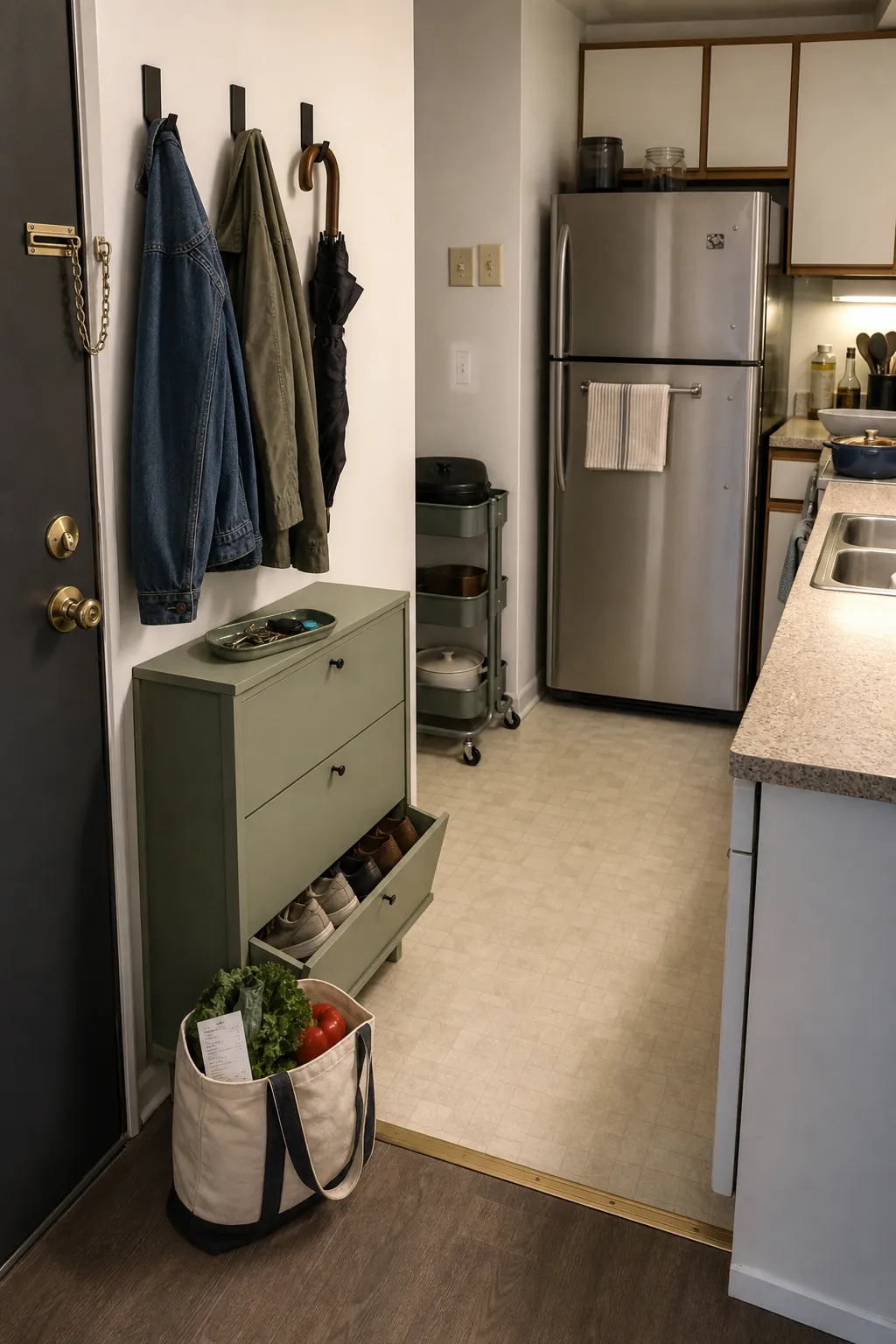
Layer Light for a Warm Apartment Aesthetic
One bright ceiling fixture flattens a small apartment interior and makes every function happen under the same harsh light. Use several compact sources instead: a focused desk lamp, a reading lamp beside the sofa, under-cabinet task lighting, and a shaded ambient lamp for evenings. Plug-in sconces and cord covers can add wall-level light without permanent wiring.
Repeat two or three colors and a small family of materials across the apartment. Warm wood, woven fabric, soft white, and one deeper accent can connect the bedroom ideas to an aesthetic living room without making everything match. Mirrors can redirect daylight when placed across or beside a window, but avoid leaning one where it reflects the messiest work zone.
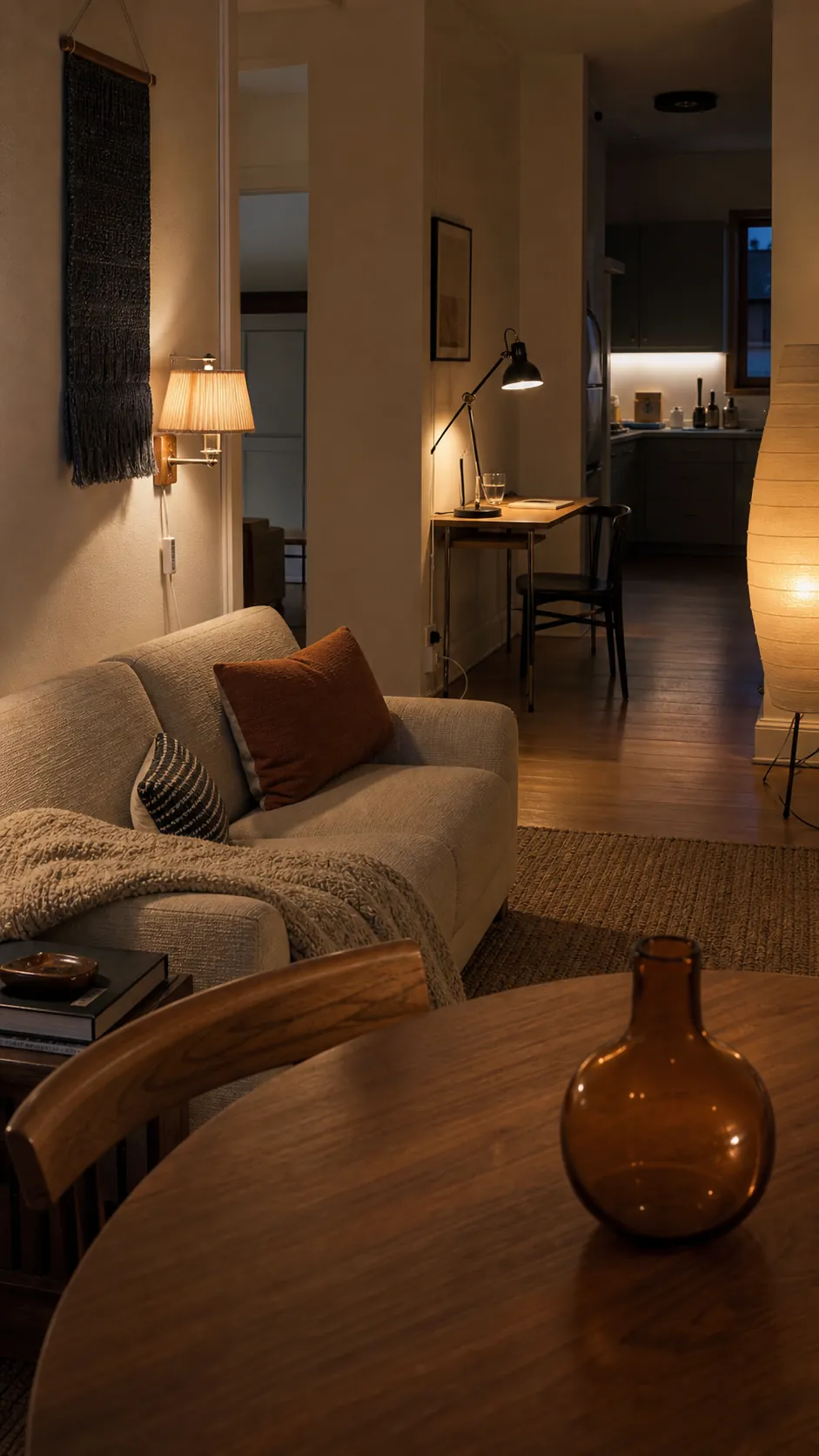
Edit the Room After Living in It
Leave some decisions unresolved during the first few weeks. Notice where mail lands, where a chair blocks a cabinet, which surface becomes a dumping ground, and which piece never gets used. Then solve those real patterns. This pause prevents expensive purchases based on an imagined routine.
Take a photo from the doorway and another from the main seat. The camera reveals visual noise that your eye has learned to ignore: cords, too many tiny objects, uneven curtain heights, or furniture that crowds the window. Remove one obstacle before adding another organizer. A successful small apartment aesthetic is not empty; it is easy to reset at the end of the day.