
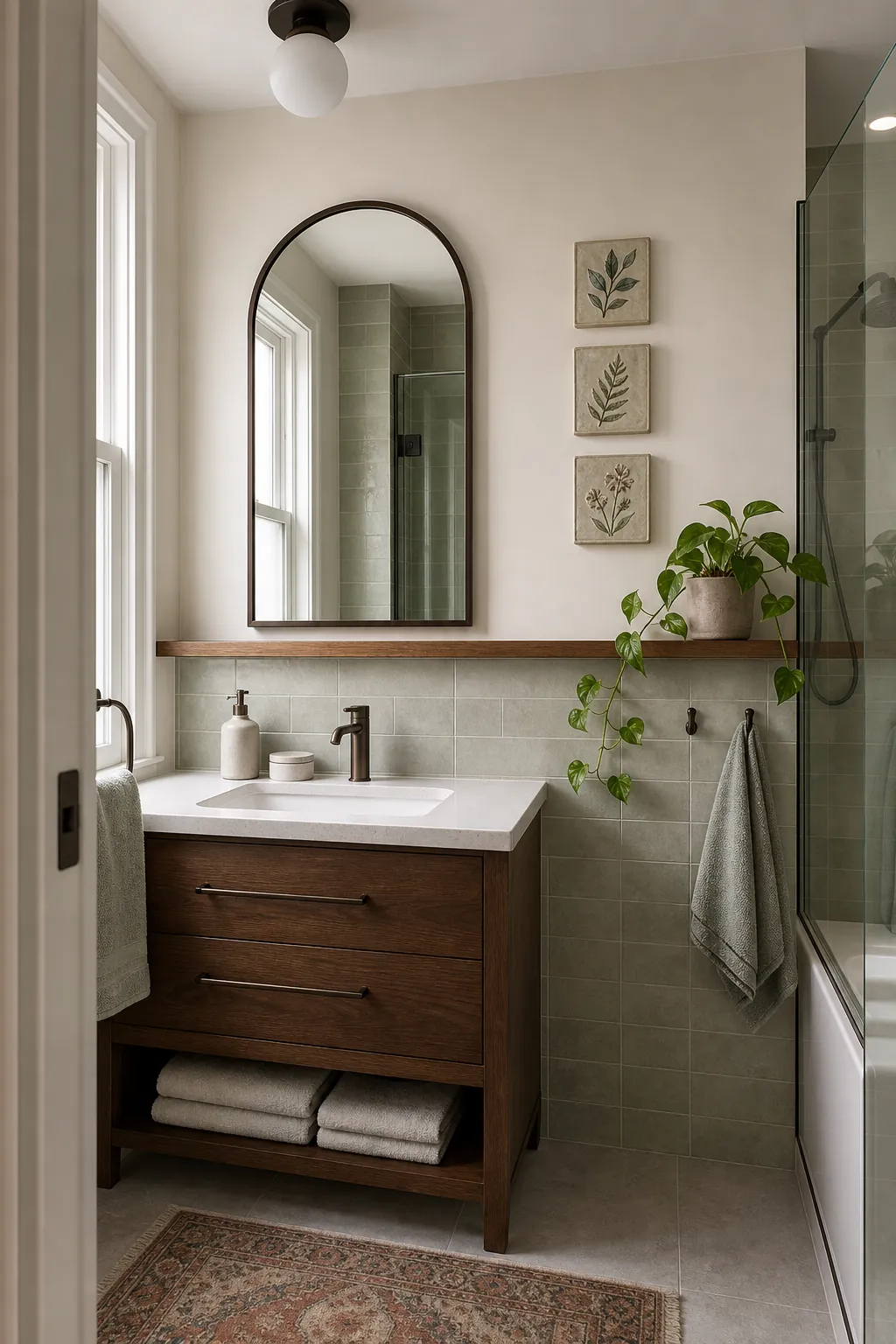
A beautiful bathroom wall is not a useful upgrade if the print buckles, the frame traps condensation, or the shelf swells after one season. The better approach is to decorate for the room you actually have: how often the shower runs, how quickly steam clears, and how close each wall is to splashing water. Humidity-friendly decor begins with placement, not style.
Start With a Bathroom Moisture Map
Before buying bathroom art, divide the room into three informal zones. The wet zone includes shower walls, the tub surround, and anywhere hit by spray. The damp zone is exposed to steam and occasional droplets, such as the wall above a towel rail or near the vanity. The dry zone is the farthest wall, often near the door or above a closed storage unit.
Use nonporous, washable materials in the wet zone. Reserve sealed prints, mirrors, and moisture-tolerant shelves for the damp zone. Put more delicate pieces only in a genuinely dry zone—and keep meaningful or valuable originals somewhere else. Reddit discussions about bathroom art repeatedly return to the same concern: even when a frame looks sealed, temperature changes and humid air can eventually ripple paper or encourage condensation.
Choose Art That Does Not Depend on Paper
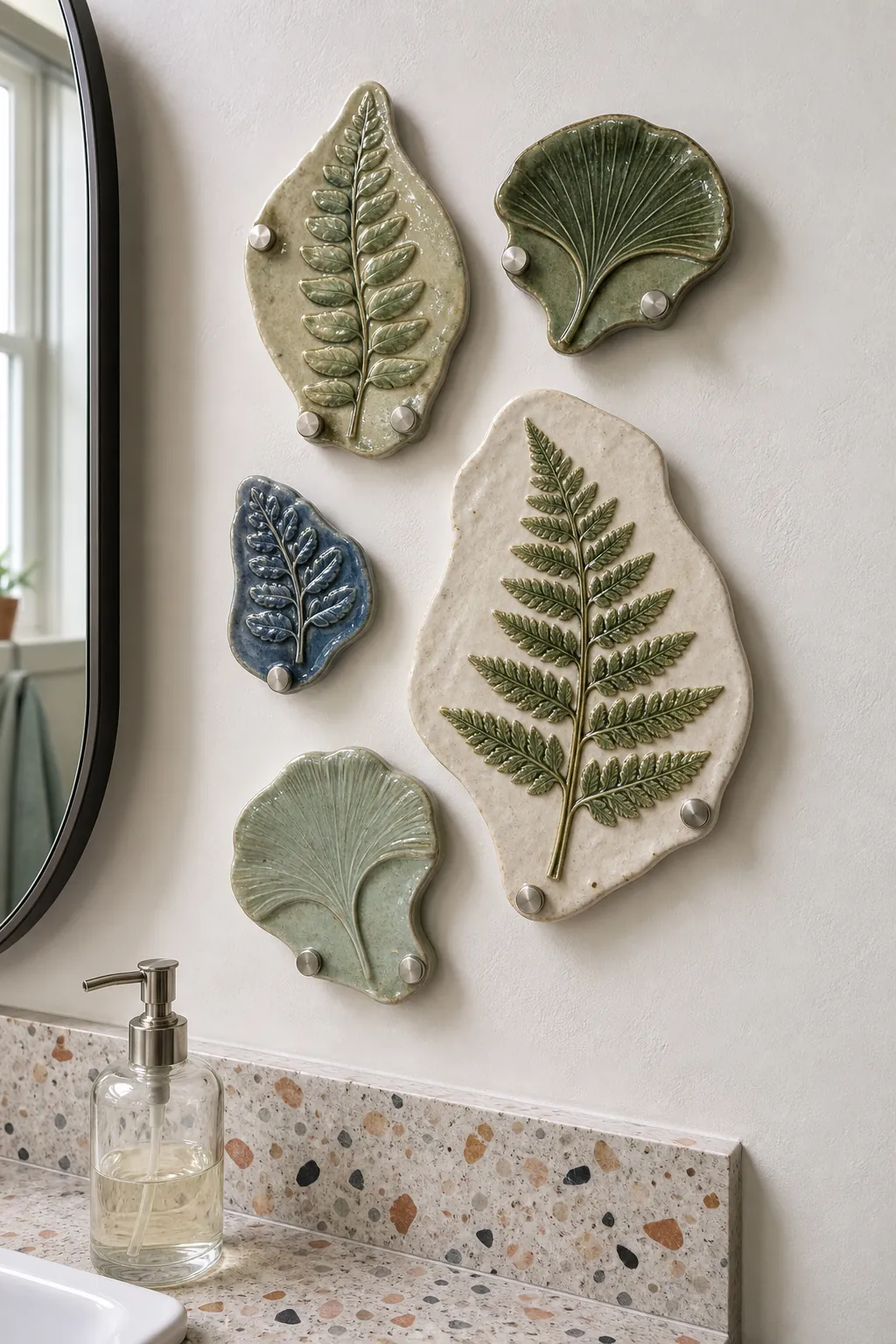
For a full bathroom used every day, the safest decorative surfaces are generally glass, glazed ceramic, sealed metal, acrylic, or another nonporous material intended for humid interiors. A small grouping of handmade glazed tiles, an enamel panel, or a metal botanical relief brings color and pattern without putting absorbent paper against the wall.
If you love prints, use an inexpensive reproduction rather than an irreplaceable original. Choose a frame with acrylic glazing and a moisture-resistant backing, mount the print so it does not touch the glazing, and avoid hanging it where water can run down the wall. A frame is risk reduction, not waterproofing. Good ventilation and distance from the shower still matter more than the frame specification.
Let Mirrors Carry More of the Visual Weight
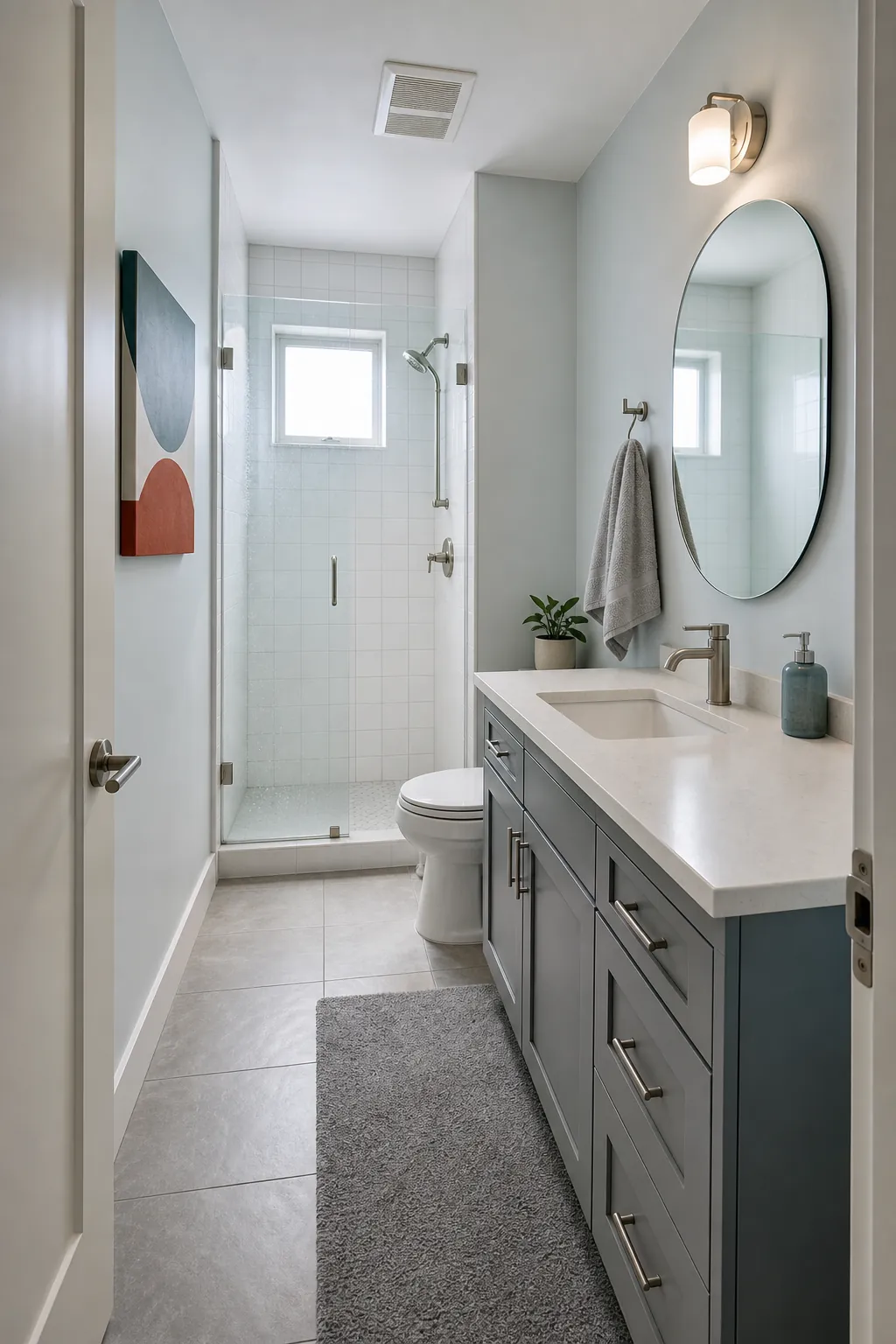
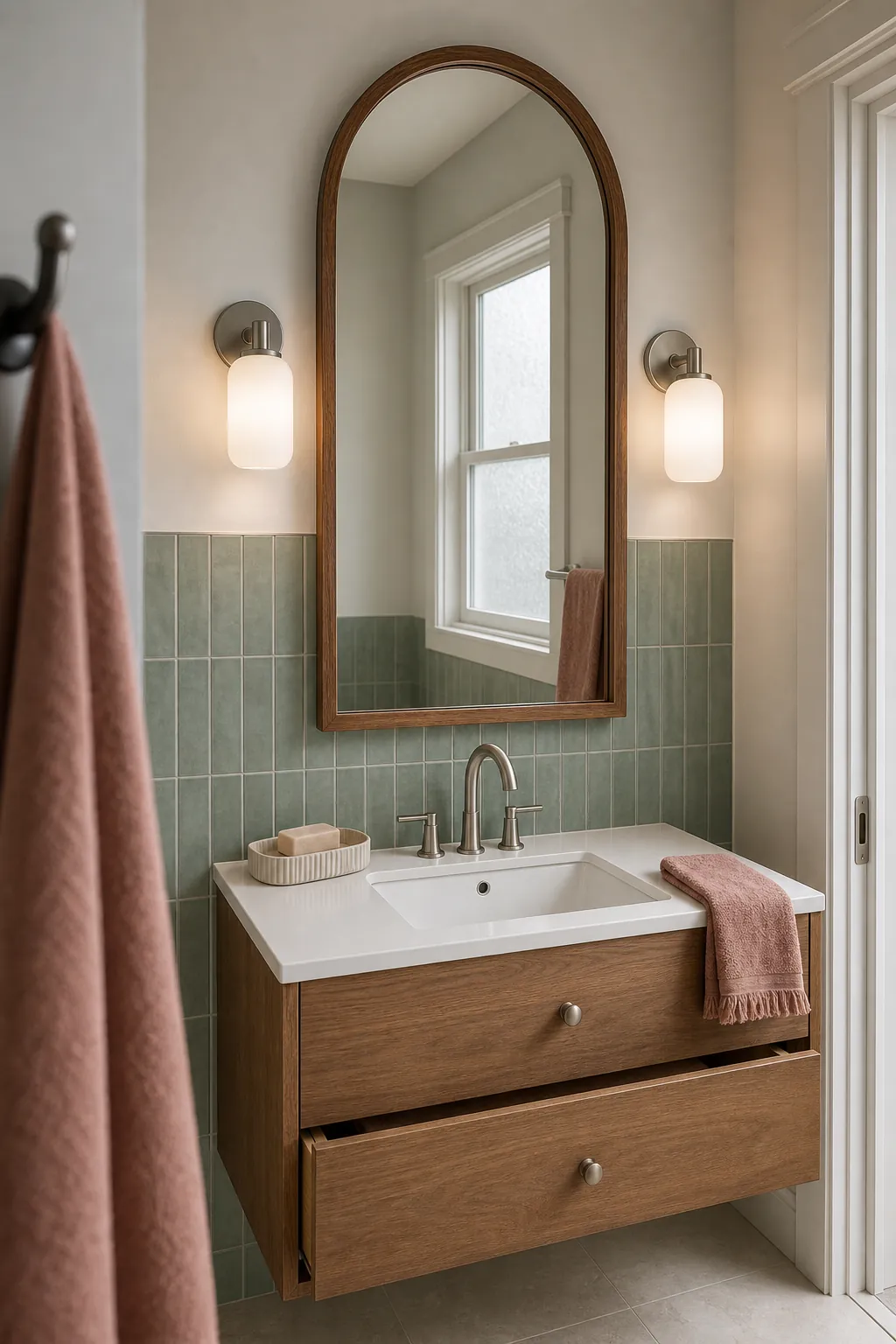
A mirror is bathroom wall decor with a job. One generously sized mirror can replace several vulnerable prints, bounce daylight into a small room, and make a guest bathroom feel finished. Frameless styles minimize moisture-sensitive edges. Powder-coated metal, sealed hardwood, and quality composite frames are better bets than raw MDF or unfinished wood.
Shape creates the decorative effect: try an arched mirror to soften square tile, a pill-shaped mirror in a narrow room, or a round mirror above a compact vanity. Leave enough clearance around lights and faucets, and do not let a decorative frame crowd the backsplash where standing water can collect.
Build Storage Into the Display
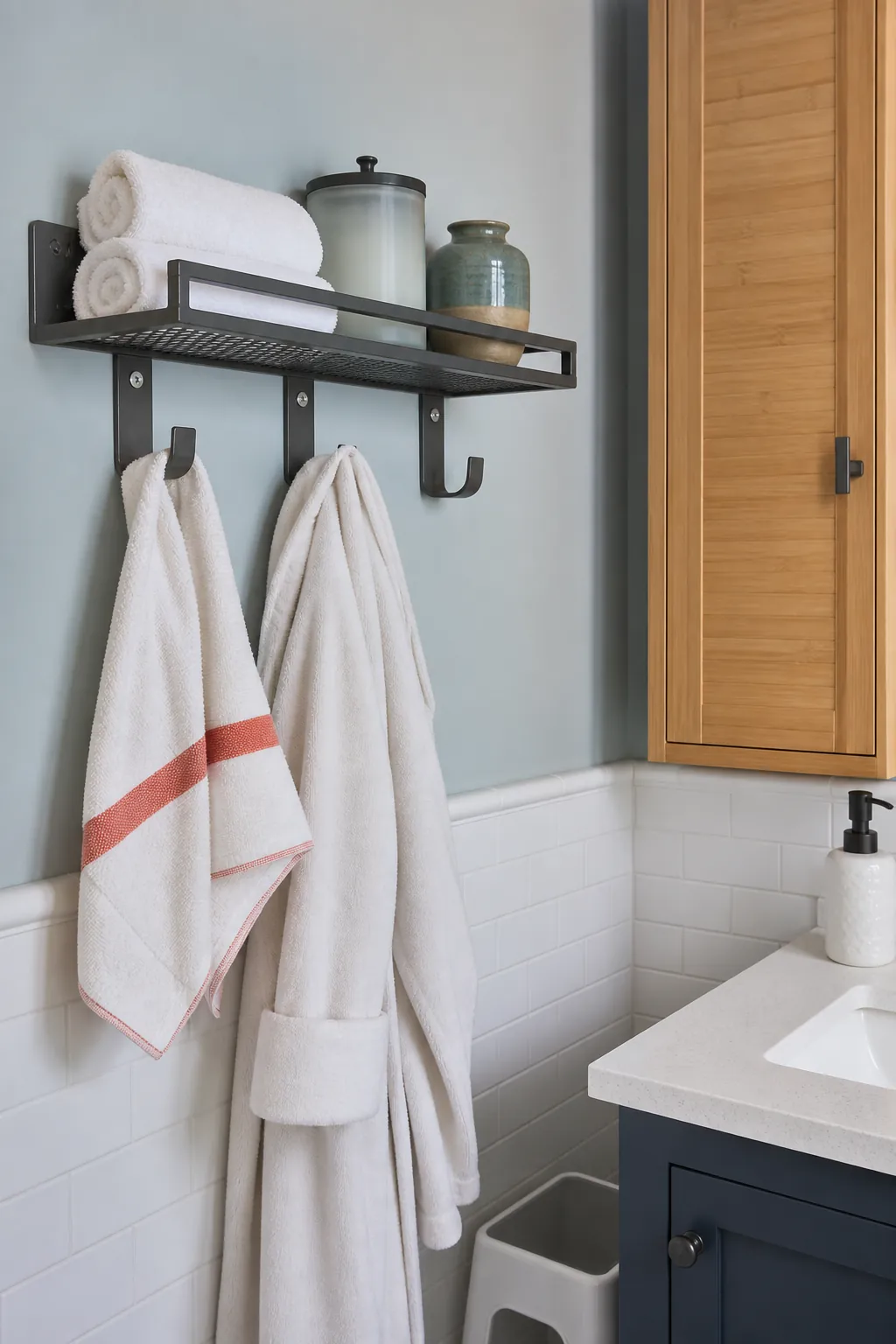
In a small bathroom, wall space should solve a daily problem before it hosts a decorative object. A slim powder-coated shelf can hold rolled hand towels, a lidded container, and one washable accent. A recessed niche avoids projecting into the walkway. Hooks can create rhythm on the wall while keeping robes and towels off the floor.
Avoid overloading open bathroom storage. Steam settles on every small object, turning a styled shelf into a cleaning chore. Use three functional categories at most: textiles, one closed container, and one decorative element. Keep toothbrushes and frequently handled items away from the toilet area, and preserve the towel hooks your household actually needs. Function is part of the composition.
Use Bathroom Plants Only Where Light Supports Them
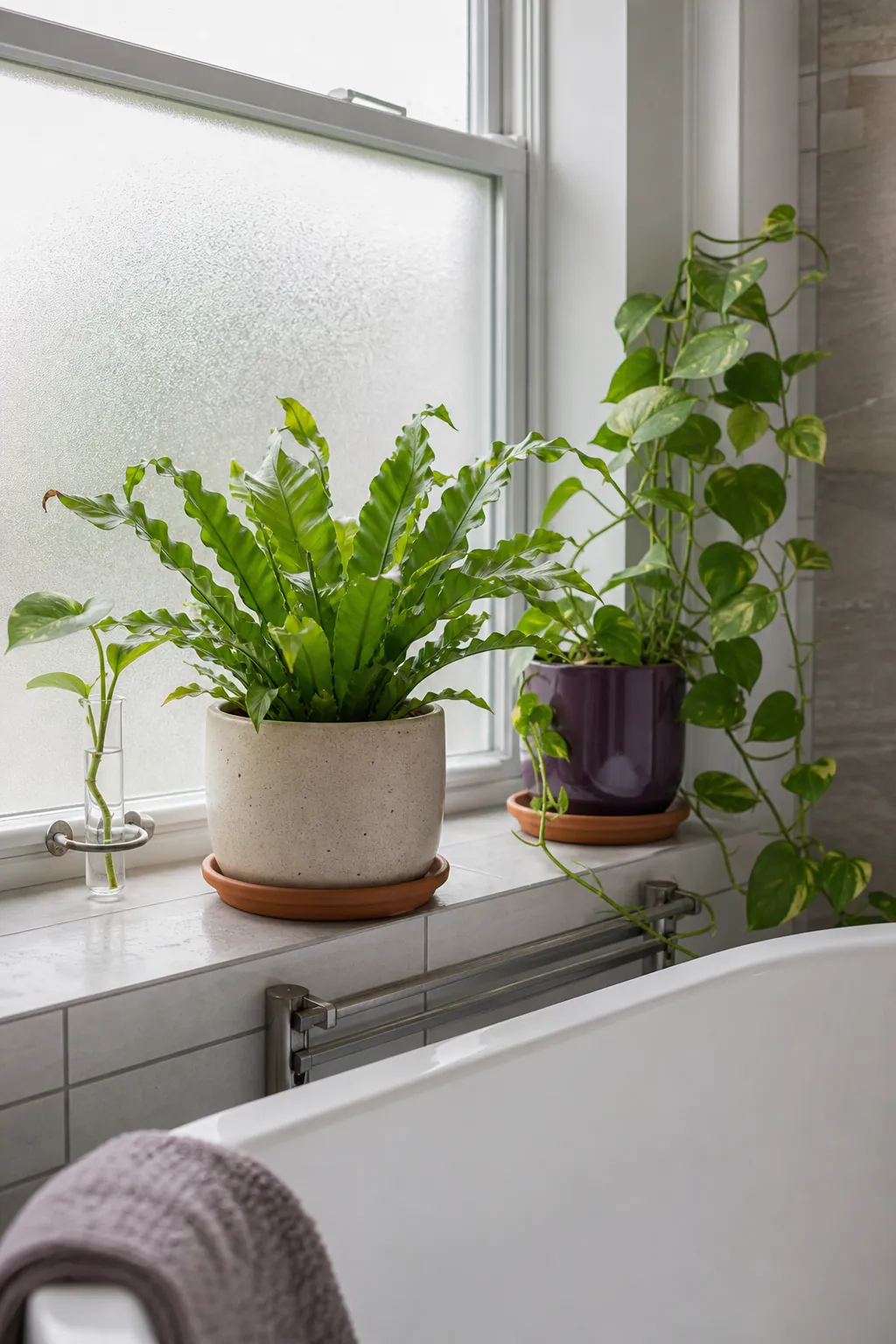
Bathroom plants can make hard tile and metal feel calmer, but humidity alone does not keep a plant healthy. A bright bathroom with diffused window light may suit pothos, spider plant, bird’s-nest fern, or a small orchid. A windowless bathroom does not become plant-friendly simply because it is steamy; use a suitable grow light or choose a convincing faux plant that can be washed.
Hang plants outside the direct shower stream and make sure the pot drains. Tropical foliage may appreciate humid air, but constantly saturated compost can still cause trouble. In a rarely used guest bathroom, conditions may be much drier than in the family bath, so choose for the actual light and watering routine rather than the room label.
Create a Spa Bathroom With Texture, Not Clutter
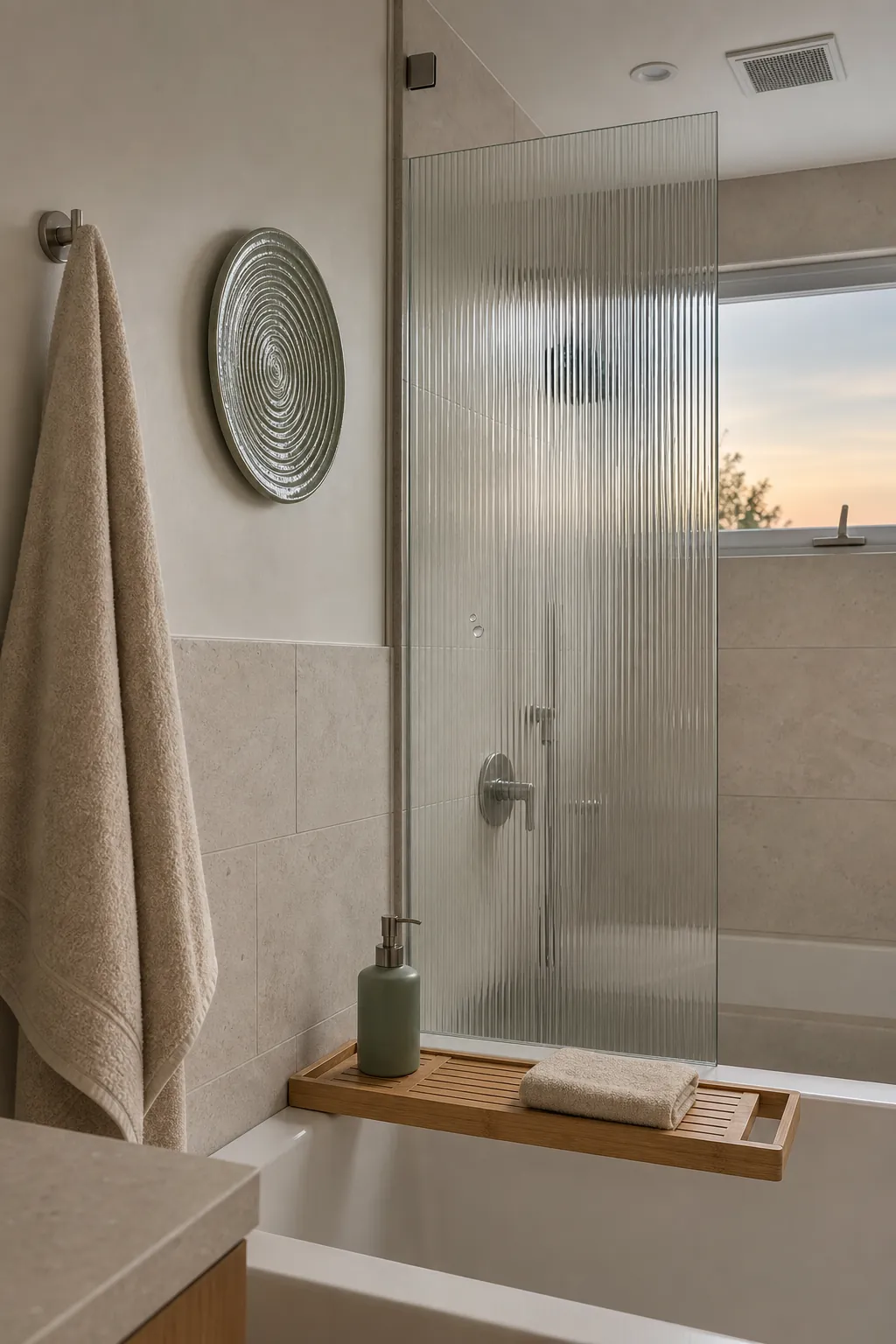
A spa bathroom does not require a wall full of signs. Use a restrained material palette: matte stone-look tile, softly textured limewash-rated bathroom paint, ribbed glass, sealed bamboo accents, and white or oatmeal towels. Repetition makes the space feel intentional. For example, echo the curve of a round mirror in a small ceramic wall disc, then repeat one muted green accent in a planter.
Texture needs maintenance planning. Dust and condensation collect on woven hangings, macramé, and unfinished baskets, so keep absorbent fibers in a powder room or very well-ventilated dry zone. In a steamy primary bath, get the natural look through washable tile relief, fluted glass, and sealed surfaces instead.
Make Rental Bathroom Decor Easy to Remove
Rental bathroom decor should survive humidity without creating a repair bill. Start with items that use existing hardware: replace the mirror only if the original can be stored safely, hang a slim organizer from an approved over-door hook, or display a lightweight acrylic print from a properly rated removable system. Check the product’s surface and humidity limitations; adhesive performance varies sharply on textured paint and damp walls.
Peel-and-stick products are not automatically bathroom-safe. Use only products rated for the surface and environment, test a hidden patch, and keep seams away from direct spray. A removable color story can also come from towels, a shower curtain, washable containers, and a framed acrylic piece in the driest location—no full wall covering required.
Ventilation Protects Every Decorating Choice
No humidity-friendly decor compensates for a room that stays wet. Run the exhaust fan during bathing and long enough afterward for mirrors and walls to clear; use an open door or window when appropriate. Wipe persistent condensation, repair leaks, and keep a small air gap behind decor rather than pressing absorbent backing flat against a cold wall.
Watch for warning signs: musty odor, soft backing board, rusting hardware, peeling paint, dark spotting, or a print beginning to wave. Move the item and solve the moisture source rather than sealing damage behind another layer. The most successful bathroom wall decor is not the piece that looks perfect on installation day. It is the piece that remains clean, useful, and intact after hundreds of showers.