
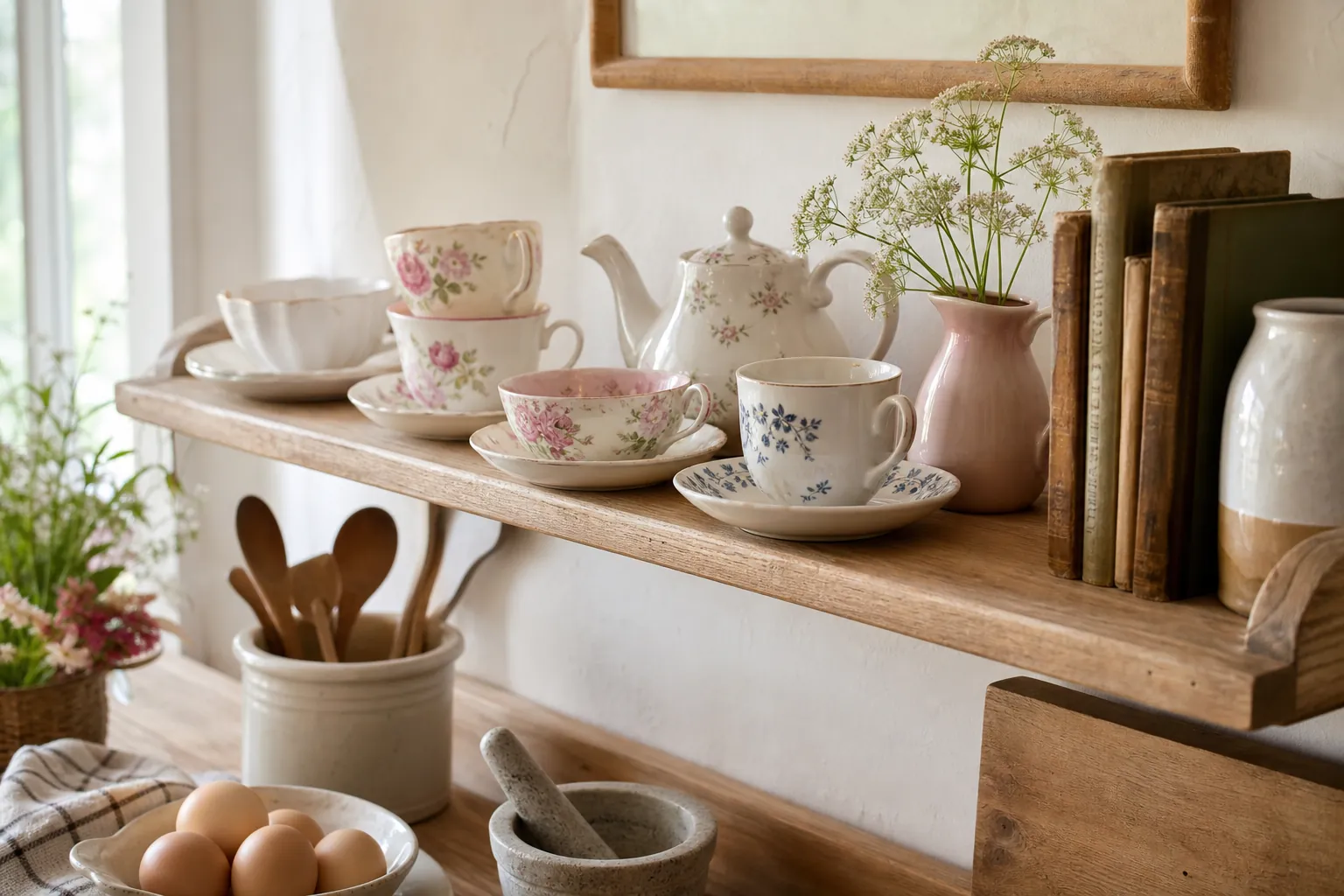
A pretty tea cup display can go wrong faster than almost any other kitchen shelf decor. Teacups are small, saucers are awkward, patterns compete with each other, and one extra thrifted find can turn a charming shelf into a crowded cabinet without doors.
The best tea cup display ideas start with one simple promise: every cup should look loved, not stranded. That means choosing a shelf that supports the saucers, editing the color story, leaving air around fragile pieces, and mixing in just enough kitchen shelf decor to make the collection feel at home.
Use these ideas for vintage teacups, family pieces, flea-market finds, or a small set you actually use for tea. The goal is a pretty kitchen shelf that feels collected, stable, and easy to keep tidy.
Start With a Shelf That Holds Saucers Properly
If your tea cup display includes saucers, ordinary mug hooks are usually the wrong first choice. They show the cup, but they often leave the saucer with nowhere graceful to go. That is why cup-and-saucer pairs look better on a narrow shelf with a small lip, a plate groove, or a shallow rail.
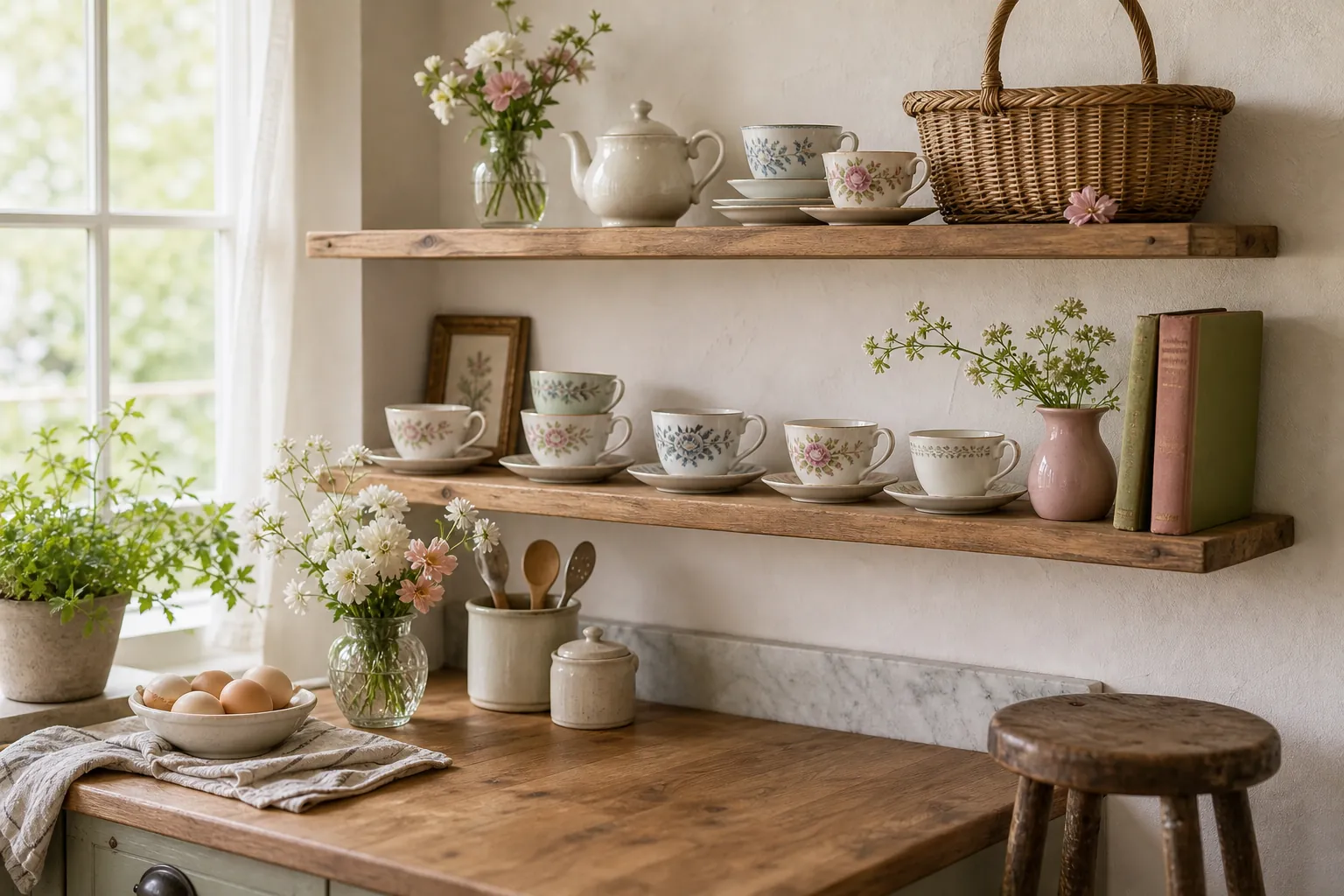
Set each saucer upright behind its cup so the pattern becomes part of the display. The cup sits in front, the saucer adds height, and the whole arrangement reads as intentional instead of improvised. This works especially well for vintage teacups with floral rims, gold edges, or mismatched cottage kitchen patterns.
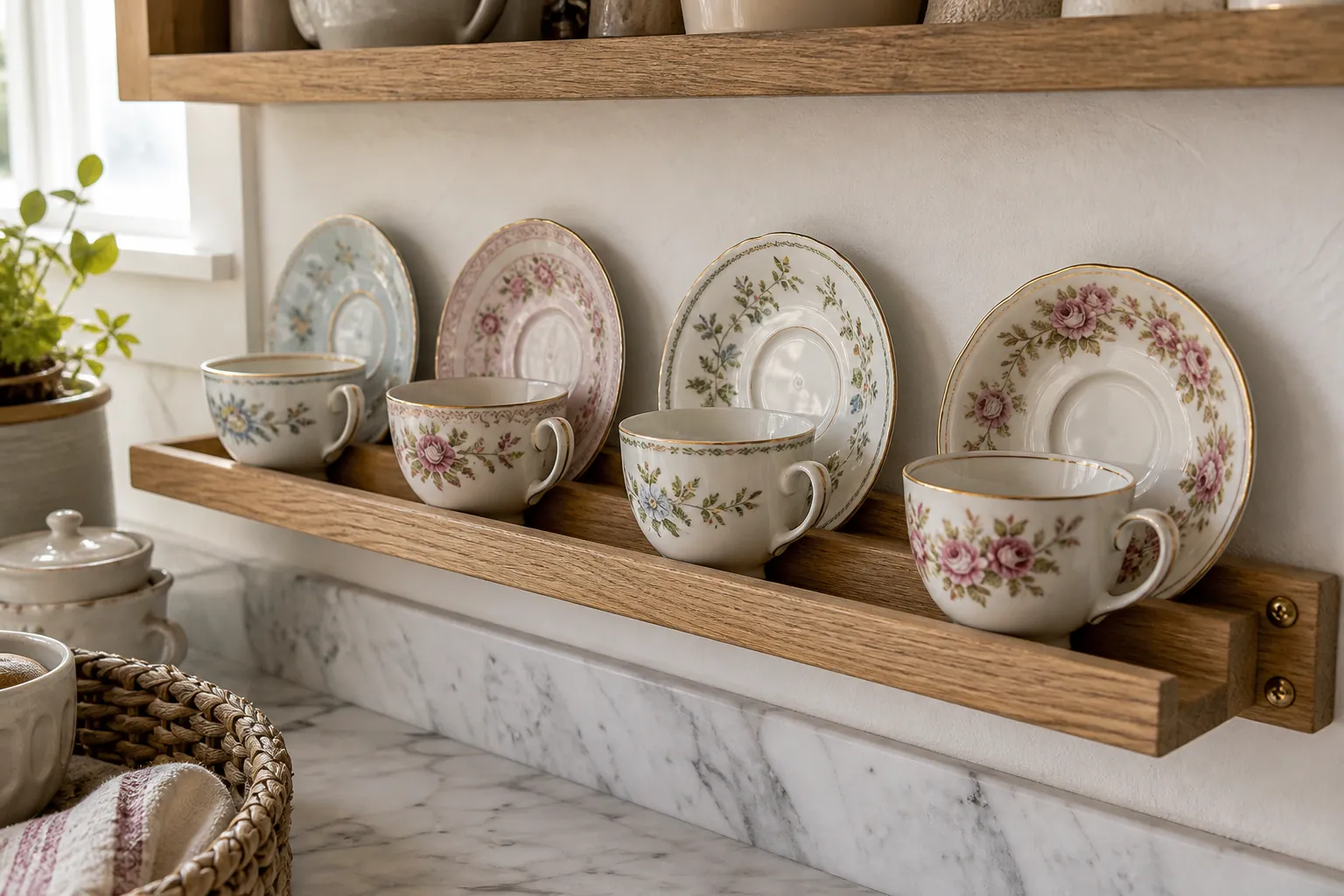
For a small kitchen, keep the shelf shallow enough that the display does not feel bulky. A picture-ledge style shelf can be ideal because the front lip gives fragile pieces a little more security without hiding the shape of the cups.
Give the Collection One Calm Color Story
Vintage teacups are rarely quiet on their own. There may be roses, gilt rims, blue bands, scalloped edges, or tiny hand-painted details. If every color gets equal attention, the shelf can look busy even when there are only a few pieces.
Choose one soft color story before you style the shelf. Cream, blush, pale blue, sage, and warm white make a pretty kitchen decor palette that feels natural with cottage kitchen finishes. You can still mix patterns, but the repeated colors keep the shelf styling calm.
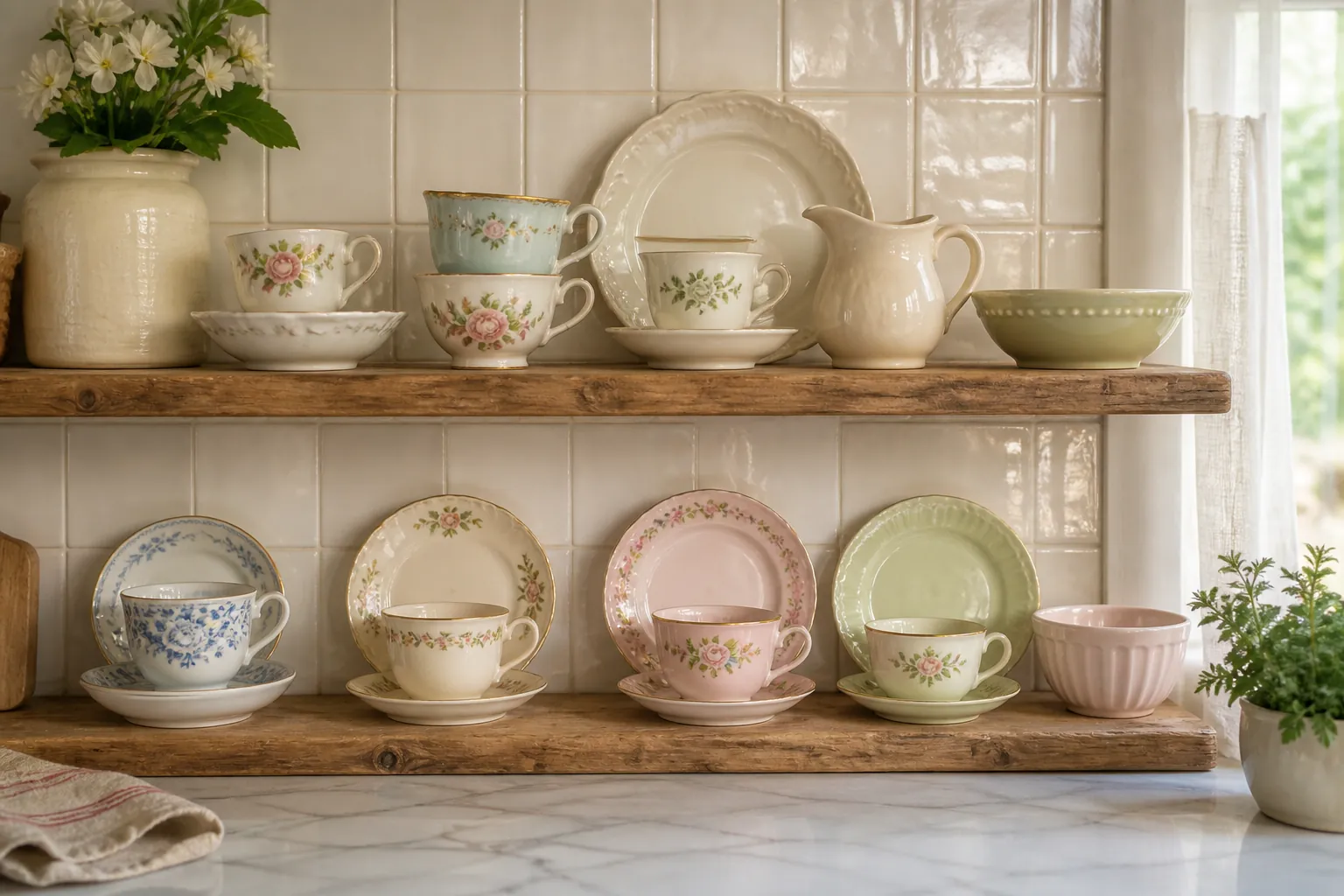
If your collection is larger, rotate pieces instead of forcing everything onto one shelf. Keep the prettiest six to ten cups visible and store the rest safely. A smaller edit usually makes sentimental collected decor feel more special, not less.
Use Risers So Every Cup Can Be Seen
A flat row of teacups can look sweet, but it also wastes space. The cups in the back disappear, the saucers overlap, and the front row starts to feel like a barrier. Small shelf risers solve that problem without needing a bigger kitchen shelf.
Try one low riser at the back of the shelf and one shorter riser to one side. Place a cup-and-saucer pair on the raised level, then keep a lower teacup or creamer in front. The height change gives the eye somewhere to travel and makes the display easier to read.
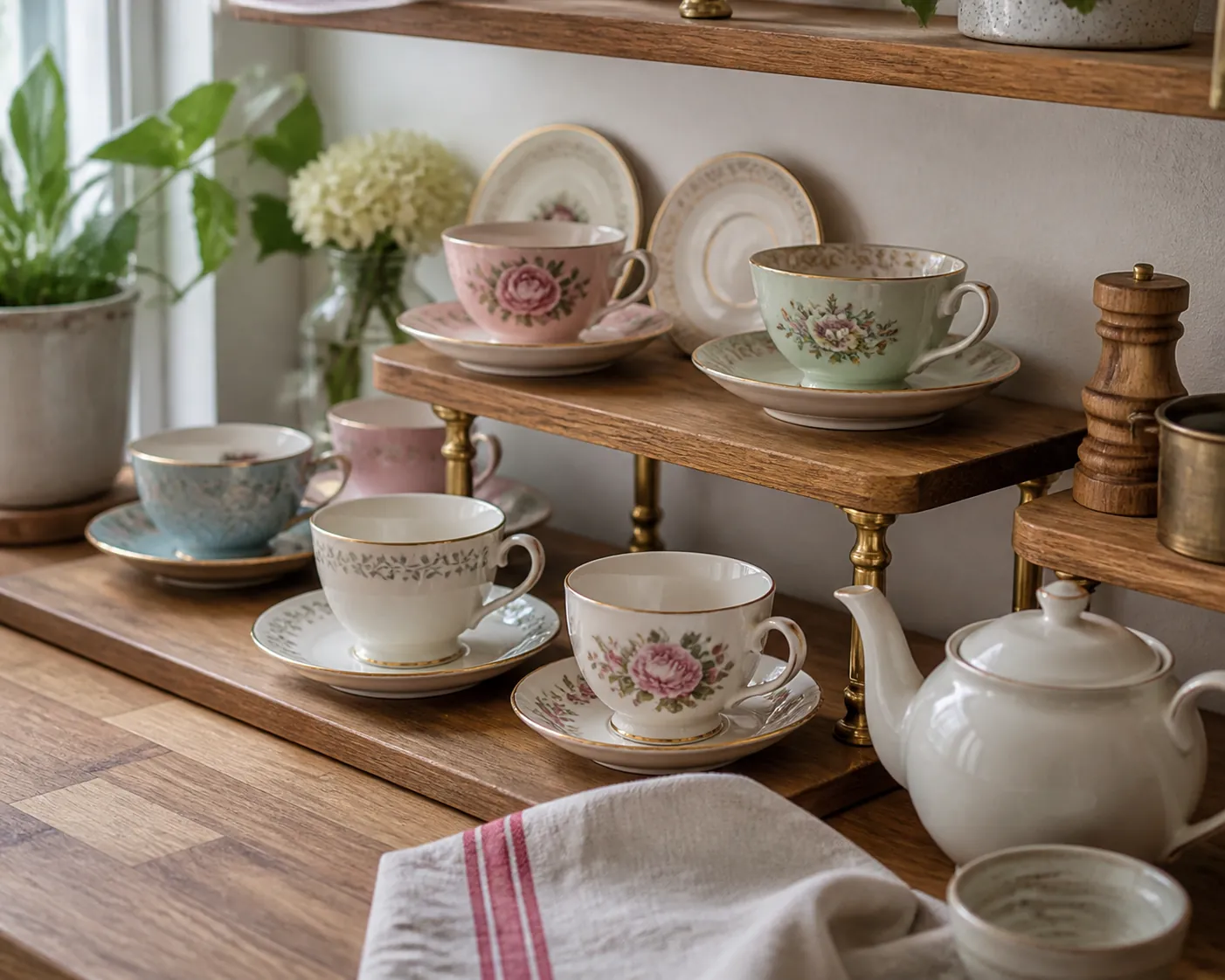
Wood, brass, and ceramic risers usually blend better than clear plastic if the goal is warm interior styling. Clear pieces can work inside a cabinet, but on open shelving they sometimes make the shelf feel more like storage than decor.
Turn the Shelf Into a Small Tea Station
A tea cup display feels more natural in the kitchen when it connects to a real ritual. Instead of treating every piece like a museum object, let one small area become a tea station. A tray, a tea tin, a sugar bowl, and two pretty cups can make the shelf both useful and decorative.
This is the easiest way to keep vintage teacups from looking random. The display has a reason to be there. It also helps you decide what belongs nearby: teaspoons, napkins, a small teapot, a canister of loose tea, or a low vase of flowers.
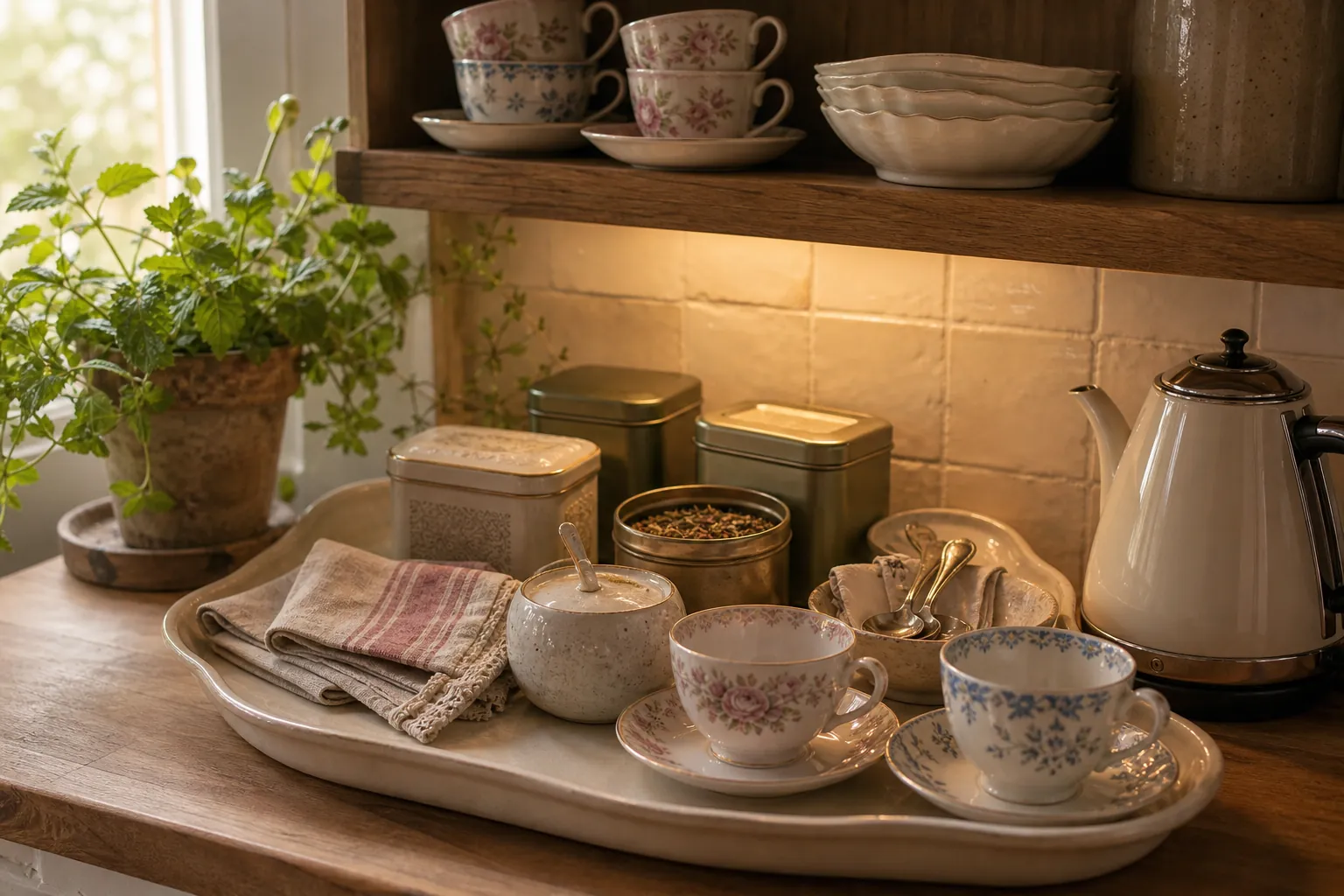
If you use the cups often, keep the daily favorites lower and easier to reach. Reserve the highest shelf for the delicate pieces you only bring down for special occasions.
Use Glass When Open Shelves Feel Too Exposed
Open shelving is beautiful when it is edited, but it is not always practical. Dust, busy cooking zones, curious children, pets, and fragile porcelain can make a fully open tea cup display stressful. If that sounds familiar, a small glass-front cabinet may be the better version of the same idea.
Clear glass gives you the full display effect. Reeded or seeded glass softens the shapes and hides a little clutter while still letting the teacups show. Either option can make vintage teacups feel protected without boxing them away completely.
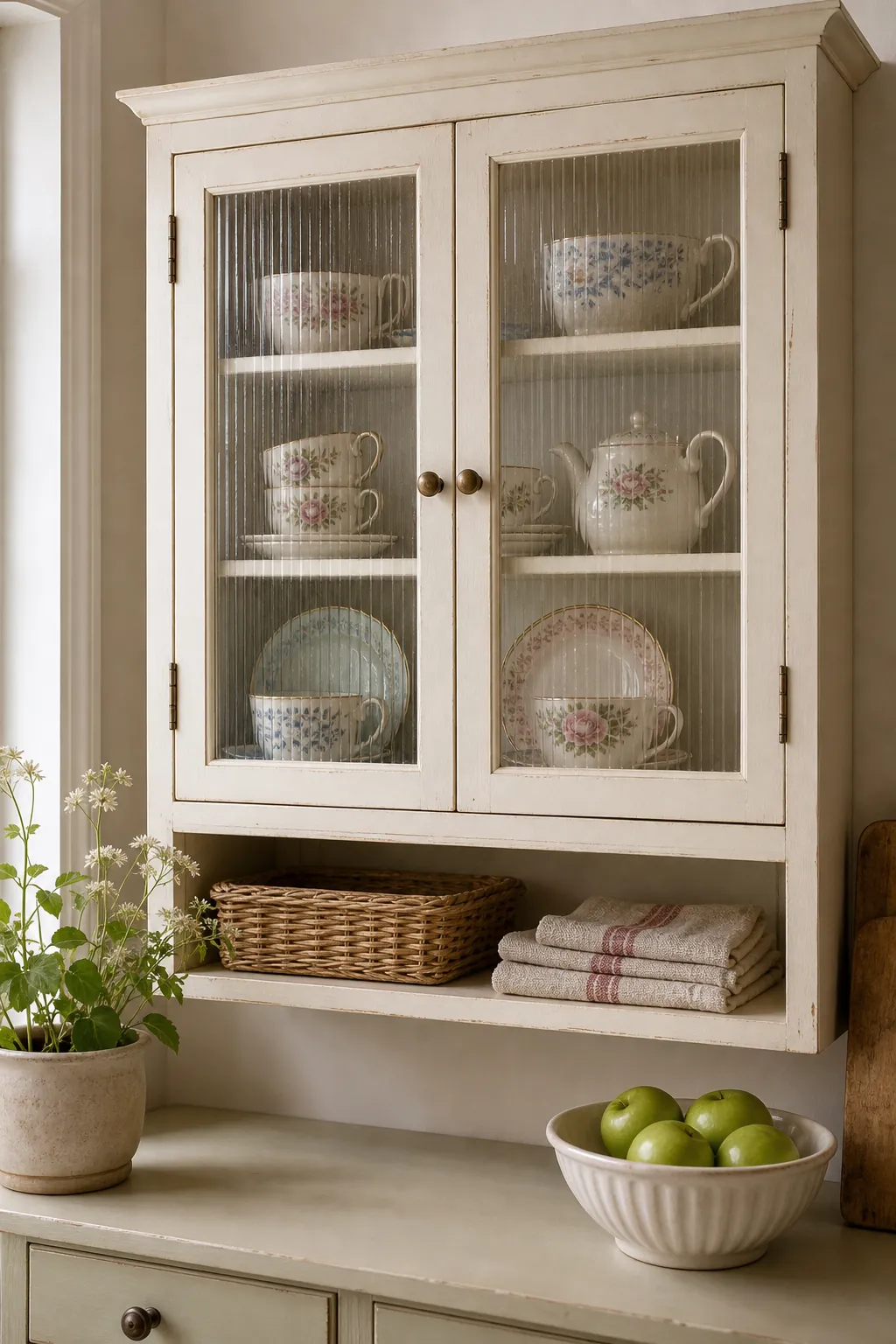
This is also a strong choice for renters or small-space kitchens. A wall cabinet, hutch top, or narrow freestanding cabinet can create a tea cup decor moment without committing every open shelf to display.
Rotate the Extras, Not the Whole Display
The teacups should be the anchor. The extras should be easy to change. A tiny vase, a linen napkin, two cookbooks, a small framed print, or a woven basket can refresh the shelf without disturbing the fragile pieces every week.
For spring, add a few flowers. In autumn, bring in a warmer napkin or a small copper accent. In winter, let cream dishes, silver spoons, and a darker tea tin do the work. The shelf stays stable, but the mood changes enough to keep the kitchen styling fresh.
Keep the Shelf Pretty by Editing What You Do Not Display
The hardest part of shelf styling is usually not adding one more pretty thing. It is deciding what to leave out. A tea cup display looks best when each piece has room for its shape, handle, saucer, and pattern to be seen.
Before you call the shelf finished, remove one cup, one accessory, and one color that does not belong. Then step back. If the remaining pieces look more charming, you made the right edit.
A pretty kitchen shelf does not need every vintage teacup you own. It needs the right few, displayed with care, supported safely, and surrounded by enough quiet space to let the collection tell its story.