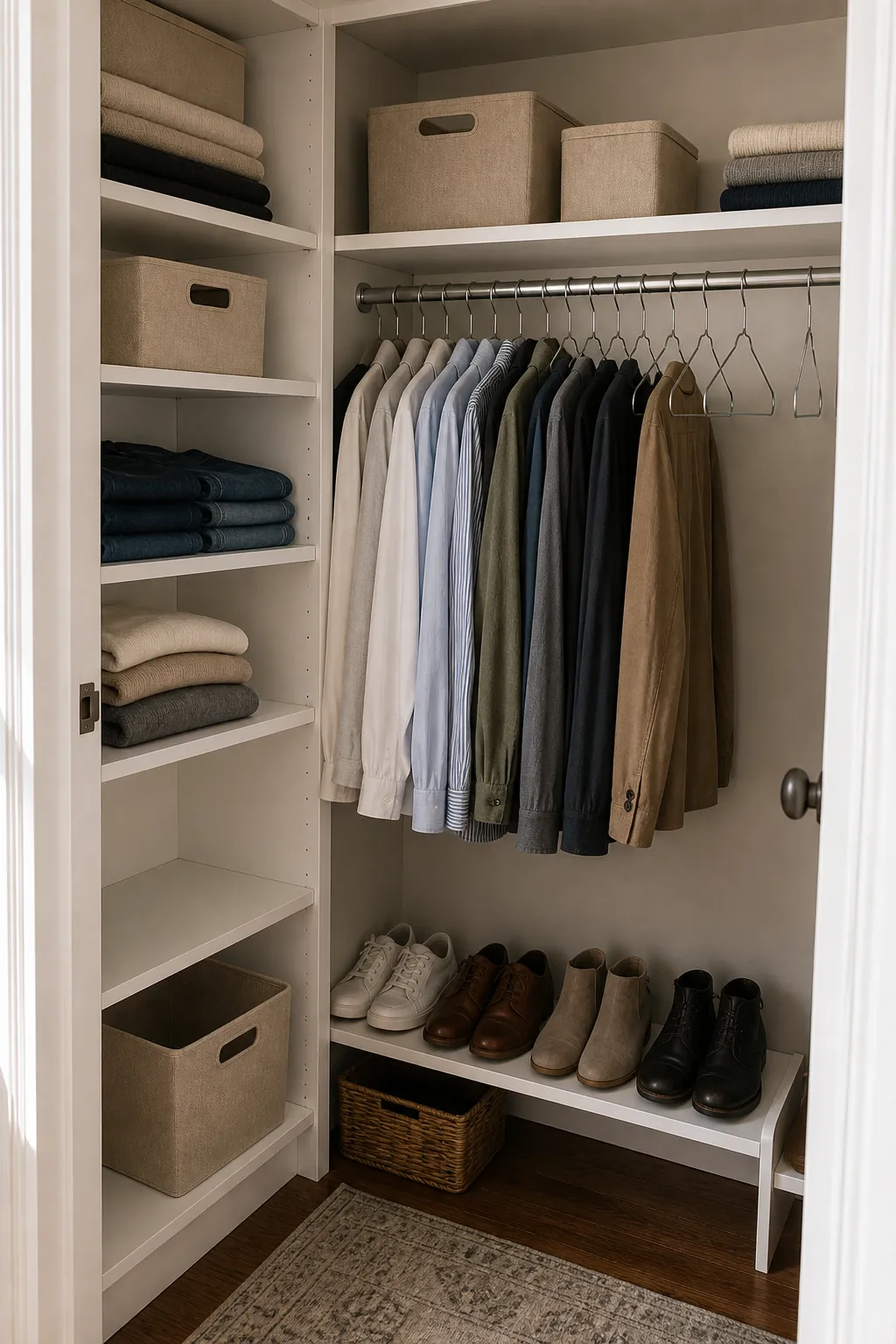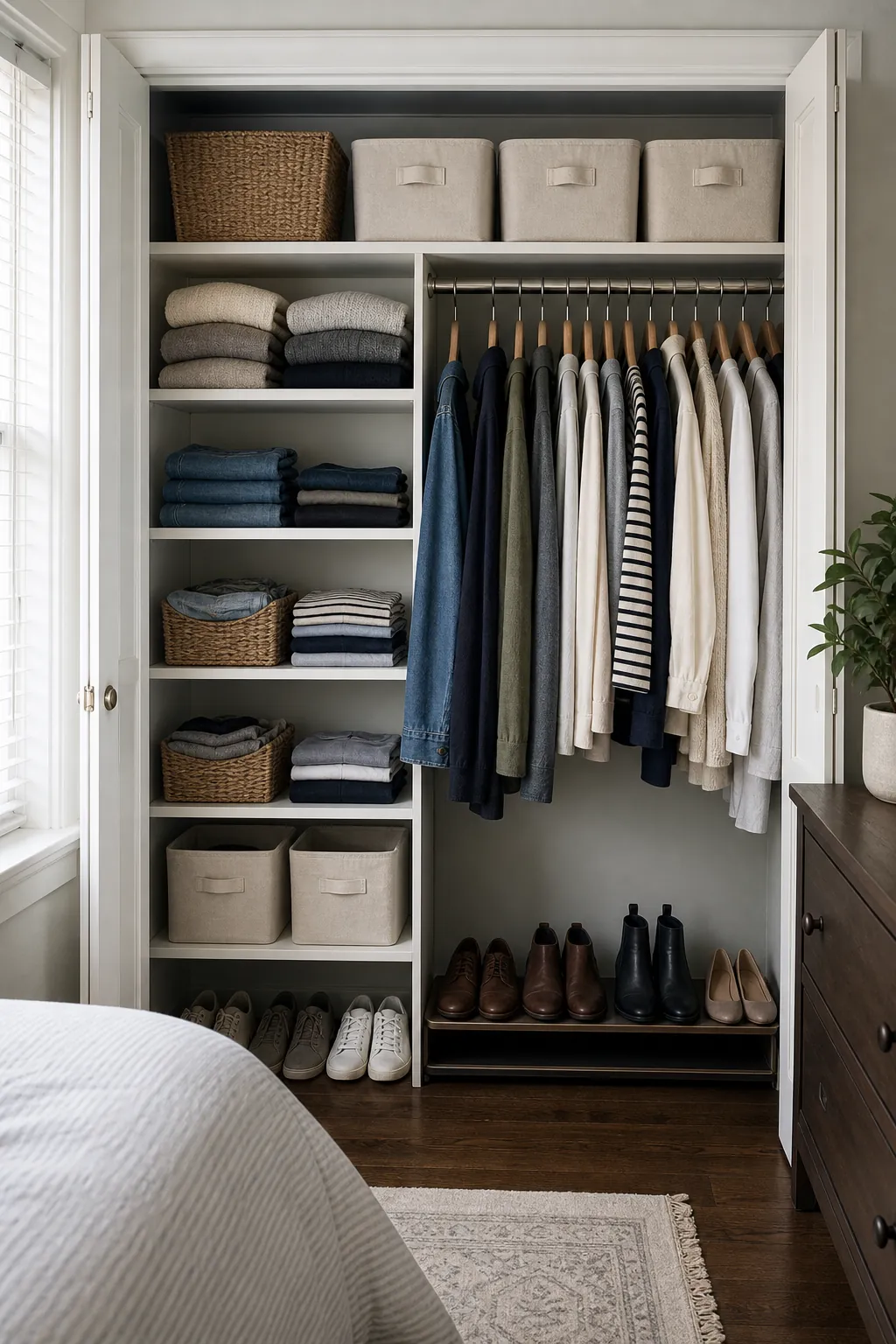
A small closet works best when shelves, bins, and hanging space each have a clear job. Shelves are for folded or contained categories. Bins are for loose items and low-frequency storage. Hanging space is for anything that wrinkles, gets worn often, or needs to be visible before you leave the room.
The common mistake is letting one storage type take over. Too many shelves leave no room for dresses or jackets. Too many bins turn into mystery boxes. Too much hanging space leaves folded clothes sliding around on the floor. The strongest small closet ideas balance all three.
Map the Closet by Clothing Type First
Before adding a closet system, sort clothes by how they should be stored. Hang wrinkle-prone shirts, dresses, jackets, and trousers. Fold sweaters, jeans, T-shirts, and soft layers. Contain socks, scarves, belts, seasonal items, and backup basics in bins or drawers.
This keeps the design from becoming a random mix of products. If most of the wardrobe folds well, shelves and drawers matter more. If most of it wrinkles, preserve more rod space. The storage plan should come from the clothes you actually own.
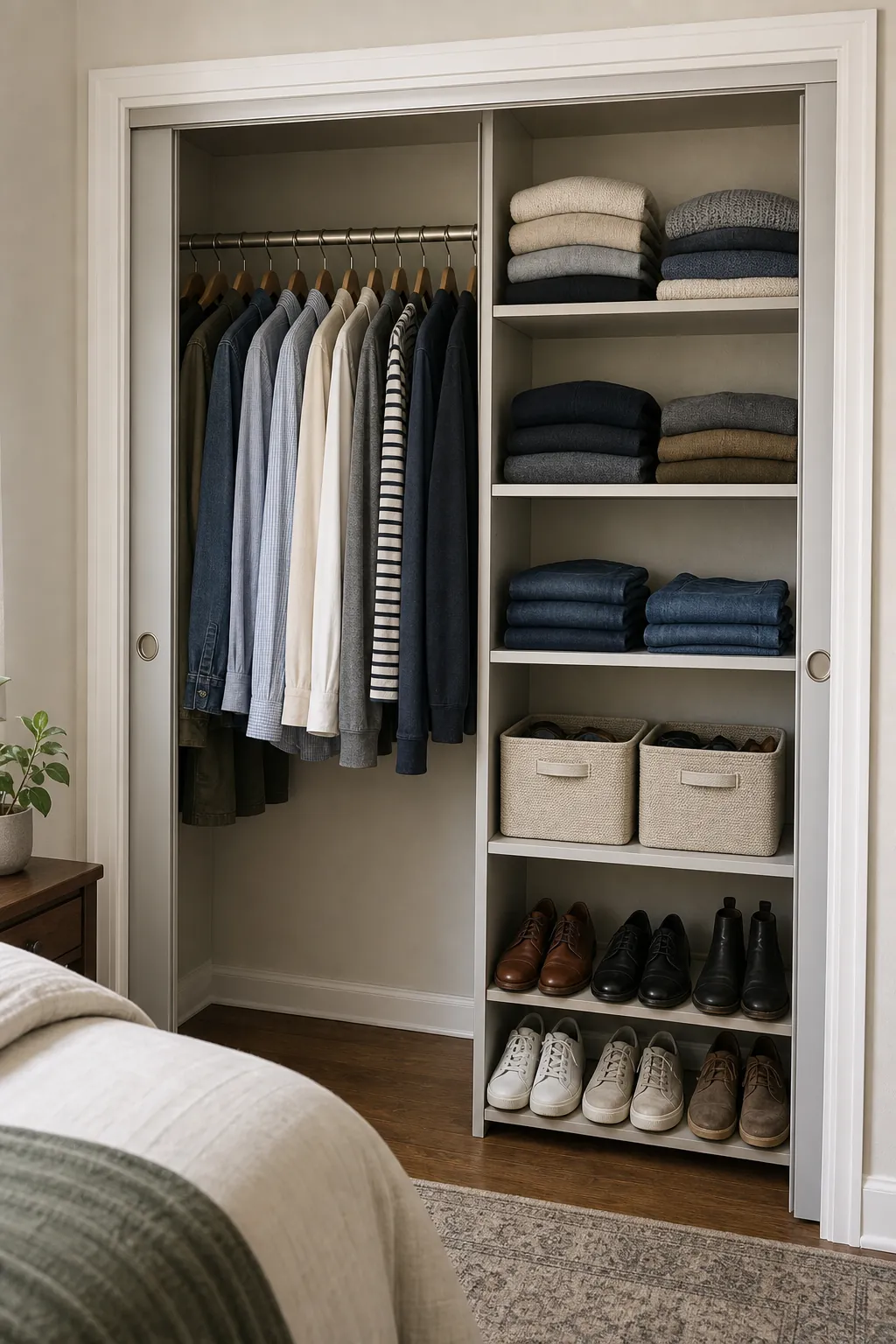
Use Adjustable Shelves for Categories That Change
Closet shelves are useful because wardrobes change. Sweaters take more space in winter. Shorts and T-shirts shrink down in summer. Shoes, bags, and linens rotate. Adjustable shelves let the closet respond without a full rebuild.
Keep shelves shallow enough to reach the back. Deep shelves sound generous, but they create hidden stacks and lost items. For most bedroom storage, a shelf you can scan quickly is more valuable than one that holds twice as much but hides the back half.
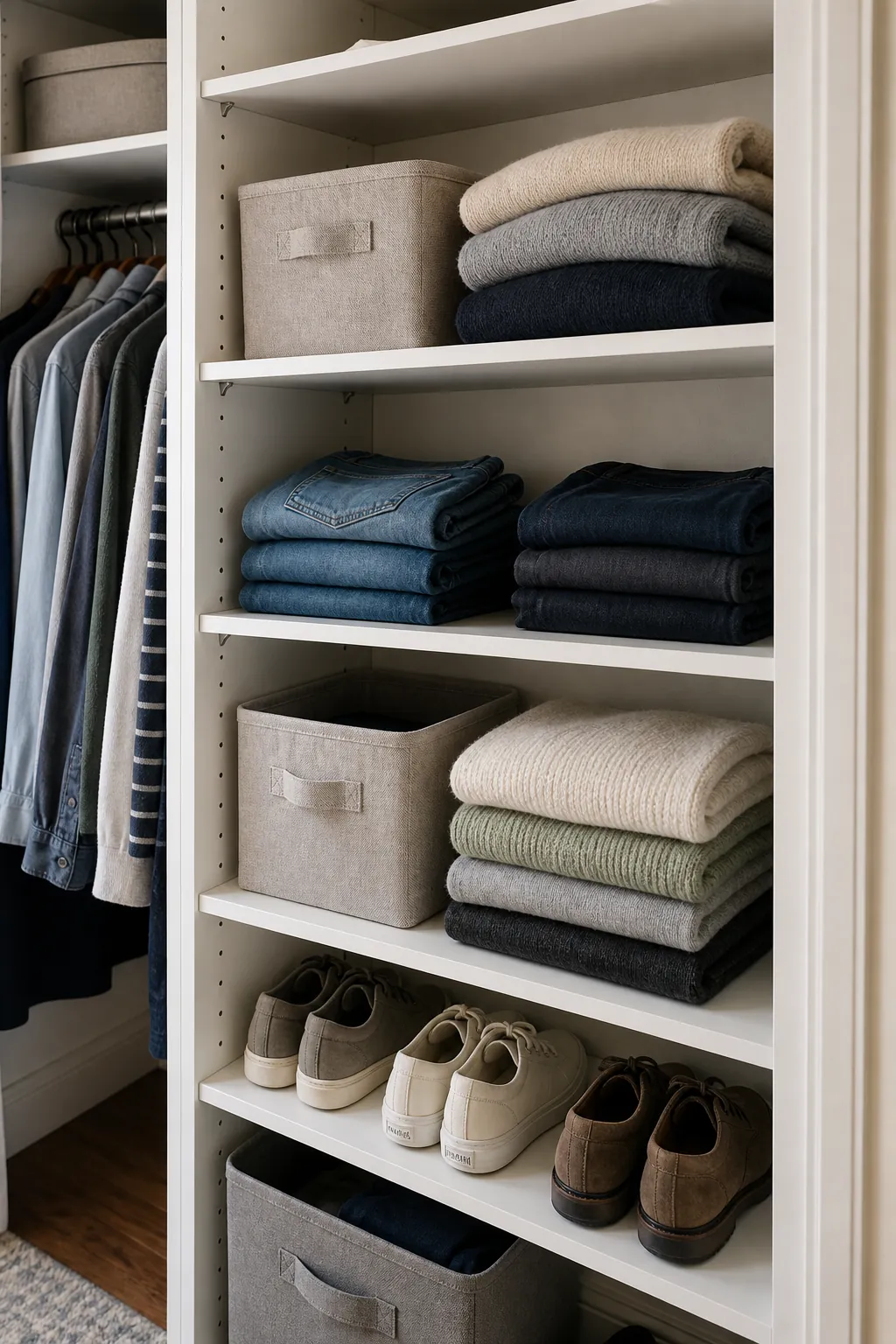
Choose Bins by What They Need to Hold
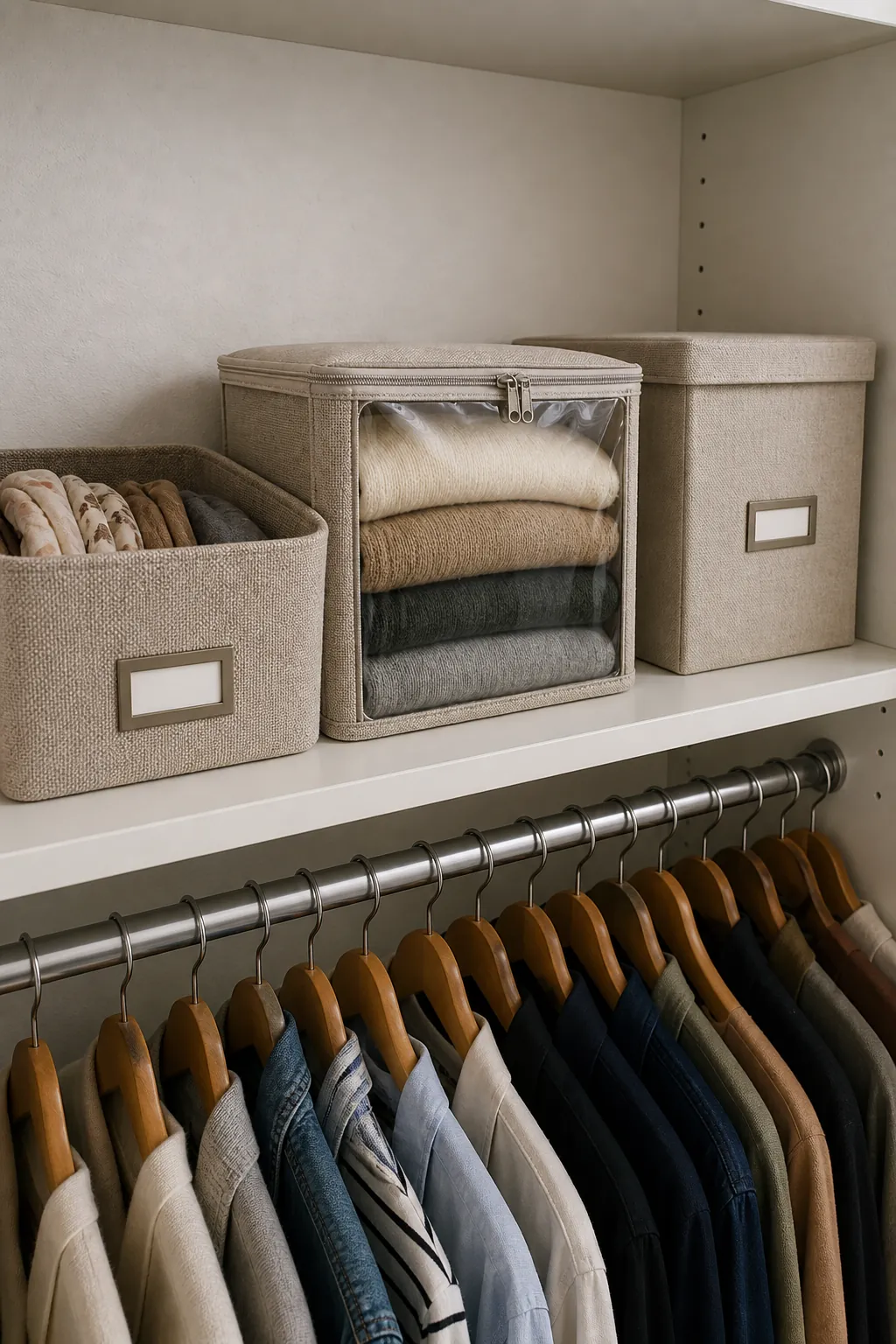
Storage bins are only helpful when the category is clear. Open bins work for things you grab often, like scarves, workout layers, or everyday bags. Lidded bins work for off-season clothes, extra linens, or items you do not need every week. Clear bins help when categories are easy to confuse.
Measure shelf depth before buying bins. A bin that hangs over the shelf will make the closet feel crowded, and a bin that is too deep will hide what is inside. Use fewer bin types and repeat them so the closet looks calm even when it is full.
Protect Enough Hanging Space for Daily Clothes
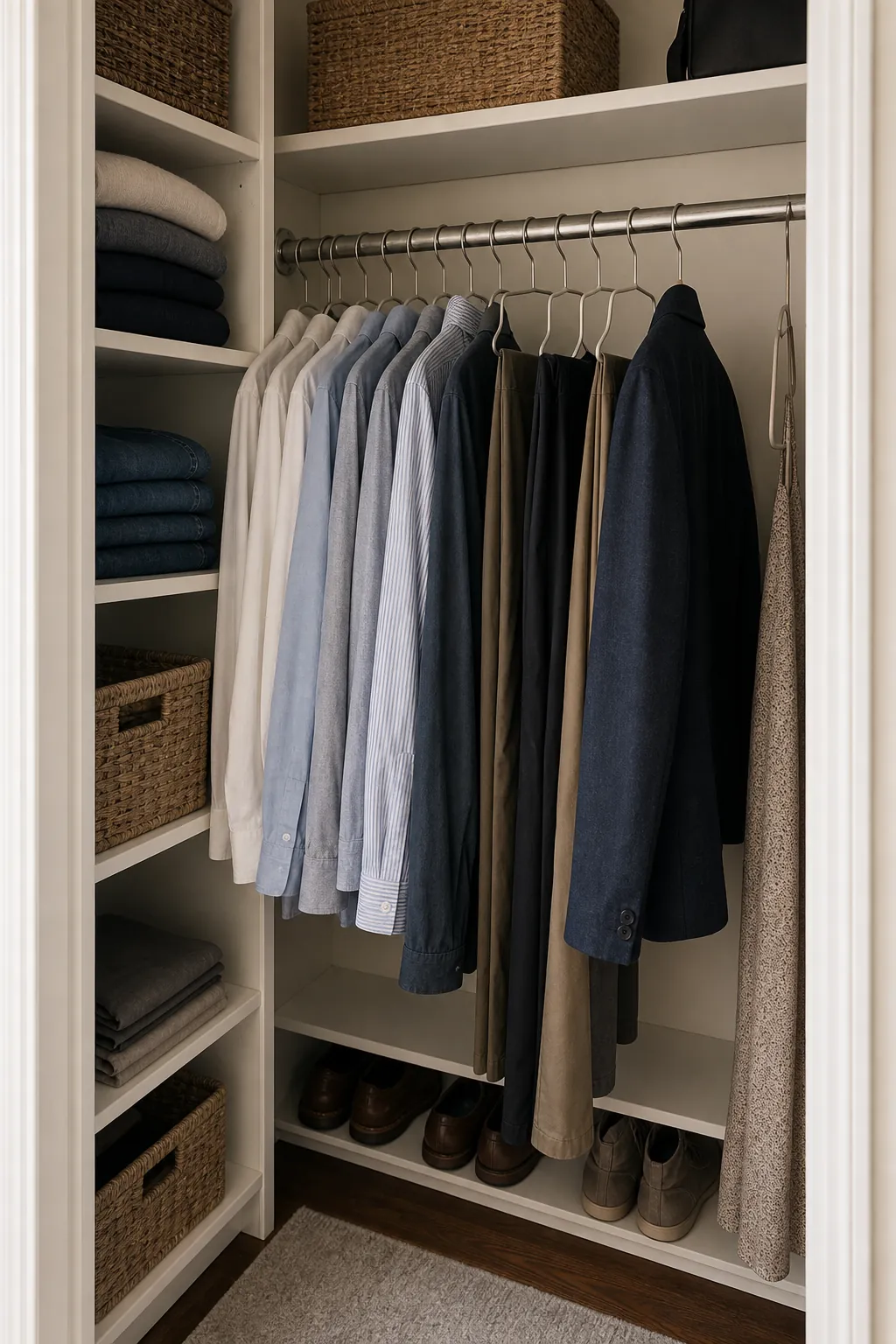
It is tempting to fill a small closet with shelves because shelves look orderly. But if the rod space disappears, daily clothes move to the door, the chair, or the bed. Keep a main hanging zone for the clothes that need to stay visible and ready.
If the closet is short, use double hanging for shirts and pants while keeping one long section for dresses, coats, or robes. If the closet is narrow, use slim hangers and edit duplicates before adding another organizer. Hanging space should feel easy to use, not packed like a store rack.
Use the Floor for Shoes, Not Random Overflow
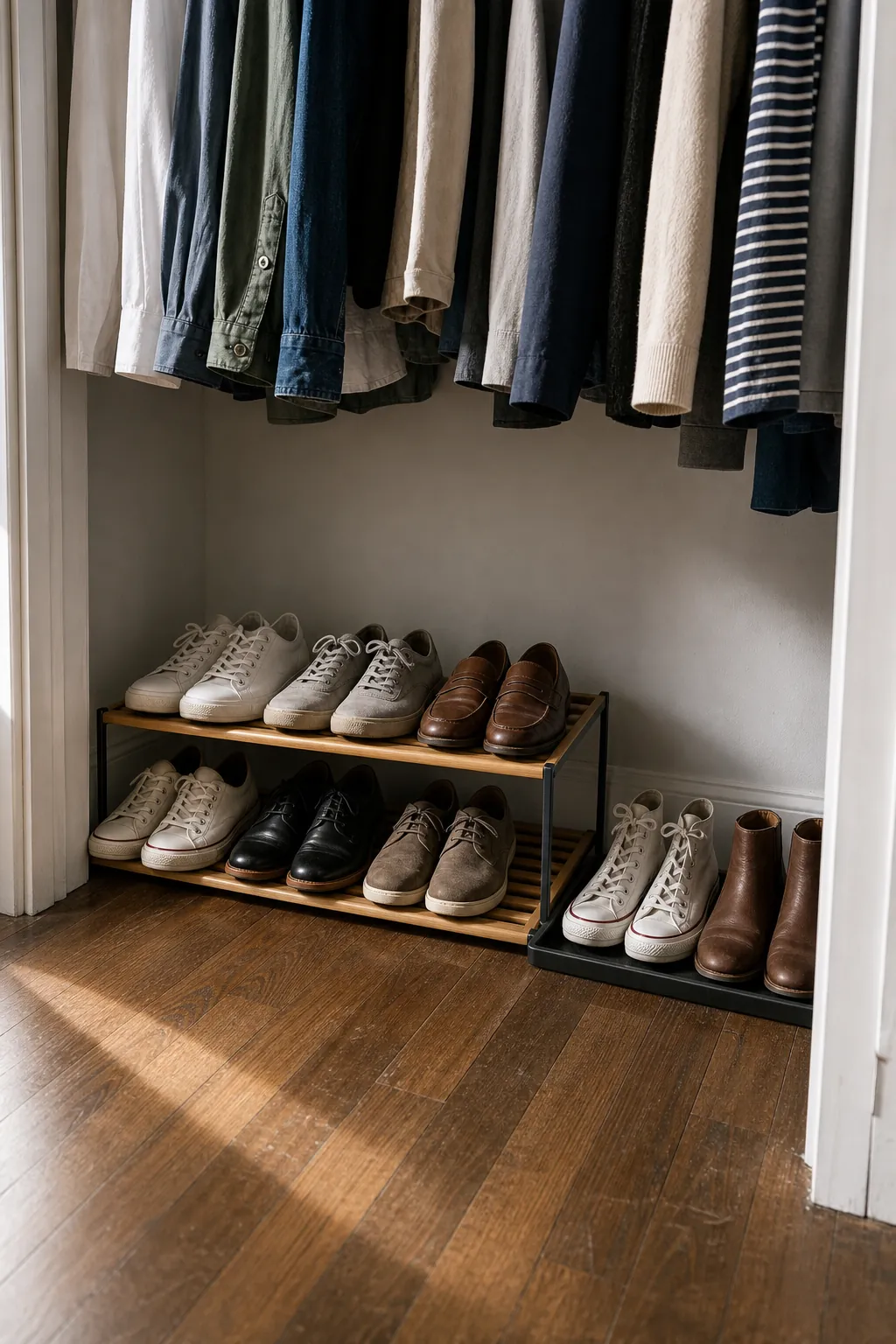
The closet floor becomes messy when it has no assignment. Give it one job. In most small closets, the best job is shoes: a low shelf, a narrow rack, or two trays that keep pairs visible and off the walking path.
Avoid storing loose bags, laundry, gift wrap, and mystery boxes on the closet floor. Once the floor becomes a catchall, the hanging clothes become harder to reach and the whole closet feels smaller. If shoes do not fit, rotate seasonal pairs or move special-occasion shoes to a high bin.
Leave One Empty Spot for Real Life
The most overlooked closet organization idea is empty space. Leave one shelf with a little breathing room, one bin not completely full, or a few inches of rod space for laundry return. A closet packed to perfection on day one has no place to absorb real life on day seven.
That empty spot can handle a new sweater, a travel bag, a half-finished laundry load, or an outfit you are deciding about. It keeps the system from breaking. Small closet storage is not about using every inch; it is about using the right inches well.