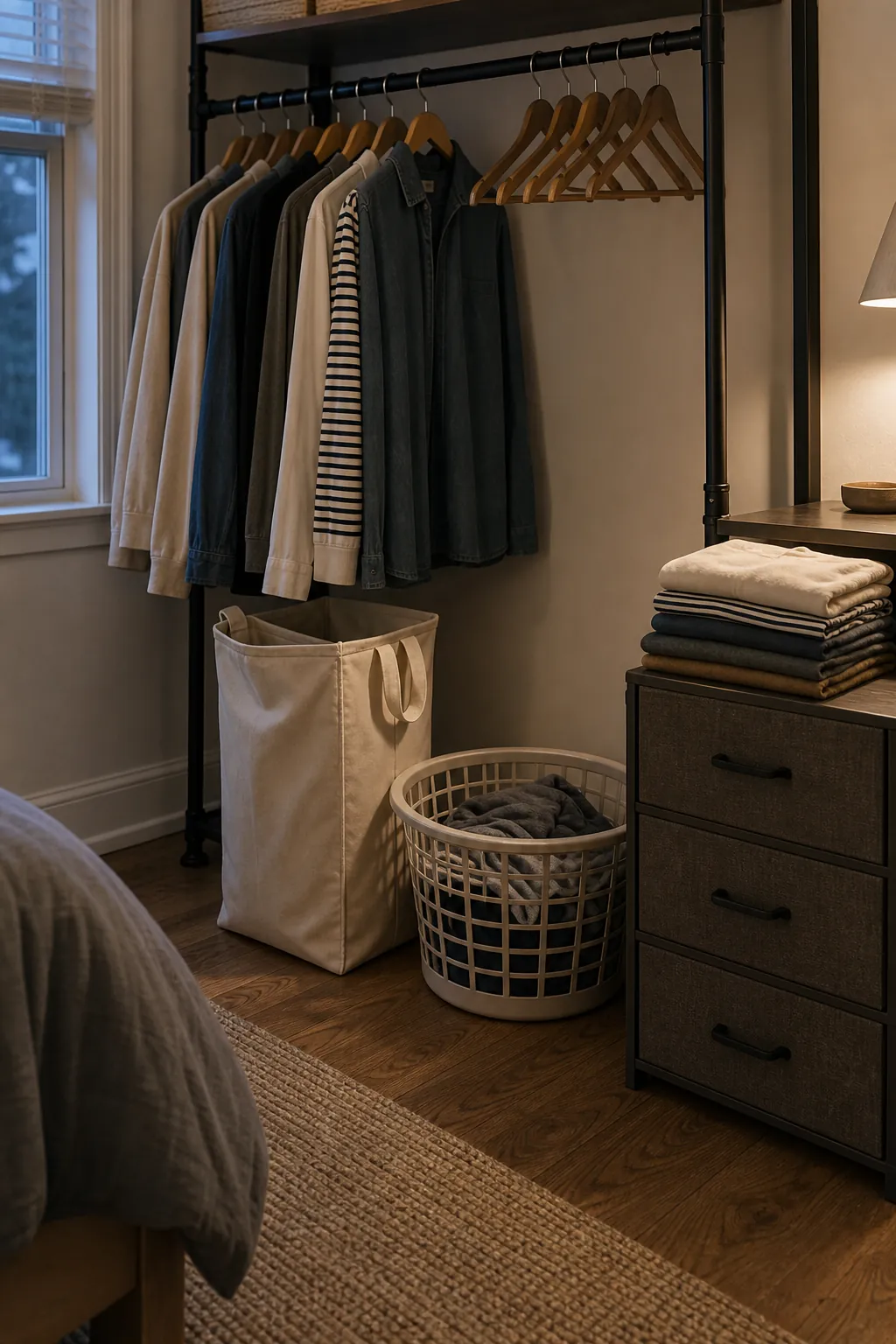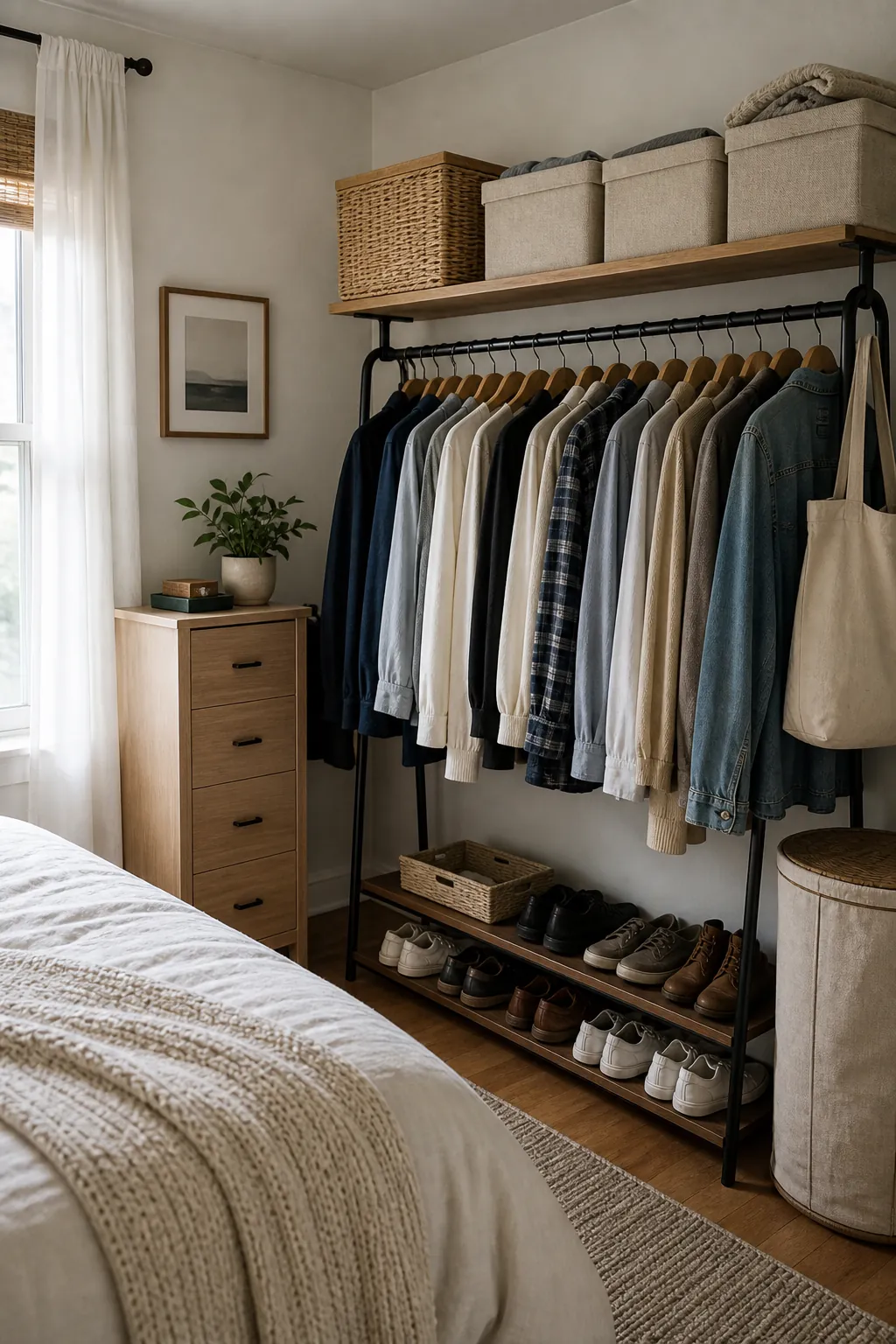
Organizing clothes without a big closet is mostly a visibility problem. If everything is hidden, you forget what you own. If everything is open, the bedroom starts to look like a storage room. The useful middle is a system that gives daily clothes a clean landing place, keeps overflow out of sight, and makes laundry easy to return before it becomes a chair pile.
The goal is not to recreate a dream walk-in closet in a small bedroom. The goal is to decide which clothes deserve the easiest access, which clothes can live in closed bedroom storage, and which closet alternatives will actually stay tidy in your routine.
Start With a Daily Wardrobe Zone
When there is no big closet, the daily wardrobe needs the most disciplined spot in the room. That might be a small clothing rack, a narrow armoire, a compact wardrobe cabinet, or a short hanging rail mounted in an alcove. Keep this zone for the pieces you reach for every week: work shirts, current-season layers, pants, dresses, and jackets that wrinkle if folded.
Do not let the daily zone become a museum of every item you own. If a piece is out of season, special occasion only, or waiting for repair, it does not belong in the prime zone. Small space storage works when the easiest spot is reserved for the clothes that earn it.
Use Closed Storage for Folded Clothes
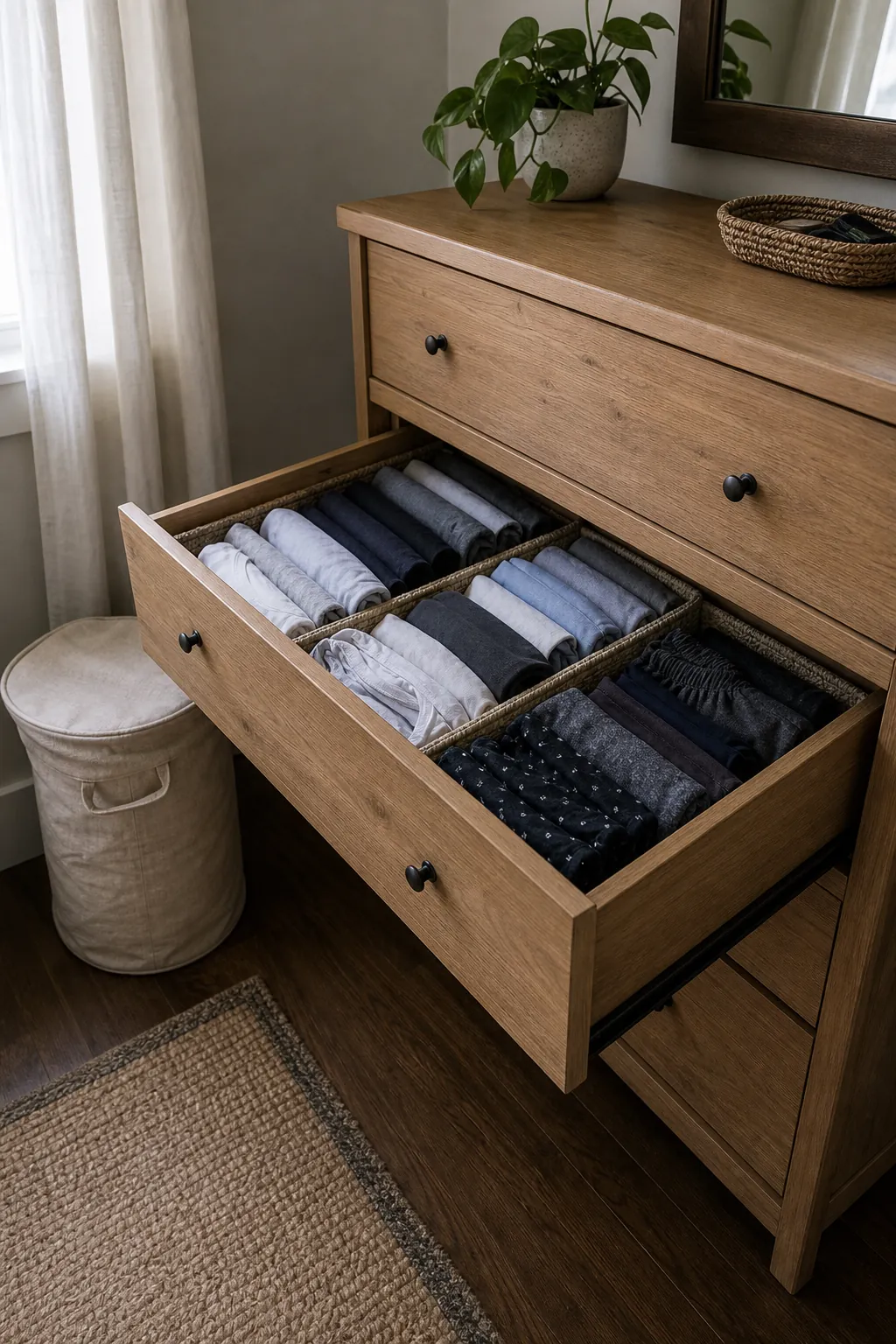
Open wardrobe setups look beautiful only when they are edited. Folded categories are usually calmer in drawers, lidded bins, or a dresser. T-shirts, leggings, pajamas, workout clothes, sweaters, and underwear do not need to be visible every time you walk into the bedroom.
A dresser is not just furniture in a no-closet room. It is the anchor that lets the open pieces stay minimal. Use drawer dividers for small items, file-fold soft clothing so you can see it from above, and keep one drawer or bin for the items that always seem to float around the room.
Make an Open Wardrobe Look Intentional
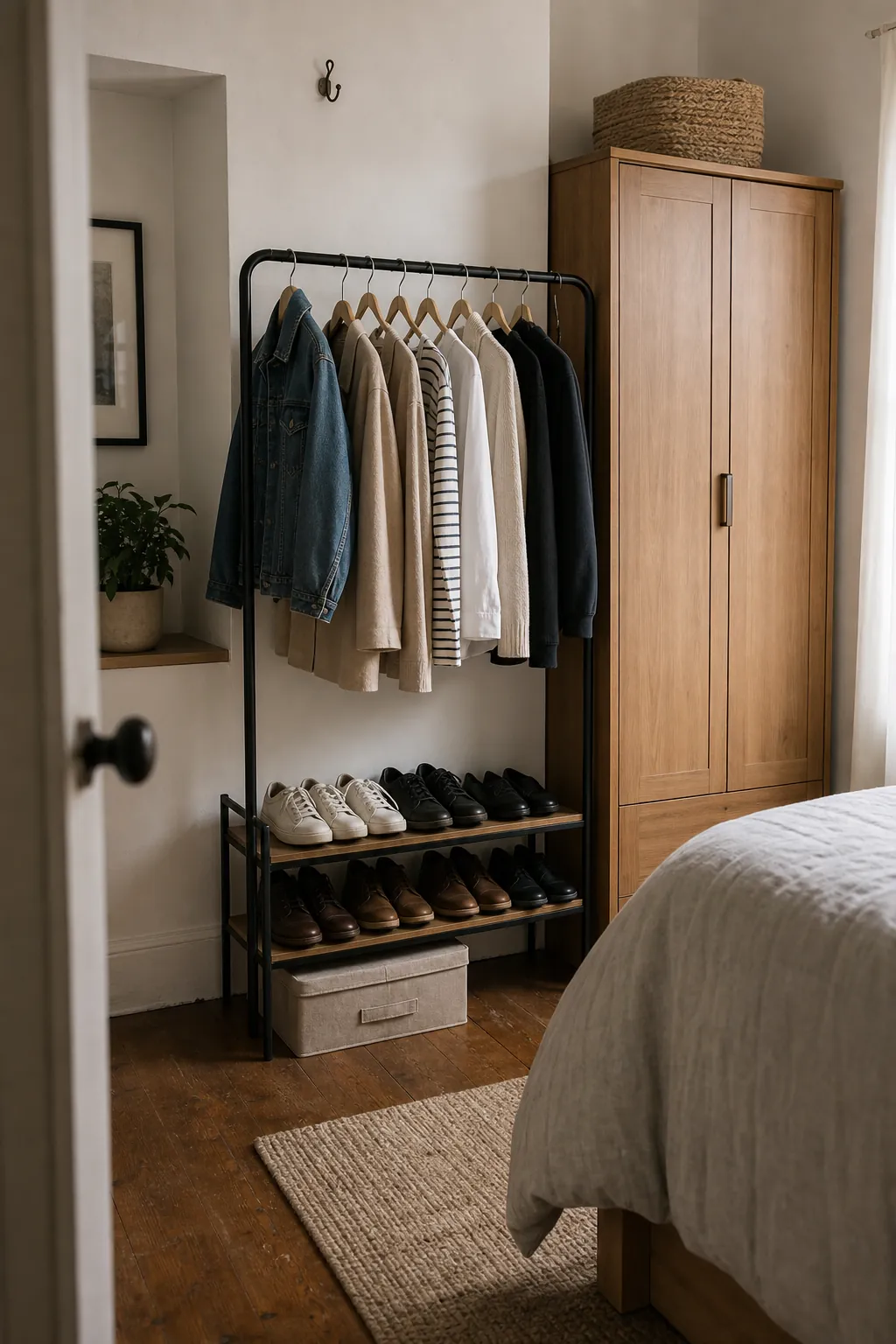
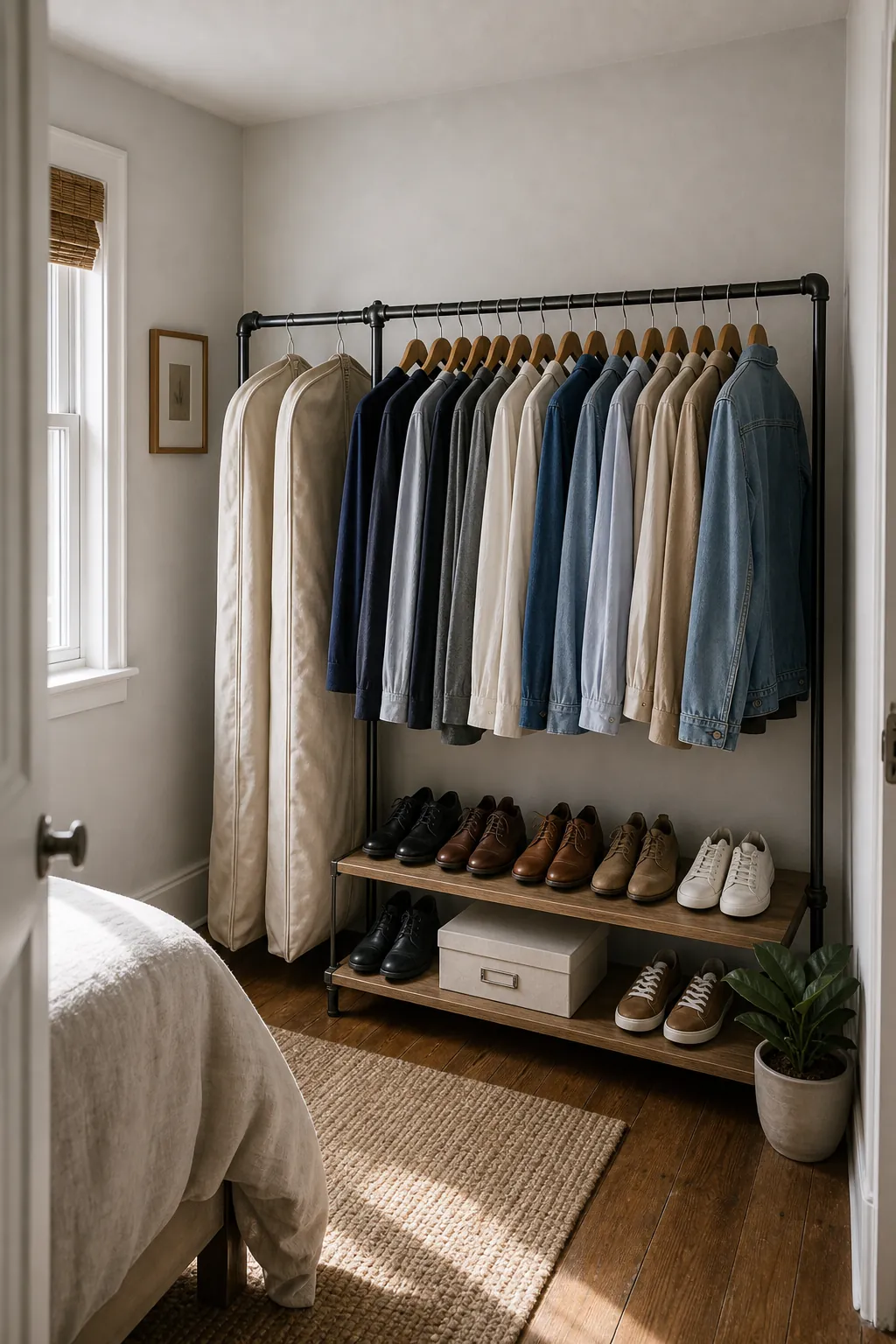
An open wardrobe can work, but it needs stricter limits than a closet with doors. Matching hangers, breathing room between garments, a contained shoe shelf, and a narrow palette of clothing colors make the rack look designed instead of temporary. If the rack is full from end to end, it will read as clutter even when every item is technically put away.
Keep visual weight low. Use the rack for hanging clothes and maybe one shoe shelf, not bags, storage boxes, laundry, and decor all at once. If dust is a problem, store less-used items in garment bags or a closed wardrobe and keep only current rotation on the open rack.
Use Vertical Space Before Floor Space
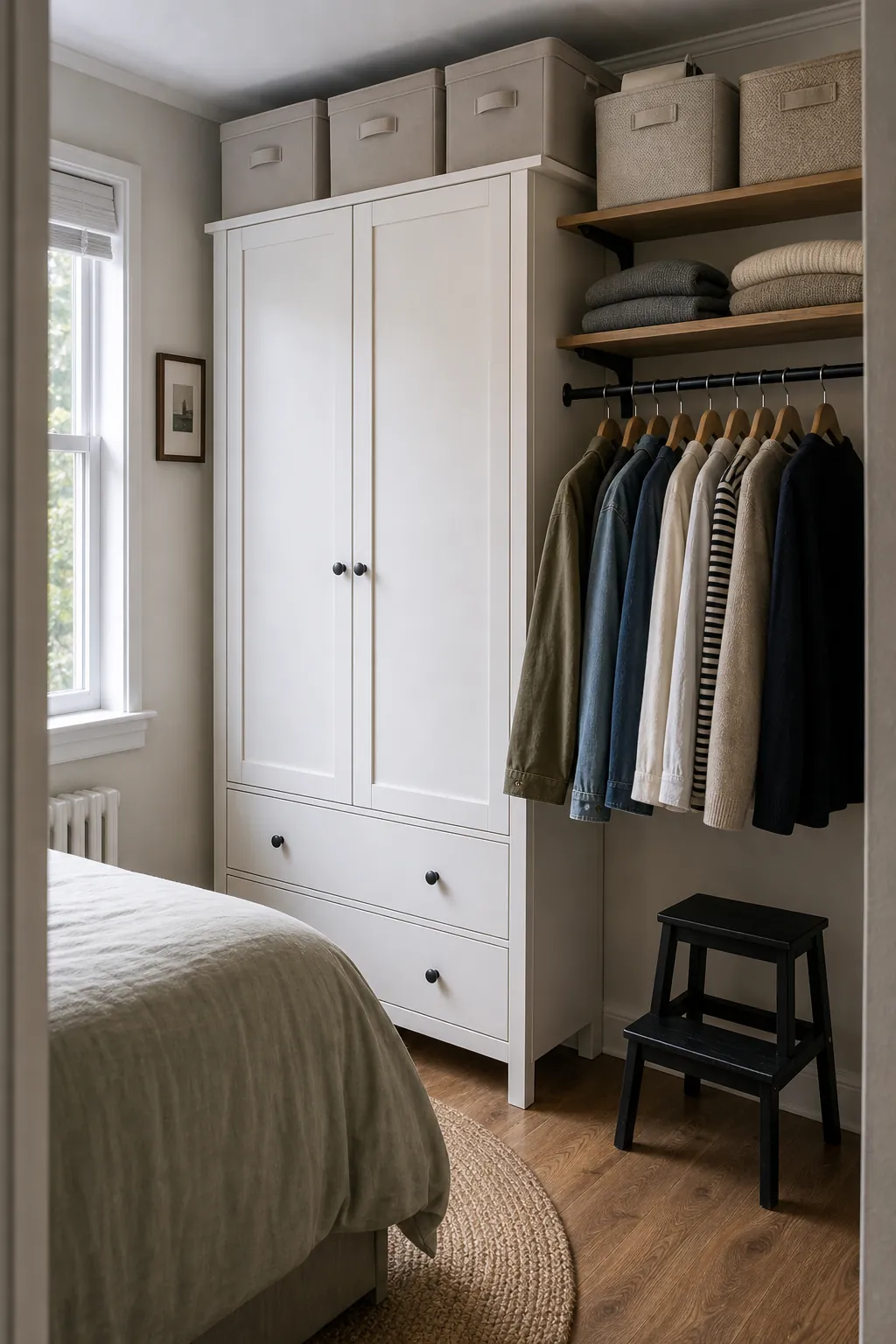
Small bedrooms usually lose function when storage spreads across the floor. Before adding another basket, look up. Tall wardrobes, wall shelves, over-door hooks, and high bins can hold off-season clothes, extra linens, bags, and shoes without taking over the walkway.
The trick is to keep vertical storage honest. Daily clothes should stay between shoulder height and drawer height. High shelves are for low-frequency items. If you have to reach overhead every morning, the system is too inconvenient to last.
Give Shoes, Bags, and Accessories Their Own Boundaries
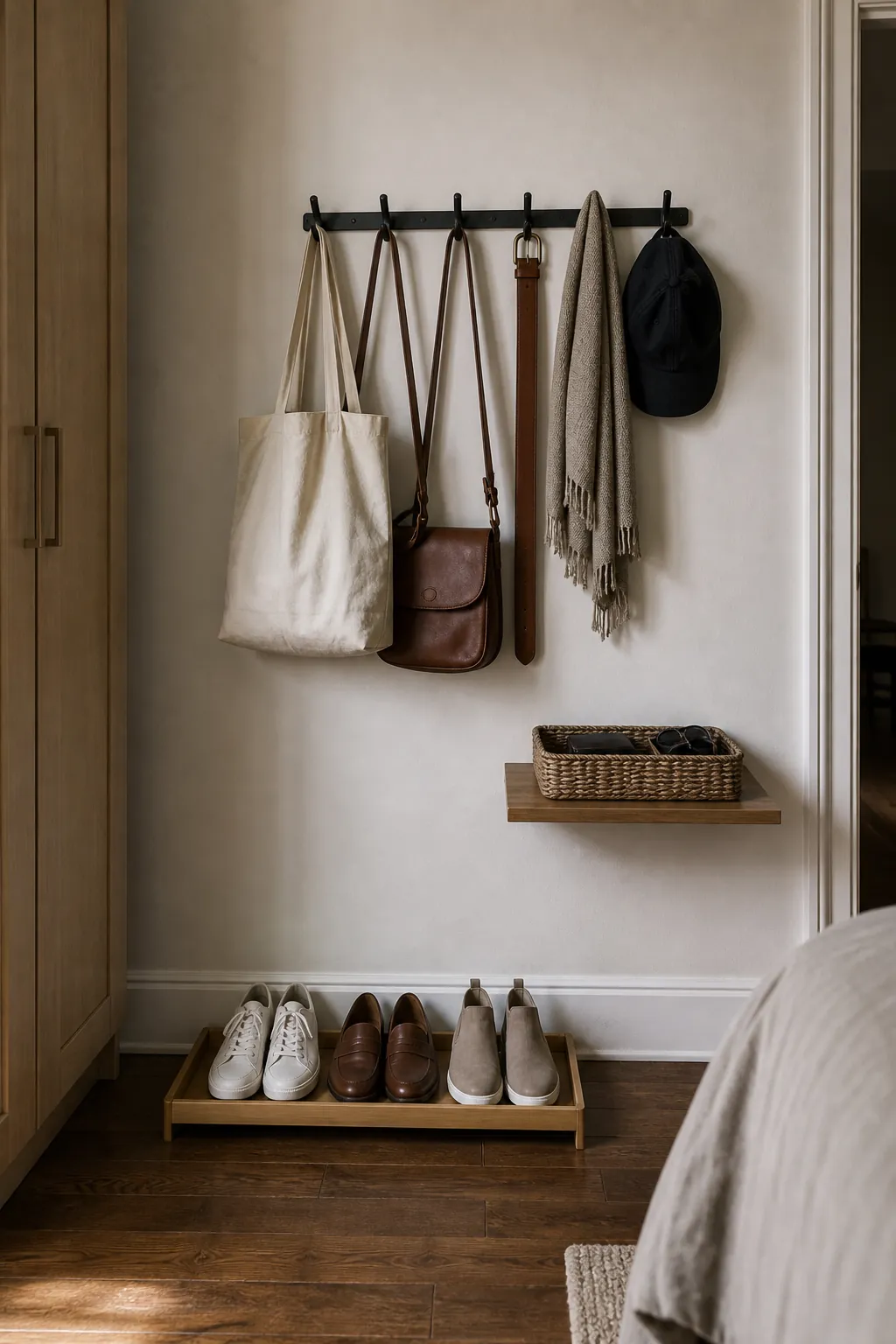
Accessories make a no-big-closet setup feel messy faster than clothing does. Shoes drift under furniture. Bags hang on chairs. Belts, scarves, and hats land wherever there is a hook. The solution is not more hooks everywhere; it is a few tight boundaries.
Use one shoe rack or tray near the wardrobe zone, one basket for small accessories, and one hook rail for bags or next-day outfits. When those spots are full, edit before adding more storage. Boundaries are what turn closet alternatives into real home organization.
Build a Laundry Return Path
Without a big closet, laundry has nowhere to disappear. That means the return path matters as much as the storage furniture. Put a slim hamper near the daily wardrobe zone, keep a small basket for worn-once clothes, and leave enough empty space in drawers and on the rack that clean clothes can go back without a full reset.
If clothing organization breaks every week, the system is probably too full or too hidden. Remove a category, rotate off-season pieces, or add one closed bin for overflow. A small room can still feel calm when the clothing system is visible, edited, and easy to reset in ten minutes.