

Shared toy storage can make a small kids bedroom feel calmer, but only when the system is simple enough for children to use. The room needs a place for shared toys, a place for personal favorites, and a way to reset the floor quickly. Without those boundaries, every basket becomes a mixed pile.
The best small kids bedroom ideas for shared storage start with low, visible containers. Kids should know where blocks go, where stuffed animals go, and which bin belongs to each child. When storage is too high, too deep, or too crowded, cleanup becomes an adult job.
Create one shared toy hub
A shared toy hub gives the room a clear center for common toys. Use a low shelf, a few baskets, and one open rug nearby. Blocks, animals, cars, play food, and puzzles can live in the shared zone, while each child keeps special items in a separate personal bin.

This works better than spreading toys across the room. If shared toys have one home, kids can find them faster and the floor is easier to reset before bedtime. Keep the most-used baskets on the lowest shelf and move backup toys somewhere less visible.
Separate personal bins from shared baskets
Personal bins reduce arguments in a shared bedroom. They do not need to be large. One fabric cube or small basket per child is enough for favorite stuffed animals, special collections, current books, or small treasures. The rest of the toys can stay in shared categories.
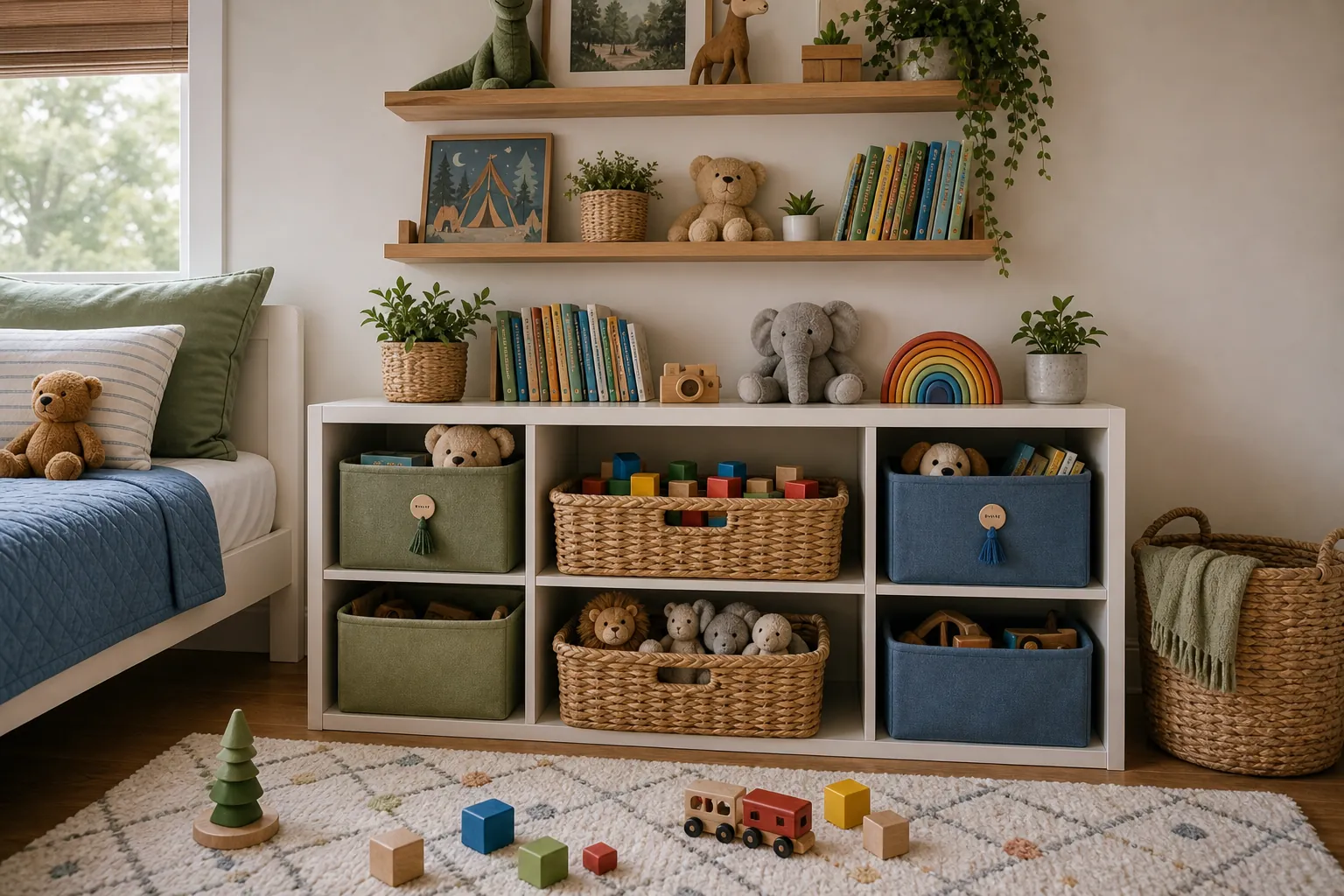
Use color, position, or picture labels to make the system clear. Written labels are less useful for younger kids. If one child always uses the left bin and the other uses the right bin, cleanup becomes easier without adding more furniture.
Use the closet for toy overflow
In a small kids bedroom, the closet can store more than clothes. A few shelf baskets or drawer bins can hold toy overflow, seasonal toys, board games, and dress-up pieces. This keeps the bedroom from showing every toy at once.

Give each child a clothing zone if the room is shared, then place shared toy overflow in the center or upper shelves. The visible room should hold daily toys only. The closet can hold everything that rotates in later.
Put shared books and light toys on wall shelves
Wall shelves work well for shared books, small plush toys, art baskets, and lightweight decor. They keep the floor open and make the room feel more organized. Picture ledges are especially useful because kids can see book covers and choose quickly.
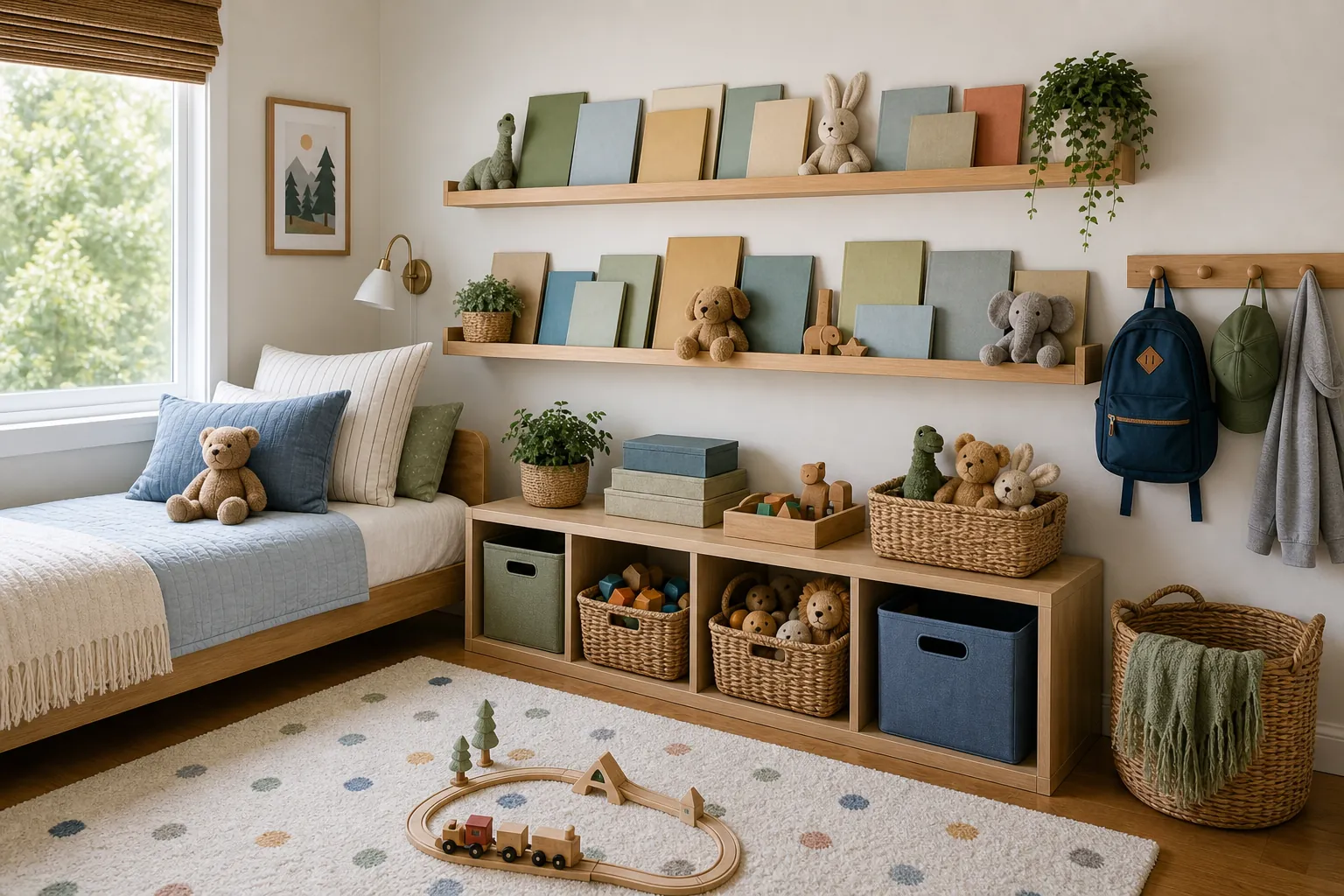
Do not overload wall shelves with heavy bins. The safest storage is still low and stable. Use the wall for things that are light, easy to see, and easy to return after reading or playtime.
Divide under-bed storage by category
Under-bed drawers are useful for shared toys because they hide visual clutter without adding a large storage unit. Dividers make them even better. One section can hold train tracks, another can hold blocks, and another can hold soft toys or extra bedding.

Keep these drawers shallow. Deep under-bed bins become another toy chest, and toy chests usually get dumped. Shallow drawers let kids see the category and pull out only what they need.
Keep the play corner flexible
A shared play corner should not be packed with furniture. Floor cushions, baskets, a small tray, and a soft rug can support reading, blocks, pretend play, and quiet time. When the activity changes, the corner can reset quickly.
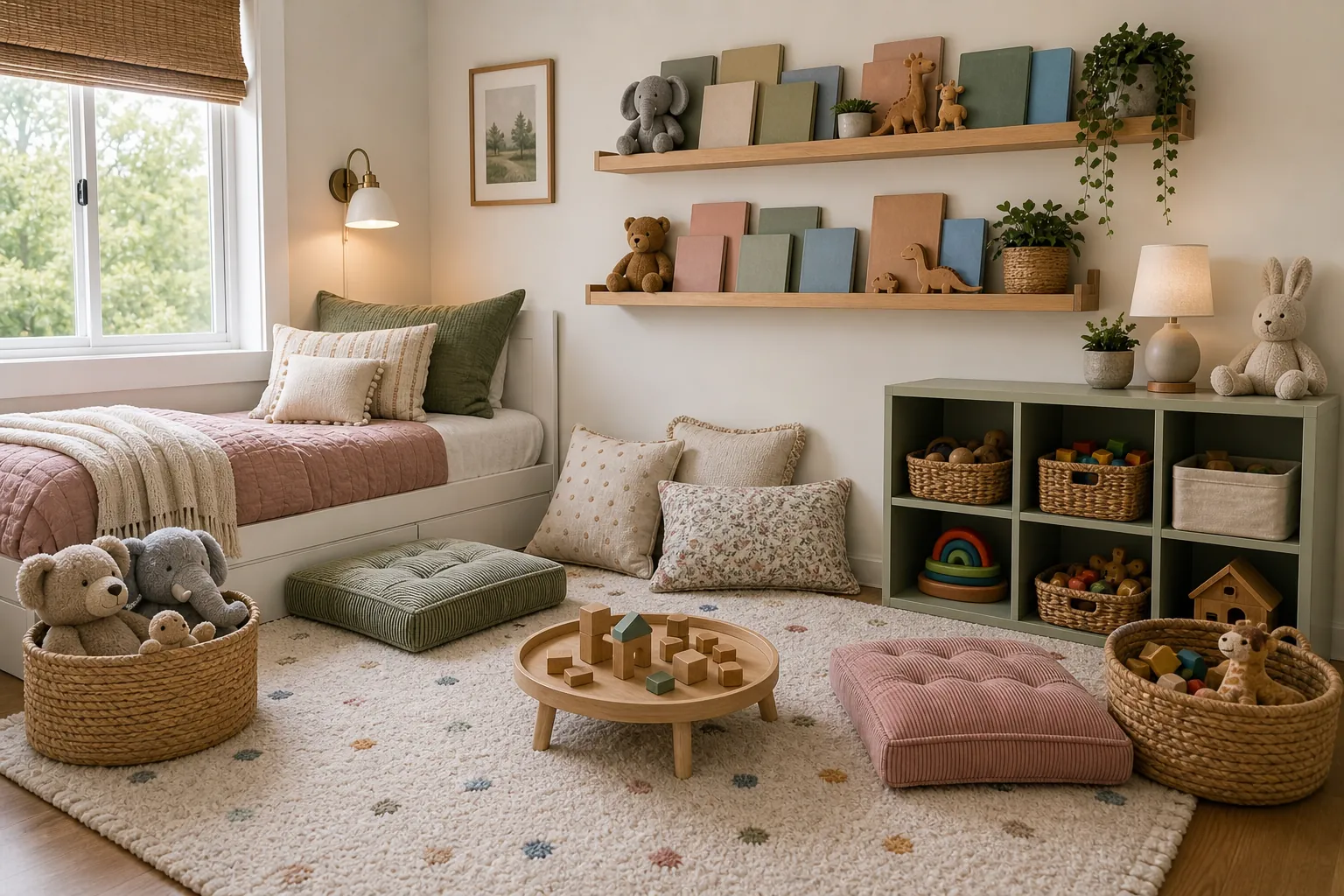
Try to keep baskets at the edges of the rug rather than in the middle. This leaves the center open for play and gives every toy a nearby home. If the room feels crowded, remove one basket before adding another shelf.
Shared toy storage checklist
- Use one low hub for shared toys.
- Give each child one personal bin for special items.
- Move backup toys to the closet or under the bed.
- Use wall shelves for books and light items only.
- Divide drawers by toy category instead of mixing everything together.
- Keep the center of the rug open so play and cleanup are easier.
Shared toy storage works when the room has fewer decisions to make. Personal favorites go in personal bins. Common toys go in shared baskets. Overflow goes out of sight. With those boundaries in place, a small kids bedroom can hold toys, sleep, and play without feeling overwhelmed.