
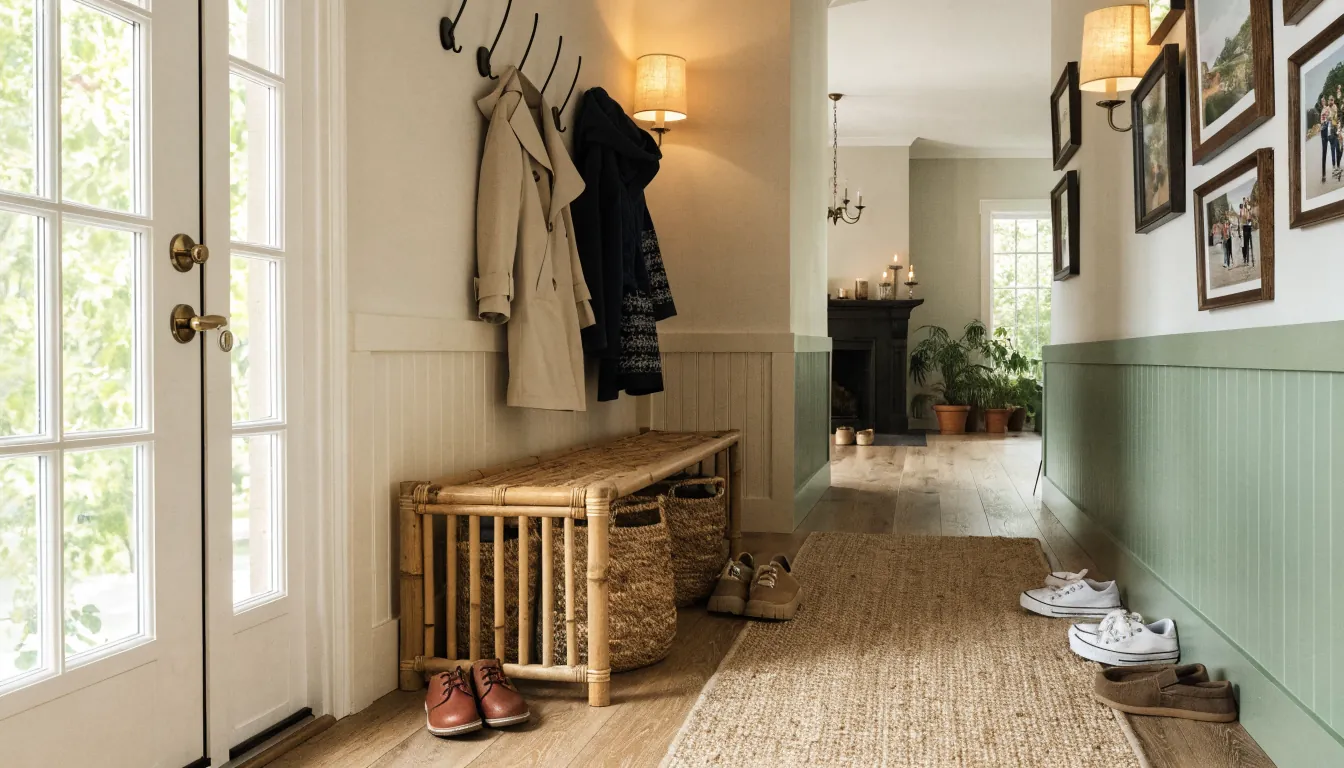
A family hallway has to work harder than almost any other pass-through space. It is where shoes come off, bags land, dog leashes disappear, coats pile up, keys migrate, and everyone still expects enough room to walk through without turning sideways.
The best family hallway ideas are not the ones that look perfect for a photo. They are the ones that make the next school morning, grocery drop, muddy walk, and bedtime reset easier. Start by deciding what the hallway must catch, then add warmth, lighting, color, and personal details around that system.
Start With The Real Drop Zone
Before buying anything, watch what your family already does for a few days. Where do backpacks land? Which shoes stay out even when there is a closet nearby? Does mail stop at the door or travel to the kitchen? Do kids unpack bags upstairs, at the dining table, or in bedrooms?
This matters because a beautiful row of narrow cubbies can fail if your family does not actually use individual compartments. A flexible system usually works better: a bench, open hooks, a few baskets, and one closed cabinet for the messiest things. Give each category a landing place instead of trying to assign every person a perfect little locker.
Use Hooks Before Cubbies
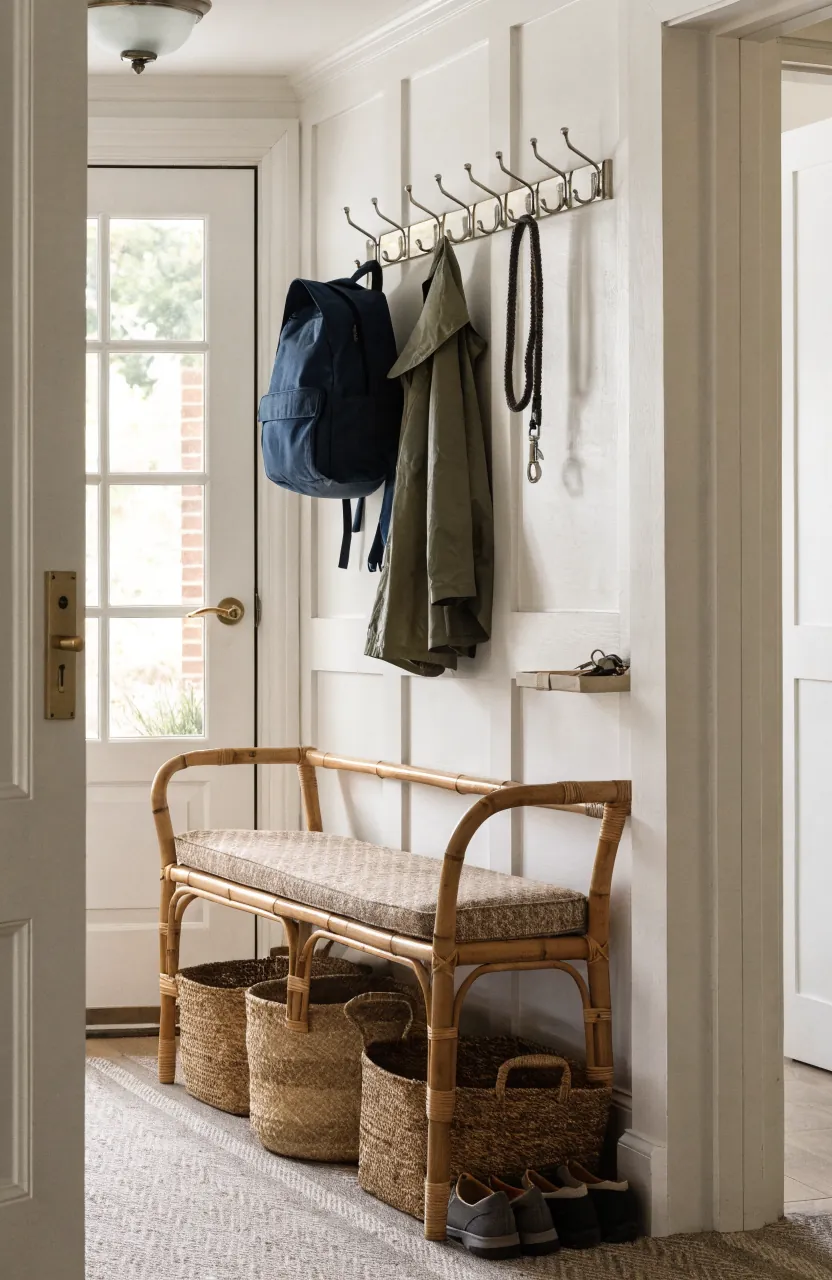
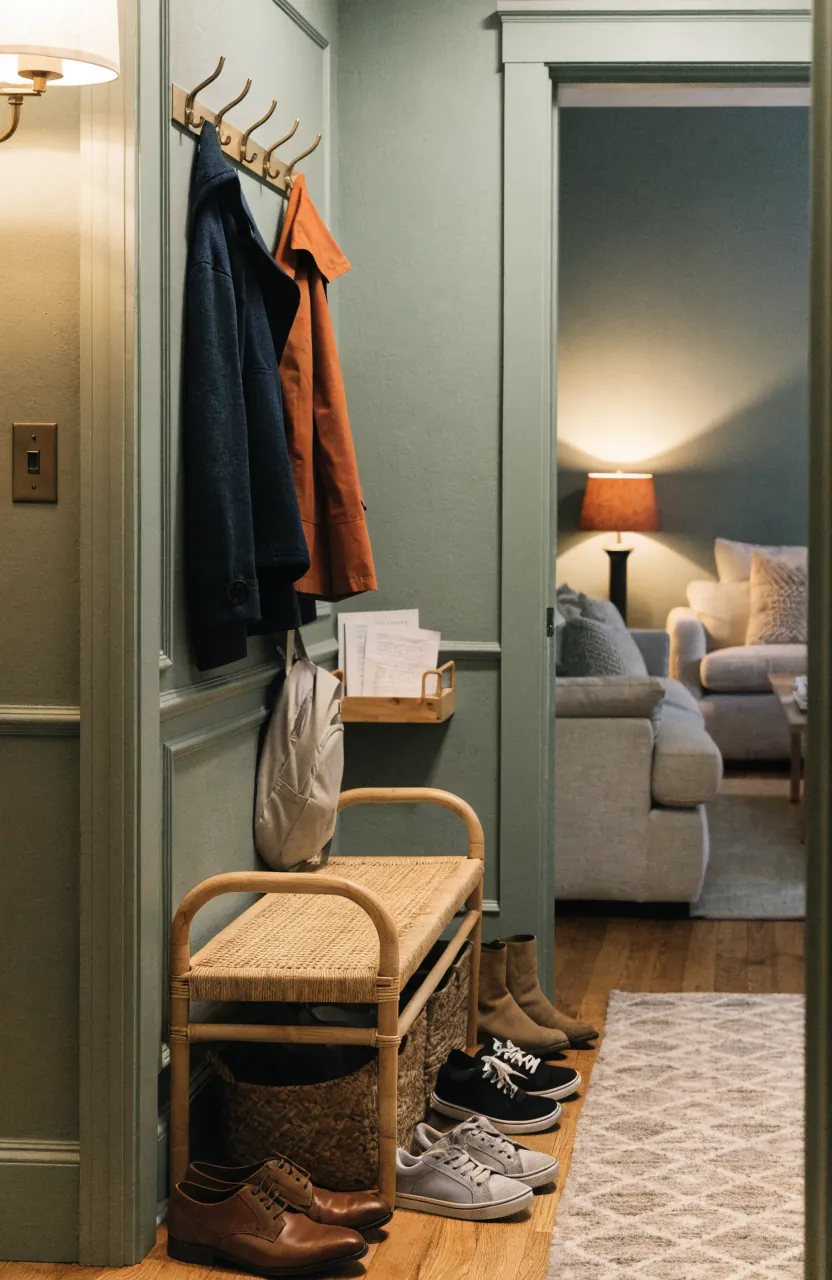
Hooks are underrated because they look simple, but that is why they work. A child can hang a coat on a hook faster than opening a closet, finding a hanger, and sliding the door closed. For hall entryway ideas that need to survive school days, install a sturdy rail of hooks at mixed heights: lower hooks for kids, higher hooks for adult coats and guest bags.
Keep the hook wall from looking chaotic by limiting what lives there. Everyday coats, one backpack per child, a dog leash, and a tote are realistic. Out-of-season jackets, sports gear, and extra bags need closed storage somewhere else. The hallway should catch the day, not the whole year.
Choose A Bench That Earns Its Floor Space
In a narrow family hallway, every inch has to justify itself. A bench is worth it when it solves two problems at once: it gives people a place to sit while putting on shoes and it hides or organizes the shoes underneath.
Look for a low bench with open shoe shelves if your family needs speed. Choose drawers, tilt-front shoe cabinets, or lidded baskets if visual calm matters more. A bamboo or light wood bench is especially useful in a busy entry because it adds warmth without making the space feel heavy.
Make Long Hallway Decorating Feel Intentional
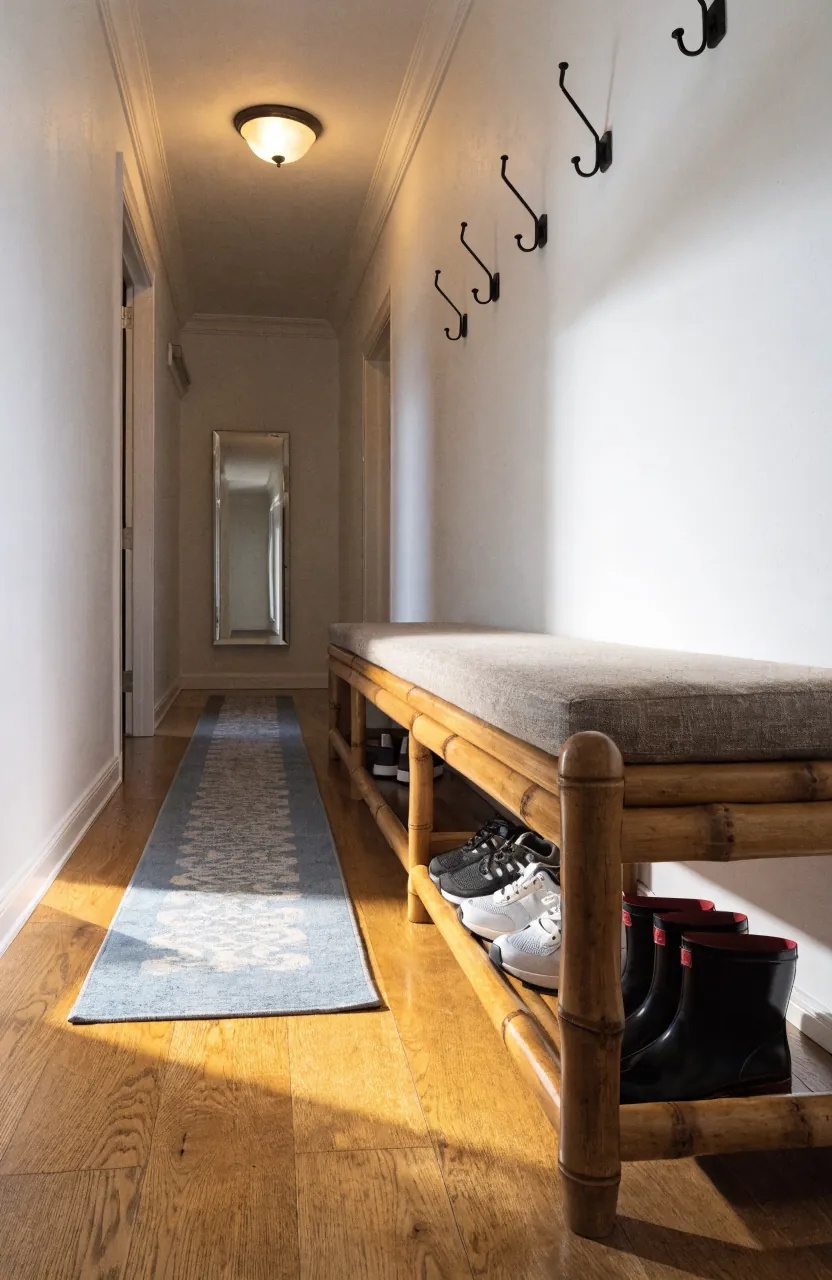
Long hallway decorating works best when the eye has a rhythm to follow. Without rhythm, a long entry can feel like a tunnel. You do not need to fill every wall. Instead, repeat a few elements: a runner, a series of frames, several warm wall lights, or slim picture ledges spaced along one side.
A runner is often the fastest upgrade for long entry hallway ideas because it softens footsteps, adds color, and visually connects the door to the rest of the home. Choose a low-pile rug with a pattern that can forgive dirt. If pets or kids need traction, use a proper rug pad and avoid thick edges that can become trip points.
Build A Family Gallery Wall That Does Not Look Random
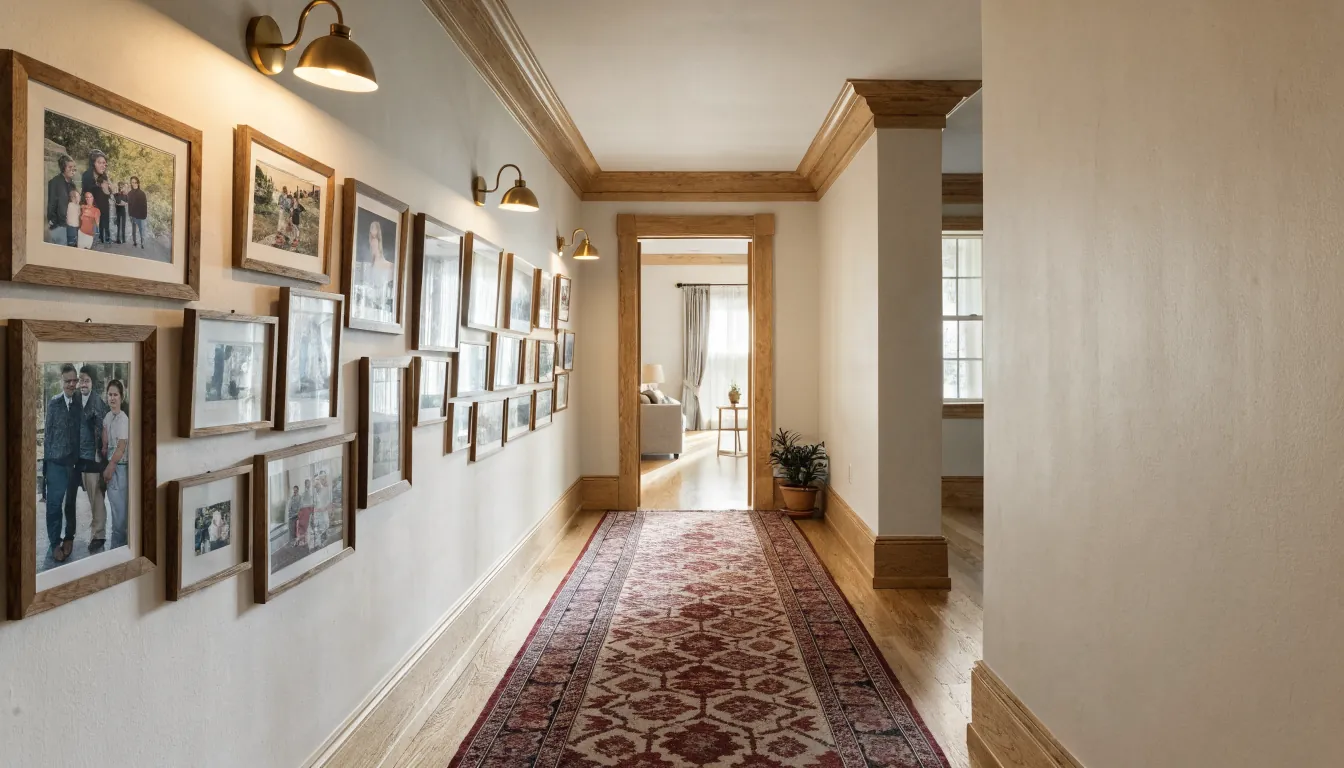
Family photos belong in a hallway because people naturally pause there. The trick is making the wall feel edited rather than accidental. Pick one frame color, one mat color, or one photo treatment so school portraits, vacation snapshots, children’s art, and old family pictures can live together.
For a busy house hallway, leave breathing room between frames and keep the lowest pieces above bump height. In a very narrow hall, use slim frames and avoid shelves that stick out into the walkway. In a wider hallway, add a shallow ledge for rotating art, seasonal cards, or small framed notes.
Give Upstairs Hallway Landings A Job
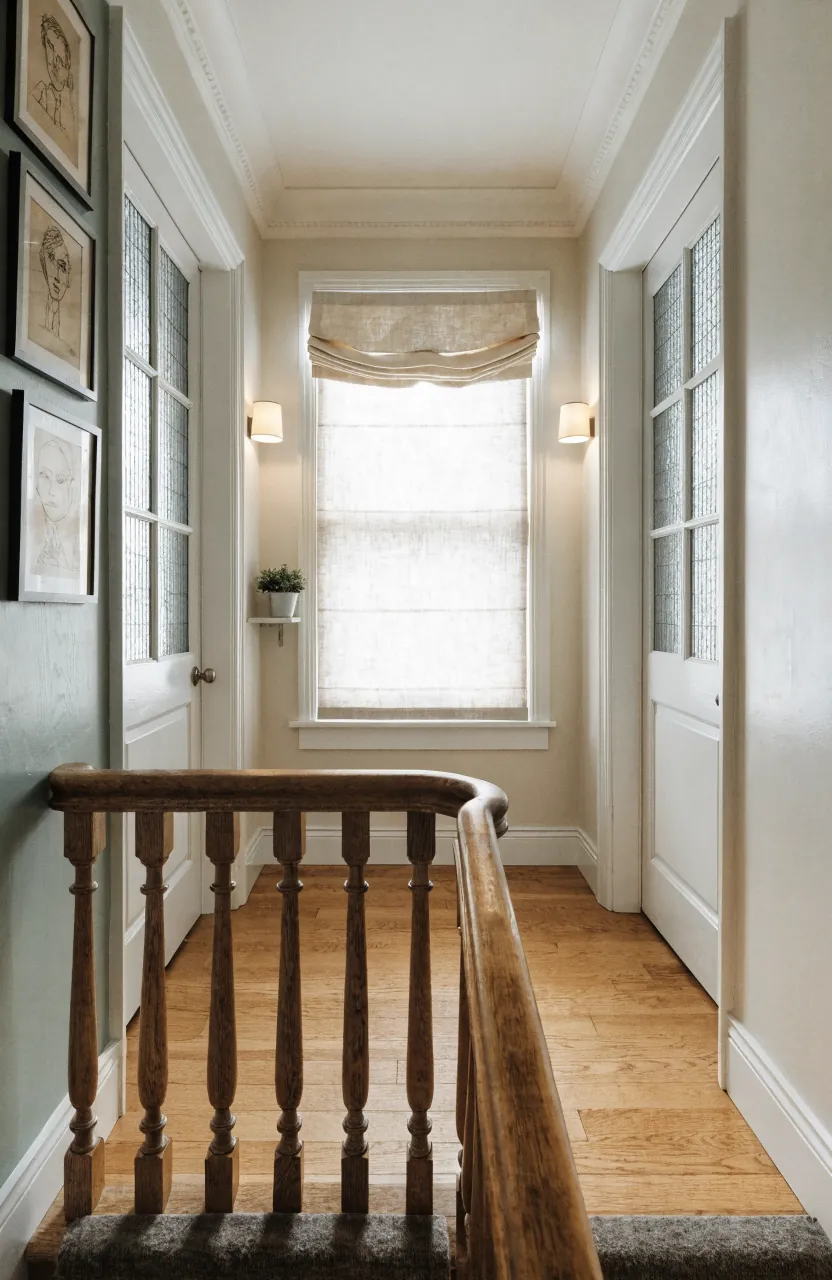
Upstairs hallway ideas landing spaces are tricky because they often look empty but cannot hold much furniture. Treat the landing as a small pause point rather than a full room. A narrow console, a wall-mounted shelf, a reading chair only if there is real clearance, or a vertical stack of art can make the space feel finished.
Safety comes first on landings. Avoid loose baskets, floor plants, or anything that narrows the route from bedroom to stairs. If the landing has a window, a Roman shade, painted trim, or a pair of small sconces can do more than a cluttered table.
Use Mirrors Where They Solve A Problem
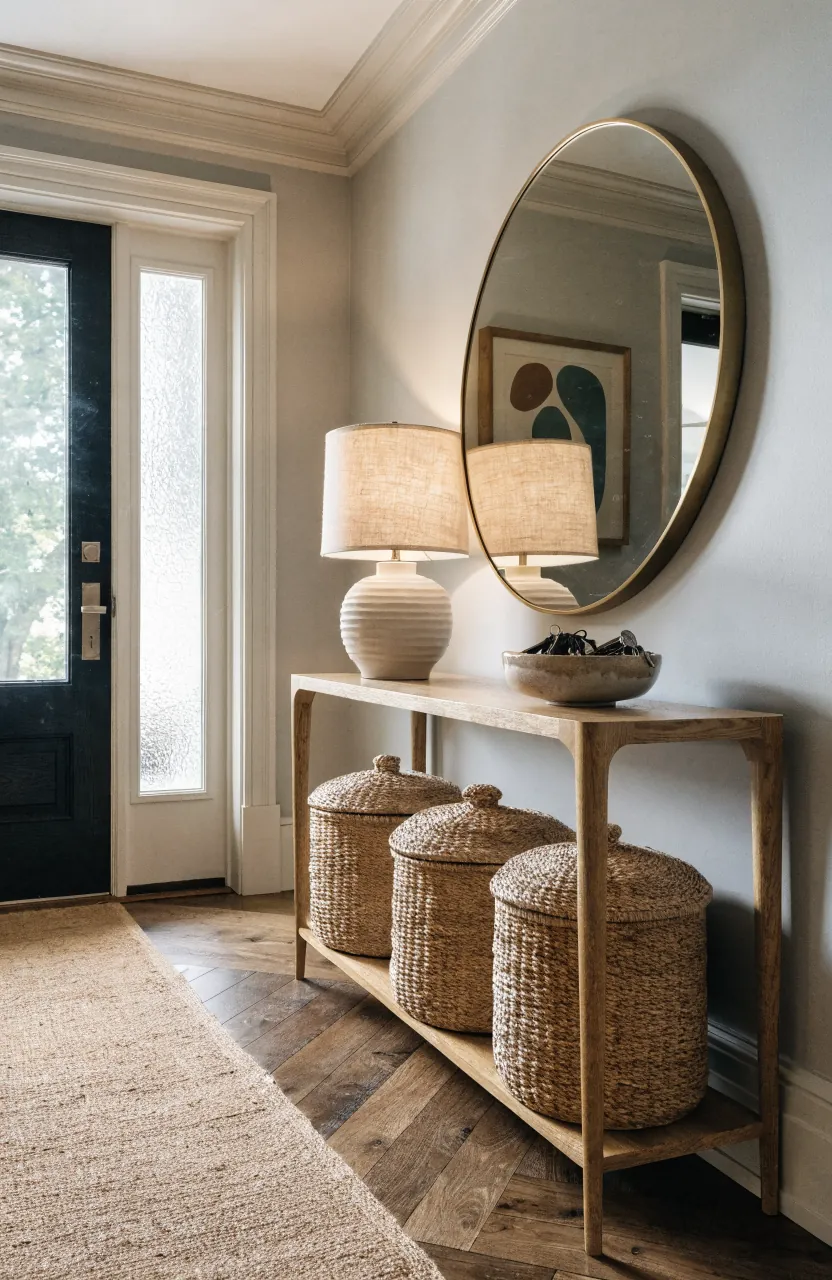
A mirror can make a hallway brighter, but placement matters. Put a mirror where it catches natural light, gives people a quick last check before leaving, or creates a focal point at the end of a long hallway. A mirror that reflects a cluttered shoe pile will simply double the clutter.
In long hallway entryway ideas, a tall mirror near the door can replace extra art while still feeling practical. In a wide hallway, a large mirror above a slim console can anchor the drop zone. In a narrow hallway, choose a flat wall mirror instead of a deep framed one.
Layer Lighting So The Hallway Feels Warm At Night
Many family hallways feel unfinished because the only light is one cold ceiling fixture. Better lighting makes even simple storage look intentional. Use a ceiling light for general brightness, then add wall sconces, picture lights, or a small lamp on a console if there is room.
Warm bulbs help a front hallway ideas entrance feel welcoming at night. If hardwiring is not realistic, rechargeable sconces or plug-in picture lights can still create the same layered effect. The goal is not drama. It is enough softness that the hallway feels like part of the home instead of a service corridor.
Use Closed Storage For The Things That Never Stay Pretty
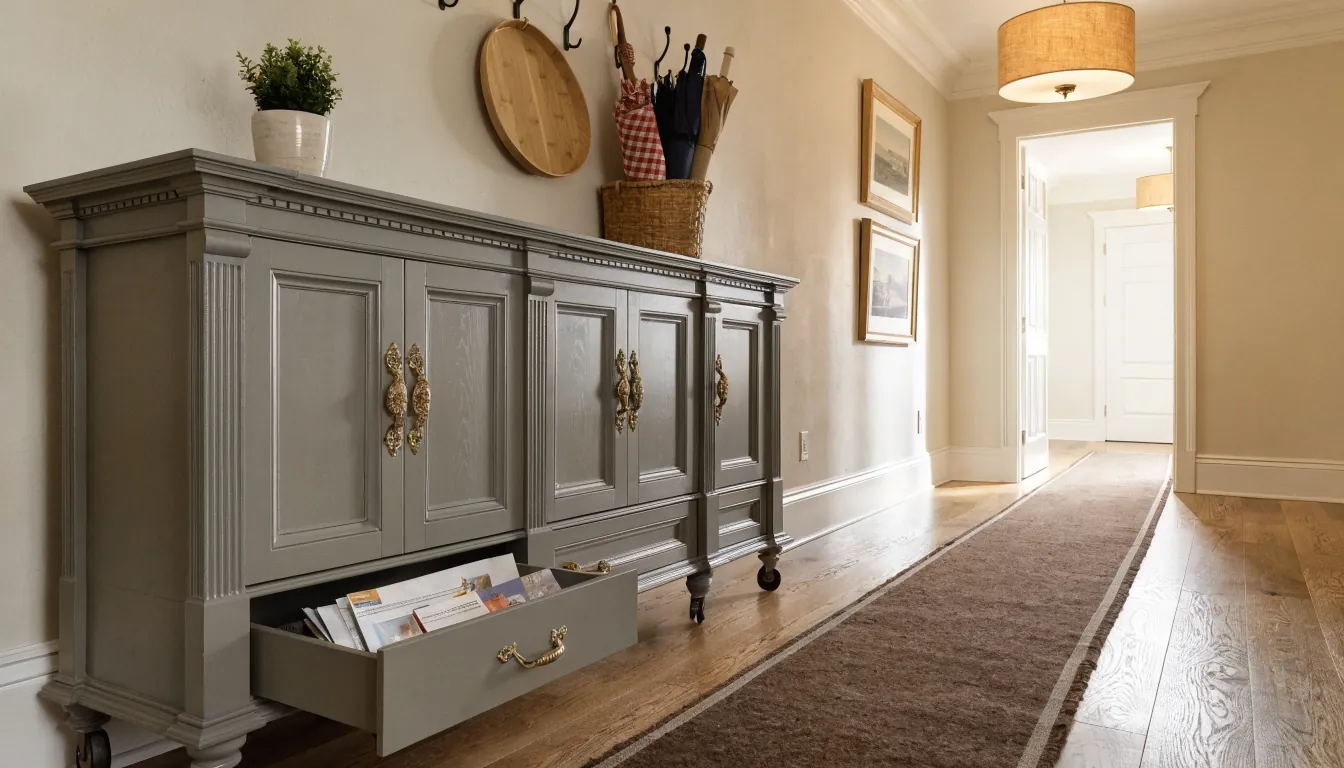
Open storage is convenient, but not everything deserves to be seen. Sunscreen, gloves, spare keys, pet bags, batteries, umbrellas, and mail can make a hallway feel messy even when the big items are under control. Give those small things a closed cabinet, a drawer, or labeled baskets inside a bench.
This is where wide hallway ideas can become more useful than decorative. A shallow armoire, closed-door credenza, or built-in cabinet can hide the family overflow without stealing too much walking space. If the hallway is narrow, use wall-mounted storage and keep furniture depth as slim as possible.
Add Warm Materials That Can Handle Real Life
Family hallways take scuffs, dust, wet shoes, and constant hand traffic. Choose finishes with texture and forgiveness: washable paint, satin or eggshell wall finishes, woven baskets, low-pile rugs, wood or bamboo accents, and framed art under glass.
Natural materials are useful because they make practical storage feel less harsh. A bamboo bench, rattan basket, jute runner, linen shade, or wood frame brings warmth to white walls and hard flooring. Keep the palette connected to the rooms around the hallway so the pass-through feels like a transition, not a leftover strip.
Create A Simple Family Reset Routine
A hallway system only works if it is easy to reset. Give the space one short routine: shoes back to the shelf, coats on hooks, papers into the tray, backpacks where they are actually unpacked, and the runner shaken out once a week. If the system needs a ten-minute tidy every night, it is probably too complicated.
For families with young children, labels can help. For older kids, flexibility matters more. A peg rail and broad baskets can adapt as backpacks turn into sports bags, instruments, laptops, and job uniforms. Build the hallway for change, not just the current school year.
Family Hallway Ideas By Space Type
- Small entry hallway: Use wall hooks, one slim shoe cabinet, a mirror, and a washable runner.
- Long hallway: Add a runner, repeated art, warm wall lighting, and a focal point at the end.
- Wide hallway: Use closed storage, a bench, larger artwork, or a shallow console without blocking the route.
- Upstairs landing: Keep the floor clear and use wall art, a shade, sconces, or one narrow surface.
- Open hallway: Match the hallway materials to nearby rooms so the space feels connected.
The Best Family Hallway Is Easy To Use
A hardworking hallway does not need to look bare, and a beautiful hallway does not need to ignore storage. The strongest family hallway ideas make daily habits easier first, then use rugs, art, mirrors, lighting, and natural textures to make the space feel warm.
If the hallway catches what your family actually drops, keeps the walkway clear, and still feels good when you walk through it at night, it is doing its job.