
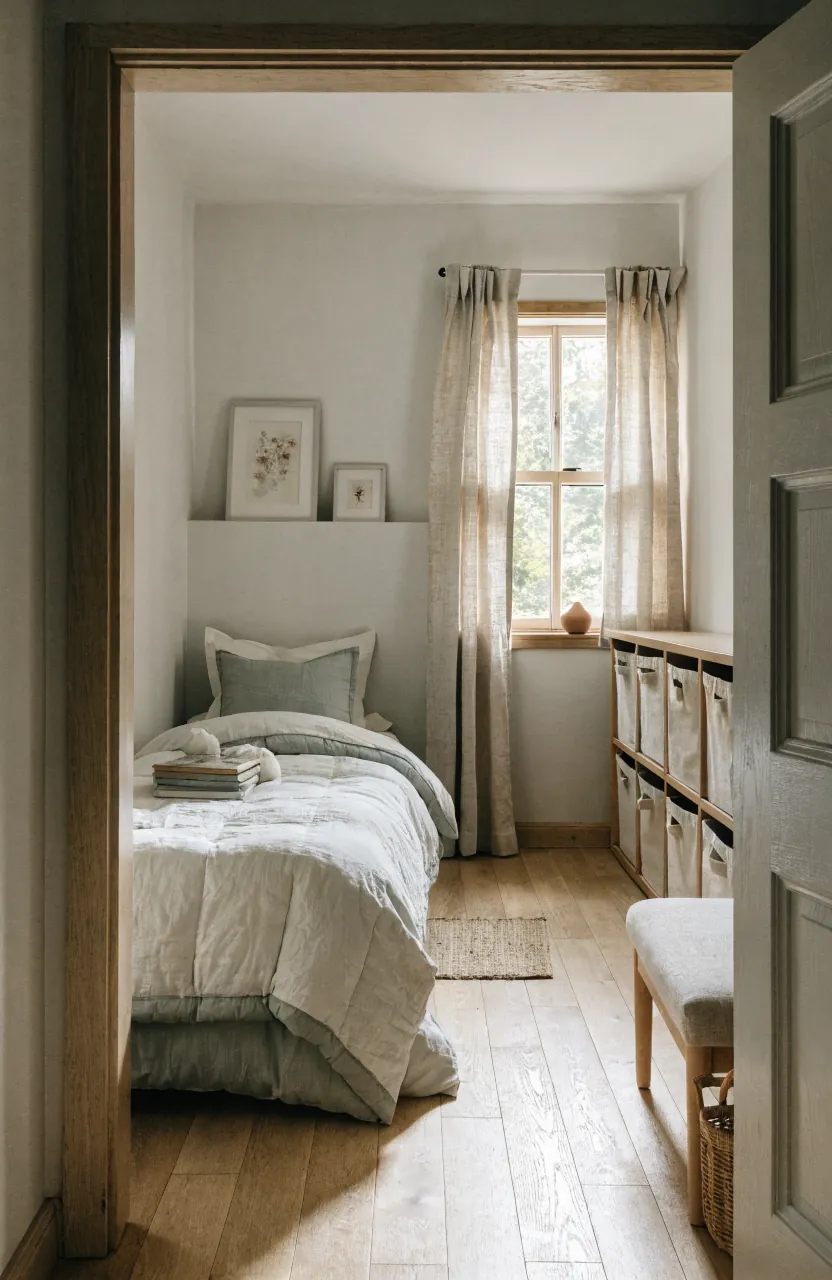
A small kids room usually starts to feel overdecorated for one reason: every problem gets solved with something visible. A themed comforter, a cute wall decal, a row of open bins, a craft table, another shelf, another basket. Each piece may be harmless on its own, but together they make the room feel busy before a child has even played in it.
The better approach is quieter. Treat the bedroom as a daily routine space first and a display space second. Sleep, getting dressed, reading, and toy cleanup all need a clear place to happen. Once those basics are calm, small kids room decor can feel personal without covering every surface.
Start With One Calm Base
The fastest way to make a small bedroom feel less crowded is to stop asking every wall, textile, and storage piece to be the star. Choose one calm base for the room: warm white walls, pale oatmeal, soft green, misty blue, or light natural wood. That base gives the eye somewhere to rest and makes ordinary kid stuff look more intentional.
This does not mean the room has to be beige or empty. It means the largest surfaces should stay quiet enough that toys, books, art, and bedding do not compete with them. In a simple kids room, the background does a lot of the visual work by staying still.
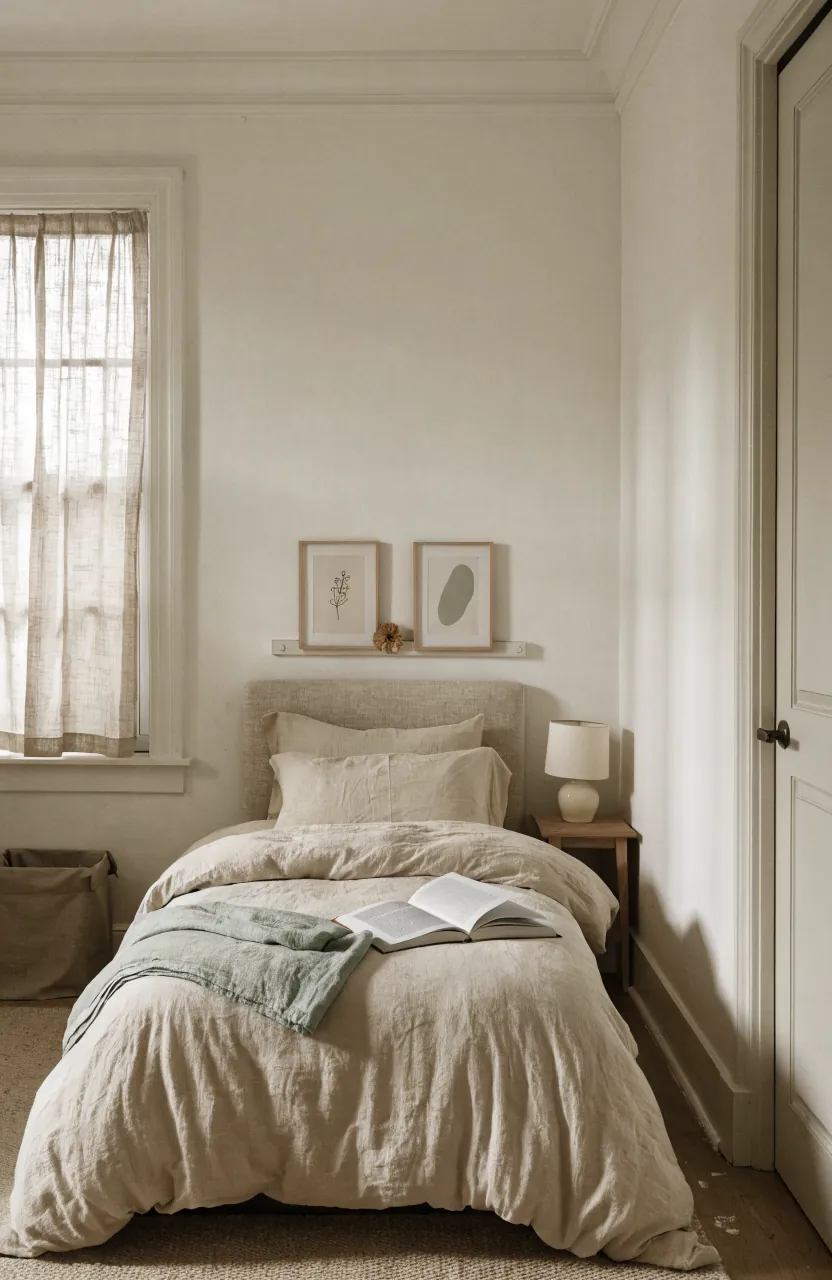
If the room already has a lot of color, edit the biggest repeat first. Swap loud bedding for a smaller pattern. Keep only one accent color in the curtains or rug. Move highly saturated toys into closed storage. The room can still be cheerful, but the cheer should come in controlled moments rather than from every direction.
Keep the Floor Visibly Open
Parents often try to add storage by placing more furniture around the room. In a small bedroom, that can shrink the only space a child has for movement. A better test is simple: when you stand in the doorway, can you see a clean path from the door to the bed, closet, and main play spot?
Open floor is not wasted space. It is what makes the room feel breathable. It also makes cleanup easier because children can see what is on the floor. When every corner is already full, toys have nowhere to land except in a pile.
- Use wall space before floor space for books, dress-up hooks, and small display shelves.
- Choose one low storage unit instead of several scattered baskets.
- Slide seasonal toys or extra bedding under the bed if the clearance is practical.
- Leave one plain rug area as the play zone instead of filling it with furniture.
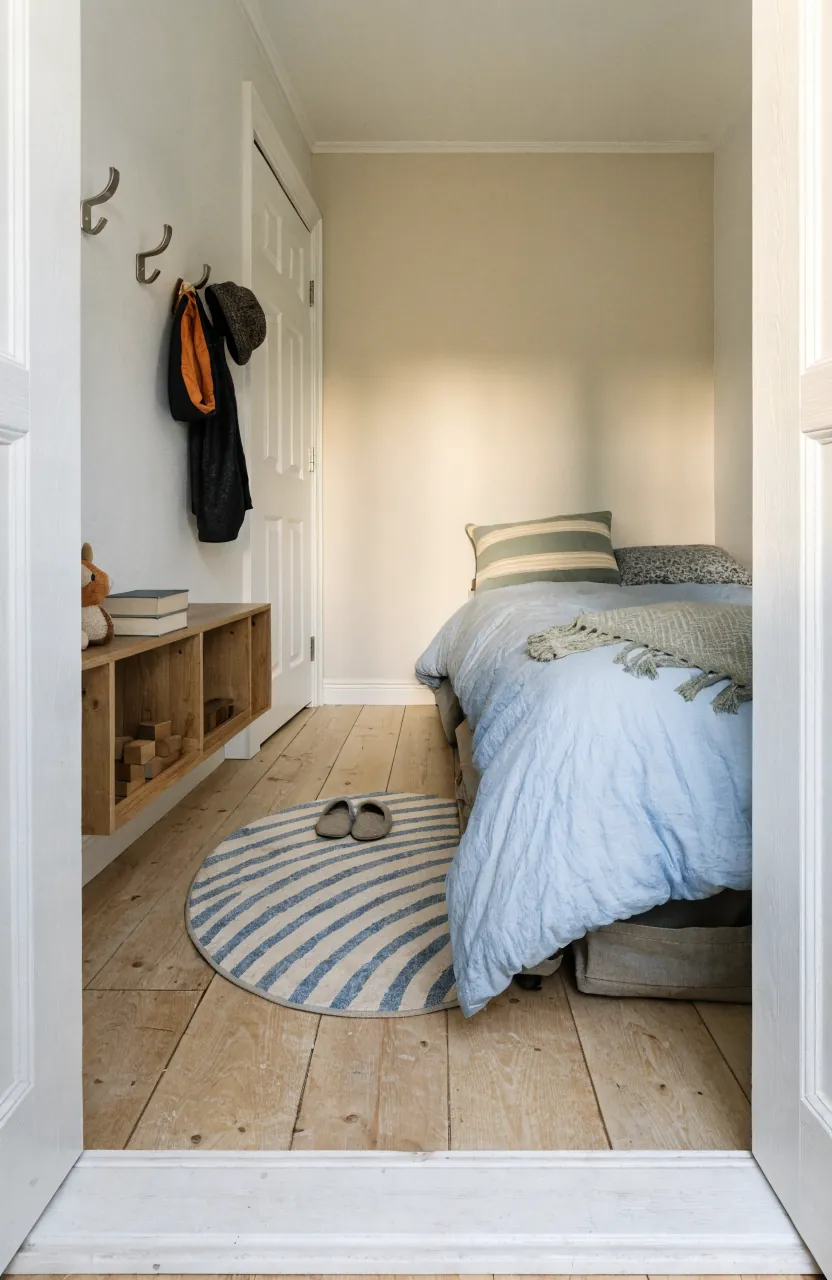
This is where many kids bedroom ideas fail in real life. They photograph well with a child-sized table, a tent, a bookshelf, a dollhouse, and a laundry basket. Then bedtime comes, and there is no place to walk. If the room is small, choose the furniture that supports the routine and let the floor stay useful.
Use Toy Storage That Looks Quiet When Closed
Toy storage has to work for the child, but it also has to disappear visually when play is over. Open shelves can look beautiful with a few wooden toys and forward-facing books. They look very different when they hold loose blocks, small plastic pieces, dress-up accessories, stuffed animals, puzzles, and craft supplies.
For a clutter free kids room, mix accessible storage with visual closure. Use low cubbies with fabric or woven bins for busy categories. Keep two or three open shelves for books and current favorites. Put tiny pieces in lidded boxes inside the bin, not loose on the shelf. Children still know where things go, but the room does not have to show every object all day.
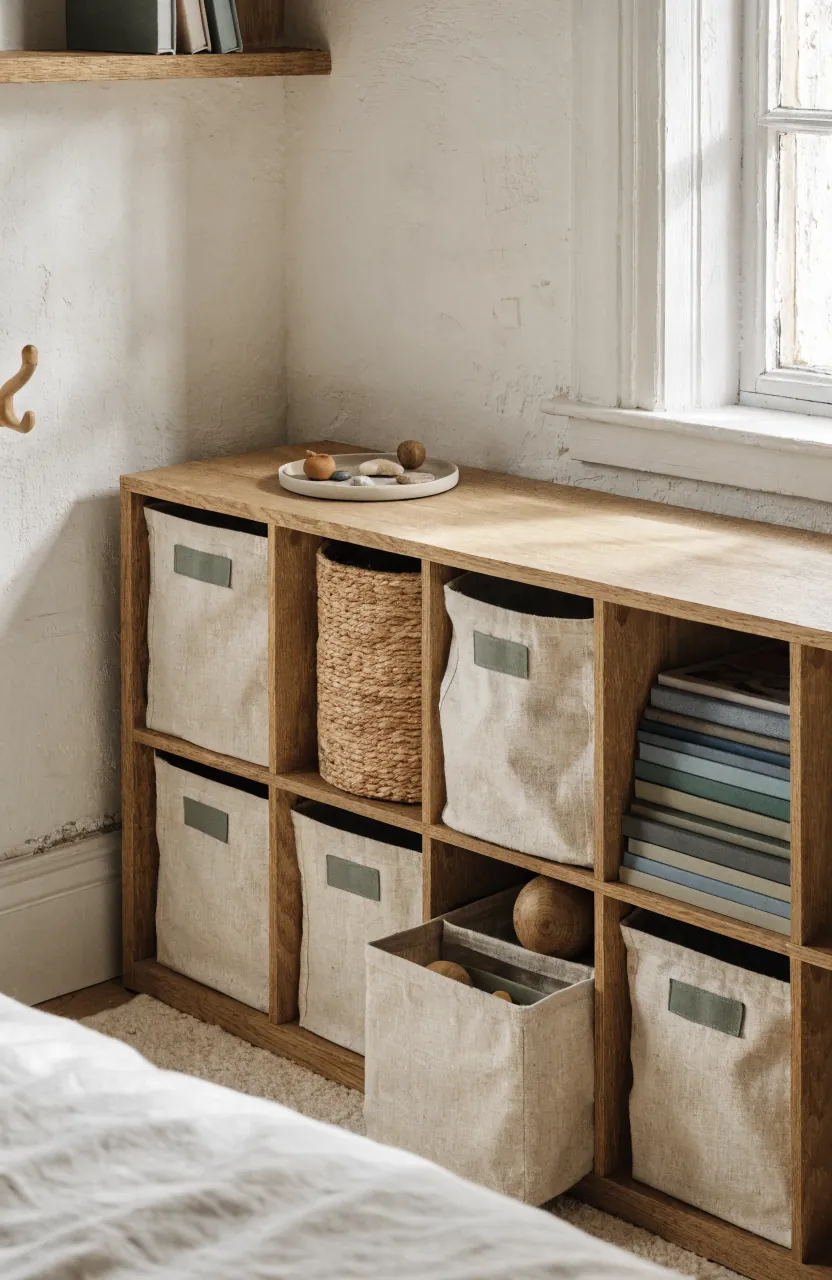
The best system is usually boring in a good way. One bin for building toys. One for pretend food. One for dolls or figures. One for vehicles. One small tray for the things that never seem to have a home. If a category no longer fits its container, that is the signal to rotate, donate, or move extras somewhere else.
Create One Personality Moment
A room starts to feel overdecorated when personality is spread everywhere. Themed bedding, themed curtains, themed wall stickers, themed bins, themed lamp, themed rug. Instead, choose one place where the room gets to be expressive. That one moment can carry the child’s taste without turning the whole bedroom into a stage set.
Try a narrow art rail, a pinboard above a desk, a small book ledge, or a single framed print over the bed. Let your child help choose what goes there. Then keep the rest of the room calmer so the display actually stands out.
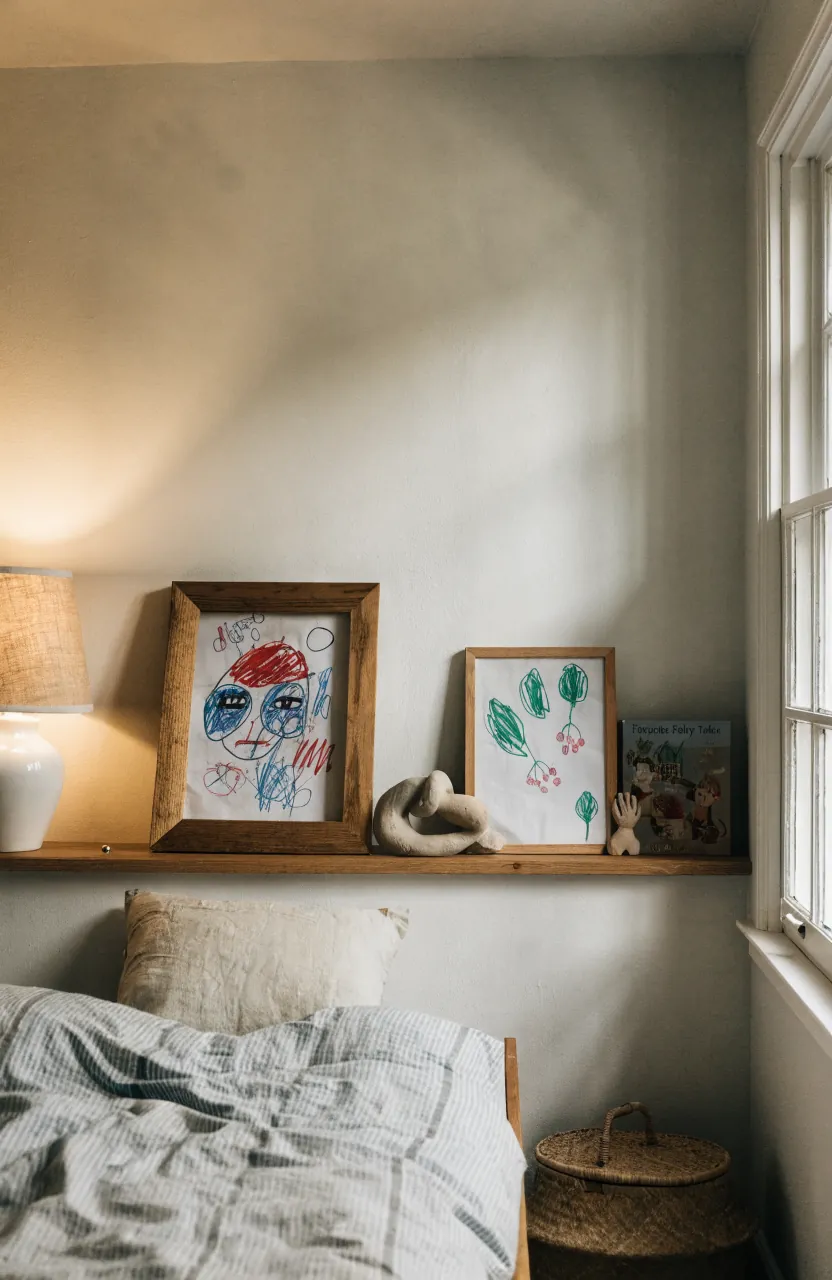
This also makes updates easier. When interests change, you refresh the display instead of replacing the whole room. A dinosaur phase, fairy phase, sports phase, or space phase can live on one shelf or wall strip. The expensive pieces stay neutral, and the small accents do the storytelling.
Let Soft Colors Come From Textiles
Soft colors are especially useful in a small bedroom because they add warmth without shouting. The trick is to bring color through pieces that already need to be there: bedding, curtains, a rug, a pillow, or a lampshade. That keeps the room layered without adding extra decor objects.
A pale green quilt, blue striped sheet, dusty rose pillow, or muted yellow lamp can make the room feel finished. Because these items are functional, they do not add clutter. They also soften the hard edges of storage furniture, bed frames, and closet doors.
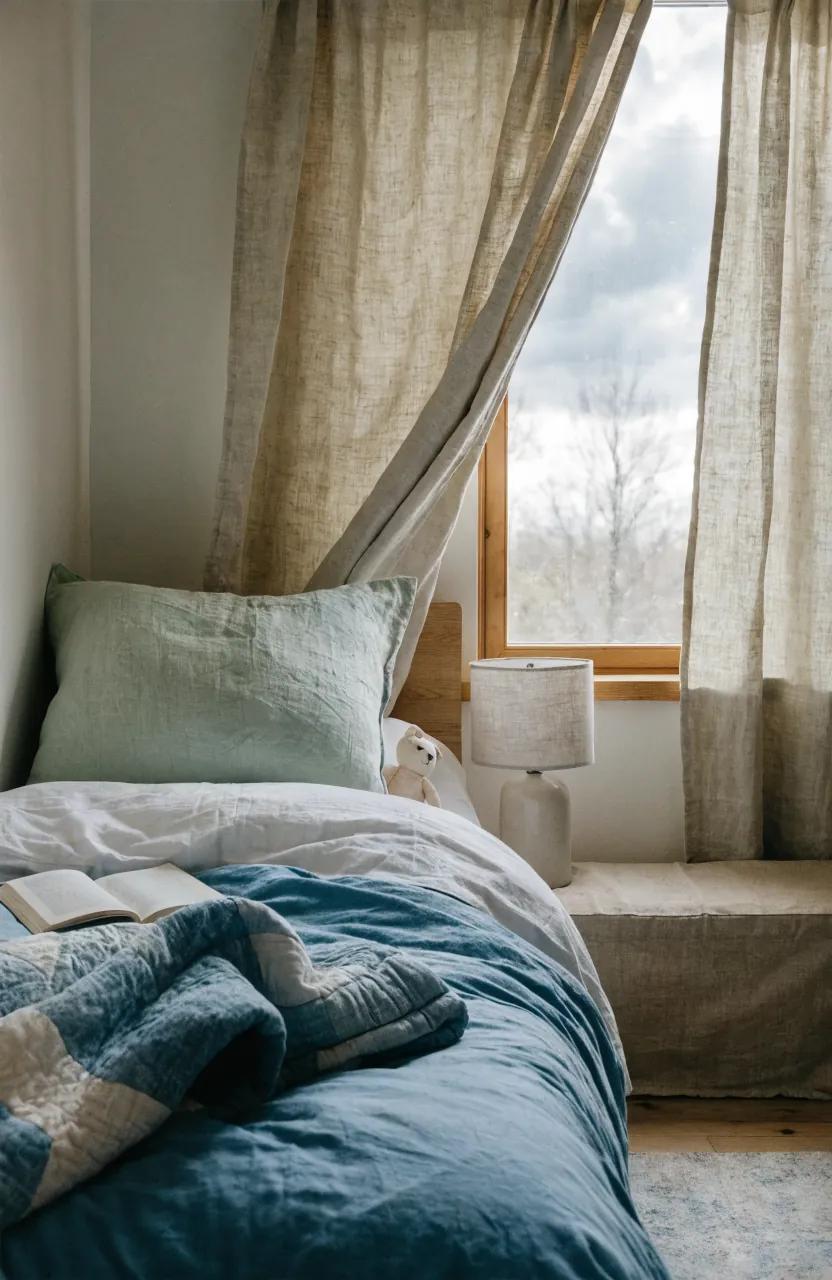
If the room feels flat, add texture before adding more color. Washed cotton, waffle weave, braided jute, painted wood, canvas bins, and a wool-look rug can make small bedroom decor feel richer without making it louder.
Build the Reset Into the Room
A beautiful small kids room will not stay calm unless the reset is obvious. Children need storage they can reach, categories they can understand, and a room layout that tells them where things belong. If cleanup depends on an adult sorting everything perfectly, the system is too fragile.
Make the reset physical. Place a laundry basket where clothes actually land. Put book storage near the bed. Keep toy bins near the play rug. Add one small catchall box for random treasures, hair clips, tiny figures, and paper bits. A room can look styled and still admit that children collect little things.
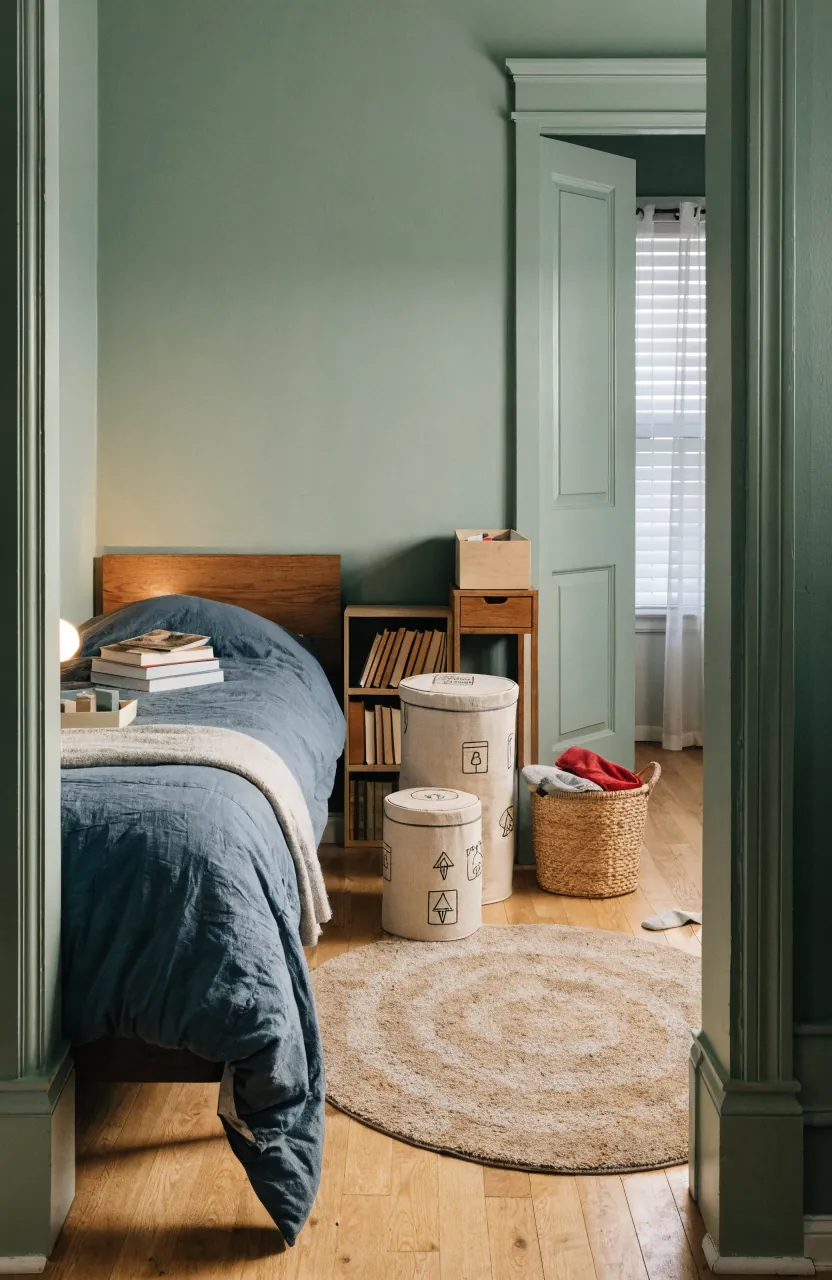
The goal is not a room that looks untouched. The goal is a room that can come back quickly. When the big surfaces are calm, the floor has breathing room, and the storage closes visually, everyday mess stops feeling like design failure. It just becomes part of a room that knows how to recover.
A Simple Formula for a Not Overdecorated Kids Room
- One calm wall color or neutral base.
- One main toy storage zone with mostly closed bins.
- One open floor area for play.
- One display zone for personality.
- Two or three soft colors repeated through textiles.
- A reset system a child can understand.
That formula leaves room for childhood without letting the room become visually exhausting. It gives you the parts parents usually want from kids room styling: warmth, personality, storage, and calm. More importantly, it works after the photo moment is over.