
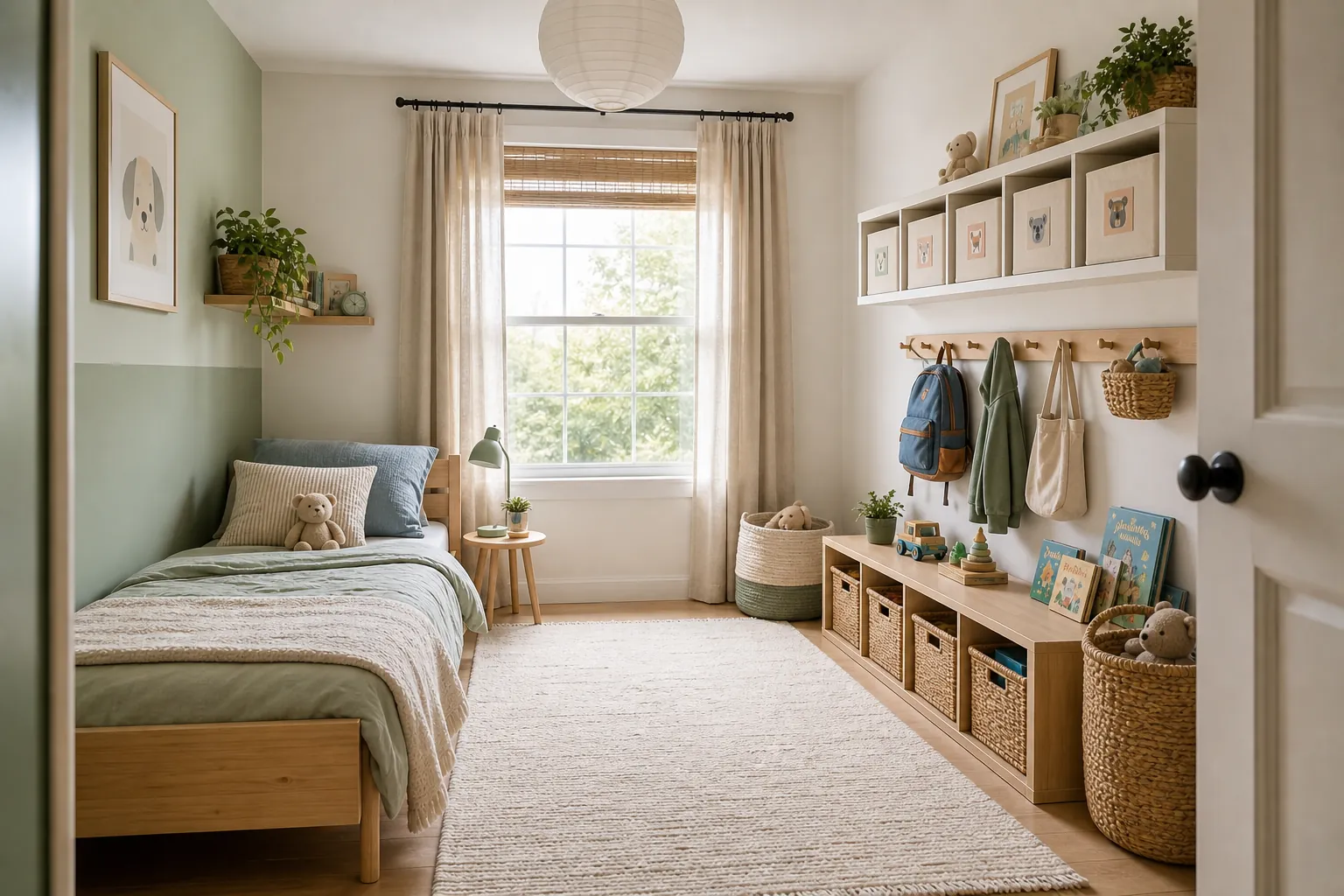
In a small kids room, wall storage only works when it gives something back. If the walls are packed but the floor is still covered with toys, the room has not improved. The best wall storage makes daily items easier to reach, clears the play area, and gives the room a cleaner first impression from the doorway.
That is the balance to aim for: more storage up the wall, but less visual pressure around the room. Wall shelves, hooks, book ledges, peg rails, and slim cabinets can all help, but only when each one has a job. A small kids room does not need every vertical idea at once. It needs the right wall doing the right work.
Pick One Storage Wall Before You Buy Anything
The first mistake is spreading wall storage across every surface. A shelf above the bed, hooks by the door, bins beside the closet, a rail near the desk, and art on every blank wall can make the room feel busy from all directions. Start by choosing one main storage wall.
The best wall is usually the one that already holds furniture. If a bed, dresser, low toy shelf, or bench sits against a wall, use that wall more deliberately. Add storage above it or around it instead of adding another floor piece somewhere else. This keeps the center of the room open for a real play area.
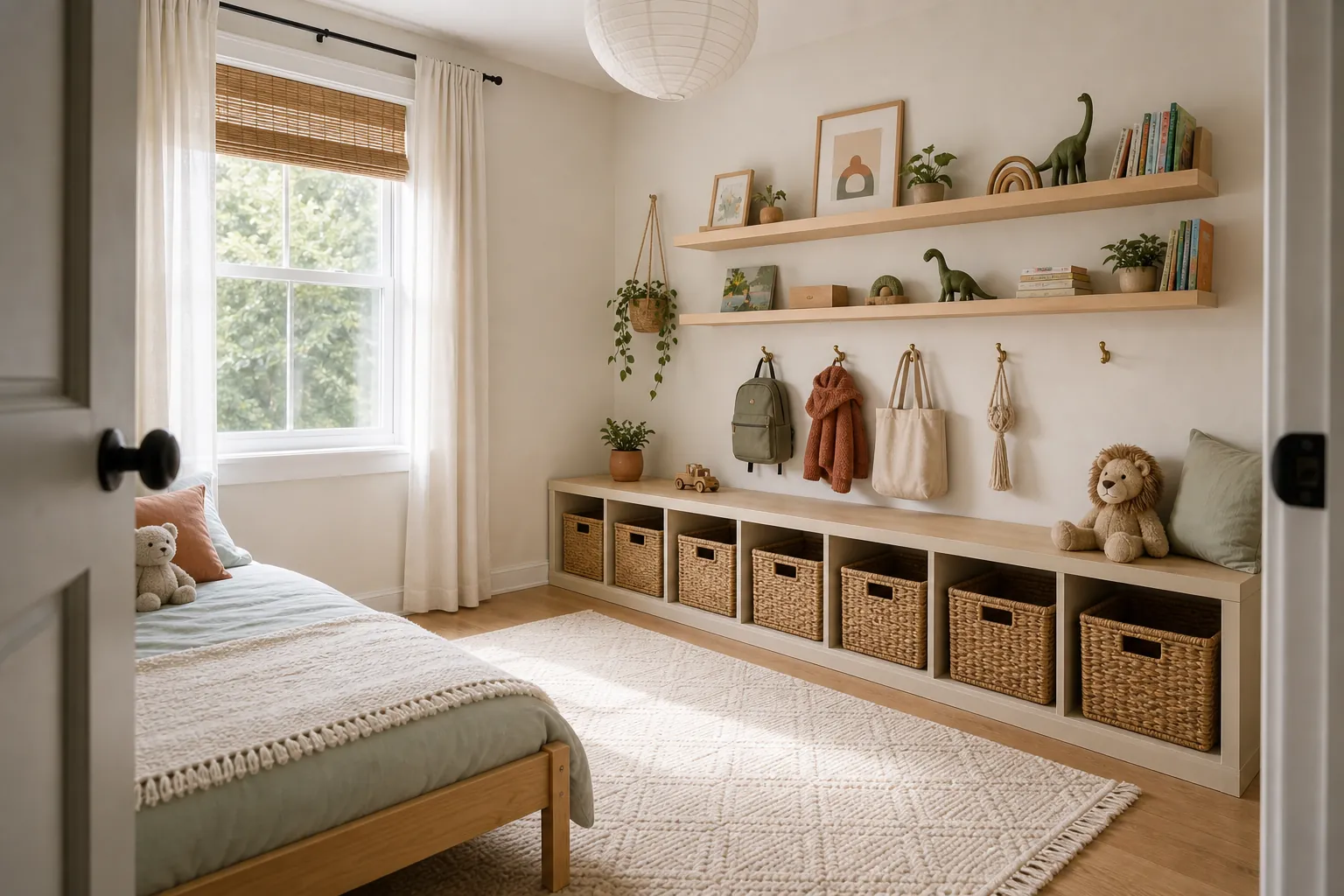
Look at the room from the doorway. The main storage wall should feel organized, not heavy. Use a mix of closed bins, a few open shelves, and one display moment. If everything is open, the wall can look crowded. If everything is closed, the room may feel plain and less child-friendly. The middle ground is usually strongest.
Build Around The Bed Without Crowding The Sleep Zone
The bed wall is often underused in small kids room design. A low bed takes up a large footprint, but the wall above and beside it can handle bedtime storage without adding another nightstand. Think slim wall shelves, a small ledge for books, a plug-in sconce, or a narrow wall pocket for pajamas and quiet toys.
Keep the sleep zone calm. Avoid putting busy toy shelves directly above the pillow. Instead, use the bed wall for soft, simple storage: two bedtime books, a lamp, a water bottle shelf, or a small row of favorite plush animals. The more exciting toys should live away from the bed so the room still supports sleep.
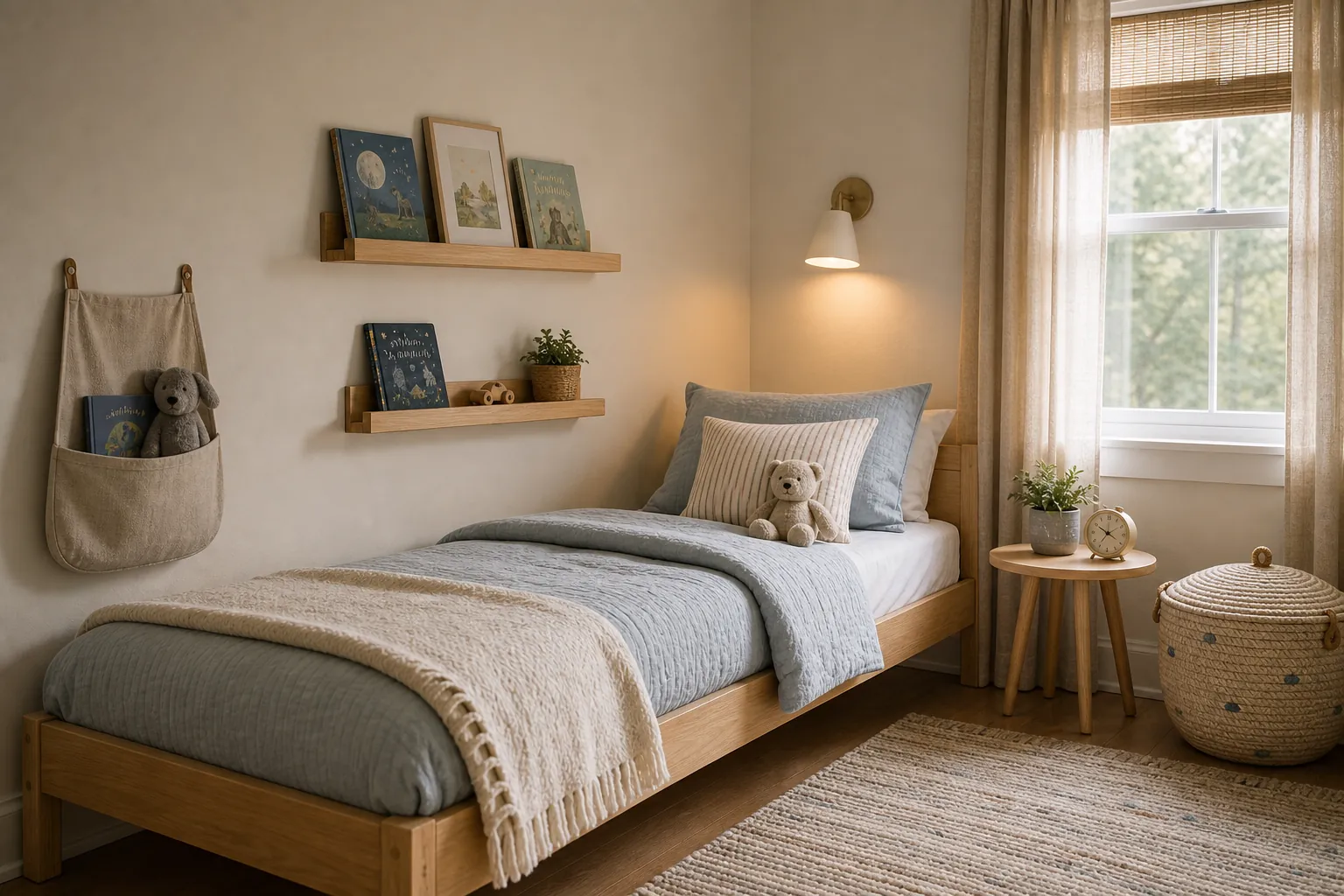
Safety matters here. Anything above or near a bed should be securely anchored and light enough for the location. Heavy shelves, glass frames, or deep storage boxes above a sleeping child are not worth the risk. Keep heavier items low and use upper wall space for light decor or narrow book ledges.
Use Book Ledges To Save Floor Space
Books can take over a small room because they need to be visible enough for kids to choose them, but organized enough that the floor stays clear. Front-facing book ledges are useful because they use shallow wall depth. They also make cleanup simple: books go back on the ledge, not into a deep shelf where they disappear.
Install ledges low enough for everyday books and use higher ledges for display books or seasonal favorites. If the room has a dresser or low cabinet, a row of ledges above it can replace a freestanding bookcase. That single change can free up a surprising amount of floor space.
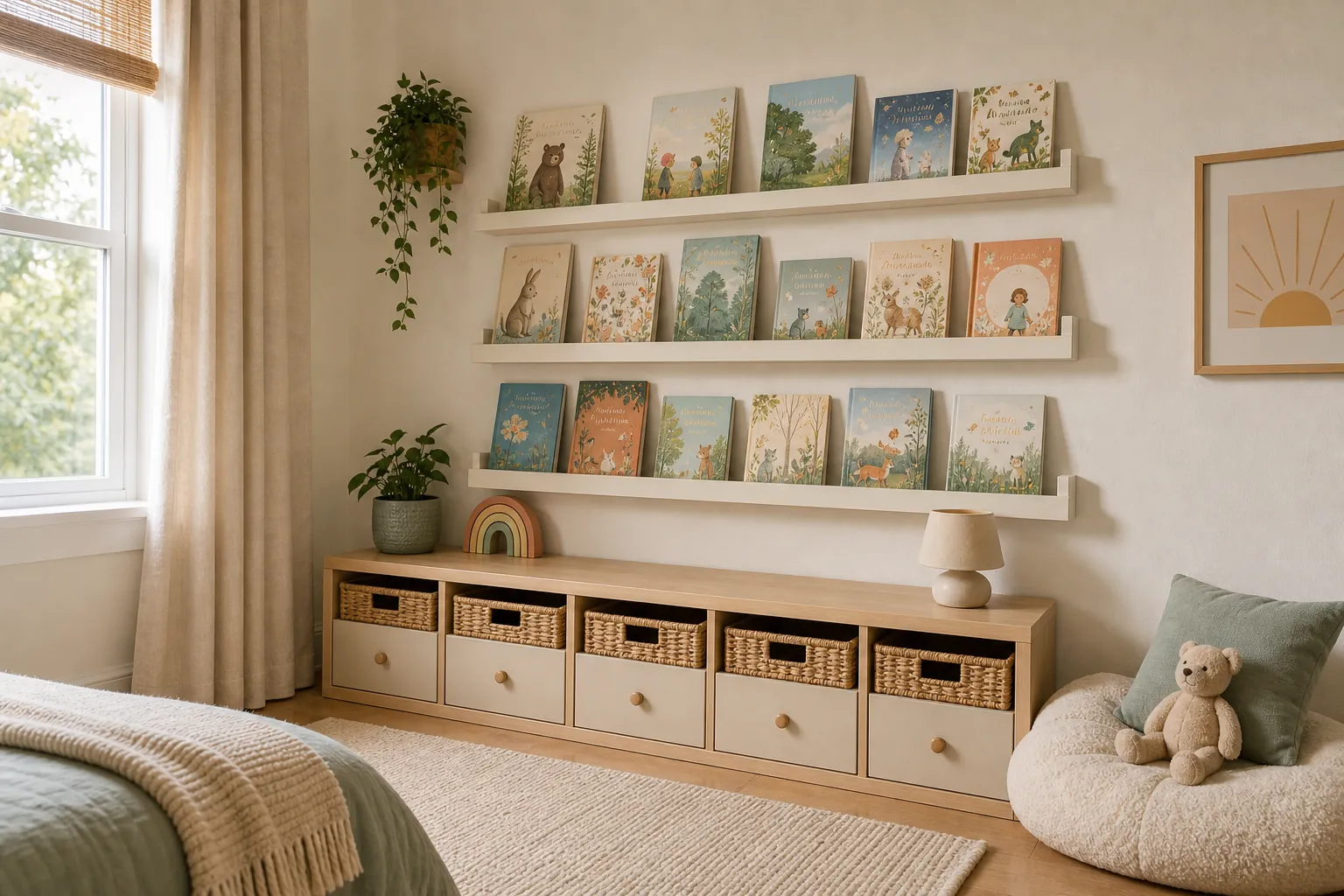
Do not overload the ledges. A few covers facing out look intentional. Too many books stacked sideways on a shallow ledge start to look like clutter. Keep overflow books in a closed bin, drawer, or closet basket and rotate them when the child wants something new.
Put Hooks Where The Mess Actually Lands
Hooks are some of the easiest wall storage for kids, but they only work if they are placed where items naturally land. A hook rail behind the door may look tidy, but if the child drops the backpack beside the bed every day, the hook is too far from the habit. Put storage close to the real drop zone.
Use hooks for backpacks, robes, dress-up clothes, hats, tomorrow’s outfit, or a small tote of library books. Keep them at child height so cleanup does not require help. In a tiny bedroom, a hook rail can replace a coat stand, costume rack, or extra chair that would otherwise steal floor space.
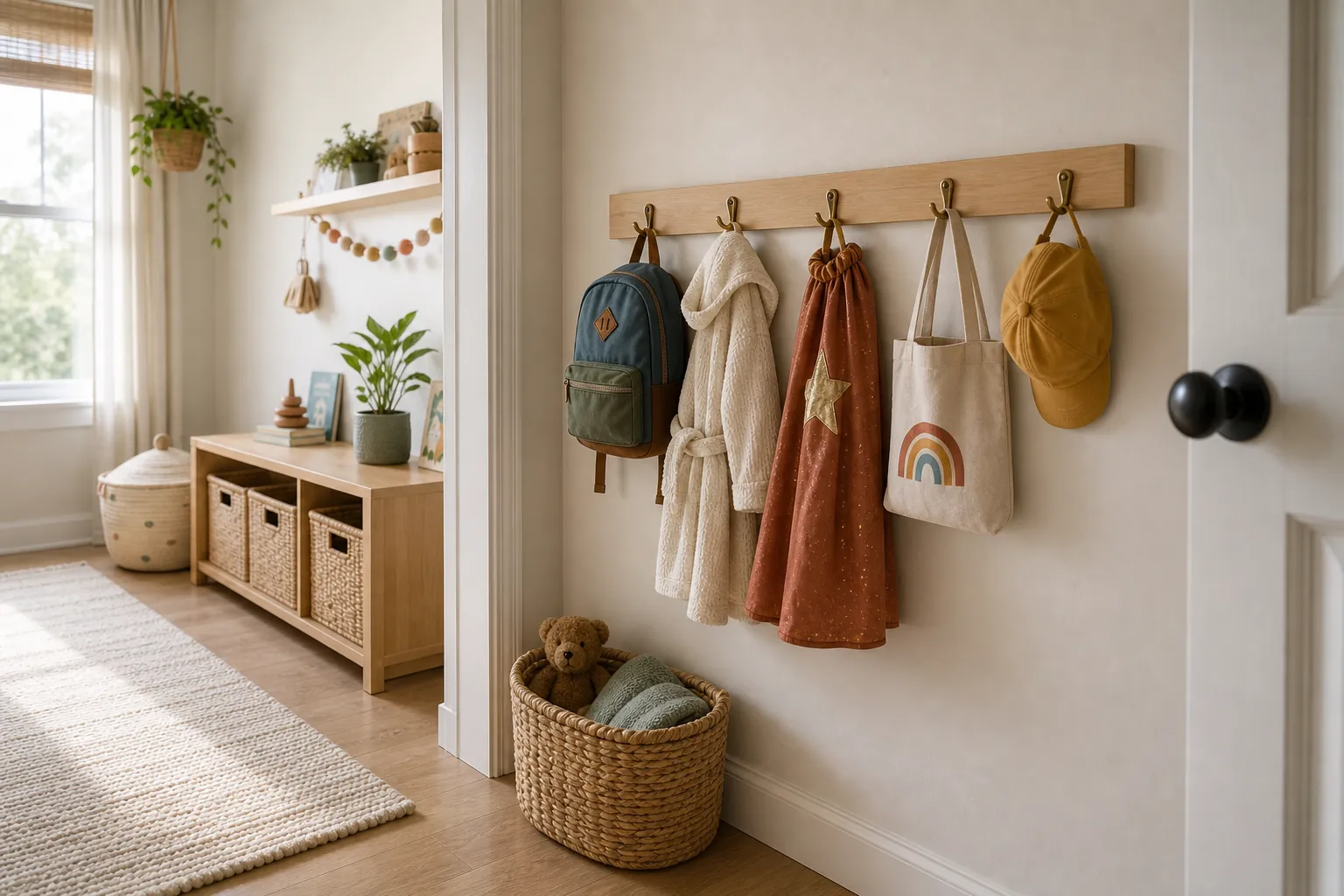
Limit the number of hooks. A wall covered with hanging items can feel messy even when everything is technically off the floor. If the hook rail always looks crowded, move seasonal items elsewhere and keep only daily pieces in the room.
Let The Floor Play Area Stay Empty On Purpose
Many small kids bedroom ideas show storage as the goal, but the real goal is floor space. Children need room to build, pretend, read, change clothes, and spread out for short bursts of play. A small open area is more useful than a larger room where every surface is blocked.
Use wall storage to frame the play area rather than fill it. A shallow shelf above the play rug can hold baskets. A wall-mounted rail can hold art supplies. A narrow picture ledge can display a few toys without taking floor space. The floor below should remain clear enough for the child to sit down and start playing.

If the play area keeps shrinking, remove floor storage before adding wall storage. A bulky toy chest, play table, or extra chair may be the real problem. Wall storage should protect the open floor, not become an excuse to keep too much stuff in the room.
Use The Closet Door And Side Walls For Narrow Storage
Small room organization often improves when you use overlooked vertical spots. The back of the door, the inside of the closet door, the side of a wardrobe, or the narrow wall beside a dresser can hold lightweight storage without changing the furniture layout.
Try a slim over-door organizer for shoes, small toys, hair accessories, art supplies, or socks. Use clear pockets only if the contents stay neat. If they look busy, choose fabric pockets or lidded bins instead. The goal is not just storage capacity. It is visual calm.
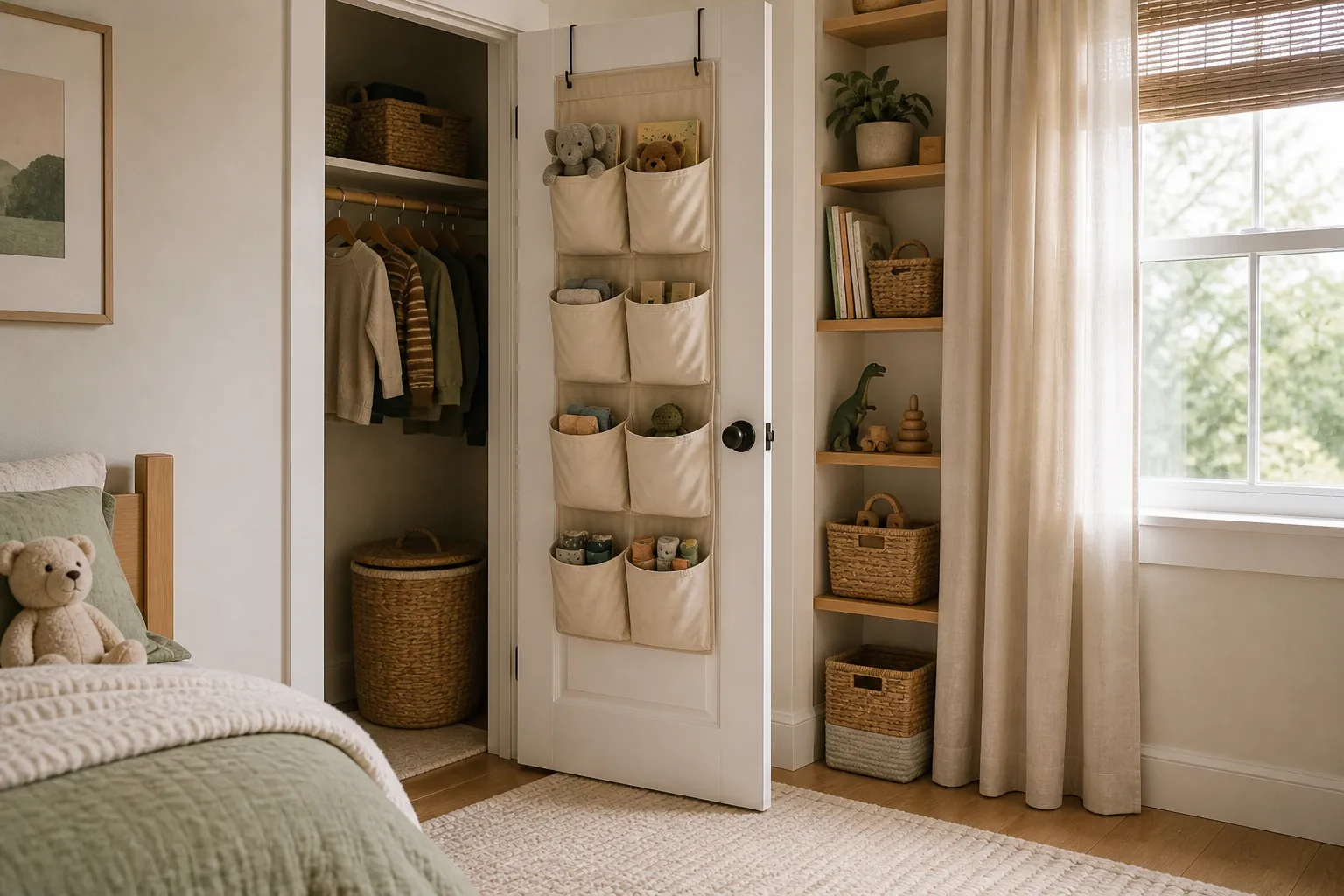
Side walls can work well for shallow shelves, peg rails, or narrow cubbies, especially if they sit beside existing furniture. Keep depth in mind. In a small room, a shelf that sticks out too far becomes something to bump into. Shallow storage is usually better than deep storage when the goal is clear floor space.
Keep Toy Storage Low And Wall Storage Light
Wall storage should not make a small kids room feel top-heavy. Heavy toy storage belongs low, where kids can reach it and where the room feels grounded. Use lower cubbies, bins, drawers, or cabinets for blocks, vehicles, dolls, stuffed animals, and building sets.
Higher wall shelves are better for light things: books on ledges, small decor, rotating toys, framed art, or baskets adults manage. This balance keeps the room safer and easier to use. It also prevents the walls from feeling like they are closing in.
A Simple Wall Storage Plan For A Small Kids Room
If the room feels crowded, use this order. First, decide where the open floor play area should be. Second, move as much furniture as possible to the perimeter. Third, choose one main storage wall. Fourth, give daily toys low homes and give light items wall homes. Fifth, remove anything that still sits in the open floor path.
The right wall storage is not about filling blank space. It is about protecting the space a child actually uses. When shelves, hooks, ledges, and bins are placed with that goal, a small kids room can hold more of what matters while still feeling open enough to play.