
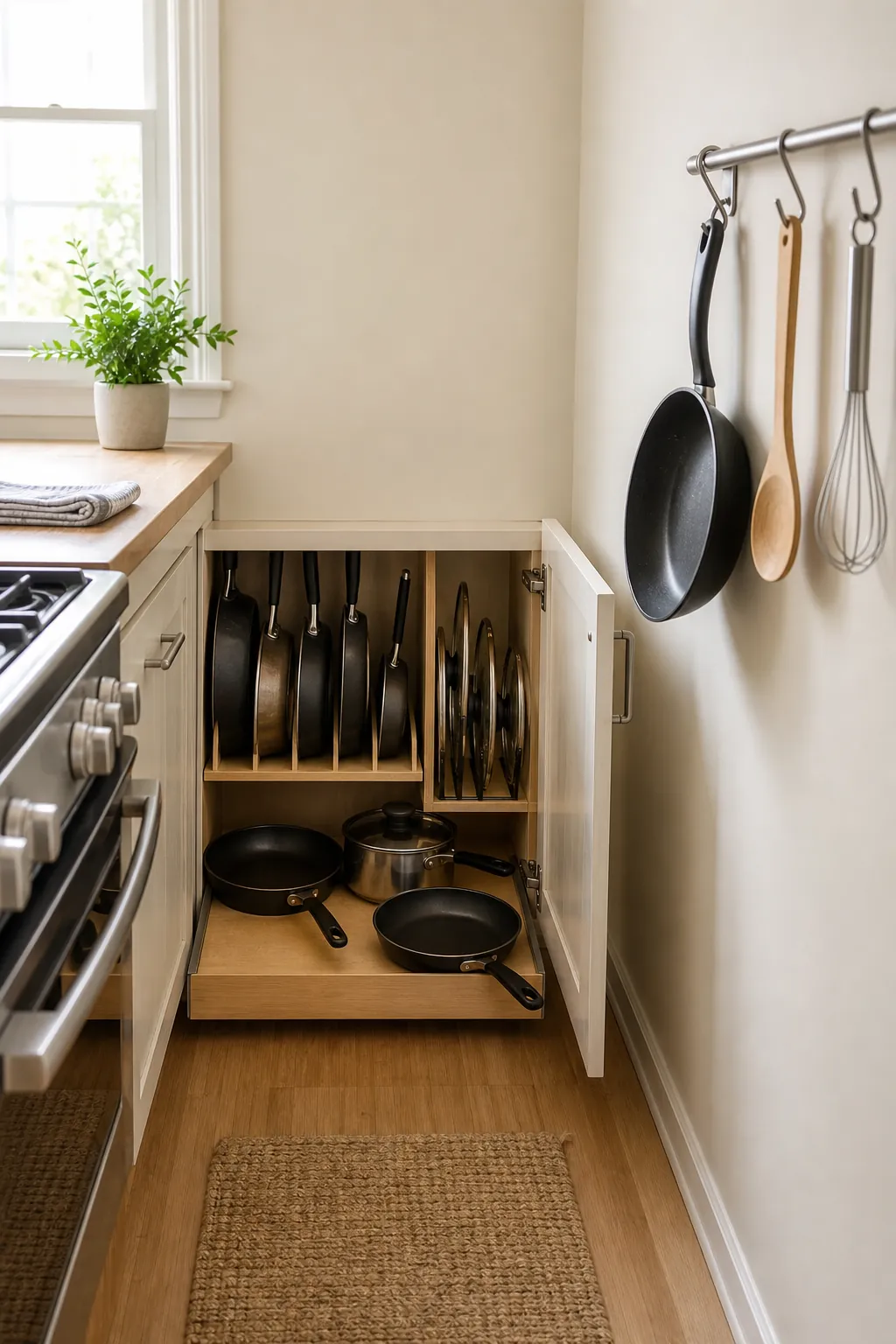
Most small kitchens do not fail because the pots are ugly or the pans are the wrong brand. They fail because every dinner starts with a small fight: one lid slides out, a skillet handle blocks the cabinet door, and the pan you use most is buried under the pot you use twice a year.
The better way to organize pots and pans in a small kitchen is to stop treating cookware like one big category. Your daily pans, heavy pots, lids, specialty pieces, and overflow items each need a different home. Once those jobs are separated, even a compact kitchen can feel easier to cook in.
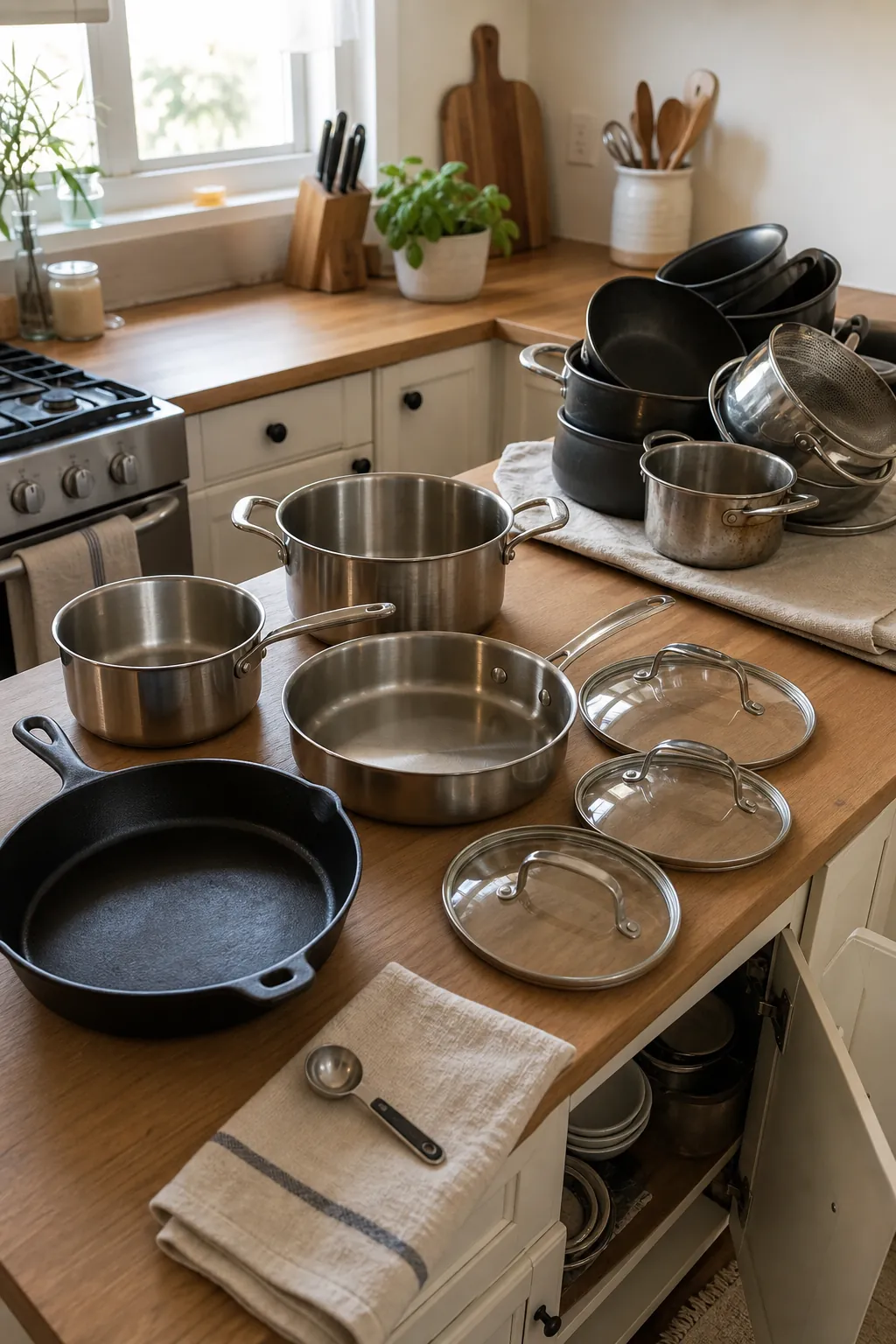
Start With the Cookware You Actually Use
Before buying a pot rack, cabinet organizer, or extra hook, pull every pot, pan, and lid out where you can see it. Put the cookware you use in a normal week on the stovetop or counter. Put baking pans, roasting pieces, big stockpots, and special-occasion cookware to the side.
This is the fastest small kitchen organization test because it shows what deserves prime space. Most people need only a few pieces within easy reach: a skillet, a saucepan, a saute pan or wok, and the pot used for pasta, soup, or rice. If a piece is heavy, awkward, or rarely used, it should not live in the front of your smallest cabinet.
- Daily cookware: front cabinet, drawer, wall rail, or rack near the stove.
- Weekly cookware: lower cabinet shelf, pull-out basket, or secondary pantry shelf.
- Rare cookware: top shelf, dining storage, utility closet, or another overflow zone.
- Duplicates: donate, store elsewhere, or keep only if they solve a real cooking problem.
The goal is not minimalism for its own sake. The goal is to remove the pieces that make normal cooking harder.
Build a Cooktop Zone, Not a Random Cabinet
The best pots and pans storage is usually close to the cooktop, but it does not have to be perfect. In a compact kitchen, “close” can mean the lower cabinet beside the stove, a narrow rolling cart, the inside of a pantry, or a wall rail within one step of the range.
Set the cabinet up by frequency, not by shape. Keep the most-used pan in the easiest position to grab. Put long handles toward the opening when possible. Slide lesser-used pots to the back. Heavy items belong low so you are not lifting cast iron or a Dutch oven down from shoulder height.
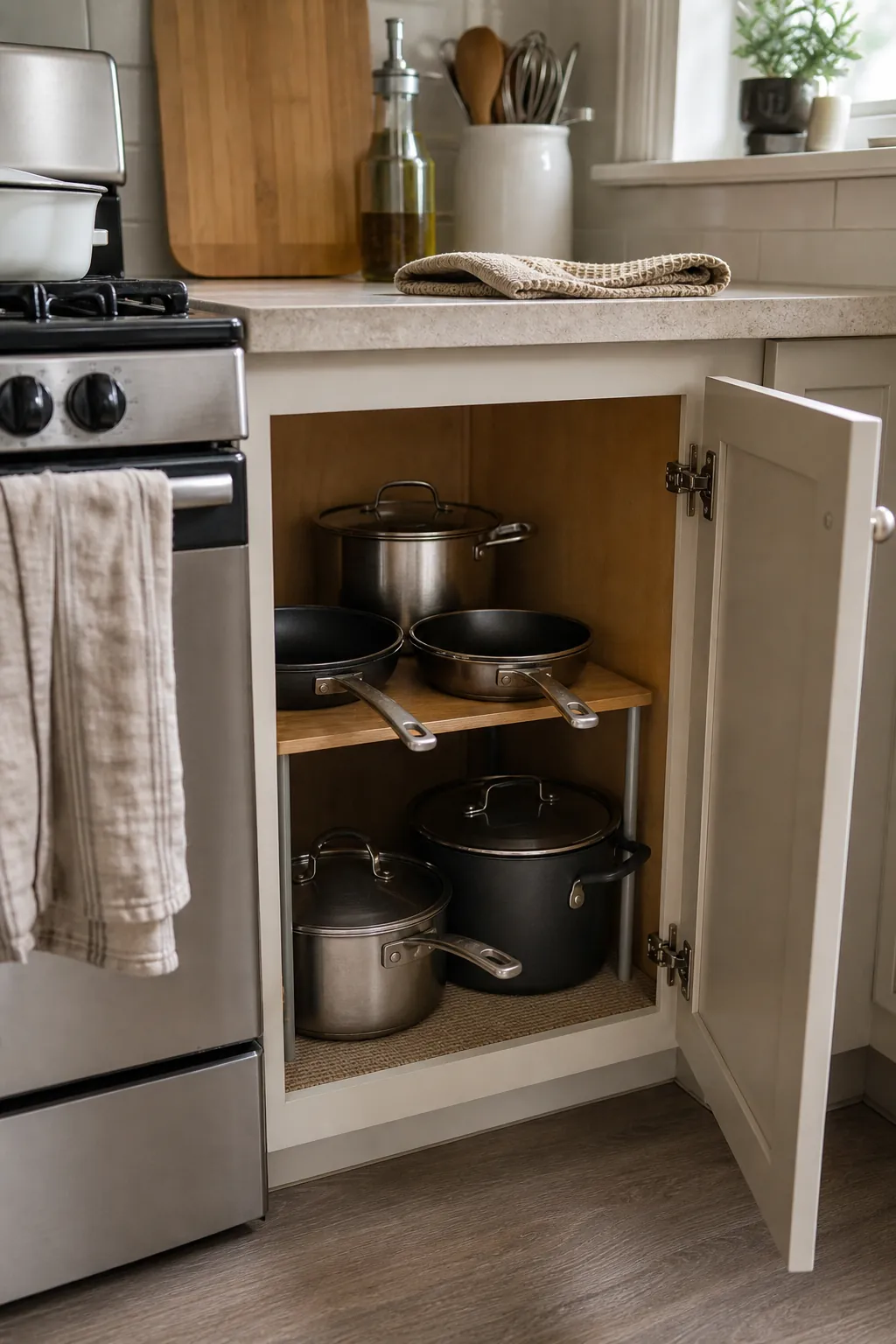
A small kitchen cabinet works better when it has a front zone and a back zone. The front zone is for dinner tonight. The back zone is for cookware you are willing to move once in a while. This one decision removes most of the daily digging.
Store Pans Vertically When Stacking Turns Into a Mess
Flat stacking looks efficient until you need the skillet at the bottom. Vertical pan storage is often better for pan storage because each piece has its own slot. You can use an adjustable pan rack, a bakeware divider, a sturdy file-style rack, or a pull-out organizer made for cookware.
This works especially well for frying pans, saute pans, lids, cutting boards, baking sheets, and shallow griddles. It also helps protect nonstick surfaces because the pans are not grinding against each other every time you cook.
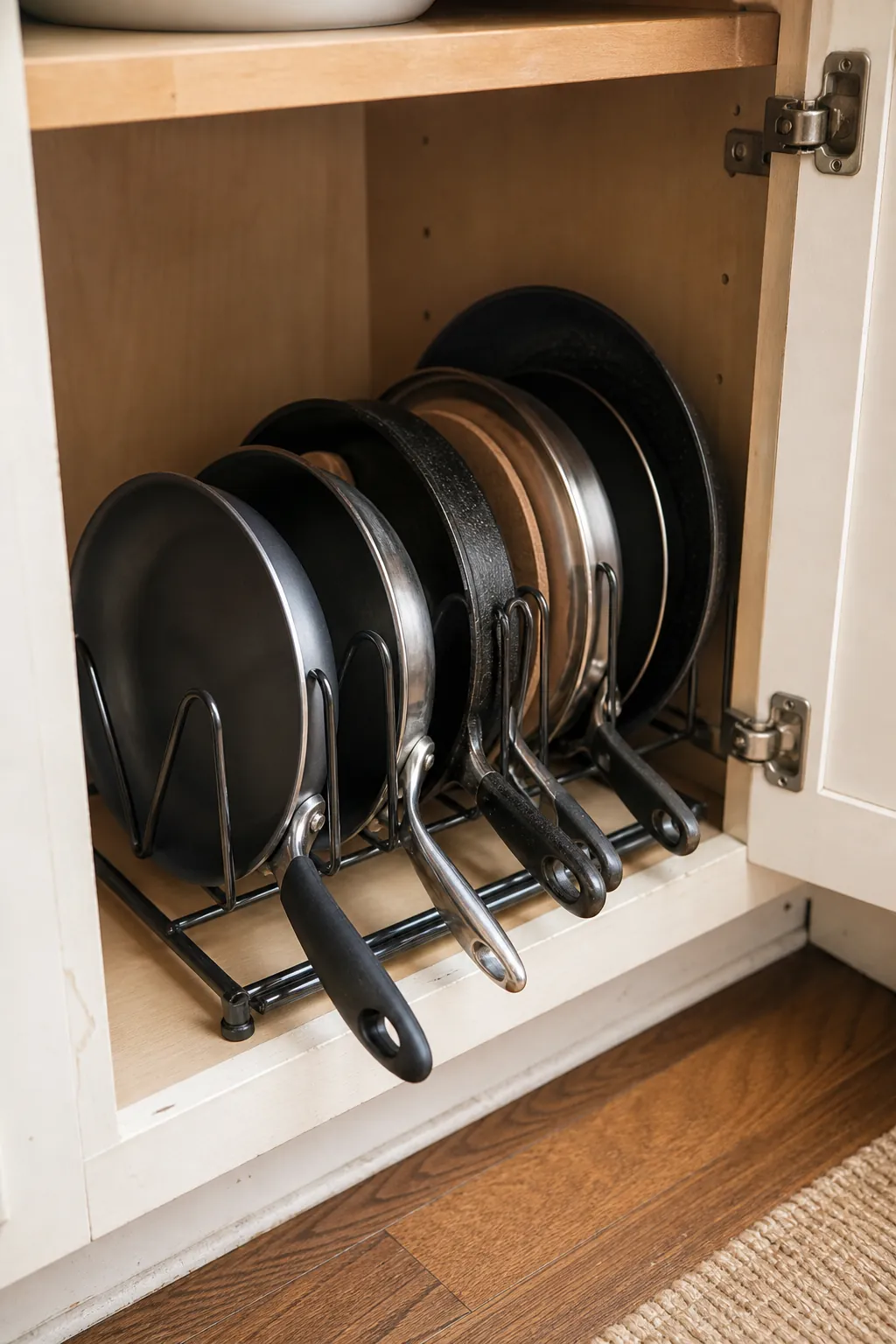
- Use the widest slots for heavy pans with bulky handles.
- Keep the pan you grab most often at the front of the rack.
- Add felt, cork, or a thin towel between stacked pieces if vertical storage does not fit.
- Avoid flimsy dividers for heavy cookware; wobble ruins the system quickly.
If your cabinet is very narrow, do not force every pan into one rack. Put two daily pans in the cooktop zone and move backup pans elsewhere. A smaller working set beats a perfect-looking cabinet that collapses after three meals.
Give Lids Their Own Home
Lids are usually the real reason a cabinet feels chaotic. They roll, clank, hide behind stockpots, and make a neat stack unstable. The simplest fix is to stop storing every lid on top of its matching pot.
In a small kitchen, a lid zone can be a narrow vertical rack, a shallow bin, a drawer divider, a cabinet-door holder, or even a magazine-style holder in the pantry. If you rent and cannot drill into cabinet doors, use a freestanding rack or a shallow box inside the cabinet instead.

Match the lid storage to your habits. If you always use the same saucepan and lid together, keeping that one lid nearby makes sense. But for the rest, separating lids from pots often gives you a calmer cabinet and faster access.
Use a Pot Rack Only Where It Solves a Real Problem
A pot rack can be the best small kitchen idea in one home and a visual headache in another. It works when you have a sturdy wall, ceiling joist, side of a cabinet, pantry wall, or blank backsplash area that can safely carry the weight. It fails when heavy cookware is hung from weak hardware or placed where it blocks movement.
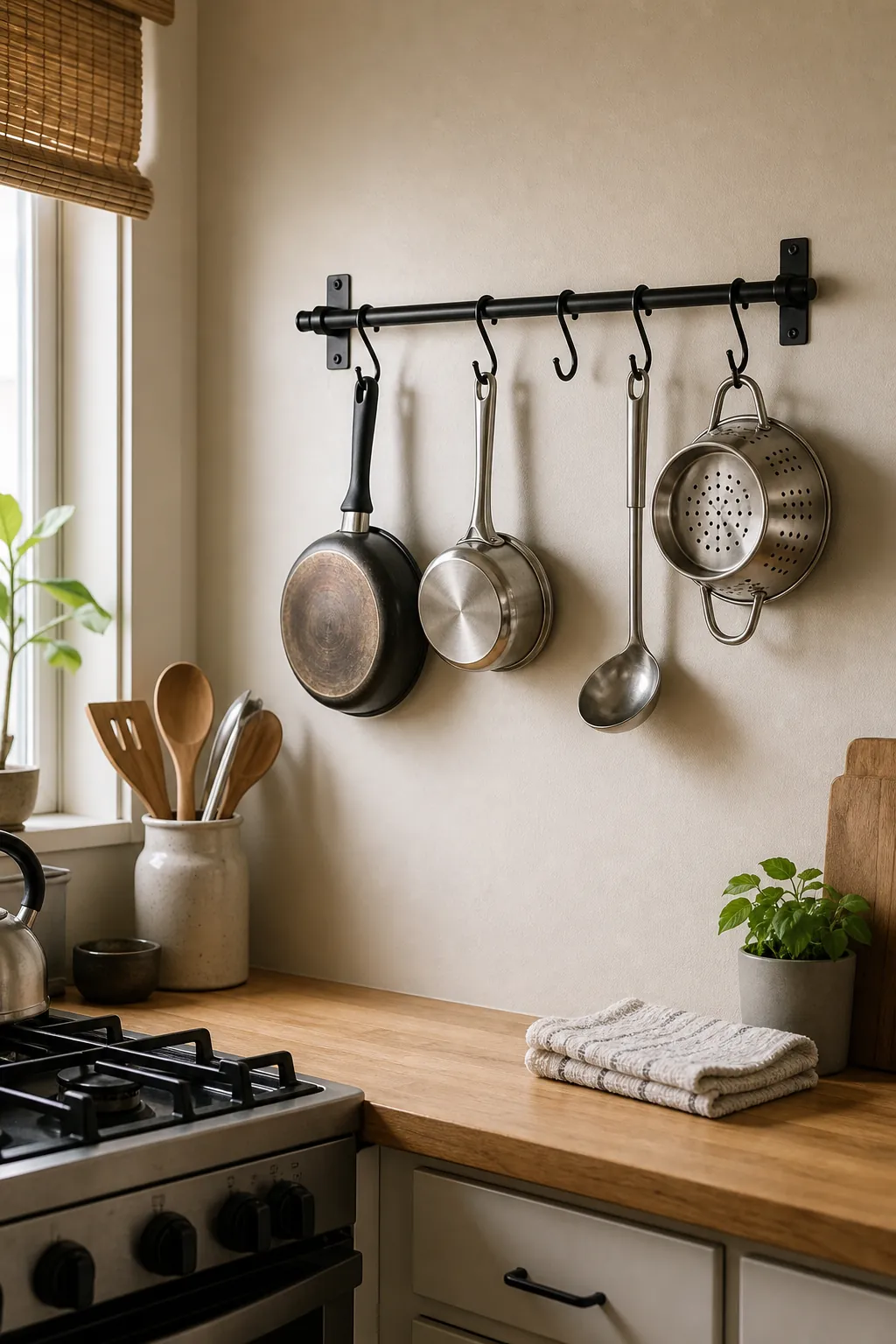
For renters or cautious organizers, start lighter. A rail with kitchen hooks can hold utensils, a small lightweight pan, a colander, measuring cups, or a splatter screen. A pantry wall can hold pieces you do not want displayed in the main kitchen. If you own your home and want a ceiling rack, install it into proper framing and keep the heaviest cookware low if lifting overhead feels risky.
Open storage should earn its visibility. Hang the pieces that look good, get used often, and do not drip, wobble, or make the room feel busier.
Make Awkward Cabinets Pull Forward
Deep lower cabinets, corner cabinets, and half-shelves are common in older compact kitchens. They look generous, but the back of the cabinet becomes a dead zone. If you have to unload five items to reach one pan, the storage is not really working.
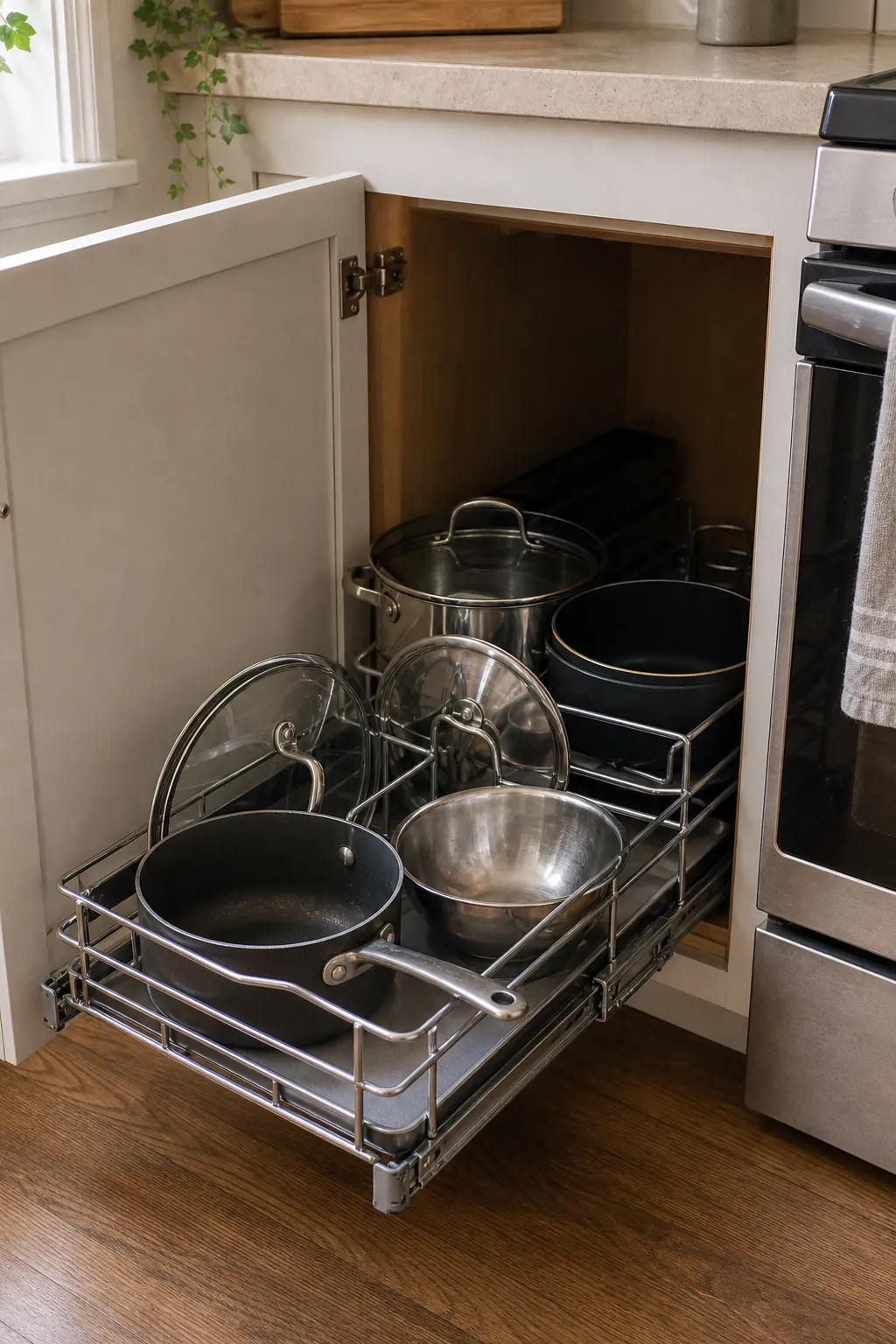
A pull-out basket, sliding shelf, lazy Susan style corner fitting, or sturdy low bin changes the movement. Instead of reaching into a dark cabinet, you bring the cookware toward you. This is especially useful for heavy pots, mixing bowls, lids, and appliances that share the same storage zone.
If a built-in organizer is not in the budget, use a large open bin without a lid. Slide it out like a drawer, choose the pan, and push it back. The point is not the product. The point is making the back of the cabinet reachable.
Choose Renter-Friendly Storage That Can Survive Daily Use
Rental kitchens add two problems: you may not be allowed to drill, and the cabinets may not fit standard organizers. That does not mean you are stuck with a messy cabinet. It means you should favor removable, freestanding, and low-risk solutions.
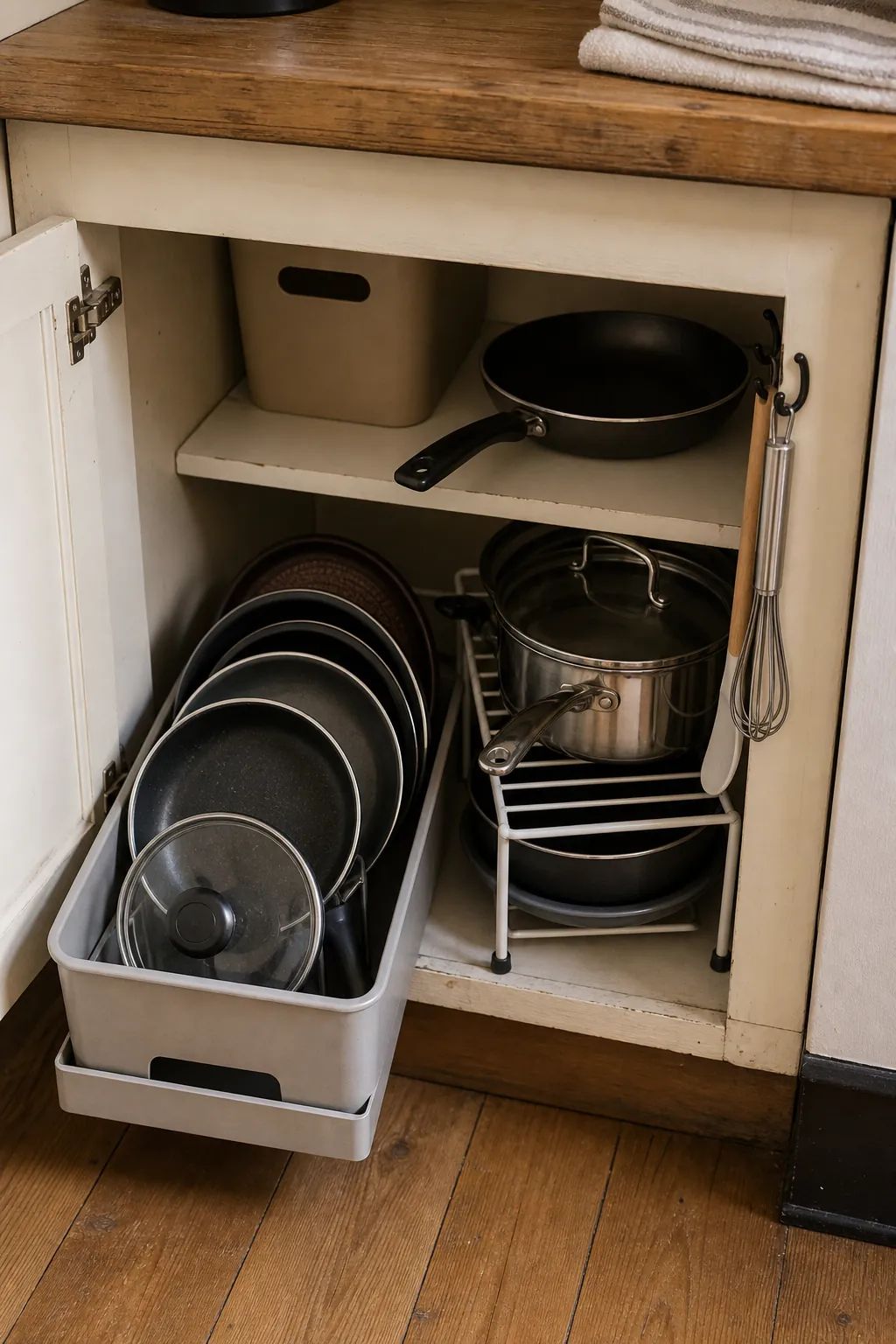
- Use freestanding pan racks inside cabinets instead of drilled dividers.
- Use a shallow bin for lids if door-mounted storage will not fit.
- Use a rolling cart when cabinet storage is already claimed by food or appliances.
- Use kitchen hooks for lightweight tools, not heavy pans, unless the mounting is rated for the load.
- Use shelf risers only when they do not force heavy items too high.
Small kitchen organization should make cooking calmer, not create a delicate setup everyone is afraid to touch. Choose storage that still works when you are tired, cooking quickly, or sharing the kitchen with someone else.
Keep the System From Turning Back Into Clutter
The real test is not how the cabinet looks on the day you organize it. The test is whether you can put everything away after dinner in under a minute. If the answer is no, the system is too tight, too fussy, or holding too many pieces.

Give each zone a simple limit. One rack can hold only the pans that fit without scraping. One lid bin can hold only the lids that stand upright. One cabinet front zone can hold only the cookware used most often. When a new pan comes in, decide what leaves the prime zone.
A small kitchen does not need every possible organizer. It needs a clear cooking path: edit the cookware, keep daily pieces near the stove, store pans vertically when possible, separate the lids, and move rare pieces out of the way. That is the system that makes a compact kitchen feel larger without adding a single cabinet.