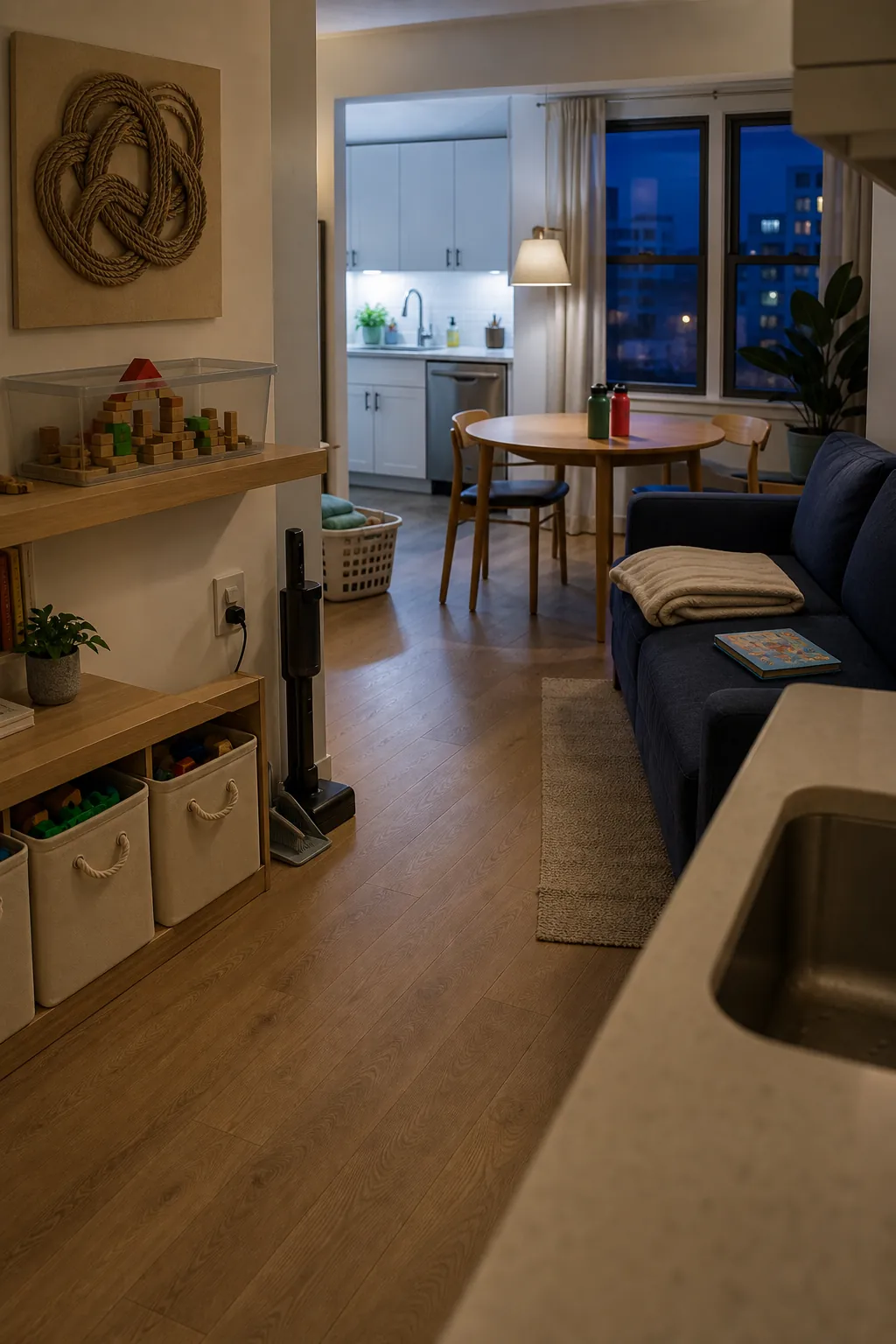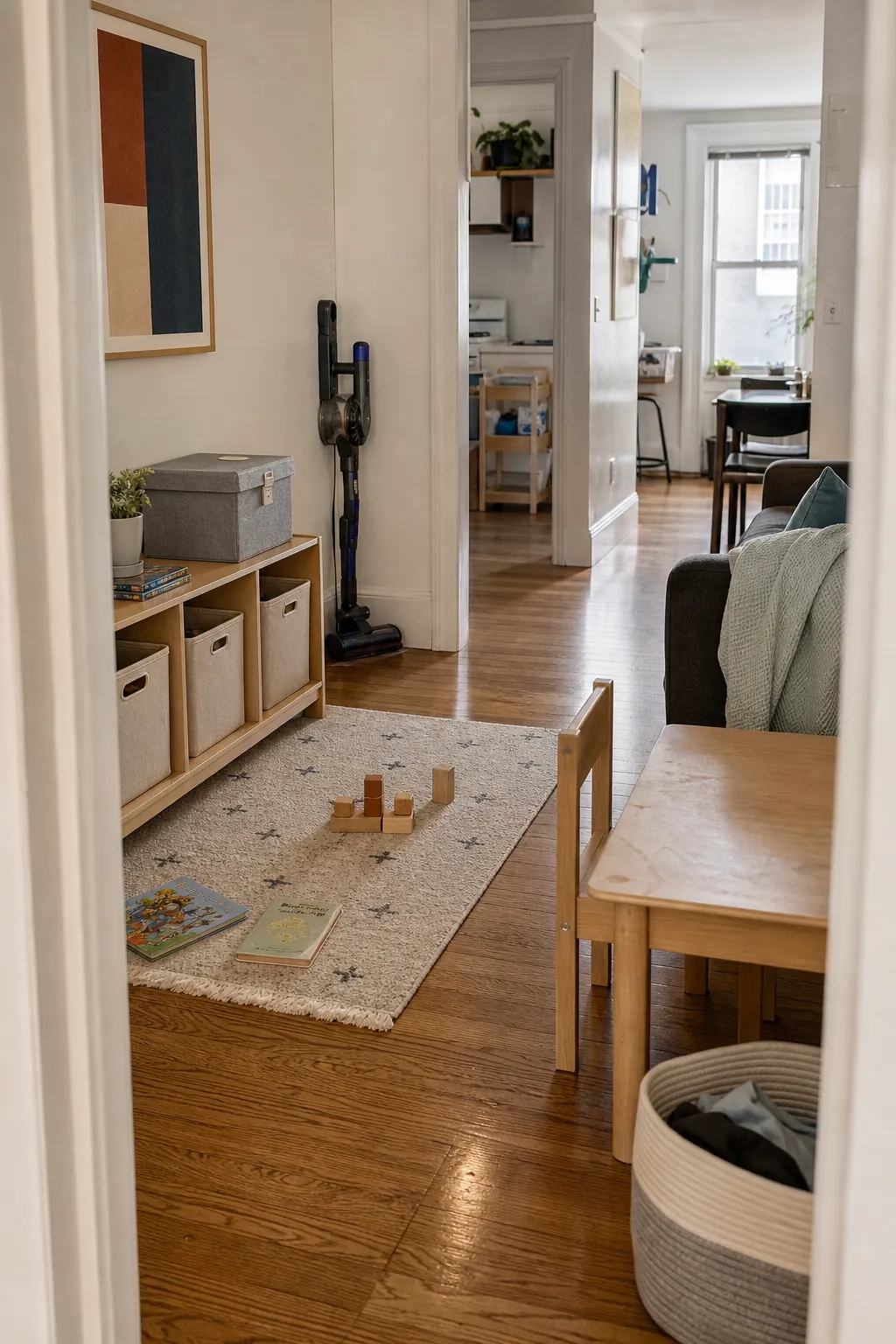
A small home with children can look undone ten minutes after you clean it. That does not mean your family needs a stricter schedule. It usually means too many things are active at once, storage asks for more sorting than a tired child can manage, or the cleaning tools live too far from the mess.
The goal is not a home that stays photo-ready all day. It is a home that can return to functional quickly. These small space cleaning ideas reduce the number of decisions between play and cleanup, keep floors available, and give children useful jobs without turning every evening into a negotiation.
Reduce What Is Active Before Adding Toy Storage
When every toy is available, several activities spread through the room at once and children can become overwhelmed by the cleanup. Keep a small, varied collection in the active play zone: building pieces, pretend play, vehicles, art materials, and a few books. Store the rest out of sight and rotate only when interest fades.
Rotation should make life easier for adults too. Use broad groups, not an elaborate weekly calendar. A lidded bin for “later toys” is enough. If managing the rotation creates another chore, reduce the total further. Fewer available pieces mean faster play setup, deeper play, and a floor that can be cleared in minutes.
Use Broad Categories Children Can Reset Themselves
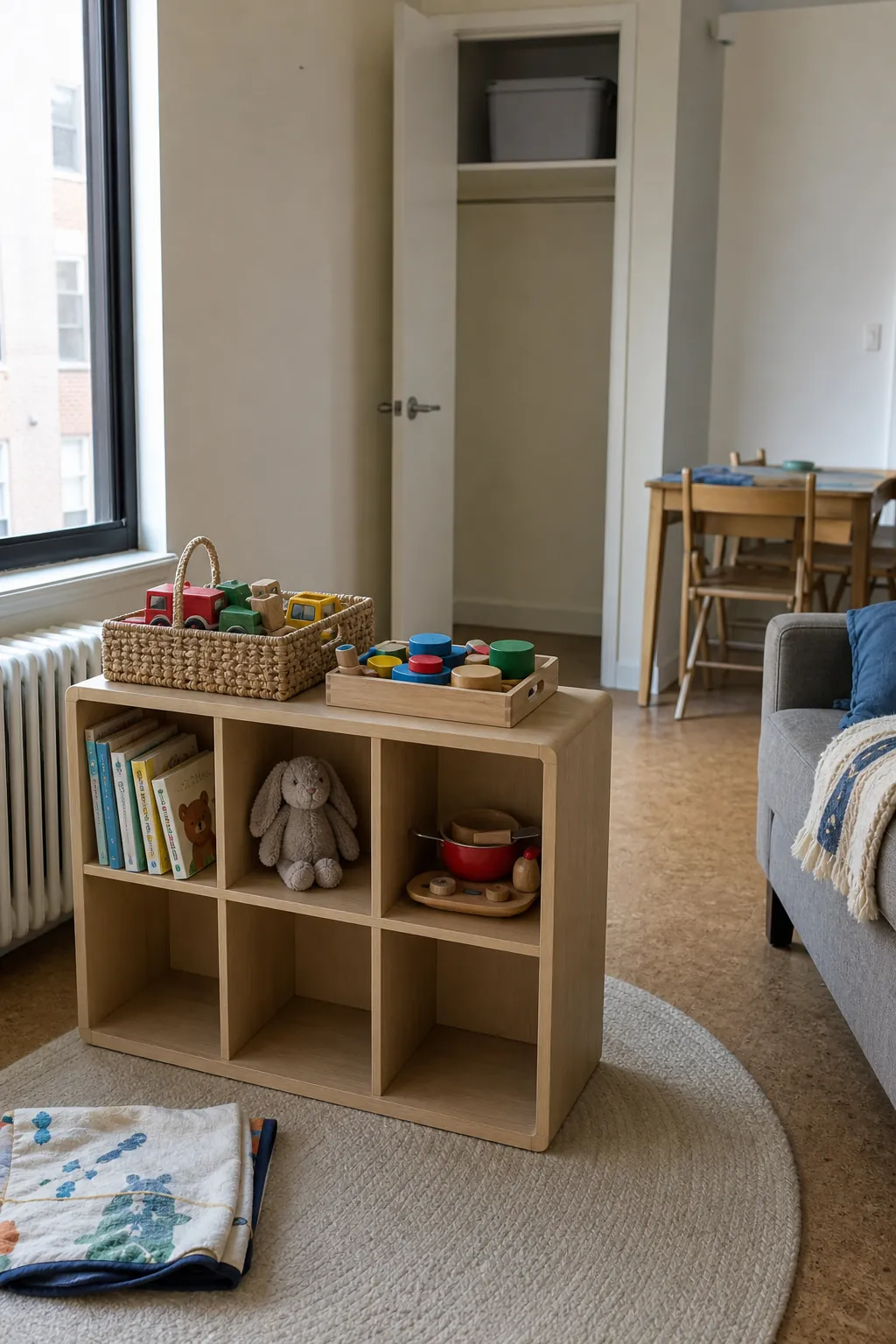
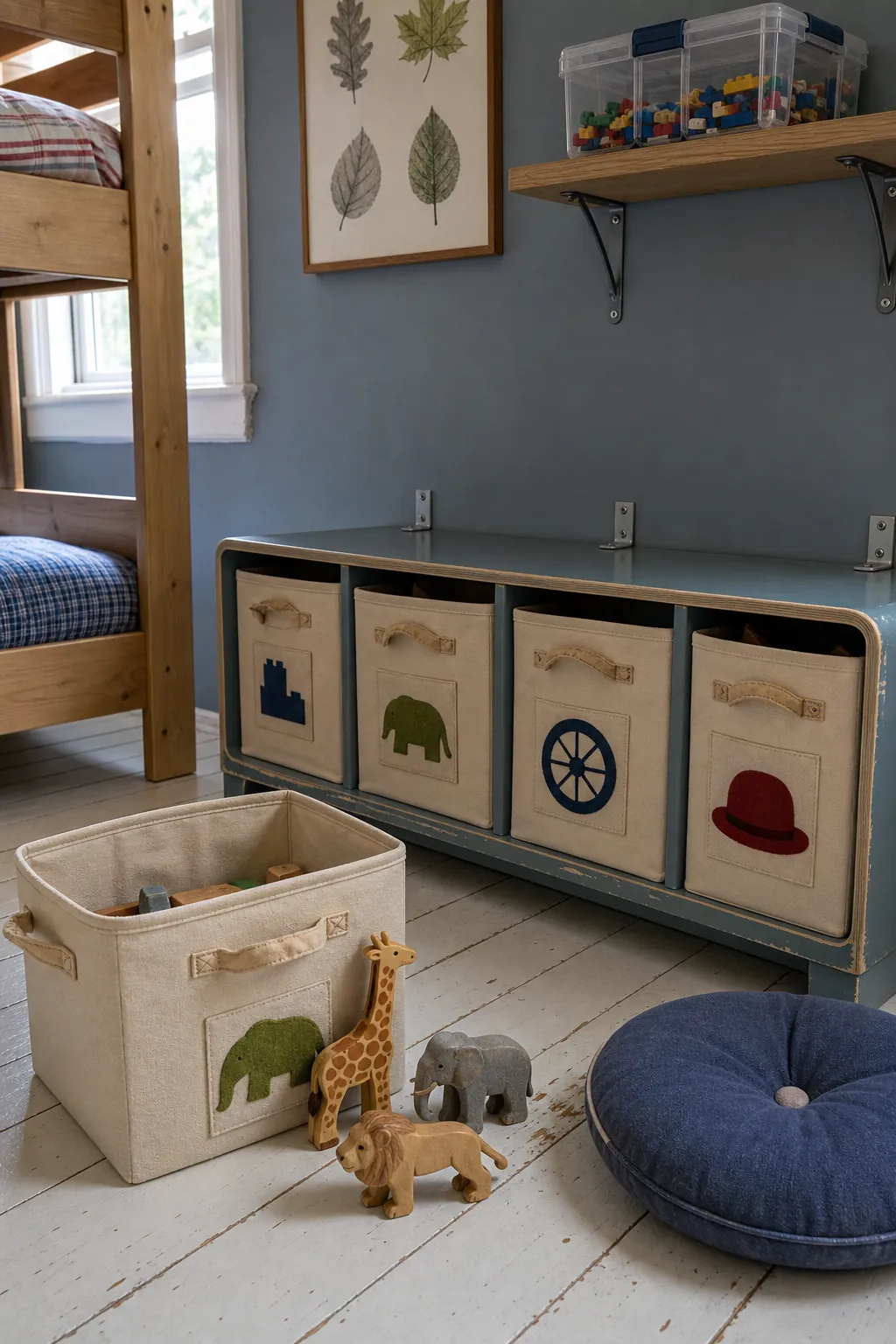
Detailed sorting looks neat before anyone plays, but it often leaves parents separating tiny pieces late at night. Young children usually do better with large, obvious categories: blocks, animals, vehicles, dress-up, and art. Use lightweight open bins within reach and add a simple picture cue when reading is not yet useful.
Keep each container light enough to carry and shallow enough that a child can find something without emptying it. Reserve closed, adult-height storage for small parts that require supervision. A quick cleanup should mean carrying one bin to the play area, gathering one category, and returning it—not making dozens of tiny decisions.
Contain Mess Where It Happens
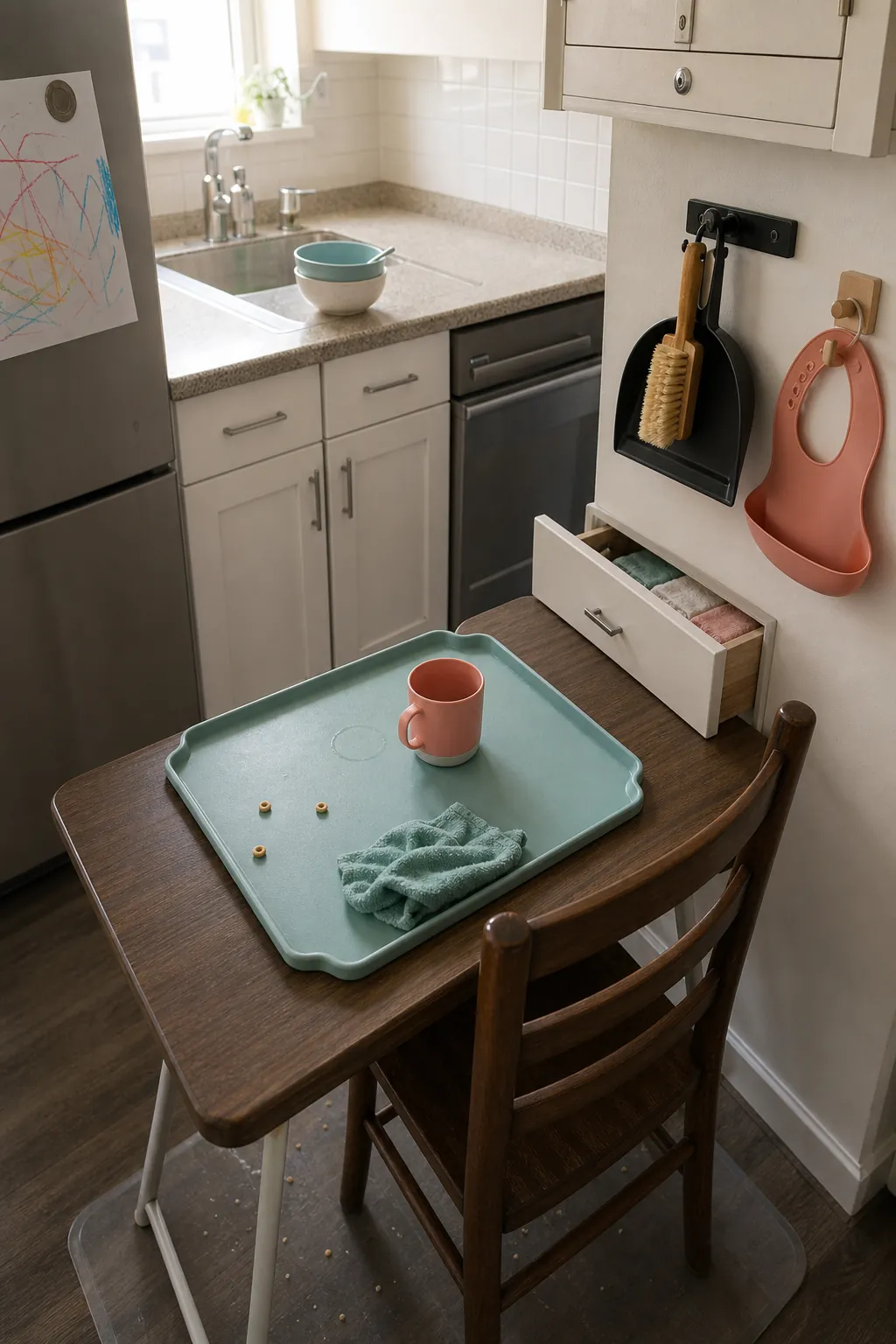
In a compact home, one activity can migrate through every room. Give messy work a boundary: a washable mat for crafts, a tray for modeling dough, a basket for toys that belong elsewhere, and a high-sided container for small construction pieces. The boundary is both a visual cue and a faster way to lift the activity when the table is needed.
Place a small cleaning kit near recurring messes. A kitchen cloth drawer, a handheld brush beside the dining area, and a bathroom squeegee save more time than a perfect supply closet across the home. Store products securely away from children and use only age-appropriate tools for helping.
Clear the Floor Before You Clean Anything Else
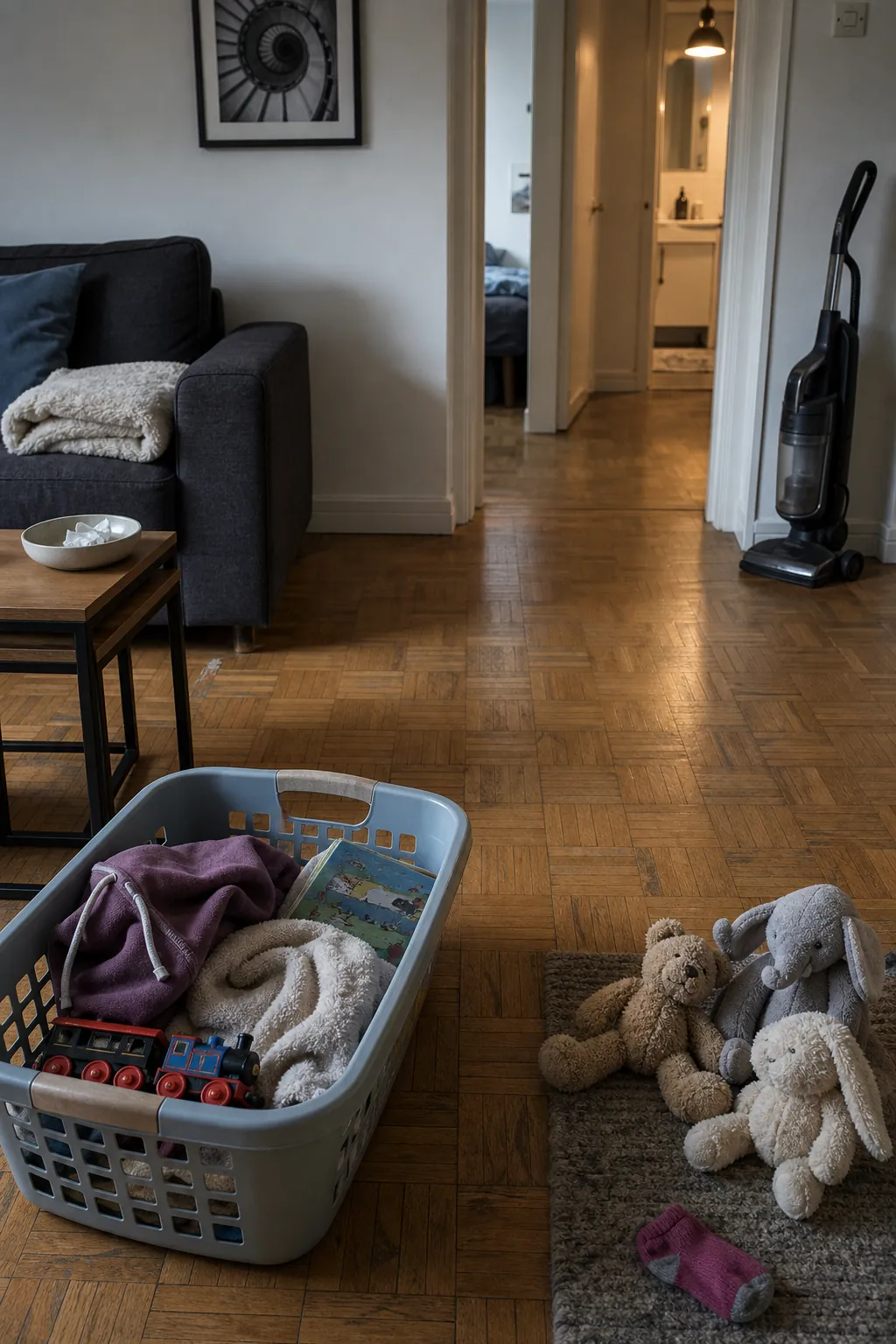
Open floor changes how a small home feels and makes every later cleaning task easier. Start a reset with one laundry basket. Walk through the living area and collect objects that belong in another room. Do not leave the route to put each one away; finish gathering first, then make one delivery loop.
Children can handle a concrete instruction such as “put every soft toy in this basket” more easily than “clean the room.” Once the floor is clear, vacuum high-traffic paths and under the table. Cleaning in the same order—floor pickup, dishes, surfaces, then laundry—removes the nightly decision fatigue.
Give Laundry and Paper an Immediate Landing Place
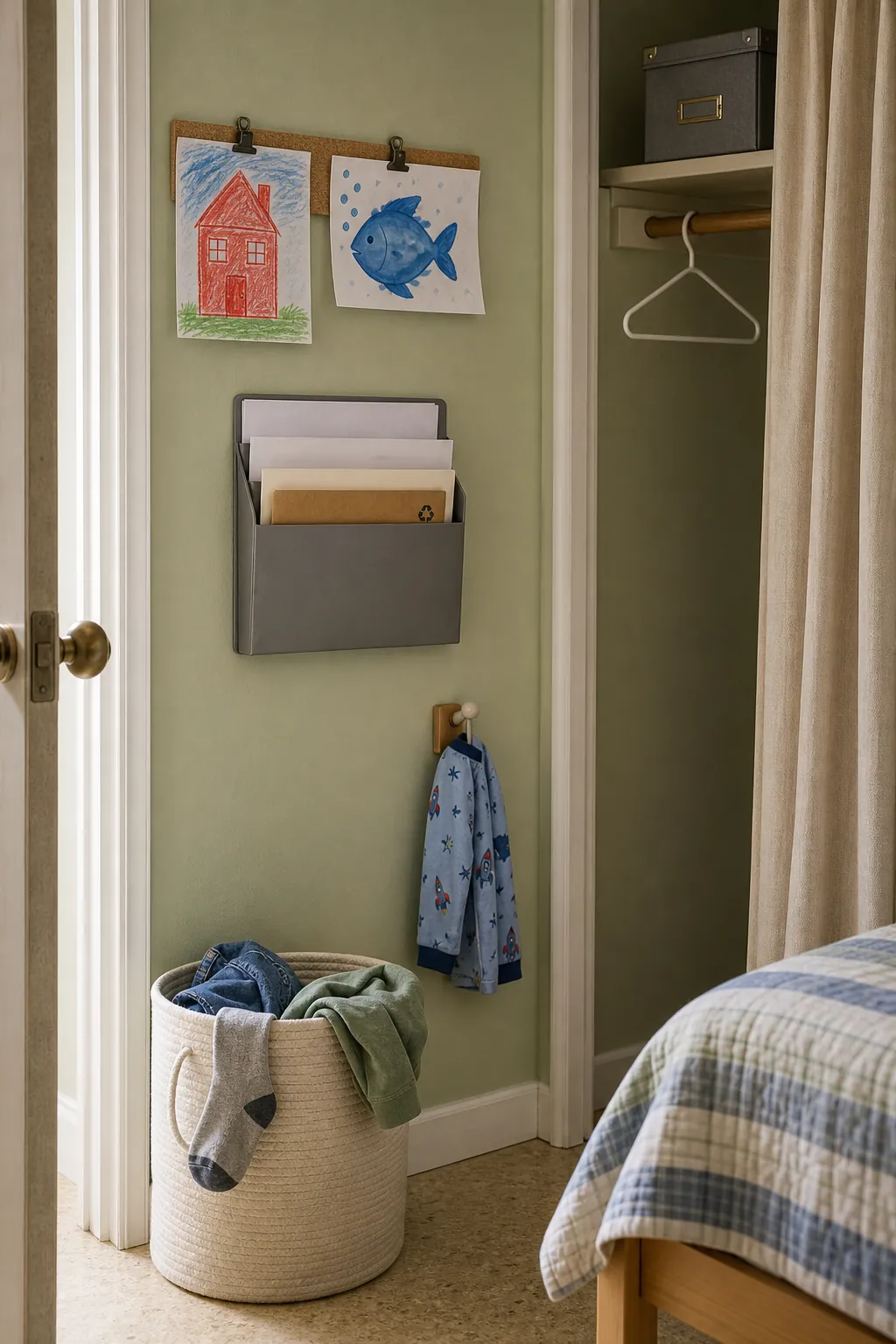
Clothes and school papers become clutter because they pause without a next step. Put an open hamper where clothes are actually removed, not where you wish they were removed. Use one upright file for school papers that need action, one small display area for current artwork, and one memory box elsewhere for pieces worth keeping.
Empty the school-paper file at a predictable time each week. Photograph artwork that matters but cannot stay, recycle routine worksheets, and return signed forms immediately. Keeping only one or two current pieces on display lets a child’s work feel valued without turning every wall and counter into long-term storage.
End the Day With a Short Family Closing Shift
Choose a cue that already happens every evening—after dinner, before bath time, or before the bedtime story—and attach a ten-minute reset to it. Assign visible jobs: one person gathers dishes, one fills the toy bins, one clears the walkway, and one starts laundry. Use a song or timer if it helps, but stop when the short shift ends.
- Every night: dishes, floor pickup, food crumbs, and tomorrow’s essentials.
- Twice a week: bathroom touchpoints, laundry, and high-traffic vacuuming.
- Weekly: rotate one toy category, clear school papers, and clean under movable bins.
A tidy home with kids is not one where play never appears. It is one where play has boundaries and every family member knows the next small action. Build a routine that still works on the tired days; those are the days the system is for.