
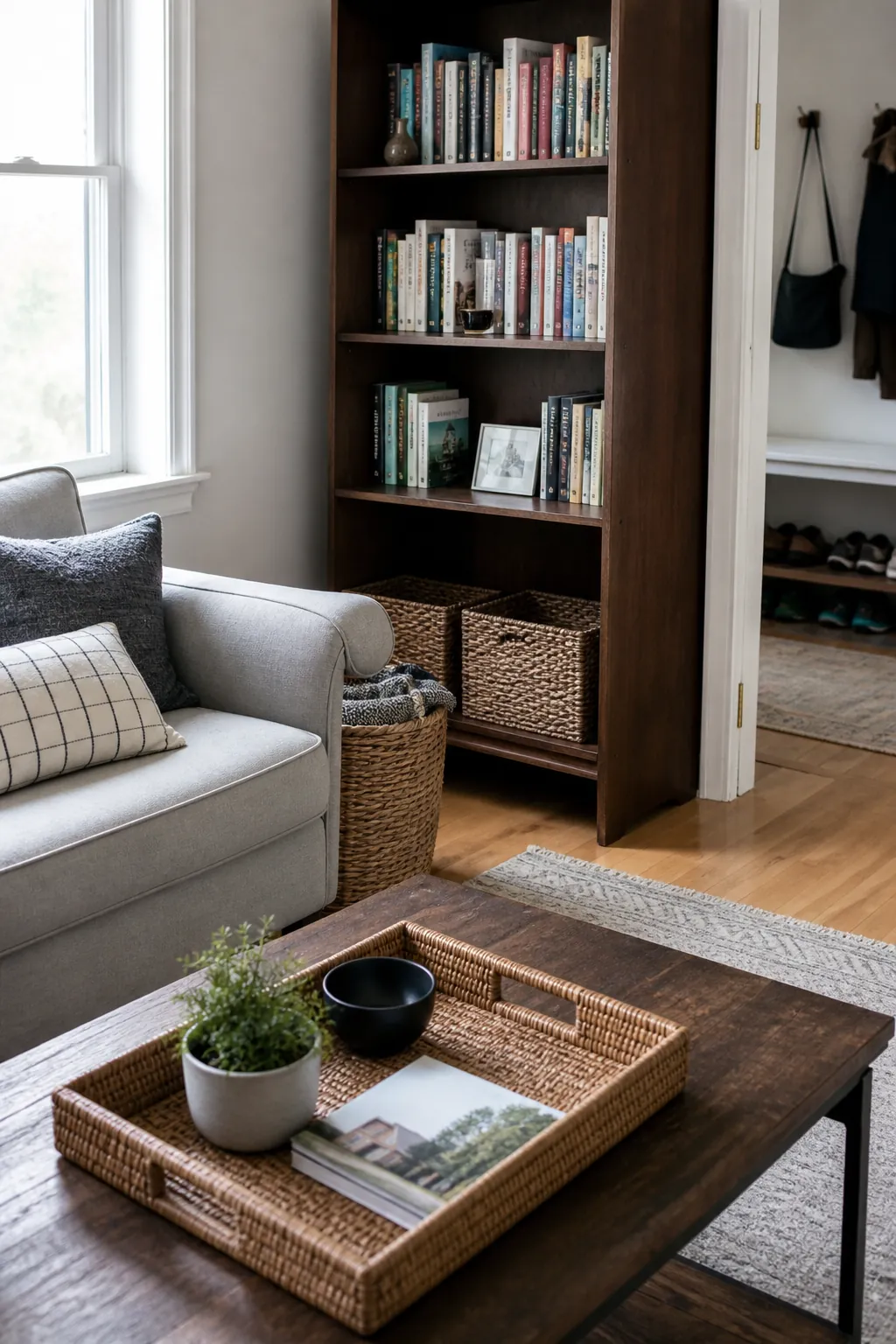
Small space storage usually fails for a boring reason: the home has plenty of containers, but too many everyday things still do not have a place to land. That is why the best fix is not always another cart, shelf, or set of matching bins. Often, the better move is to look at the furniture you already own and ask a sharper question: what job could this piece quietly do besides the obvious one?
This guide focuses on practical furniture storage ideas that work in apartments, small homes, and rentals where you may not want to drill holes, buy bulky pieces, or redesign the room. The goal is simple: use what you have, reduce visual clutter, and make home organization feel easy enough to maintain on a normal weekday.
Before moving anything, do one fast pass through the room and remove obvious duplicates, empty packaging, mystery cords, and items you would not buy again today. Storage cannot save everything. But once the excess is gone, the furniture you already have can usually hold more than you think.
Turn the Coffee Table Into a Daily Reset Station
The coffee table is often blamed for clutter because it sits in the center of the room. But in a small living room, that makes it useful. It is already the place where remotes, books, chargers, notebooks, glasses, and half-finished tasks gather. Instead of pretending that will stop, give the table a reset system.
If your coffee table has a shelf, drawer, or lower rail, use it for one narrow category: remote controls, current reading, game controllers, or work-from-couch tools. If it has no storage at all, place a shallow tray on top and slide one low basket underneath. The tray is for active items; the basket is for things that should disappear at night.
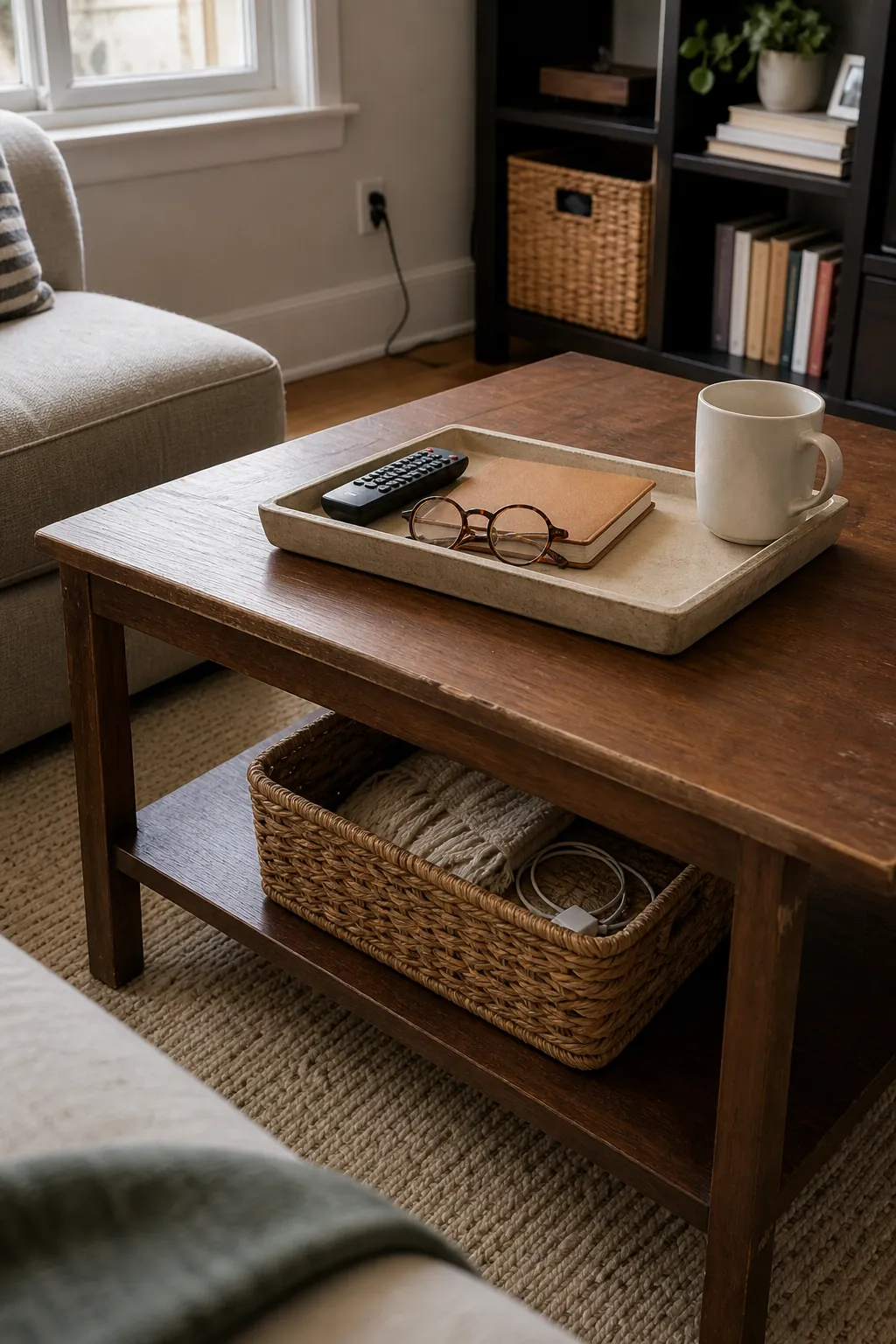
This is one of the easiest budget storage upgrades because it does not ask the table to become a giant storage trunk. It gives daily clutter a short return path. At the end of the evening, mail goes to the entry, dishes go to the kitchen, and the few living room items drop back into the tray or basket.
Use Bookcases as Closed Storage Without Making the Room Feel Heavy
Open shelves are useful until every shelf becomes a tiny stage for visual noise. In a small apartment, a bookcase can either calm the room or make it feel busier. The difference is not the shelf itself. It is how much of the storage is visible.
Start by dividing the bookcase into three zones. Keep the upper shelves lighter with books, plants, framed photos, or a few pieces you actually like seeing. Use the middle shelves for the items you reach for often. Reserve the bottom shelves for baskets, lidded boxes, file bins, extra cords, pet supplies, or hobby materials. Heavy storage belongs low, and visual breathing room belongs high.
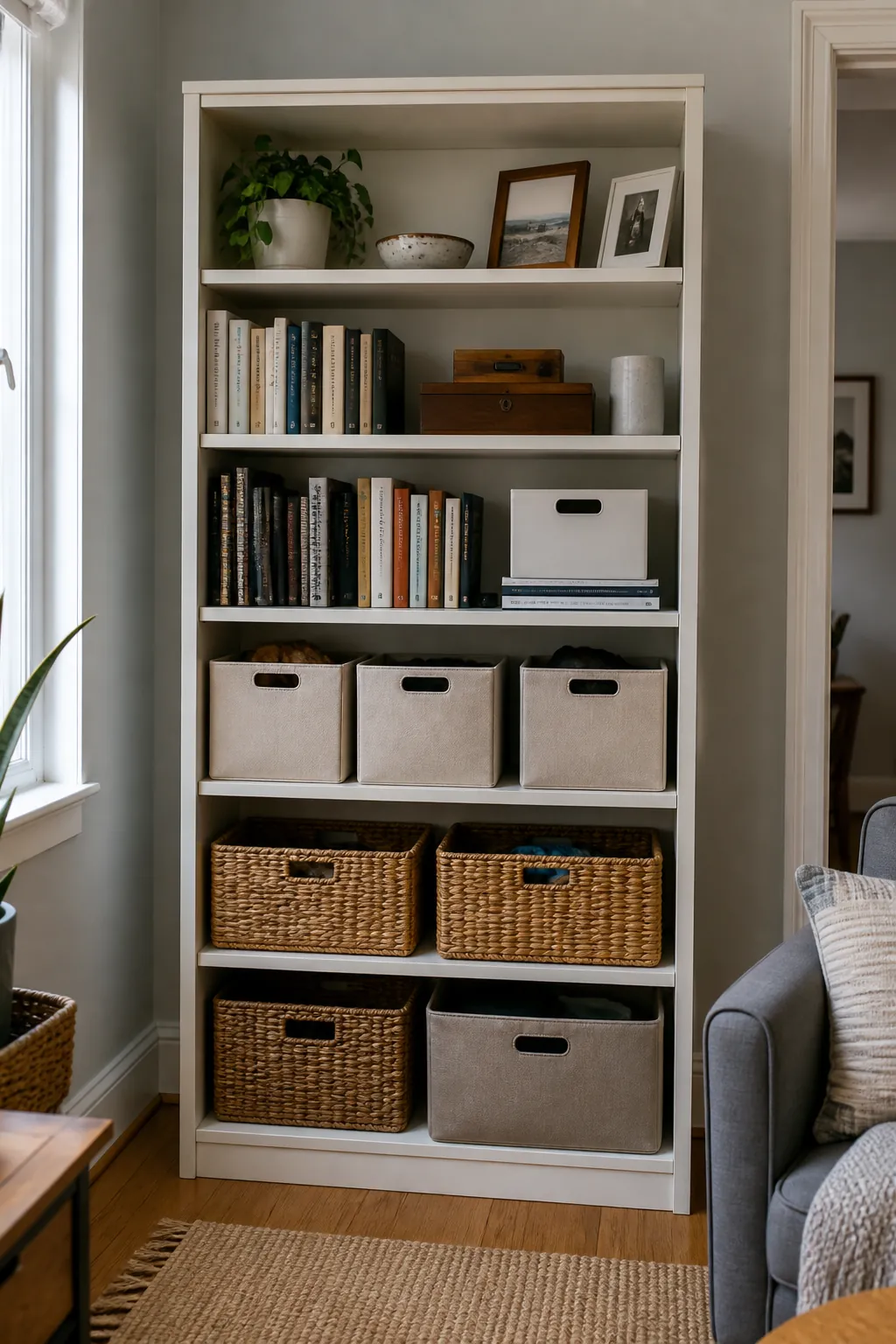
If you already have cube shelves, treat every cube as a separate address instead of a random bin wall. One cube can hold paperwork, another can hold workout gear, another can hold spare linens. Label the inside edge if labels feel too busy from the front. This keeps small space storage from turning into a wall of anonymous boxes.
Make the Sofa Zone Work Harder With Baskets and Trays
The sofa is usually the largest piece in a small living room, so the space around it has to earn its footprint. Look under the sofa, beside the sofa, behind the sofa, and at the end of the sofa before buying anything new. Those edges can absorb more clutter than a new freestanding shelf would, and they do it without changing the room layout.
Slide a long, low basket under a sofa with visible legs for blankets, yoga straps, slippers, or seasonal pillow covers. If there is a gap between the sofa and wall, use it for a flat charging strip, folded tray table, or slim basket for magazines. If your side table has an open bottom, place one basket there instead of letting the floor become a pile zone.
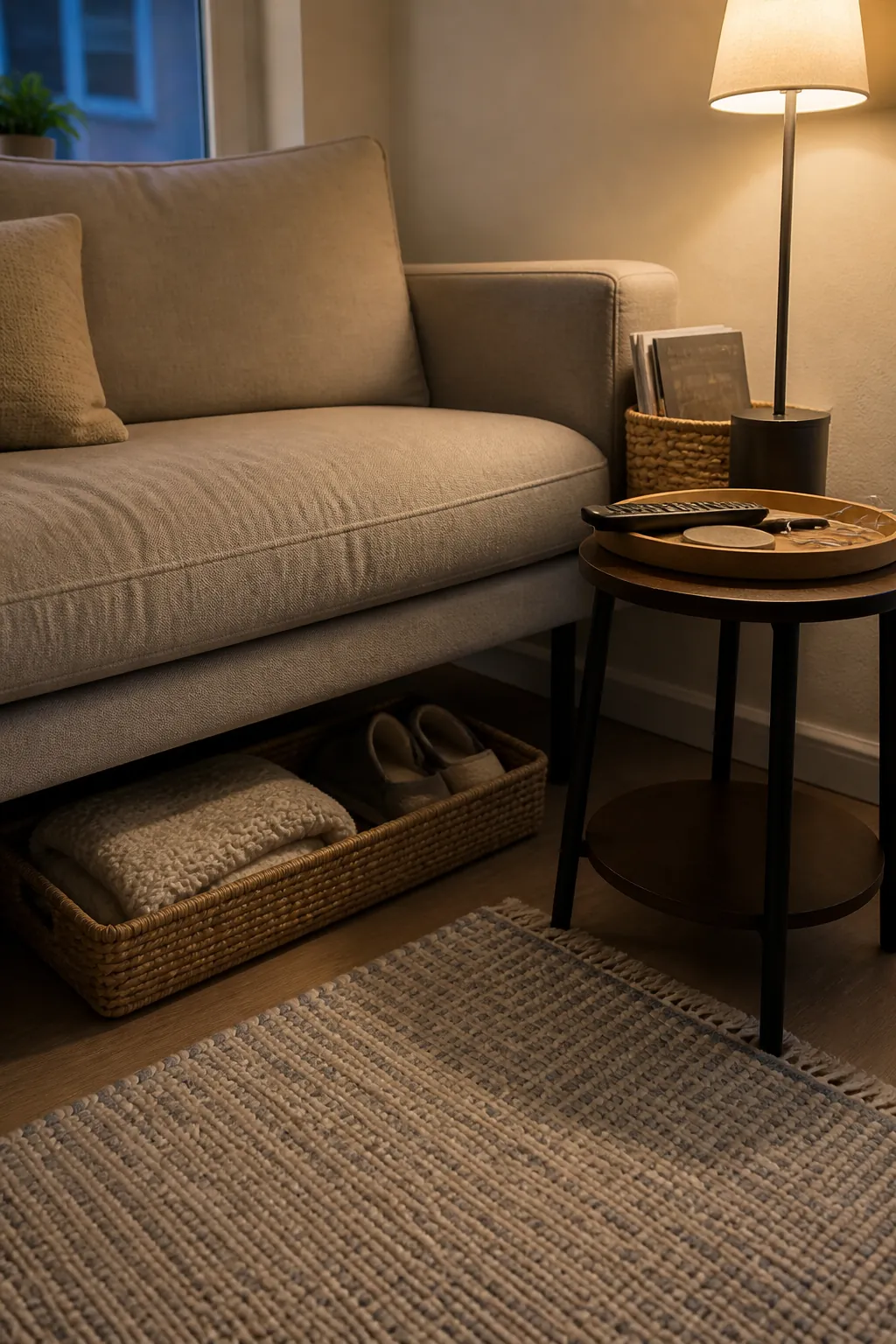
The trick is to store items where they are used, not where you wish they belonged. Blankets live near the sofa. Reading glasses live near the lamp. Chargers live near the outlet. Good apartment storage reduces the number of steps between using something and putting it away.
Give Nightstands and Dressers Real Jobs Beyond Clothing
Bedroom furniture is often underused because every drawer is assumed to be for clothing. In a small home, that rule is too narrow. A nightstand drawer can hold medication, sleep masks, journals, hand cream, chargers, or the small things that otherwise collect on top. A dresser drawer can become overflow linen storage, office supply storage, or a clean place for accessories.
Do not empty a drawer and refill it with random categories. Give each drawer a sentence. For example: “This drawer holds everything I need before sleep.” Or: “This drawer holds guest bedding.” Or: “This drawer holds daily getting-ready tools.” A drawer with a sentence is easier to maintain than a drawer with a vague theme.
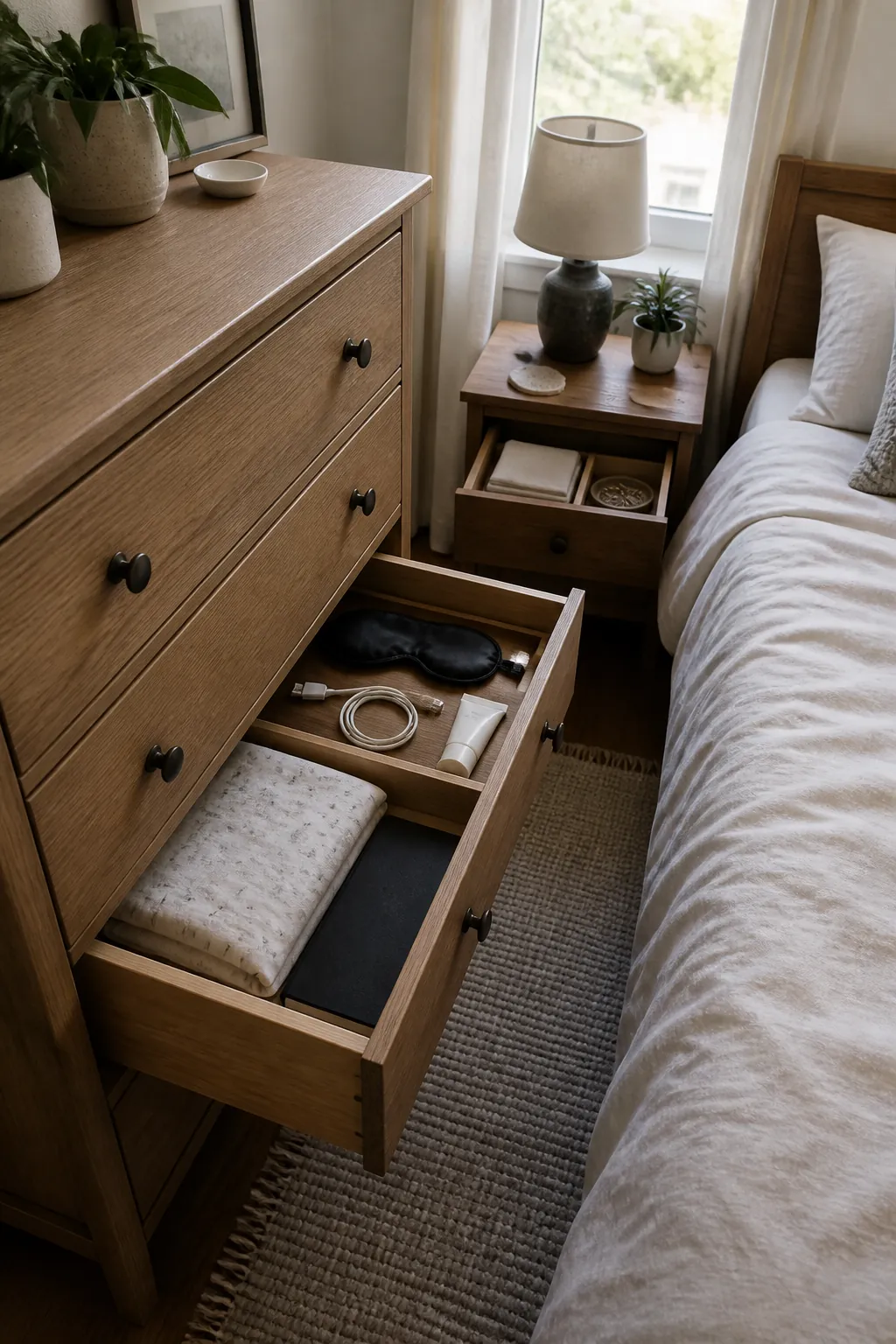
If the top of the dresser is crowded, remove anything that belongs inside a drawer, then add one small tray for daily jewelry, watch, lip balm, or keys. Keep the tray smaller than your instinct. When the tray is too large, it becomes another shelf. When it is small, it forces decisions.
Turn the Bed Frame Into Seasonal Storage
Under-bed storage is common advice, but it goes wrong when the bed becomes a dark archive for things nobody wants to decide about. The space is valuable, so give it to items with clear seasons or clear rotation: winter bedding, summer clothes, luggage, gift wrap, sentimental boxes, or spare towels.
If the bed is low, use existing suitcases as storage instead of buying new bins. If the frame has a little clearance, use shallow boxes with lids so dust does not become part of the system. If you already own a storage bed, resist filling every drawer with mixed categories. Under-bed storage should hold the things you need occasionally, not the things you need every morning.
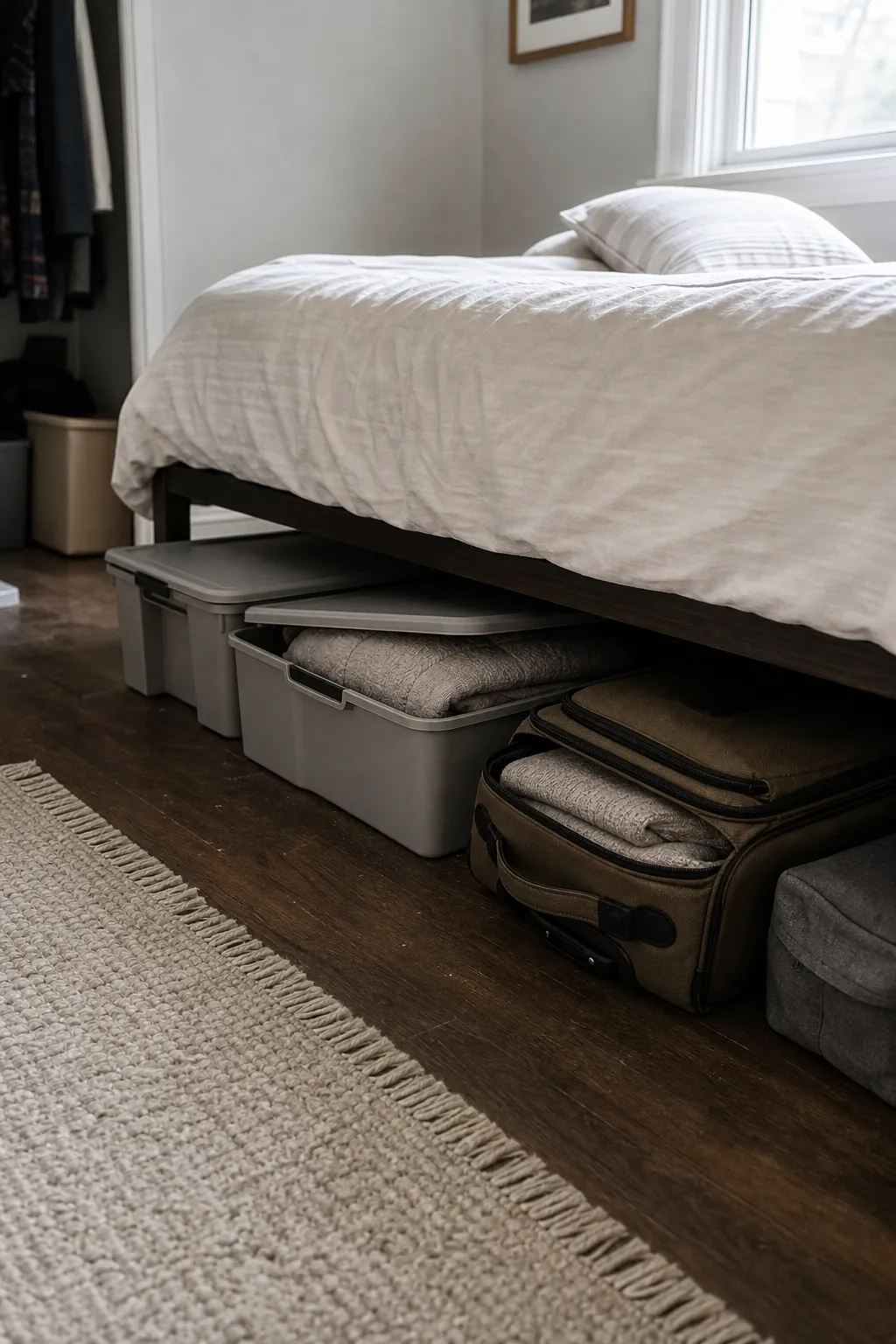
For renters, bed risers can create more room, but measure first. The space only helps if the containers slide out easily and the bed still feels stable. A storage solution that is hard to access will quietly become a place you avoid.
Treat the Dining Table and Sideboard as a Command Center
In small homes, the dining table often does triple duty as a desk, craft zone, homework spot, folding area, and dinner table. The problem is not that the table is used for too many things. The problem is that each use does not have a closing routine.
If you have a sideboard, console table, buffet, bar cart, or even a spare cabinet nearby, turn it into the table’s reset partner. Use one drawer for paperwork, one shelf for placemats or table linens, and one box for project supplies. If there is no sideboard, use a basket that can move from the table to a nearby shelf when dinner starts.
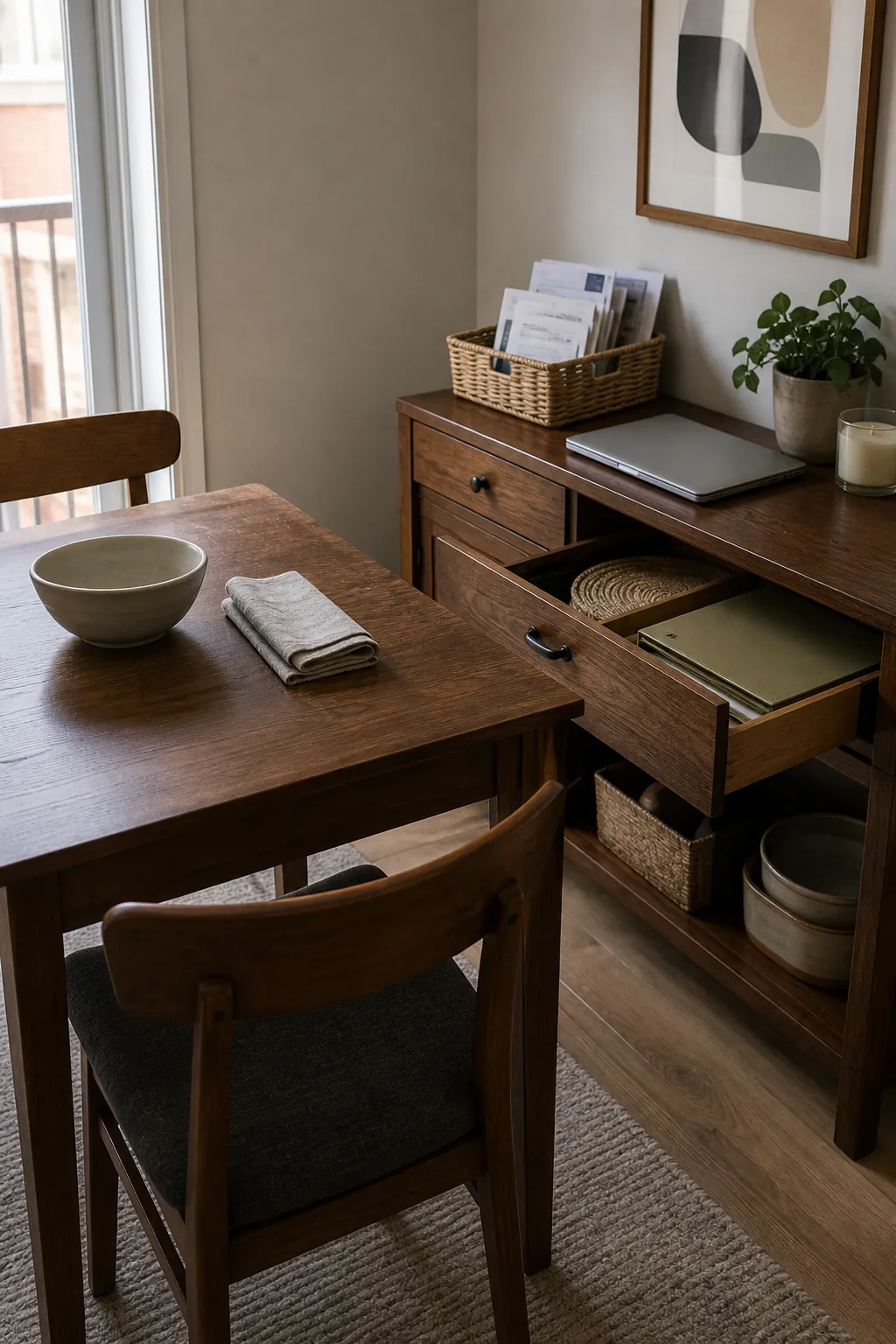
This is where multi purpose furniture matters most. A cabinet near the table does not need to be a formal dining piece. It can be a printer station, board game cabinet, craft supply home, pantry overflow, or laptop dock. The key is to make the table easy to clear in two minutes.
Borrow Kitchen Cabinet Logic for Every Cabinet You Own
Kitchens teach a lesson that works everywhere: cabinets get better when the inside space is divided. A tall empty shelf wastes height. A deep cabinet loses items in the back. A random drawer becomes a junk drawer because nothing inside has edges.
Use that logic on media cabinets, bathroom vanities, wardrobes, laundry cabinets, and entry consoles. Put small bins inside deep shelves. Add a tray inside a drawer. Stand files upright in a cabinet instead of stacking paper flat. Put the least-used items in the back and the weekly items at the front. The inside of furniture matters as much as the furniture itself.
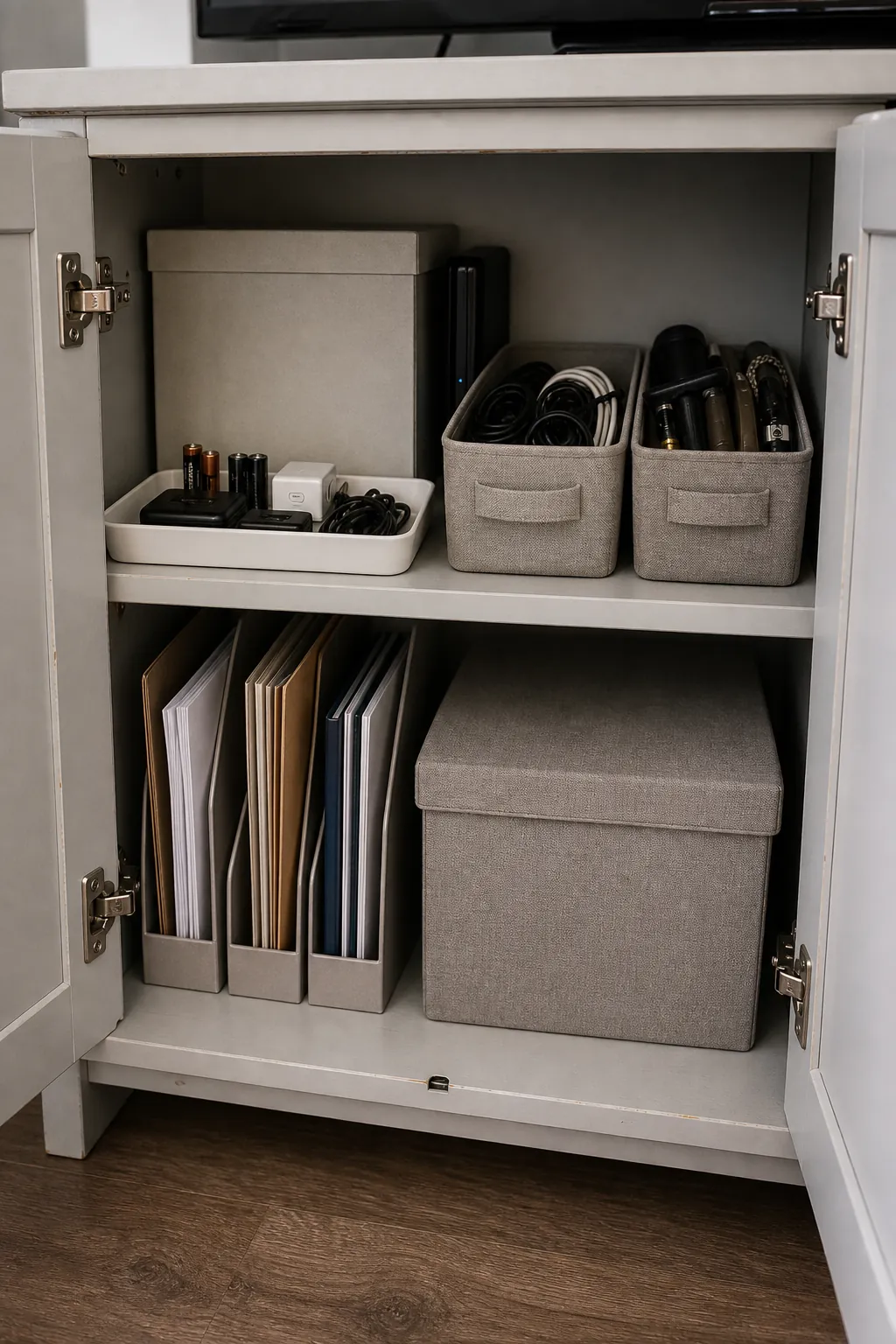
This is also the safest place to use leftover containers. Shoe boxes, small baskets, gift boxes, jars, and drawer dividers can be useful when they create clear boundaries. The goal is not a matching storage system. The goal is a cabinet where you can see what you own and grab it without unloading half the shelf.
Make Entry Furniture Catch Clutter Before It Spreads
The entry is not just a pass-through. It is the place where clutter either stops or enters the whole home. Shoes, bags, mail, sunglasses, pet leashes, umbrellas, and return packages all need a landing spot. If they do not get one near the door, they will borrow the sofa, dining table, bed, or kitchen counter.
Use the entry furniture you already have first. A bench can hide shoes underneath. A console can hold a tray for keys and one basket for outgoing items. A small bookcase can become a landing shelf with the bottom row reserved for bags. Even a chair can work if you add one basket below it and keep the seat clear.
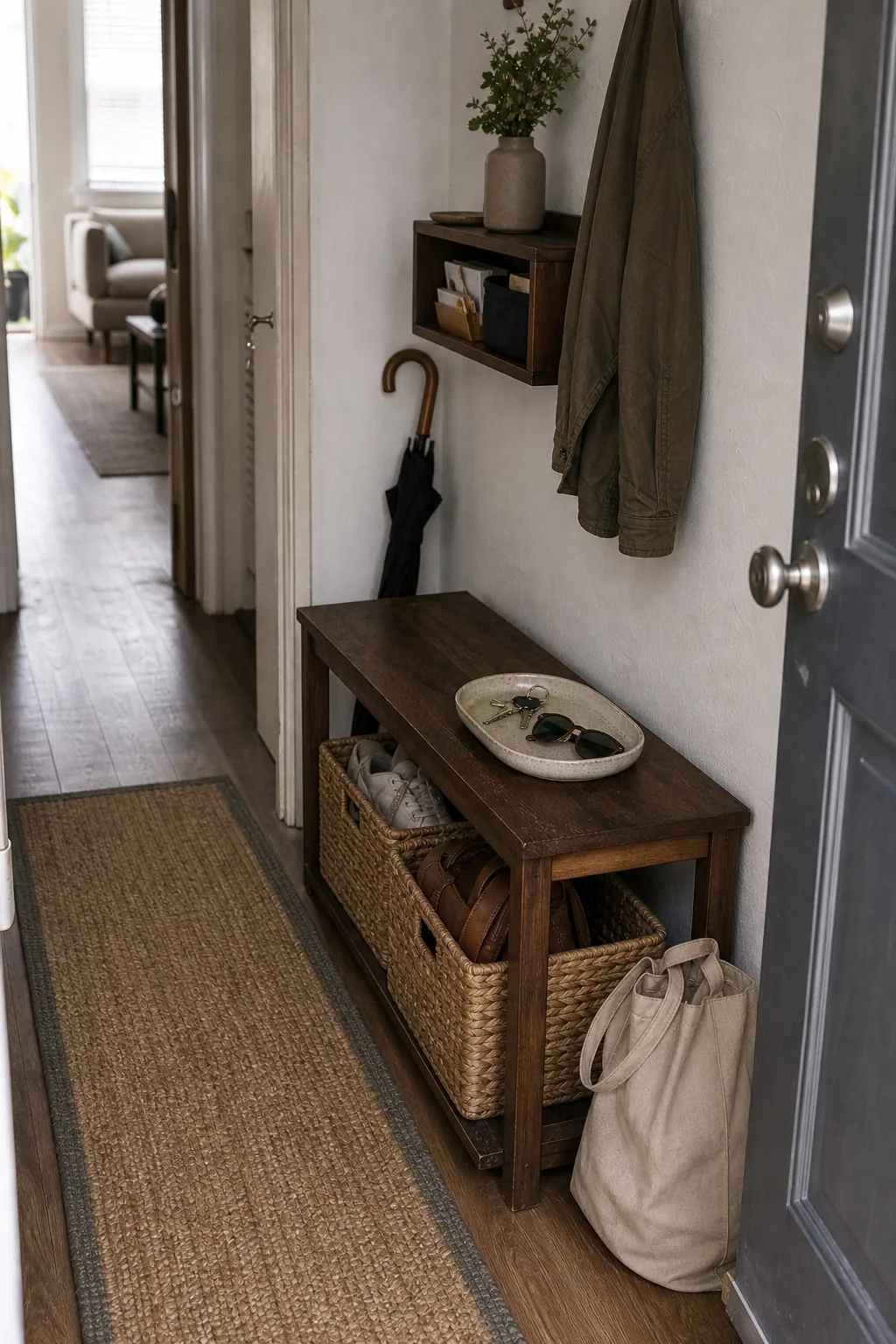
The entry system should be small enough to maintain when you are tired. One tray, one shoe zone, one bag hook or basket, and one outgoing spot is plenty for most homes. Small home storage works best when it catches real behavior instead of demanding a perfect routine.
The best storage furniture is not always furniture sold as storage furniture. Sometimes it is the dresser that can spare one drawer, the bookcase that needs baskets on the bottom row, the suitcase already under the bed, or the coffee table that finally gets a reset tray. Start with one clutter hotspot, give it a home inside a piece you already own, and live with that change for a week before buying anything else.