
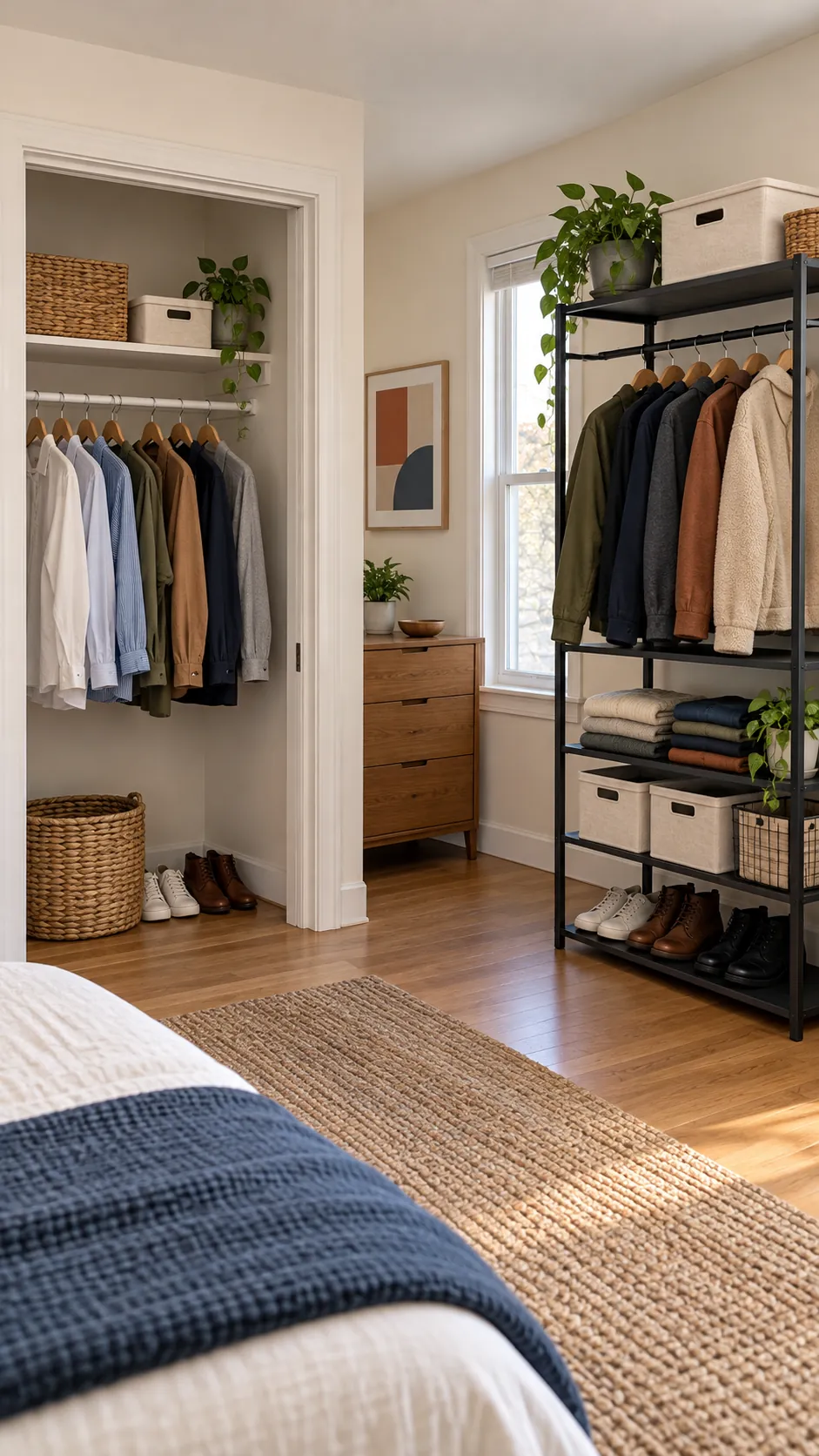
A closet upgrade can fail in two opposite ways. A pressure rod can drop a week after you load winter coats, while a sturdy rack can consume the only clear path beside the bed. The useful comparison begins with the room, the wall surfaces, and the actual clothing load.
Indexed Reddit snippets reflect the same tension. Renters like pressure systems because they preserve floor space, yet several discussions warn that heavy clothing can overcome friction or stress thin wardrobe panels. Freestanding frames solve the wall problem, but users still need enough depth and a stable base.
Measure the Opening and the Floor
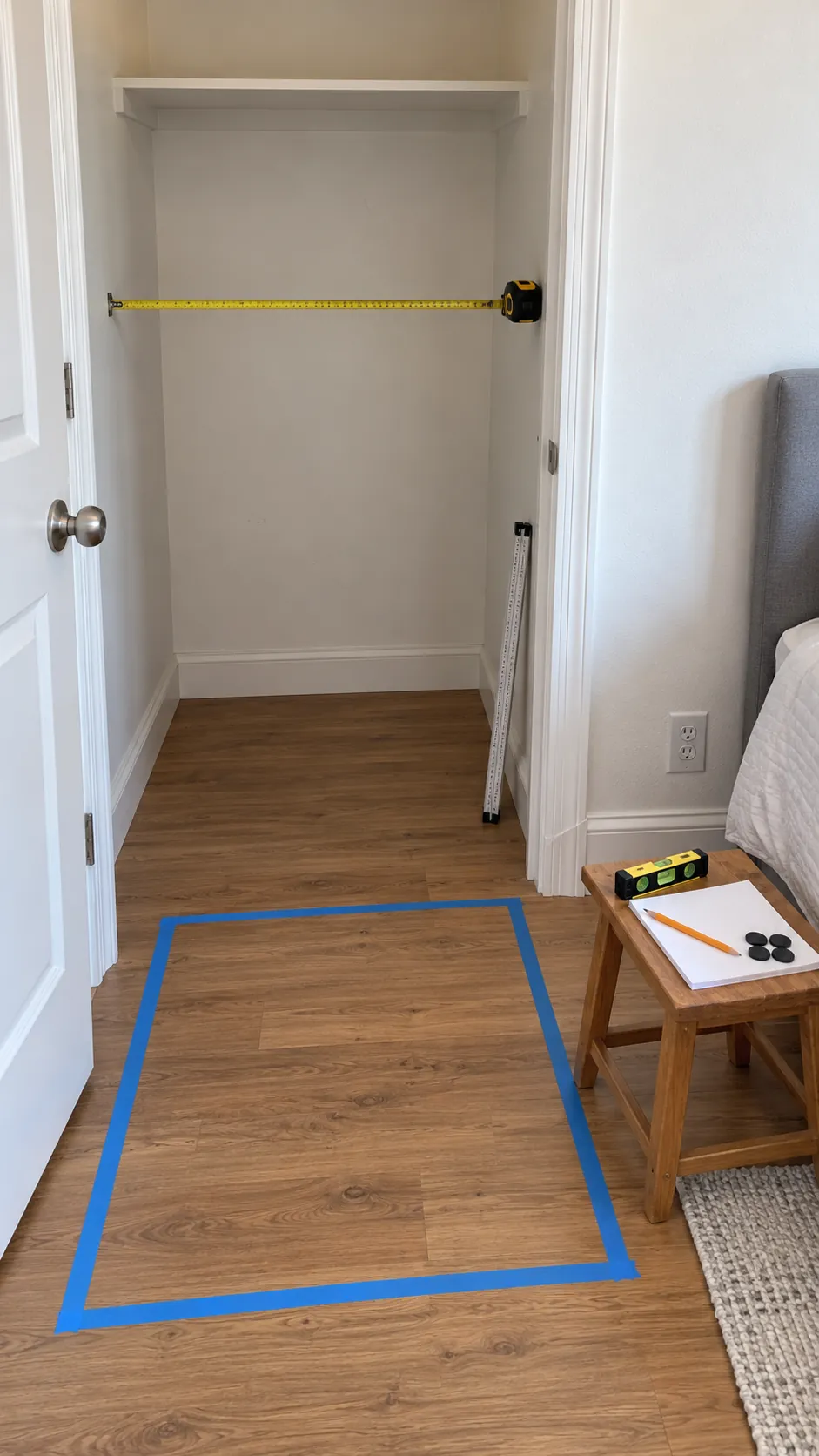
A closet tension rod organizer needs two sound opposing surfaces at the correct distance. Measure the opening at the front, middle, and back because older walls and built in cabinets may not be parallel. Compare the smallest measurement with the supported adjustment range, not merely the maximum advertised length.
A freestanding closet organizer system needs width, depth, height, and room for assembly. Mark its full footprint with removable tape, then open doors and drawers around it. Include baseboards, outlets, vents, and the space required to pull hangers forward.
Use Tension for a Light Focused Load
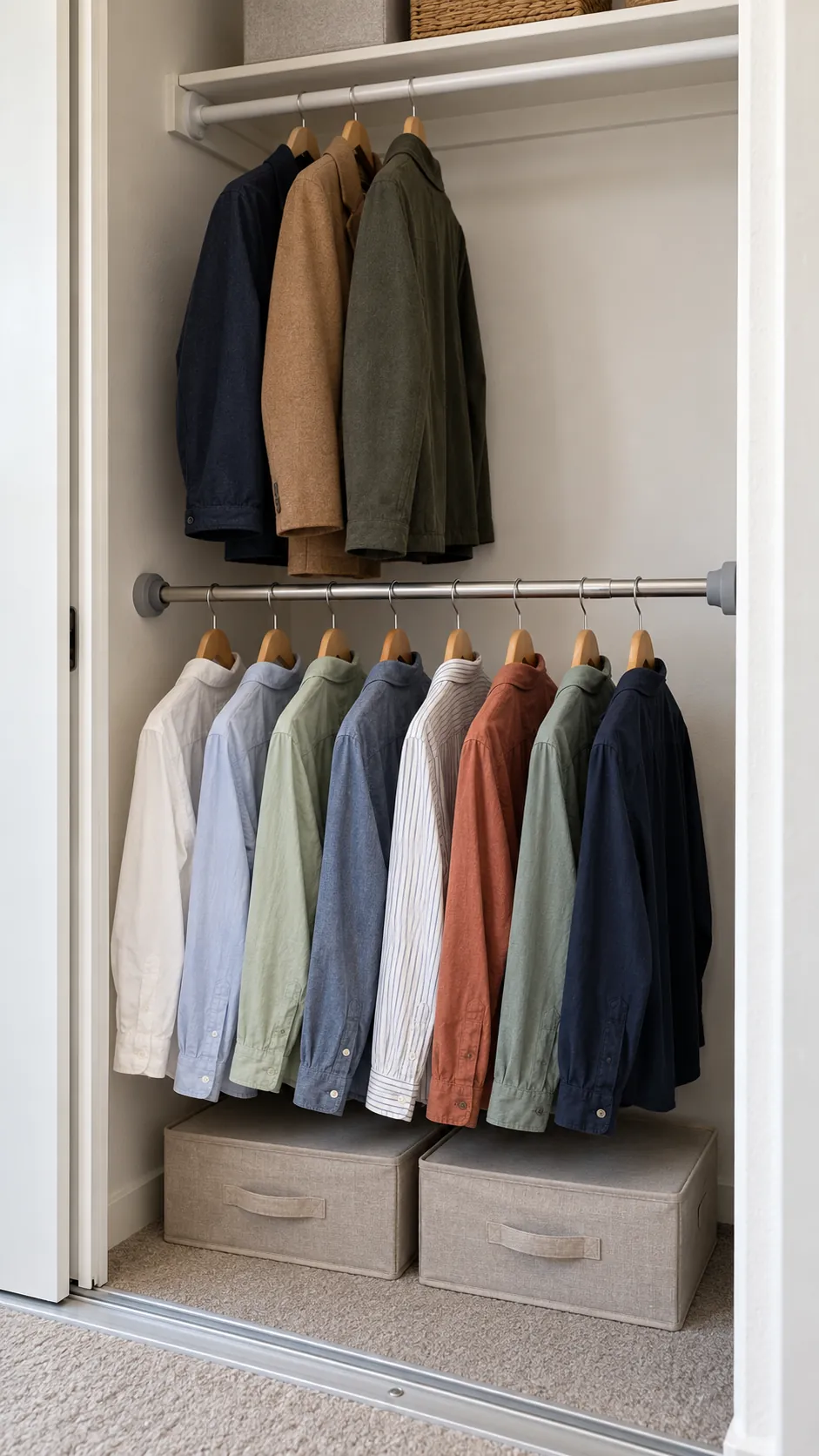
A tension rod works best as a secondary hanging rail for shirts, skirts, light trousers, or children clothing. It can turn unused lower space into a second tier without taking floor area. This is valuable in a narrow reach in closet where a frame would block access.
Do not treat adjustable closet rod capacity as a target. Rod length, pad size, surface finish, installation pressure, and sideways movement all change the working load. Test with a few garments, check the rod regularly, and keep heavy coats on the original supported rail.
Choose Freestanding for Mixed Storage
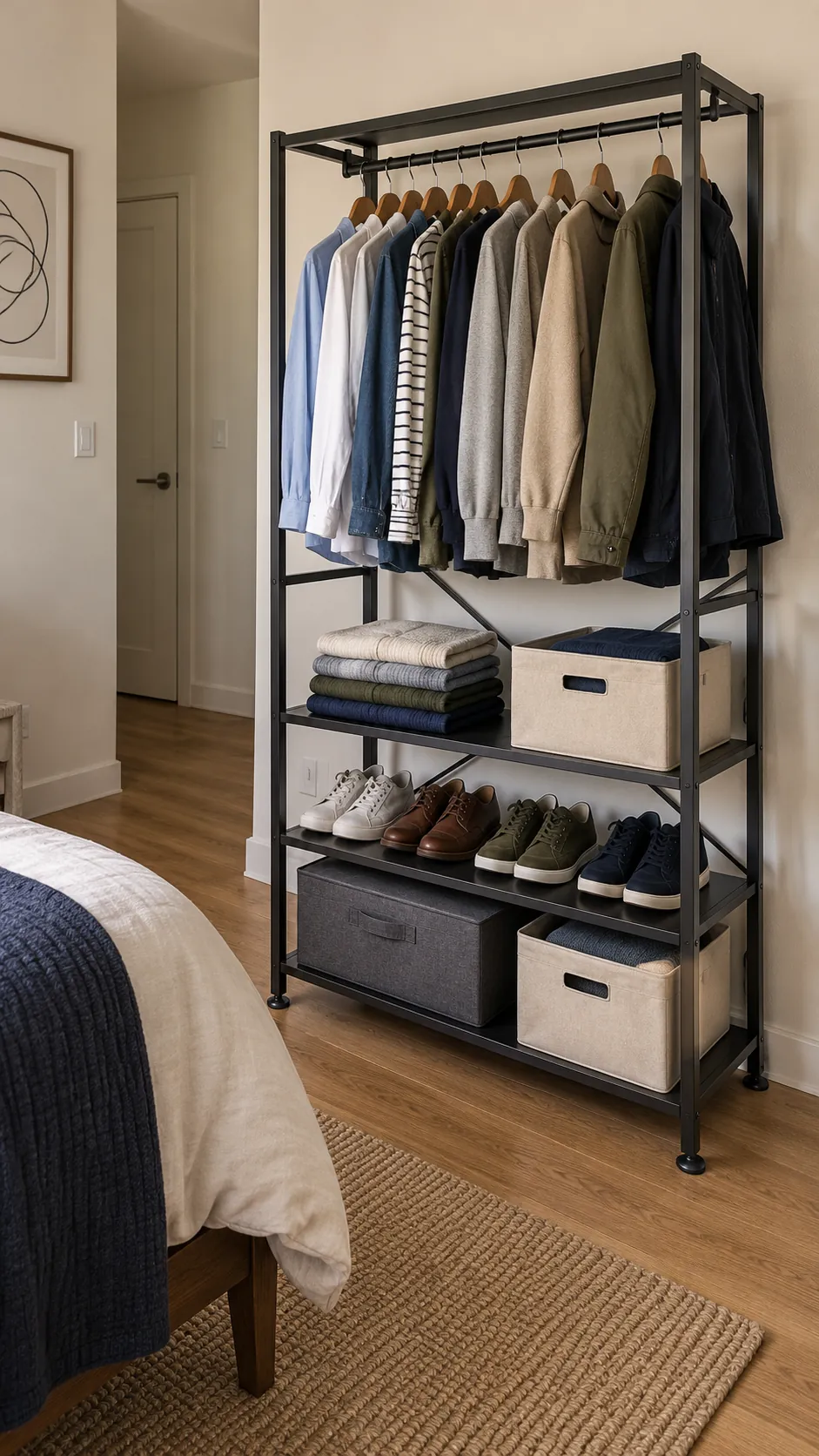
A freestanding system is better when you need hanging space, folded clothes, shoes, and bins in one structure. The load transfers to the floor rather than pressing outward on closet walls. It also works in a bedroom with no closet, provided the frame has a stable stance and does not interrupt circulation.
Look beyond total capacity. Check the rating for each rail and shelf, the frame bracing, foot adjustment, caster locks when present, and any manufacturer anti tip requirement. A portable wardrobe for a renter is useful only when it is assembled square and loaded with heavier items low.
Protect Walls, Floors, and Cabinet Panels
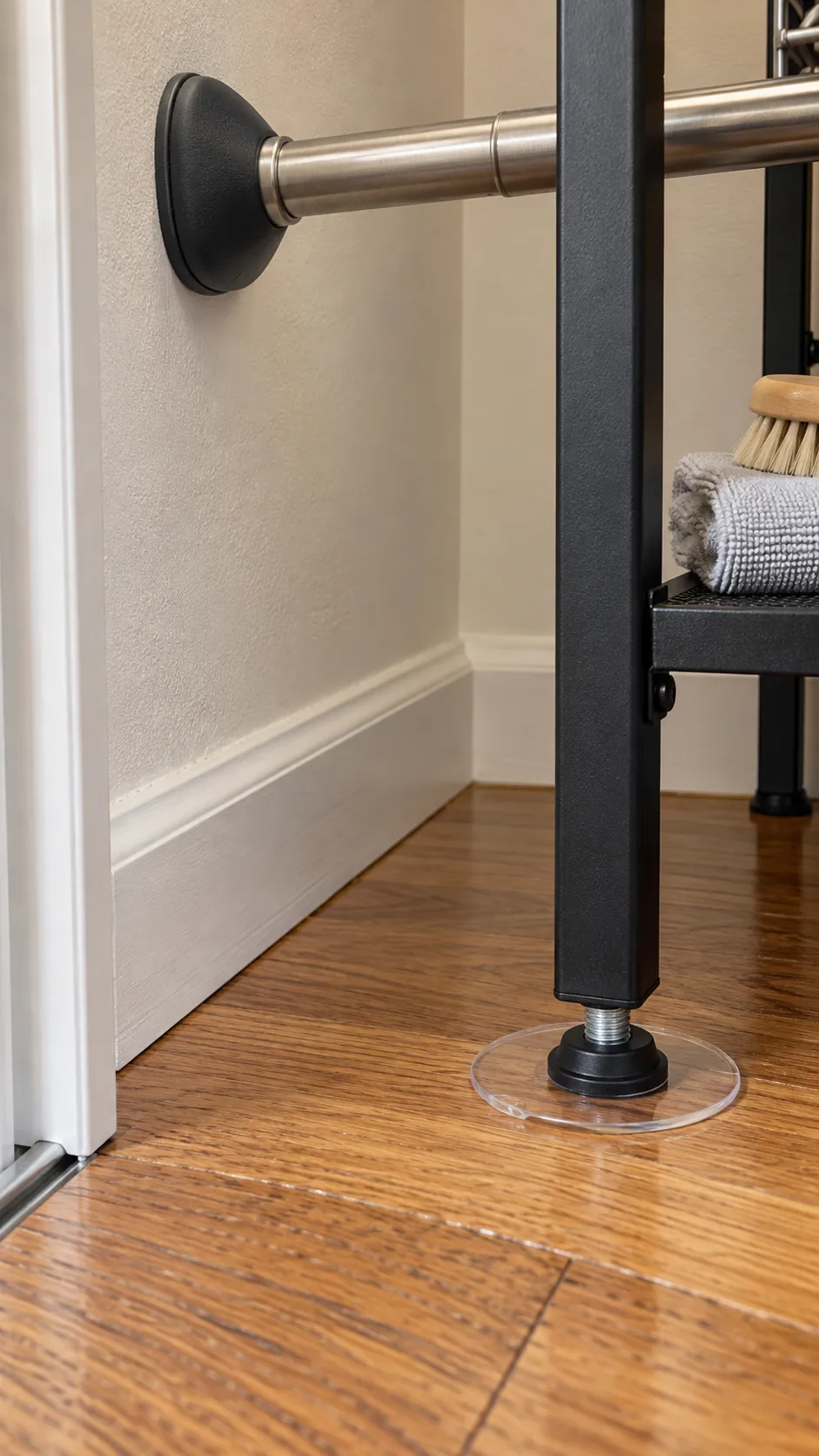
Pressure does not automatically mean damage free. A small pad can dent soft drywall, polish paint, or bow a thin wardrobe side. Use only a surface approved by the rod maker, spread pressure through the supplied pads, and stop tightening when the mechanism reaches the stated installation condition.
Freestanding feet can also leave marks. Clean grit from beneath the frame, use floor protectors suited to the surface, and level every foot so the unit does not rock. Ask the landlord before using any wall restraint that requires a fastener.
Keep Long Garments and Daily Access Clear
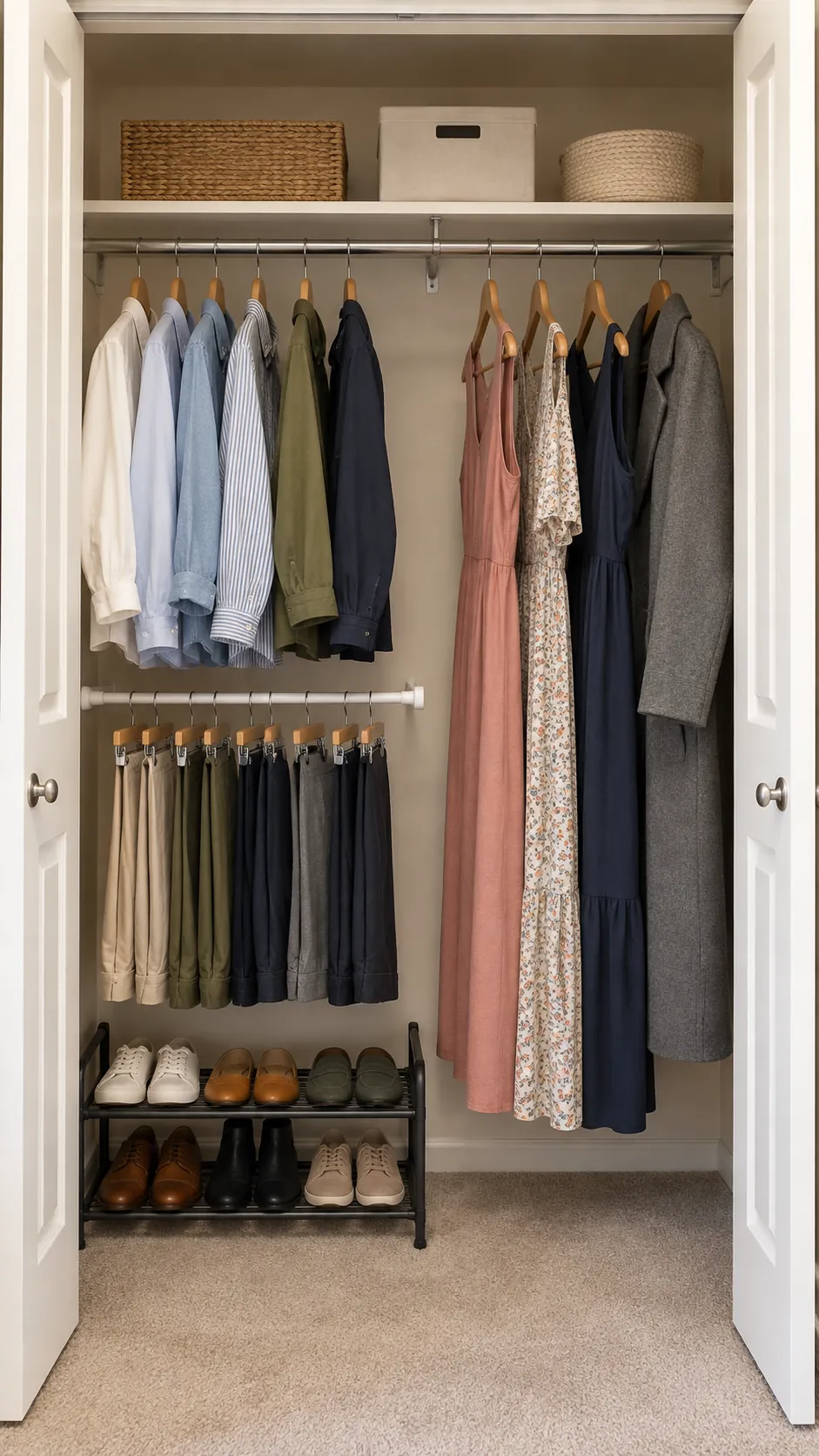
A second rod doubles short hanging space only if your wardrobe is mostly short. Dresses, long coats, and jumpsuits need an uninterrupted drop zone. Divide the closet by garment length before choosing a layout, and reserve one tall section even when it holds fewer pieces.
Daily access matters as much as capacity. A deep frame can hide the back corner of a small closet, while a low tension rail can make the floor hard to clean. Leave a clear hand path to every hanger, bin, and shoe shelf instead of filling every vertical gap.
Plan for Moving and Reassembly
A tension rod is easy to carry, but it may not fit the next opening. Keep its adjustment range and pad requirements with the product. Release pressure slowly during removal, then clean and inspect the end pads before storing it.
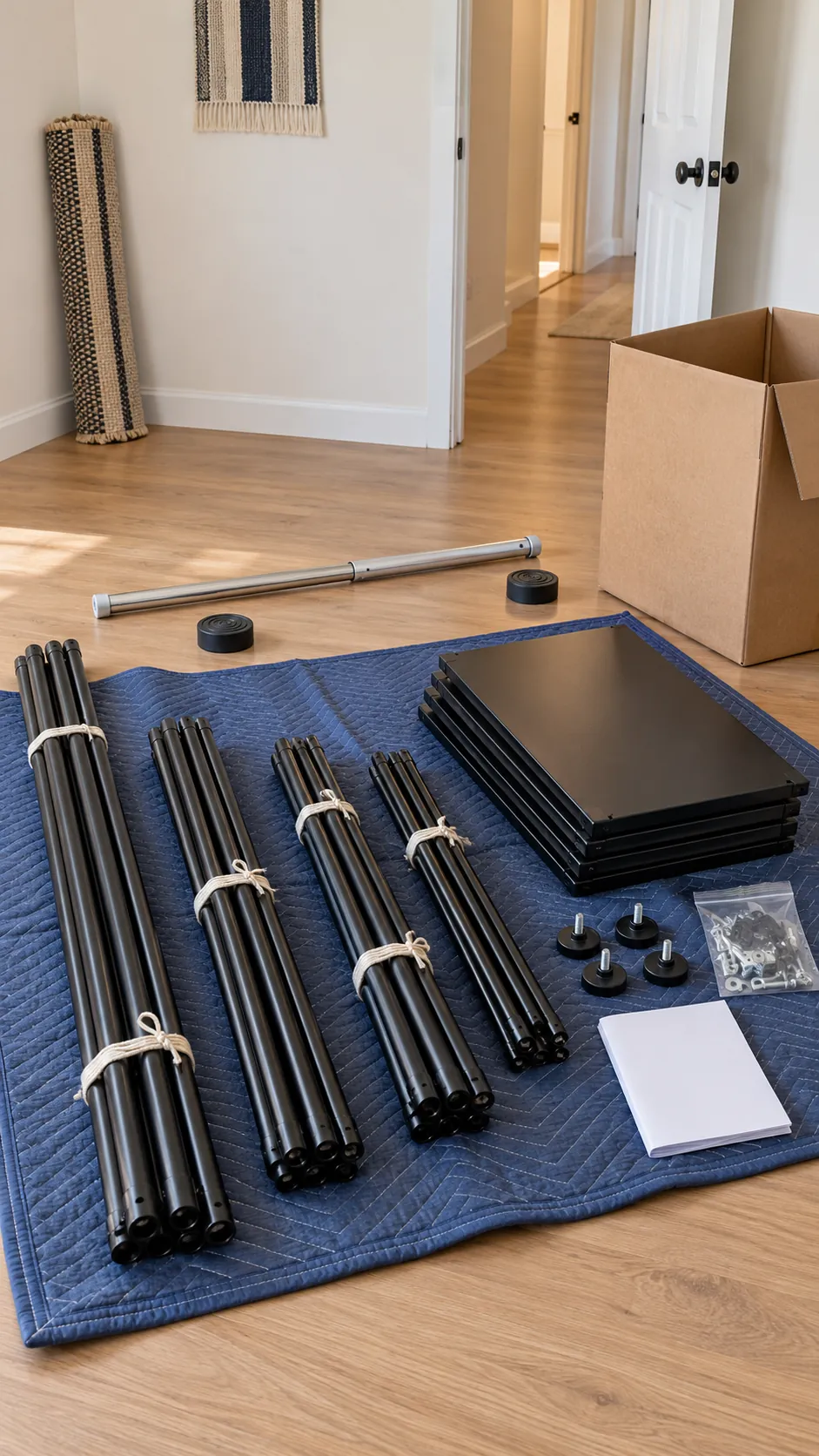
A freestanding frame takes longer to move but adapts to more rooms. Save the assembly guide, label matching parts, and keep fasteners in a sealed bag. Measure the largest panel before assuming it will turn through a hallway or fit in a car.
Choose by Load, Space, and Surface
Choose a tension rod when two approved surfaces are close enough, the load is light, and preserving floor space is the main goal. Choose a freestanding system when you need shelves, bins, shoes, heavy clothing, or a complete open wardrobe. Neither choice should depend on optimistic capacity claims alone.
For many renters, the strongest layout uses both methods carefully: a stable floor supported frame for the main wardrobe and one light pressure rail inside a sound closet for extra short garments. The winning no drill closet system is the one that remains stable, reachable, and easy to remove in your actual room.