
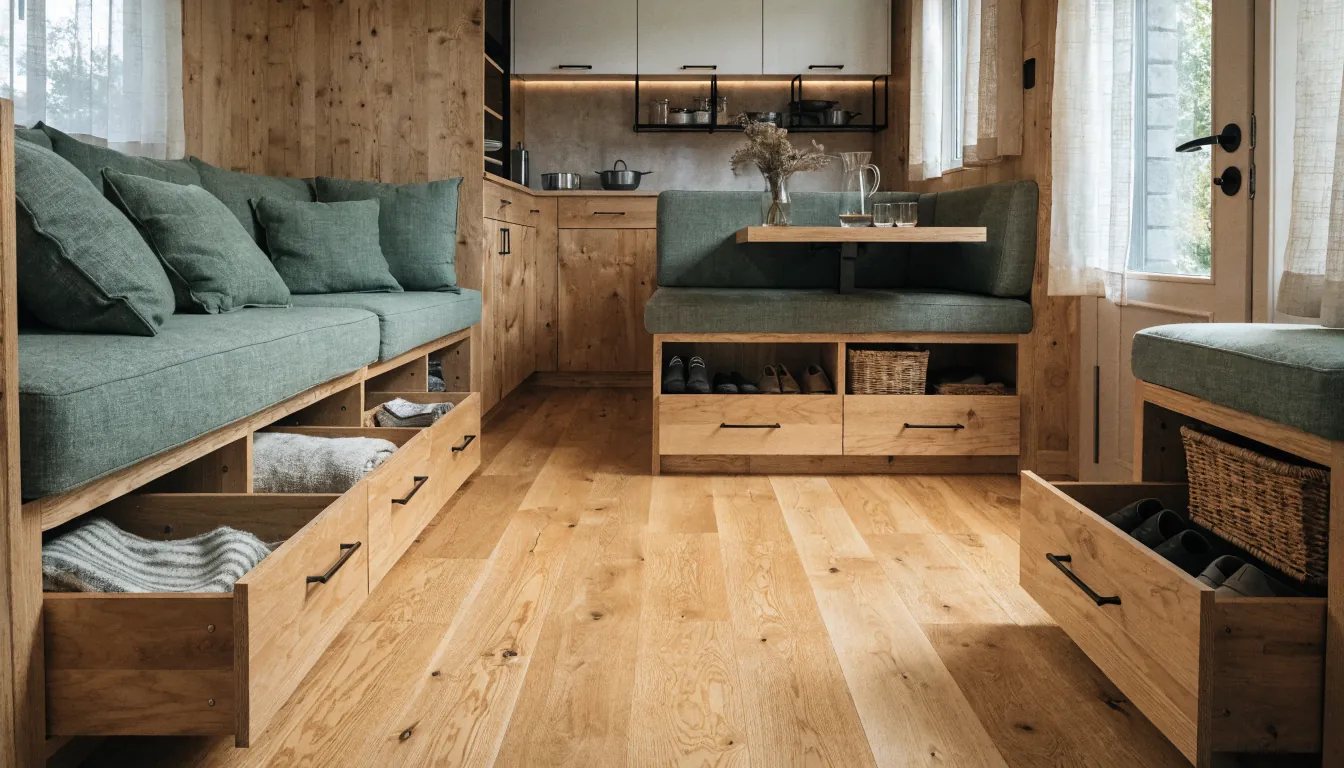
A tiny house seat is never just a seat. If it takes up floor space, it should also hide shoes, linens, tools, pet gear, board games, winter layers, or the awkward everyday things that never look good on open shelves.
The trick is not to cram storage under every cushion and call it done. Under seat storage works only when each seat has a clear job: quick access near the door, deep storage for seasonal items, shallow drawers for daily clutter, or long compartments for things that will not fit in a standard cabinet.
These tiny house ideas focus on built in storage that still feels comfortable, intentional, and easy to live with. The goal is a tiny house interior where storage furniture supports compact living instead of making every room feel like a stack of boxes.
Start With the Seat You Use Most
The best place to begin is the seat you touch every day. In most tiny homes, that is either the dining bench, the sofa bench, or the entry bench. Do not waste the prime storage on once-a-year items if the seat is in your daily path.
A lift-up dining banquette can hold extra cookware, table linens, appliance parts, or bulk pantry overflow. A sofa bench can handle blankets, laptop accessories, game controllers, and charging cables. An entry bench should be faster: shoes, bags, dog leashes, gloves, and anything that needs to leave with you.
Use Lift-Up Seats for Deep Storage
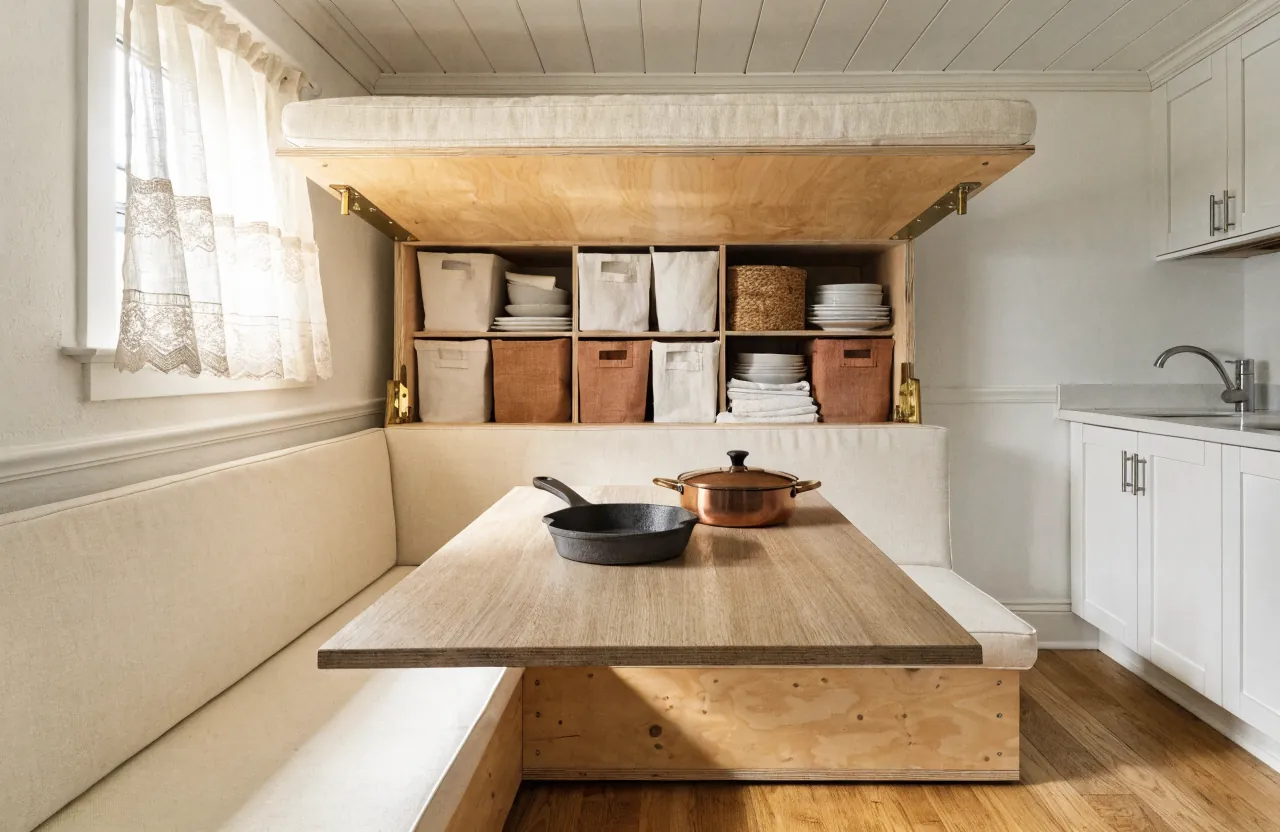
Lift-up seats are the simplest way to get generous under seat storage because the full box below the cushion stays open. They work especially well for bulky items: guest bedding, spare pillows, small suitcases, seasonal decor, extra paper goods, and off-season clothing.
The mistake is making every lift-up lid too deep. A deep compartment becomes annoying when you have to unload half of it to reach the bottom. Treat it like a trunk: use soft bins, label the ends, and reserve the deepest zone for things you do not need every week.
- Use lightweight lids with soft-close hinges so the storage is not a wrestling match.
- Break long benches into two or three lids instead of one heavy slab.
- Keep a finger pull or recessed handle visible enough to use but quiet enough to disappear.
Choose Drawers for Things You Reach Daily
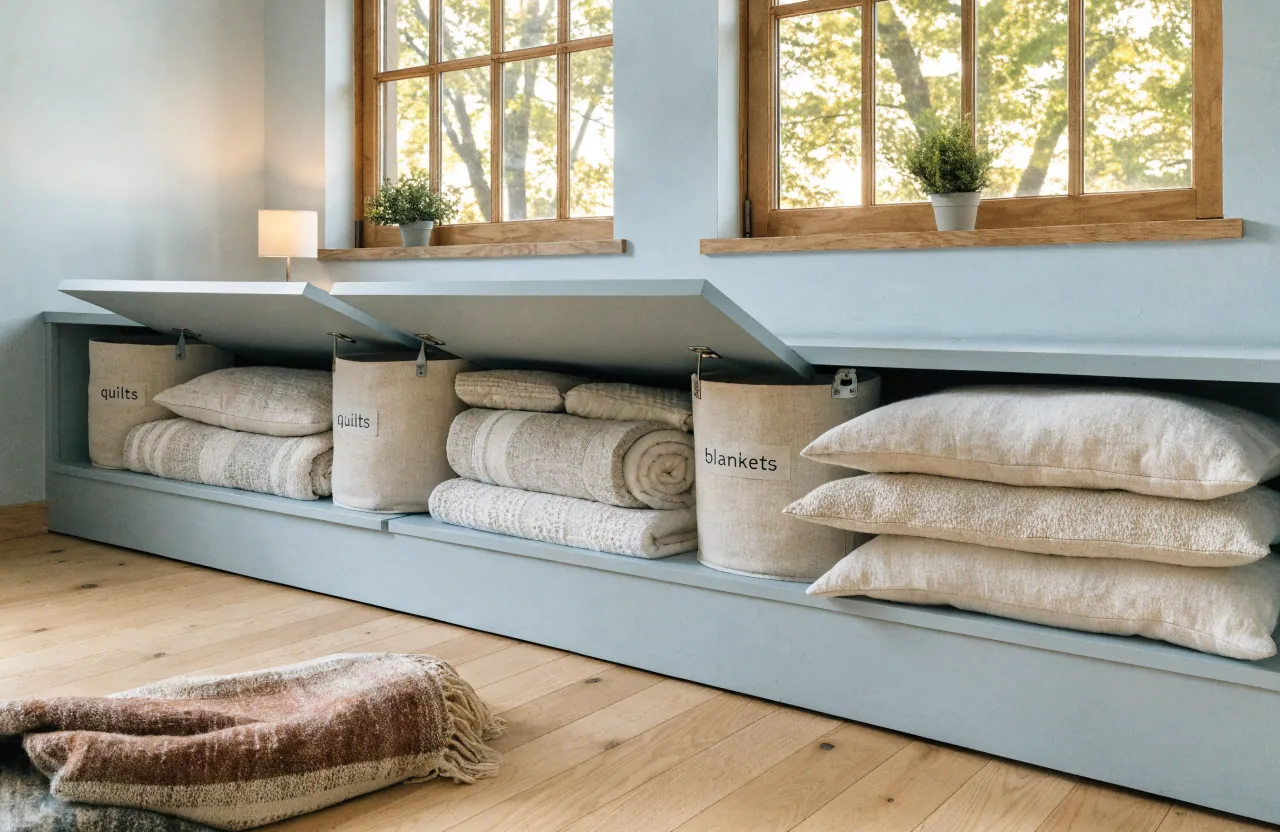
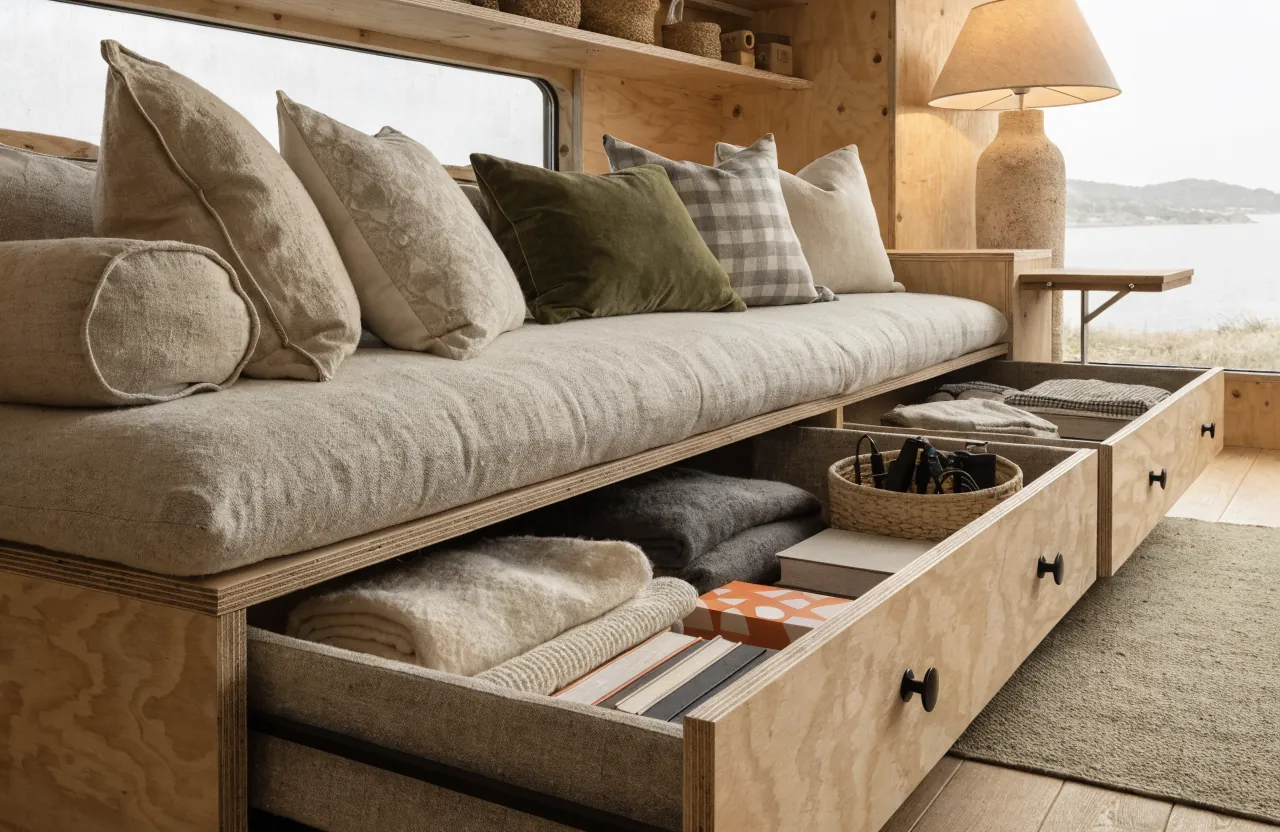
Drawers are better than lift-up seats when you need access while someone is sitting down. That is why bench storage under a dining nook often works best as drawers facing the aisle. You can grab napkins, chargers, craft supplies, or pet items without clearing cushions and pillows first.
In a tiny house, drawer depth matters. Very deep drawers look efficient on paper, but they can turn into clutter caves. A mix of shallow and medium drawers usually works better: shallow for daily items, medium for folded textiles, and one long drawer for odd-shaped gear.
Give the Sofa Hidden Storage Without Making It Boxy
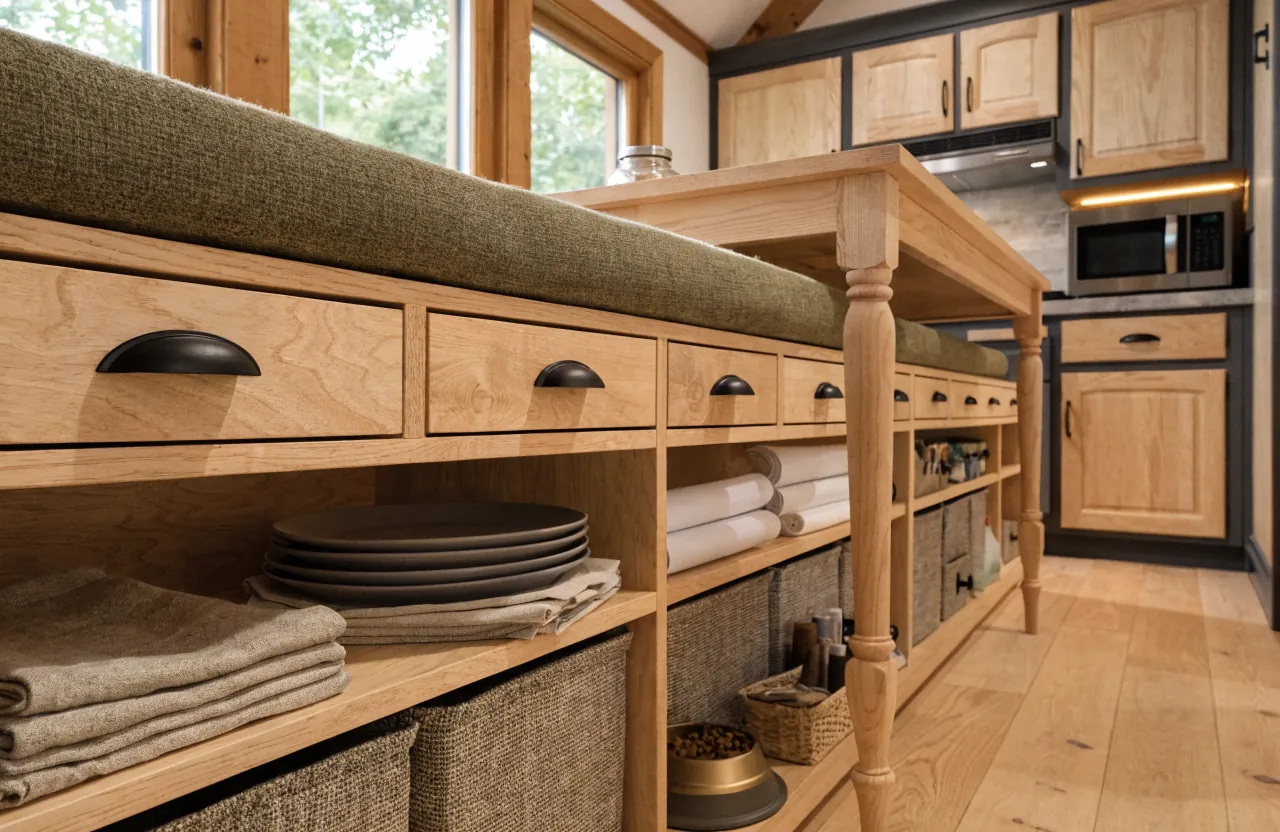
A built-in sofa is one of the highest-value tiny home ideas because it can be lounge seating, guest seating, a daybed, and hidden storage in one footprint. The key is to avoid the heavy plywood-box look. Let the base align with nearby cabinetry, use cushions that actually invite sitting, and leave toe space or shadow lines so the sofa does not feel like a storage chest pushed against the wall.
If your sofa bench faces the kitchen or entry, drawers may make more sense than top-access lids. If it sits below a window or along a quiet wall, lift-up compartments can work beautifully for blankets, books, hobby supplies, and guest linens.
Make the Entry Bench the Fastest Storage in the House
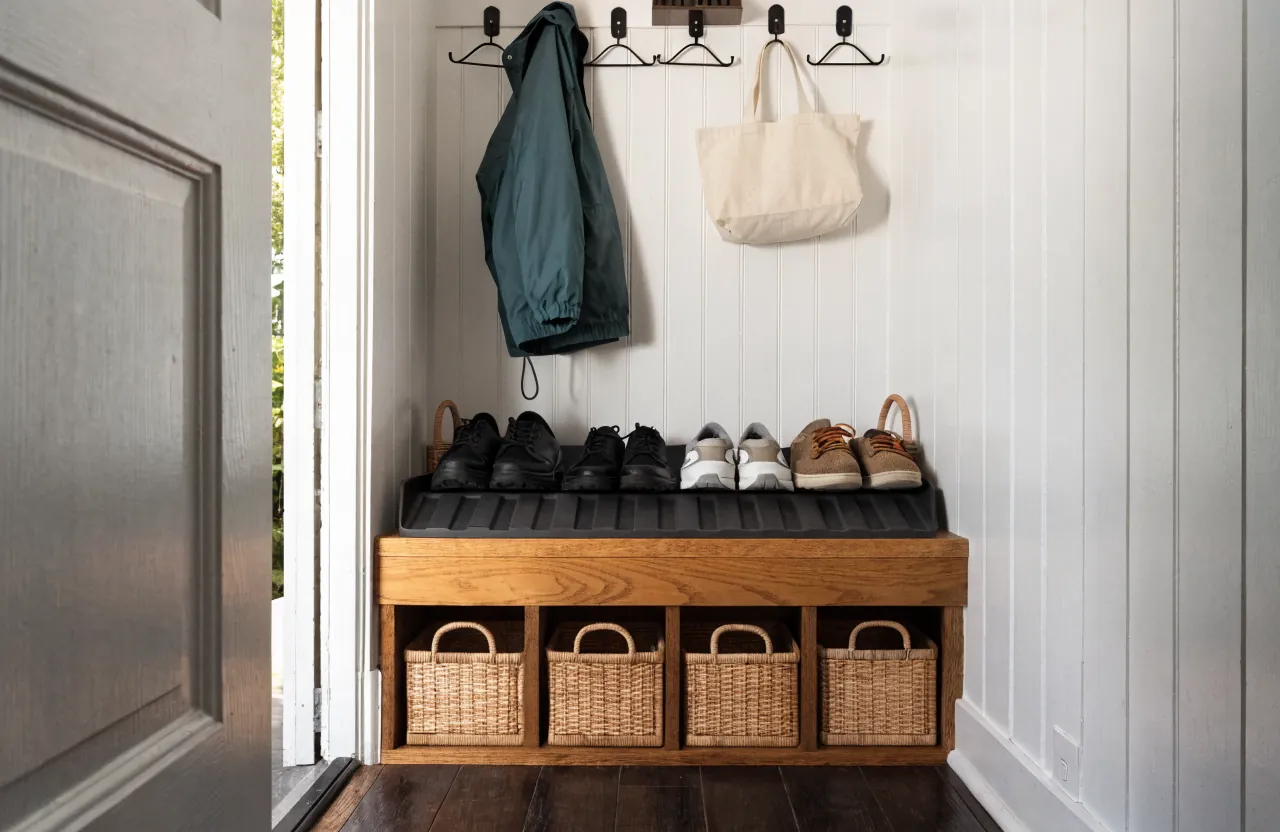
A tiny house without a real drop zone usually gets messy at the door. The fix can be small: a narrow bench, a few hooks, a tray for keys, and under seat storage that is divided for shoes or outdoor gear. This is not glamorous storage, but it prevents clutter from traveling into the kitchen, sofa, and bed area.
For a compact entry, avoid one big open bin under the bench. Shoes pile up, bags snag, and the area starts looking like a closet floor. Use two or three cubbies, a boot tray, or a low drawer that can be wiped clean. Add hooks directly above the bench only if hanging coats will not crowd the walkway.
Turn Awkward Steps and Nooks Into Seats
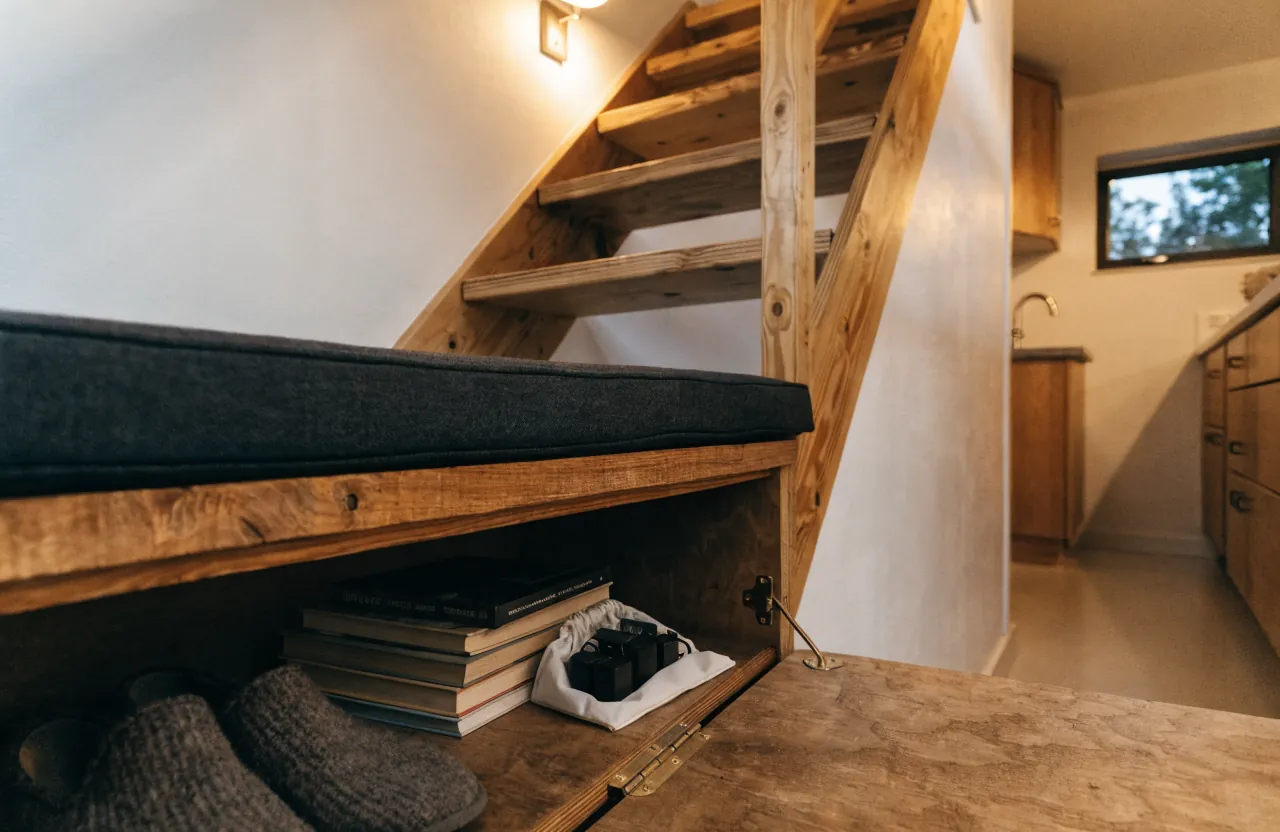
Some of the smartest tiny house storage comes from awkward edges: the side of a stair run, the landing below a loft, the gap under a window, or the short wall beside a kitchen. If the spot is already a pause point, it can often become a small seat with storage below.
For loft stairs, a low step can double as a shoe seat or reading perch. For a kitchen nook, a short bench can replace two chairs and create space for mixing bowls or pantry overflow. For a window wall, a narrow seat can hold extra bedding without stealing closet space.
Match the Storage Type to the Object
Under seat storage fails when every compartment is treated the same. A tiny house needs storage zones that match real objects, not vague categories. Before building, write down what each seat will hold and how often you need it.
| Seat location | Best storage type | Best use |
|---|---|---|
| Entry bench | Cubbies or wipeable drawer | Shoes, bags, leashes, gloves |
| Dining bench | Drawers or split lift lids | Linens, pantry overflow, small appliances |
| Sofa bench | Drawers or deep lift-up base | Blankets, books, hobby gear, guest bedding |
| Window seat | Lift-up compartment | Seasonal clothing, pillows, soft bins |
| Loft landing seat | Small drawer or hinged top | Slippers, reading items, extra chargers |
Keep Air, Weight, and Comfort in the Plan
Built in storage adds weight, especially when every seat becomes a cabinet. If the tiny house is on wheels, weight placement matters. Heavy items should sit low and balanced, not all on one side of the trailer. Even in a stationary tiny home, ventilation still matters: closed boxes can trap moisture, smells, and dust.
Comfort matters too. A storage bench that is too tall, too deep, or too upright will not get used as seating. Aim for a seat height close to a normal chair, cushions that do not slide, and back support where people will linger. Storage furniture should not punish the person using it.
A Simple Under Seat Storage Plan
If you are planning from scratch, give every major seat a clear role. Put fast-access storage near the door, daily storage near the dining or sofa zone, and deep storage where you can open a lid without interrupting the room. That one decision keeps hidden storage from becoming hidden chaos.
The best tiny house interior does not show off every clever compartment. It simply feels calmer because the bags, blankets, shoes, chargers, and seasonal items already have a place to go.