A room can look old without feeling authentic, especially when every fitting comes from the same coordinated collection. The better approach is to choose a clear period reference, keep useful original fabric, and update the hidden systems that make the room safe and comfortable. That balance gives you character without turning daily routines into a compromise.
Choose One Period as Your Anchor
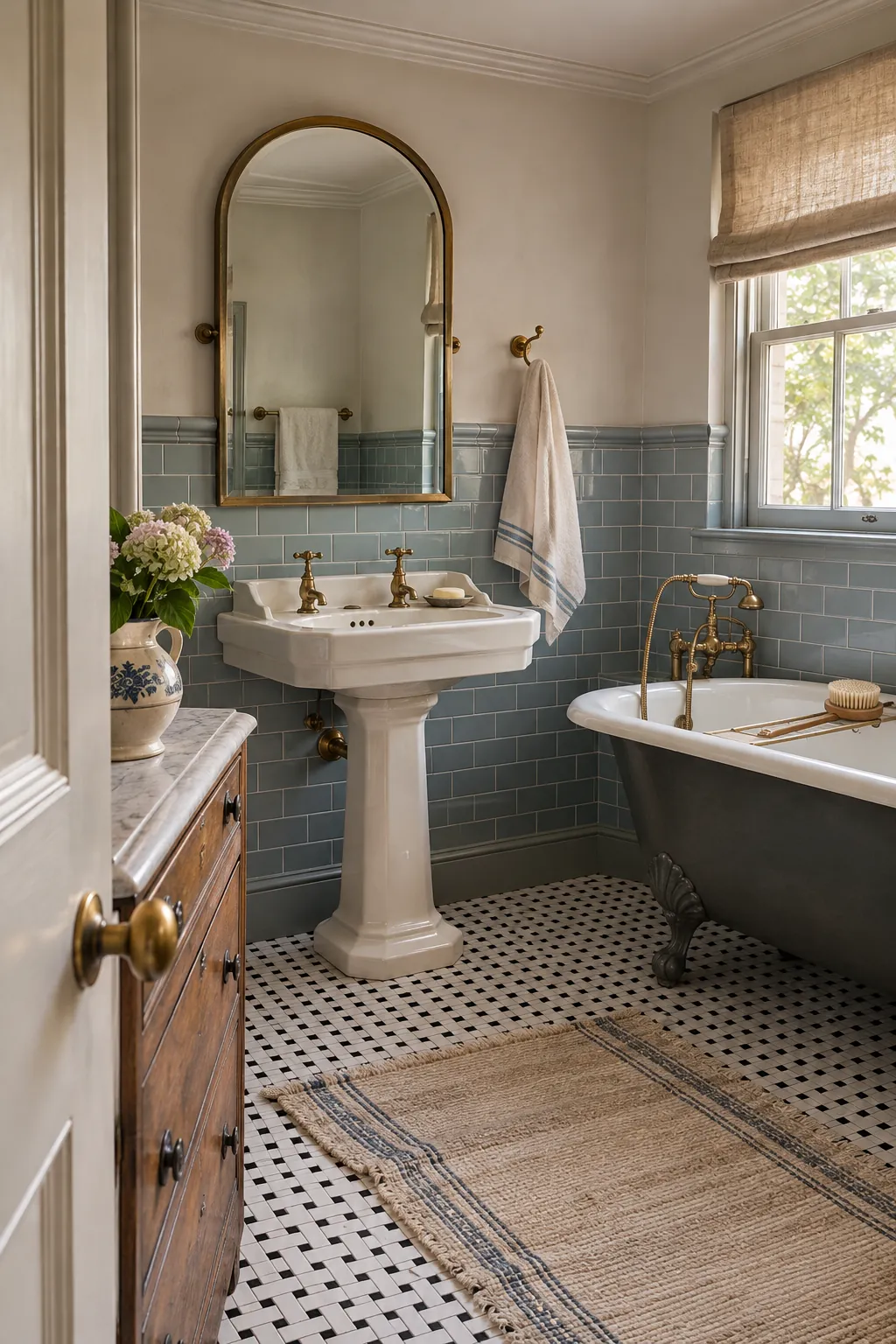
A vintage room feels convincing when one period sets the visual rules. Start with the fixture shapes, tile proportions, and metal finishes that belong to the era you like most. A Victorian room may favor a console sink and turned details, while a midcentury room often works better with simpler cabinetry and a bolder color field.
The anchor does not need to control every object. Modern ventilation, safe wiring, and efficient plumbing can remain quiet parts of the room. Let the visible choices repeat a small set of cues so the result reads as collected rather than themed.
Keep Original Materials That Still Work
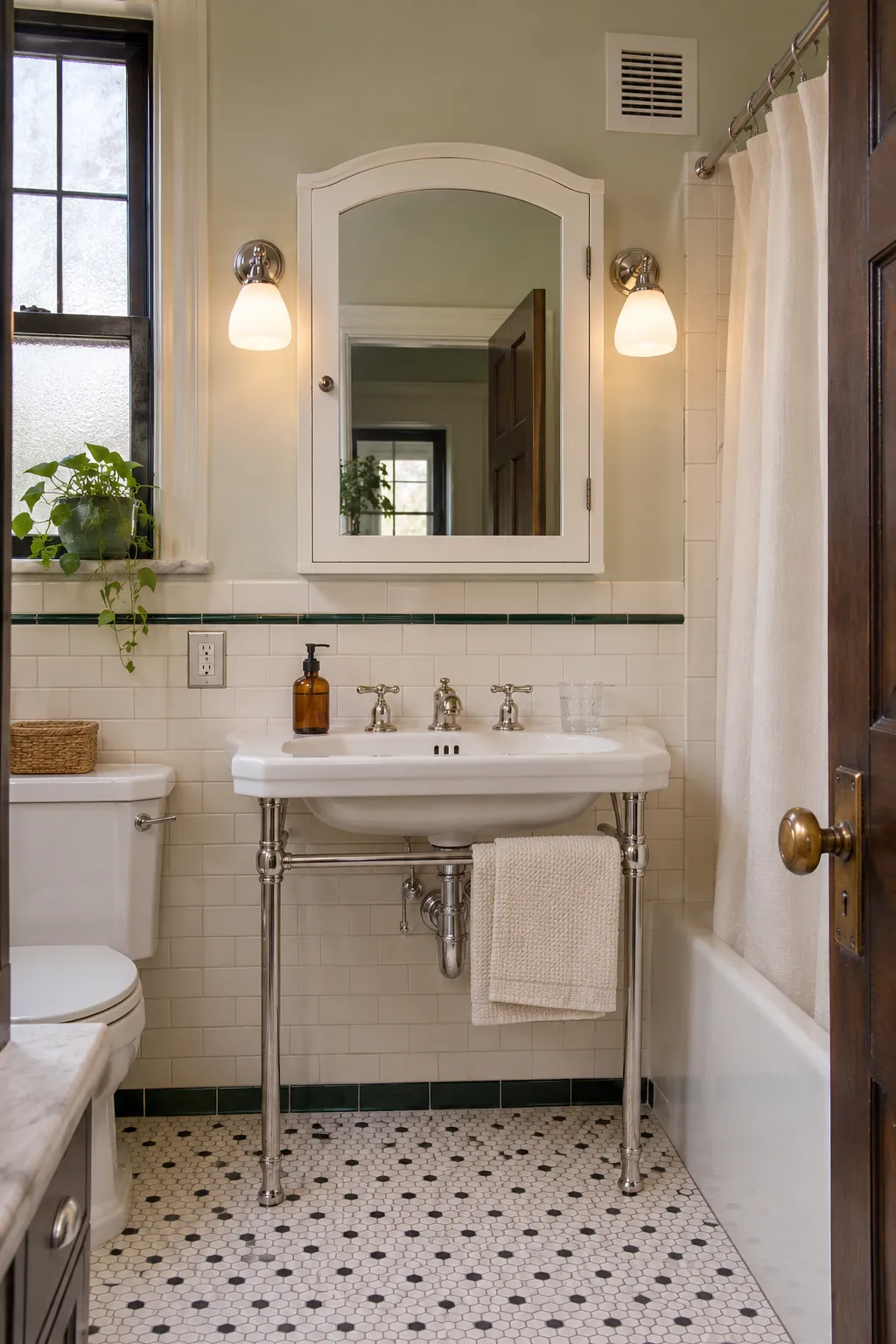
Old tile, cast iron, and solid wood can give a bathroom character that new reproductions struggle to match. Inspect each surface for movement, moisture damage, corrosion, and failed grout before deciding to remove it. Sound material can often be cleaned, resealed, or repaired in a limited area.
Preservation also keeps useful irregularities. Slight color shifts in glazed tile and gentle wear on brass create depth. Damage that affects hygiene, structure, or water control is different and should be repaired by the right trade.
Photograph patterns and measurements before work begins. Those records help you match missing pieces and put salvaged fittings back in the correct place.
Hide Modern Performance Behind Classic Details
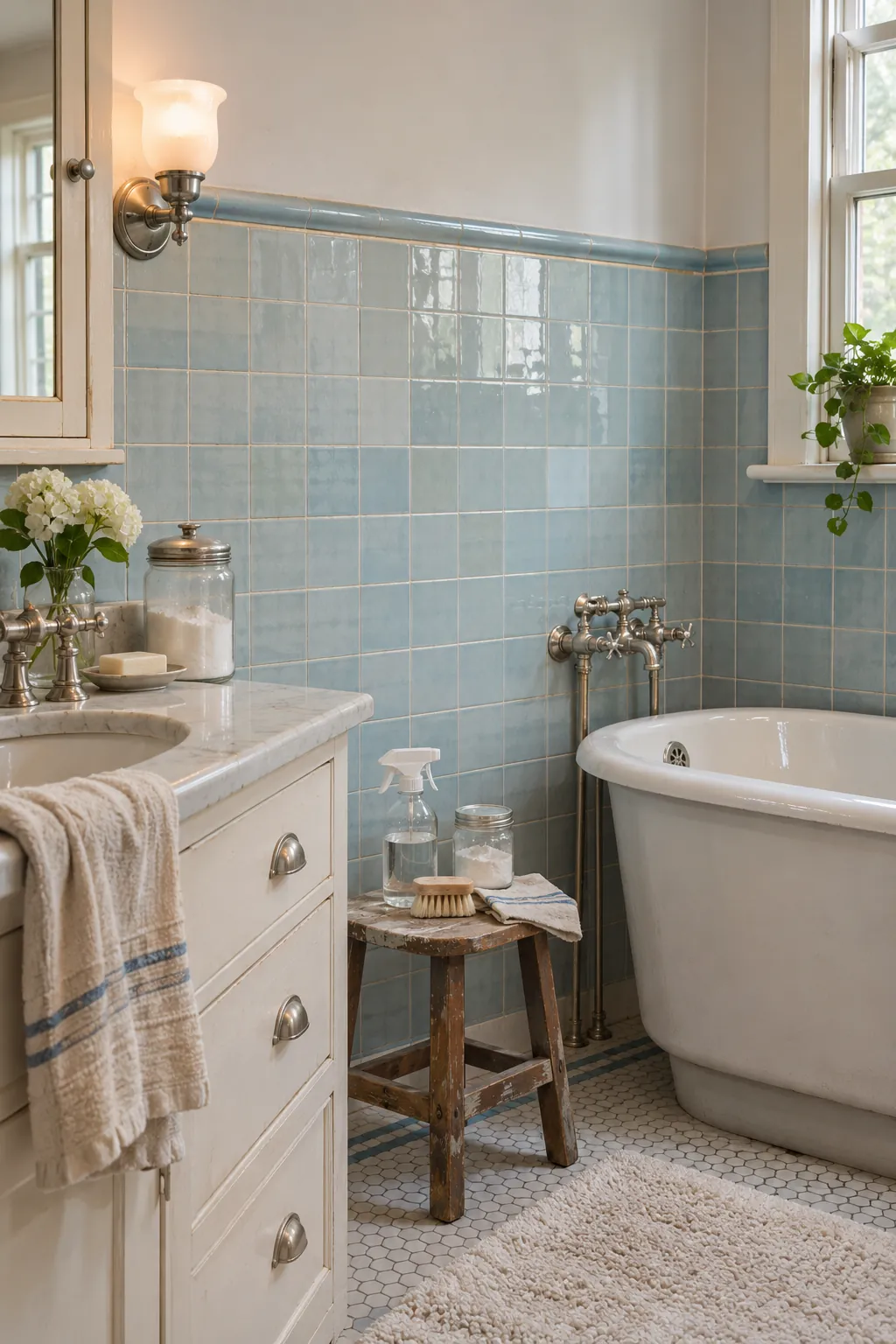
A practical vintage style bathroom should handle steam, splashes, and daily cleaning. Use current waterproofing behind tile, a correctly sized exhaust fan, protected electrical outlets, and reliable shutoff valves. These systems can disappear behind period aware surfaces and fittings.
Choose a new faucet or shower valve for serviceability, then select visible trim with the right silhouette. A traditional cross handle, porcelain index, or simple lever can support the era without sacrificing replacement parts. The same approach works for heated floors, quiet fans, and efficient toilets.
Coordinate Metals Without Forcing a Perfect Match
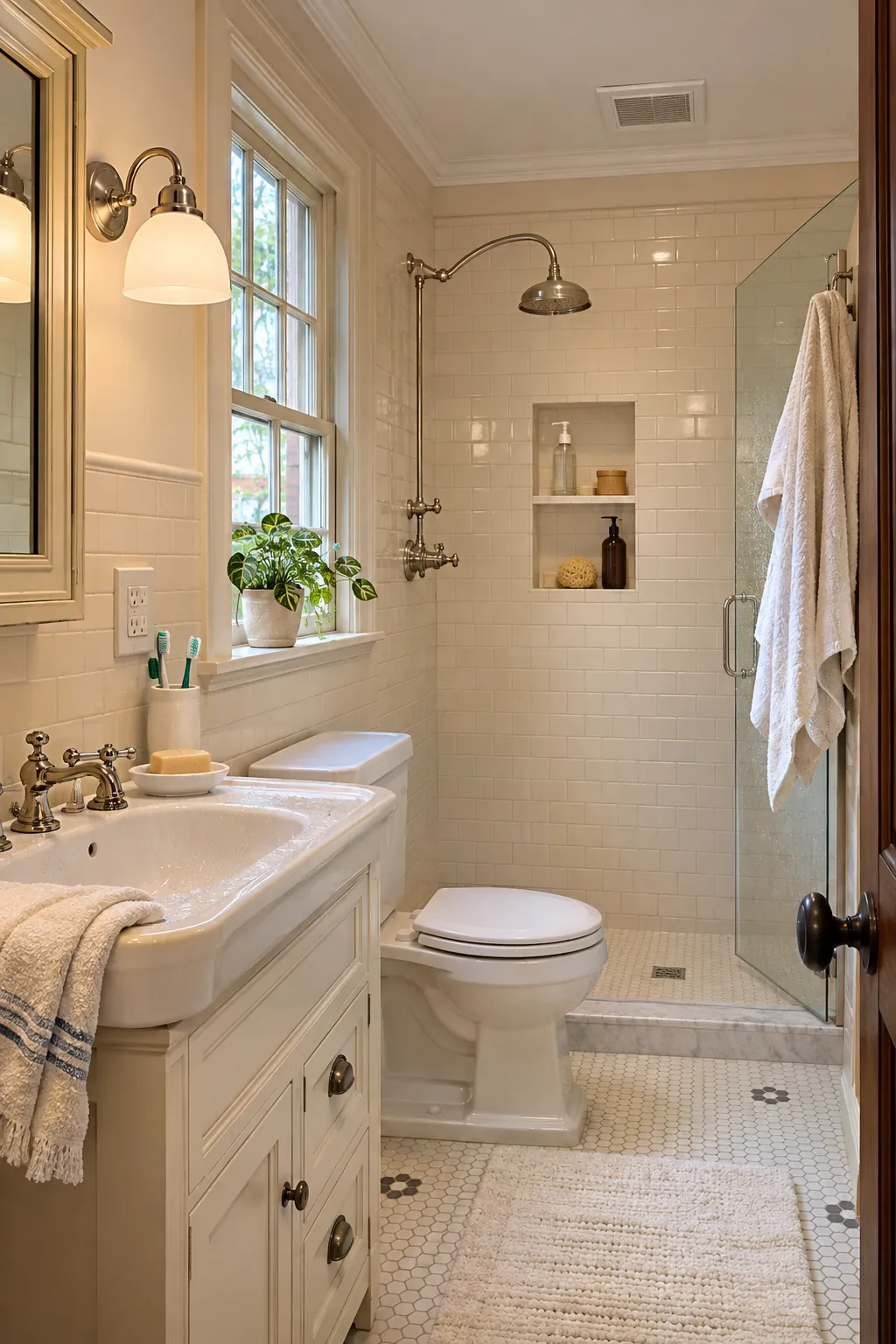
A room assembled over time rarely has one identical metal finish on every fitting. Pick a dominant finish for the plumbing, then allow one supporting finish on lighting, cabinet hardware, or a mirror. Repeat each finish at least twice so the variation looks deliberate.
Pay attention to undertone and surface sheen. Warm aged brass can sit comfortably with dark bronze, while polished nickel often pairs better with silvered mirror frames and chrome details. Avoid coating every piece with an artificial antique effect because identical distressing can make the room feel manufactured.
Keep the number of visible finishes controlled in a small room. Two related metals usually provide enough depth without visual clutter.
Build Storage That Looks Like Furniture
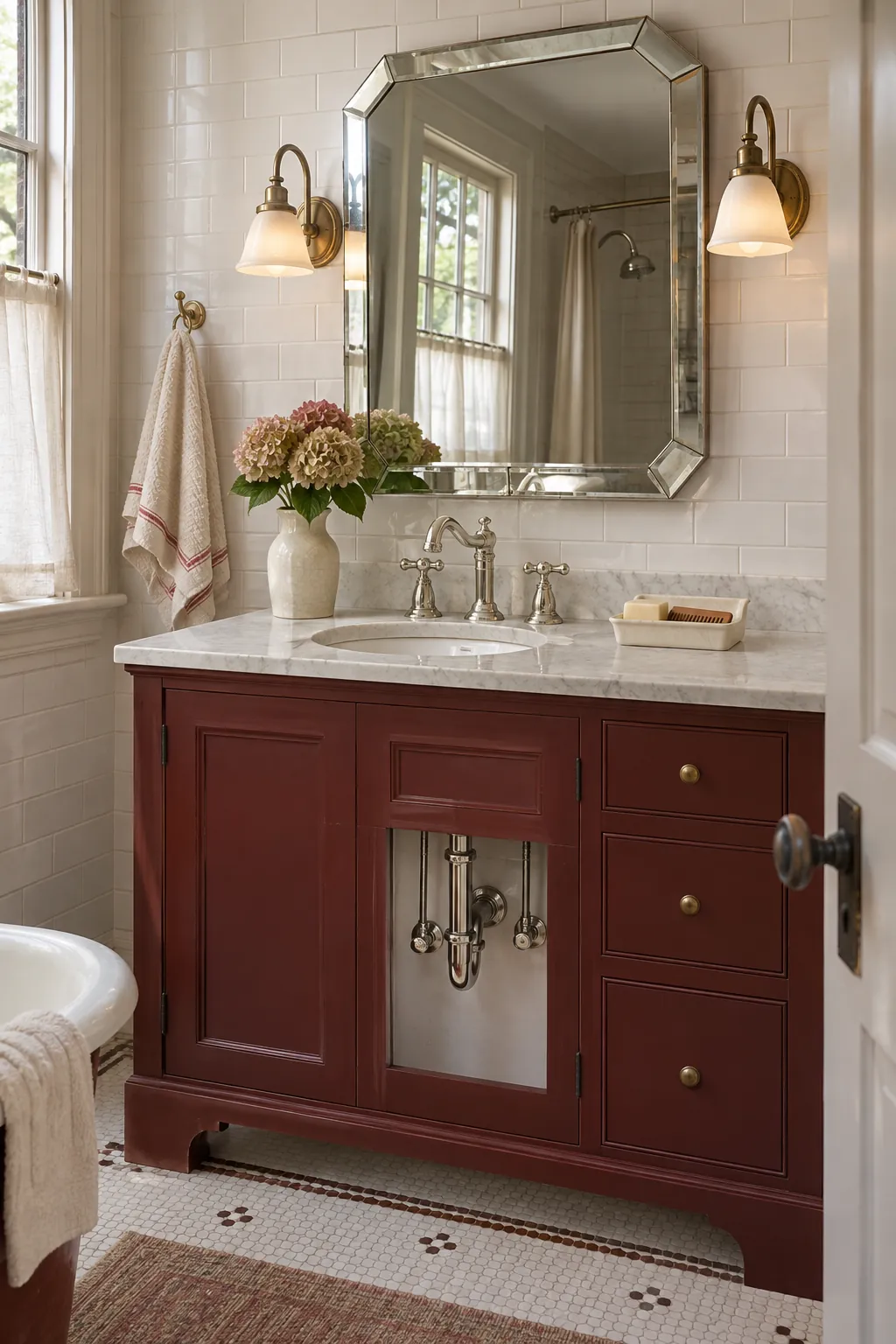
Vintage bathrooms often need more storage than their original plans provided. A vanity with inset doors, visible feet, and furniture scale can hold modern plumbing while keeping a traditional profile. Shallow recessed cabinets also add capacity without crowding a narrow passage.
Measure bottles, towels, and cleaning supplies before choosing drawers and shelves. Deep empty cavities are less useful than compartments sized for what you actually keep. Use washable drawer liners and leave access around valves.
A freestanding cabinet can work when floor area permits, but it should not block ventilation or make the toilet and shower difficult to clean. One substantial storage piece is usually calmer than several small baskets and stands.
Use Lighting That Respects Faces and Finishes
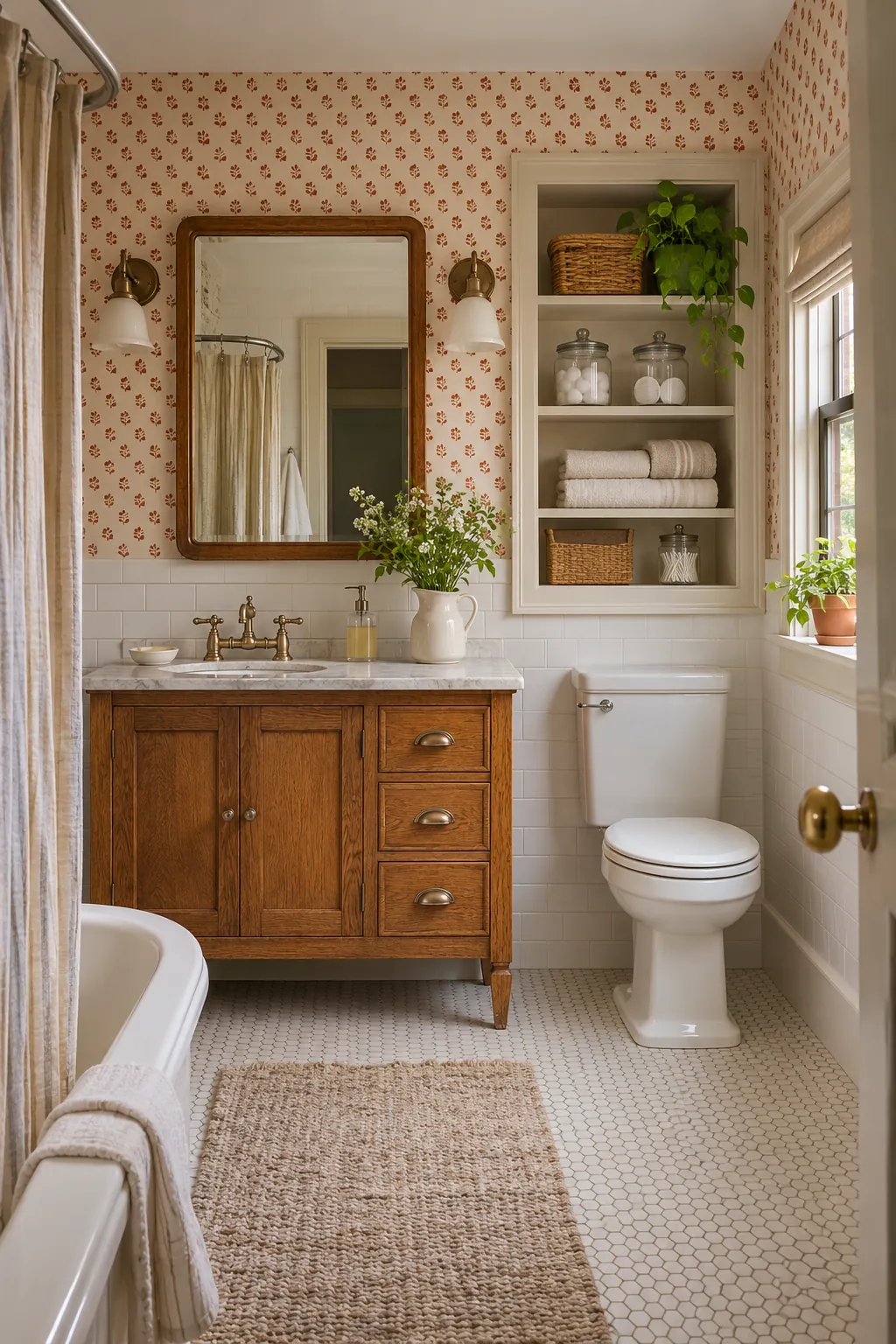
Decorative sconces establish period character, but their first job is to light the mirror well. Place shaded fixtures near face height on both sides when space allows. This reduces harsh shadows and makes grooming more comfortable.
Add a separate ceiling or shower light for safe general illumination. Warm lamps can flatter brass, wood, and cream tile, while accurate color rendering keeps makeup and paint colors honest. All fixtures must suit the bathroom zone where they are installed.
Balance Color, Pattern, and Quiet Space
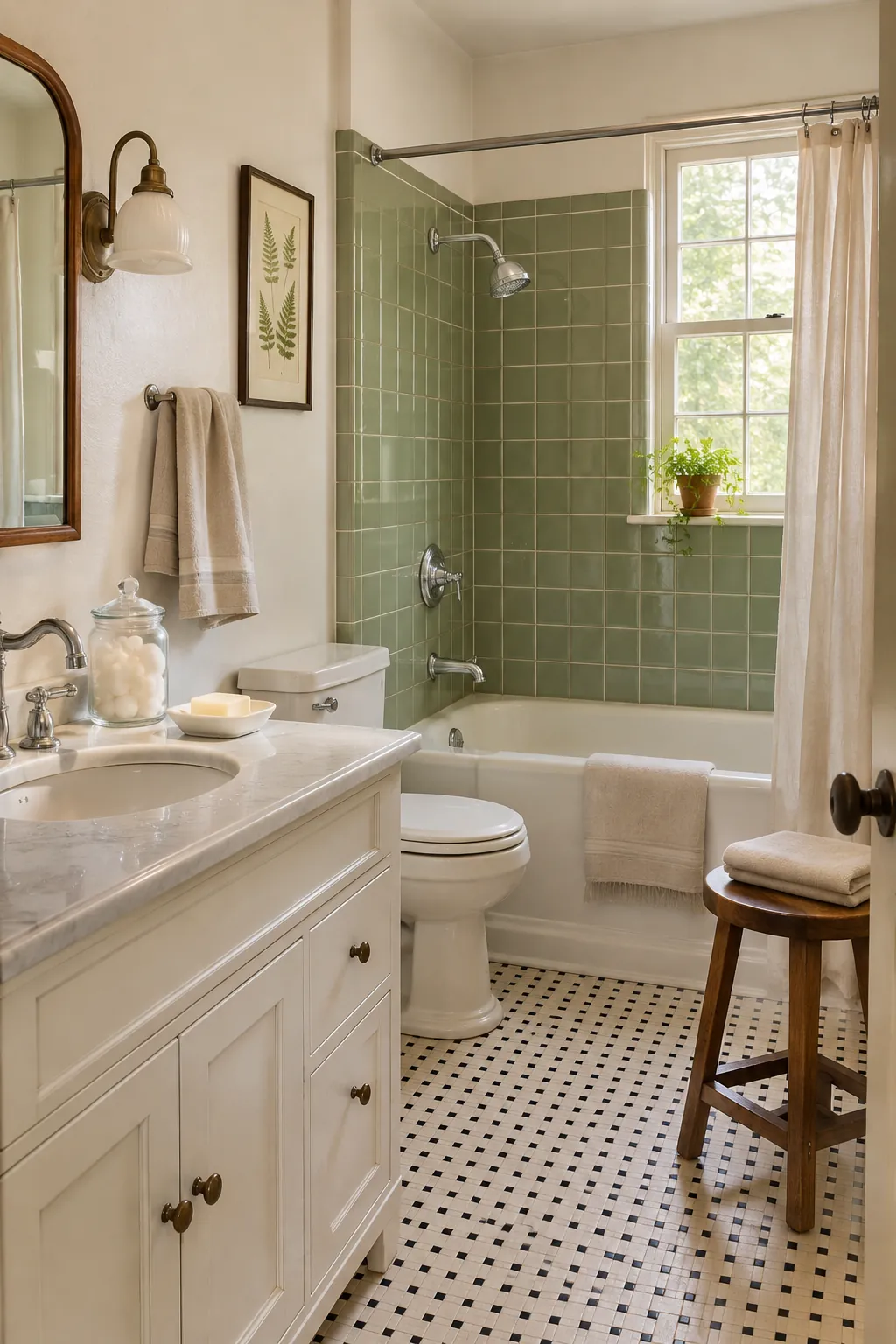
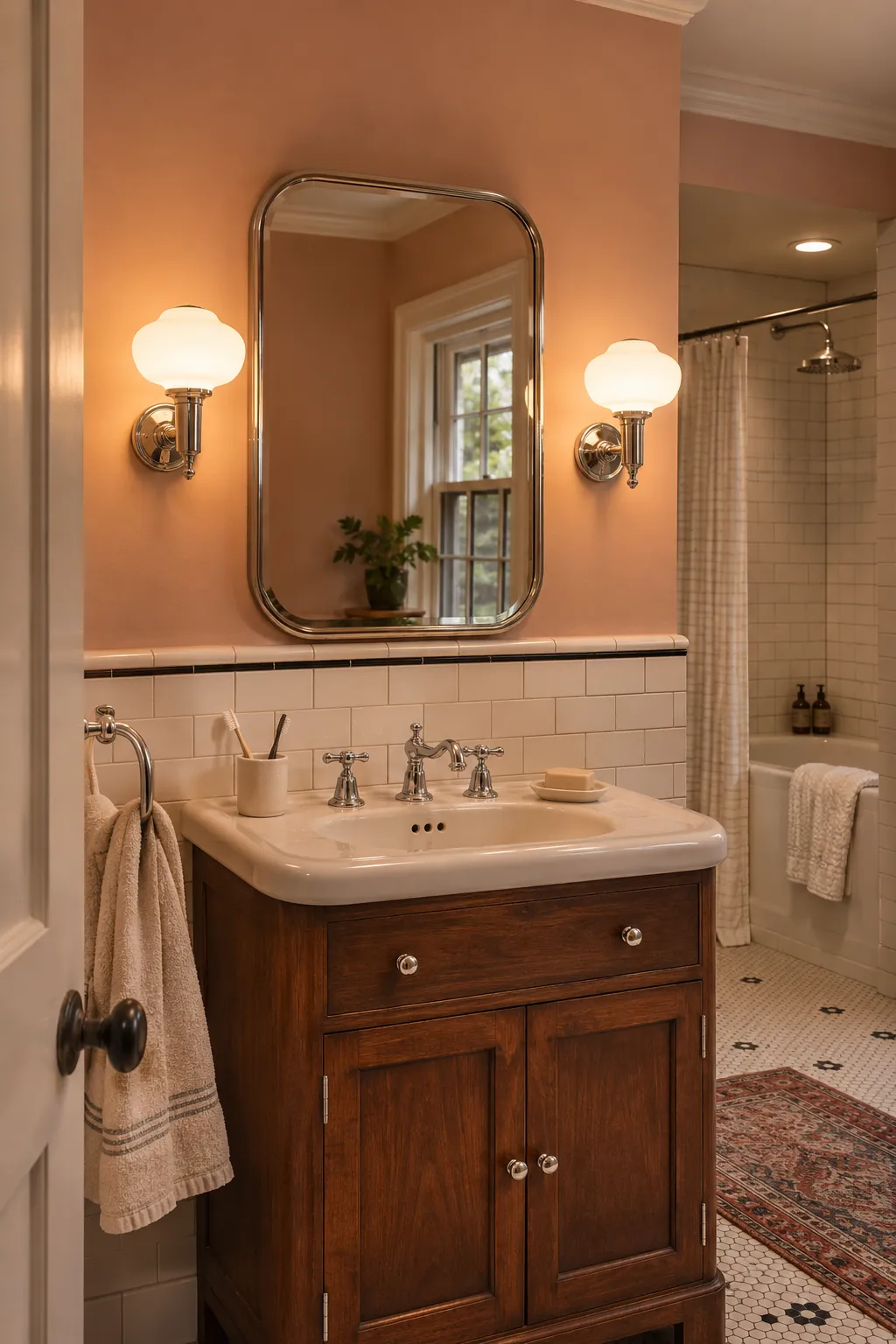
Period color can be expressive without covering every surface. Let one memorable element lead, such as green field tile, a small floral pattern, or a dark painted vanity. Surround it with quieter plaster, simple floor tile, and plain textiles so the feature has room to register.
Scale matters as much as color. Small mosaic floors can support larger wall tile, while a busy wall pattern benefits from an unpatterned floor. Test samples beside the tub, metals, and wood because bathroom light changes their undertones.
Finish with a few useful objects that suit the room: a ceramic soap dish, a woven hand towel, a lidded glass jar, or a small stool. Stop before every surface becomes a display. The strongest vintage style comes from consistent materials, useful details, and enough open space for daily life.