

Have you ever wondered, “What does bamboo symbolize?” Bamboo’s popularity is not a new trend, as humans have used this versatile natural resource for thousands of years. A plant so well-ingrained and important to multiple cultures globally is bound to take on greater meaning, but what and to whom?
Bamboo’s symbolism varies between cultures; however, the overarching themes are durability, flexibility, growth, longevity, resilience, and strength. Bamboo is entrenched in many cultures thanks to its versatility and history. The plant’s characteristics inspire bamboo symbolism.
Bamboo is an essential plant for many cultures, both modern and ancient. Bamboo has taken on many symbolic meanings thanks to its physical characteristics and popularity. The rest of this article examines bamboo’s symbolisms in different cultures.
Exploring Bamboo’s Symbolism: A Global Perspective
Bamboo’s importance throughout human history cannot be overstressed. There are roughly 1400 bamboo species (subfamily Bambusoideae) found globally in tropical, subtropical, and mild temperate regions.
Humans have looked to bamboo for food (including hunting in bamboo forests), shelter, fuel, fabric, construction materials, and many other enterprises for thousands of years.
Thanks to this close association, humans have placed a symbolic value on these plants. Bamboo features frequently in art, poetry, and folklore, taking on different virtues closely associated with bamboo’s physical characteristics and traits.
Bamboo Symbolism In Chinese Culture
One of the “hotspots” of bamboo symbolism is in Chinese culture. The millennia-old (close to 7000 years) relationship between the various Chinese peoples and bamboo has produced solid connections with these plants.
The bamboo plant features in much of China’s art, poetry, and folklore. There are various stories concerning bamboo and its symbolism.
Bai Juyi (a poet) described bamboo as:
- Resolute – due to its deep roots
- Honorable – due to its height
- Modest – due to its hollow internodes
- Chaste– due to its “clean” exterior (few leaves)
The bamboo plant is considered one of four “gentlemen” plants thanks to its virtues.
Historically, bamboo was an essential part of everyday life for Chinese people, where it served several purposes, including:
- Books (bamboo sheets tied on string)
- Fiber for clothing
- Food
- Musical instruments
- Shelter (housing)
- Transportation in the form of boats and chariots
Bamboo Symbolism In Japanese Culture
The ancient Japanese also valued bamboo for its plethora of uses. Japan has roughly 250 bamboo species, which are an essential part of everyday life.
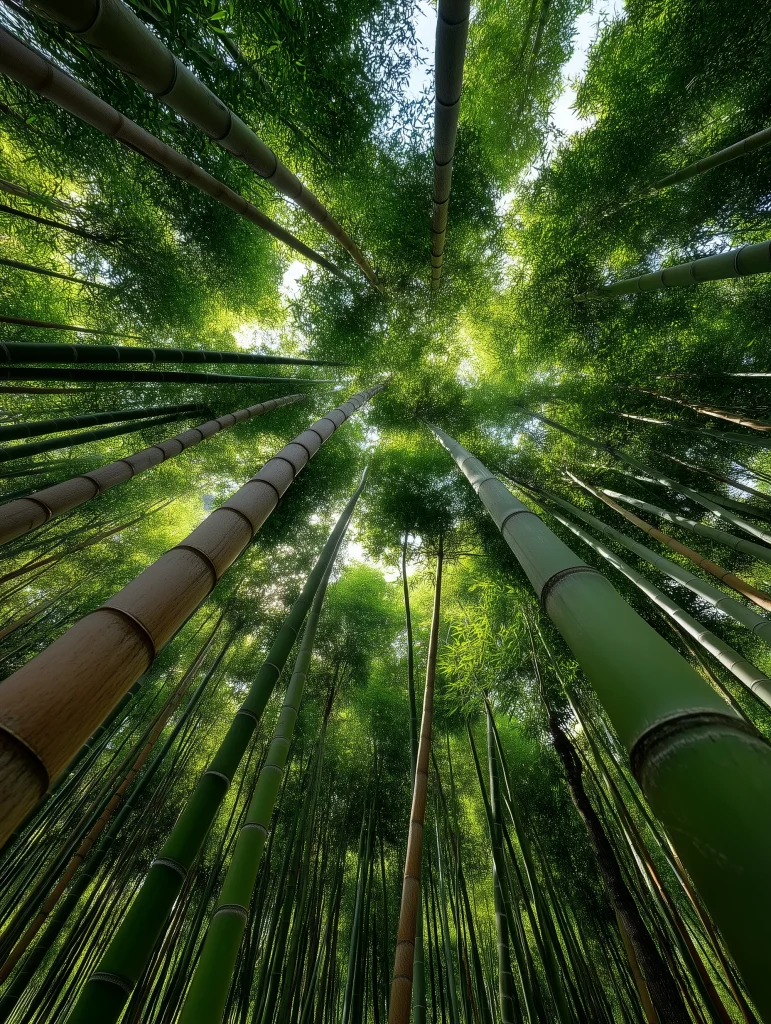
Bamboo features in Japanese art, folklore, and several ceremonies.
The symbolism ascribed to bamboo by Japanese culture includes:
- Innocence and purity – due to the “plain looking” culms, which may also represent simplicity.
- A way to guide deities to the home – during the New Year celebration, “kadomatsu” (three bamboo culms tied together with pine sprigs) are placed in front of entrances to buildings/homes. The three bamboo pieces represent heaven, earth, and humanity.
Another tradition featuring bamboo is the ground-breaking ceremony (“jichinsai”), performed before building begins at a site. Bamboo plants are part of the prayers to deities for the safe completion of the job (creating a haven for the deities).
- Longevity – due to their evergreen nature, quick growth rates, and hardiness.
- Permanence – due to bamboo’s evergreen nature (the plants remain green throughout the year).
The Japanese use bamboo for several purposes, including:
- Construction (houses/buildings)
- Martial arts (like kendo sticks)
- Ornamental/decorative, including ceremonial uses
- Utensils (including brooms, chopsticks, fishing poles, and umbrellas)
Bamboo Symbolism In Indian Culture
Bamboo in India is closely associated with Hinduism; however, there are some “generalized” symbolic meanings, including:
- Prosperity/ a large family/lots of progeny – due to how bamboo grows in clumps.
- Good luck/good fortune
Bamboo is frequently used in ceremonies and as a musical instrument.
Although it’s a sacred tree, bamboo was commonly used for various industries (some of which are relevant today), including:
- Agricultural implants
- Ancient warfare (bow and arrows, chariots, etc.)
- Basket and mat weaving
- Food (the seeds)
Bamboo Symbolism In Other Southeast Asia Cultures
While some cultures have specific symbolism surrounding bamboo, there is considerable overlap.
Some pertinent symbolism include:
- Creation stories – the first man and woman came from a split bamboo plant. This plant was on an island formed after the ocean and sky concluded their battle.
A variation of this story is a man sleeping under bamboo when he dreams of a woman inside the plant, which he splits open and finds her.
- Ghosts/Evil spirits inhabiting bamboo forests – many cultures hold the superstition of evil spirits in bamboo forests that capture/murder people and animals that stray too close (often, a female spirit that devours the victims).
- Good luck – happiness, prosperity, and good luck are ascribed to bamboo. Many people build houses with bamboo in the pillar’s base to bring good fortune.
Bamboo plants are quintessential to most people’s lives and are used for various purposes, including:
- Construction of buildings and furniture
- Basket and mat weaving
- Food (shoots and roots)
- Utensils and musical instruments
Other Symbolic Meanings Of Bamboo
Bamboo is a fundamental part of some religions, like Buddhism and Hinduism.
Bamboo In Buddhism
In Buddhist symbolism, bamboo represents enlightenment through its persistence, strength, and adaptability in tough conditions. The hollow culm signifies peace, simplicity, and emptying oneself to achieve enlightenment.
These plants also represent cleansing and healing, thanks to some of their physical traits.
Bamboo features in Buddhist folklore/stories teaching patience and perseverance.
Bamboo In Hinduism
These plants represent luck and prosperity.
Bamboo is the emblem of Venugopala (and Krishna), elevating its importance to “sacred.” Krishna also used a bamboo flute to charm cowherders, making it an important instrument.
Bamboo is closely associated with several ceremonies, including the “Festival of the Bamboo Pole,” where bamboo poles are planted and decorated in honor of Indra.
Bamboo features in Hindu proverbs that teach followers to live in balance (wealth and poverty, happiness and unhappiness). I.e., to not seek an extreme but to live in between.
Bamboo Is A Symbol Of Healing And Cleansing
While not ascribed/limited to a particular culture or religion, many people associate bamboo with healing and cleansing the spirit.
Bamboo plants play a significant role in:
- “Purifying” the air – while there is some debate over the facts, many people suggest that bamboo plants remove pollution from the air. Whatever your stance, bamboo removes carbon dioxide from the air during photosynthesis.
- Traditional medicine – these plants have been a remedy for thousands of years. Scientific studies revealed that bamboo is a source of antioxidants and anti-inflammatories. It improves cognitive defects and protects the liver.
The leaves are useful for treating diabetes and nervous system diseases.
The Reasons Behind Bamboo’s Symbolic Value
Most of the bamboo’s symbolism is directly related to its phenomenal characteristics.
The most significant traits influencing symbolism include:
Durable, Strong, And Resistant
The living plant is hardy, reaches incredible heights (for grass), and is relatively disease-resistant.
Bamboo makes excellent timber thanks to its sustained strength after it dries out. It is durable, especially when mixed with resins.
Bamboo often grows in areas that experience adverse conditions, proving its strength and resilience as a tree, which inspires people to live with the same strength and perseverance.
Flexible And Lightweight
Aside from its strength, bamboo is flexible (alive and when dried), making it an ideal resource for multiple needs. It is also wonderfully lightweight compared to other hardwoods, improving its ease of use.
Another way of looking at it is bamboo is adaptable. When the strong winds blow, bamboo bends with the wind but does not break, eventually returning to its position.
Incredible growth Rates
Some species may grow up to 1 foot a day! This incredible growth rate means that bamboo is a “relatively” sustainable resource that is dependable.
People ascribe prosperity, longevity, and large families to this trait.
Widely Available
Bamboo species grow well in many locations, and it was easy to access by older civilizations, which allowed them to discover other amazing properties.
This availability encourages its use and popularity and speaks of prosperity and resilience.
An Essential Food Source For Specific Species
The panda bear is held in high regard by some cultures, and thanks to their reliance on bamboo, it further elevates the plant’s esteem.
Humans eat the seeds and saplings(shoots), and livestock eat the leaves, making them essential to life providing sustenance and wholeness.
Conclusion
Bamboo is an exceptionally well-integrated plant in many cultures and religions. Many people ascribe deep symbolic meanings to bamboo thanks to its strength, flexibility, durability, and other traits. While the exact meaning may differ between cultures, bamboo is widely revered as sacred and treated with respect.