The chair is full, clean laundry is still in a basket, and there is nowhere to hang the shirt you need tomorrow. Start by separating clothes that need hangers from clothes that can fold. For a quick setup, a stable clothes rail plus a dresser covers both jobs; if visible clothing bothers you, an armoire is usually the more comfortable choice. Measure the space you can spare before buying either one.
Start with a freestanding clothes rail for everyday hanging
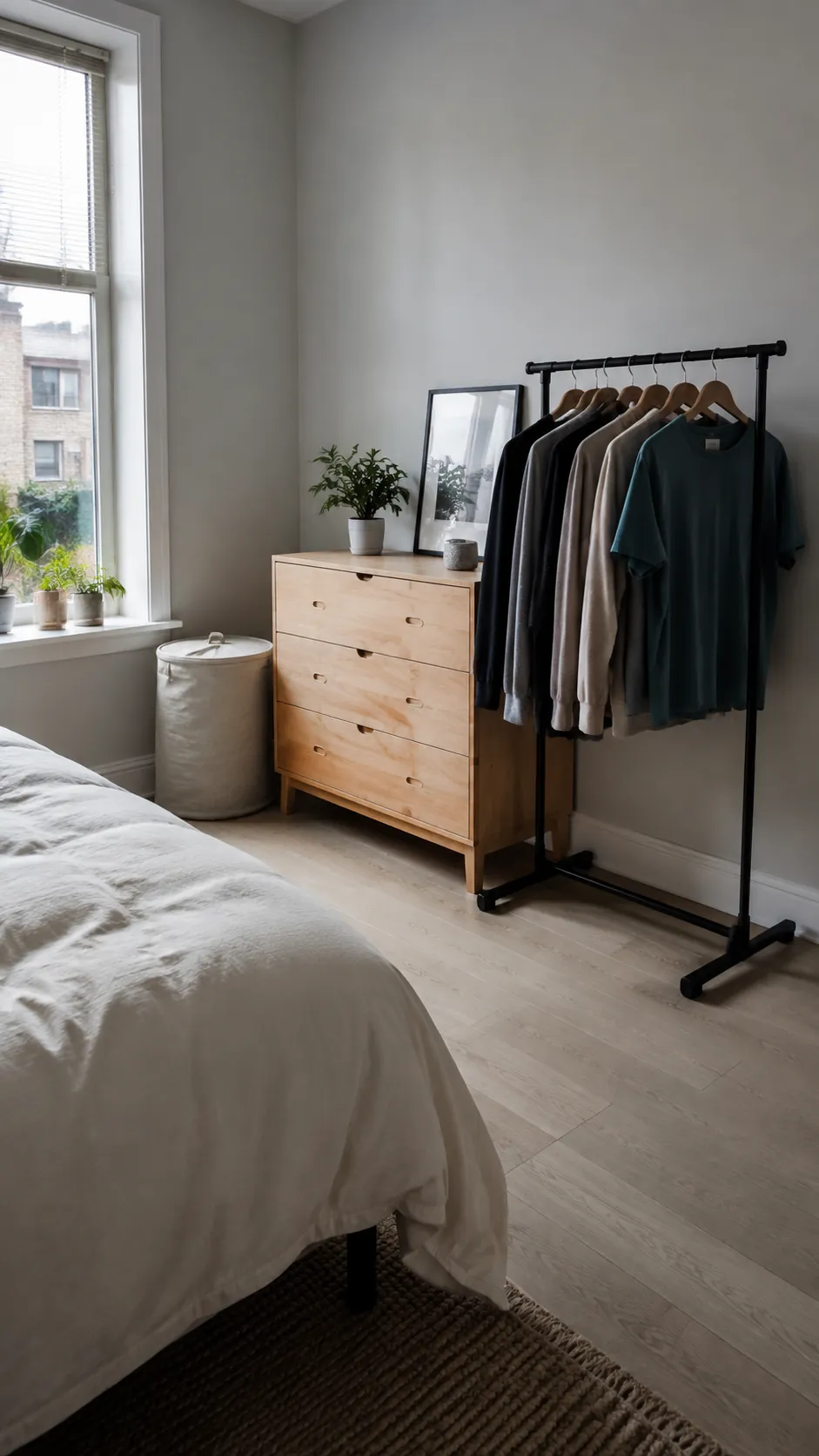
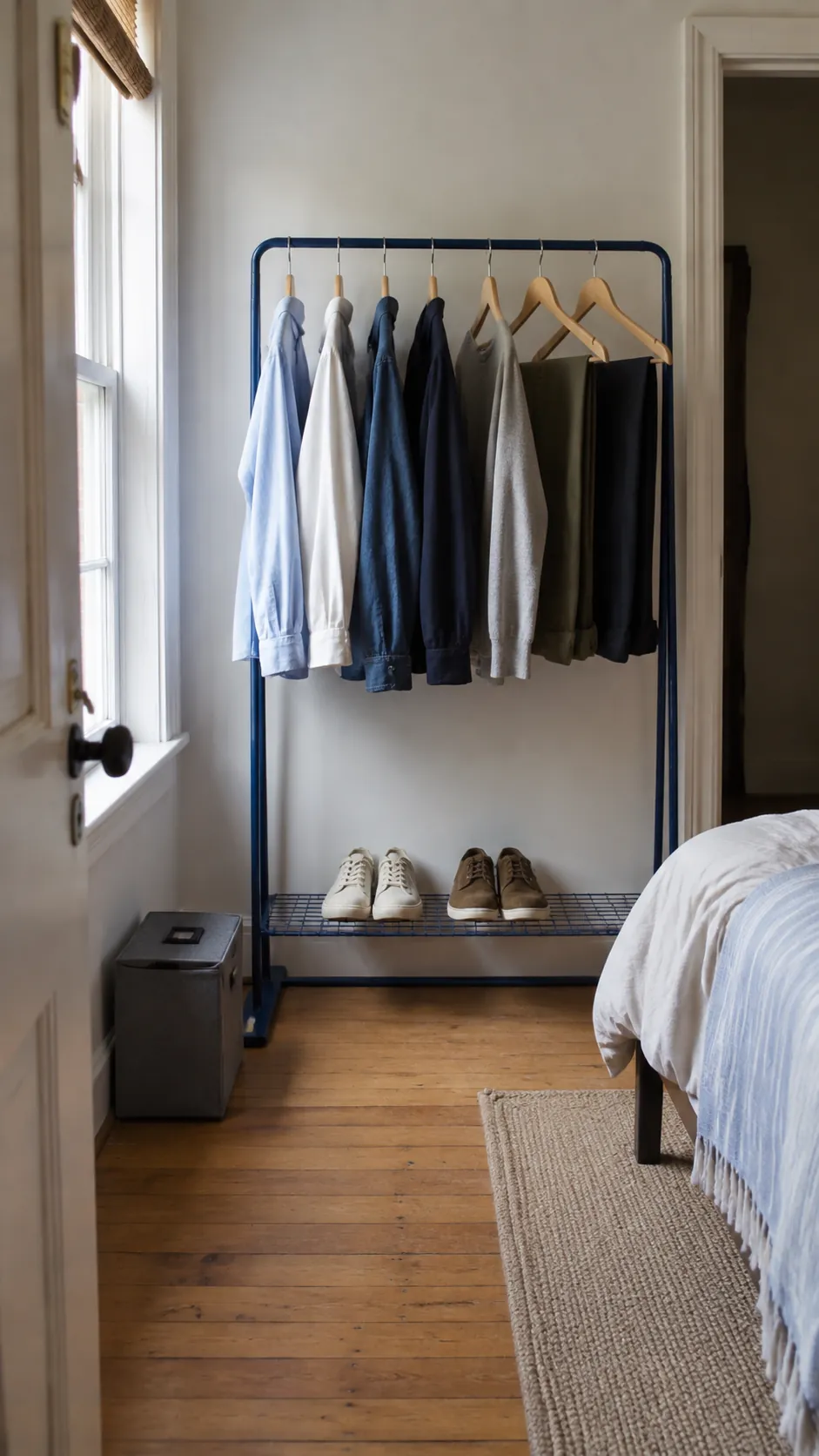
A freestanding clothes rail is the quickest option if you mainly need somewhere to hang shirts, jackets, and tomorrow’s outfit. Choose a stable base and check the manufacturer’s load rating before filling it with coats. Measure the longest garment from the hanger hook to the hem so it clears both the floor and any lower shelf. An open wardrobe rack works best for clothing you wear regularly, while a separate drawer or covered bin handles underwear and smaller items.
Keep the rail outside the door swing and leave enough room to slide hangers sideways without brushing the bed. Open storage exposes clothes to dust, so vacuum around the base and use breathable garment covers for seldom worn pieces. If seeing every item makes the room feel busy, choose an enclosed option before spending money on matching hangers.
Choose an armoire when you want clothing out of sight
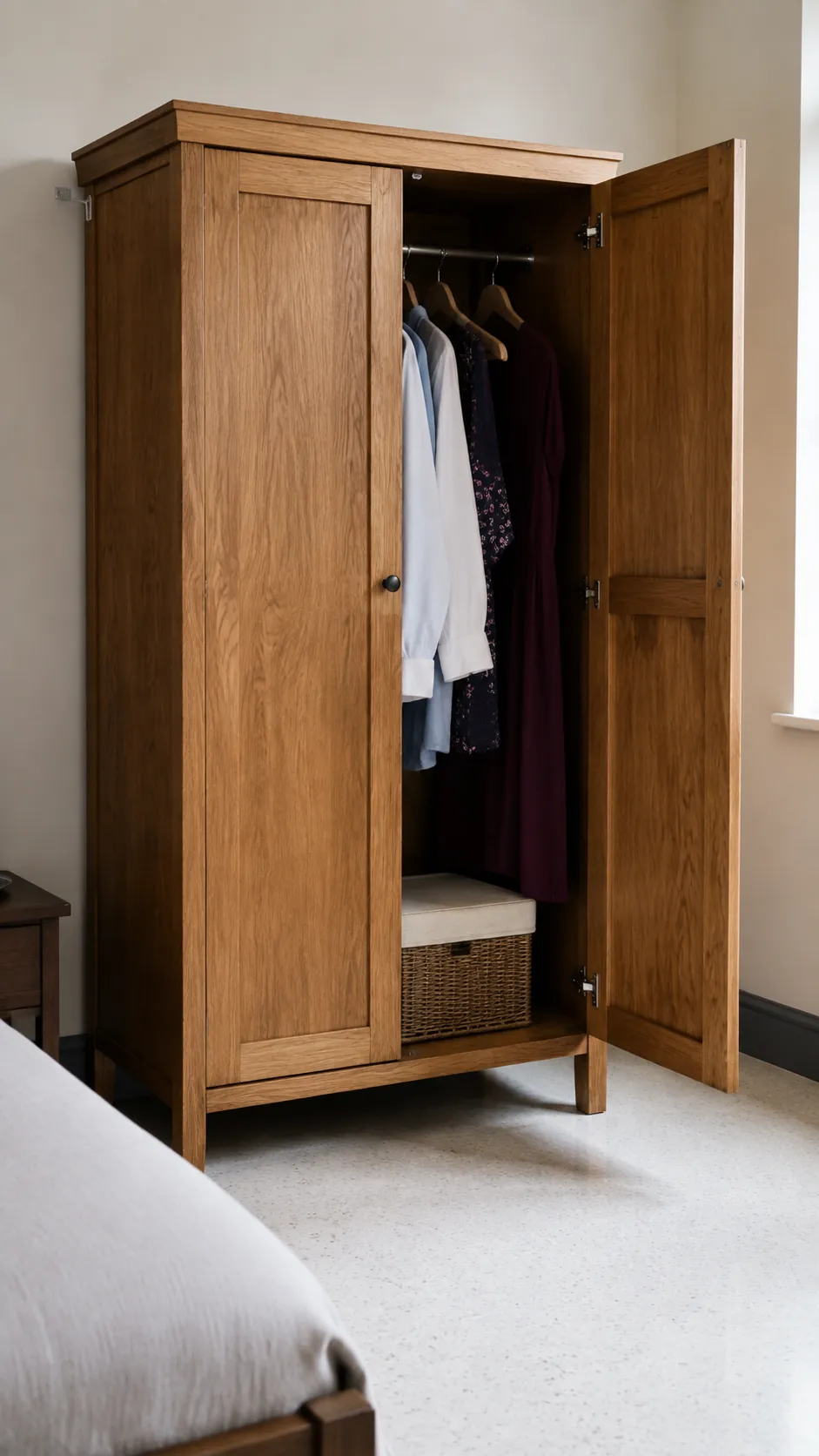
An armoire gives you hanging space behind doors and can make a bedroom feel calmer without building a closet. Check its interior depth with one of your actual loaded hangers; the outside measurement includes doors and back panels. Look inside for a useful mix of rail space and shelves rather than choosing by the exterior alone. If you wear long dresses, a cabinet divided into two short hanging sections may be the wrong fit.
Measure the delivery route, ceiling clearance, and space needed to open the doors before buying. A sliding door model can suit a narrow aisle, though you usually cannot access the whole cabinet at once. Secure wardrobes according to the manufacturer’s instructions, and get approval for any required wall attachment in a rental. If secure installation is not possible, choose a different storage solution rather than skipping the restraint.
Let a dresser handle the clothes that do not need hangers
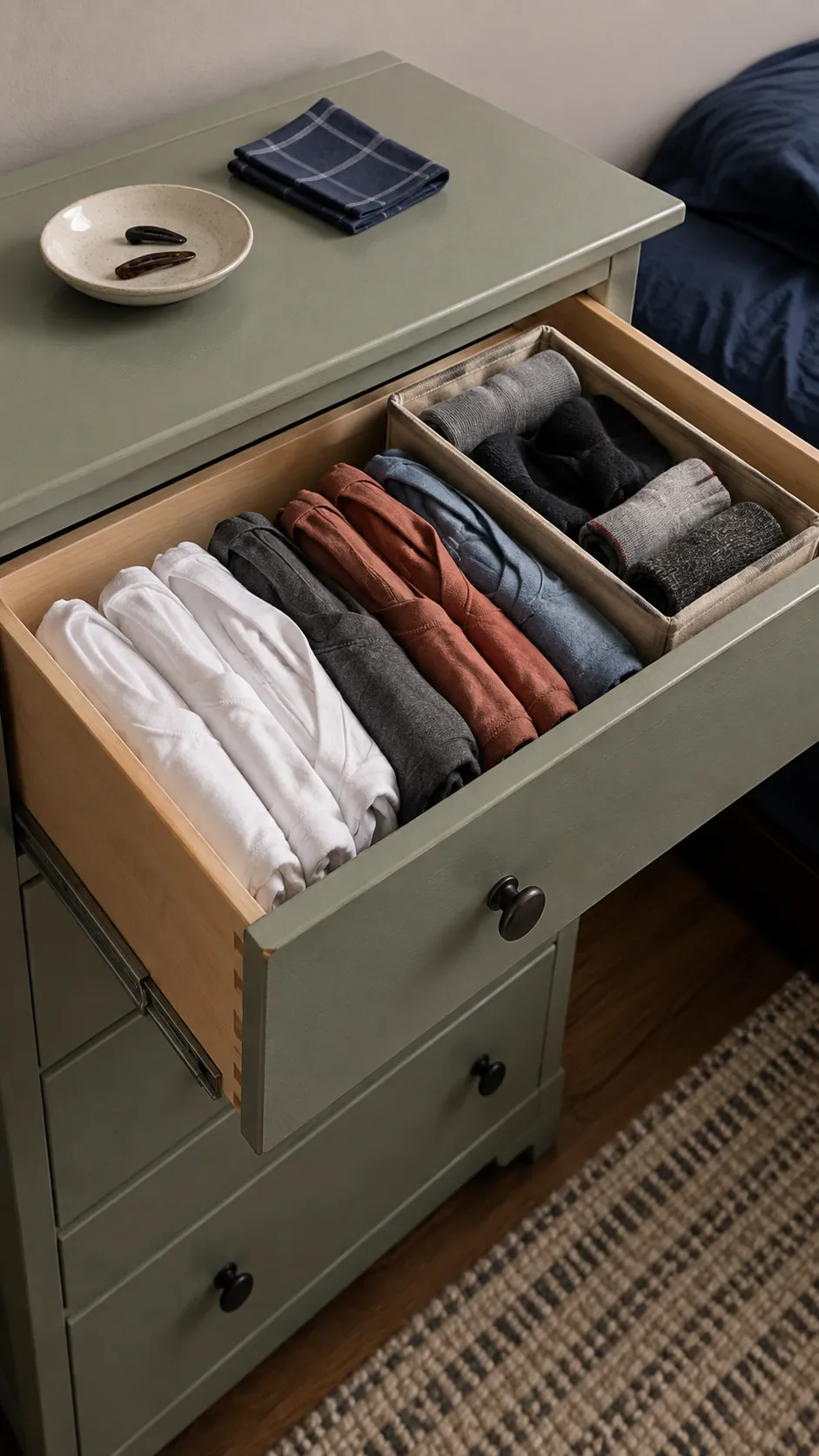
T shirts, socks, pajamas, and most knitwear usually fit more efficiently in drawers than on a rail. Dresser storage solutions work particularly well when you prefer folded clothes and want small items contained. Fold garments so you can see each one without lifting a tall stack, then adjust the fold to the drawer’s actual depth. Give socks and underwear a divider so they do not migrate into the next category.
Leave enough clear floor space to pull the deepest drawer out and stand in front of it. Follow the furniture’s anchoring instructions and never treat a low dresser as automatically safe from tipping. A modest chest plus a short hanging rail may serve your wardrobe better than one large cabinet with the wrong interior. Keep the top mostly available for dressing instead of turning it into a second storage pile.
Use covered storage beneath the bed for the seasonal overflow
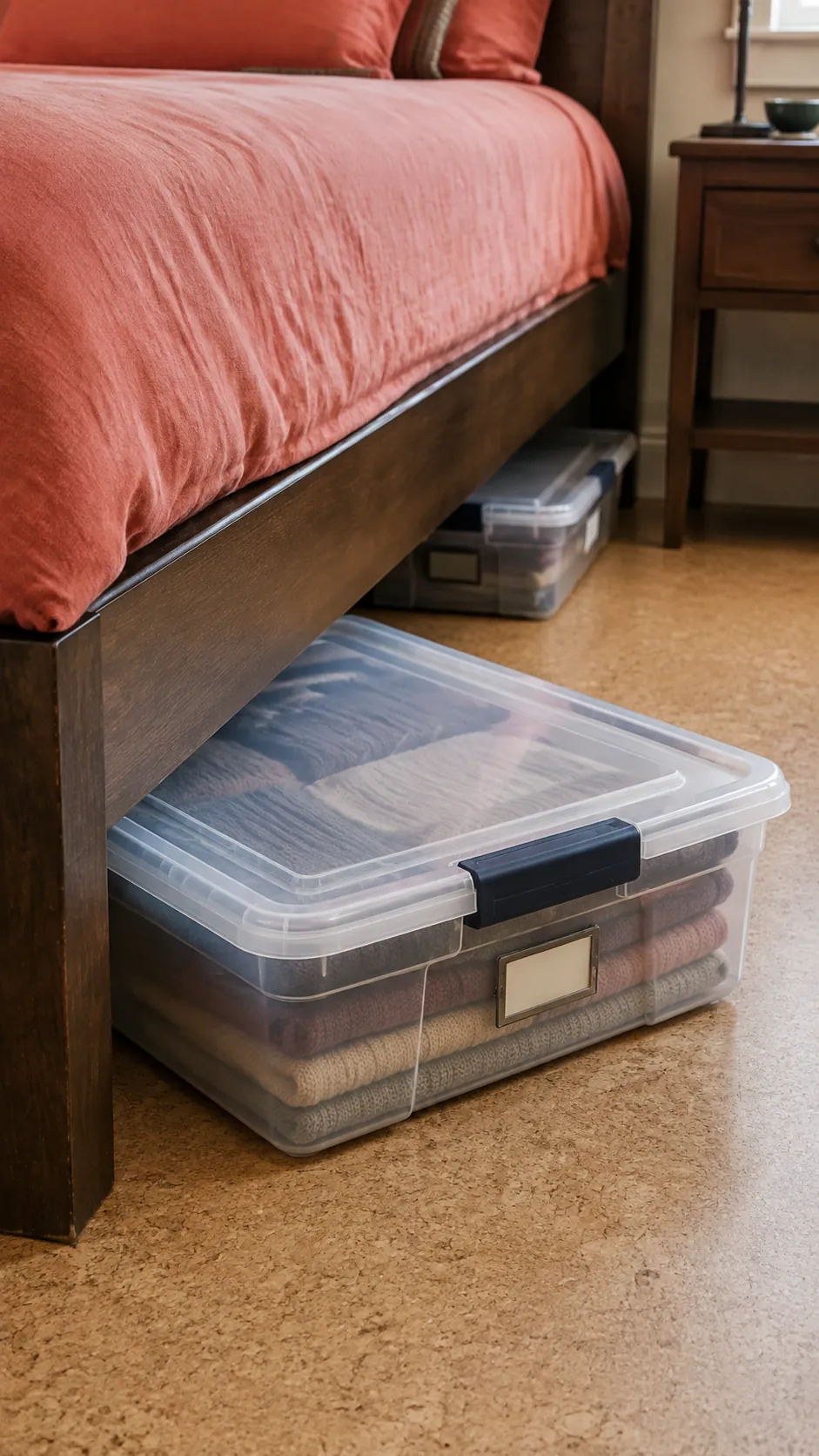
Under bed storage is useful for clean, fully dry clothes that you do not need every morning. Measure the lowest clearance, including the bed’s center supports, before buying containers. Check that the box can slide out from the side you can actually reach, since a bedside table may block an otherwise perfect fit. A shallow container with a lid protects garments from ordinary dust better than an open basket.
Group items by season or purpose and label the accessible end so you can retrieve one container without opening everything. Avoid packing damp textiles away, and investigate any moisture problem rather than sealing it inside a box. Vacuum the floor beneath the bed when you rotate clothing. Reserve an easy daily storage spot for current outfits so getting dressed does not require kneeling on the floor.
Hide a storage zone behind a curtain
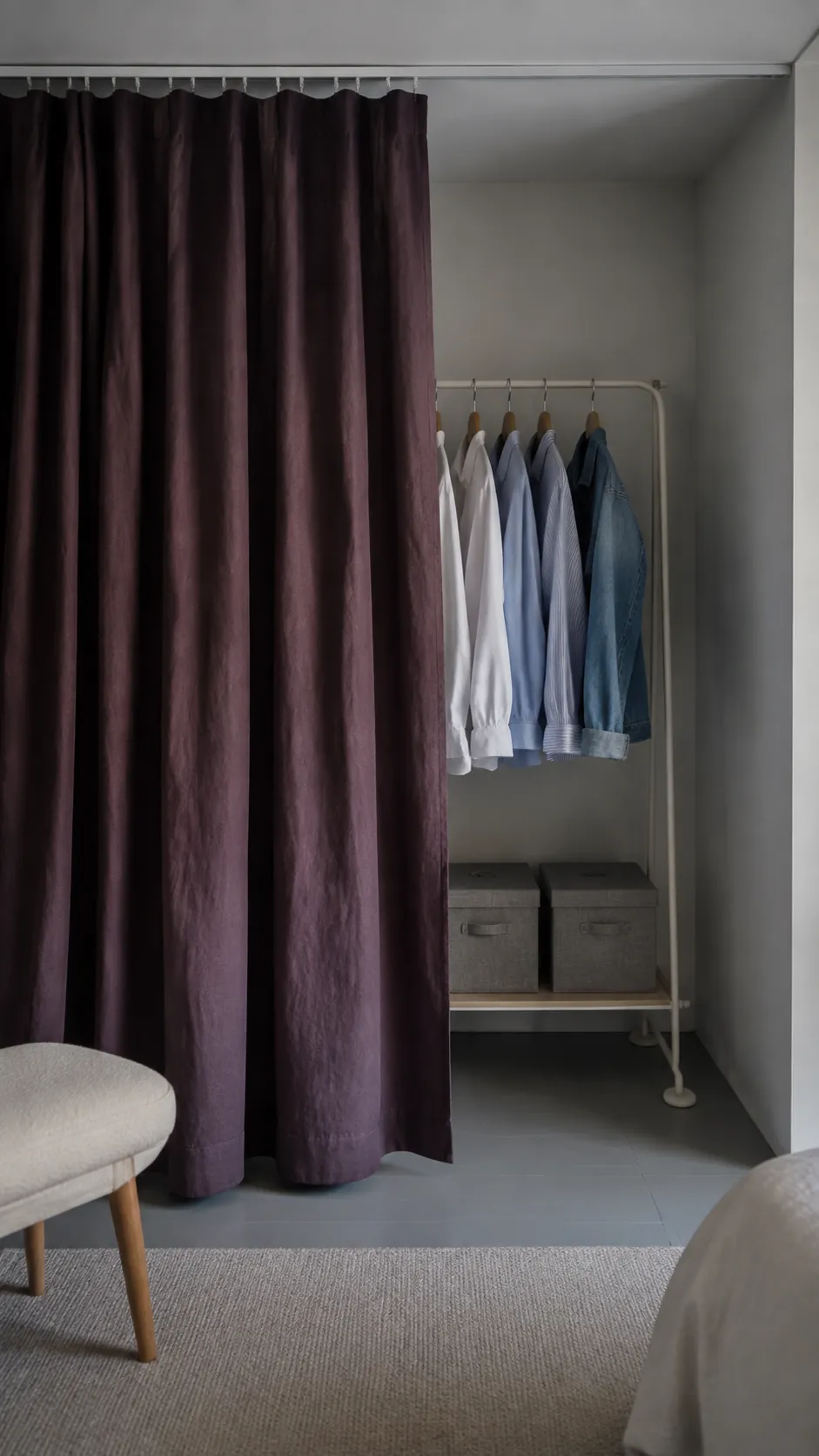
A curtain can soften the view of a rail and shelves when cabinet doors would use too much space. Among curtain wardrobe ideas, the most practical is a dedicated shallow zone with a curtain that opens fully for access. Allow for the shoulder depth of hanging clothes and the folds of the fabric so the panel does not snag each time you move it. Keep the hem clear of the floor for easier cleaning.
The curtain should conceal storage, not support its weight. Use hardware rated for its span and fabric weight, and follow the installation instructions for the actual wall or ceiling material. A tension rod is appropriate only where its product requirements and intended load can be met. Leave heaters, vents, windows needed for escape, and electrical access clear, even if that means using a smaller storage area.
Use a wall rail only where the mounting can carry the load
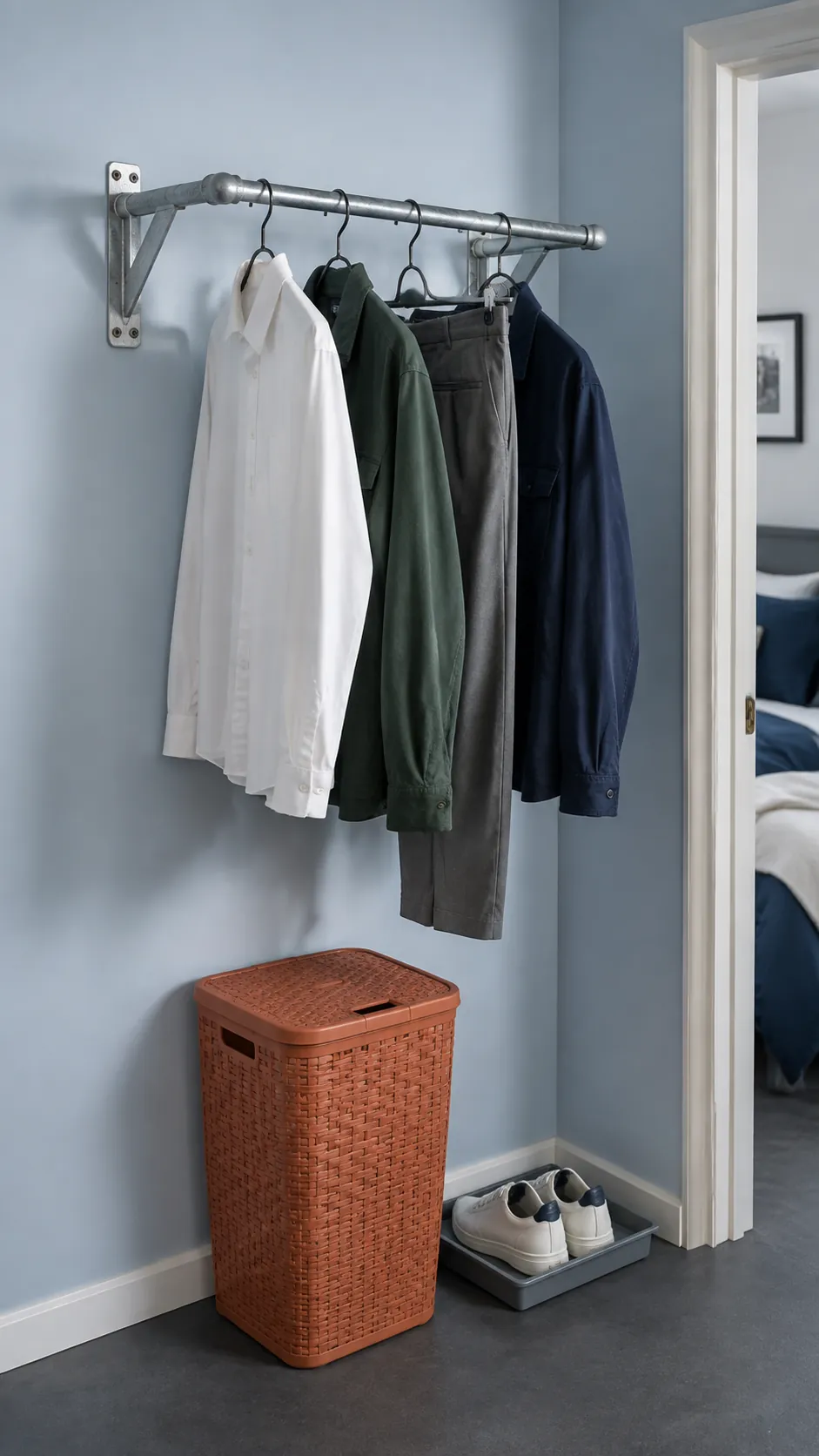
A wall mounted clothing rack can free the floor below for a small hamper or shoe tray, but the attachment matters more than the styling. Confirm the wall construction, required fixings, load rating, and landlord permission before choosing hardware. Do not hang a wardrobe’s worth of clothing from adhesive hooks or fixings intended for a lighter object. Allow enough projection for hangers to sit normally without pressing sleeves against the wall.
Mount the rail at a height you can reach comfortably and keep its ends away from a busy walking route. Pair it with a few covered bins for folded garments instead of trying to hang every item you own. Start with the storage type that matches most of your clothes, then add only the missing function. The best small bedroom clothes storage is the arrangement that lets you put tonight’s clothes away without borrowing the chair again.