
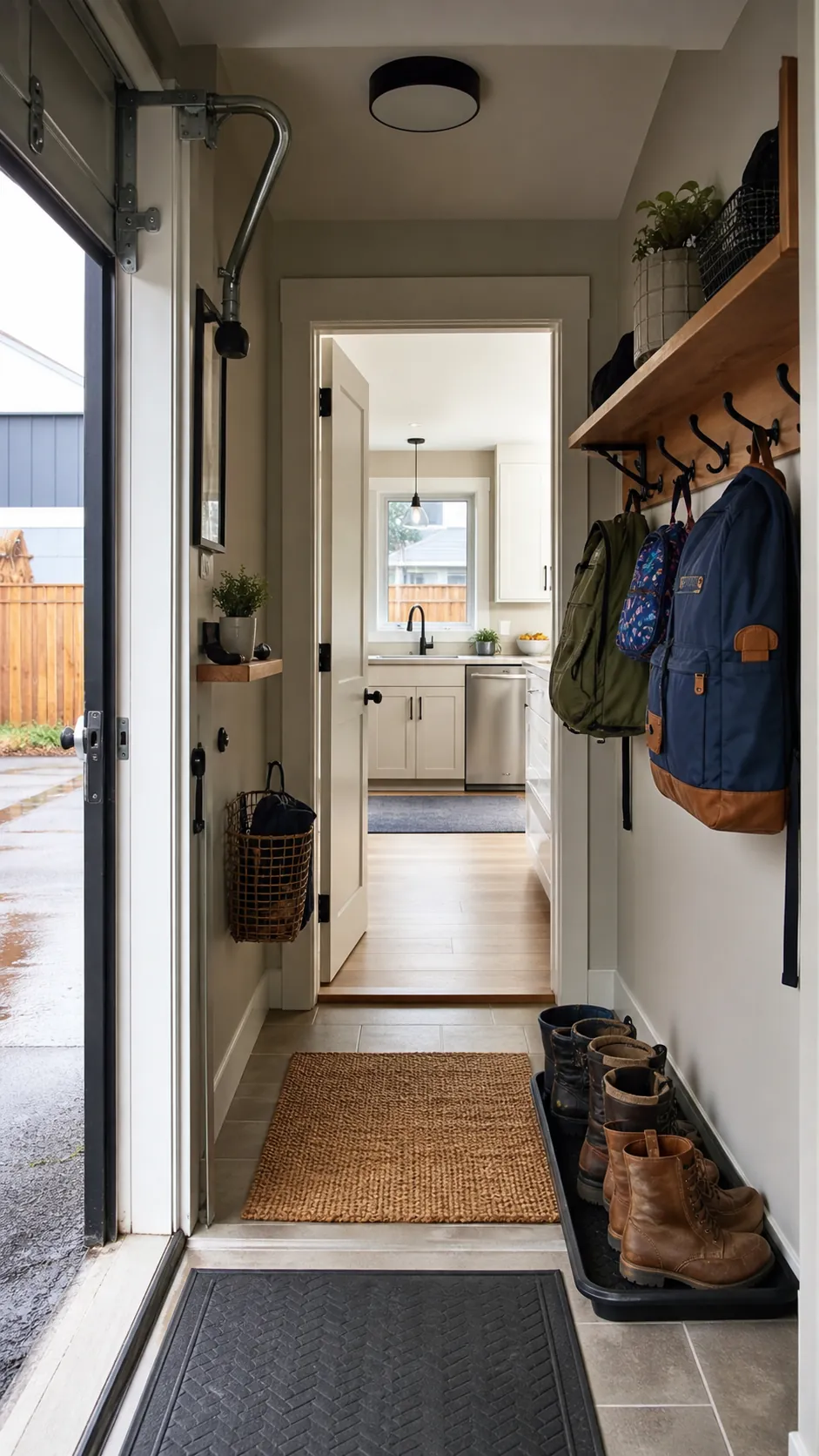
The door from the garage is often the most-used entrance in the house, yet it may open into nothing more than a narrow kitchen edge or short hall. That makes every backpack, shoe, parcel, and wet coat visible. These 13 small entryway from garage ideas create a practical drop zone without pretending you have a full mudroom. The priority is simple: keep the door and route clear, make daily items easy to put away, and stop outside dirt before it travels farther inside.
Protect the Garage Door Swing
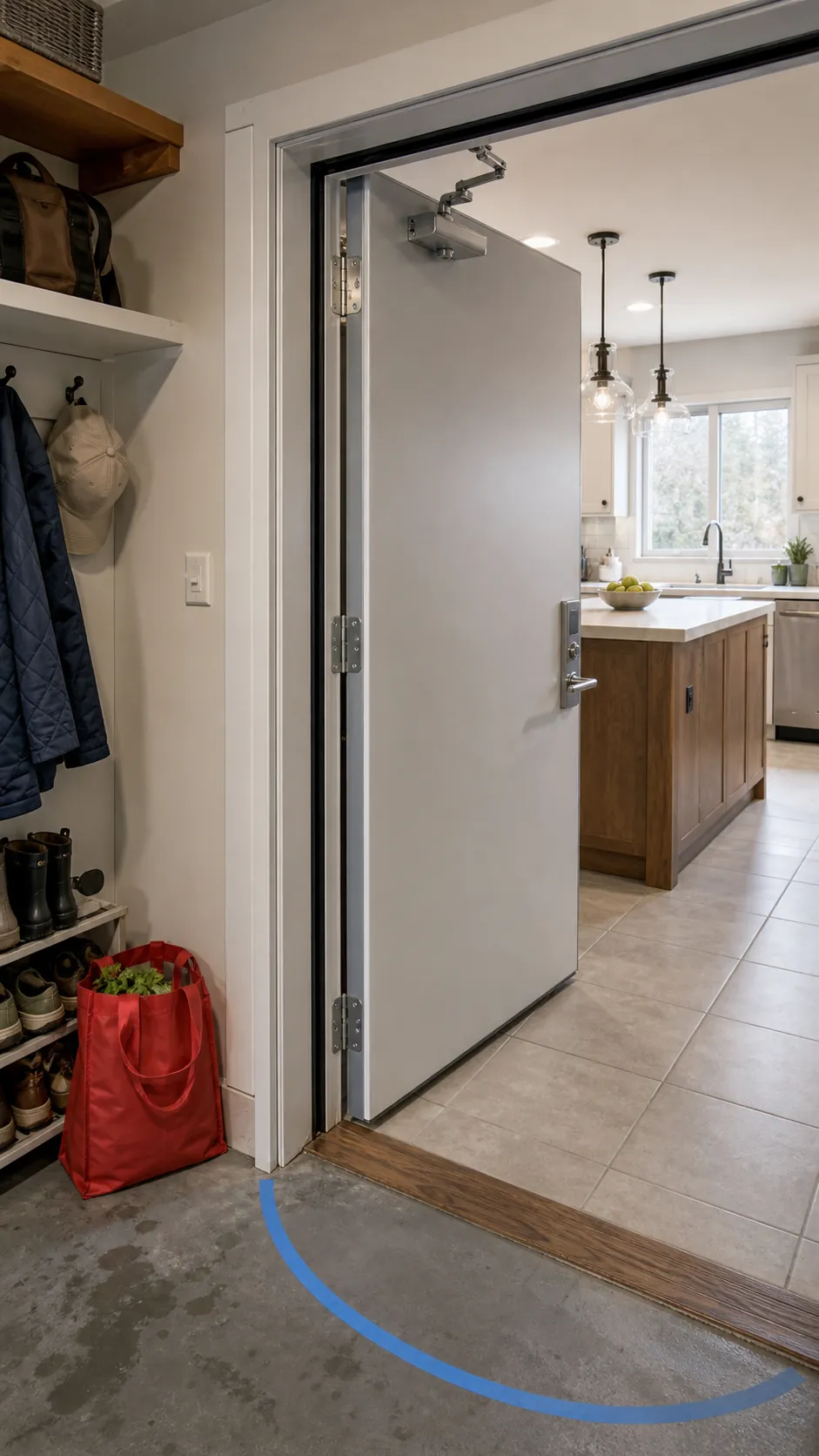
Open the door as far as it is designed to travel and keep that entire arc free of benches, baskets, shoes, and hanging sleeves. Do not interfere with locks, seals, hinges, closers, or any fire-safety features required between the garage and house. Mark the swing with painter’s tape before adding storage. A small drop zone only works when arriving with groceries remains easy and the protective door can close properly every time.
Lay Down a Two-Stage Dirt Barrier
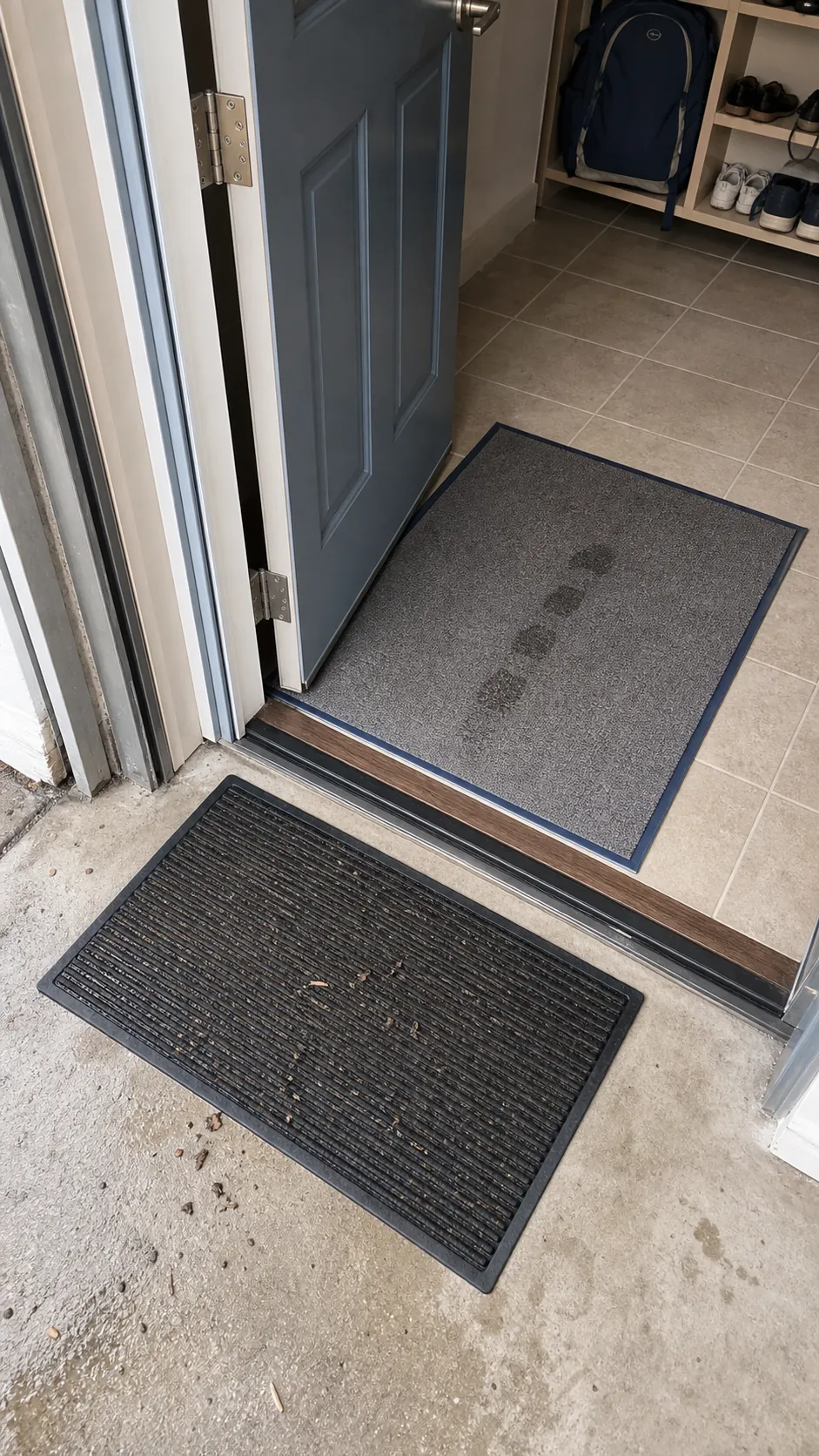
Use a coarse scraper mat on the garage side and a washable absorbent mat inside. The first removes grit; the second catches dampness. Both must lie flat and clear the door. Choose dark, heathered surfaces that disguise ordinary marks, then vacuum or shake them before debris builds at the threshold. This simple pair often protects the rest of the home more effectively than a decorative indoor rug that cannot handle oil dust, rain, or winter salt.
Give Each Person One Backpack Hook
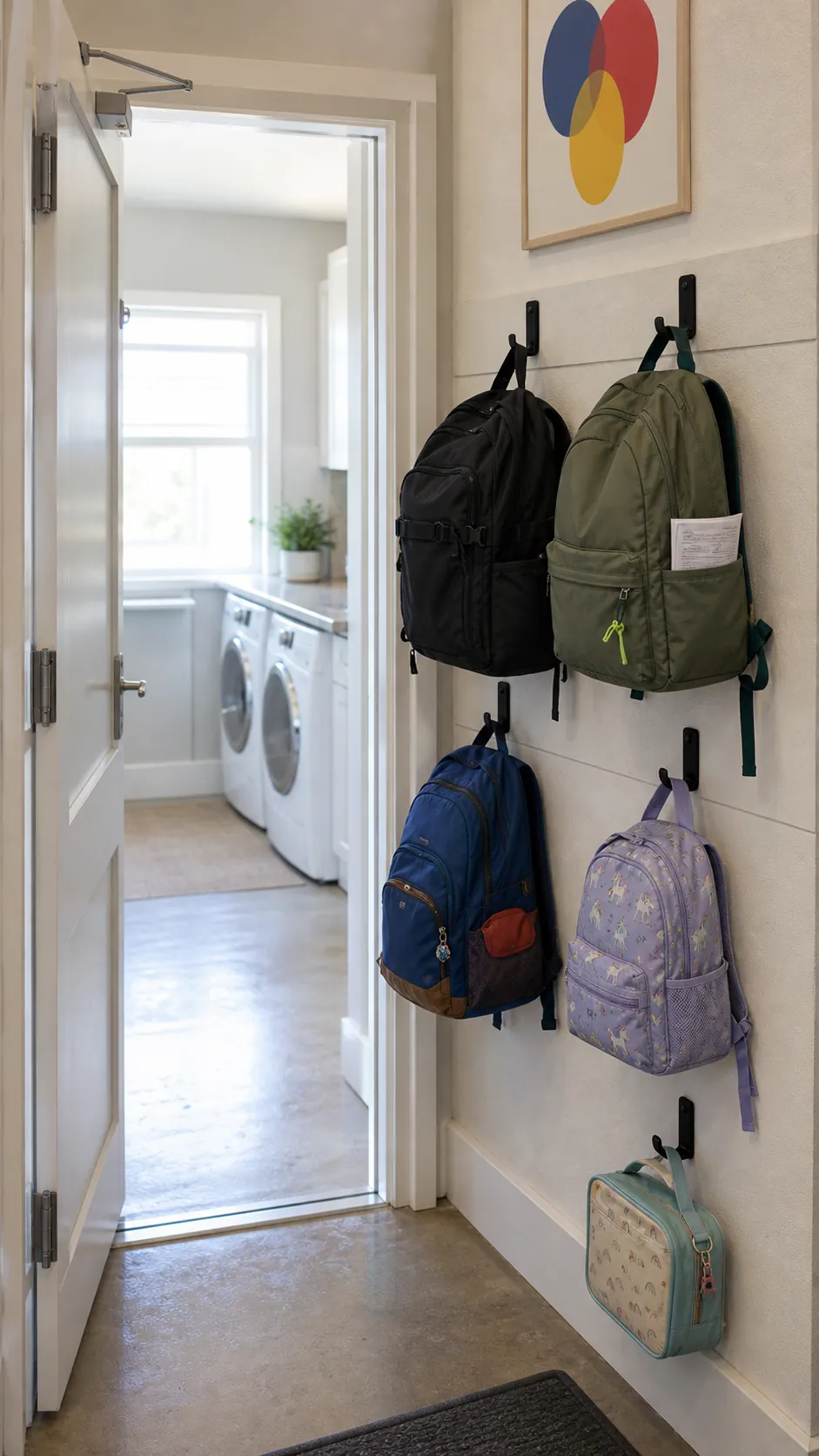
Assign one sturdy hook per household member and mount children’s hooks where they can reach without climbing. Space them for loaded bags rather than empty straps, and anchor them for the expected weight. A name label or distinct color makes ownership obvious. Keep coats on a separate row so backpacks do not become buried. The system succeeds when a child can hang a bag in one motion instead of dropping it while searching for an available peg.
Use a Boot Tray as a Firm Boundary
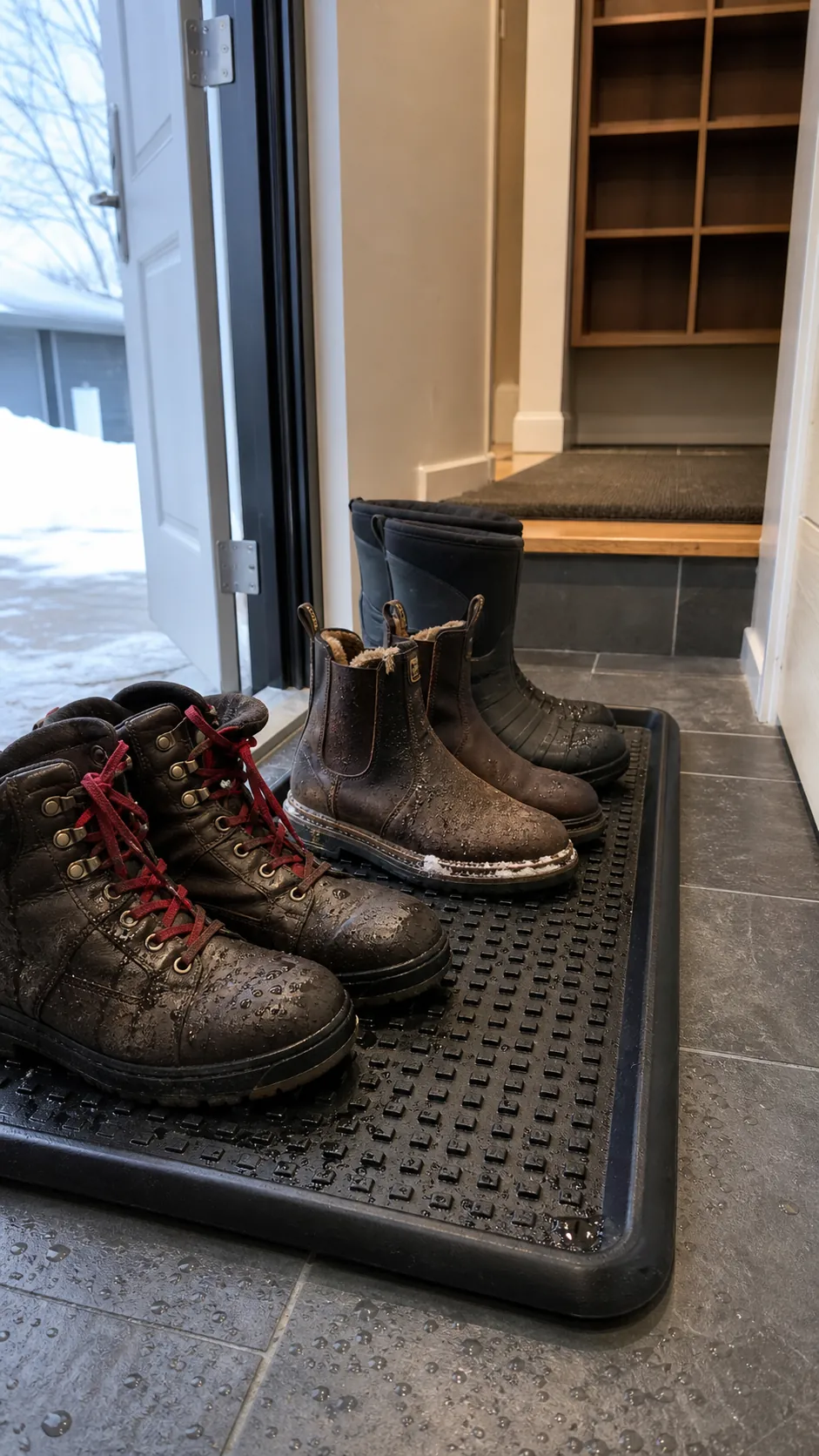
A lipped waterproof tray tells everyone exactly where damp shoes belong and keeps runoff off the floor. Buy for the number of wet pairs that realistically arrive together, not the household’s full shoe collection. Add a washable insert or raised grid so soles can drain and dry. Position it beyond the door swing and near the first stable handhold. When the tray is full, older pairs move to closed storage rather than expanding into a second row.
Fit a Flip-Up Perch
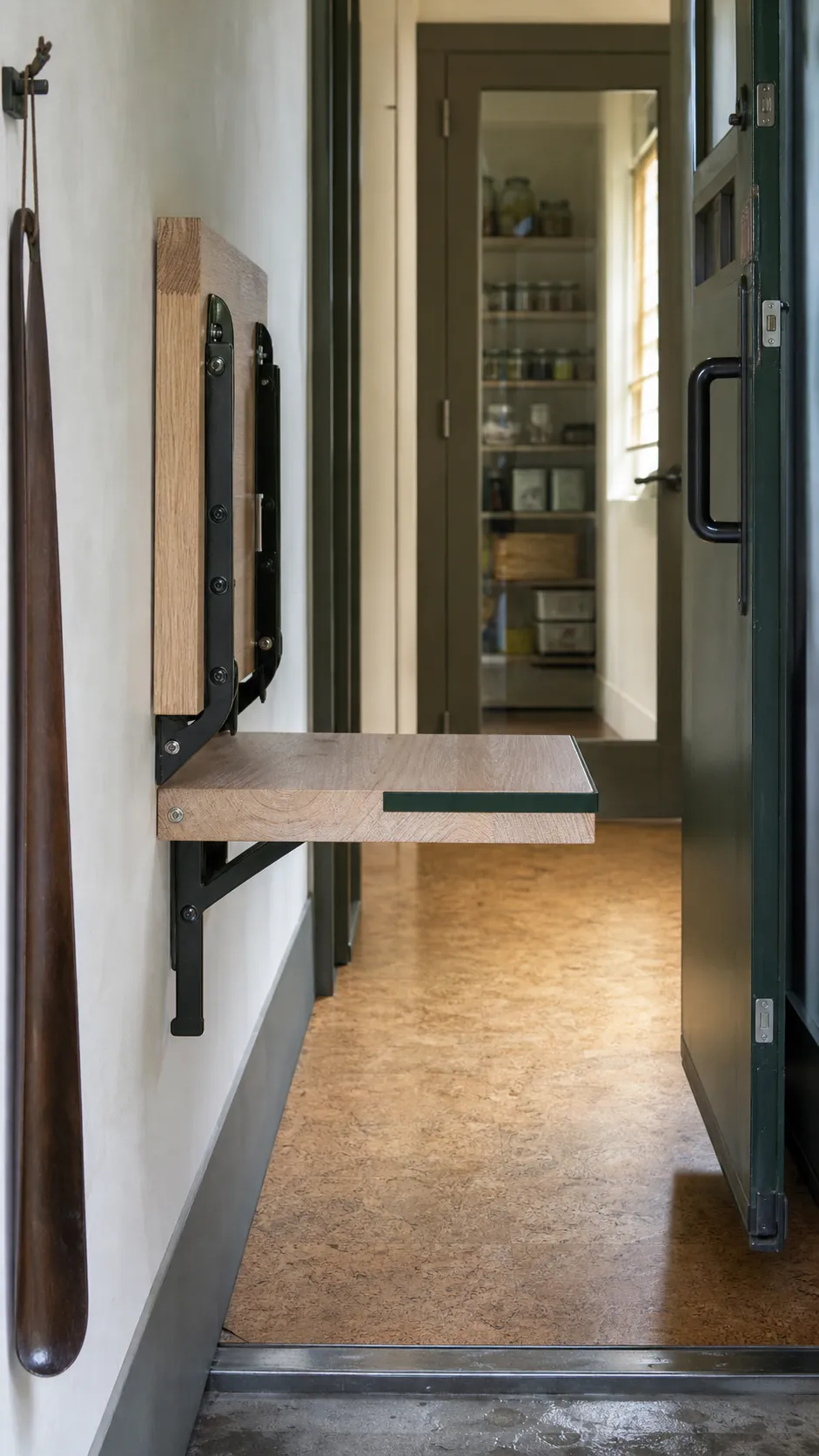
If sitting to remove work boots matters but a bench blocks the route, install a properly supported flip-up seat on a suitable wall. It should lock or rest securely when open, fold flat without trapping fingers, and carry the intended user load. Keep a small shoe horn nearby rather than decorating the seat. This creates comfort on demand while returning precious floor width as soon as footwear is changed.
Turn a Closet Into Daily Zones
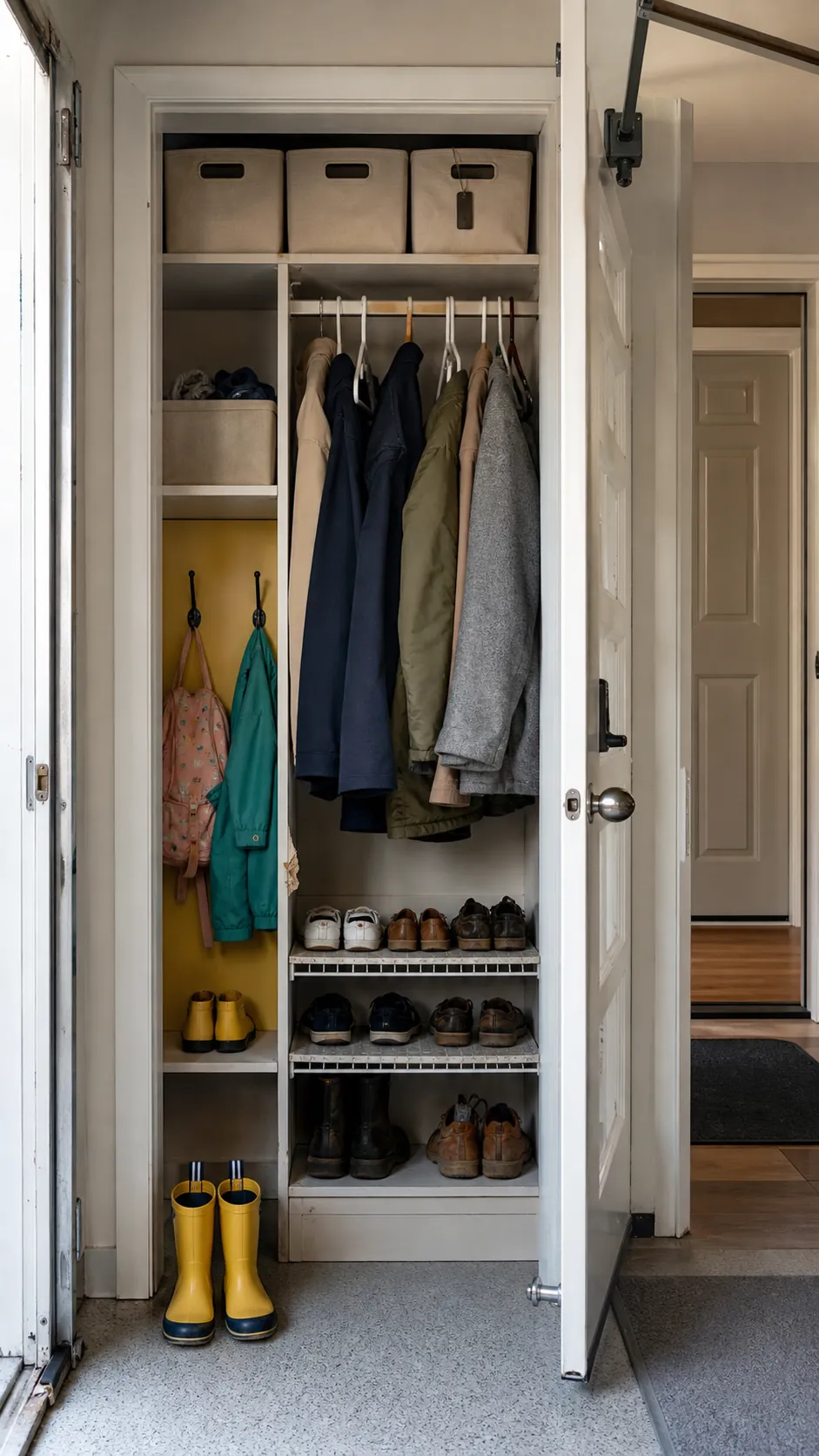
A nearby coat closet can outperform new furniture when its interior matches how the family arrives. Reserve a low section for children, a ventilated shelf for everyday shoes, hooks for active coats, and an upper shelf for seasonal gear. Remove items used only a few times a year. Door-mounted storage should stay shallow and never strain hinges. Organize by frequency and owner, not by squeezing every possible item into the closet.
Mount a Tiny Garage-Opener Shelf
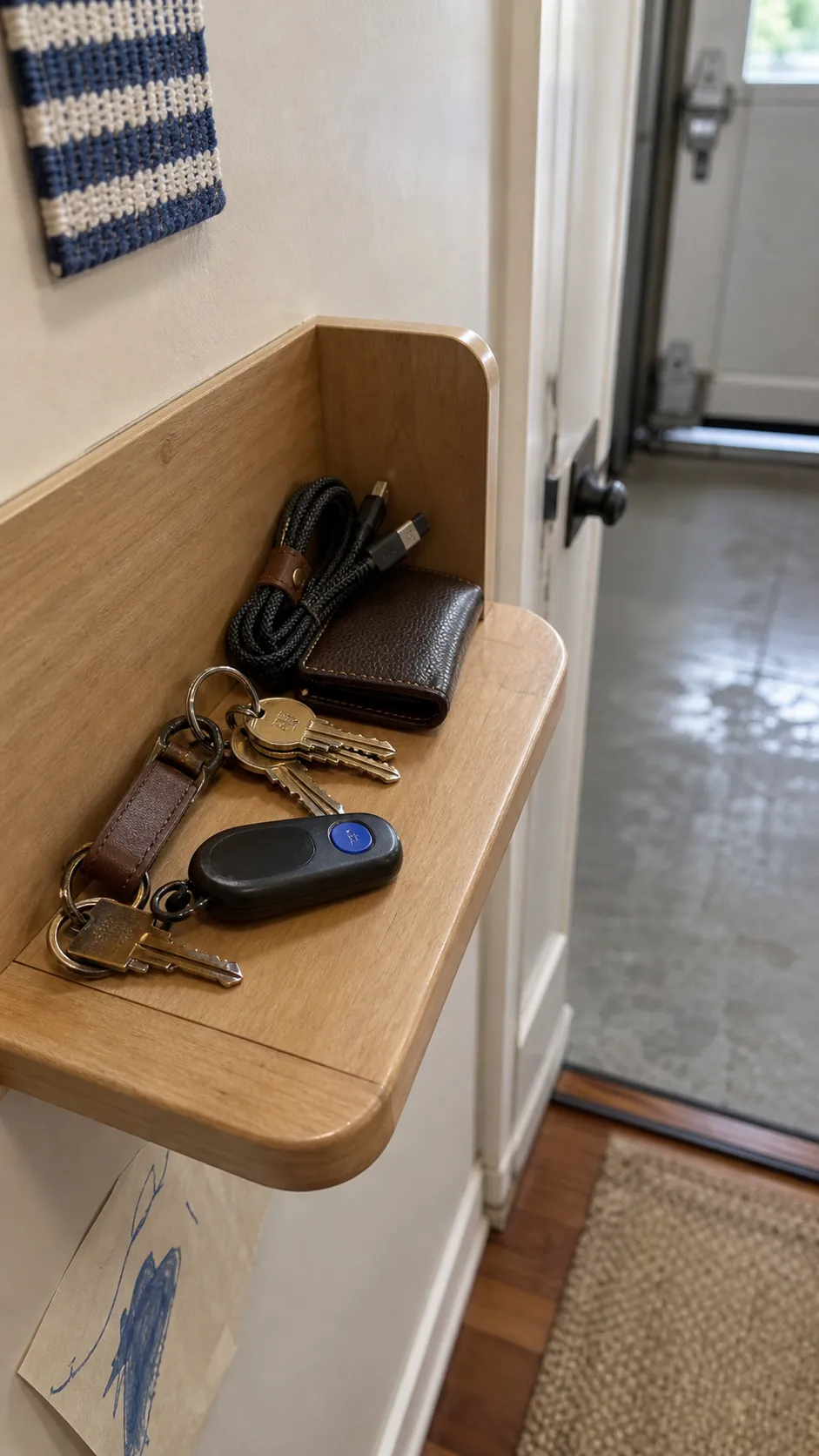
Keys, wallets, and a garage remote need a landing point that cannot become a mail mountain. A palm-deep wall shelf or narrow cubby near the interior route is enough. Add one tray and a charging cable clip if needed, but keep the top mostly empty. Mount it where bags will not knock objects off and where a person can reach it after closing the door. The smaller the surface, the faster the daily reset.
Create an Outgoing Basket
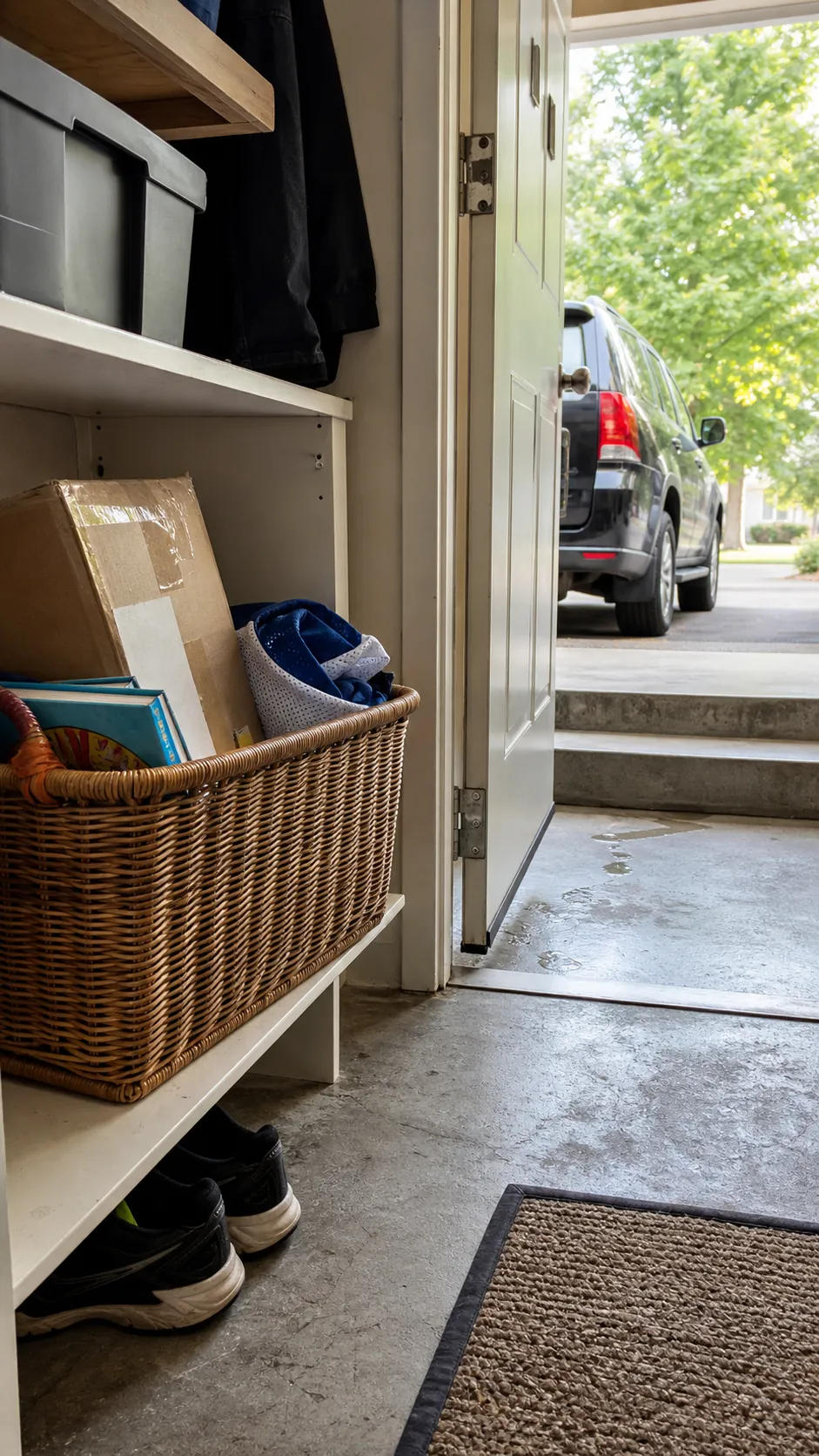
Returns, library books, sports gear, and items for a friend often pile up because they have no “leaving” category. Give them one handled basket on a shelf close to the garage route. Empty it into the car when you go, then bring the basket back. Do not use it for trash or indefinite storage. A single outgoing container reduces morning searches and keeps temporary objects from colonizing the floor.
Store Seasonal Gear Up High
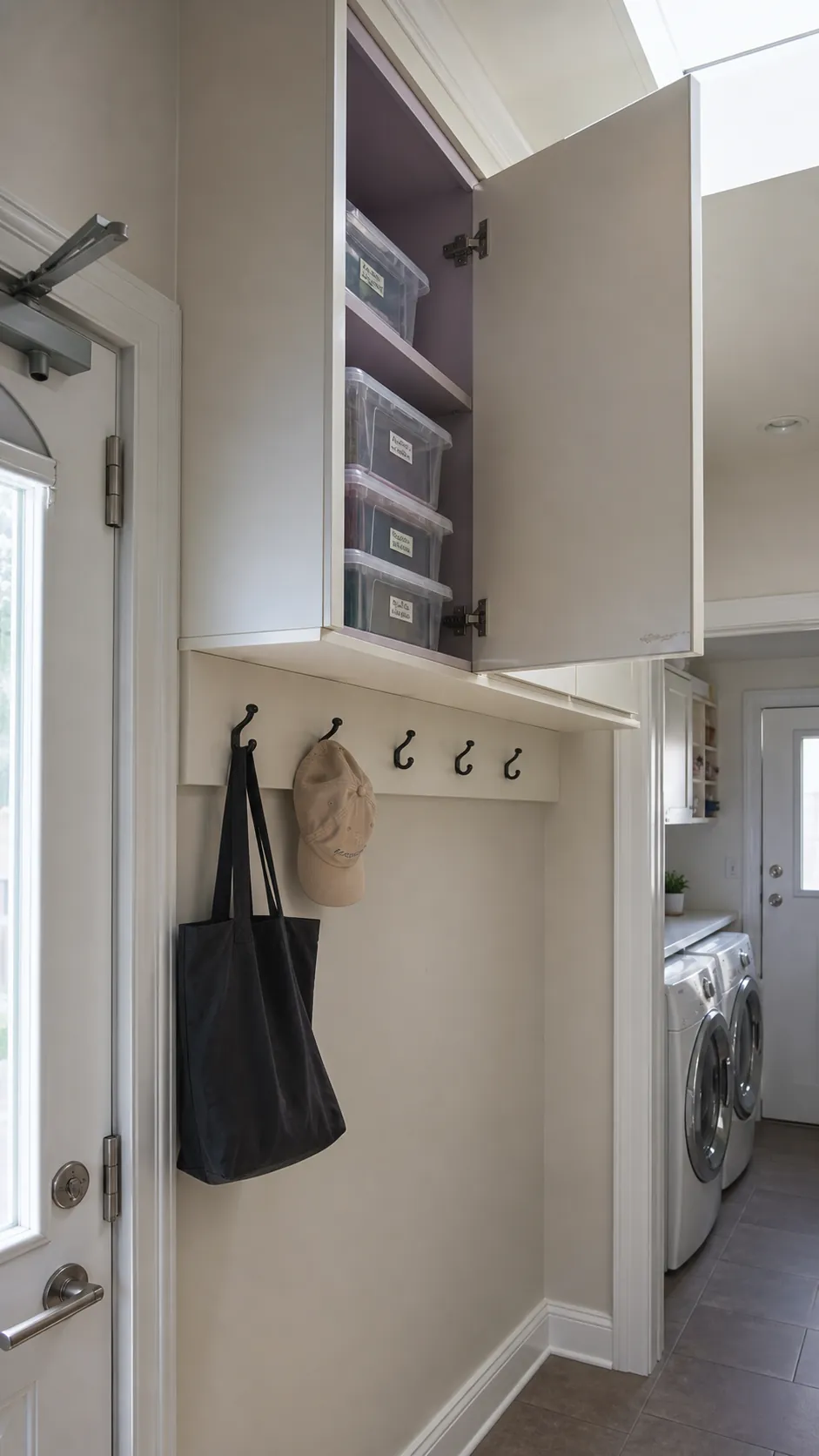
Hats, spare gloves, picnic gear, and off-season accessories do not deserve prime grab height all year. Move them into labeled closed boxes or a secure upper cabinet, leaving daily hooks and shelves breathable. Keep heavy items lower and use a stable step stool stored safely elsewhere. If the garage is damp, hot, or vulnerable to pests, store textiles inside the conditioned house. High storage should reduce clutter, not hide moisture problems.
Add a Towel Rail for Wet Gear
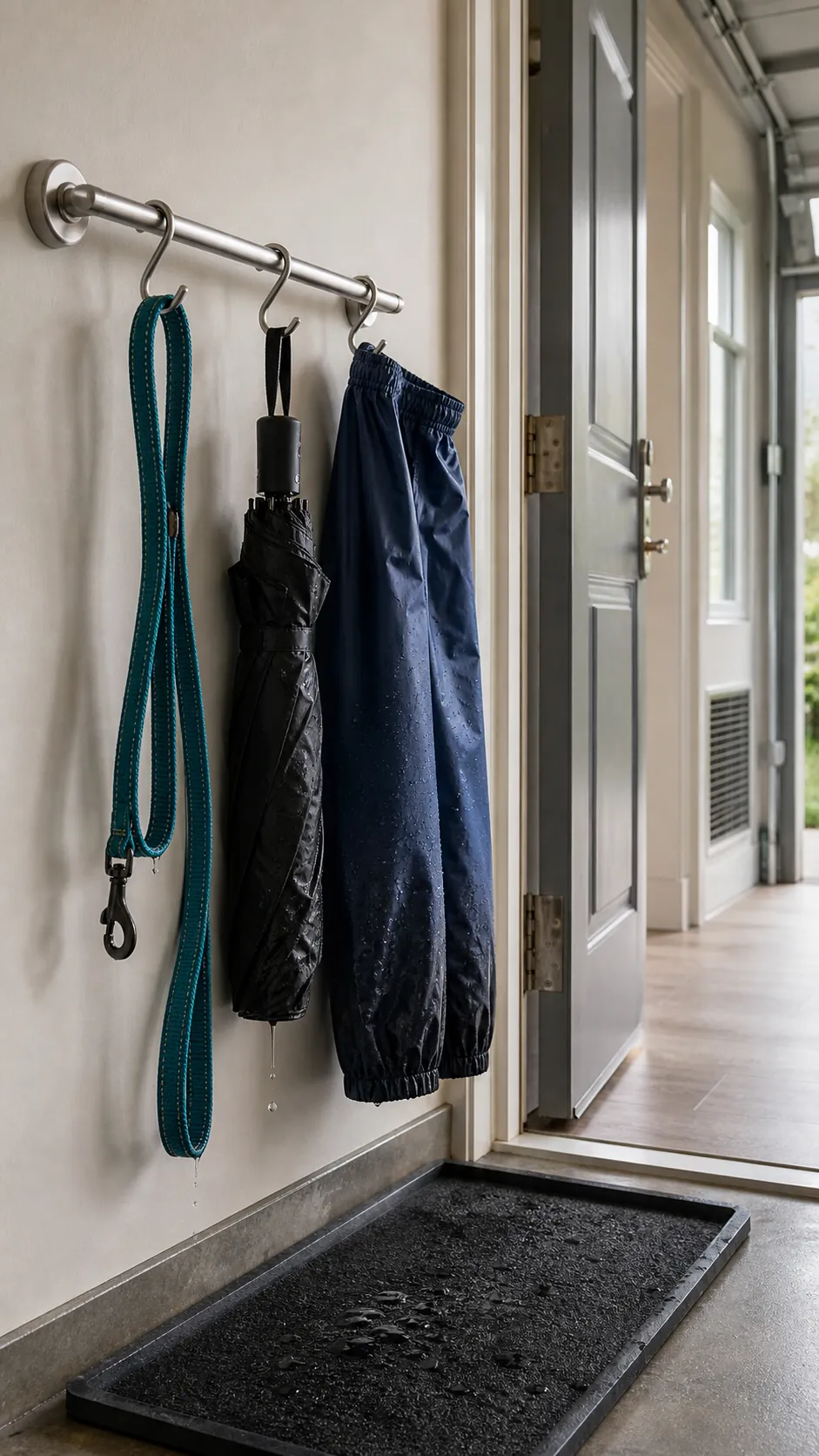
Wet dog leads, umbrellas, and children’s rain trousers need air rather than a closed basket. A short rail with spaced S-hooks can hold them away from the wall above a washable drip surface. Keep fabric clear of heaters and electrical equipment, and avoid placing drips where people step. Once dry, return gear to its permanent home. This small drying zone prevents mildew smells and stops damp items from being tossed over a bench.
Build a Grocery Landing Shelf
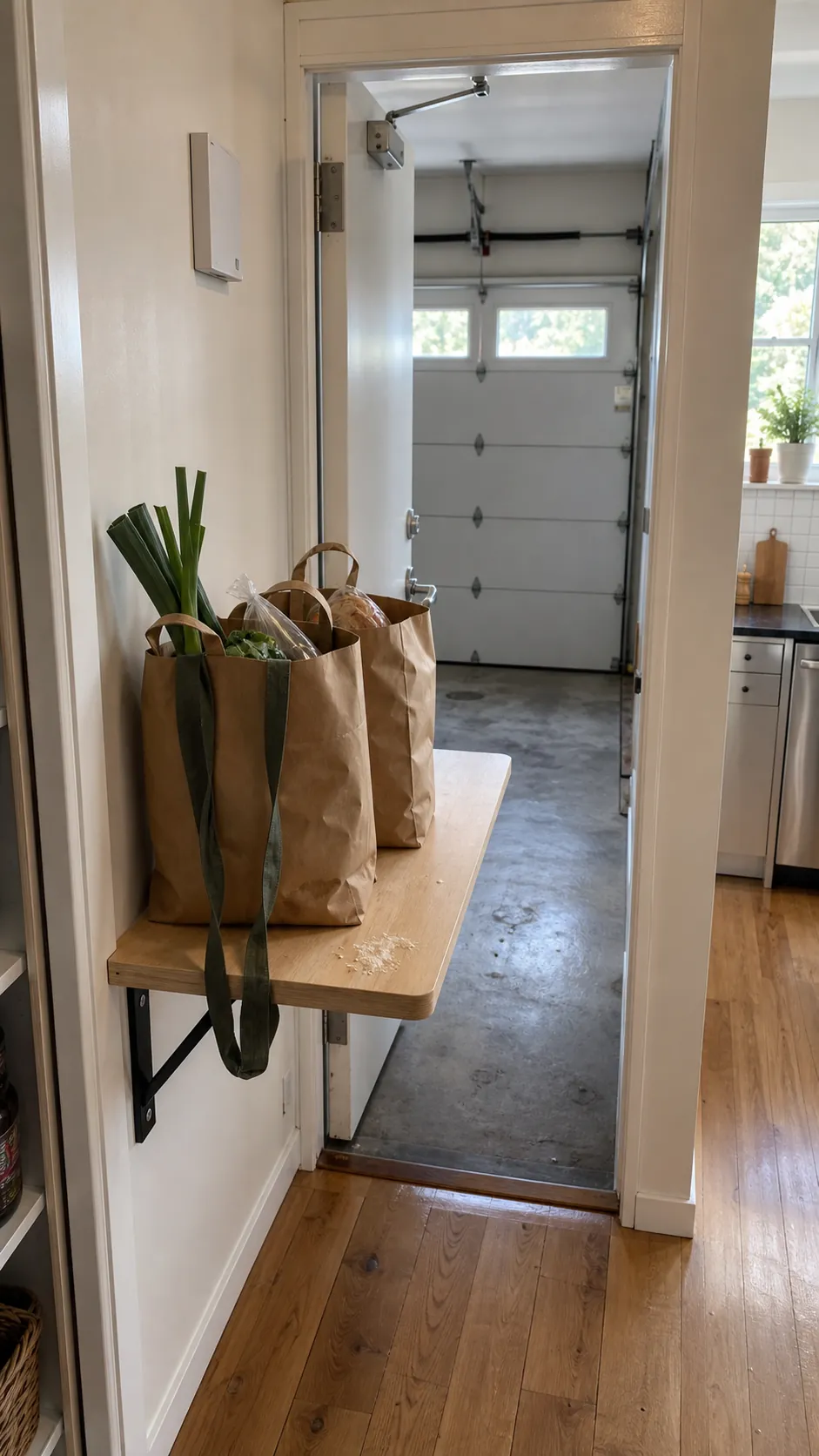
A stable fold-down shelf or narrow counter can hold grocery bags while you close the garage door, remove shoes, or unlock an interior gate. Place it beyond the swing and at a comfortable height, with enough support for the intended load. Keep it empty between arrivals so it remains useful. If a fixed surface will pinch the path, choose a fold-down design with reliable hardware and rounded corners. This is a transfer point, not another display shelf.
Use Durable Finishes Where Hands Land
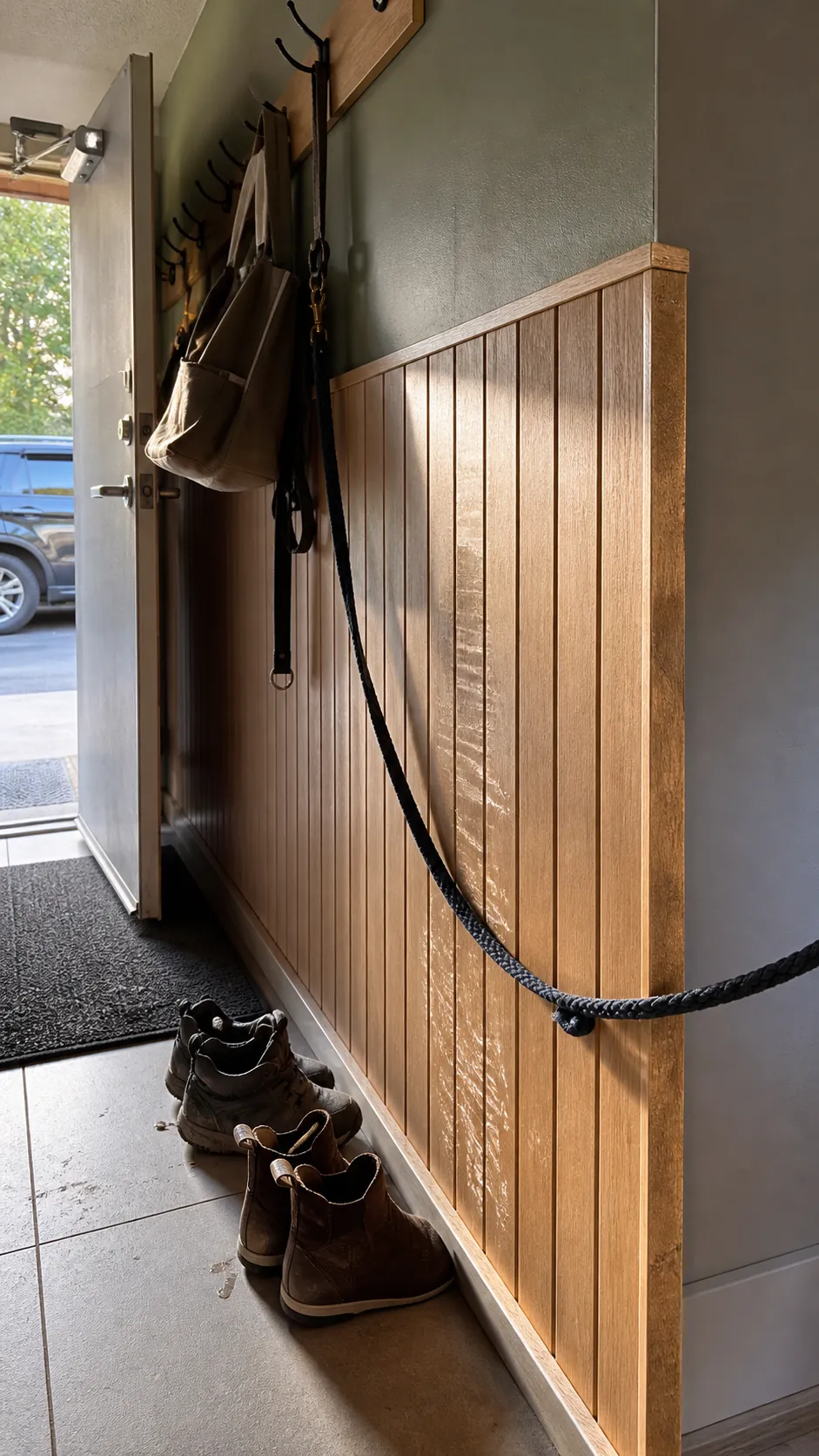
The wall beside a garage entrance collects handprints, bag rubs, grit, and dog splashes. Use a washable paint appropriate for the surface, or add a simple panel behind hooks and the boot zone. Durable does not have to look industrial: muted color and visible wood grain can warm the small entry. Seal exposed edges and choose materials you can actually wipe. Protect the places that receive contact rather than covering every wall with bulky treatment.
End the Day With a Two-Minute Reset
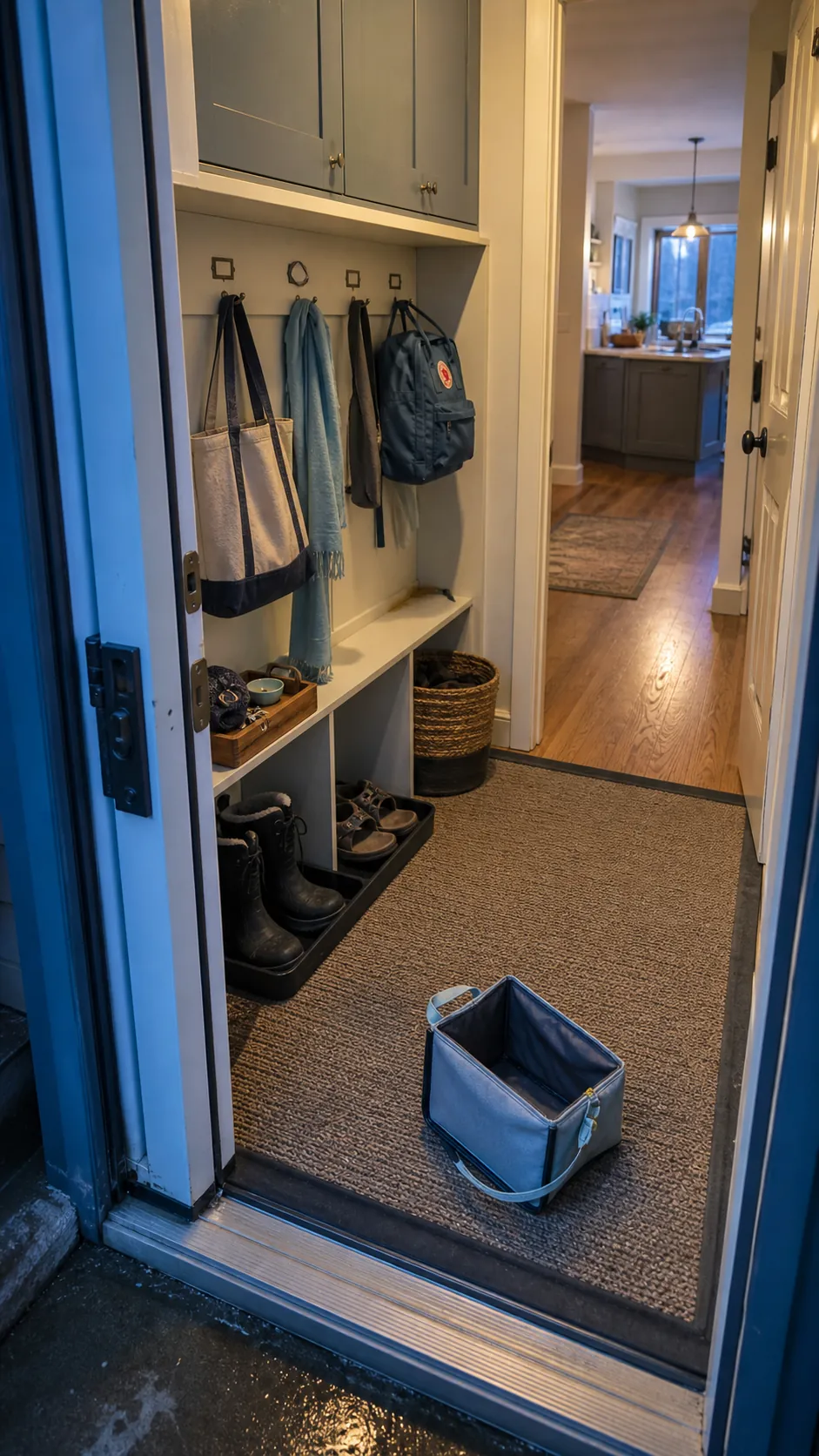
Move surplus shoes to their main storage, empty lunch bags, place wet items on the drying rail, return the garage remote to its tray, and transfer the outgoing basket to the car when appropriate. The reset is short because every category already has a close, obvious home.
Watch what still lands on the floor for a week. That behavior is better design evidence than a styled photograph. Lower a hook, widen a shoe slot, or relocate the basket based on the repeated miss. A tiny garage entryway becomes reliable when the easiest action is also the tidy one.