
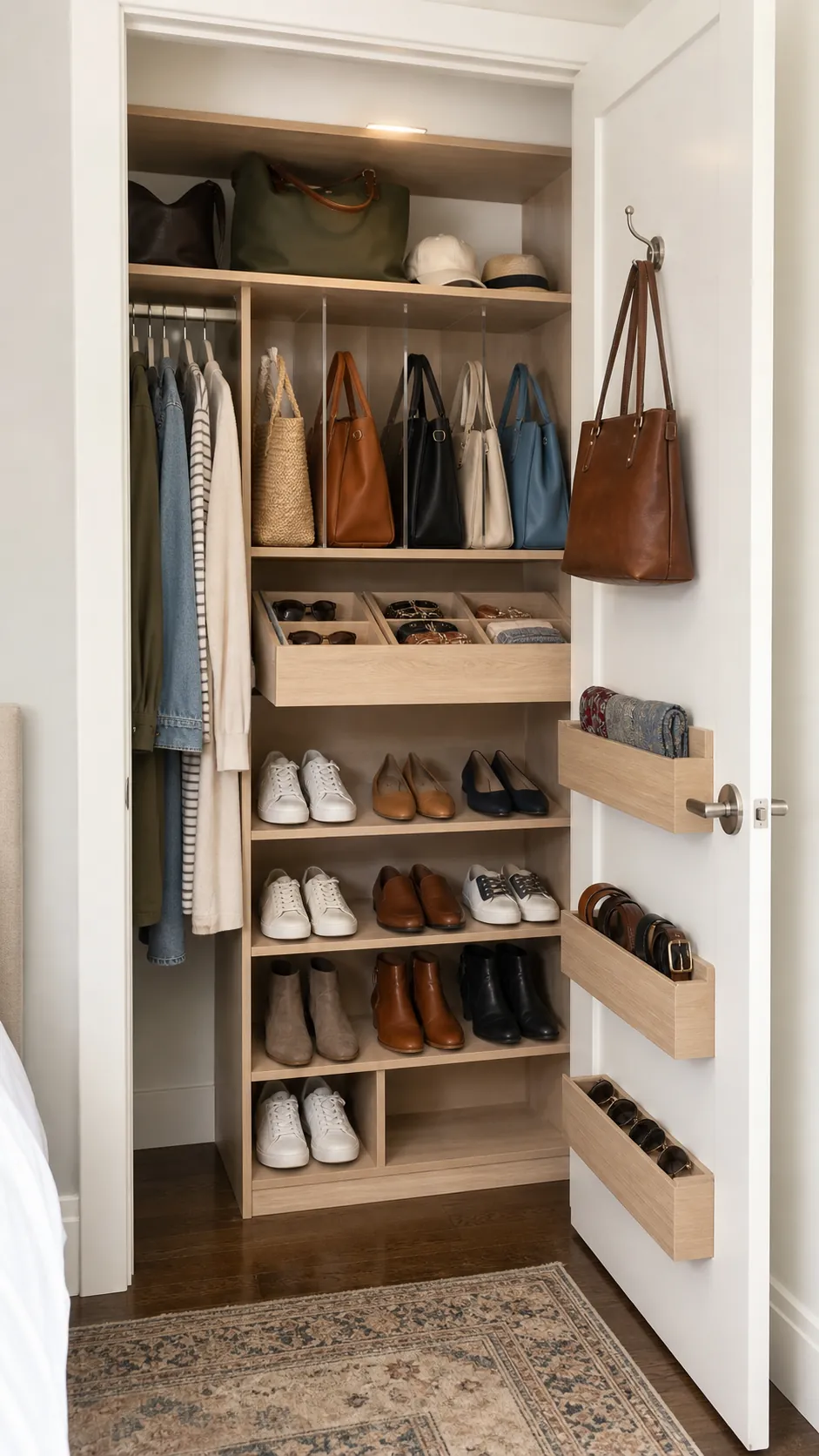
Bags, shoes, and accessories create disproportionate closet chaos because they are different sizes, shapes, and frequencies of use. A shoe rack cannot solve a pile of belts; one giant basket turns handbags into a crushed tangle. The best small closet ideas for bags, shoes, and accessories give each category a storage position that matches how it is handled.
Start by protecting the floor and the door. Those two zones determine whether the closet stays easy to enter, easy to scan, and easy to reset.
Map accessories by use and structure
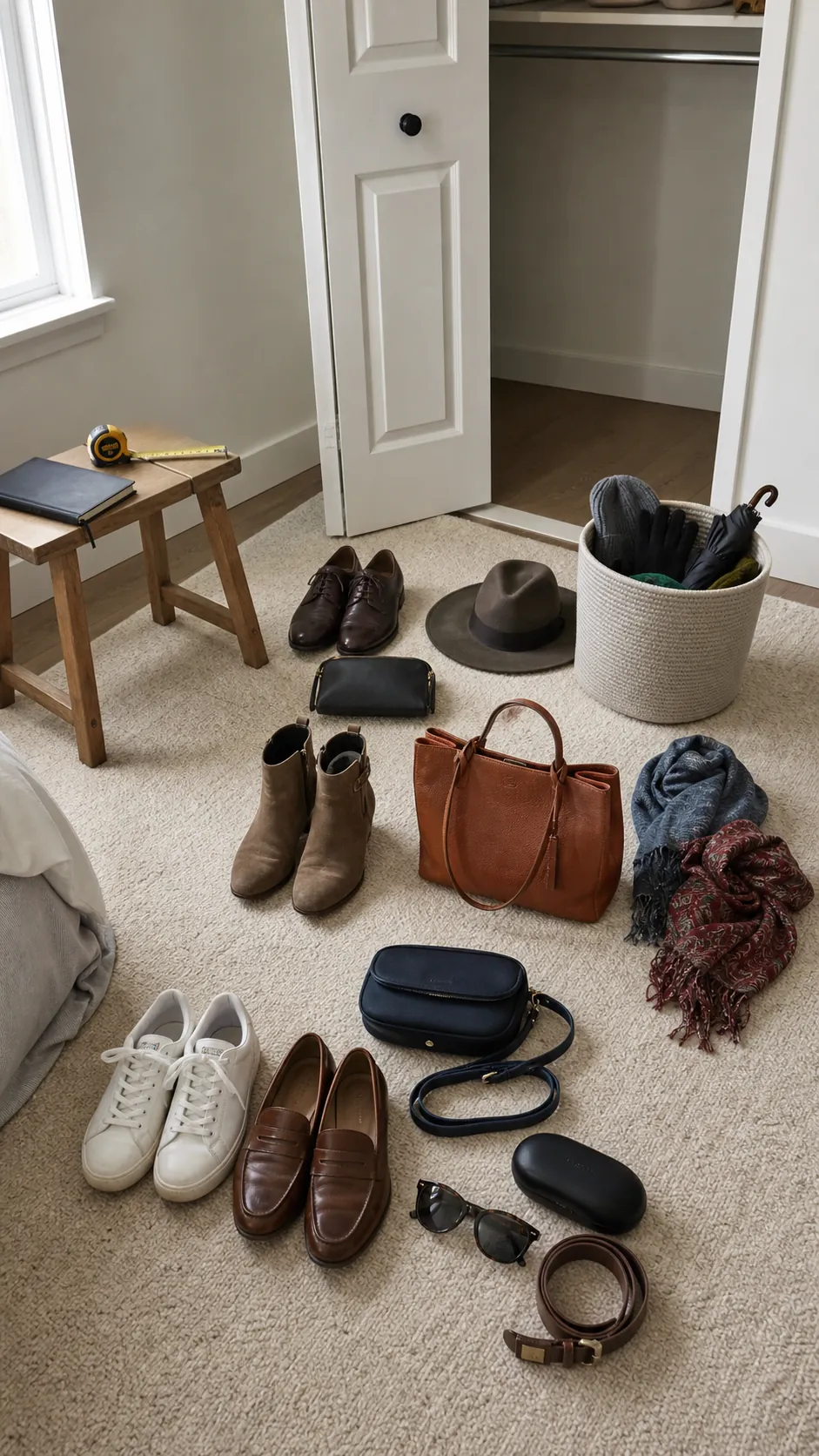
Gather every shoe, bag, belt, scarf, hat, and small accessory before buying storage bins. Sort first by frequency: daily, weekly, occasional, and seasonal. Then sort by structure. Leather handbags need support, sneakers need airflow, jewelry needs shallow separation, and soft winter accessories can tolerate a flexible basket.
Put the daily group between knee and shoulder height. Weekly items can sit slightly higher or lower. Seasonal pieces belong on the top shelf or in another protected storage area. This frequency map prevents the common mistake of giving eye-level space to special-occasion bags while daily shoes spread across the floor.
Assign storage by retrieval motion. If you need to see all options, use an open shelf or shallow divided drawer. If you can choose by touch, a basket may work. If the object must hold its shape, give it an upright compartment.
Build shoe storage around the largest daily pair
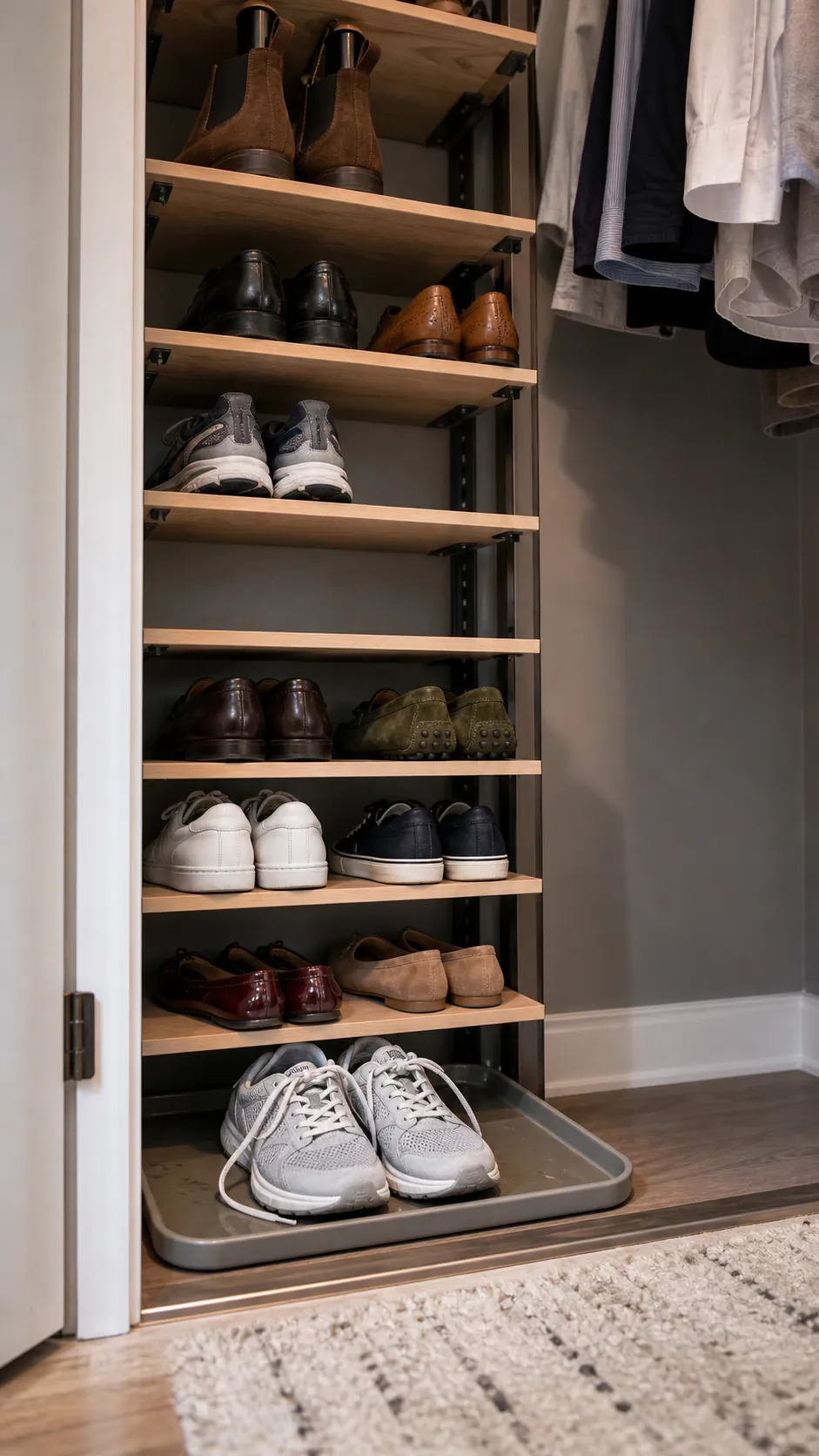
Measure the longest and tallest shoes in your everyday rotation before choosing a rack. Flats and sneakers fit close shelf spacing; ankle boots need more height; tall boots need vertical support. A rack that holds ten pairs in the product photo may hold far fewer once real shoe sizes and usable closet depth are considered.
Single-file shelves are easier to scan than deep rows. If two rows are unavoidable, put occasional shoes behind daily pairs or use a pull-out tray. Keep a little air around leather and damp footwear, and never seal recently worn shoes in an airtight box.
Reserve the lowest shelf for durable daily shoes and the cleaner upper shelf for dress shoes. Pair every shoe heel-to-wall or toe-out consistently so missing pairs are obvious. Leave one empty slot; it is the landing place that keeps tomorrow’s shoes from starting a new floor pile.
Store bags upright without straining handles
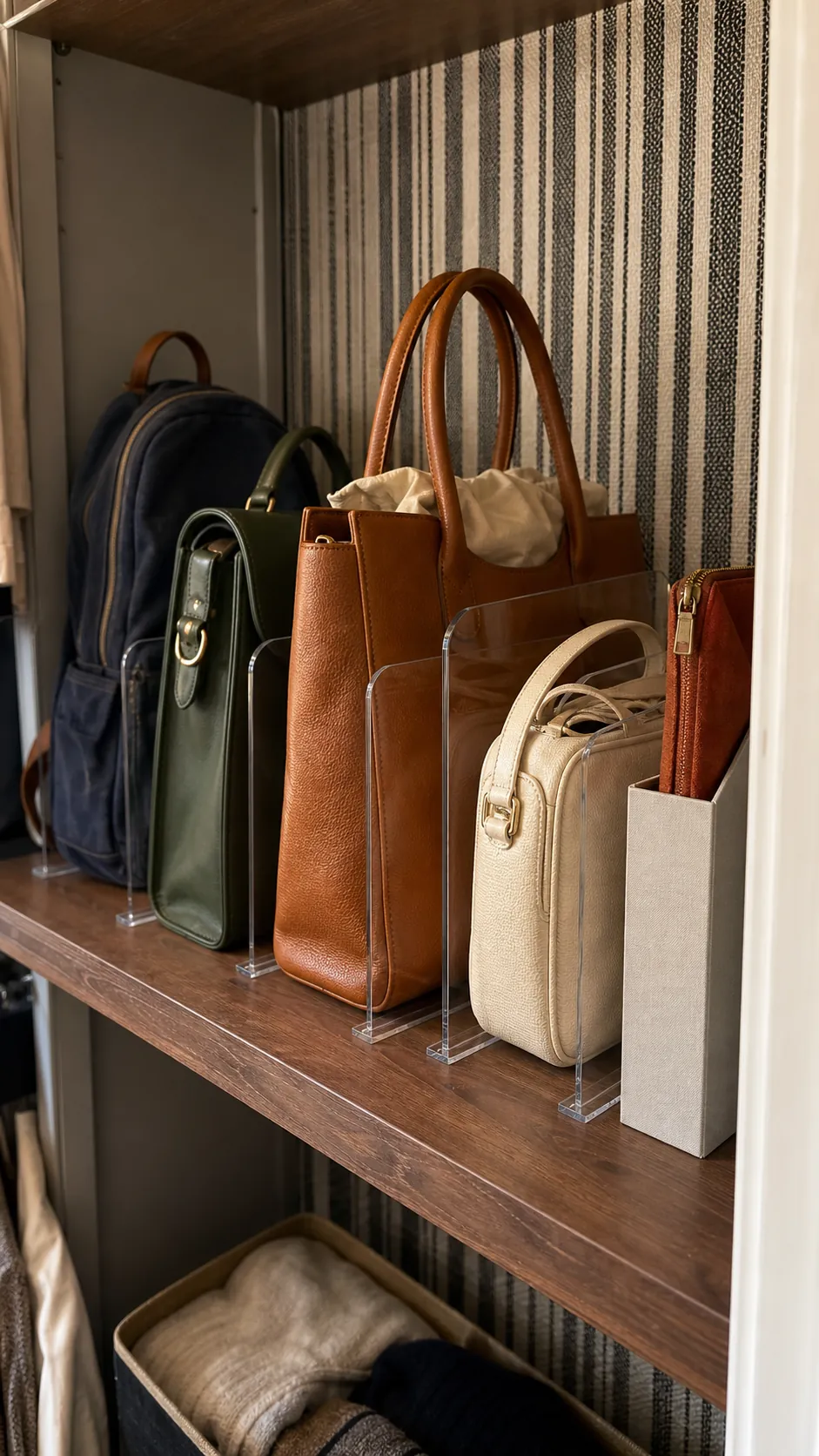
Structured bags keep their shape best when they stand on a shelf with light interior support. Use acid-free tissue, a soft cotton insert, or the bag’s dust cover rolled loosely inside. Do not overstuff. Crossbody straps should be tucked inside or coiled gently rather than hanging where they catch on neighboring bags.
Clear adjustable dividers are useful because they stop one bag from collapsing into another. Give each bag enough width for its body and handles; shelves packed edge to edge create scuffs and make removal awkward. Small clutches can stand vertically in a file sorter or shallow divided box.
Avoid loading several heavy bags onto one door hook. The weight can strain hinges, block the door, and deform handles. Hooks work better for one active tote or a lightweight backpack that is emptied frequently.
Turn the door into shallow accessory storage
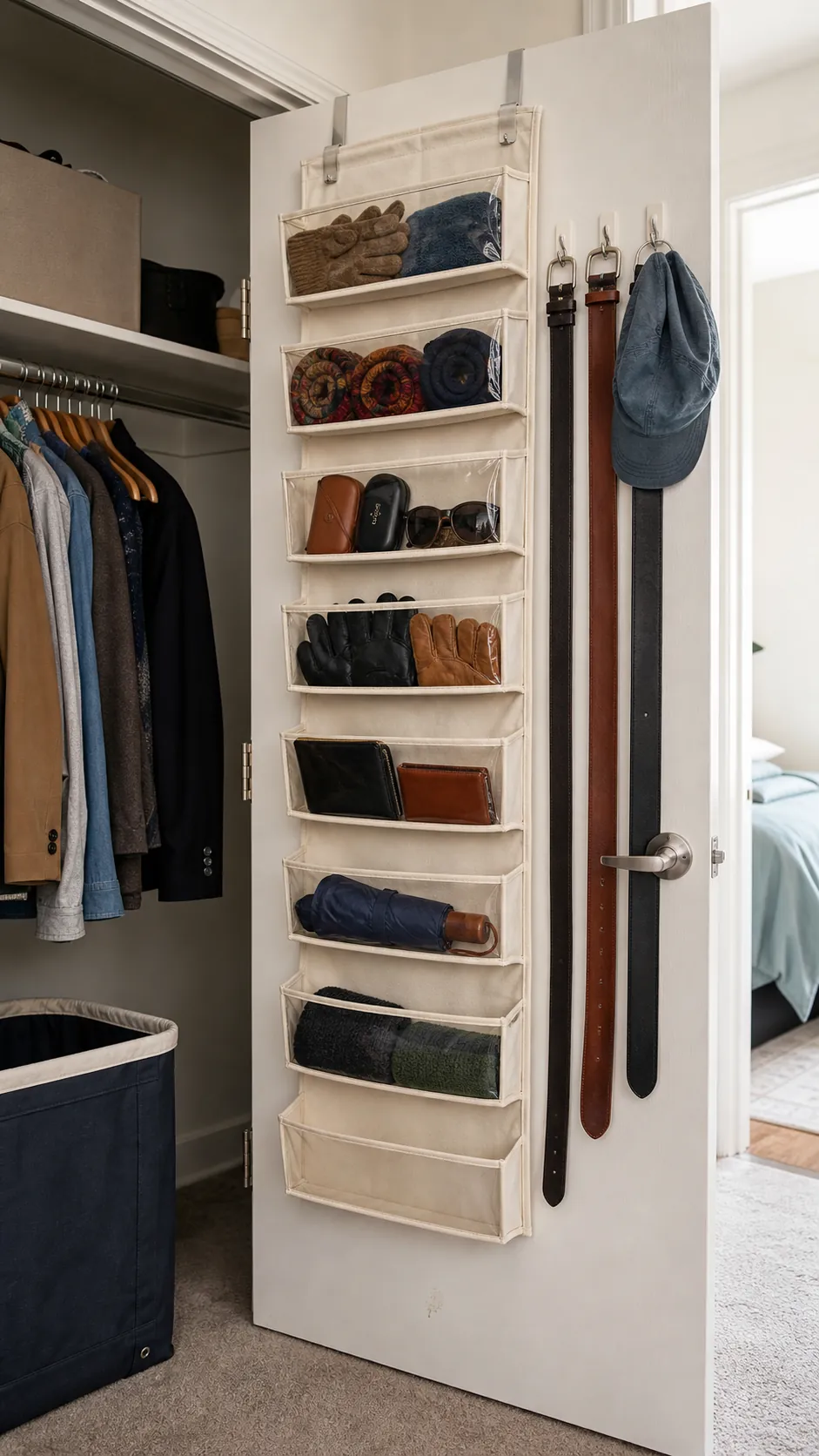
The back of a hinged closet door can hold belts, scarves, hats, compact umbrellas, or flat shoe pockets, but depth is limited. Before installing anything, close the door slowly and check the organizer against shelves, hangers, and trim. A system that crushes clothes or prevents the latch from closing is not extra storage.
Use slim hooks for belts and necklaces only when items can hang without tangling. Clear pockets work for gloves, sunglasses cases, and rolled scarves because contents remain visible. Put frequently used accessories at hand height and seasonal pieces above or below.
Sliding doors need a different strategy. Mount shallow rails or pocket storage on an accessible side wall instead of attaching bulk to the panels. Preserve the door track and the garment clearance first.
Contain tiny accessories in shallow layers
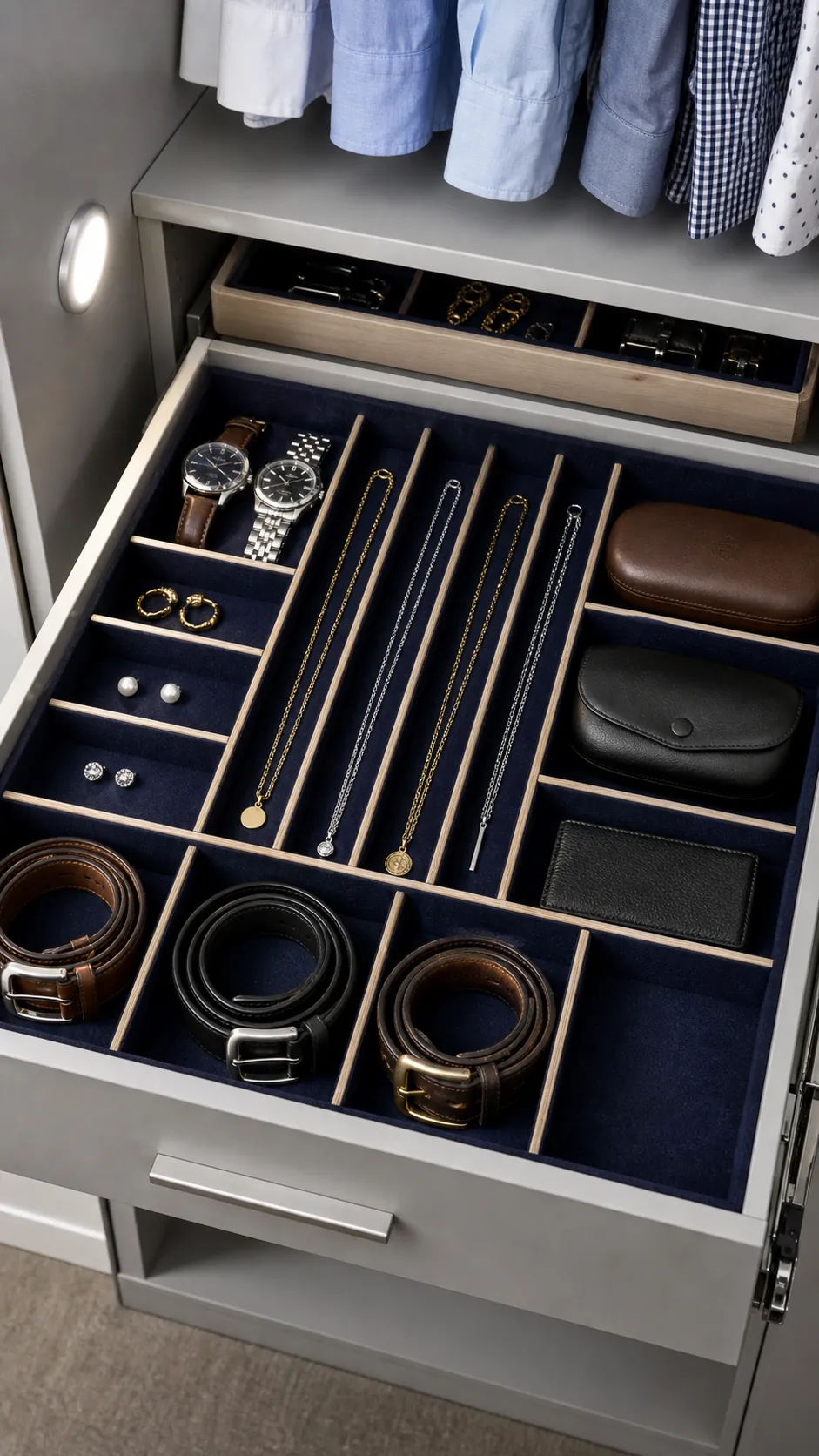
Jewelry, watches, sunglasses, hair accessories, and wallets disappear in deep bins. Use shallow drawers, stackable trays, or clear lidded boxes that reveal the entire category in one layer. Dividers should follow the object’s real size rather than creating dozens of tiny unused squares.
Keep daily pieces near the dressing zone and special items higher or farther back. Line jewelry compartments with soft fabric, separate chains, and store sunglasses where lenses cannot rub. Belts can coil in wide drawer sections or hang from a multi-hook bar if they are easy to return.
Label opaque containers by category, not by vague words such as “miscellaneous.” A box called “winter gloves” has a clear job. A box called “accessories” becomes a delayed sorting decision.
Create a daily drop zone that cannot spread
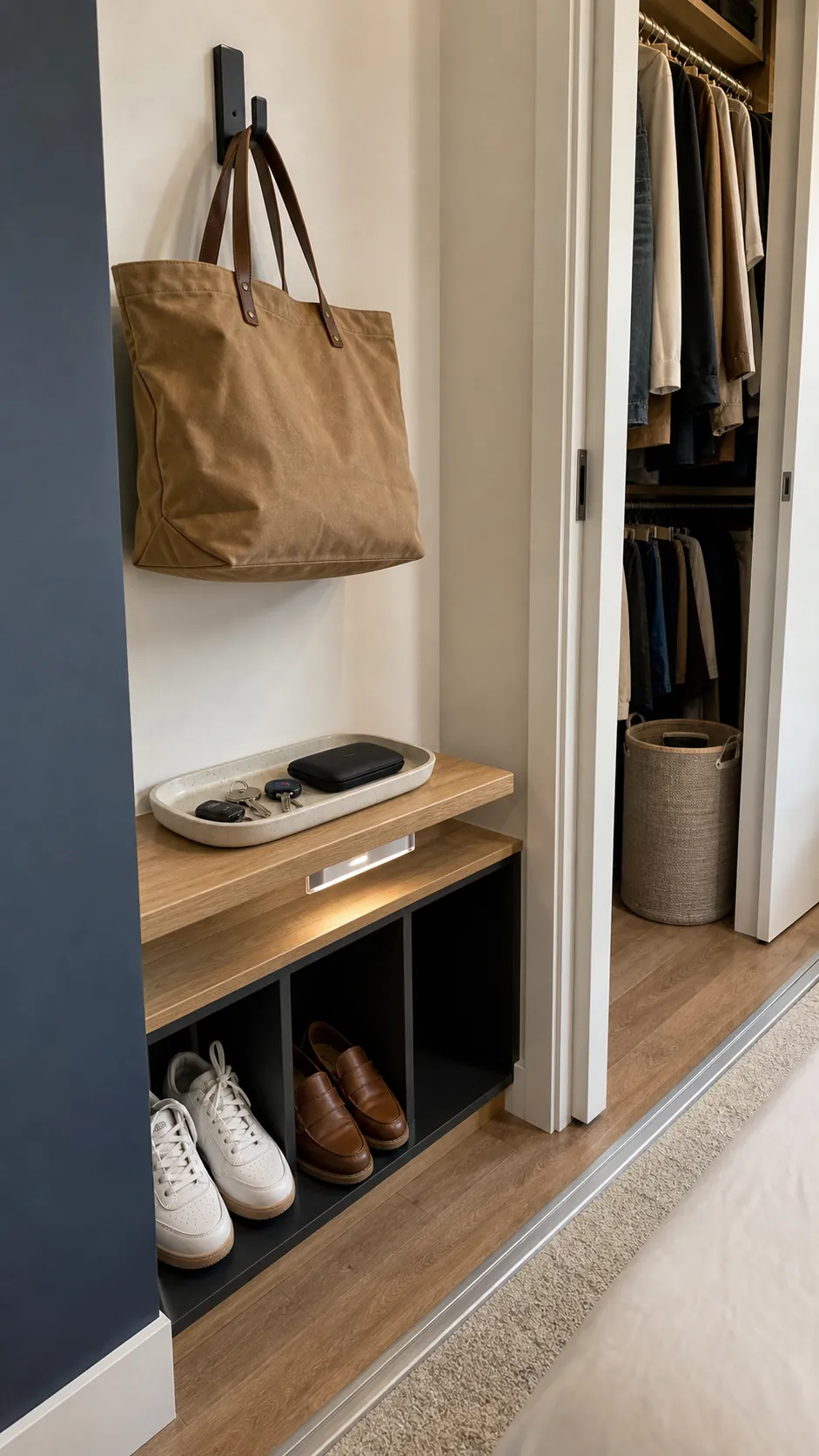
The active handbag, current shoes, keys, and sunglasses need a temporary home. Without one, they collect on the closet floor, bed, and nearest chair. A small tray, one hook, and one open shoe slot can contain the daily rotation without turning the entire closet into open storage.
Keep the drop zone near the closet entrance so putting things away requires one motion. Its boundaries should be strict: one bag hook, one accessory tray, and one or two shoe positions. When the space fills, return yesterday’s items before adding today’s.
This is also where a compact rechargeable light helps. If the closet is dark, clear pockets and divided trays still become invisible. Light the active zone enough to see colors and small pieces without covering every shelf in gadgets.
Let capacity limits keep the closet usable
Every organizer creates a visible limit. When the shoe rack is full, another pair needs a different home or another pair needs to leave. When bag compartments are crowded, adding more dividers will not create breathing room. Respecting those limits protects the objects and the path into the closet.
Rotate seasonal shoes and bags rather than keeping every option in prime space. Review the small-item trays when you change seasons, discard broken accessories, and return empty boxes to recycling instead of storing them indefinitely.
Good accessory storage is specific, shallow, and easy to reset. Shoes need measured shelves, bags need upright support, tiny items need divided layers, and daily pieces need a tightly bounded landing zone. When each category has the right physical home, a small closet stops behaving like a junk drawer.