
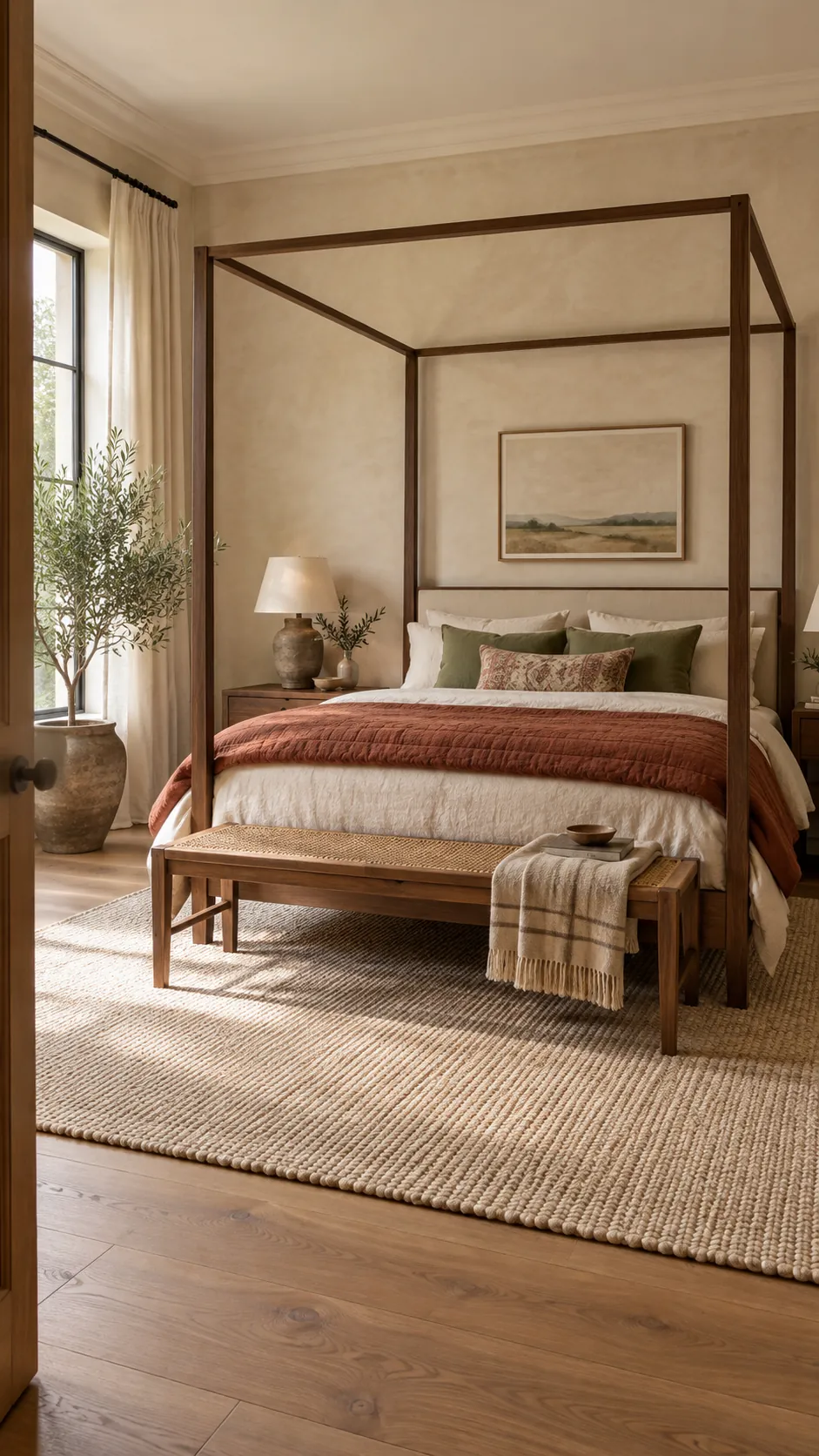
Boho style feels relaxed because materials look collected, not because every surface is full. Around a canopy bed, that distinction matters. The frame already creates many lines, so the best rooms use a small number of strong textiles, safe plant placement, and useful open space to keep the atmosphere restful.
Start With An Earthy Three Color Base
Choose one light neutral, one earth color, and one deep accent before adding patterns. Cream, rust, and olive work well with natural timber, while sand, indigo, and clay suit a black canopy frame. A limited base lets woven details and handmade objects feel expressive without creating visual noise.
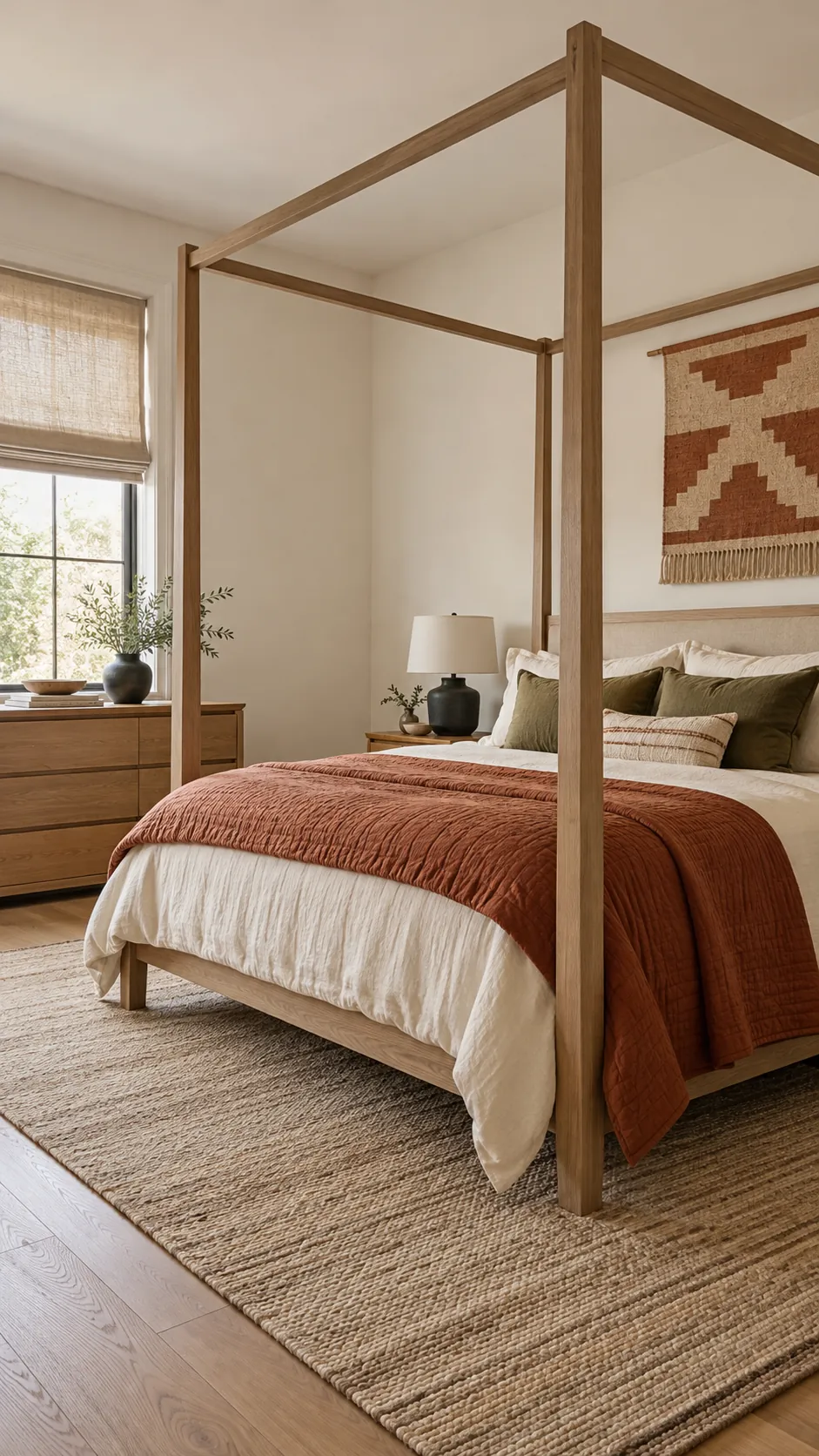
Repeat each color at a different scale. The neutral can cover the walls and bedding, the earth tone can appear in a quilt, and the dark accent can return in a cushion and small lamp. Equal amounts of every color often make the room feel busy.
Layer Texture Without Building Clutter
Use texture where the body meets the room: linen bedding, a flat weave rug, a wool throw, and one woven headboard or bench. Keep hard surfaces mostly clear so dusting and daily tidying stay easy. A few large textures read more calmly than many tiny baskets, tassels, and ornaments.
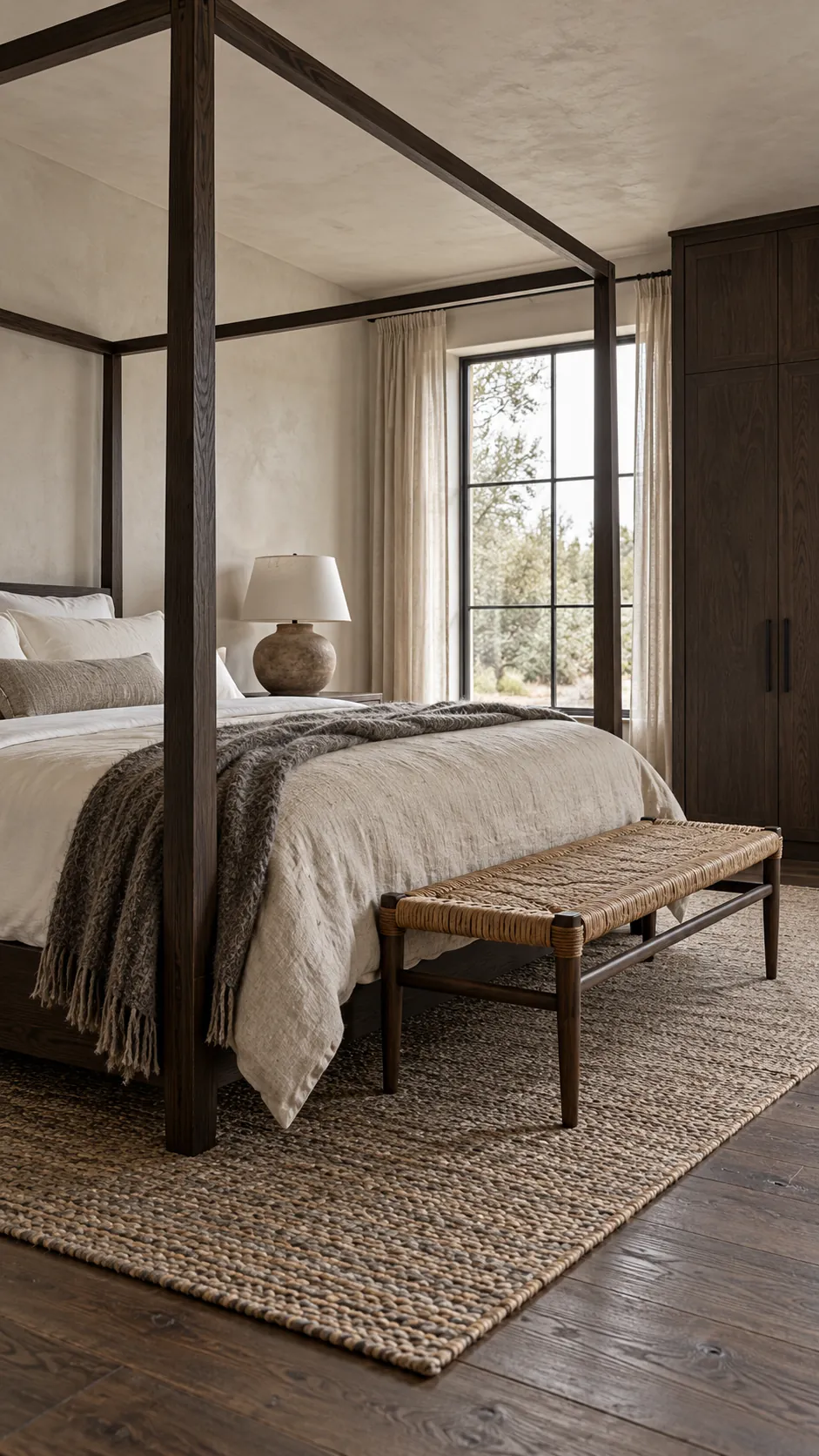
Vary the weave rather than adding another print. Smooth cotton beside slubby linen, a coarse rug, and braided cane already gives the eye enough to explore. Leave some plain wall and floor visible to separate those textures.
Keep Plants Off The Canopy Frame
Trailing plants look natural in a boho bedroom, but a canopy rail is rarely designed for wet soil, pots, or repeated watering. Put plants on a stable wall shelf, a floor stand, or a ceiling fitting installed for the real load. Keep leaves away from pillows and choose positions with suitable light.
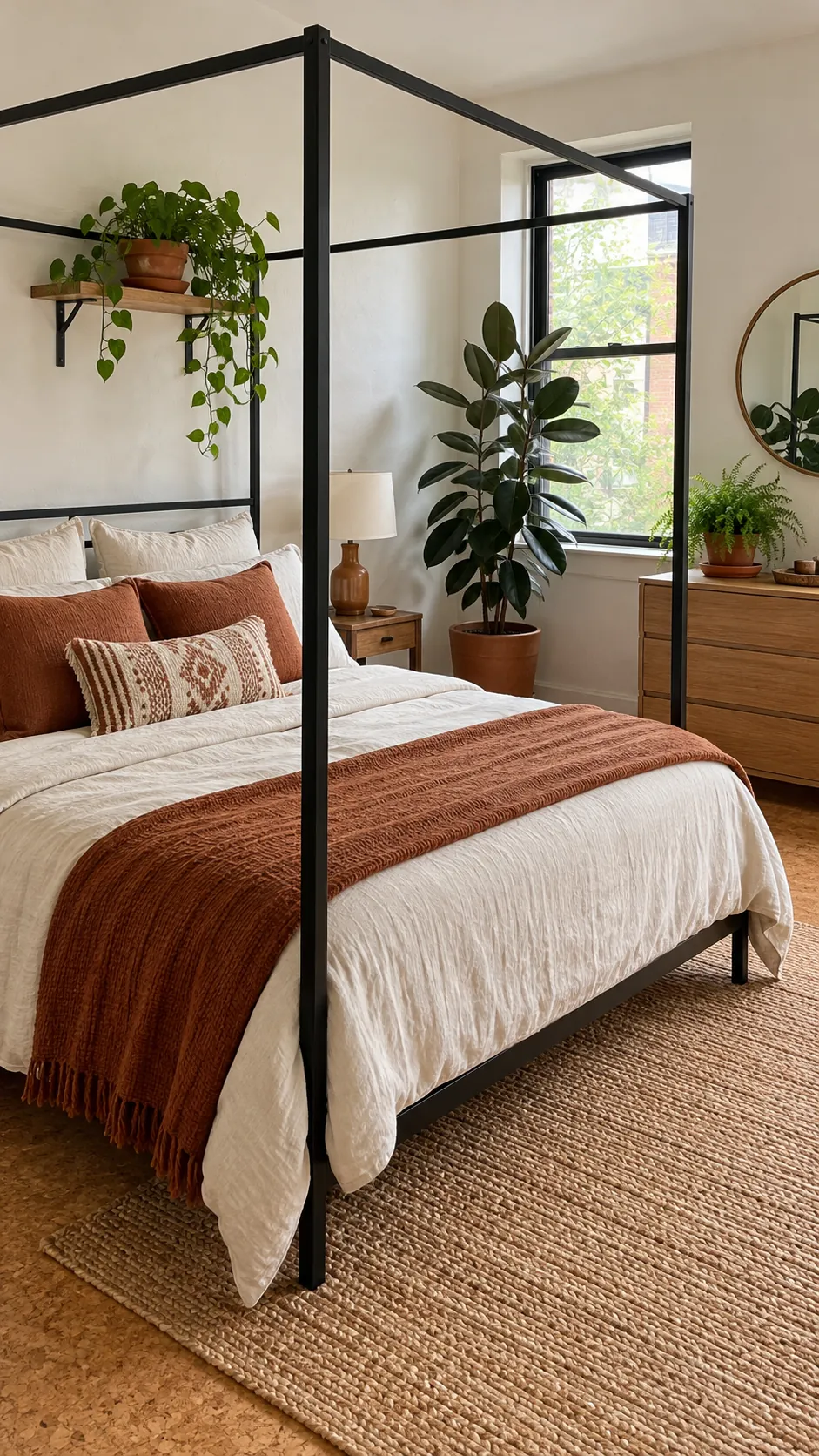
A single healthy plant has more impact than several struggling ones. Check whether each species is safe for pets and children in the home, and use a saucer that protects the furniture. Avoid vines where they can catch hair, fabric, or a moving fan.
Use Fabric As A Soft Accent
Drape only one short section of the canopy or place two panels behind the headboard. This keeps the frame readable and makes fabric easier to remove for washing. A loose cotton gauze or linen blend gives movement without the heavy enclosed feeling of curtains on every side.
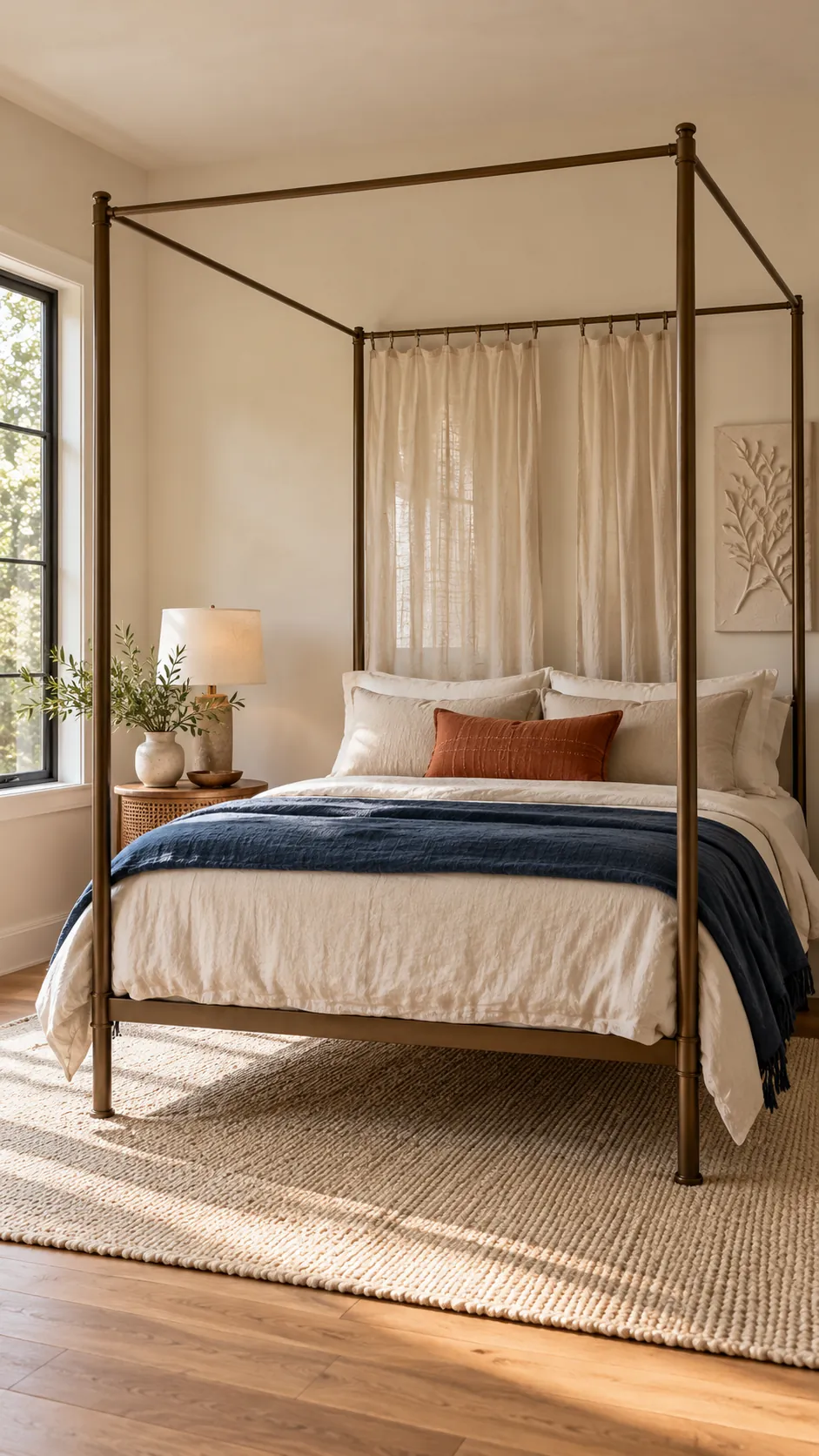
Use proper brackets and anchors for any ceiling or wall installation. Adhesive alone is not a dependable support for fabric above a sleeping person. Keep every panel clear of bulbs, cords, heaters, and fan blades.
Give A Small Room One Open Side
A small boho canopy bedroom needs a clear route more than another decorative layer. Place the bed so at least one side remains easy to use, then protect the closet and door swing. Wall lights and a narrow ledge can replace floor lamps and wide nightstands.
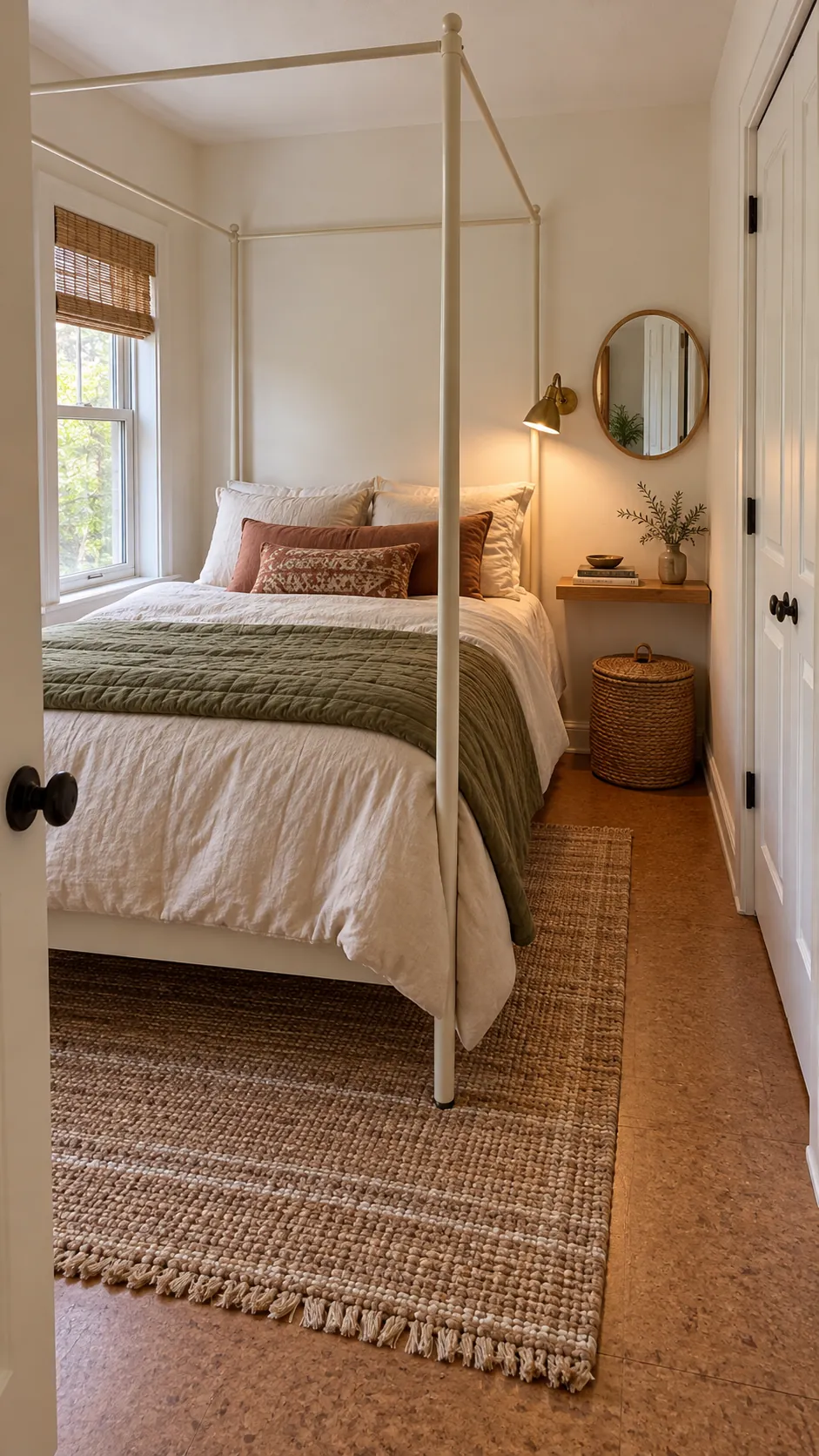
Choose a frame close to the wall color and keep the upper rails bare. Store practical items in one closed drawer or lidded basket rather than several open containers. The room will still feel layered because the bedding and rug carry the style.
Make The Accent Wall Quietly Tactile
An accent wall behind a canopy should support the frame, not fight it. Limewash, grasscloth, or a restrained block print pattern can add depth with fewer objects. Test a large sample behind the posts because thin lines and busy motifs can create distracting intersections.
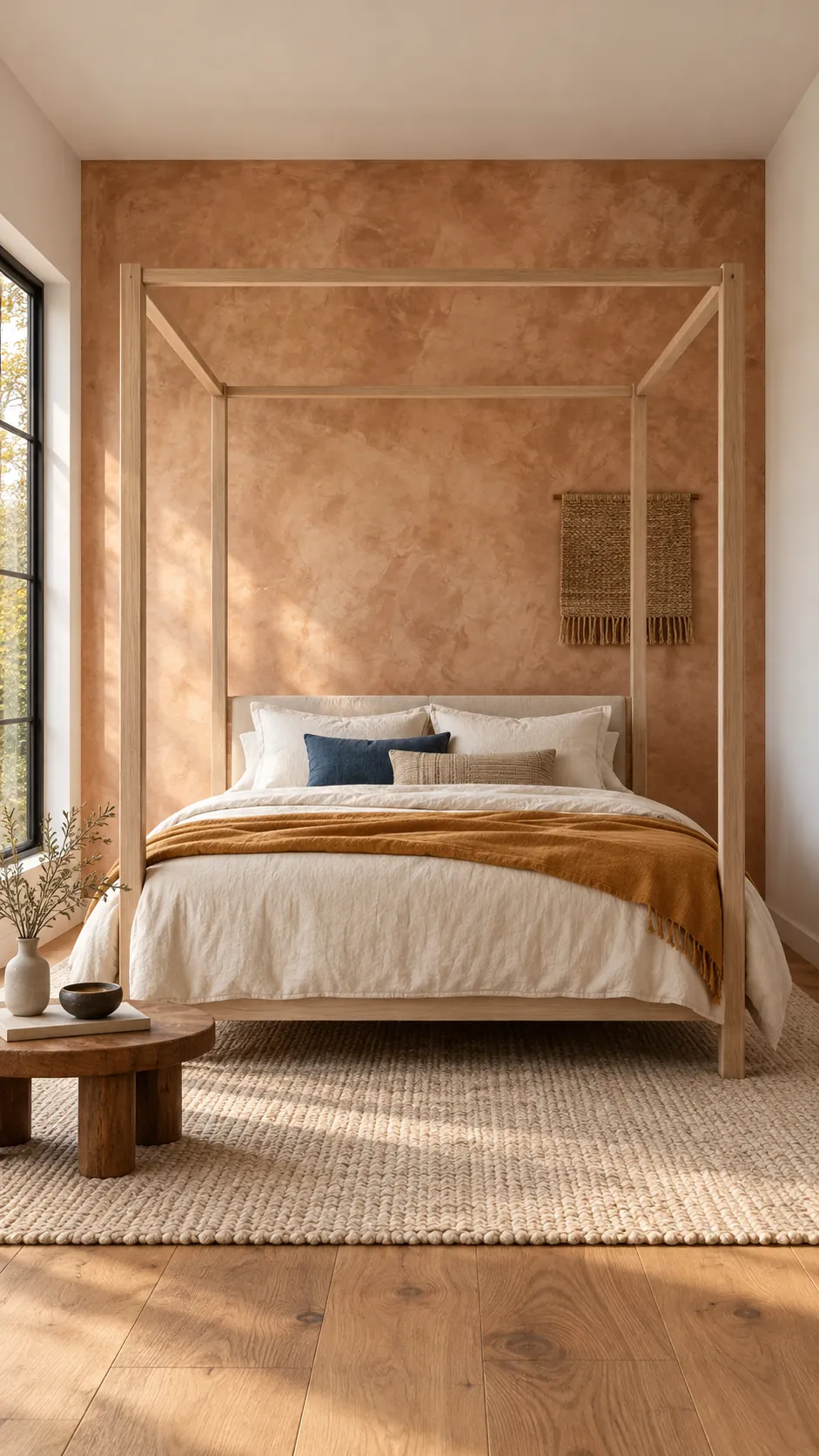
Keep the wall color connected to the textiles and let it remain mostly uncovered. One sculptural wall object or a small woven panel is enough if the finish already has movement. A calm backdrop gives handmade pieces more presence.
Edit The Room For Daily Rest
Stand at the doorway and identify the first three things you notice. The bed should lead, followed by one textile or plant moment and one source of warm light. If several small objects demand attention first, remove or group them.
Leave the canopy rails accessible for cleaning and keep the bed easy to make. A boho canopy bedroom feels personal when useful objects, natural materials, and collected pieces have room to breathe. Safety and calm are part of the style, not limits on it.