
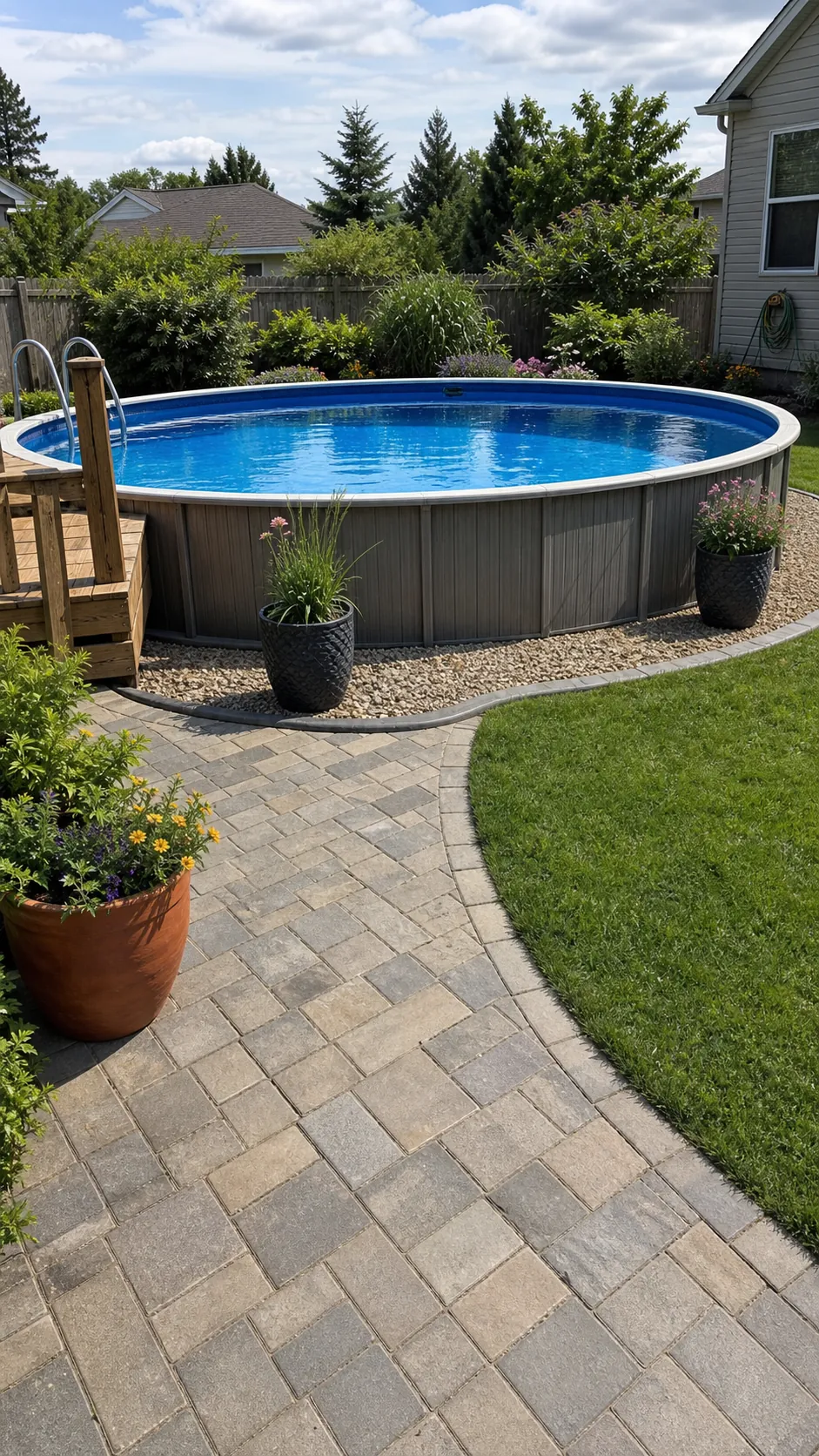
An above-ground pool can be the best-used feature in a backyard and still look strangely unfinished. The fix is rarely to hide every inch of the wall. Good landscaping around an above-ground pool creates a clean transition from water to yard, moves rain and splash-out away from the pool, and gives wet feet a safe route to the ladder or deck.
Before buying plants or stone, watch where water travels after a storm and check the pool manufacturer’s clearance requirements. Keep soil, mulch, roots, and hard edges away from the wall, preserve access to the pump and frame, and call a local pool professional when grading, retaining walls, electrical equipment, or a partially buried installation is involved. These 21 ideas range from fast weekend upgrades to more permanent outdoor-room projects.
Create a Clean Gravel Collar
A narrow collar of washed gravel gives the pool a deliberate edge while replacing the muddy strip that grass trimmers struggle to reach. Excavate only as safely allowed around the installed pool, establish a stable edge on the lawn side, and use a liner-safe separator so stone cannot migrate against a soft wall. The finished surface should encourage water to move away from the pool, not form a bowl around it.
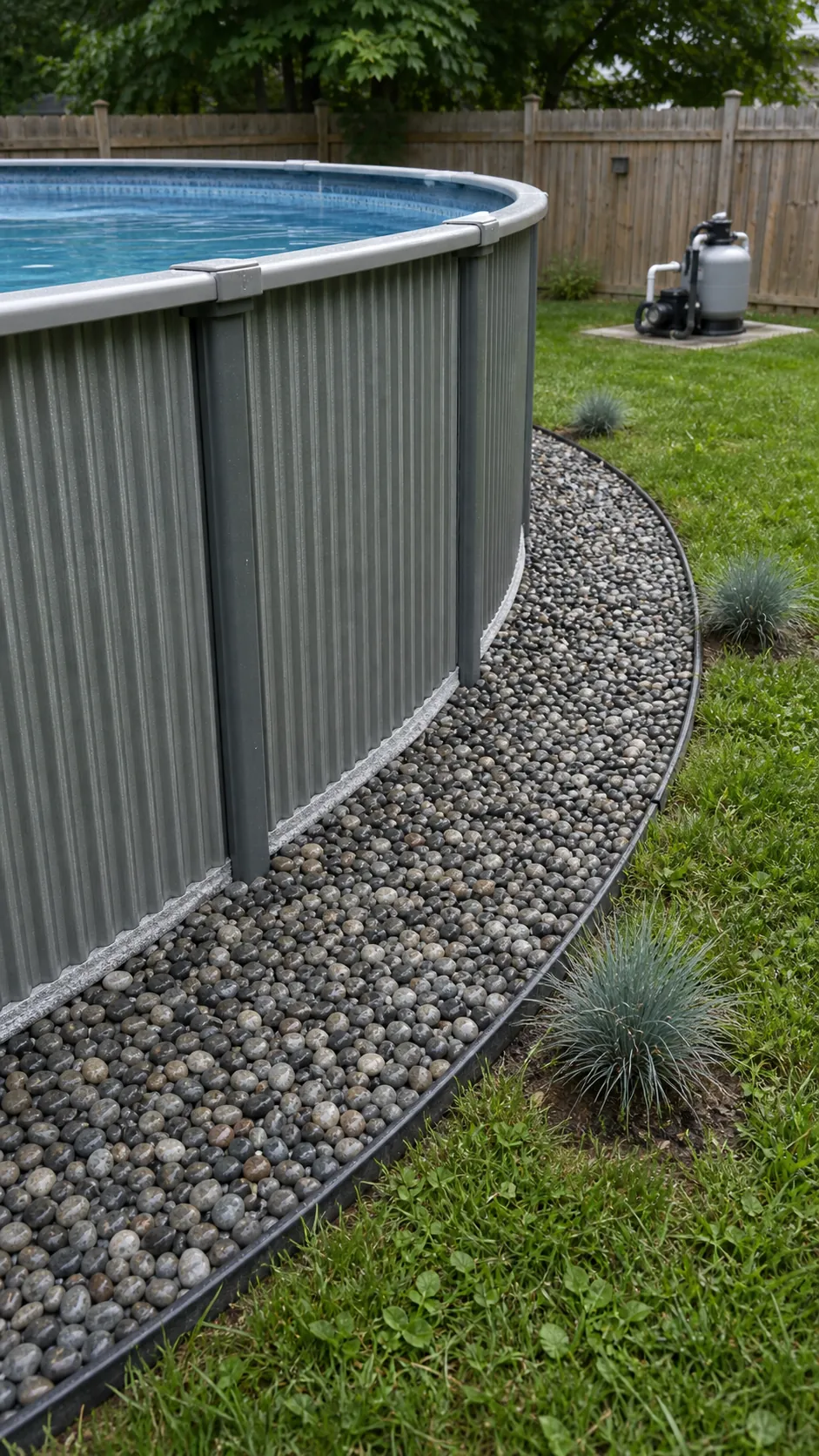
Choose rounded or small angular stone that stays comfortable near bare feet, and contain it with metal, composite, or masonry edging set well away from the liner. A restrained two- or three-foot band usually looks more polished than spreading rock across the entire yard.
Build a Stepping-Stone Path to the Ladder
Most pool mess comes from the same short route: lawn to ladder, then wet feet back across the grass. Large, stable stepping stones interrupt that cycle without the cost of a full patio. Lay them close enough for a natural stride, seat every stone so it cannot rock, and make the landing by the ladder wide enough for a swimmer to pause safely.
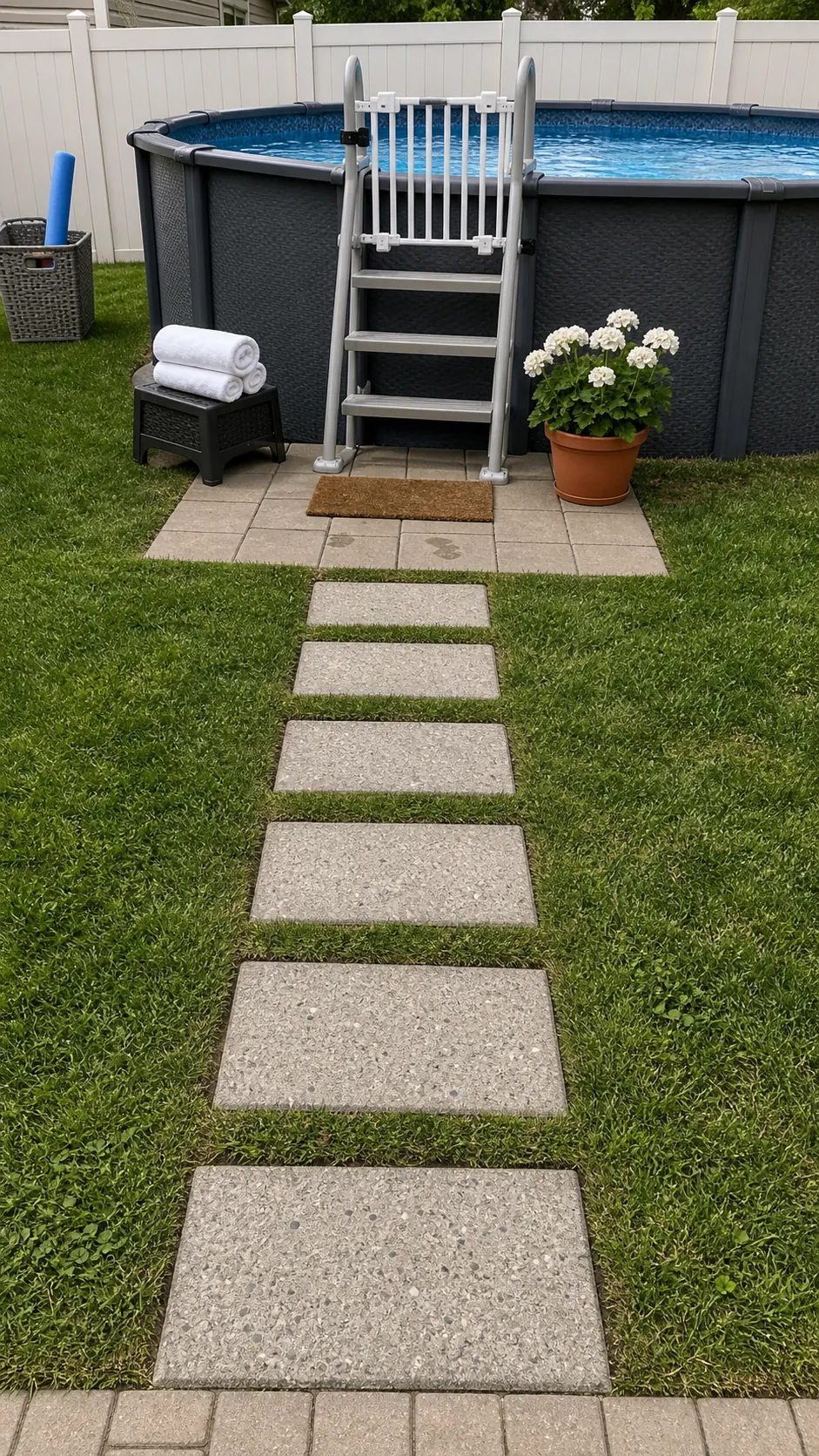
Use textured pavers rather than slick decorative tile. Gravel or low groundcover between the stones can soften the path, but leave the walking surface open and easy to inspect. This is one of the most useful above-ground pool surround ideas for a small budget.
Frame the Pool With Oversized Planters
Containers deliver height and greenery without letting roots wander toward the liner or frame. Place two or three large, heavy pots where they soften the view without narrowing a walkway, blocking a brace, or hiding a leak. Self-watering inserts can help in hot climates, but every pot still needs free drainage and a stable base.
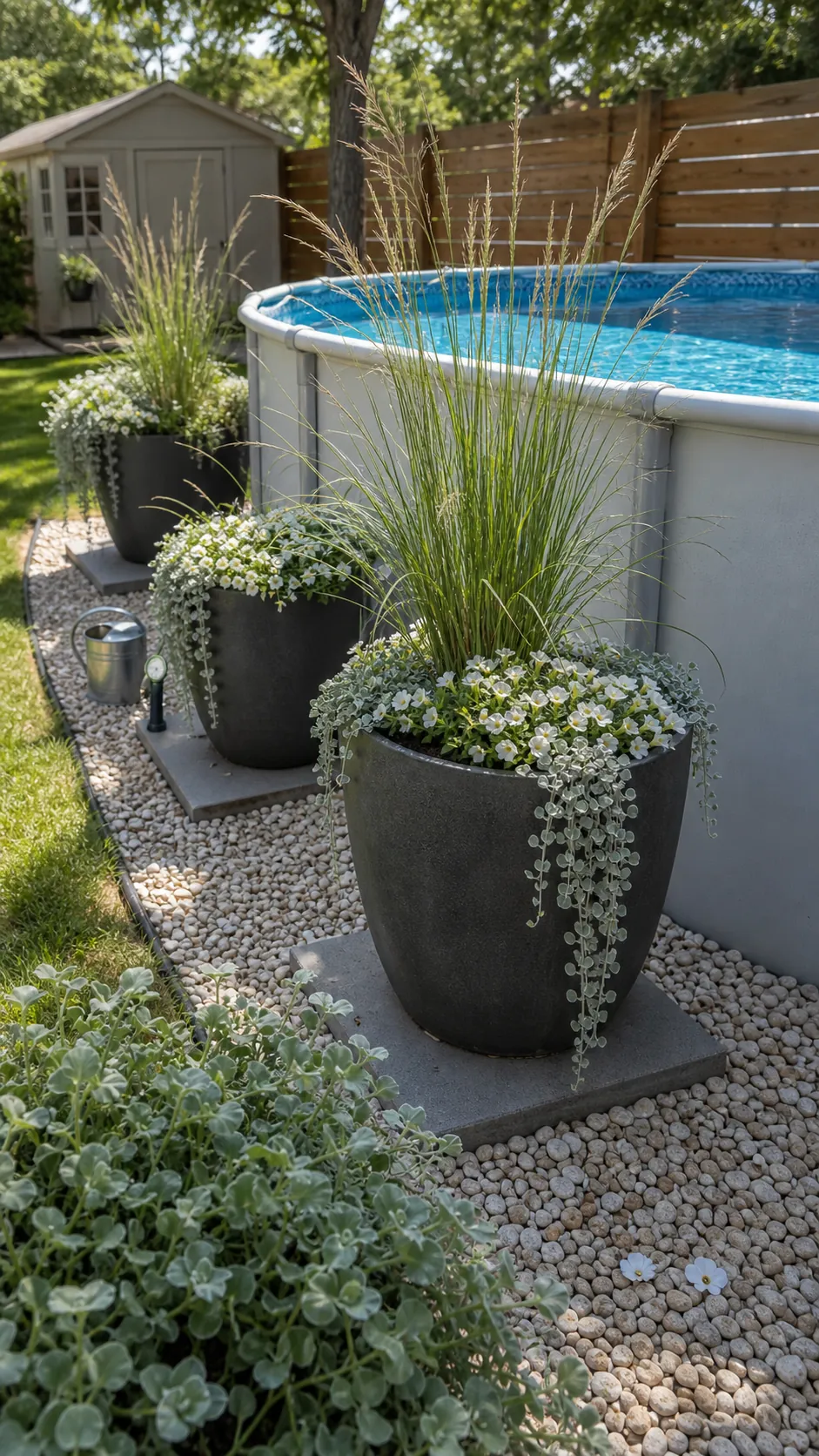
Repeat one pot material for cohesion, then mix a vertical plant, a mounding plant, and a trailing accent. Favor low-litter, non-thorny choices suited to the site. Containers also make it easier to relocate plants when access is needed for winterizing or repair.
Curve a Low-Maintenance Perennial Bed
A curved bed makes a round pool feel connected to the geometry of the yard. Instead of planting tightly around the wall, start the bed farther out and let its outer curve echo the pool. Keep the closest zone open for inspection, airflow, drainage, and maintenance, then group perennials in broad drifts rather than scattering one of everything.
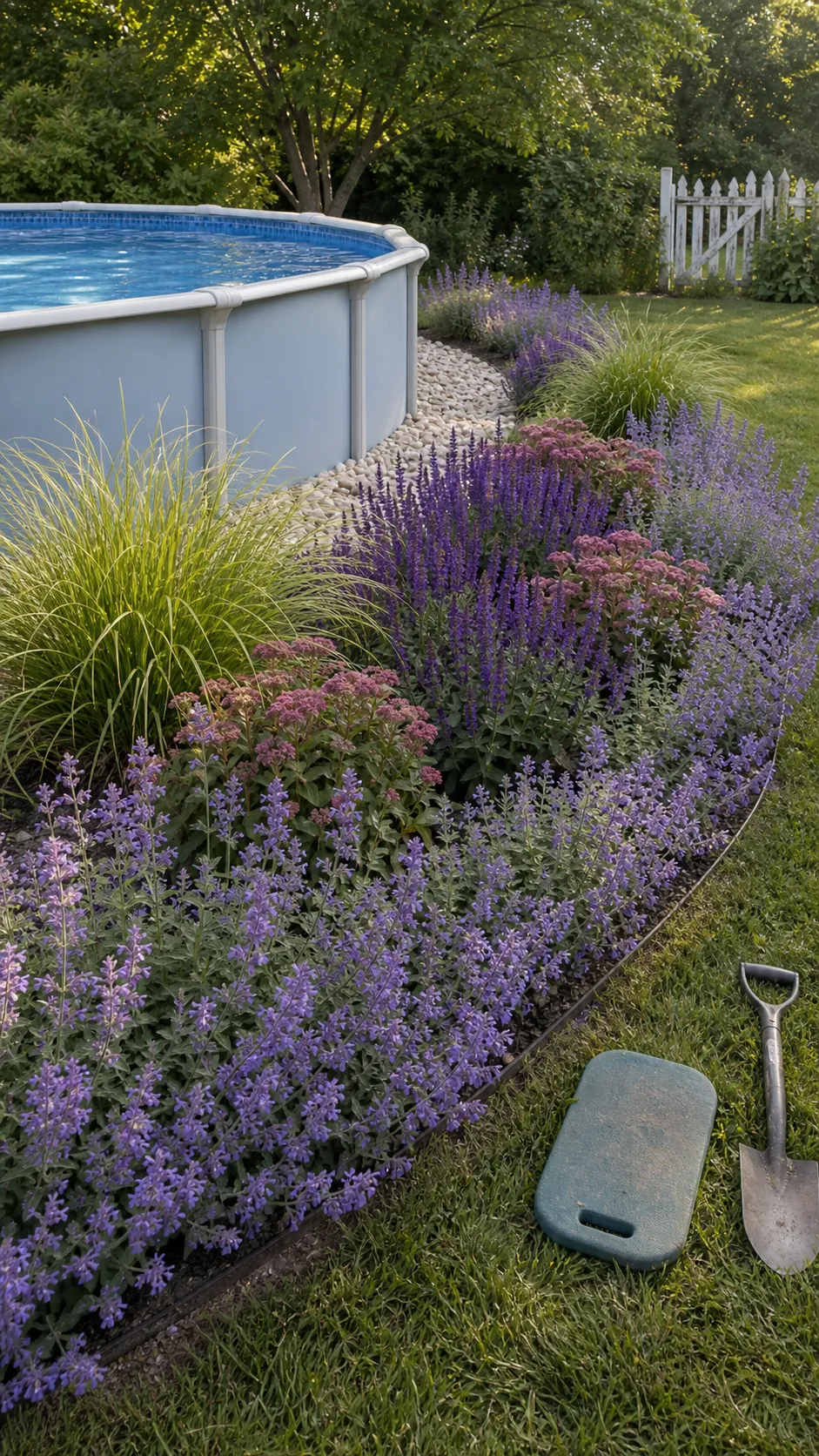
Match plants to sun, winter hardiness, and soil moisture, and avoid aggressive spreaders. Long-blooming catmint, compact salvia, sedum, or dwarf ornamental grasses can work in many regions, but local nursery advice should determine the final palette.
Use Ornamental Grasses for Soft Screening
Fine-textured grasses disguise a hard pool wall without creating a solid hedge. Their movement also makes a utilitarian corner feel relaxed. Choose compact, clump-forming varieties and place them far enough away that mature blades cannot lean into the pool or crowd equipment. Avoid invasive grasses and seed-heavy varieties where local guidance flags them.
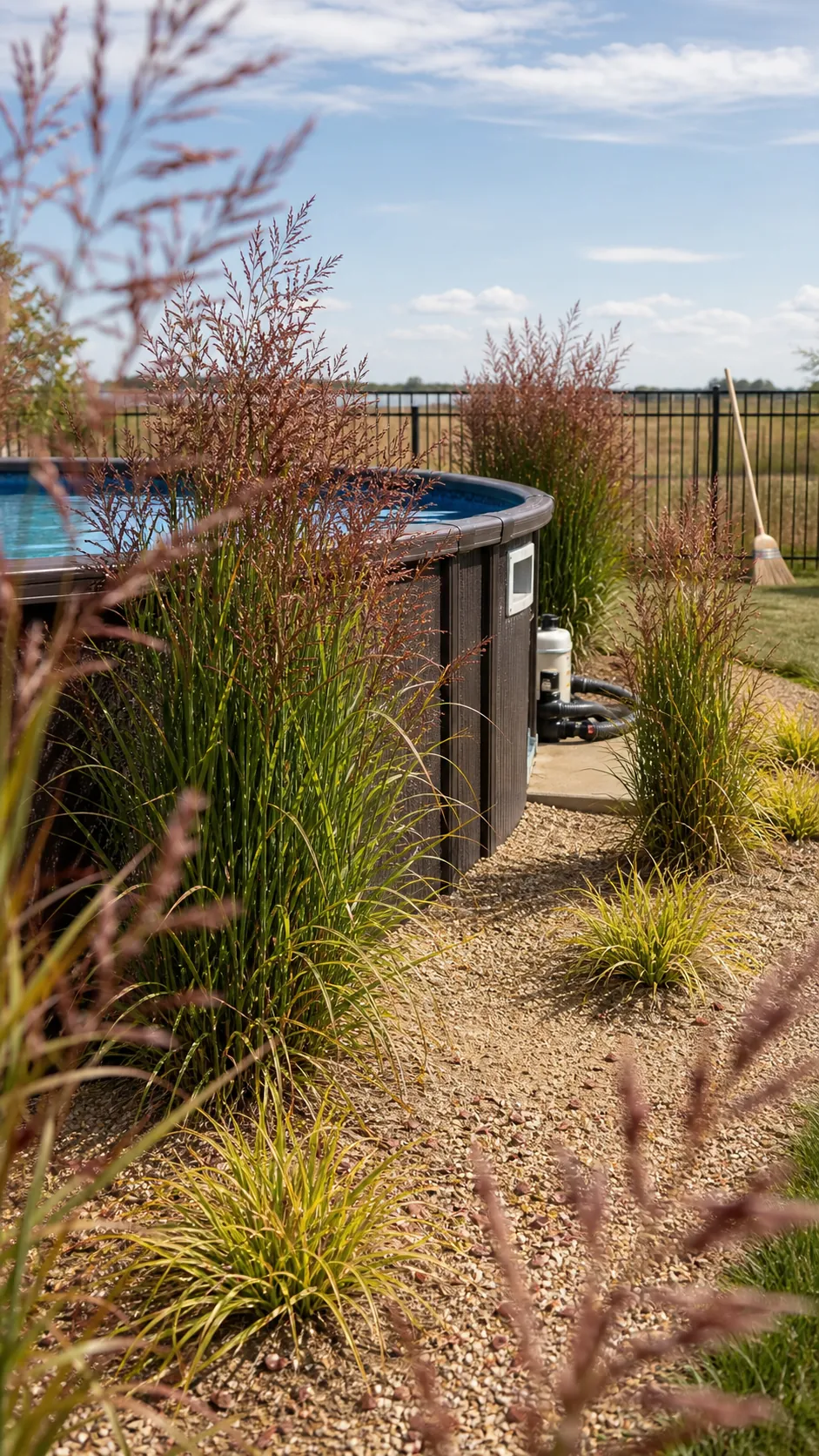
Plant in an offset rhythm rather than a straight soldiers’ row. Leave clear gaps around hoses, shutoffs, braces, and the skimmer. Cutting grasses back at the proper season keeps dried foliage from blowing into the water.
Define the Edge With Steel or Composite Edging
A crisp border is the small detail that makes inexpensive gravel or mulch look intentional. Flexible steel follows a round pool neatly; composite edging offers a softer, corrosion-resistant option. Position the border between the landscape band and lawn, never where a sharp edge can contact the liner or become a barefoot hazard.
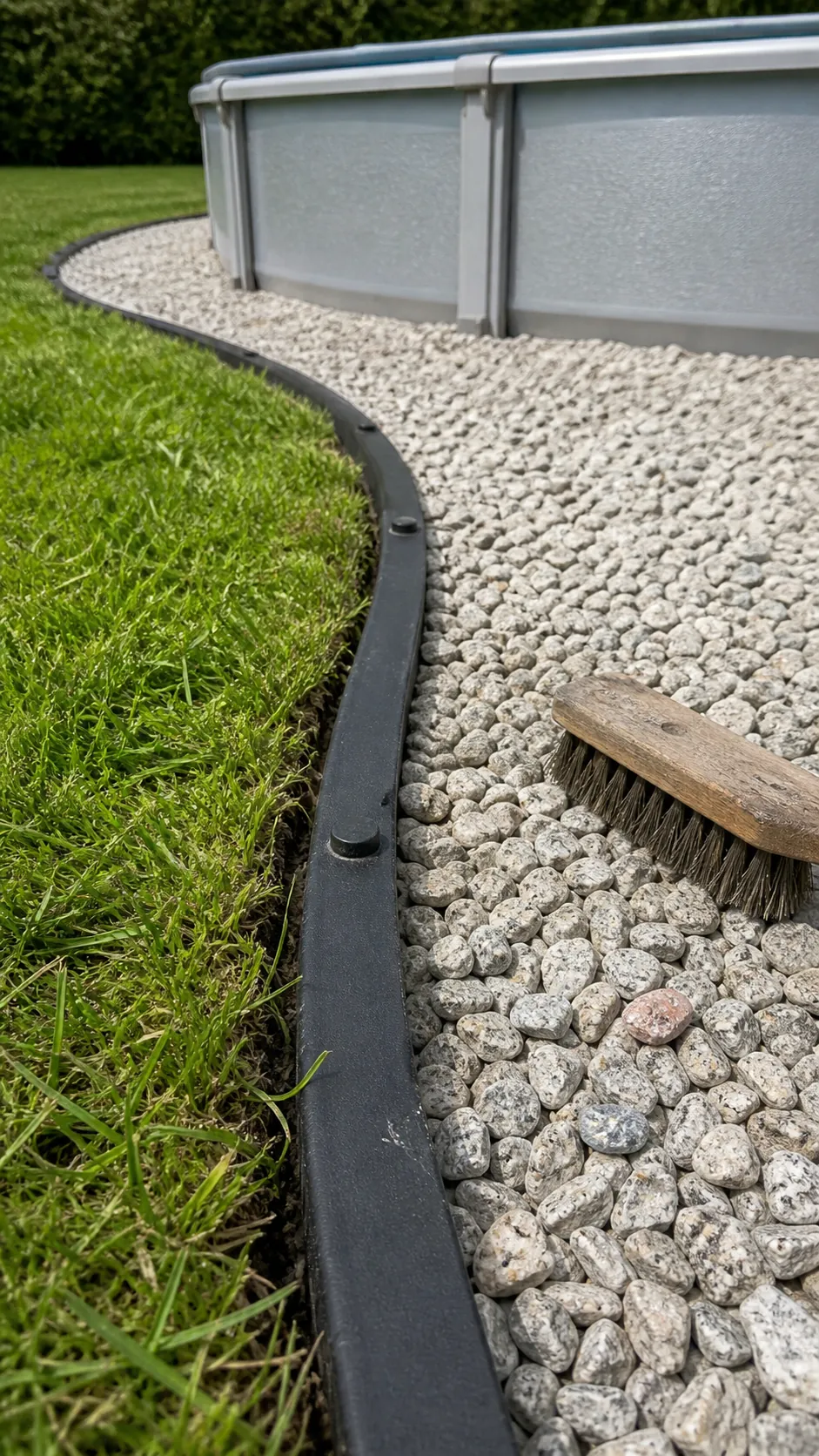
Set the lawn side at a mower-friendly height and secure the edging according to its installation system. Clean curves are more forgiving than a string of tiny bends. The result is an above-ground pool border that limits stone migration and reduces hand trimming.
Add a Paver Landing at the Entry
The ladder or stair entrance deserves more than a single loose patio block. A properly based paver landing gives swimmers a dry place for sandals, towels, and the first careful step out of the water. Make it generous enough for circulation while keeping the pool’s supports and required clearances untouched.
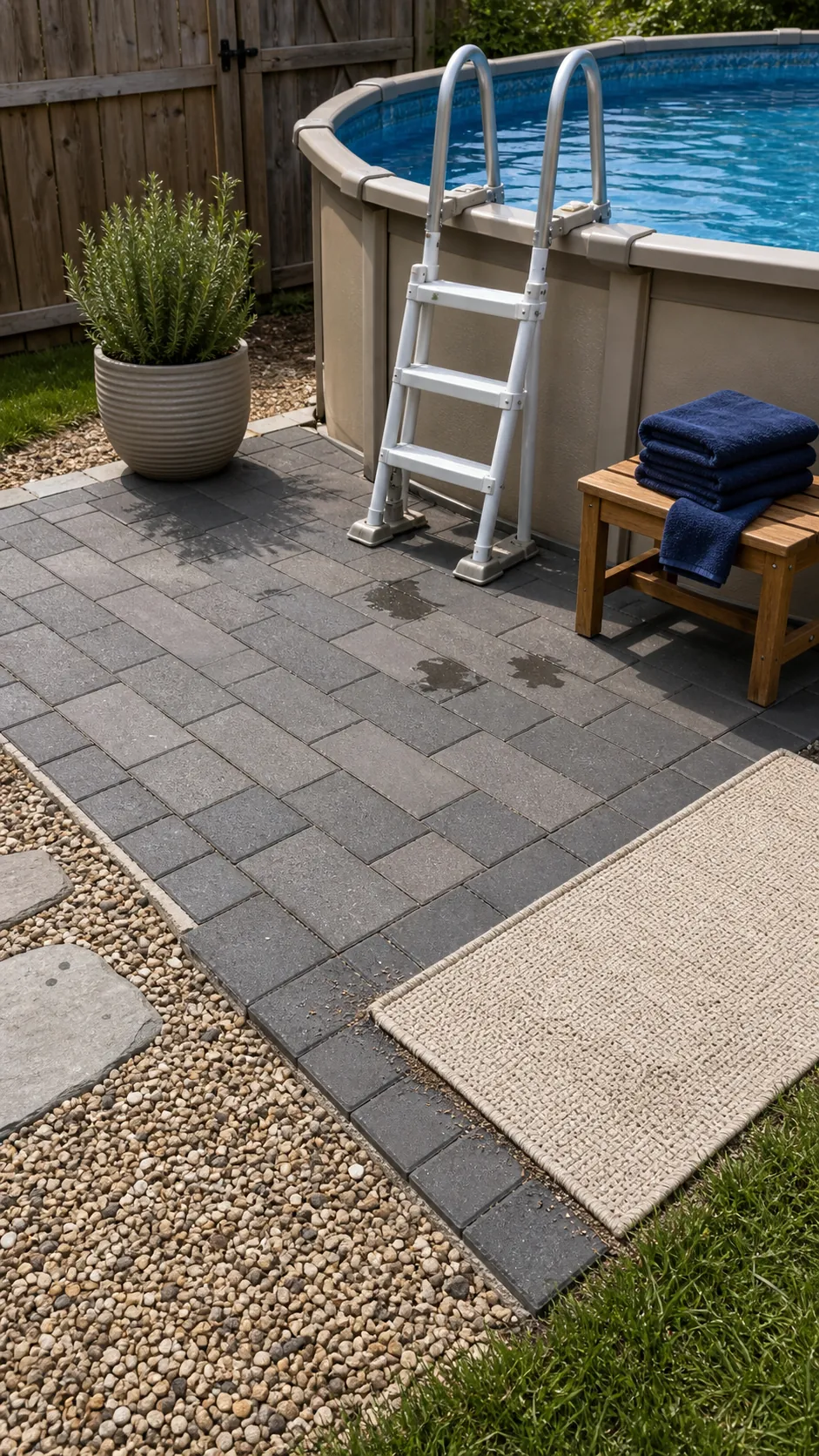
Use a compacted base and non-slip pavers appropriate for freeze-thaw conditions in your region. Pitch the landing so splash-out drains away from the wall. A washable outdoor mat can catch grit before it reaches the pool.
Wrap One Side With a Small Deck
A partial deck can transform the experience without encircling the entire pool. Concentrate the investment where people enter, supervise children, or set down towels. A compact platform also breaks up the tall wall visually and creates a natural destination in the yard.
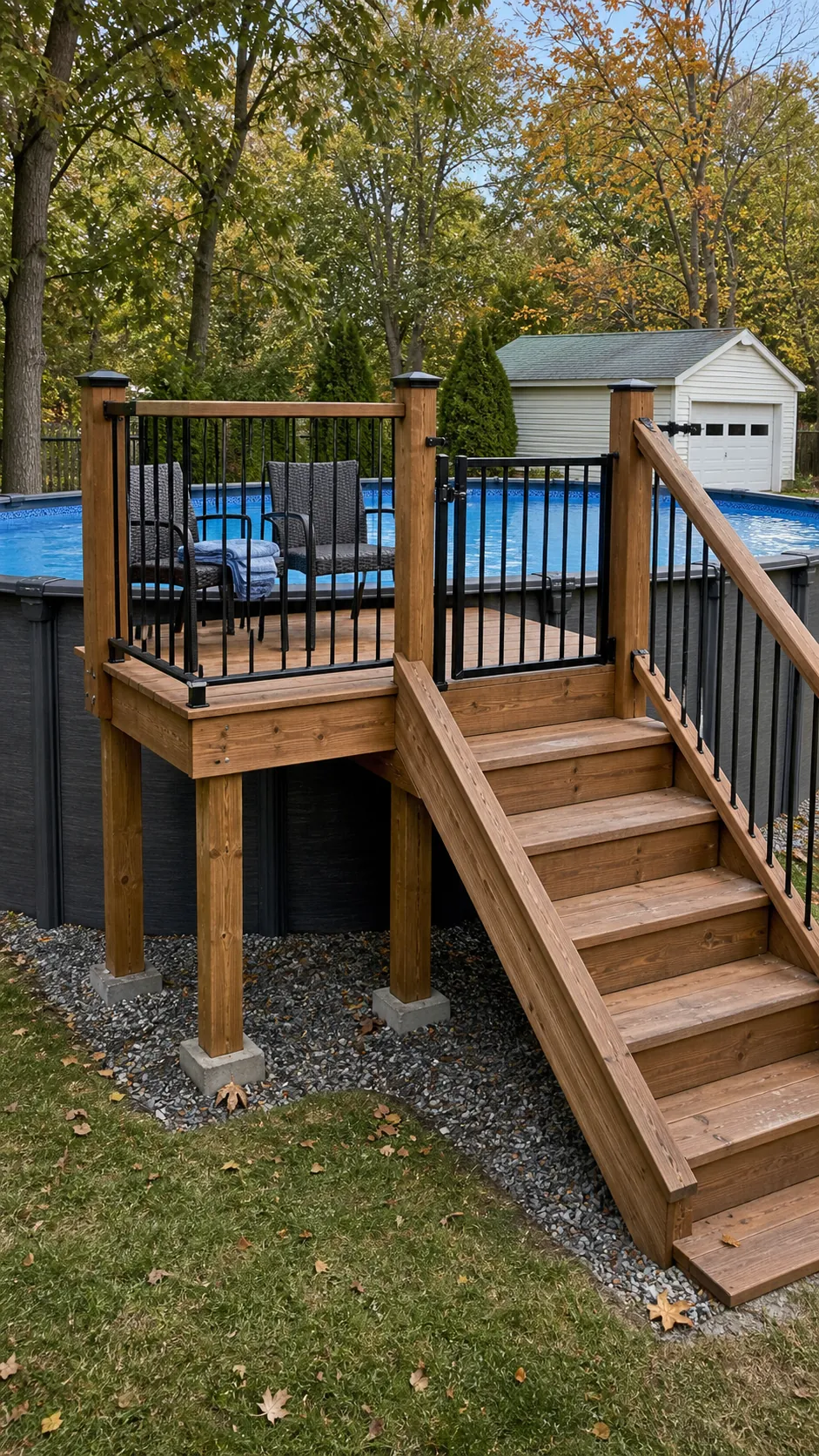
This is structural work, so follow local permits, guard and gate requirements, electrical clearances, and manufacturer guidance. The deck should not transfer loads to a pool that was not designed to support them. Choose textured decking and preserve service access below.
Create a Dry Creek for Runoff
If stormwater already follows a shallow route through the yard, a dry creek can turn that pattern into a landscape feature. A swale lined with varied stone guides surface water toward a safe outlet while adding shape beyond the pool’s immediate border. It should solve an observed drainage path, not decorate a low spot that still has nowhere to drain.
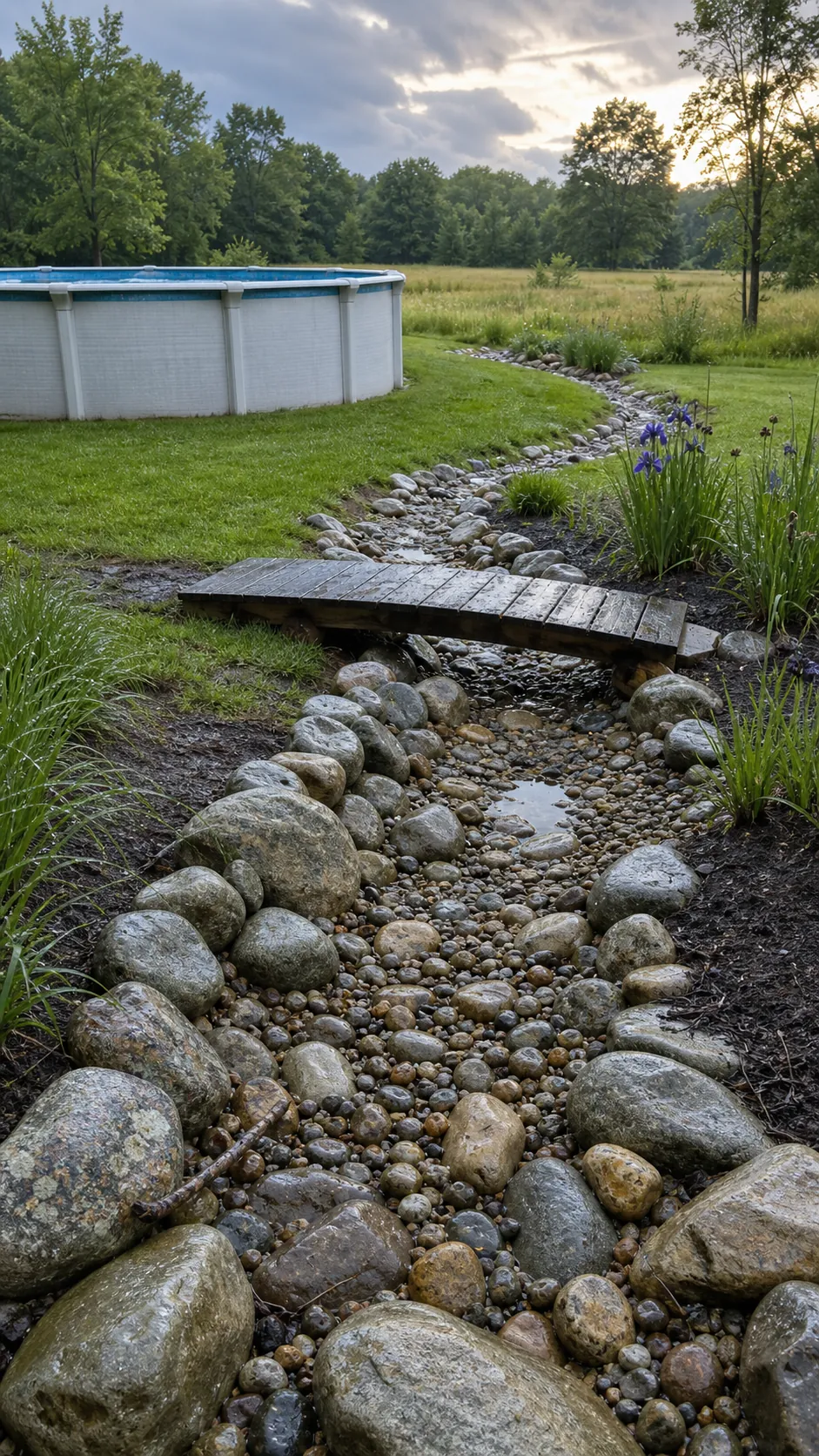
Confirm the legal discharge location and avoid directing water to a neighbor or foundation. On difficult slopes or persistently wet sites, get professional grading advice. The best-looking creek uses a mix of stone sizes and a few moisture-tolerant plants outside the pool’s service zone.
Plant a Pollinator Strip Away From the Ladder
A sunny above-ground pool garden can support pollinators, but placement matters. Keep nectar-rich plants away from the ladder, food table, towel hooks, and narrow circulation paths so bees and bare feet are not competing for the same space. A strip along the far side of the yard provides color in the view without crowding swimmers.
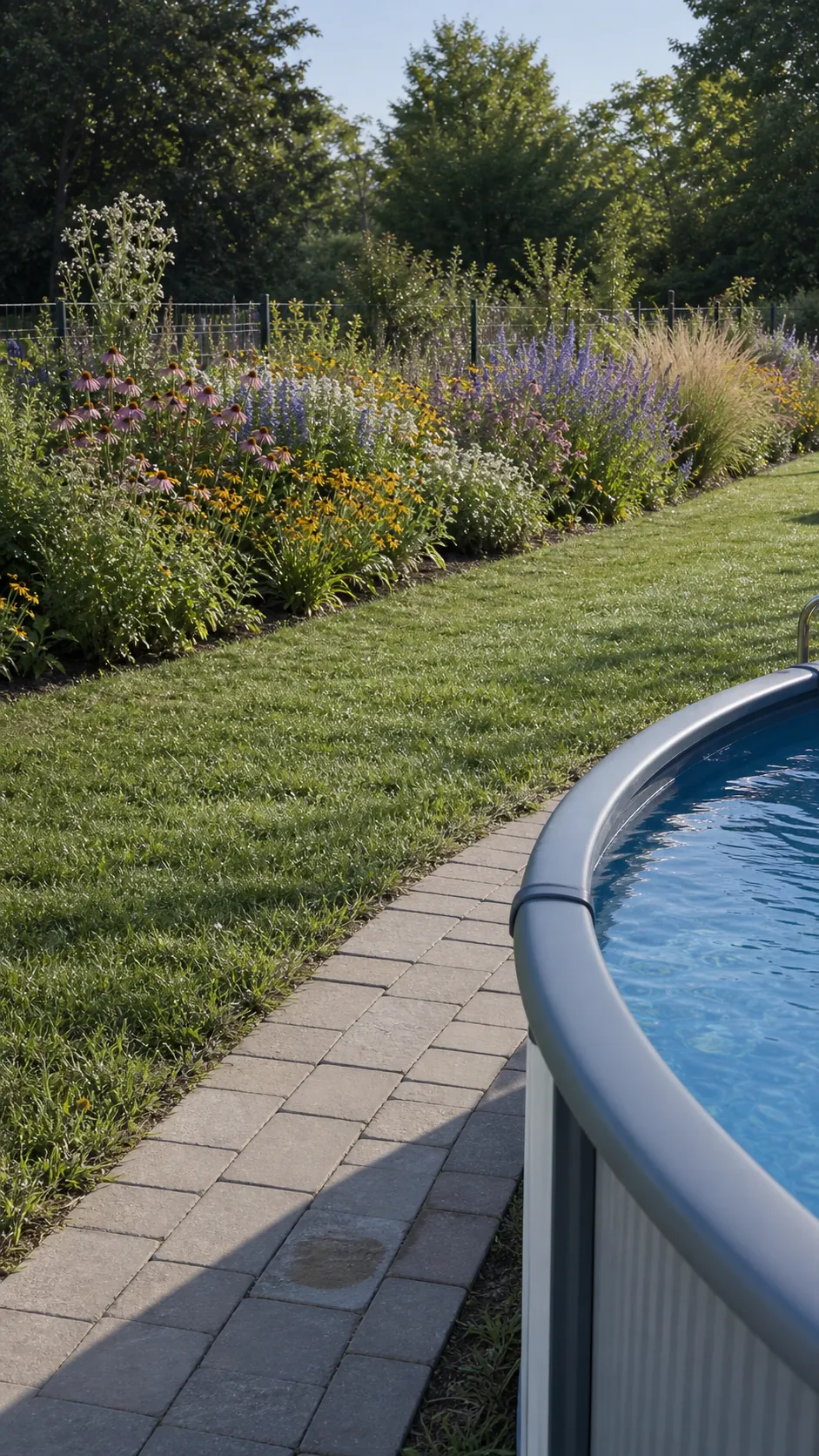
Select native plants for the local climate, group them for a composed look, and include different bloom seasons. Leave an open buffer so fallen petals and seed heads are less likely to reach the water.
Make a Mulch-Free Tropical Corner
A few bold leaves can create a tropical feeling without packing damp organic mulch against the pool. Build the look in containers or in a bed set well beyond the wall, using region-appropriate plants with nonaggressive roots. Canna, elephant ear, banana, or palm-like forms may provide the silhouette, depending on climate and toxicity concerns.
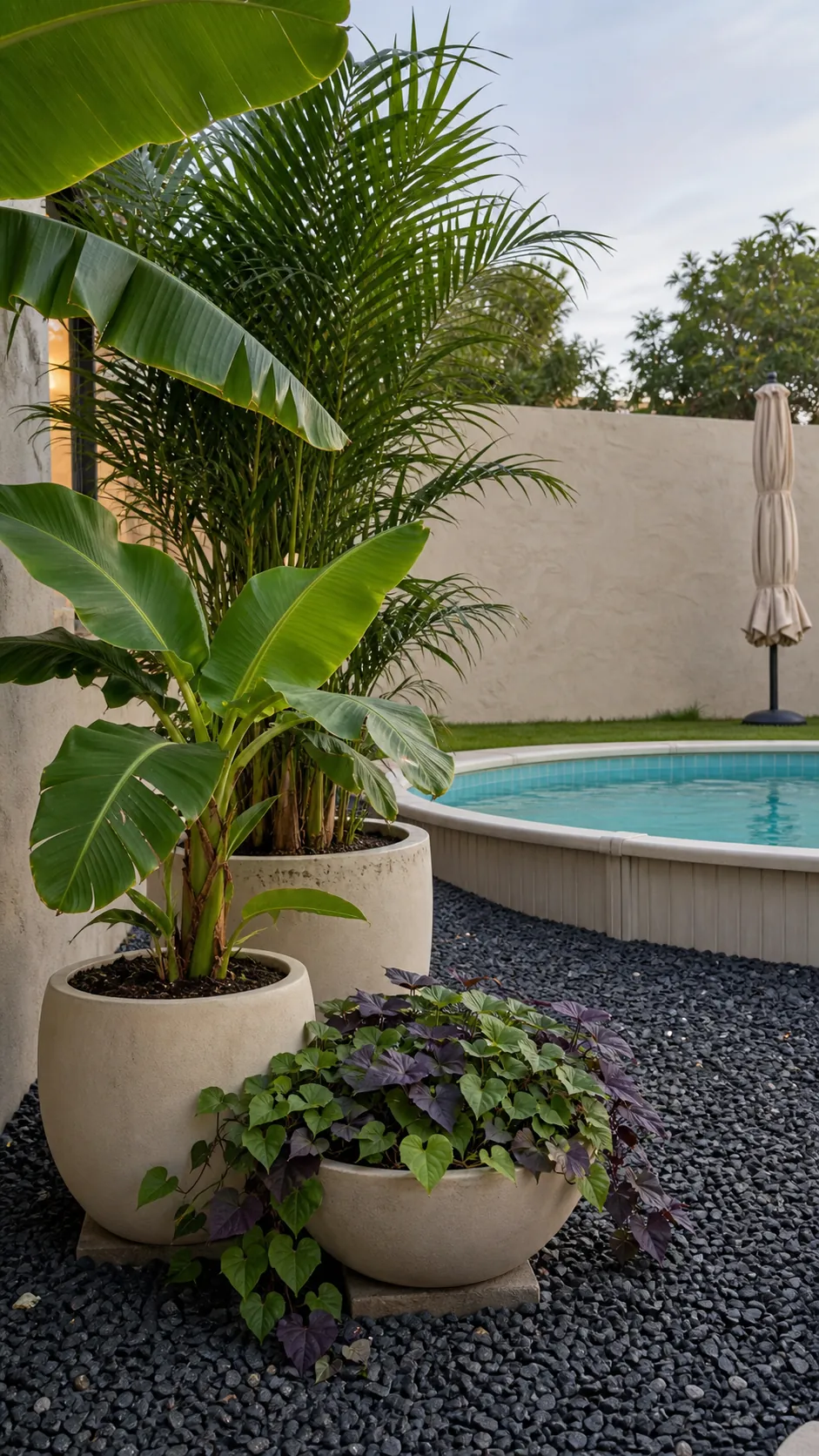
Use mineral gravel beneath the pots for a clean, fast-drying surface. One tall specimen, one broad-leaved middle layer, and one trailing plant provide depth without turning the area into a maintenance jungle.
Screen Equipment With a Slatted Panel
The pump and filter need airflow and access, but they do not need to dominate the view. A freestanding slatted panel placed at the correct distance can screen equipment from the seating area while leaving the service side completely open. Match its finish to a deck, fence, or planters for a connected outdoor-room look.
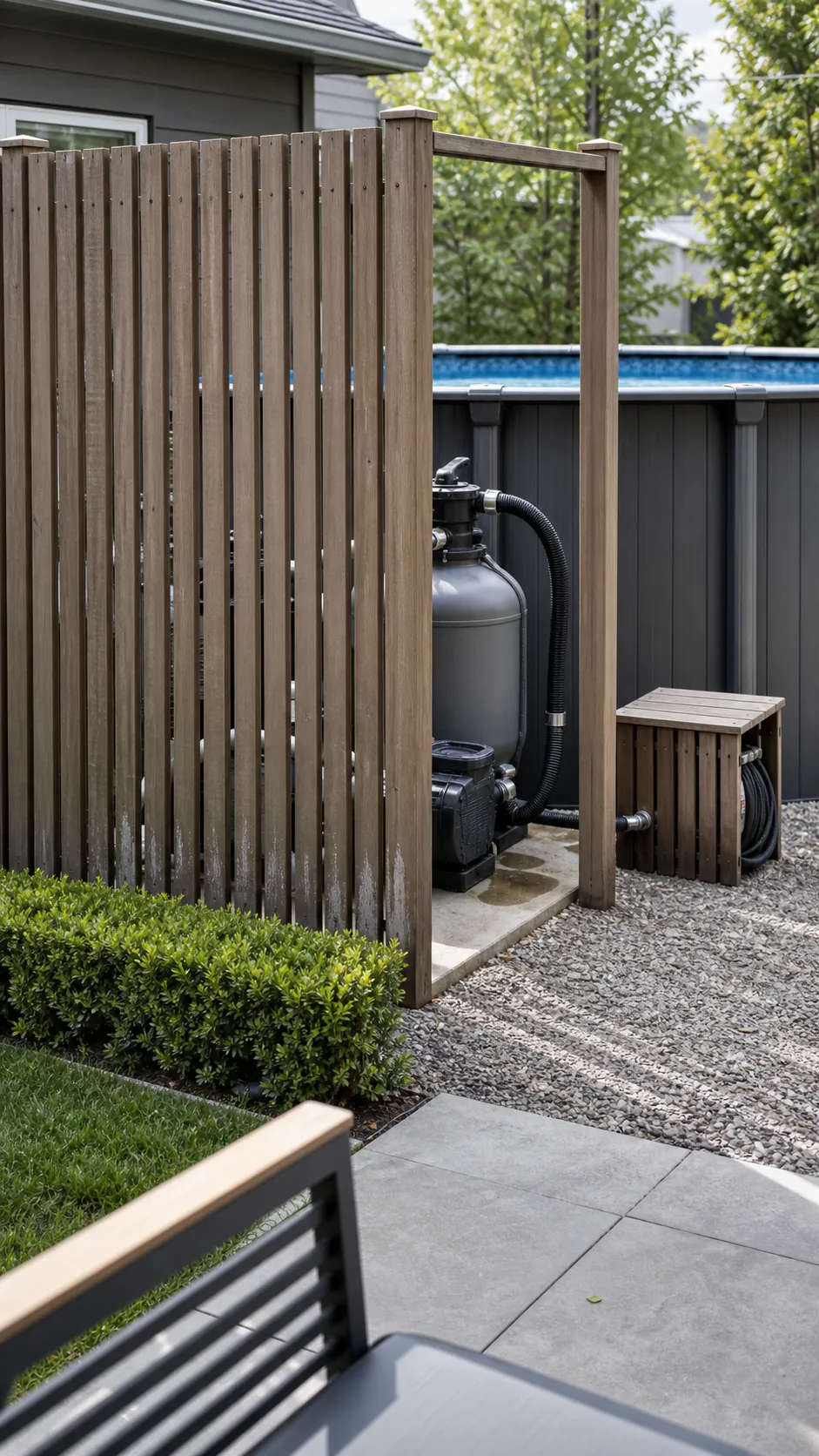
Never box equipment into a tight enclosure or cover controls, hoses, electrical components, or required clearances. Confirm the equipment manuals and local code before building. A hinged or removable panel makes seasonal maintenance far easier.
Install a Simple Towel-and-Storage Station
A dry landing becomes more useful when towels, goggles, and small pool tools have a home. Choose an outdoor-rated storage bench or a post with sturdy hooks, located away from the wall and equipment. Keeping belongings off the lawn reduces clutter and prevents swimmers from circling the pool looking for what they need.
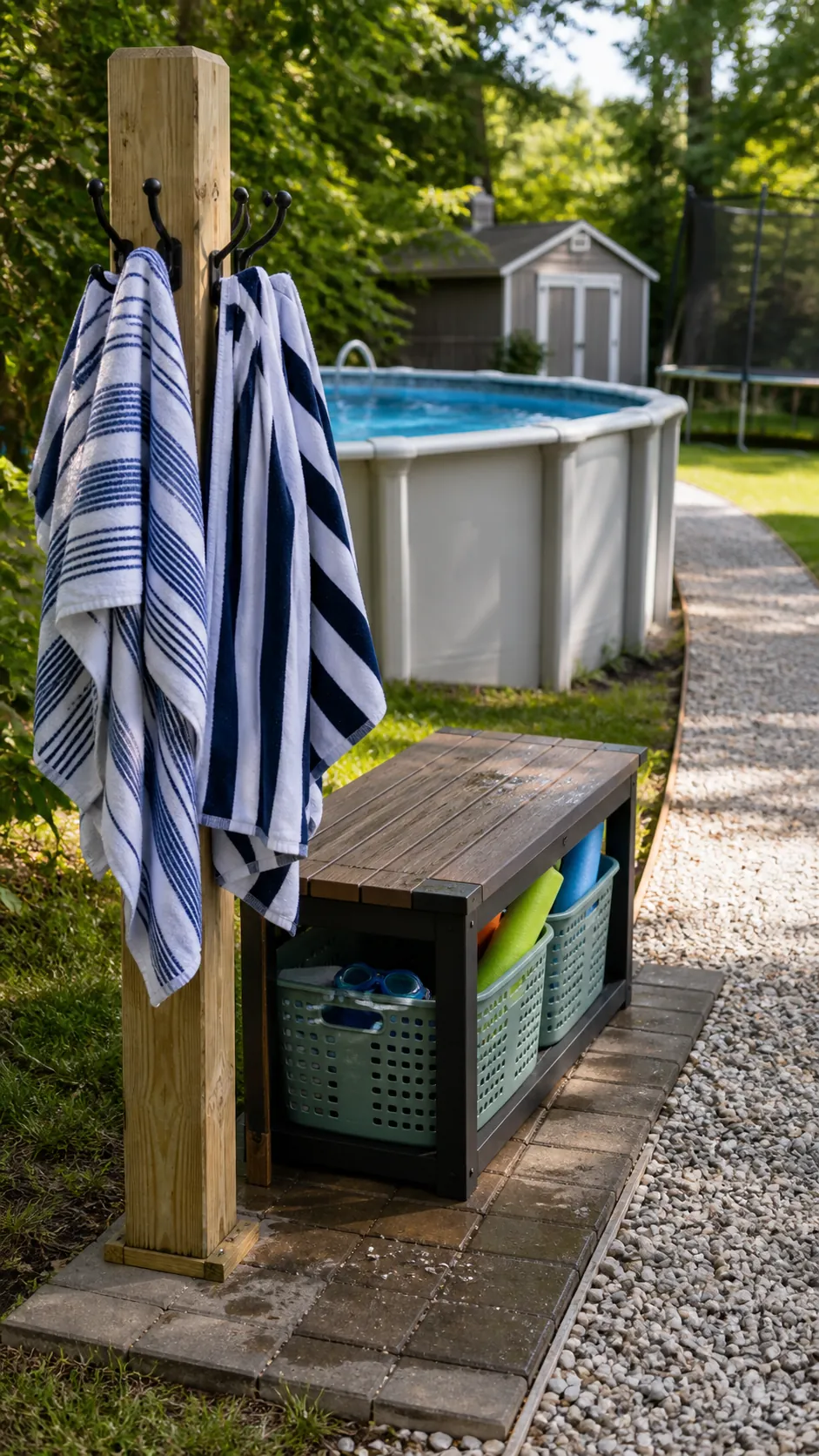
Look for drainage and ventilation rather than an airtight box that traps damp fabric. Mount hooks with smooth edges and keep the walkway clear. A lidded bin can hold toys, while chemicals should remain in their own secure, properly ventilated storage location according to label directions.
Use Groundcover Between the Pool and Fence
A narrow strip behind a pool can be too awkward for mowing yet too visible to ignore. Low, walkable groundcover can replace struggling turf if the site receives enough light and the plants are not invasive locally. Keep a clear gravel or paver service path beside the pool rather than planting right up to the wall.
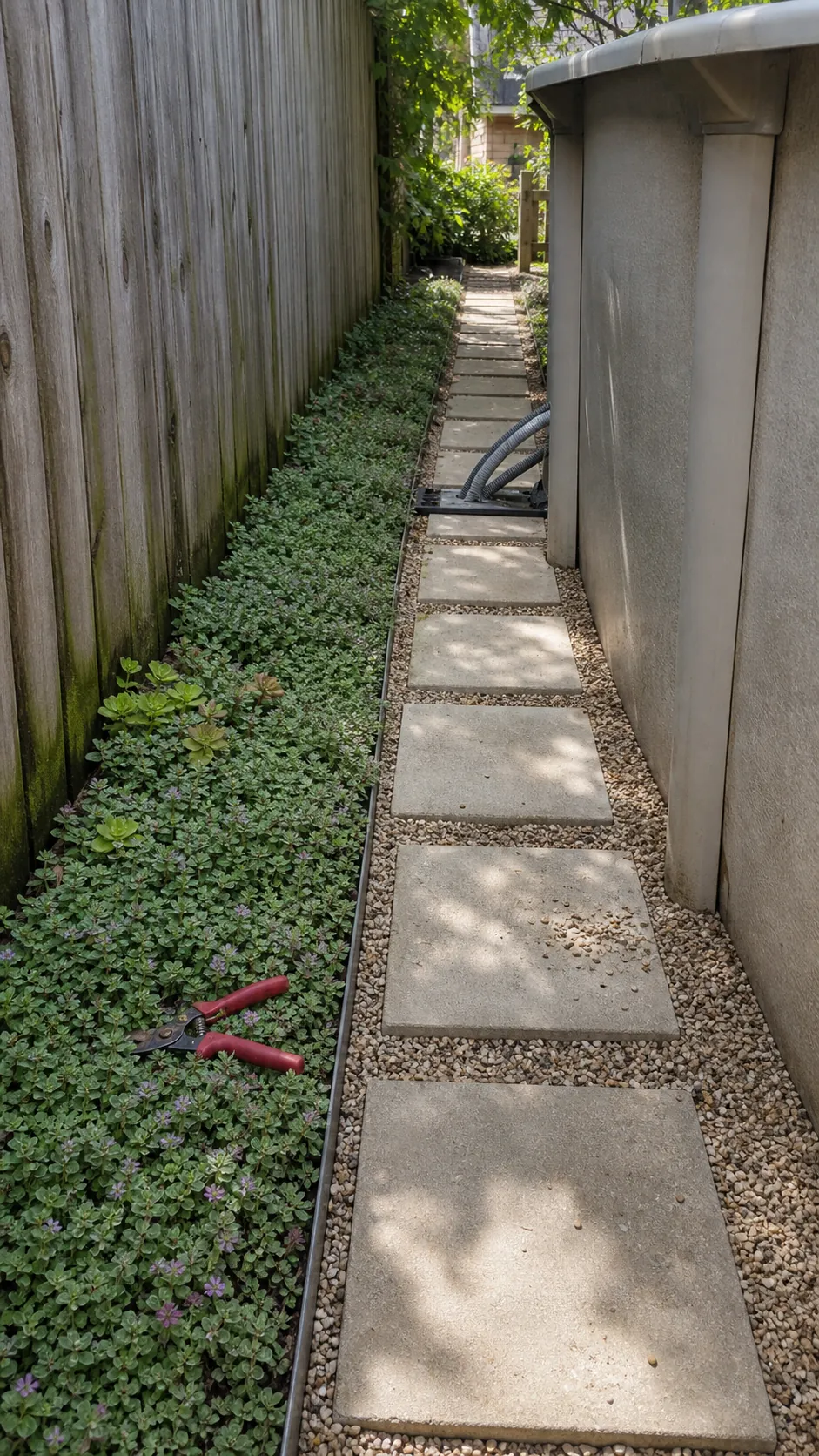
Thyme, sedum, mondo grass, or native alternatives may suit different climates and foot-traffic levels. Confirm mature spread and maintenance needs first. The goal is a stable green carpet, not a plant that escapes into the lawn or pool structure.
Create a Pea-Gravel Lounge Pocket
Instead of paving a large patio, carve out one level lounge pocket beside the best view of the water. A contained gravel pad can hold two chairs and a small table while remaining visually light. Use a compacted base and edging suited to the site; loose gravel alone will shift under furniture legs.
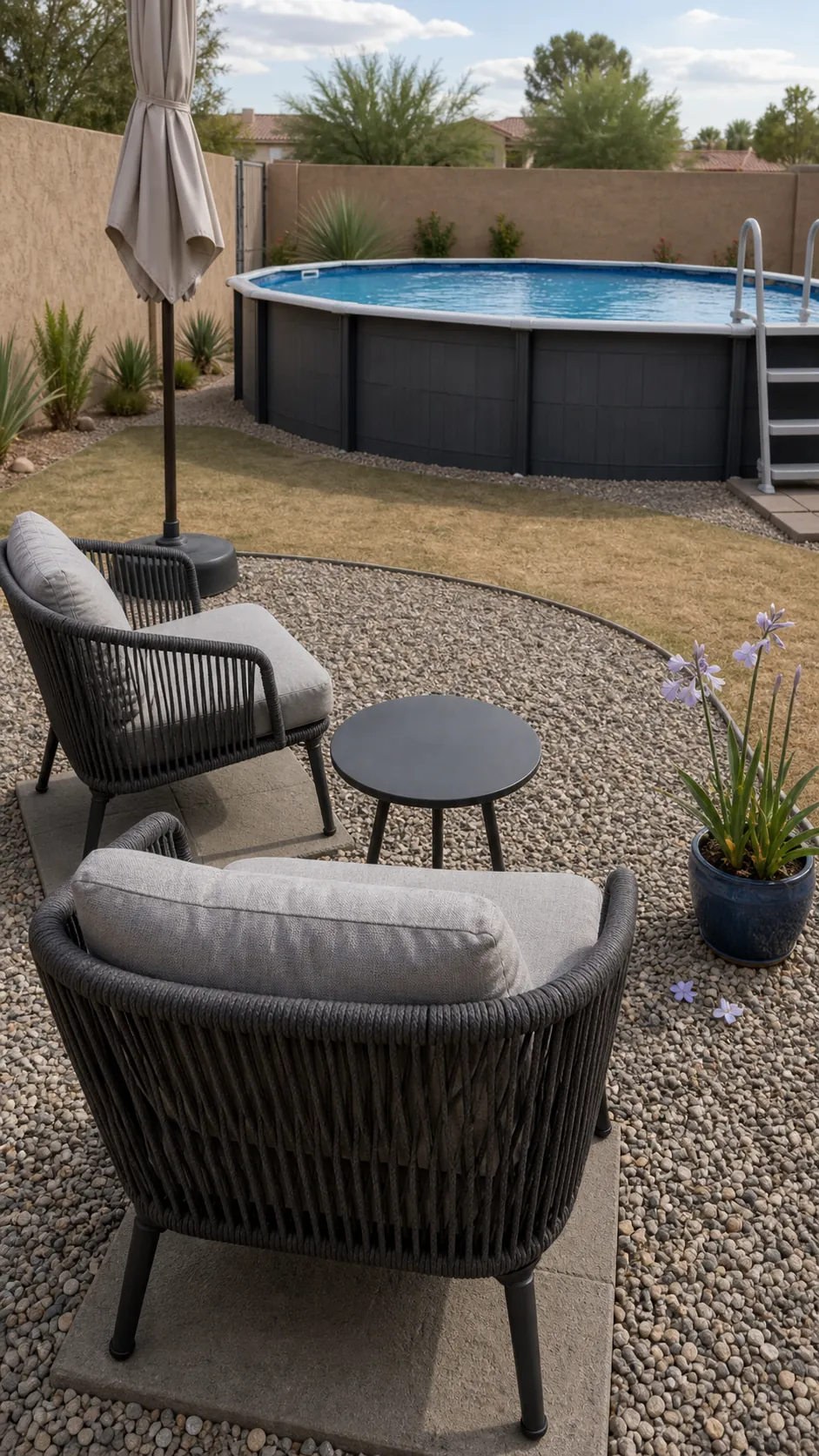
Set the seating outside splash-heavy circulation and preserve a clear line of sight for supervision. Wide furniture feet or discreet paver pads improve stability. One umbrella or large planter can make this inexpensive zone feel complete.
Add Solar Lighting Along the Approach
Low path lights help swimmers see the route back to the house without turning the pool area into a runway. Place warm, shielded fixtures along the approach rather than right beside the wall, where glare can reflect on the water. Solar units are easiest when their panels receive reliable sun.
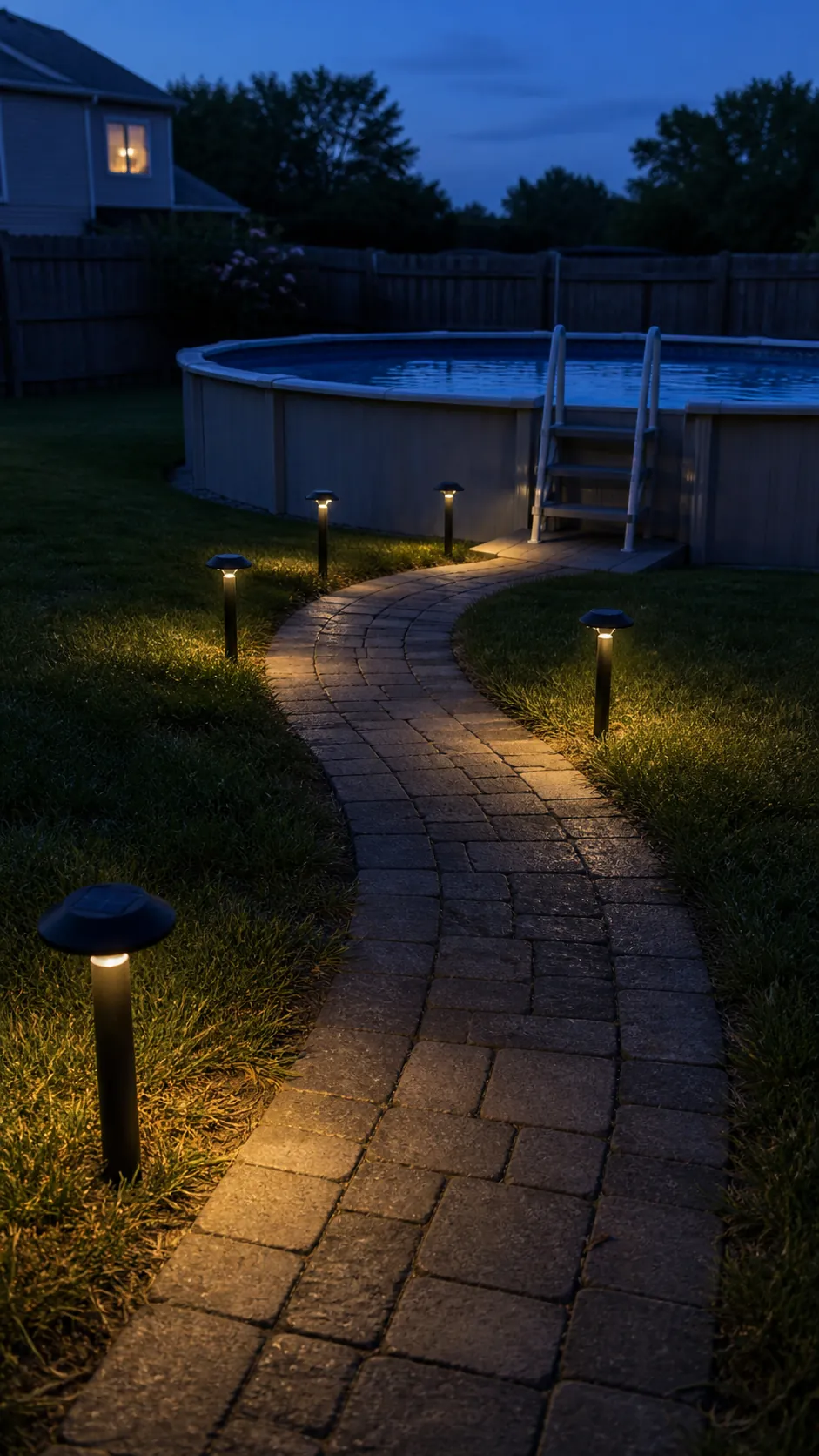
Lighting near water must respect electrical safety rules. Do not improvise with indoor lights or extension cords. For wired fixtures or any uncertainty around bonding and clearances, use a qualified electrician familiar with pools.
Build a Low Retaining Edge on a Slope
Where the pool sits below a cut slope, a properly designed retaining edge can hold back soil and create a maintainable drainage gap. This is not decorative backfilling: pressure, runoff, and soil movement can damage a pool. Keep any wall independent of the pool structure and respect the installation requirements.
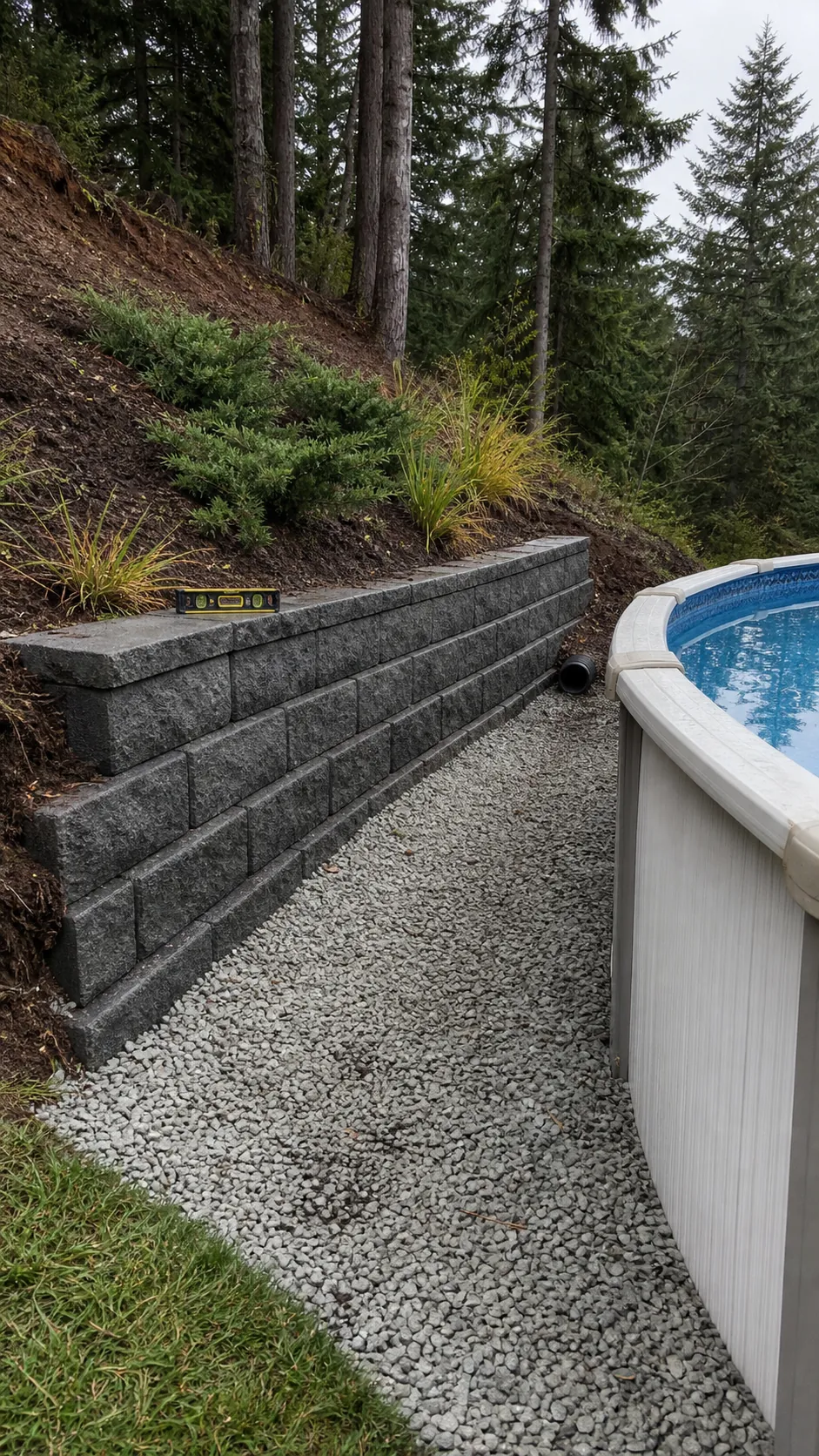
Even a short wall needs a sound base, drainage, and a safe outlet. A landscape contractor or engineer should assess meaningful grade changes. Once the structure is correct, a narrow planting band above it can soften the view without loading the pool wall.
Refresh the Pool Wall With a Coordinated Palette
Sometimes the landscape looks disconnected because the wall, deck, fence, and pots all speak different visual languages. Repeat two or three existing colors instead of adding more materials: charcoal edging with gray planters, warm timber with sand-colored stone, or white accents with blue-green foliage.
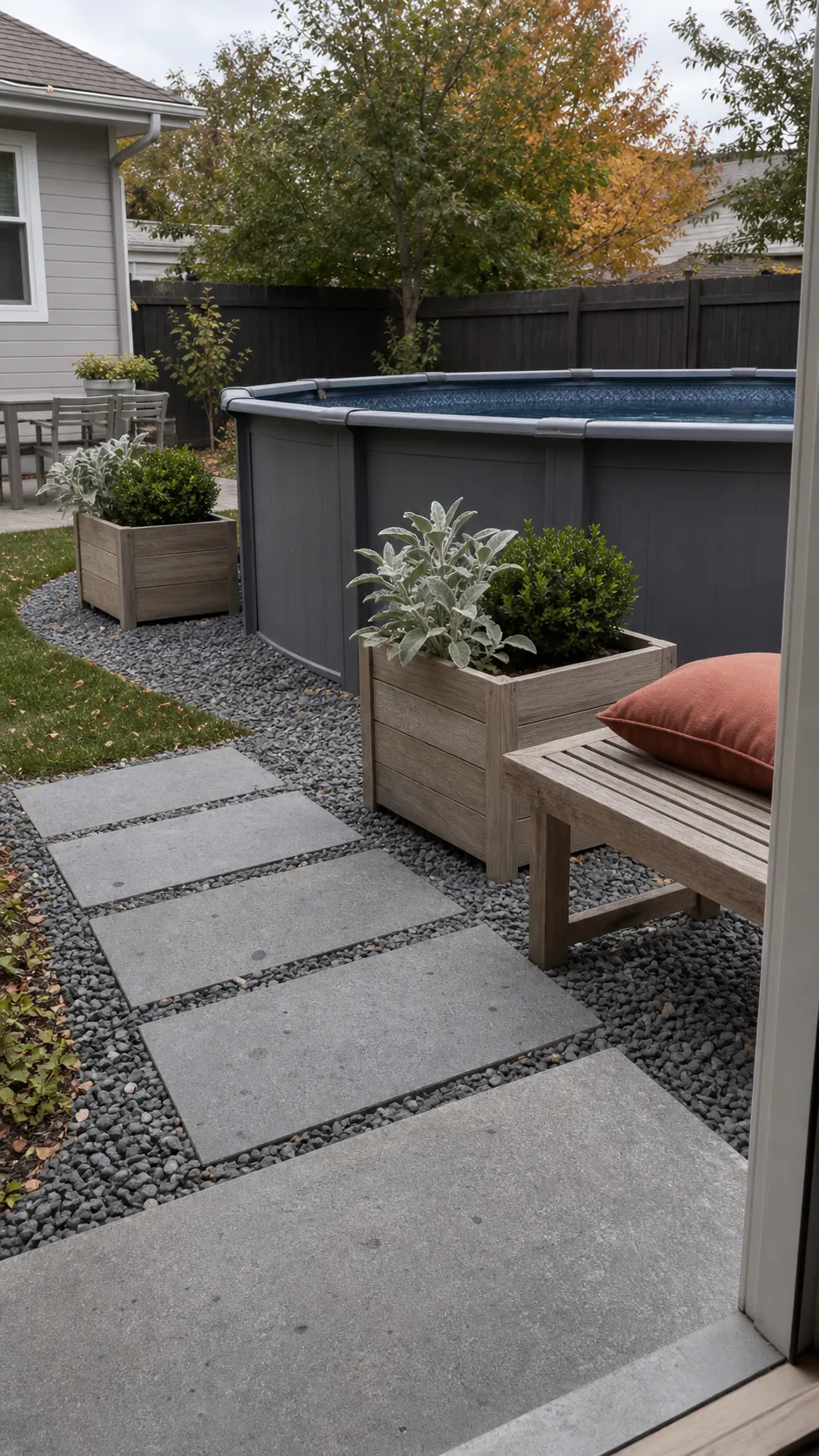
Do not paint, clad, drill into, or attach anything to the pool unless the manufacturer explicitly allows it. The safer strategy is to coordinate movable elements around it. A limited palette can make budget materials feel much more expensive.
Leave a Deliberate Maintenance Gate
The most attractive planting plan fails if no one can reach the filter, hoses, wall seams, or winter cover. Reserve a clear service route from the house or shed to the equipment. A wide paver path, removable planter, or simple gate can blend into the design while still admitting tools and replacement parts.
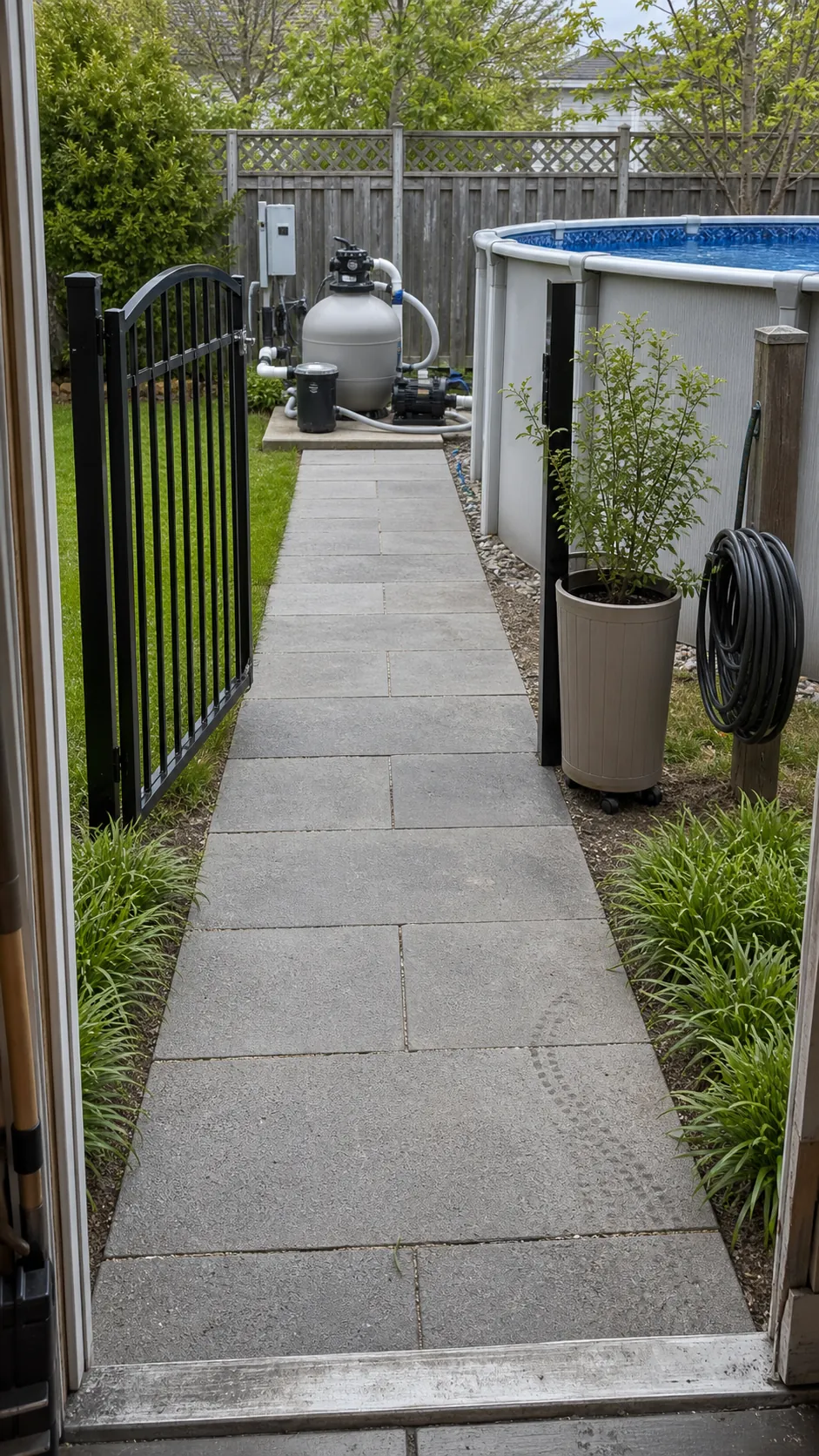
Measure the largest component that may need removal, not just the width of a person. Avoid thorny plants and unstable stepping stones in this route. Good landscaping makes maintenance easier to do, which helps small problems get noticed sooner.
Layer Privacy at the Far Boundary
Privacy planting is safer and more convincing at the yard boundary than pressed against the pool. Combine a fence or approved screen with shrubs of different mature heights, leaving required access and airflow around the water. This creates depth in the view and keeps roots, leaves, and branches farther from the liner.
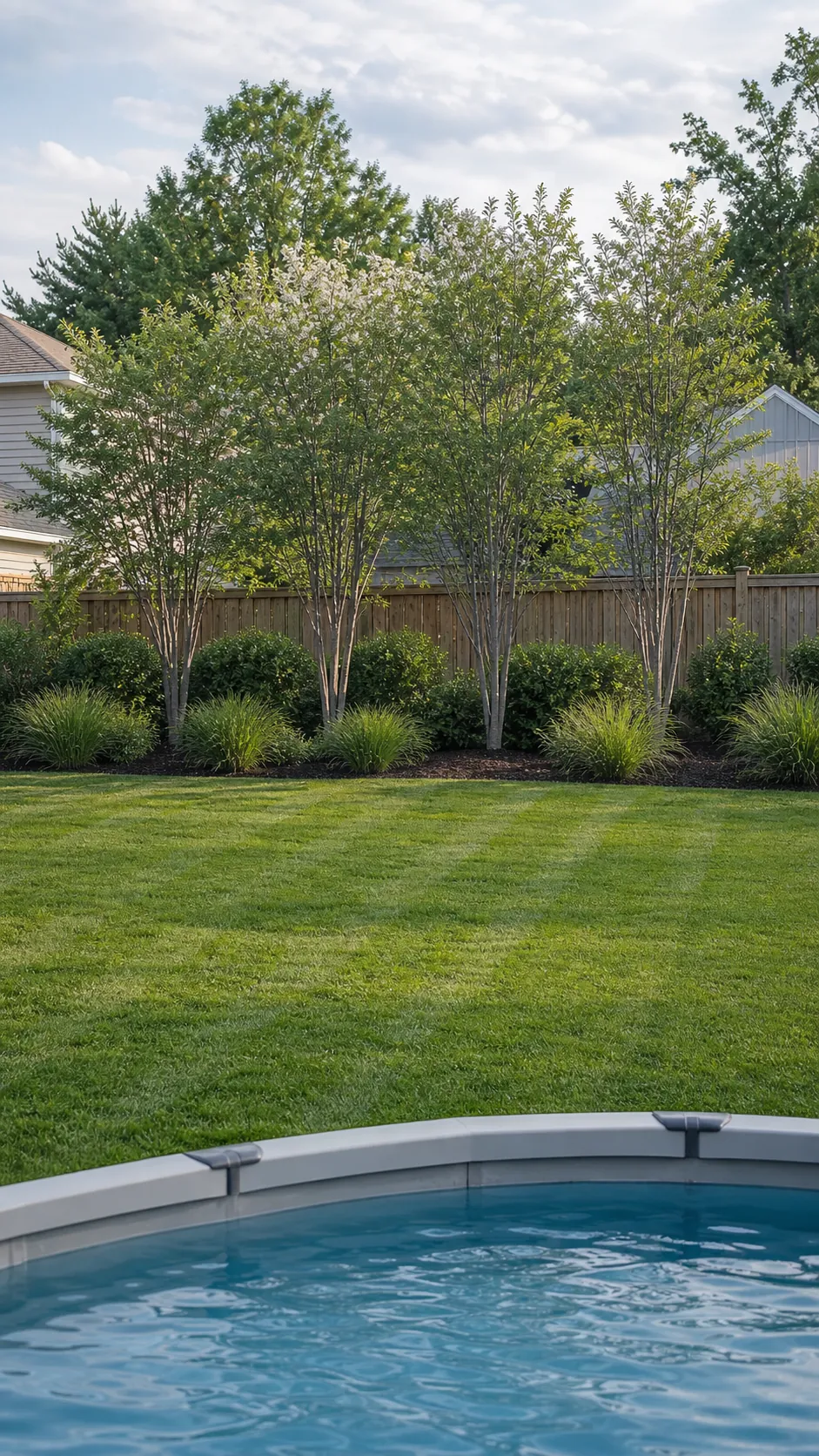
Choose plants for mature width, local climate, litter level, and noninvasive behavior. Staggered groups look more natural than one tight hedge and are less likely to become a maintenance wall. Keep sightlines required for child supervision and local safety rules.
Connect Every Zone With One Consistent Material
The strongest round pool landscaping does not require the most features. It repeats one material from the house to the pool: the same gravel in the collar and lounge area, the same paver in the path and ladder landing, or the same timber tone in the deck and equipment screen. That repetition turns separate fixes into one calm composition.
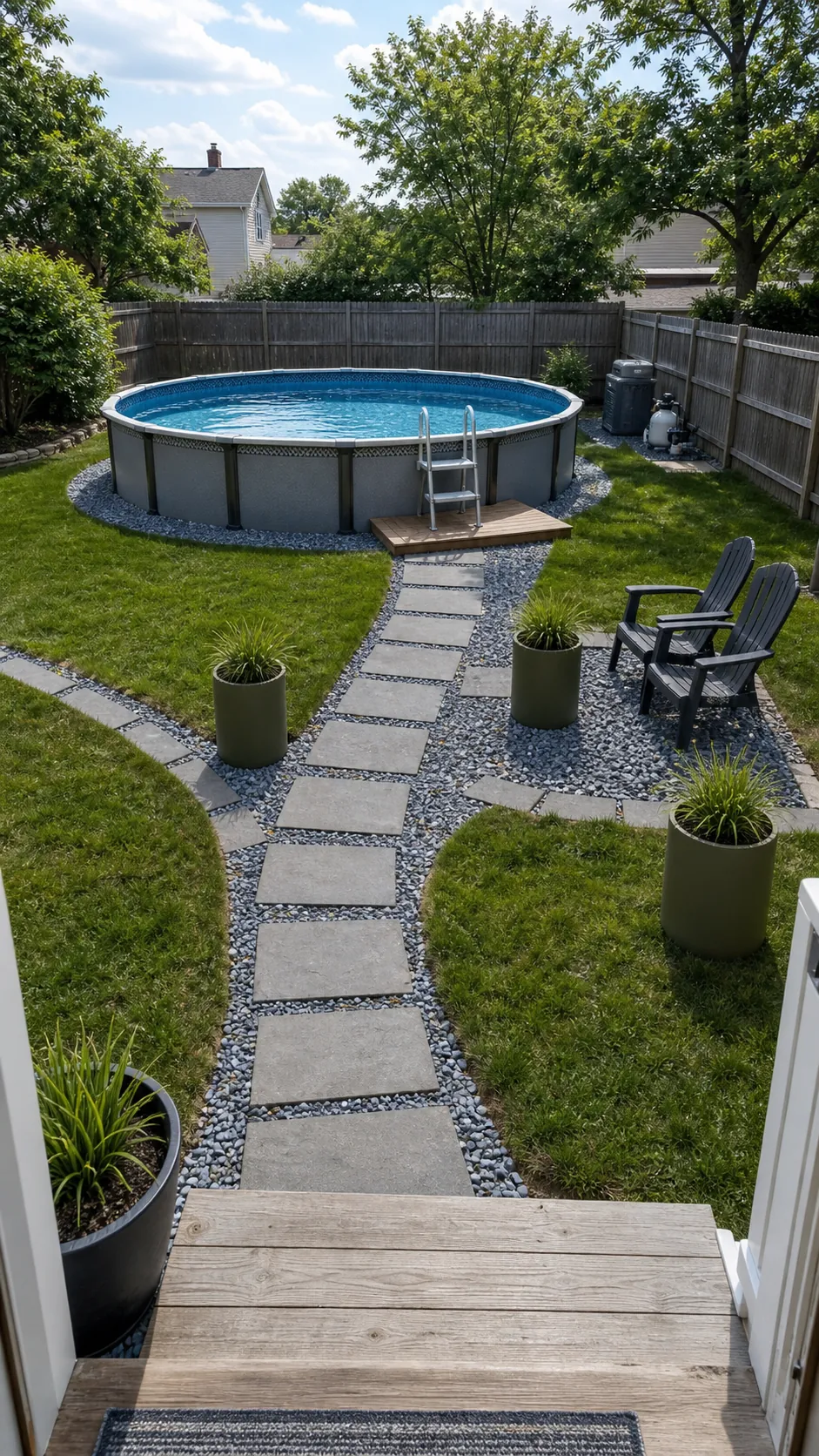
Start with drainage, safe footing, and maintenance clearance, then choose the repeated finish. A small yard may need only a gravel collar, a stable path, and three containers; a larger yard can add seating, a partial deck, or boundary planting over time. The finished space should make the pool easier to use and care for, not merely harder to see.