
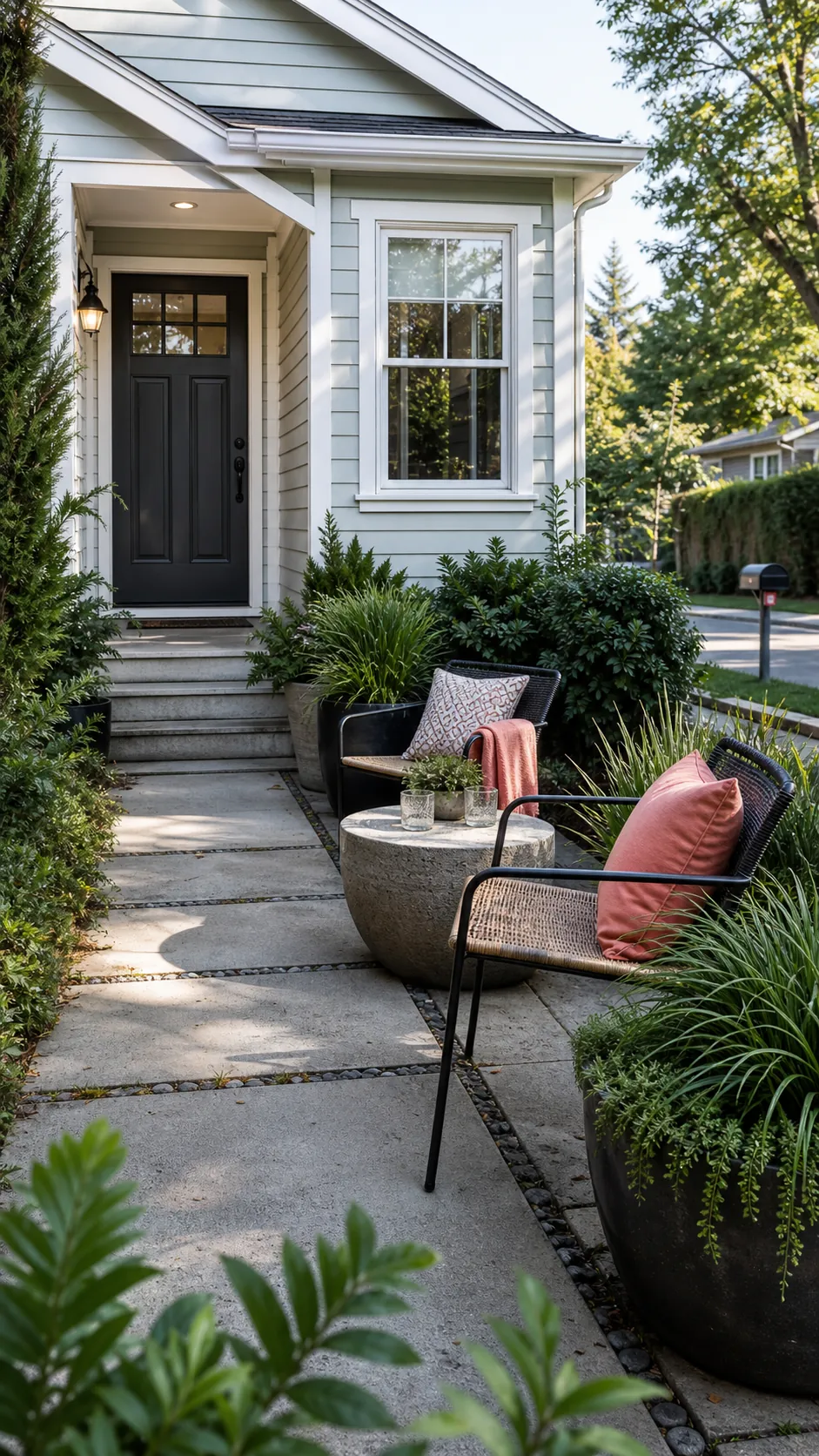
A small front patio has to do more than look pretty. It must keep the route to the door clear, feel comfortable under neighborhood eyes, handle rain without sending water toward the foundation, and still make the house look welcoming from the street. The strongest small patio ideas for the front of a house solve those practical demands first, then add character with furniture, planting, and light.
Before buying anything, mark the intended patio with painter’s tape, stakes, or a garden hose. Walk from the driveway to the door carrying groceries. Open the gate. Pull out a chair. That simple rehearsal exposes pinched paths and oversized plans before they become expensive. If you are adding hardscape, confirm local rules and make sure the finished surface drains away from the house.
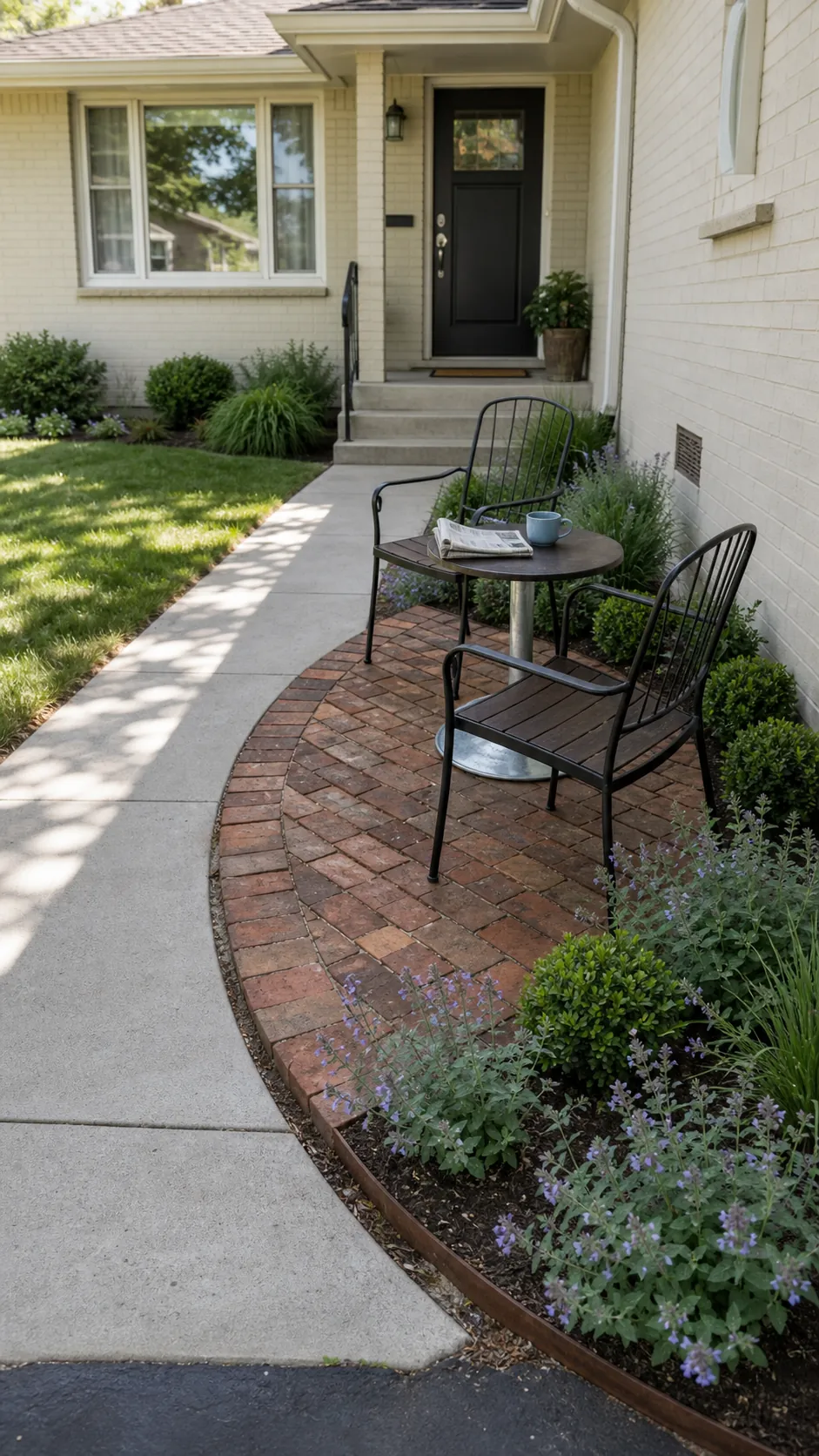
Curve a Petite Patio Beside the Walkway
A shallow half-circle beside the main path creates a front yard patio without turning the entrance into an obstacle course. The curve softens a boxy facade and makes a modest paved area feel intentional rather than leftover. Keep the walkway visually continuous so guests immediately understand which route reaches the door.
Use one compact bench or two light chairs angled toward each other. A narrow planting band around the outer arc gives the seating a sense of enclosure while leaving the house side open. This is especially useful for small front yard ideas where a square patio would consume too much lawn.
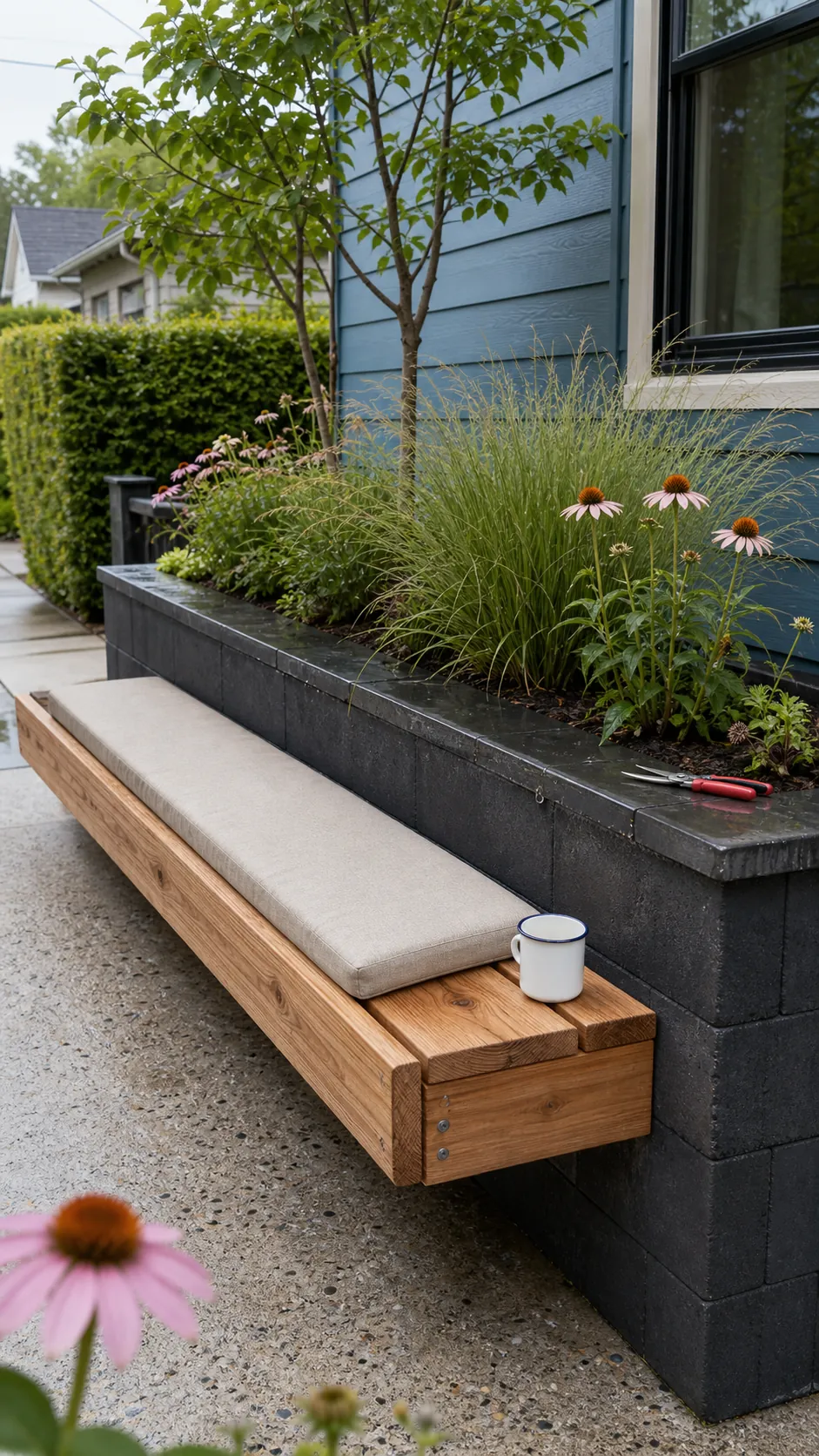
Build a Bench Into a Raised Planter
A planter-backed bench gives one strip of ground three jobs: seating, greenery, and a gentle privacy screen. Because there are no rear chair legs or loose pots behind it, more of the floor stays usable. Choose a seat depth that feels comfortable, then size the planter around mature plant growth rather than nursery-pot dimensions.
Low grasses and airy perennials preserve sightlines from the house; evergreen structure keeps the patio presentable in winter. Avoid thorny plants, heavy fruit drop, or species that will spill into the walkway. Add a loose cushion only when you are actually using the bench so the setup stays easy to maintain.
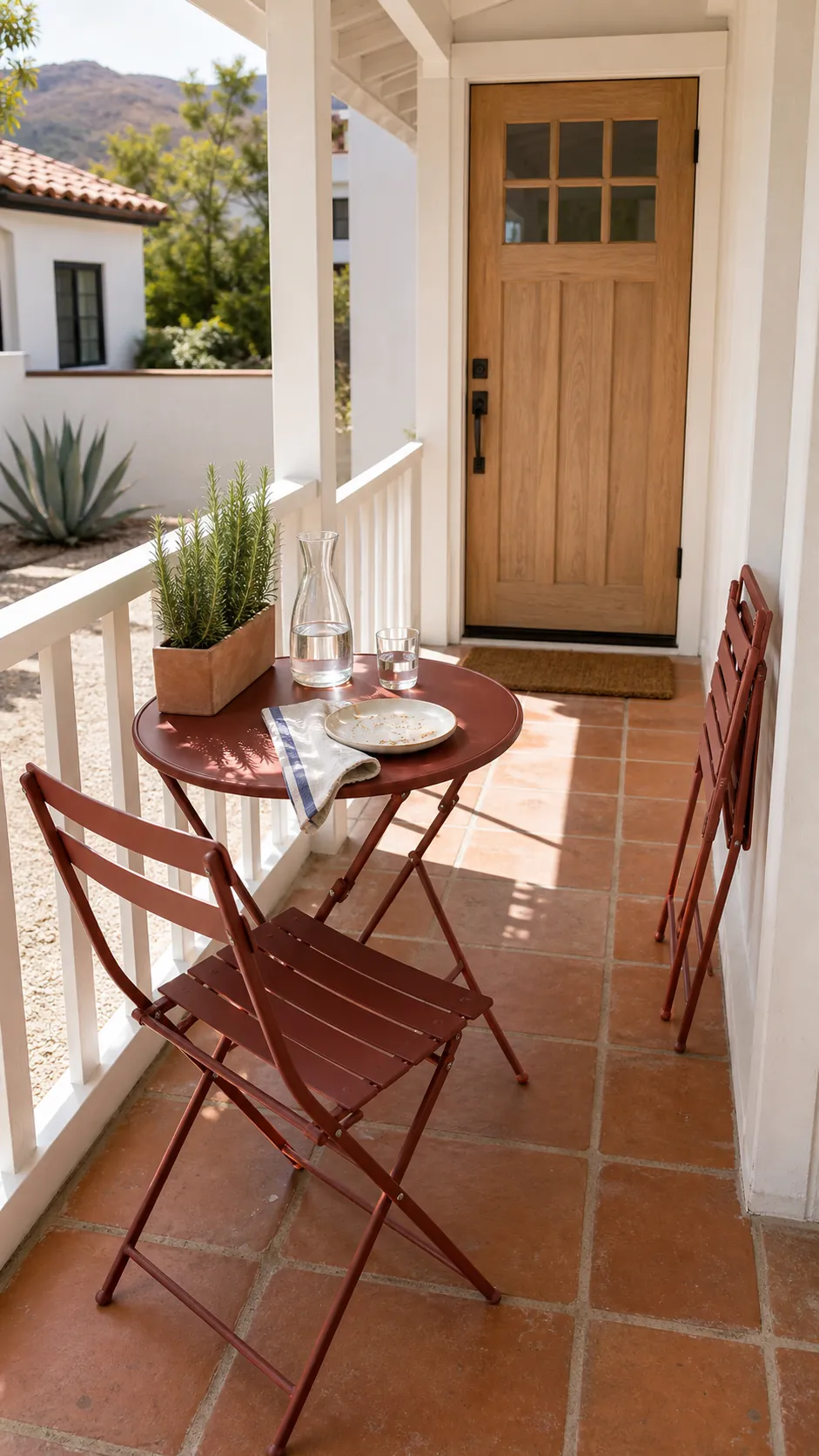
Choose a Bistro Set That Can Fold Away
A round café table avoids sharp corners in a tight circulation zone, while folding chairs can disappear when you need extra room for deliveries or seasonal maintenance. Measure with the chairs pulled out, not tucked under the table. A set that looks tiny online may require a surprisingly wide operating circle.
Powder-coated metal is visually lighter than a bulky outdoor sofa and suits many front patio decorating ideas. Let one confident color echo the front door, trim, or flowering plants. The repetition makes inexpensive furniture feel connected to the architecture.
Lay a Permeable Gravel Sitting Pocket
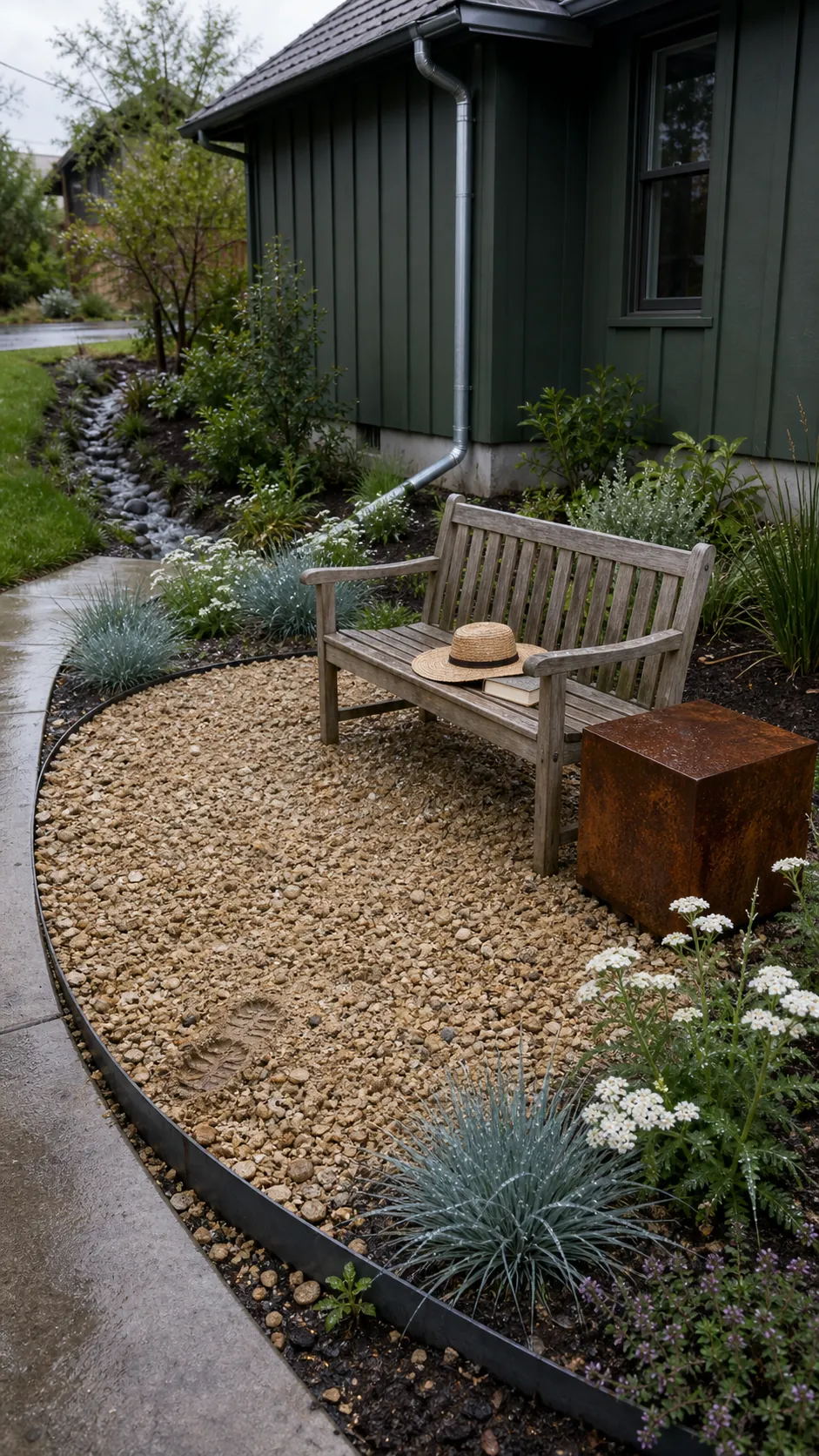
Compacted decorative gravel can define a casual sitting area without the visual weight or cost of paving every inch. A crisp steel, brick, or stone edge prevents migration into beds and makes the surface look finished. Select angular gravel that locks together underfoot rather than rounded pea gravel that shifts beneath chairs.
Drainage still requires a proper base and a route for water; permeability is not permission to ignore grading. Keep loose material below door thresholds and away from places where it can scatter onto public sidewalks. This relaxed surface works particularly well with cottage, ranch, and bungalow facades.
Extend the Front Step Into a Landing
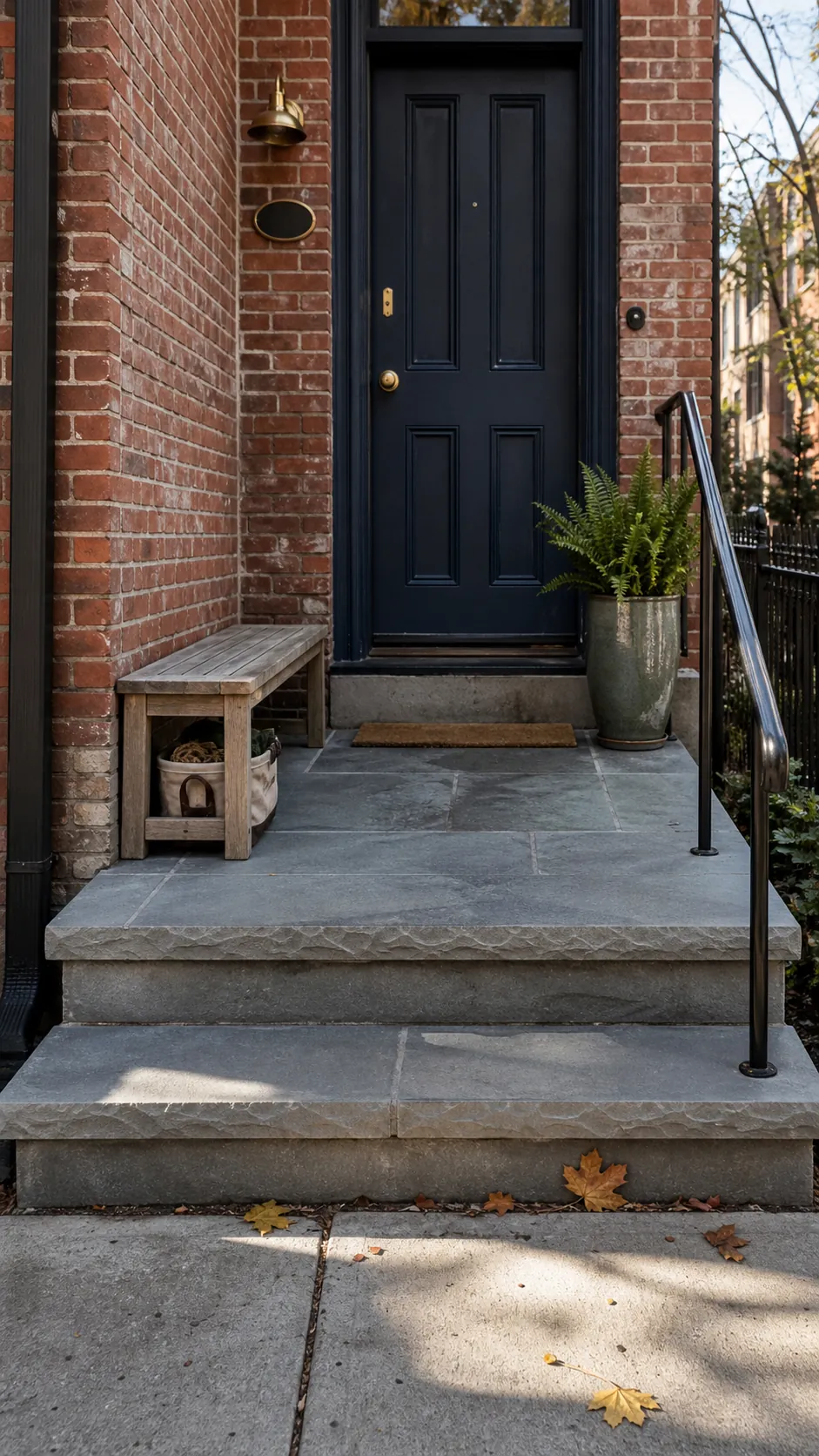
If the stoop already receives good light and has a pleasant view, widening it into a usable landing may be more efficient than creating a separate patio. Matching or coordinating the new surface with the existing step makes the addition look original to the house. Keep railings, risers, and handholds compliant and unobstructed.
A slim bench along the wall leaves a generous arrival zone for packages and people. Skip deep furniture near an outward-swinging door. The goal is a useful pause point that supports the entry, not a sitting room that competes with it.
Frame Two Chairs With Oversized Pots
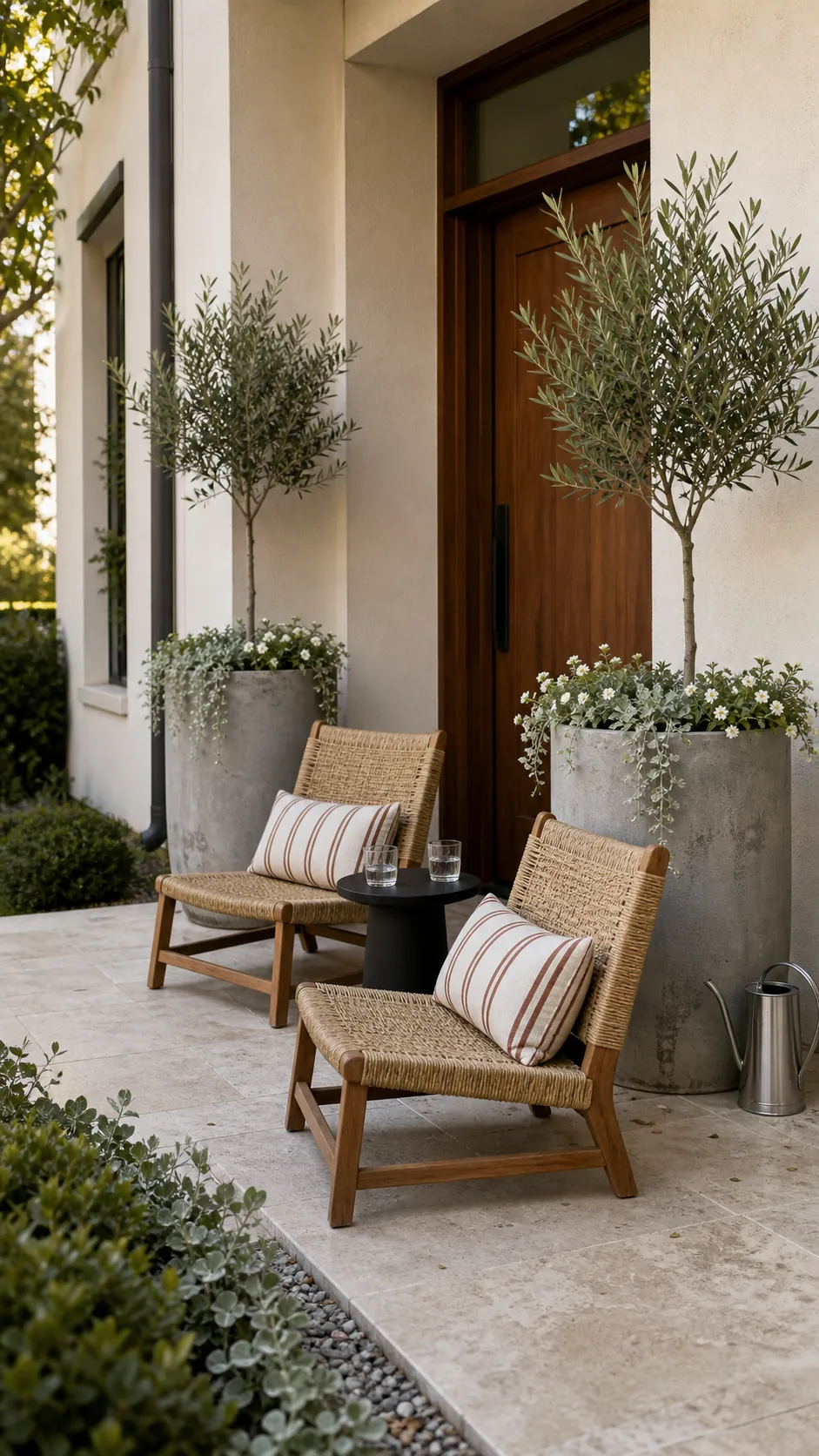
Two substantial containers create more order than a scatter of little pots. Place them where they frame the seating without narrowing the path or hiding the address. Their scale should relate to the facade; undersized containers tend to vanish from the street and encourage clutter.
Use a simple planting recipe with one structural plant and a restrained underplanting. Confirm sun exposure, winter hardiness, container drainage, and the weight of a fully watered pot. Large lightweight planters with stable bases are easier to position but should not become top-heavy in wind.
Use a Low Wall as Extra Seating
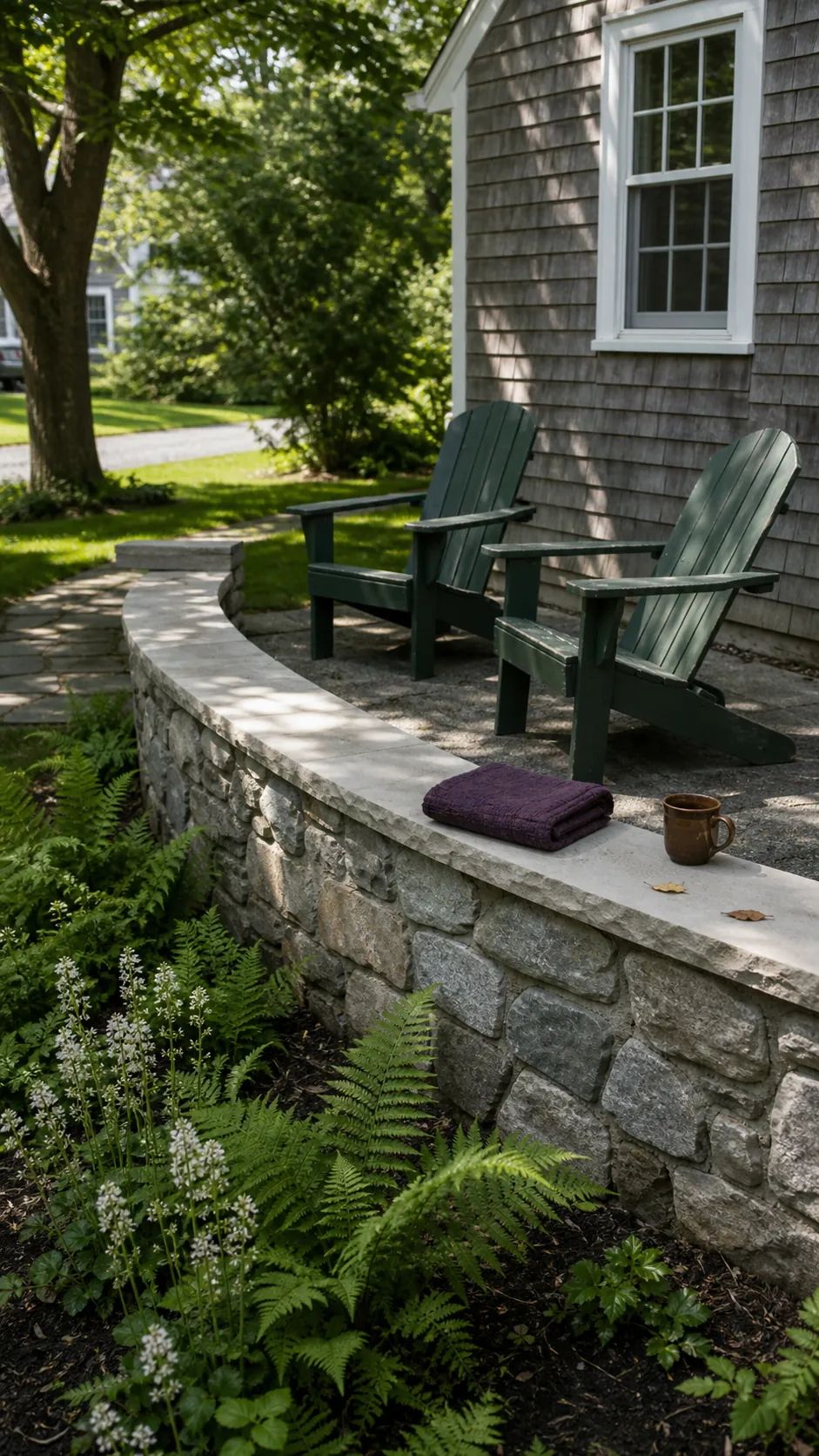
A broad, flat-topped garden wall can edge a small patio, hold back a slight grade, and provide occasional perch seating. That allows the everyday furniture plan to stay minimal while still accommodating a neighbor or two. Make the cap comfortably wide and keep rough masonry away from delicate clothes.
Because retaining and freestanding walls have structural and code considerations, involve a qualified professional where height, slope, utilities, or permits are relevant. Visually, repeat stone or brick already present on the house so the wall supports curb appeal instead of reading as a separate project.
Tuck a Conversation Spot Under a Window
A blank stretch beneath a front window can hold a pair of armless lounge chairs and a tiny drinks table. Low backs protect the view from inside and prevent the furniture from covering architectural details. Leave enough clearance for window cleaning, foundation access, and any emergency-egress requirements.
Angle the chairs slightly toward each other rather than lining them up against the wall. That small shift signals conversation and feels less like waiting-room furniture. A washable outdoor rug can define the zone on a covered surface, but it should dry quickly and never block drainage.
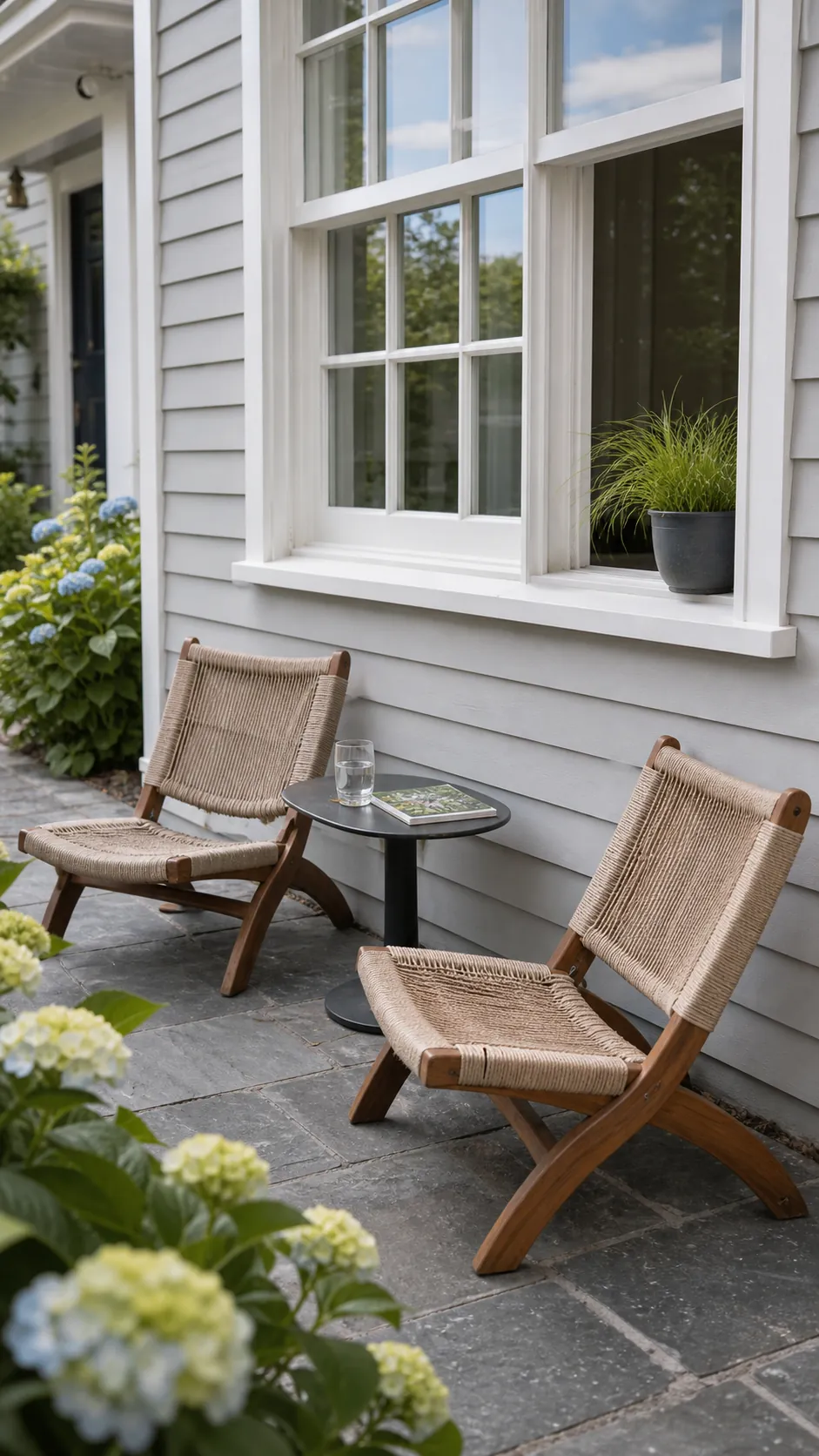
Create Privacy With an Airy Slatted Screen
Front-yard privacy works best as a filter, not a fortress. A short slatted screen beside—not across—the sitting area can soften views from the sidewalk while keeping the entry visible. Spacing between slats admits light and airflow, and a climbing plant can make the structure feel integrated with the garden.
Check setbacks, sight-line rules, and utility locations before installing anything permanent. Keep the screen proportionate to the house and stop it well short of enclosing the front door. This approach offers comfort without sending an unwelcoming message to visitors.
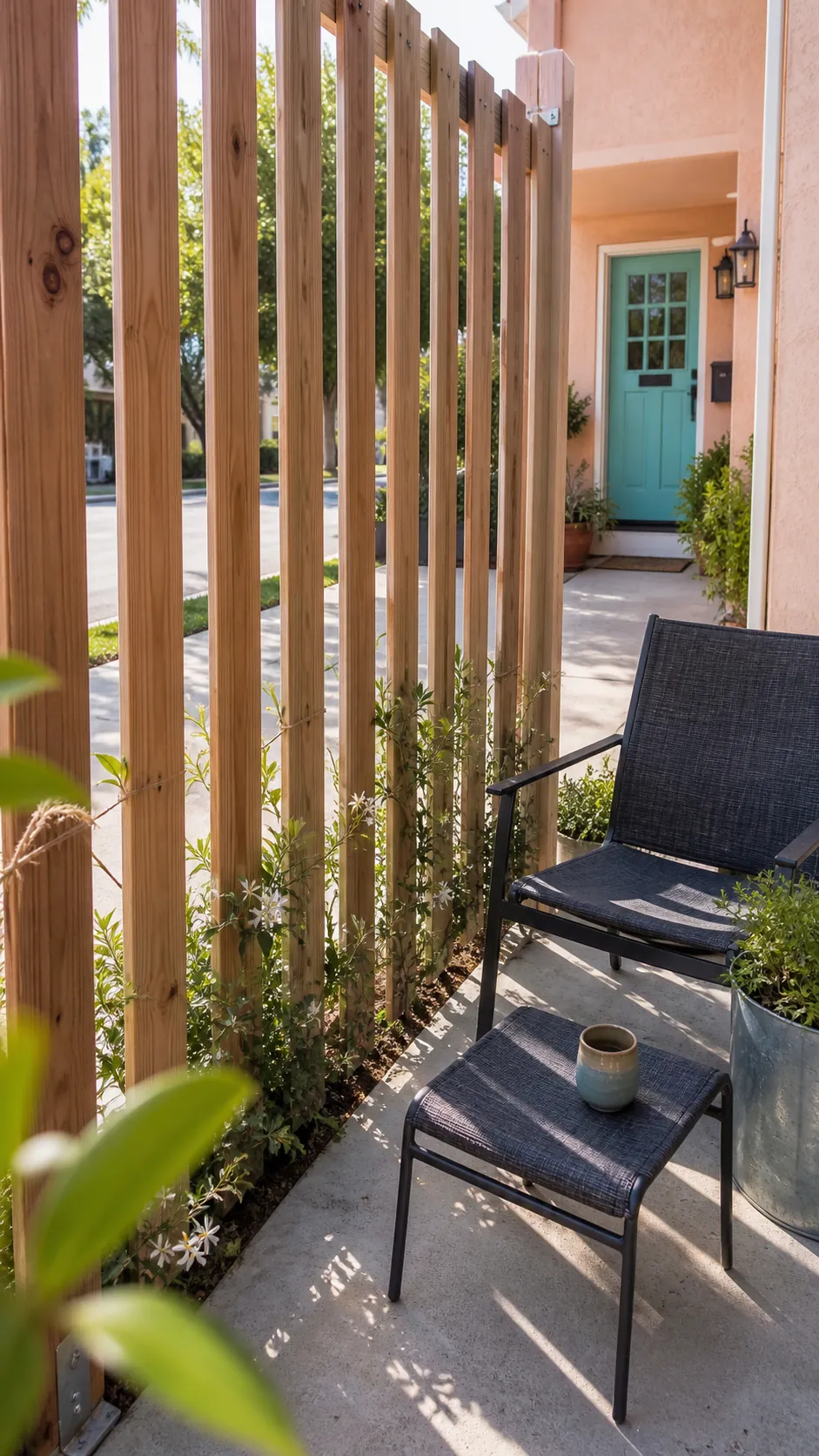
Float Stepping Pavers Through Groundcover
Large pavers separated by low groundcover visually blur patio and garden, which can make a tiny paved footprint feel broader. Use the pavers where chair and table legs actually land; an uneven or soft surface quickly becomes frustrating. Choose traffic-tolerant plants suited to the light, soil, and climate.
Precise base preparation matters even in an informal design. The stones should be stable, safely spaced, and pitched so water moves in the intended direction. Avoid planting directly against siding or covering inspection and ventilation points.
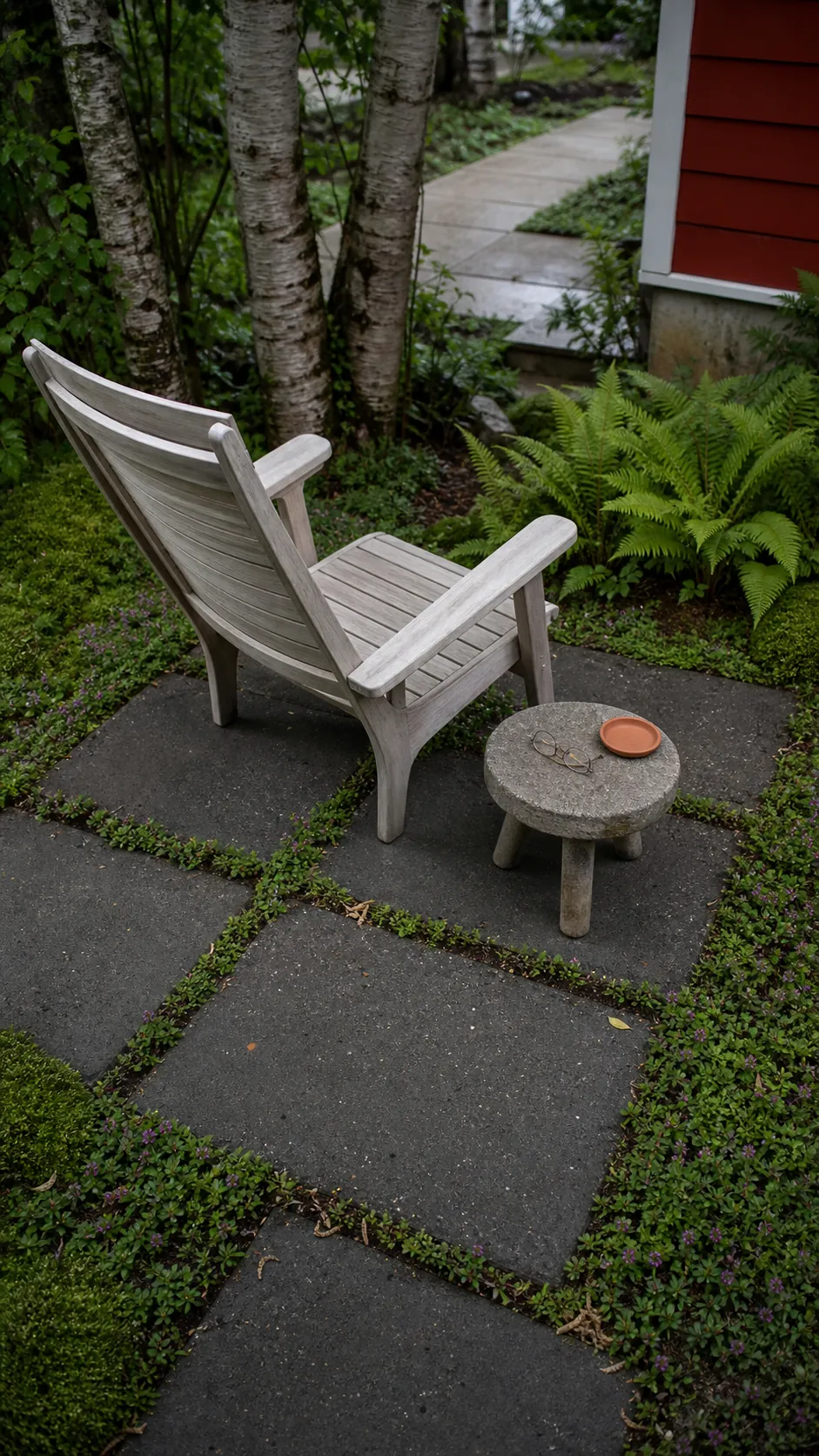
Turn a Narrow Side Strip Into a Morning Seat
Some homes have only a slim sunny strip between the entry walk and a side boundary. One comfortable chair with a wall-mounted or pedestal side table can turn it into a useful coffee spot without pretending it is an entertaining patio. Designing for one is often more successful than squeezing in seating for four.
Track the sun and street activity for a few days before deciding orientation. Face the chair toward a planted focal point or obliquely toward the yard rather than directly at passing traffic. Keep the original service route, gate swing, meter access, and bin movement clear.
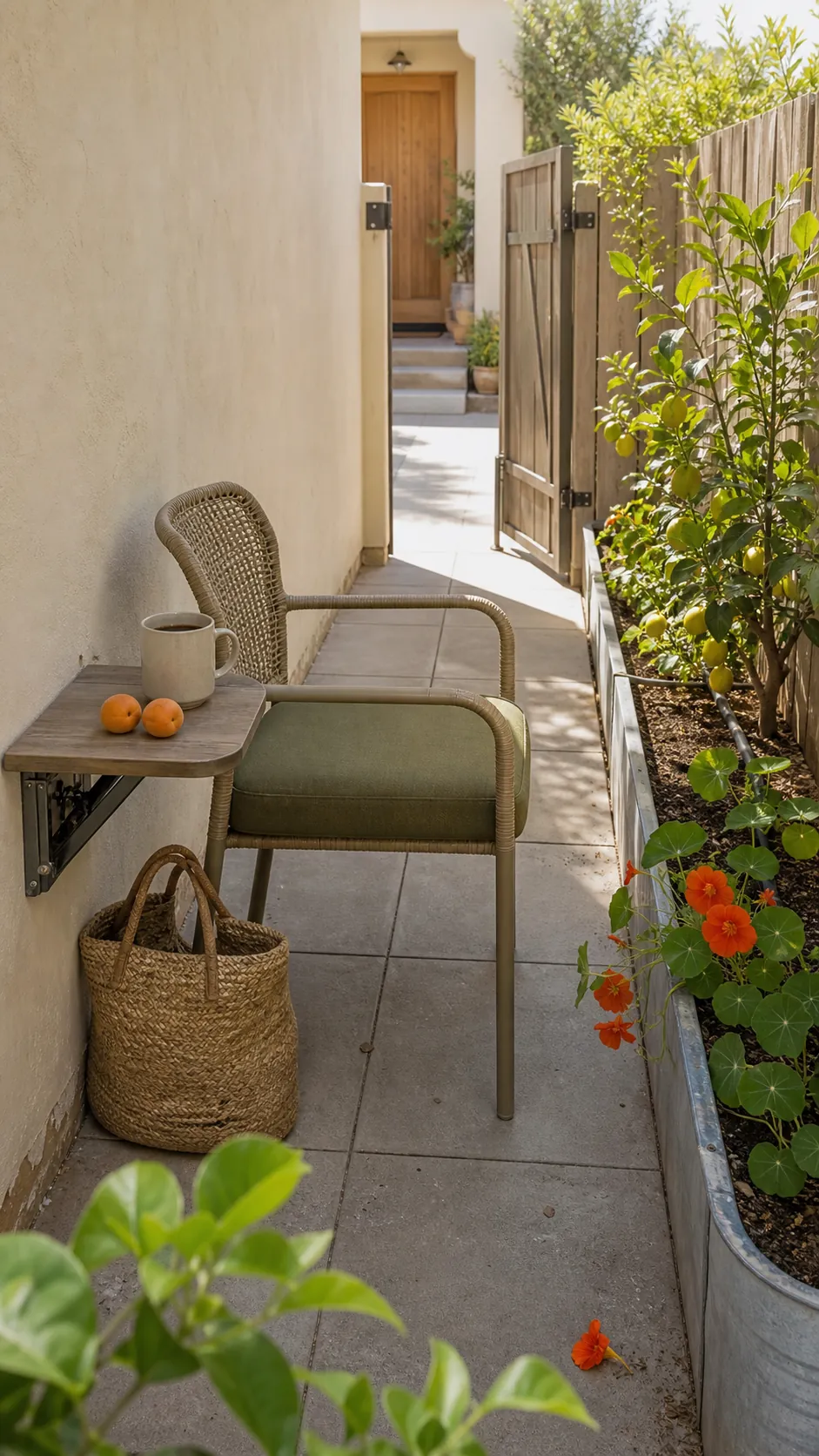
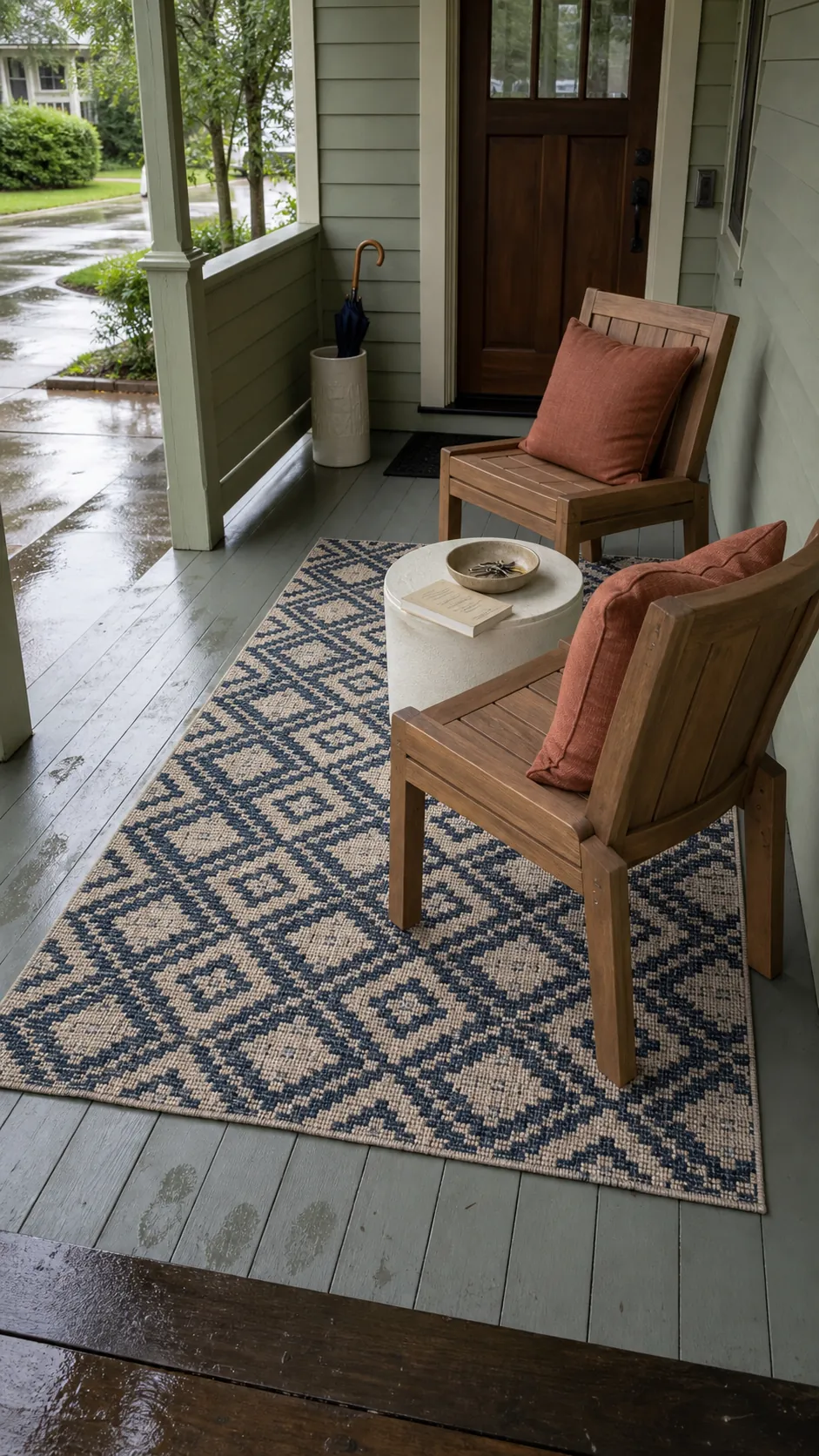
Anchor the Space With an Outdoor Rug
On a covered, well-drained porch or slab, an outdoor rug can visually gather two chairs and a table into one composition. It also introduces pattern without consuming floor area. Leave a visible border of paving around it so the patio does not look wall-to-wall carpeted.
Choose a breathable, quick-drying product and lift it regularly to clean debris and check the surface beneath. Skip the rug if the location stays damp or wind regularly flips the corners. Pattern should support the front door and house materials rather than compete with them.
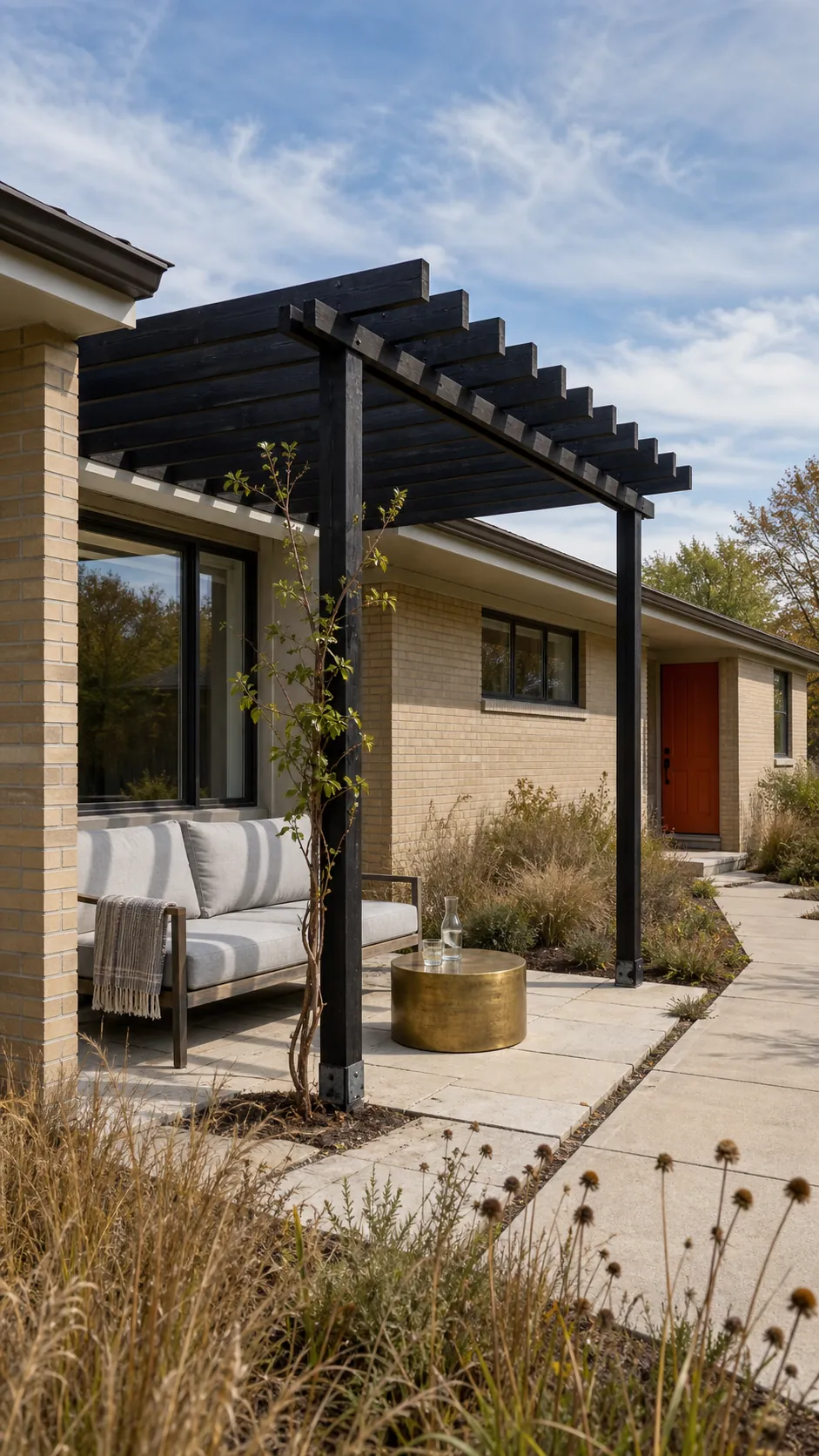
Add a Slim Pergola for Vertical Definition
A narrow pergola can give an exposed front patio the proportions of an outdoor room without adding solid walls. Keep the posts outside the circulation path and align the structure with doors, windows, and rooflines. An undersized decorative kit can look accidental, so proportion matters more than ornament.
Use open rafters, a restrained vine, or a code-compliant shade element according to the climate and facade. Secure the structure for local wind and snow loads and verify permits. The best version adds rhythm and a little dappled shade while leaving the house clearly visible.
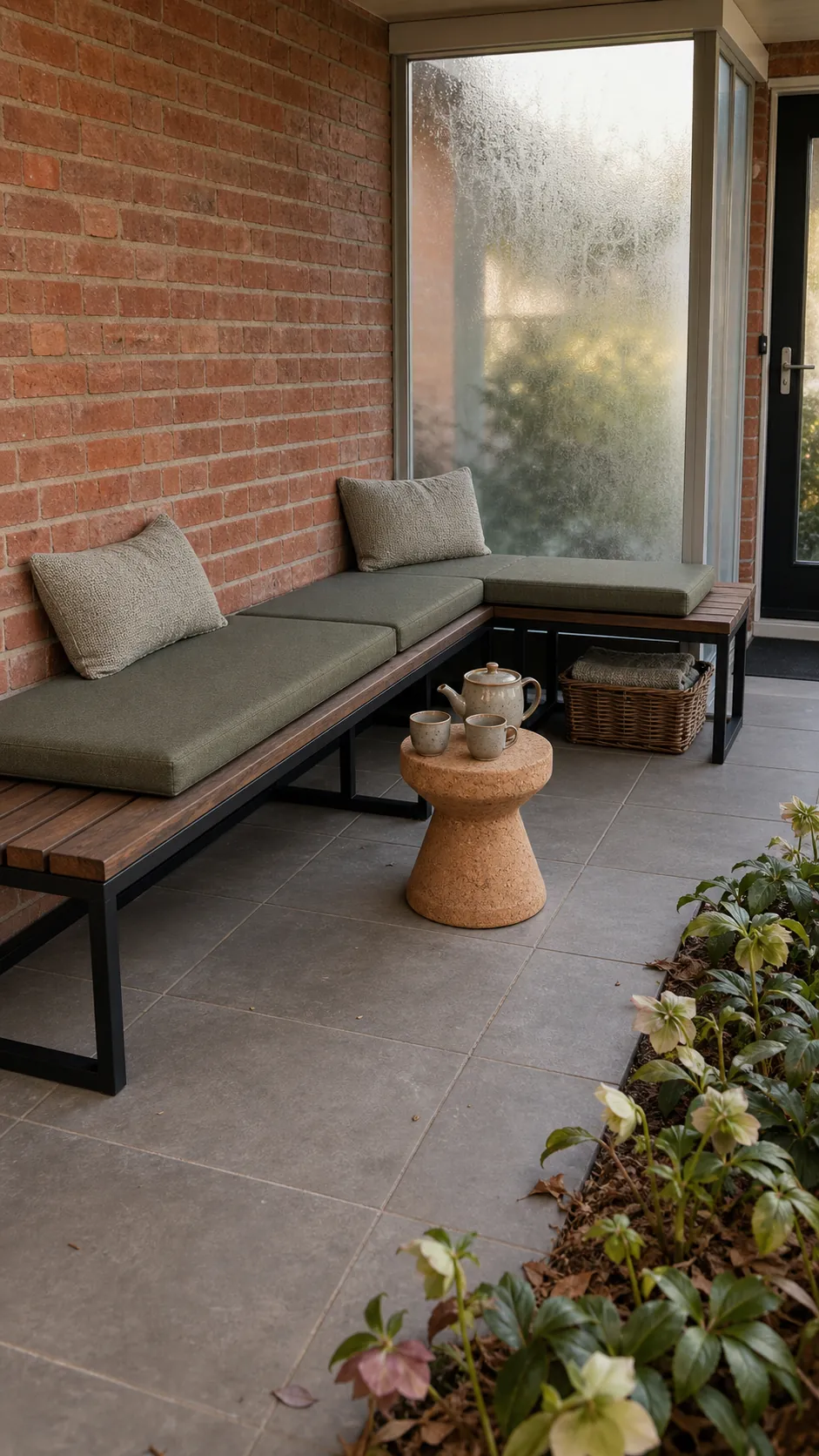
Wrap a Corner With an L-Shaped Bench
An L-shaped bench uses a sheltered corner efficiently and keeps the center of the patio open. It can seat more people than separate chairs within the same footprint, especially when paired with a small movable stool instead of a permanent coffee table. Allow comfortable knee space and a clear route out of the corner.
Storage under the seat is tempting, but outdoor compartments need ventilation, drainage, and weather-resistant construction. A simpler open base often looks lighter and is easier to keep clean. Limit cushions to a coordinated few so the bench remains an architectural element rather than a pile of textiles.
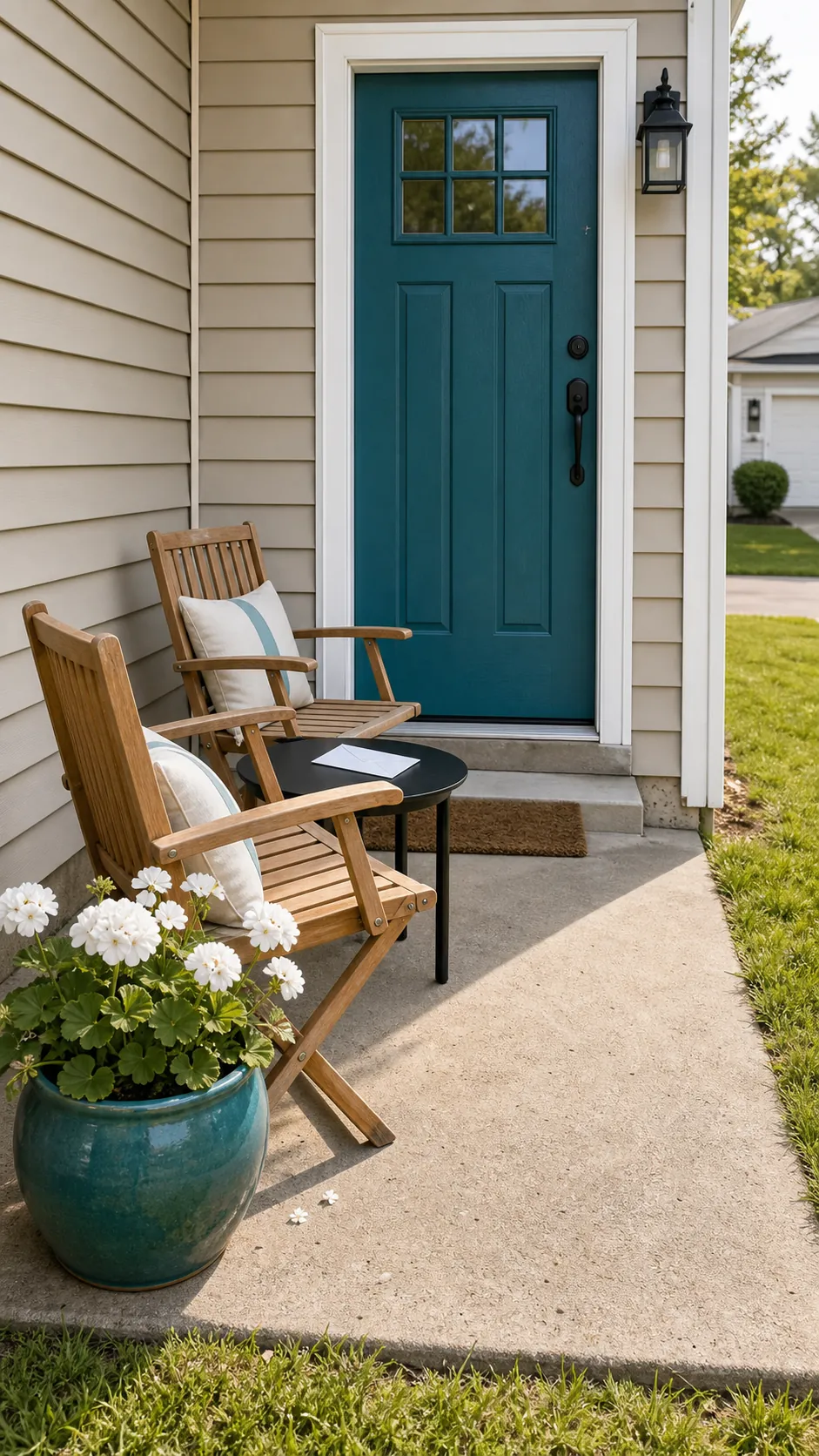
Make the Front Door Color the Main Accent
Small patios feel calmer when the color story has one leader. Let the front door provide the strongest hue, then repeat it once in a planter, cushion stripe, or flowering plant. Everything else can stay close to the house’s masonry, siding, and trim colors.
This disciplined approach is more effective than collecting many tiny decorations. From the street, the eye lands on the entrance; up close, the repeated accent ties the seating to it. Use exterior-rated finishes and test paint in changing daylight before committing.
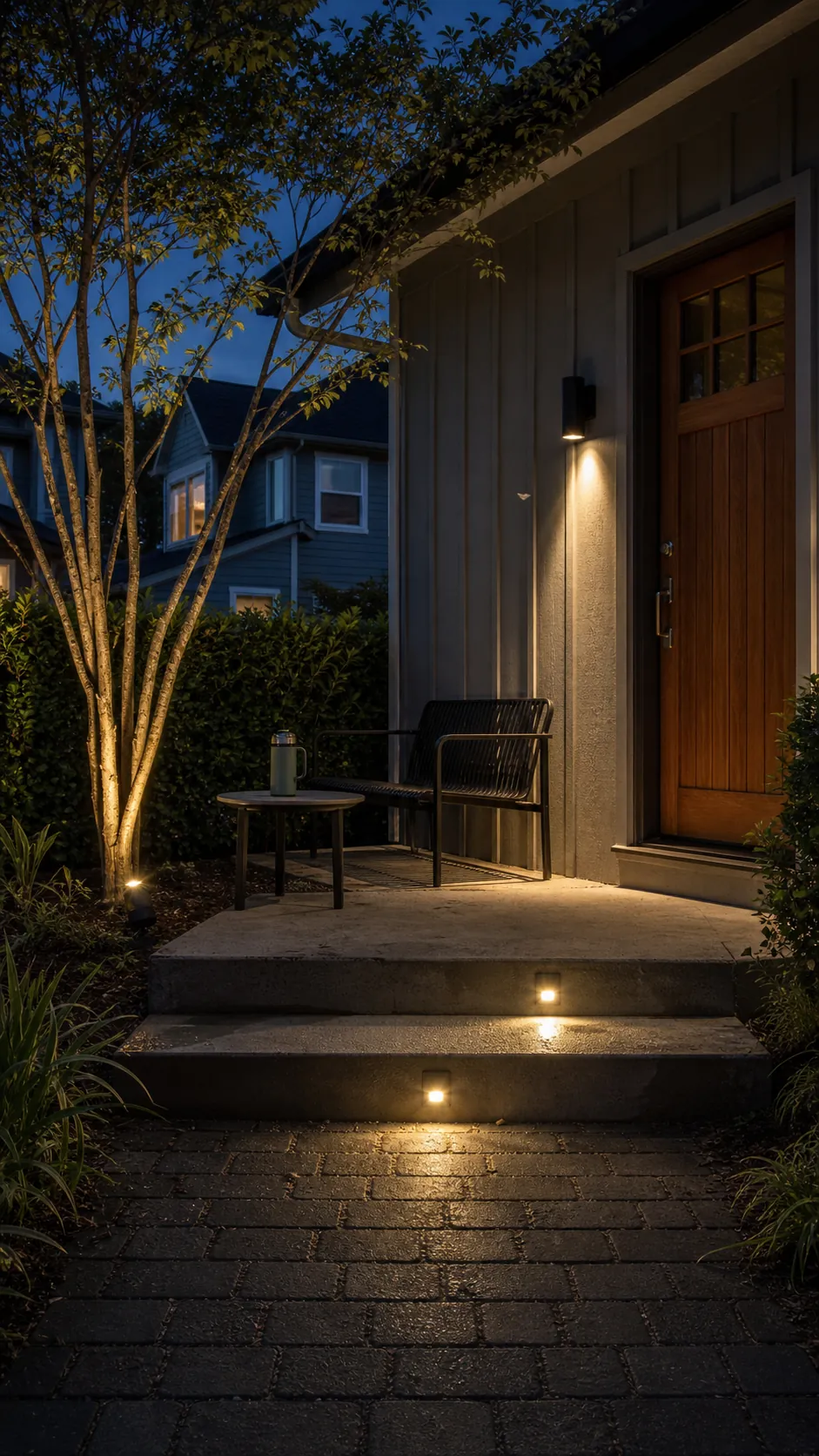
Layer Lighting at Steps, Seats, and Plants
One glaring porch light flattens a tiny patio and can bother neighbors. Instead, combine a shielded entry fixture with low step illumination and one subtle plant uplight. The layers make changes in level visible, bring texture forward, and create a softer atmosphere from inside and outside.
Use warm, restrained light directed onto your own property. Avoid aiming fixtures into windows, the street, or the night sky. Exterior electrical work, transformers, and buried cable should meet local requirements. A timer or smart control keeps the setting useful without leaving it blazing all night.
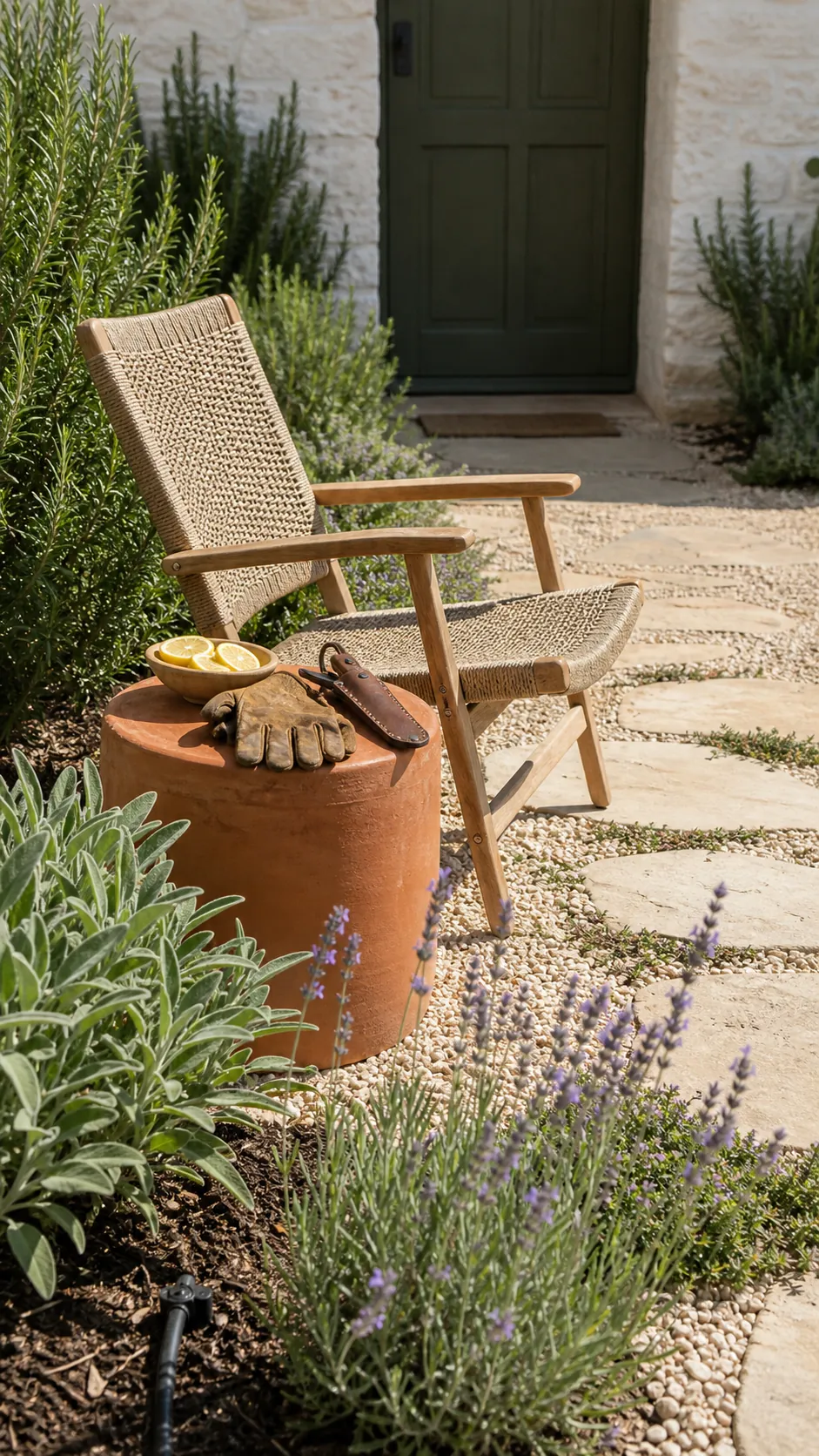
Border the Patio With Fragrant Herbs
A sunny patio edge planted with rosemary, thyme, lavender, or another locally suitable aromatic plant adds sensory value without demanding decorative clutter. Place plants where brushing past them is pleasant but where bees and growth will not crowd the main doorway. Match each species to climate, exposure, soil, and water availability.
Use a narrow bed or two generous containers rather than many pots. Herbs can soften the hardscape and make a simple chair feel like a destination. Where edible use matters, confirm the plants and soil are appropriate and avoid roadside contamination or chemical treatments.
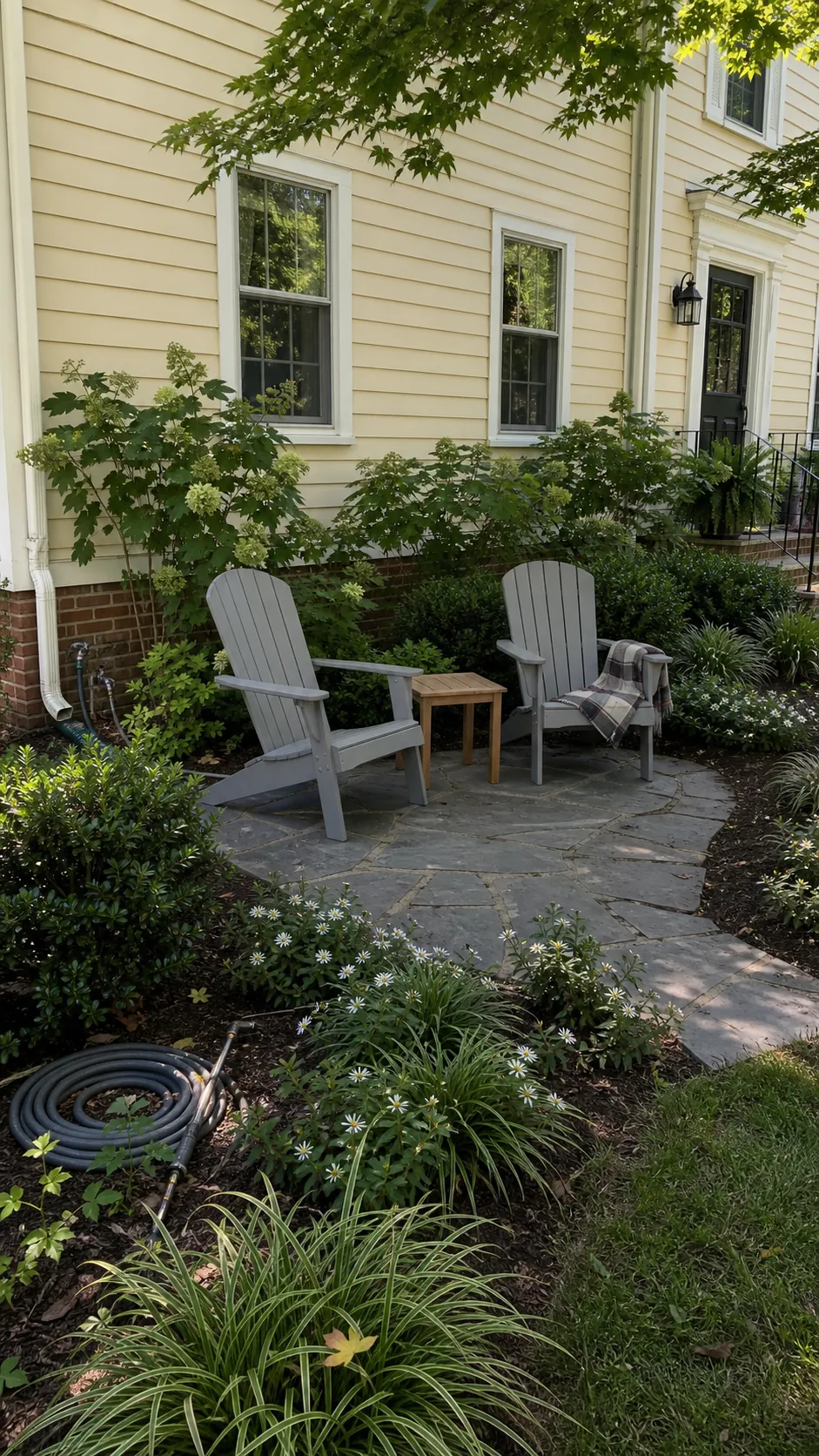
Blend the Patio Into Foundation Planting
Instead of placing a hard rectangle in the lawn, thread the patio edge into an existing foundation bed. A few repeated plant forms can wrap behind and beside the seating, visually borrowing garden space without increasing the paved footprint. Keep mature shrubs below windows and away from siding, vents, and utility equipment.
Choose a limited palette based on actual sun, soil, moisture, and mature size. Repetition creates unity; too many one-off plants make a tiny front yard look busy. Leave a practical maintenance route so pruning and window work do not require moving the entire patio.
Keep the Final Layout Open and Flexible
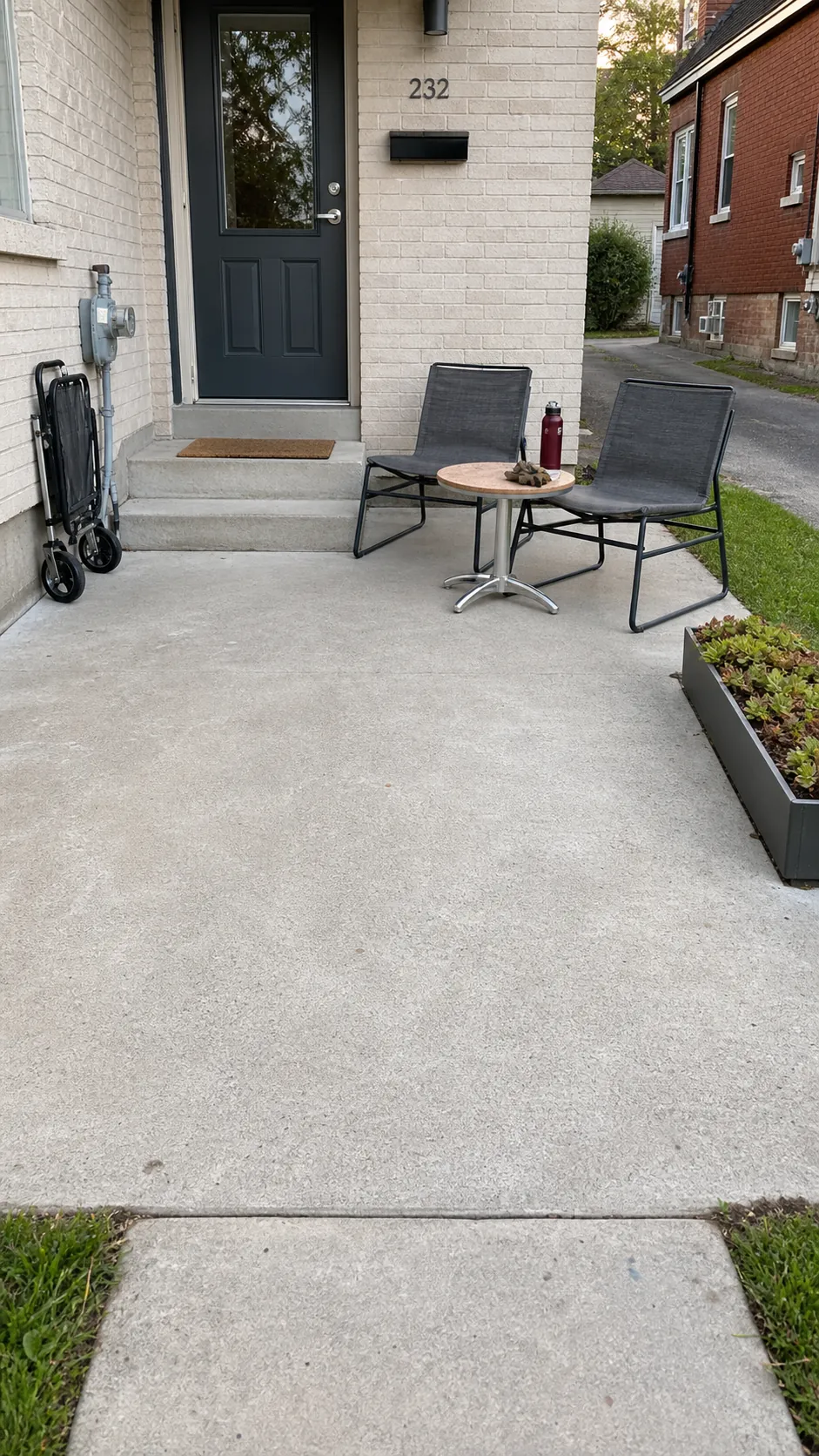
The most adaptable front patio may be the least furnished one: two genuinely comfortable chairs, a small movable table, and a clear path. Open floor area lets the same space receive a package, host a conversation, accommodate a planter during summer, or make room for seasonal chores. Empty space is a working feature, not a decorating failure.
Live with the basic arrangement before adding accessories. Notice where rain collects, which seat gets shade, how neighbors approach, and whether the front door remains the visual focus. Add only what answers a real need. That measured approach produces a small outside patio that feels generous because every object earns its footprint.