
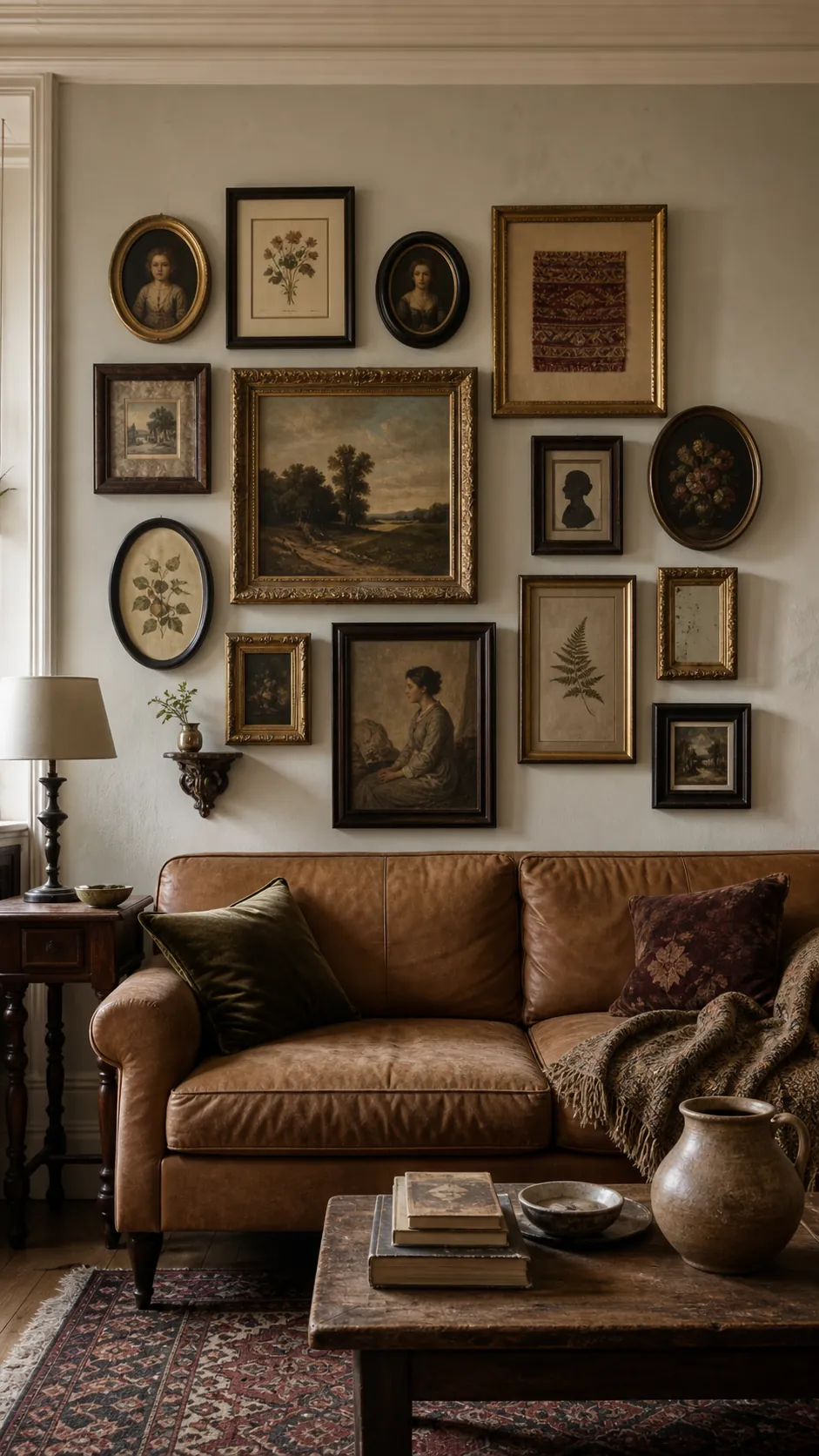
Vintage frames bring depth to a wall before you add a single piece of art, but the best arrangements still rely on scale, spacing, and a clear visual thread. Collectors often wonder how to mix gold, walnut, black, oval, rustic, and ornate frames without making a room feel chaotic. These 19 vintage frame wall ideas translate that collected look into practical layouts for living rooms, halls, fireplaces, stairs, rentals, and small apartments.
Build a Collected Gilded Salon Wall
A gilded salon wall is richest when the frames carry different histories but the art still leads. Place one broad oil landscape above the camel sofa, then gather charcoal portraits and small botanical studies around it. Distribute bright gold, softened gilt, and darkened corners so no single finish forms a shiny patch.
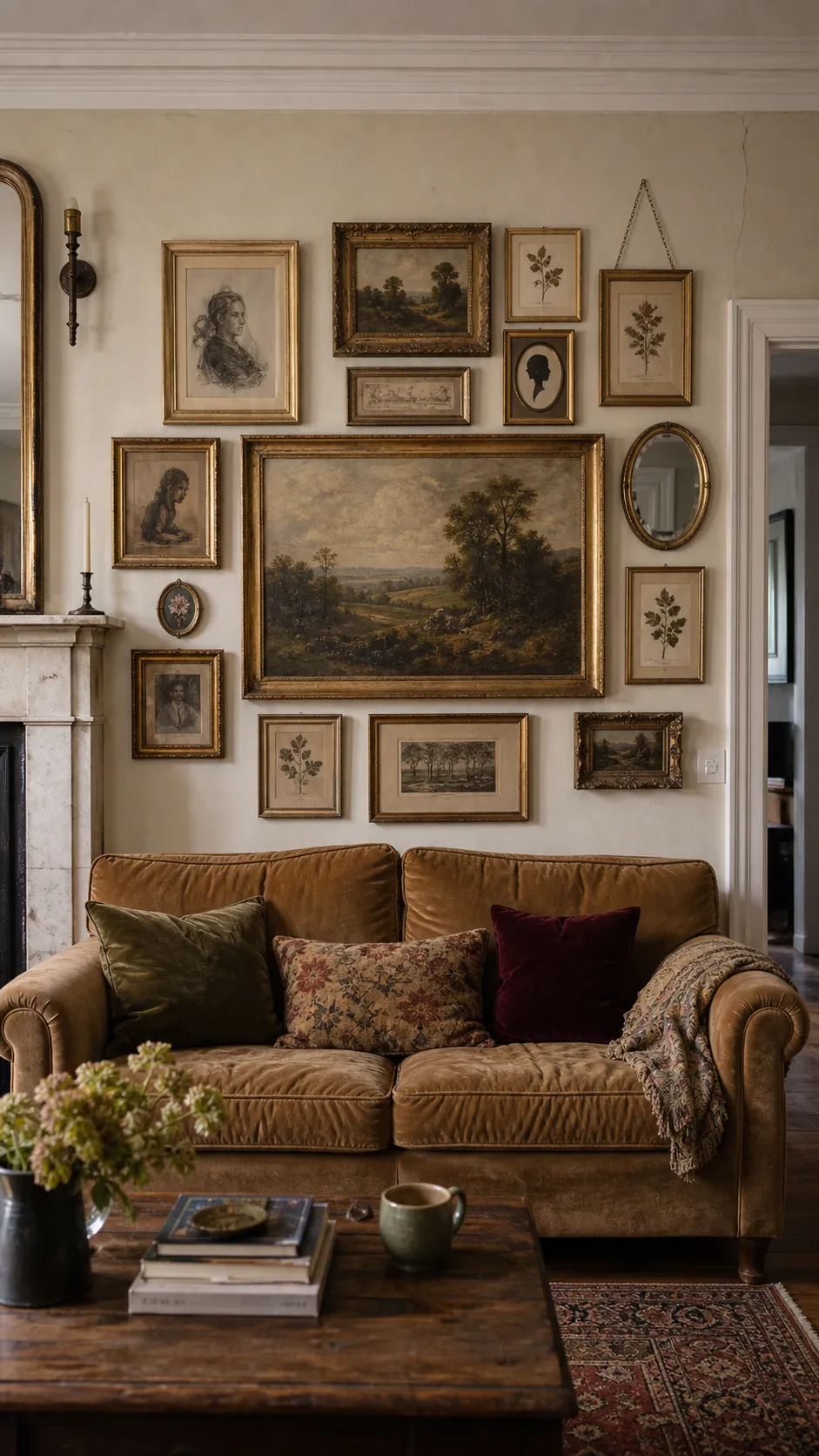
Fit smaller pieces into the irregular spaces without forcing every edge into alignment. From across the room, the landscape should remain the first read while the tighter works reward a closer view.
Mix Walnut and Black Frames for Quiet Contrast
Walnut and ebonized frames create depth through subtle material contrast rather than ornate detail. Fill them with sepia architecture photographs and spare ink drawings, letting the black profiles sharpen the softer brown wood. A linen loveseat keeps the wall from becoming too dark.
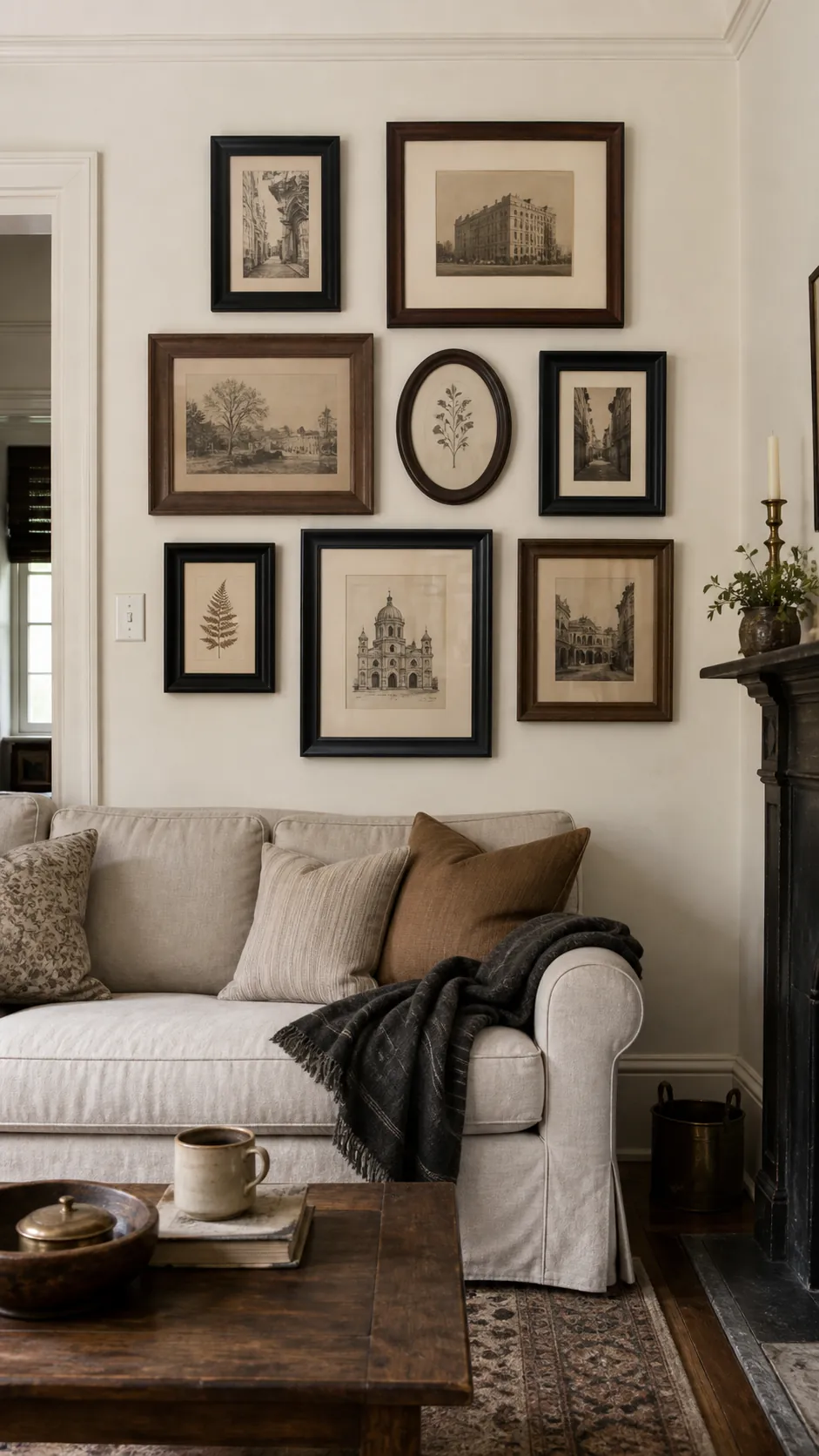
Alternate the finishes across the group instead of dividing them into separate color zones. Check tonal balance from the coffee table, where heavily shadowed photographs can disappear into a black frame if the mat is too narrow.
Center an Ornate Mirror Among Small Frames
A foxed oval mirror gives petite frames a strong center on a narrow entry wall. Let cameos, pressed flowers, and fragments of handwriting follow portions of its curve while preserving uneven spaces between their varied silhouettes.
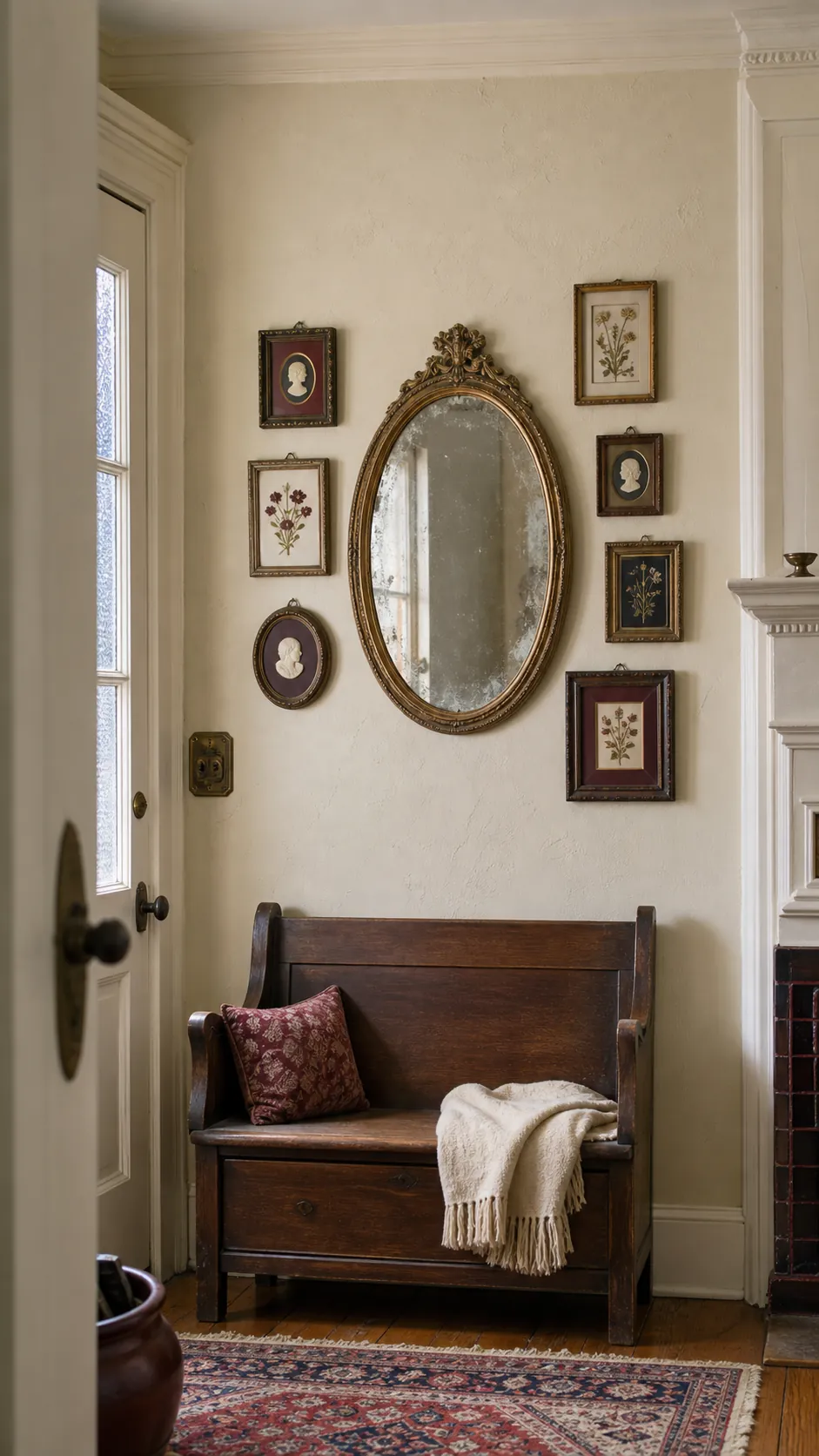
Position the mirror to reflect a calm part of the room rather than the open door or entry clutter. Keep the total composition inside the bench width, with enough clearance that a seated person cannot touch the lowest frame. Review it from the doorway angle, where an apparently centered arrangement may need a slight visual adjustment.
Hang Vintage Frames From a Picture Rail
Visible brass chains make the mechanics of a traditional picture rail part of the composition. Suspend five antique frames at varied heights, pairing shell engravings, silhouettes, and historic tool drawings with profiles that suit their scale. The descending lines add order even when the frame bottoms do not align.
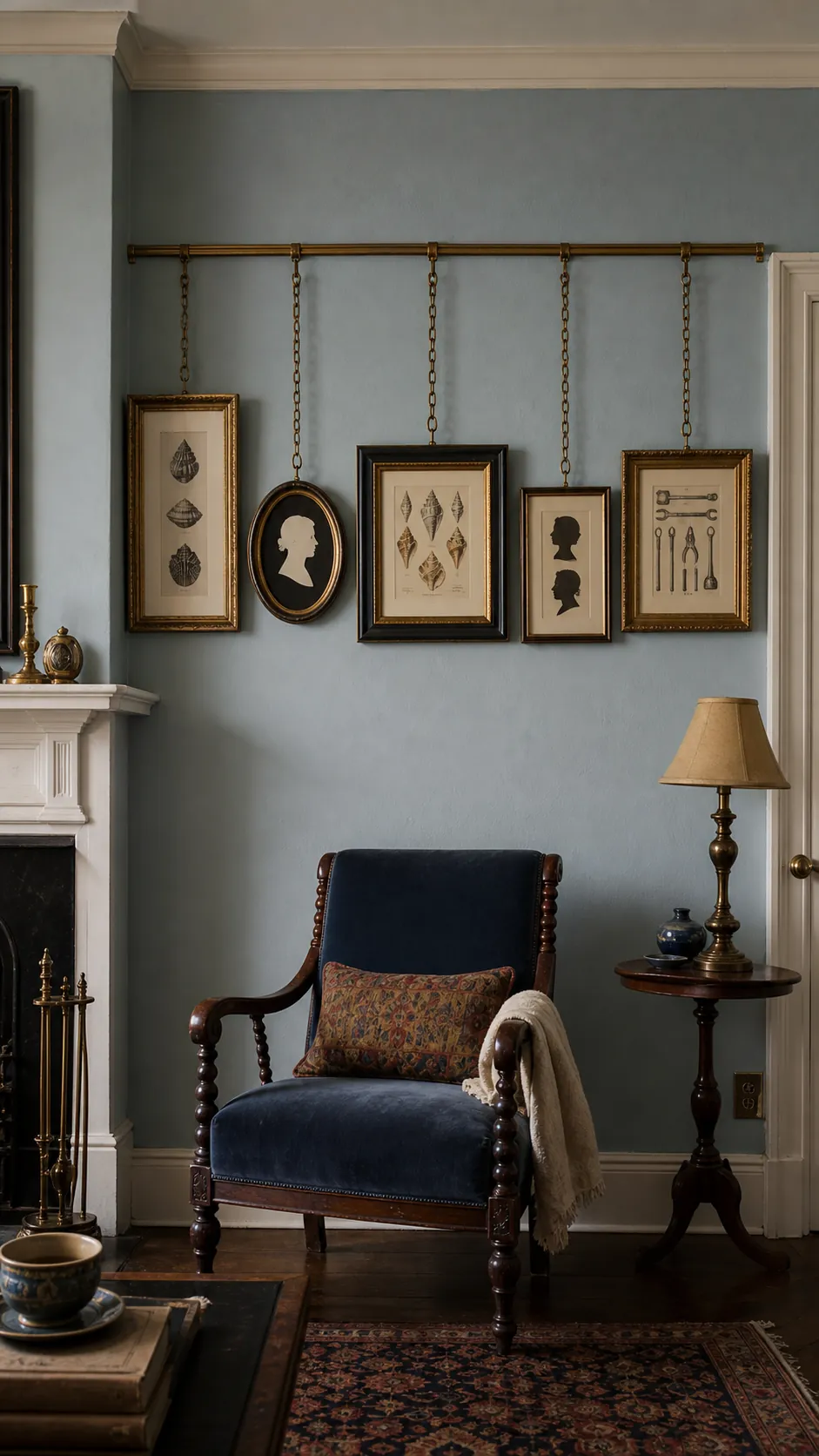
Use rail hardware and chain suited to each piece, then stabilize frames that swing when doors close. Viewed from the fireplace, the chain paths should remain distinct instead of crossing into a tangle.
Create a Victorian Portrait Stair-Step
Anonymous Victorian portraits can climb beside a staircase when their progression follows the architecture rather than a rigid horizontal grid. Begin near the dark wood console and step larger photographs and silhouette miniatures upward with the stair line.
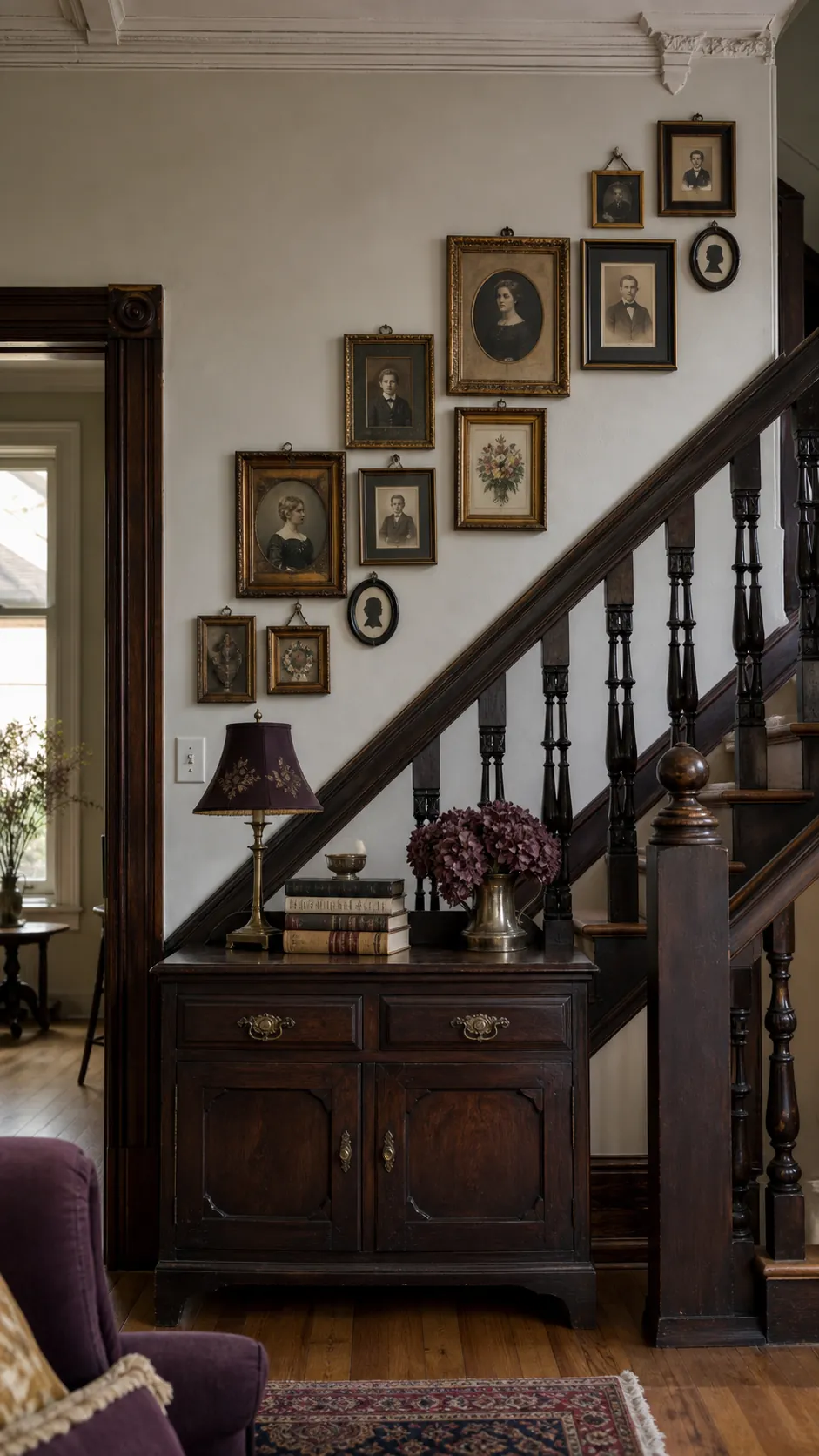
Vary frame shape to interrupt the procession, but maintain a consistent relationship to the treads so the eye keeps moving. Keep all pieces clear of the handrail and normal shoulder movement on the stairs. From the bottom landing, make sure the upper portraits taper naturally rather than ending in a crowded bunch.
Use Empty Ornate Frames as Sculptural Decor
Empty antique frames turn carving, corners, and patina into the subject instead of treating them as incomplete art holders. Layer oval, rectangular, and baroque profiles so the wall color remains visible through each opening. A velvet reading chair gives the group a substantial lower anchor.
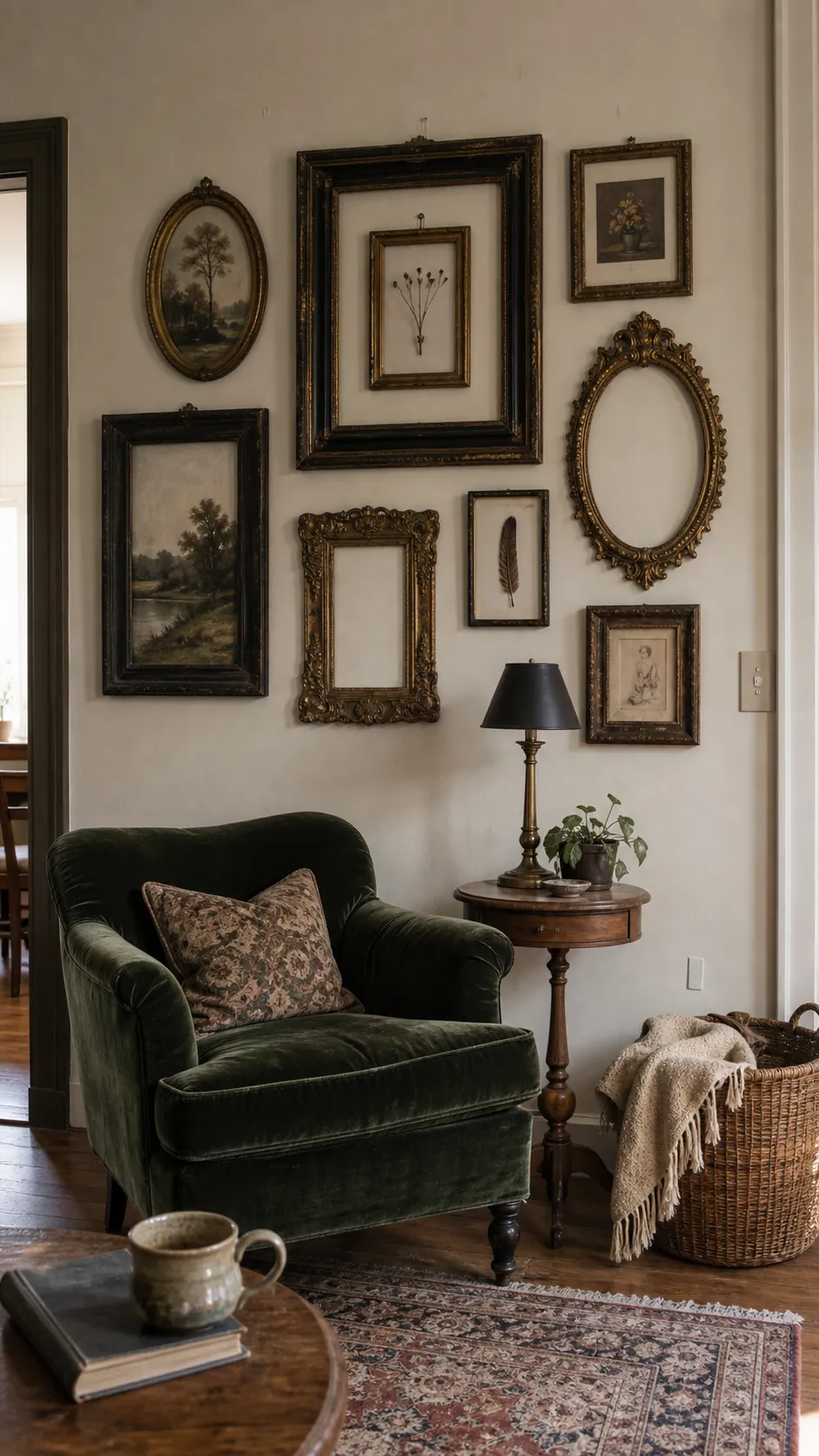
Secure overlapping pieces independently rather than letting one fragile frame bear another’s weight. Allow some contours to stand alone; too much interlocking would hide the craftsmanship that makes the idea work.
Frame a Grid of Antique Botanical Plates
Nine antique botanical plates gain authority in a measured grid above a sage settee. Choose different ferns, herbs, flowers, and seedpods, then use related vintage frames to keep the varied specimens connected.
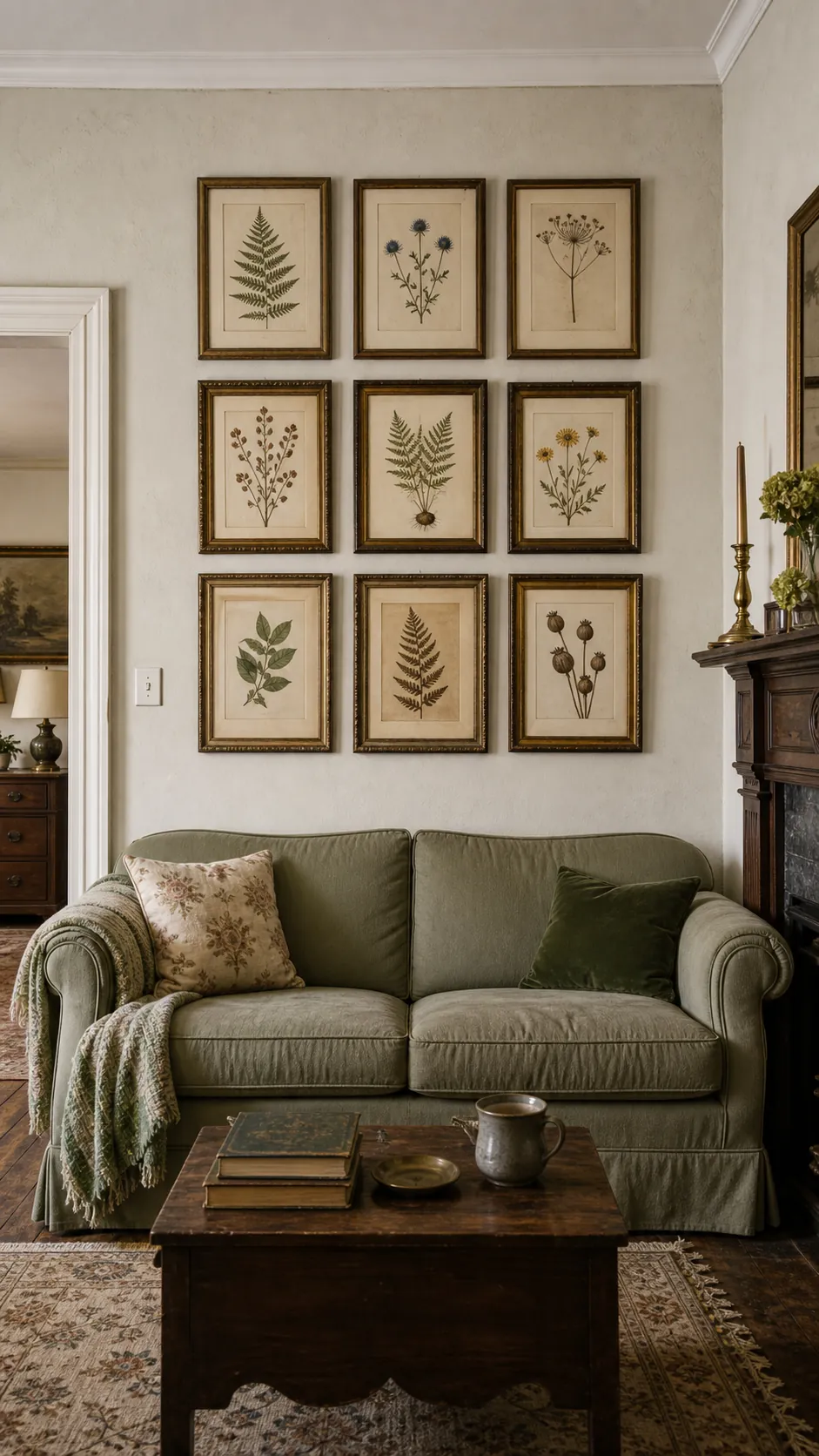
Correct any loose joints or unstable glazing before deciding the final order. Establish the grid from one level reference line, because aged frames often have slightly inconsistent outer dimensions. The straight-on seated view should reveal an orderly block first and individual plant details second.
Pair Tiny Frames With One Oversized Portrait
One large anonymous oil portrait creates a commanding imbalance that miniature frames can soften. Gather tiny landscapes and pressed petals to one side and below, leaving enough separation that the portrait retains its own silhouette.
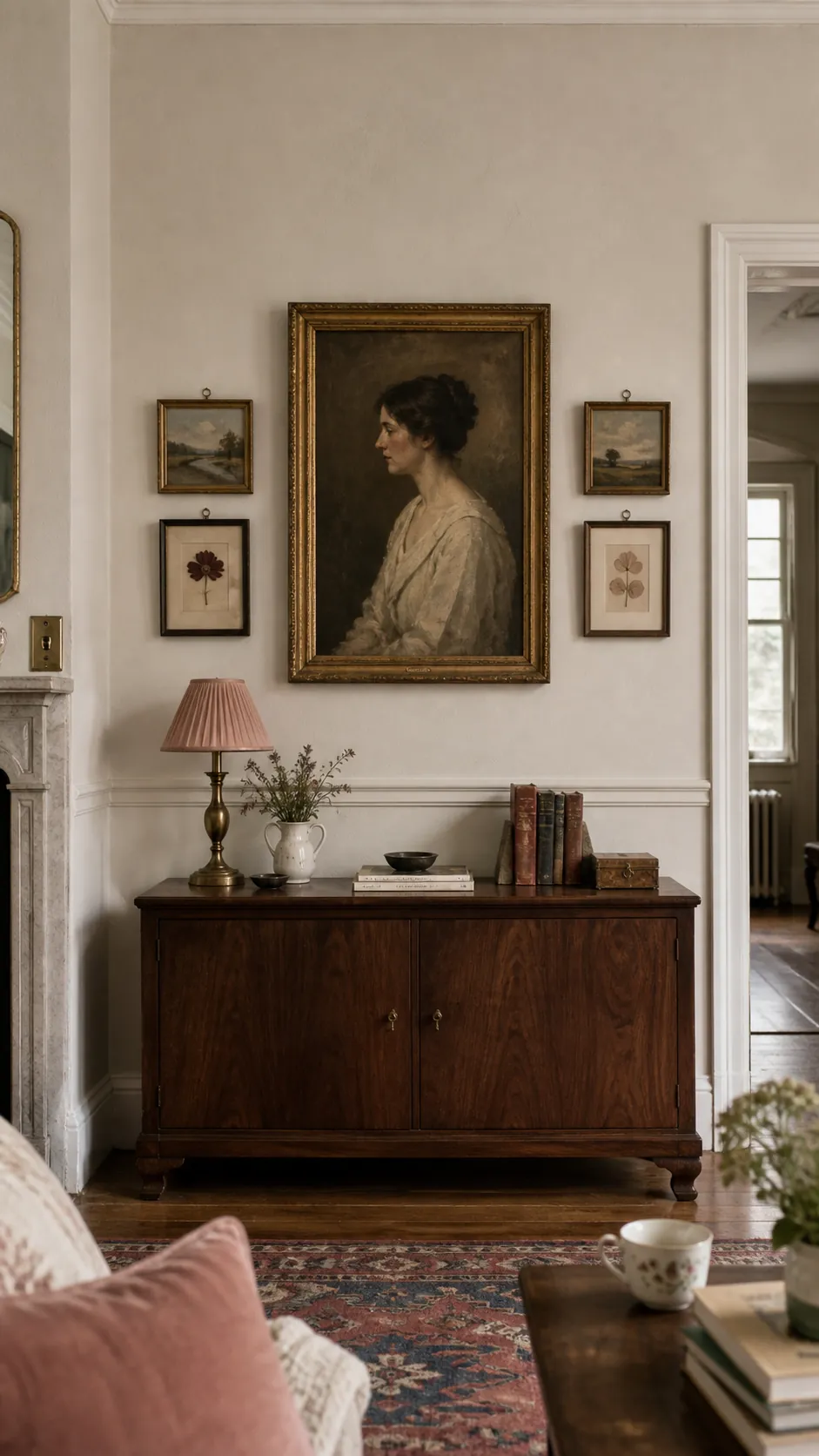
The low walnut cabinet should support the full composition rather than align only with the oversized piece. Move the miniature group as one visual mass when balancing the wall; adjusting isolated tiny frames will not correct a larger weight problem. From room center, the small works should feel like a deliberate counterpoint, not crumbs trailing from the portrait.
Fill a Narrow Hall With a Vertical Frame Stack
A vertical stack uses a narrow hallway’s height without pushing frames toward passing shoulders. Combine travel etchings, photographs of old doors, and one family silhouette within a slim, clearly defined column. Vary their heights but keep the outer side edges from wandering too far.
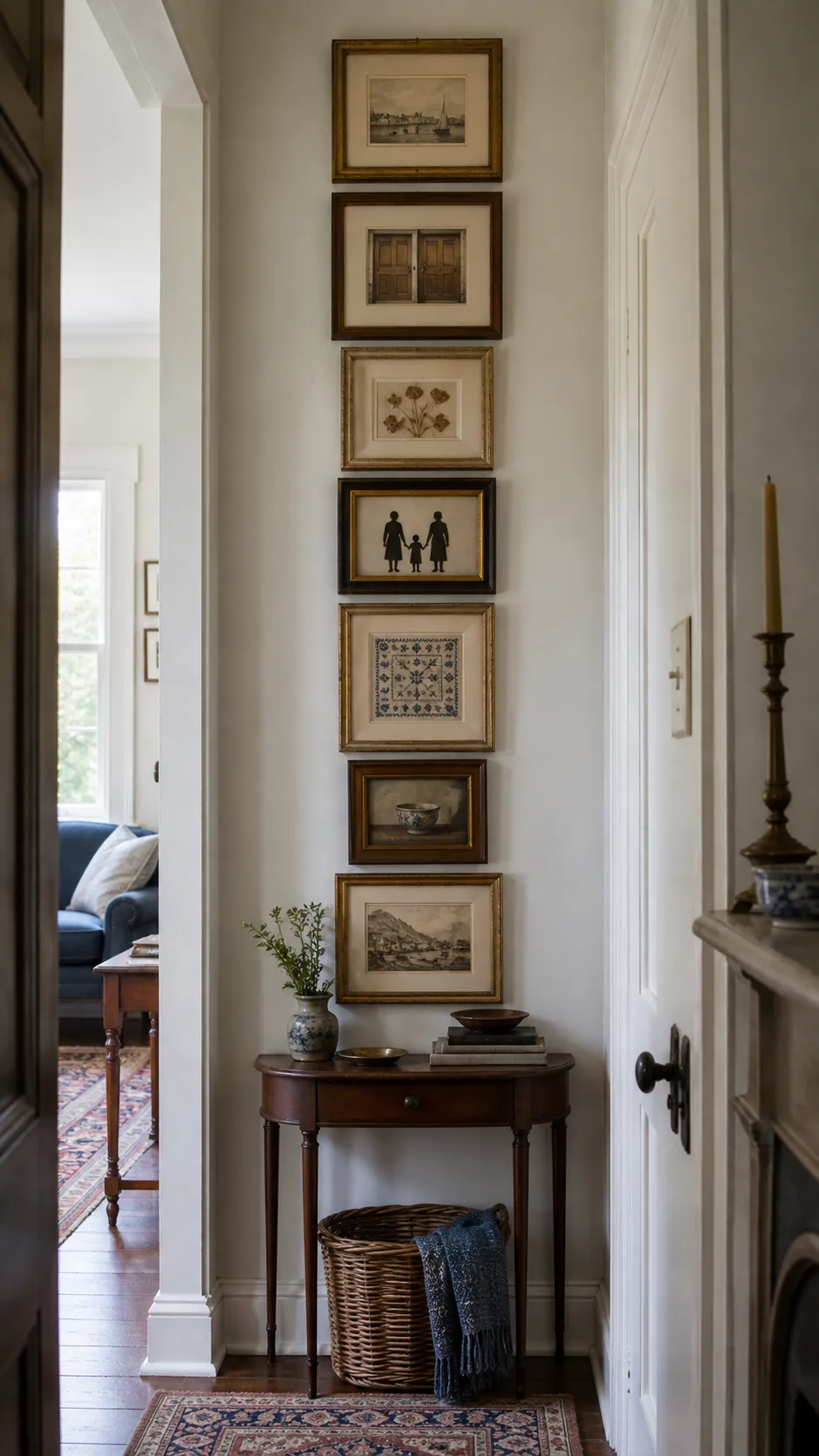
Use shallow profiles and secure every lower corner so the frames stay flat in moving air. Align the stack with the narrow table beneath it, then inspect from the hall entrance for any frame that appears to bulge into the route.
Turn Sepia Family Photos Into a Timeline
A shared centerline gives sepia photographs from different decades a clear chronological direction. Mix candid family images in portrait and landscape frames, using restrained mats to reconcile variations in size and fading.
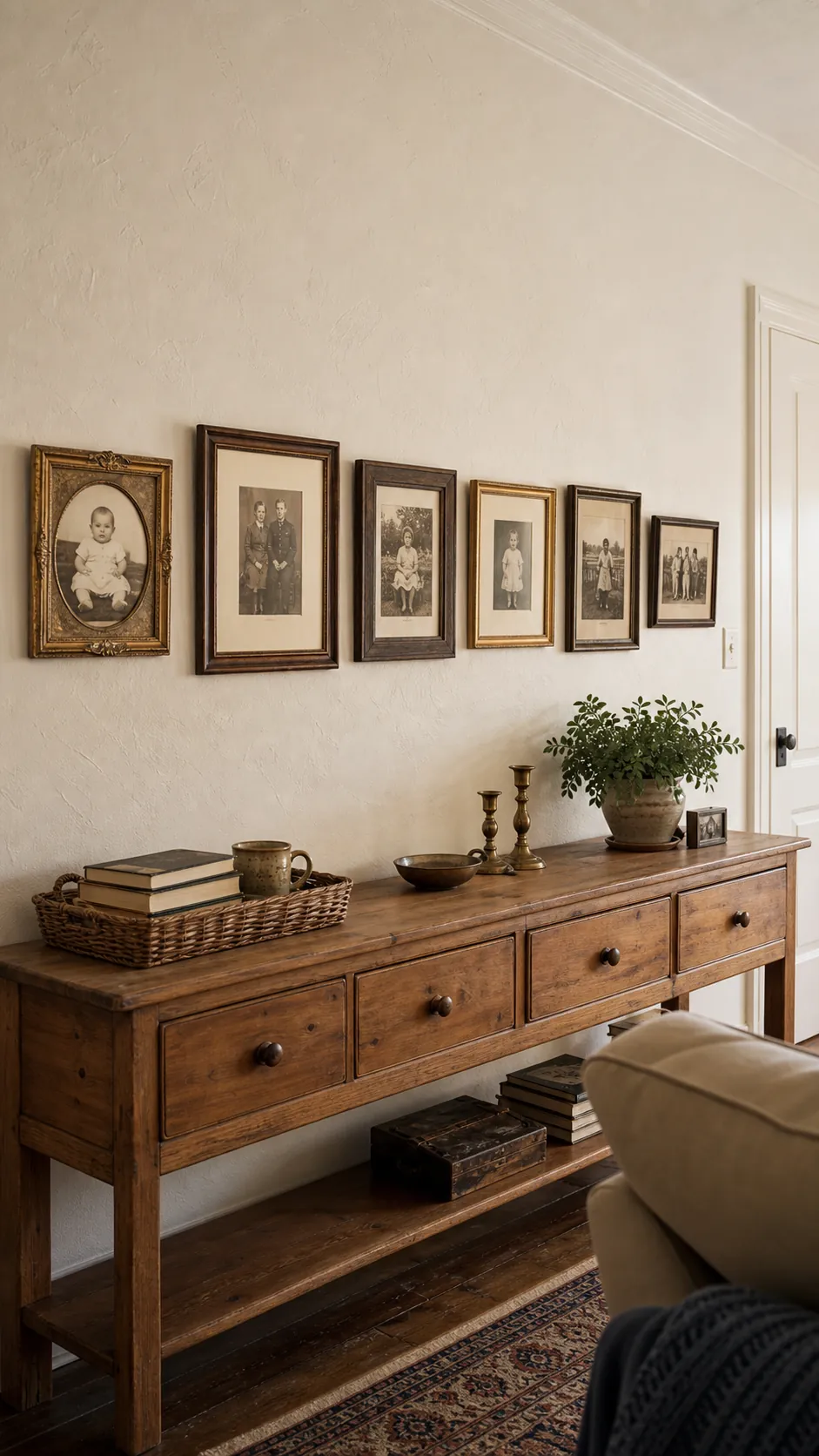
Work with copies when originals are fragile, keeping the irreplaceable photographs in appropriate storage. Run the timeline along the pine console but leave each end clear enough that the furniture remains wider than the art. At an oblique view, the central axis should still read as one continuous path.
Layer Frames on a Vintage Picture Ledge
Two oak ledges make it possible to layer seascapes, etchings, floral studies, and one textile without fixing every antique frame permanently to the wall. Place taller works on the upper ledge where they will not hide the lower row, then vary overlaps so each subject retains a useful opening.
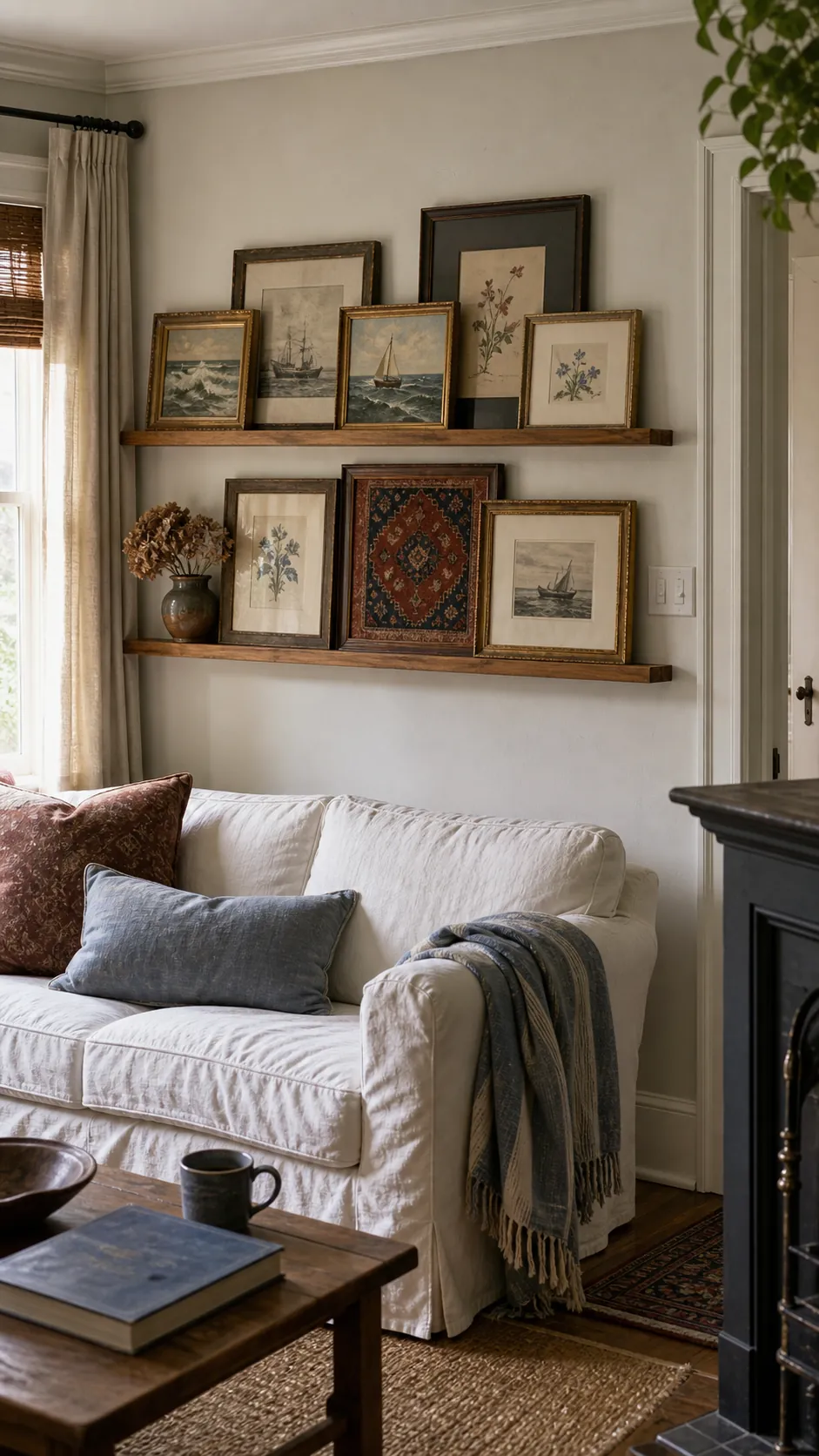
Make sure deep moldings sit securely within the ledge lip and add unobtrusive restraints where needed. Leave open oak between some groups to keep the wall from resembling storage. Check the lowest frames from the sofa corner, confirming that their edges remain comfortably above cushions and heads.
Arrange Oval Frames Around a Cameo
An oval-frame collection becomes coherent when one larger cameo sets the curve and visual center. Arrange profile silhouettes, miniature portraits, and botanical cameos around it, turning each long axis slightly to prevent the group from becoming a stack of repeated eggs.
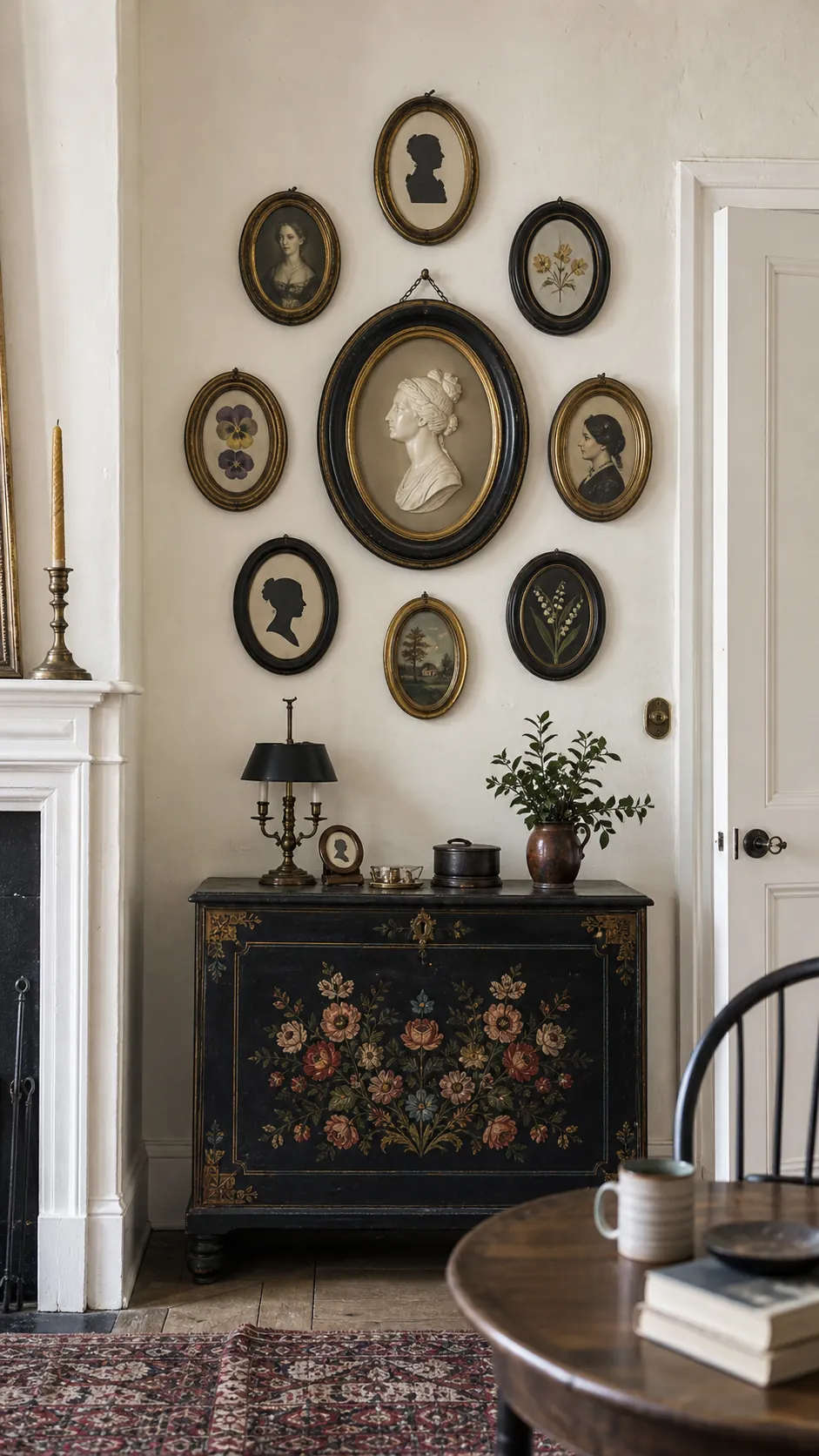
Spread dark, gilt, and painted rims across the orbit so similar finishes do not clump. Keep the outer boundary related to the chest below and protect the smallest convex or fragile glazing from contact. A close corner view will expose uneven spacing that looks balanced only from straight ahead.
Make a Rustic Gallery From Weathered Wood
Weathered oak and old painted frames can feel rustic without looking neglected when surfaces are stable and clean. Fill the cluster with rural landscapes, botanical sketches, and graphic seed-packet imagery stripped of readable wording. Differences in chipped color and grain create enough variety on their own.
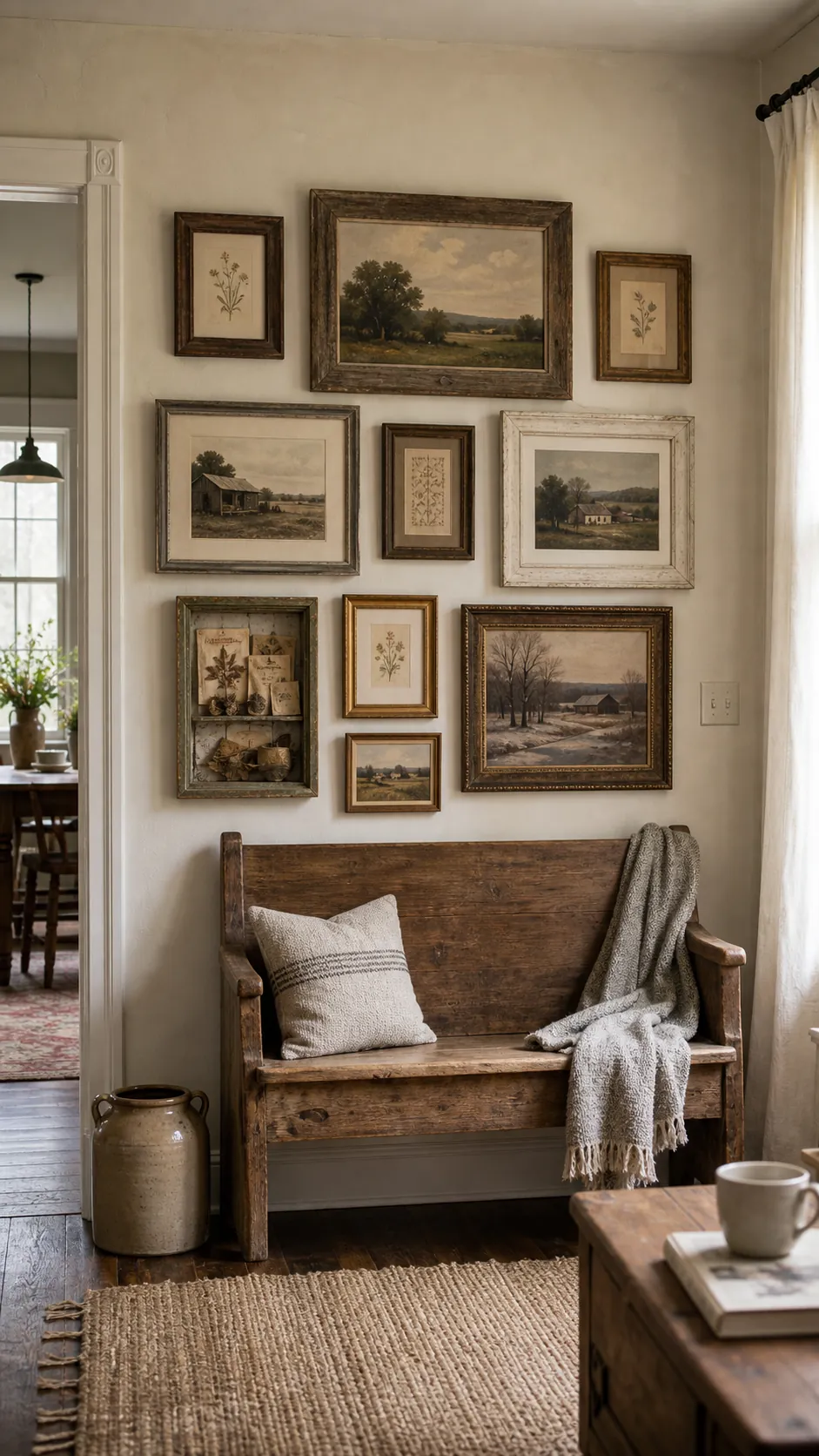
Repair loose miters and seal any flaking finish rather than manufacturing extra distress. Use the farmhouse bench as the lower boundary, preserving calm wall around the organic outline so it does not become a patch of rough texture.
Contrast Modern Art With Antique Frames
Geometric color fields and spare charcoal gestures look sharper when enclosed by carved antique frames. The contrast works because the art is genuinely modern and the frames retain authentic age, not because either side is exaggerated. A clean-lined cream sofa gives the unlikely pairing a neutral base.
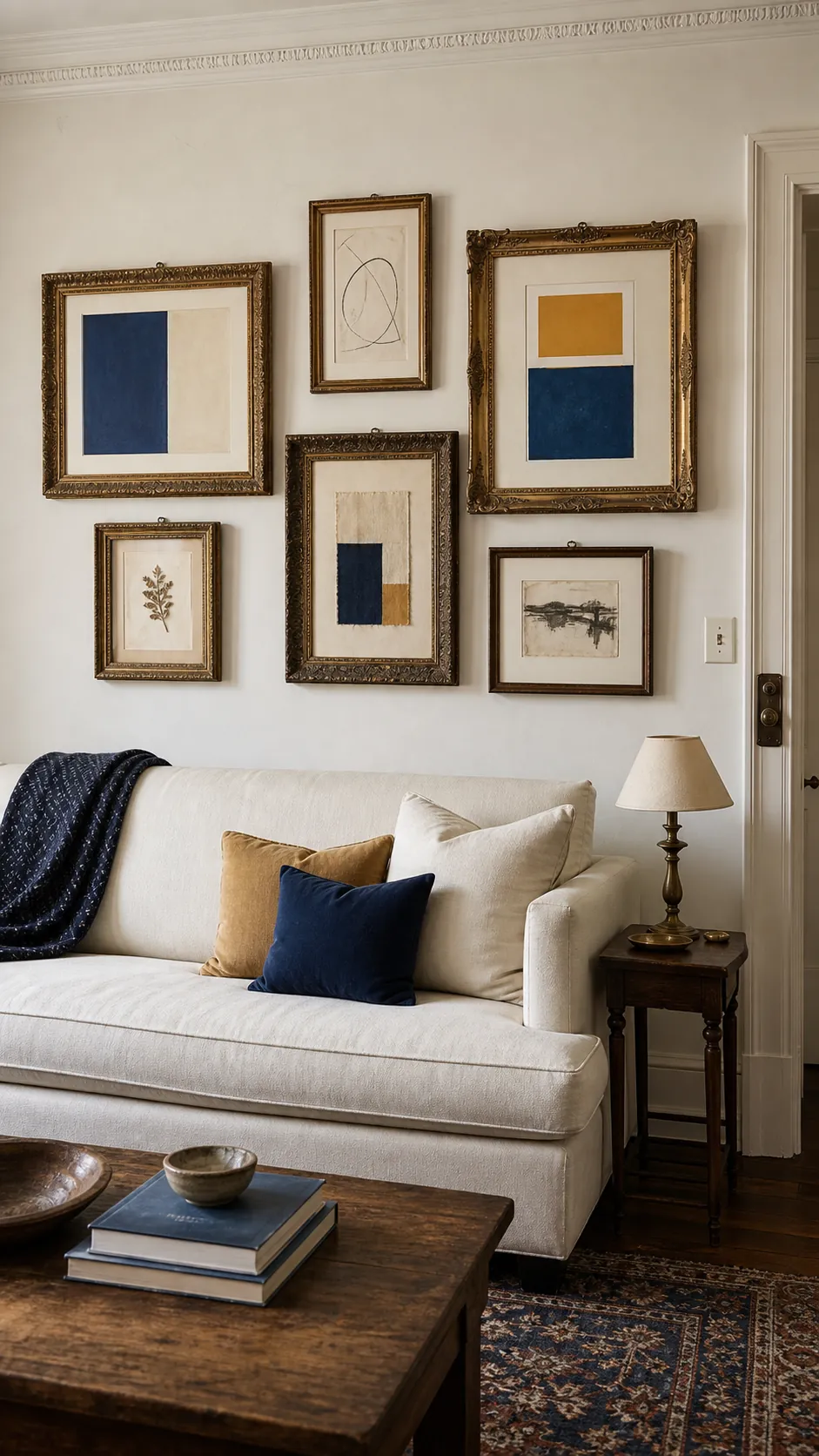
Match each work to a molding that complements its scale rather than forcing a thick baroque profile around every piece. Spread the strongest colors across the group and let some charcoal art serve as a visual pause.
Frame Heirlooms in Deep Shadow Boxes
Deep shadow boxes allow small heirlooms to be seen without turning a writing desk into a loose display shelf. Group old keys, lace, spectacles, unmarked medals, and dried seedpods by material and story, giving each object enough space for its outline and shadow.
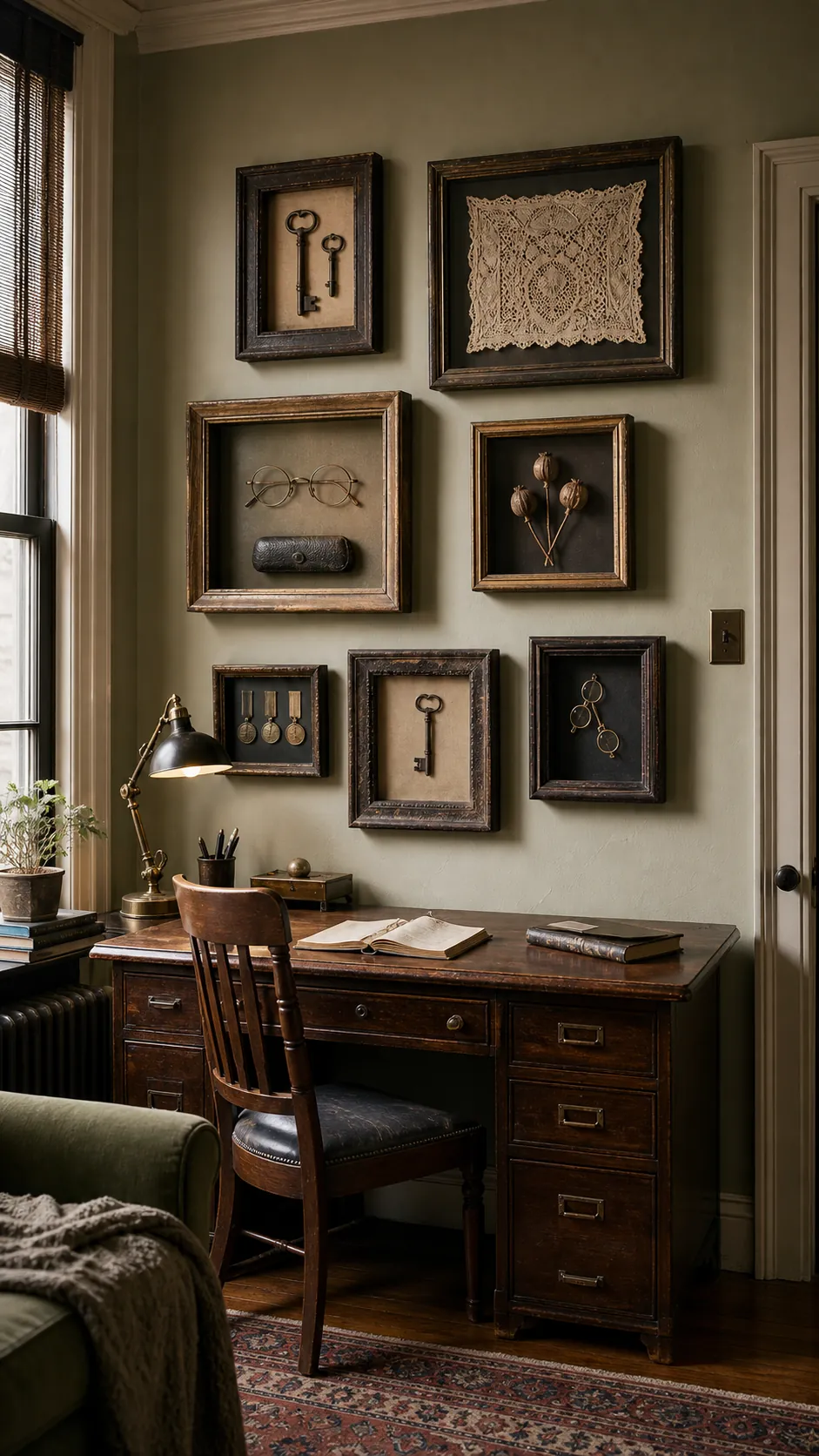
Use reversible, object-appropriate supports and avoid adhesives on anything irreplaceable. Because shadow boxes project more than ordinary frames, mount them beyond chair movement and make sure their weight is properly supported. Side lighting near the desk will reveal the depth without producing harsh glare across every front.
Wrap an Antique Gallery Around a Corner
Carrying antique art around two plaster walls can make a corner banquette feel enveloping rather than boxed in. Use street etchings, portraits, and faded floral paintings on both sides, linking the turn through related frame tones instead of identical layouts. A pair of smaller pieces near the corner can bridge the change in plane.
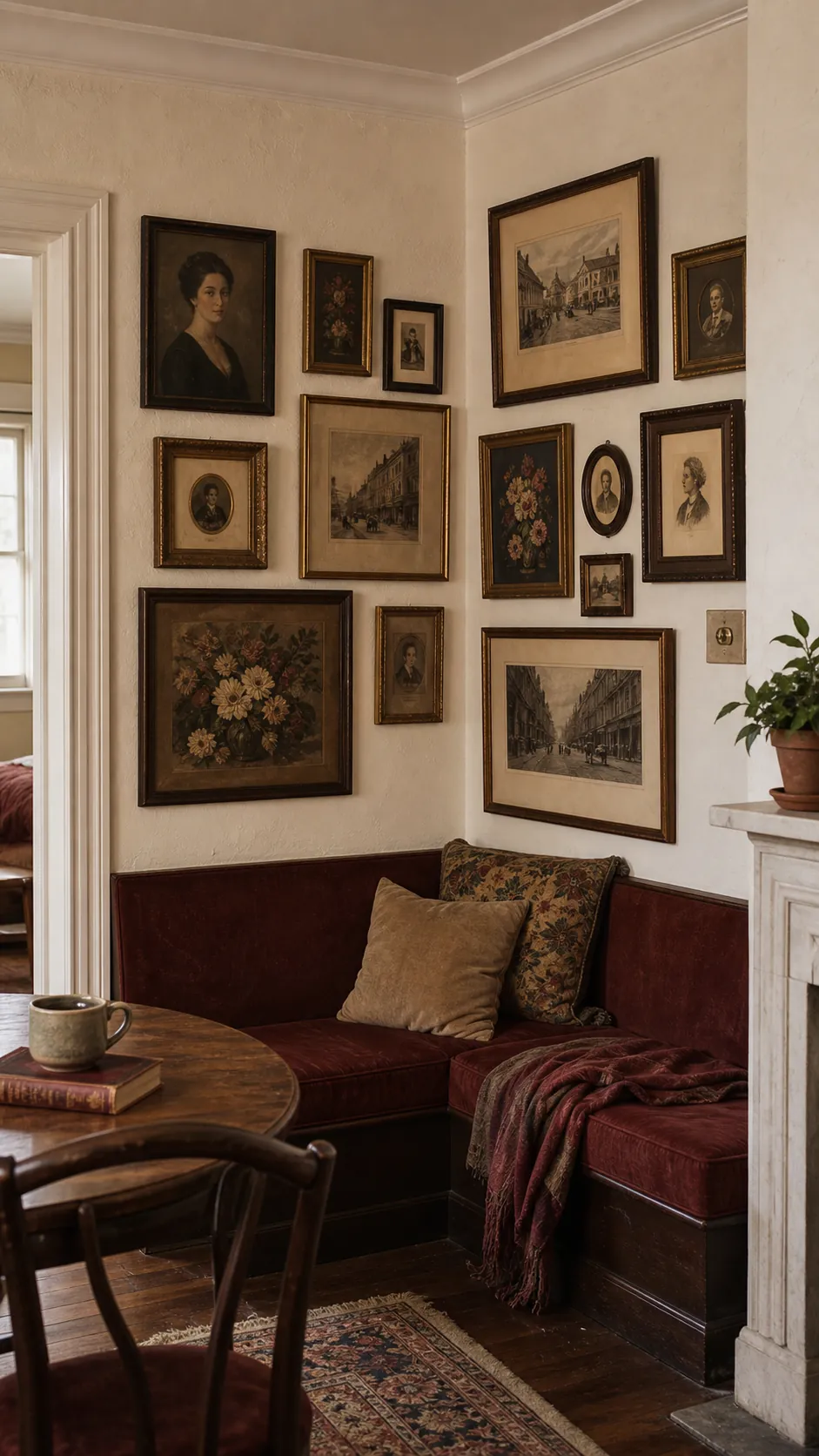
Respect the different wall widths and do not force symmetry across the bend. Preserve head clearance above both legs of the seat, then inspect from the open side to catch frames that appear to collide at the corner.
Flank a Fireplace With Uneven Vintage Clusters
Nonmatching clusters can frame a carved fireplace while allowing the woodwork to remain the room’s center. Lead one side with bird engravings and the other with a landscape, distributing family silhouettes where they correct the remaining visual weight.
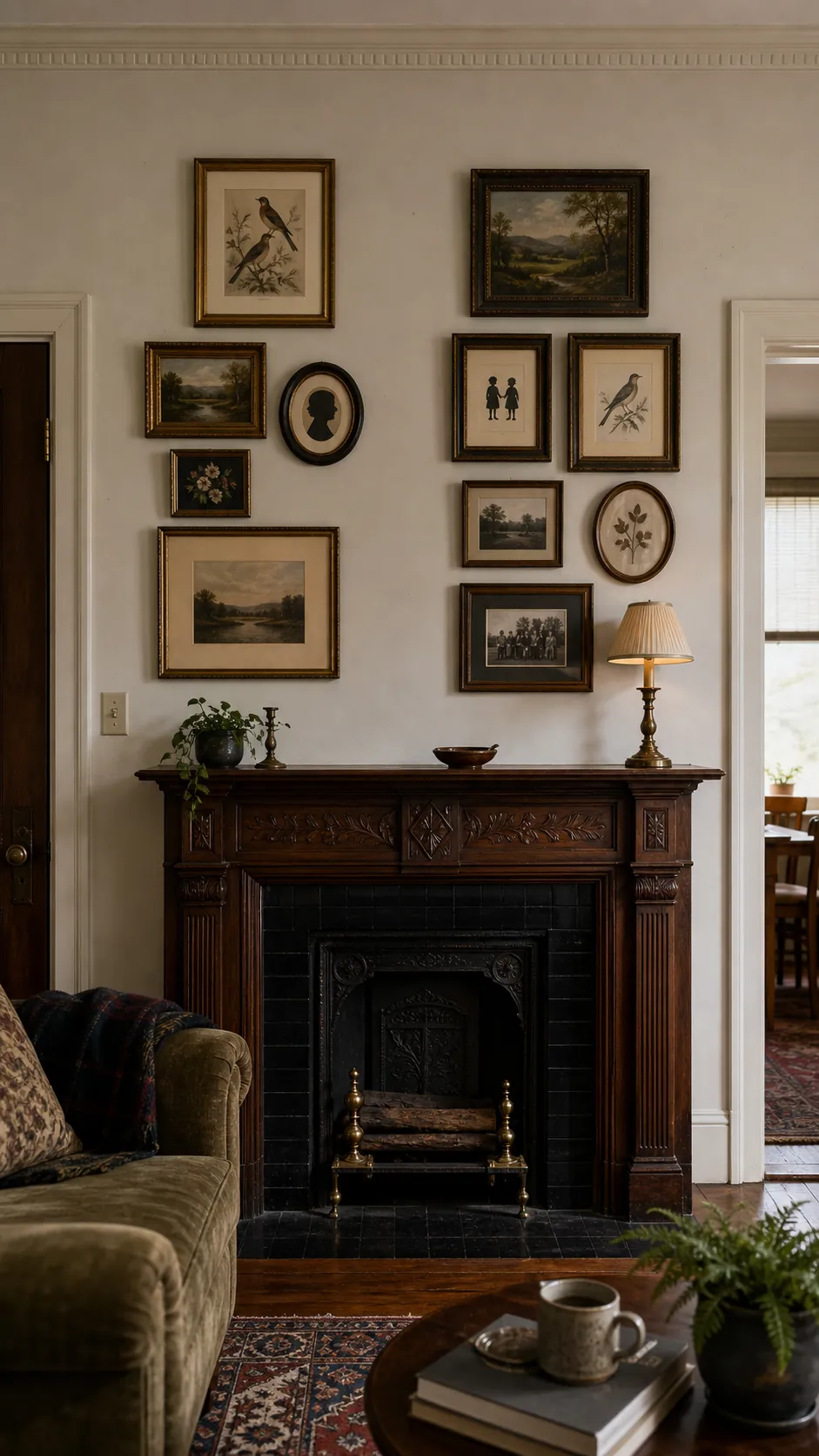
Balance the sides by total darkness, area, and frame prominence rather than matching the number of works. Observe all required heat clearances and leave fireplace controls and doors accessible. From the main hearth-facing view, neither gallery should tug the mantel visually toward its side.
Create a Moody Dark-Wall Gallery
Pale architectural engravings, still lifes, and profile drawings emerge dramatically against a deep wall. Gilded frames catch small amounts of light, while the brown leather settee adds another dark material without disappearing into the paint.
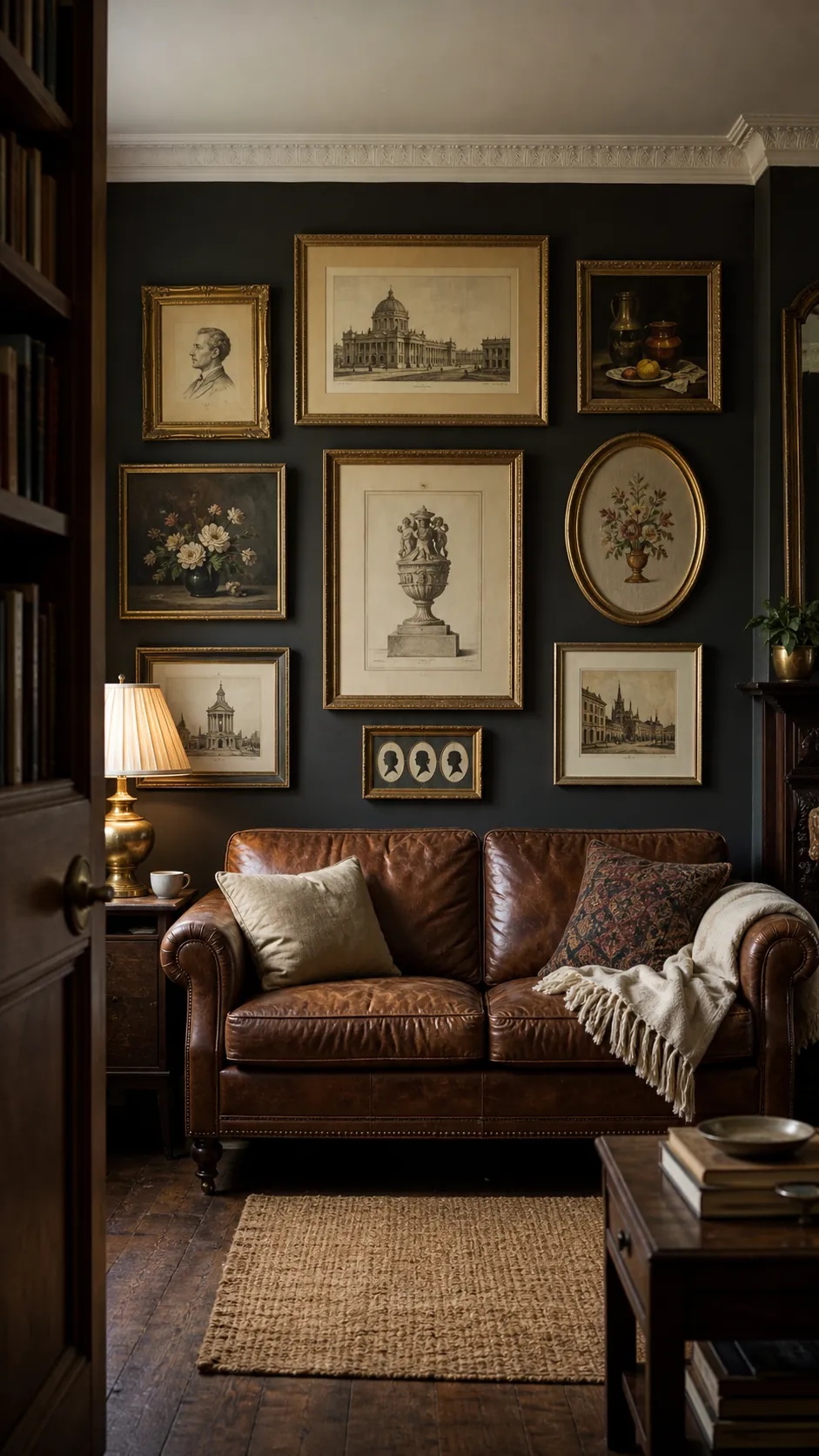
Test the wall color behind real frames through daylight and lamplight, because a near-black paint can shift the apparent tone of both gold and paper. Space the pale pieces irregularly enough to avoid a checkerboard of glowing rectangles. Viewed from the library doorway, the gallery should feel dimensional rather than simply high contrast.
Keep a Small Vintage Wall Airy
Five vintage frames are enough to give a compact apartment wall history without using every available surface. Place one landscape at the center, then arrange two botanicals, a silhouette, and a small textile in a loose diamond around it. Generous gaps let different moldings remain distinct.
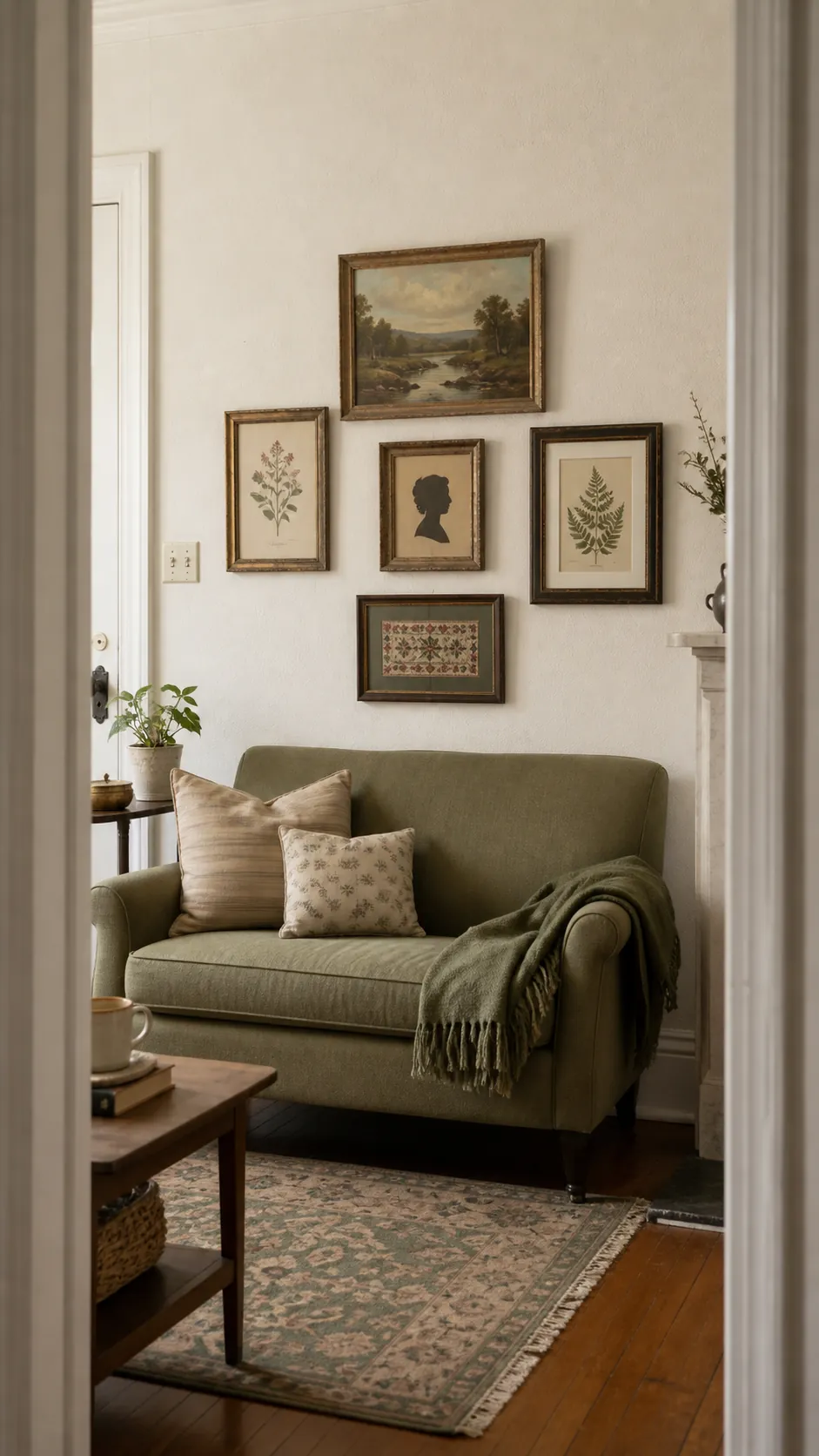
Keep the diamond narrower than the loveseat and resist adding filler pieces to make it rectangular. From the adjacent doorway, empty wall should remain an obvious part of the composition rather than looking like space awaiting more art.