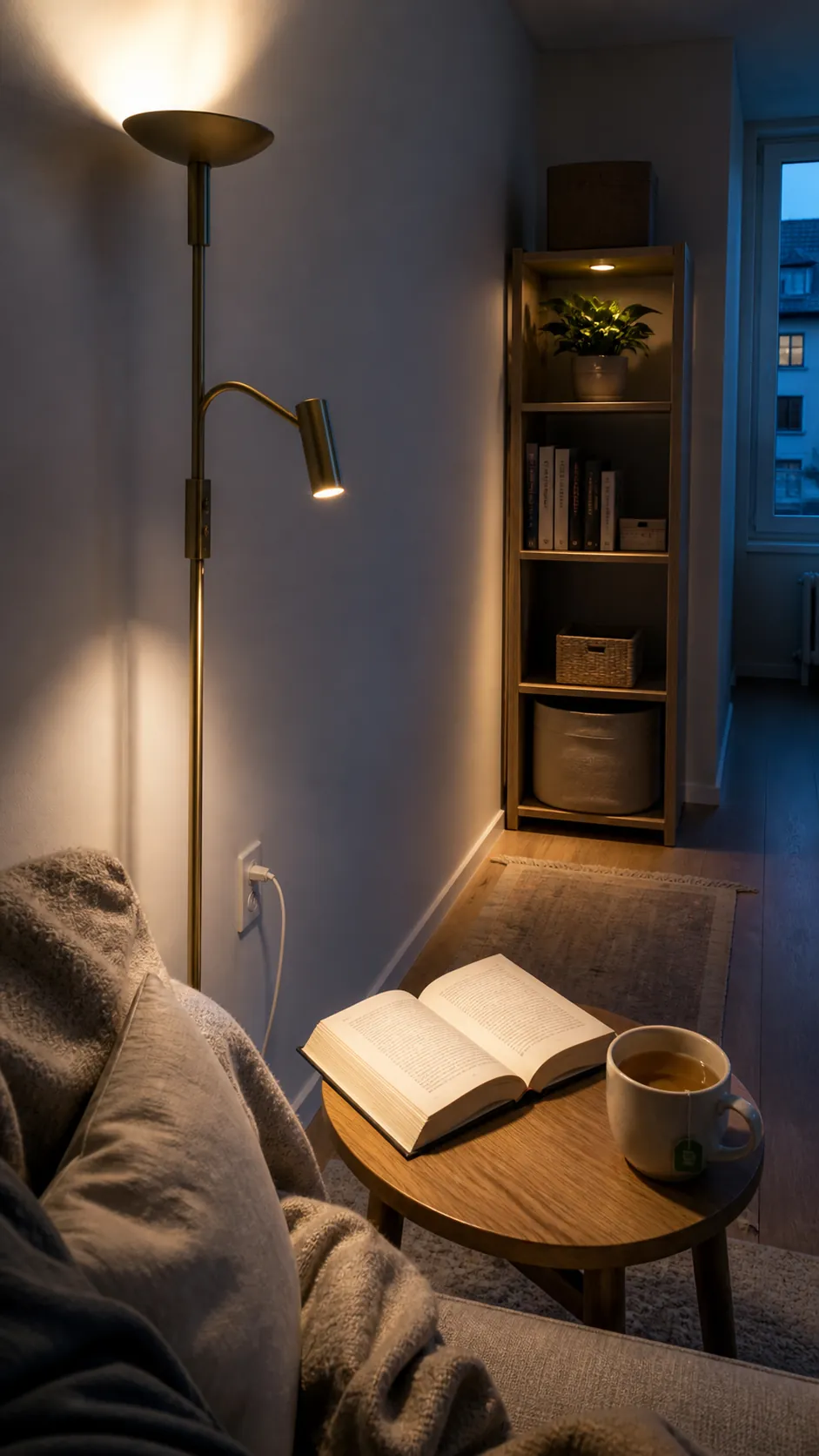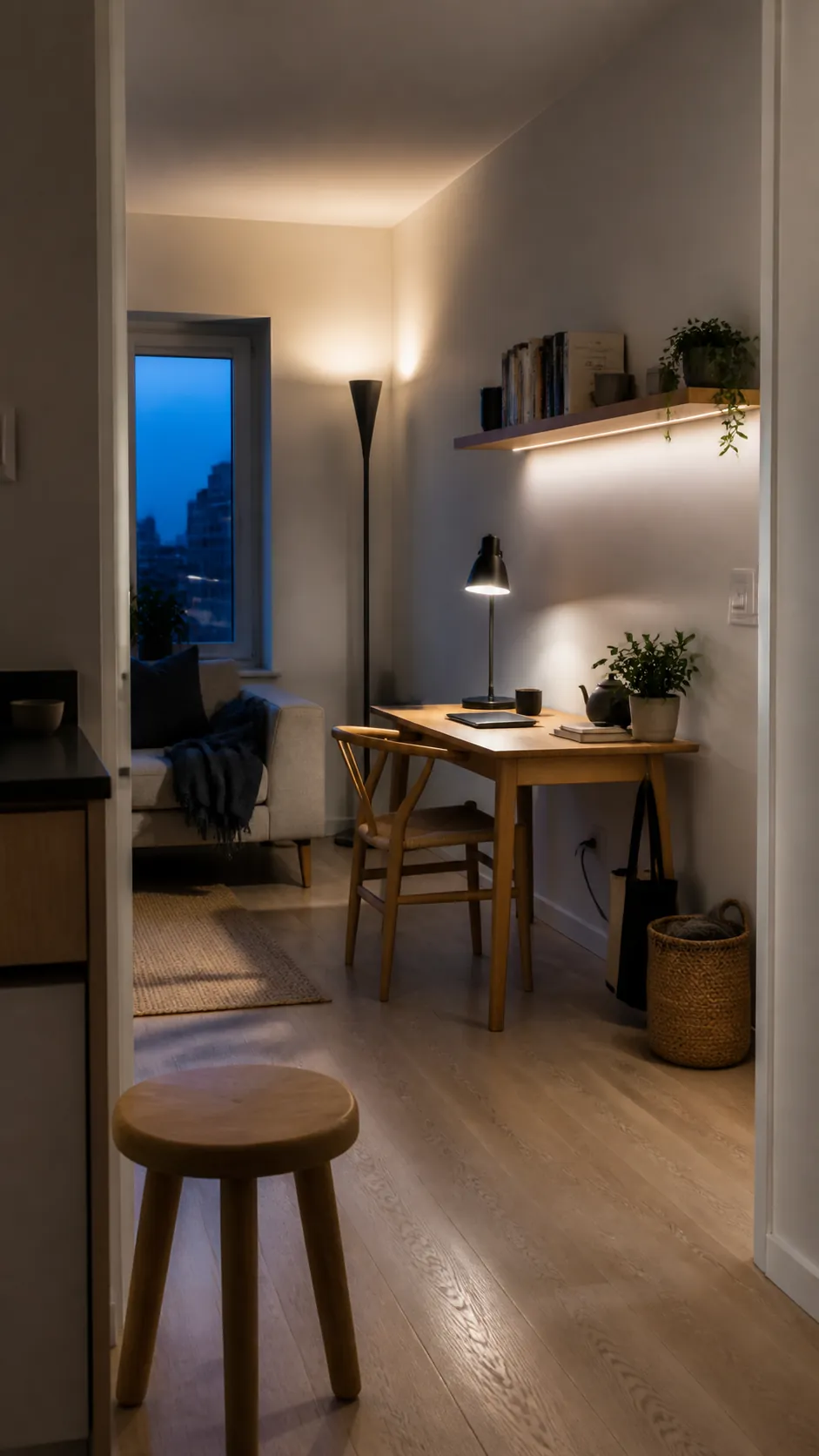
A small home rarely needs one brighter bulb. It needs light in the places where a ceiling fixture cannot reach: the reading chair, the shelf that becomes a black rectangle after sunset, and the desk where your hands work.
Renters on Reddit repeatedly describe the same frustrations: living rooms with no ceiling connection, floor lamps that brighten only one quarter of the room, and four separate switches to hunt down at night. The practical answer is layered lighting—ambient light for safe movement, task light for work, and accent light for depth—placed around real activities instead of scattered at random.
These 21 ideas are sized for tight corners, shallow shelves, and crowded desks. Start with the darkest useful zone, choose one move that solves its job, then add a second layer only if the space still feels flat.
Bounce a Torchiere Off the Ceiling
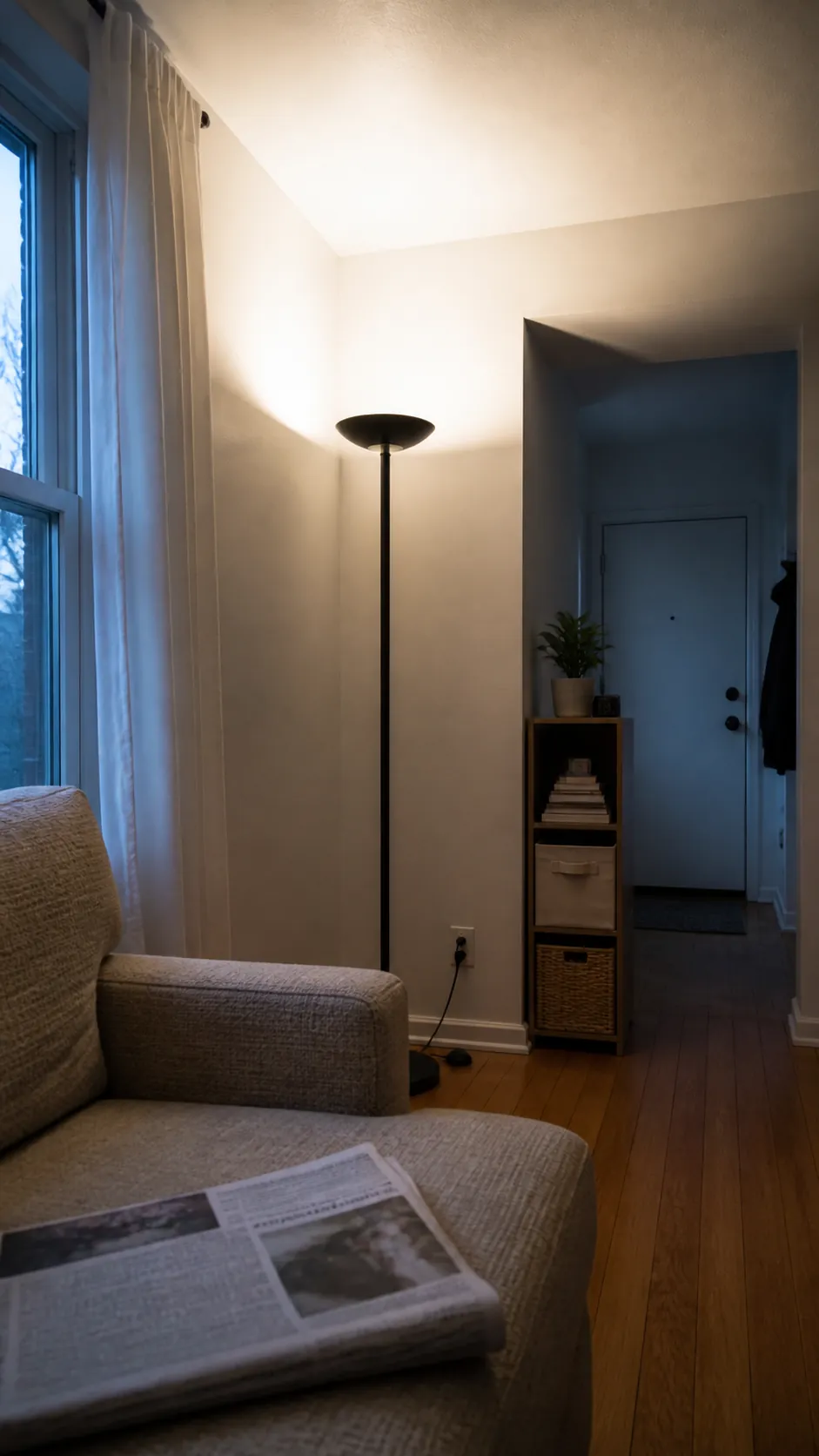
A slim torchiere can replace some of the broad glow a missing ceiling fixture would have provided without taking over the floor plan. Set it in the darkest corner and aim the bowl upward so the ceiling becomes a large, soft reflector rather than pointing a bare bulb into the room.
Choose a dimmable LED and leave a little breathing room around the shade; this keeps heat away from curtains and prevents the corner from looking jammed. This works especially well in rentals because the lamp can plug into a switch-controlled outlet or smart plug. The reflected light softens shadows across the whole room while preserving the cozy lighting effect that small homes need at night.
Use a Tripod Lamp to Define an Empty Corner
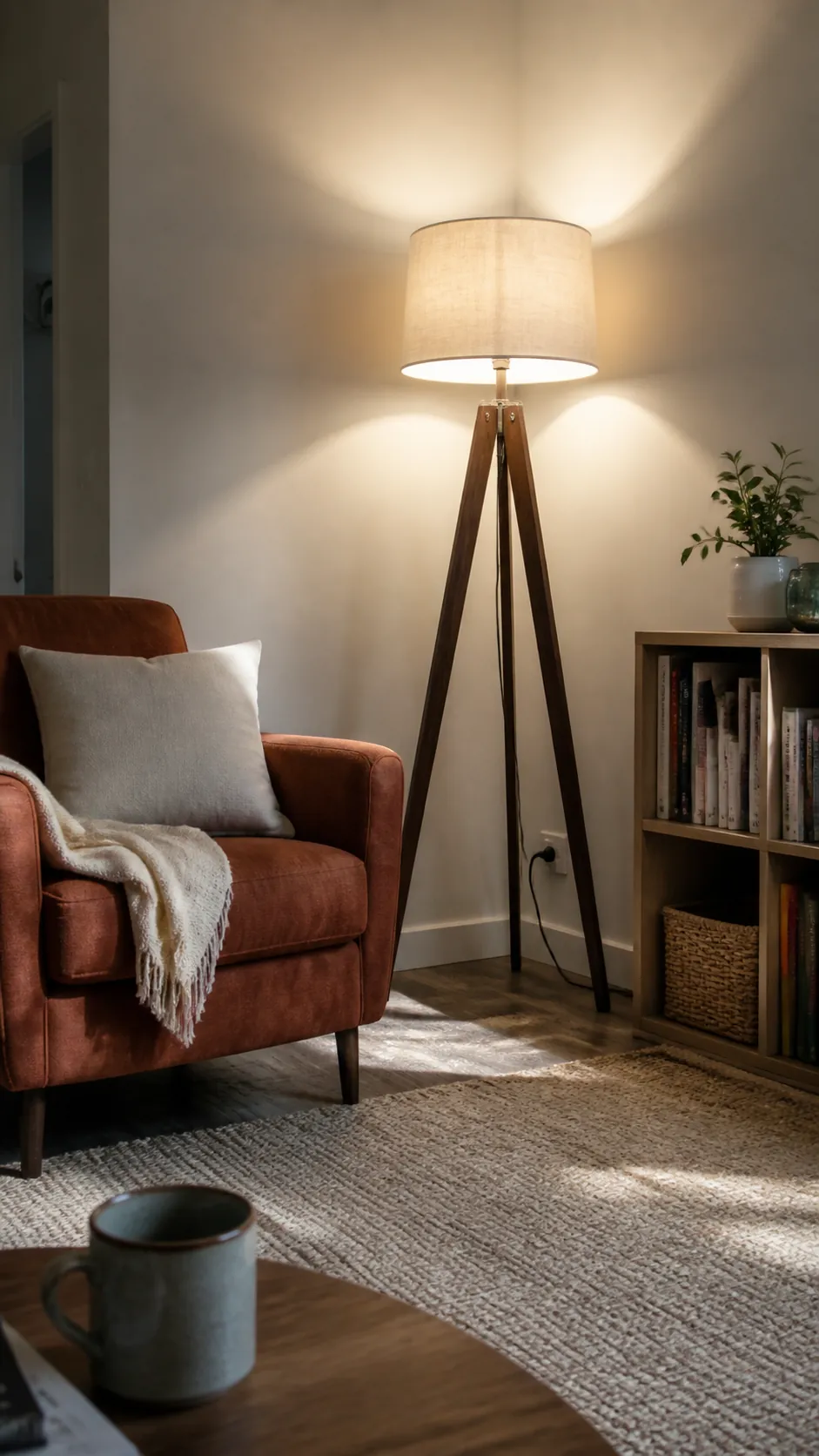
A compact tripod lamp turns an awkward corner into an intentional visual anchor. Pick a narrow base, then rotate the legs so they avoid the walkway and tuck beside a chair or sofa arm. A linen drum shade spreads ambient lighting sideways while keeping the bulb out of direct view.
The useful trick is proportion: the shade should sit above seated eye level but below nearby tall shelving. That height creates a warm pool of light without making a low ceiling feel crowded.
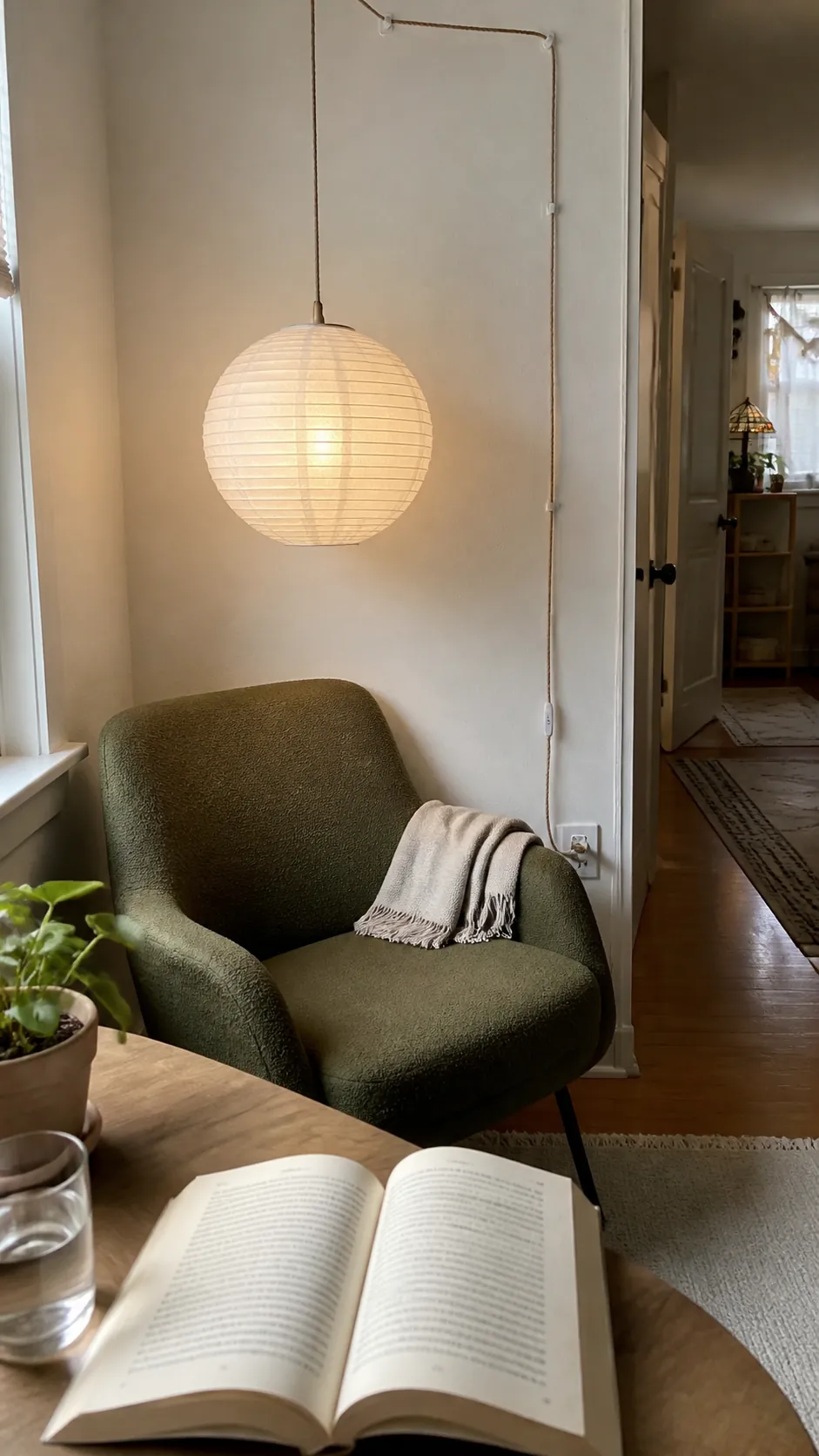
Hang a Plug-In Pendant Over a Reading Chair
A plug-in pendant gives renters the feeling of built-in corner lighting without opening the ceiling. Run the cord through two properly rated hooks so the shade hangs over the chair rather than over the path beside it.
Use a light diffuser or an opaque lower rim to keep glare out of the reader’s eyes. The pendant frees the side table for a book and drink, which matters when every surface in a small home does two jobs. If holes are not allowed, check the product weight and use only mounting hardware approved for that load and surface.
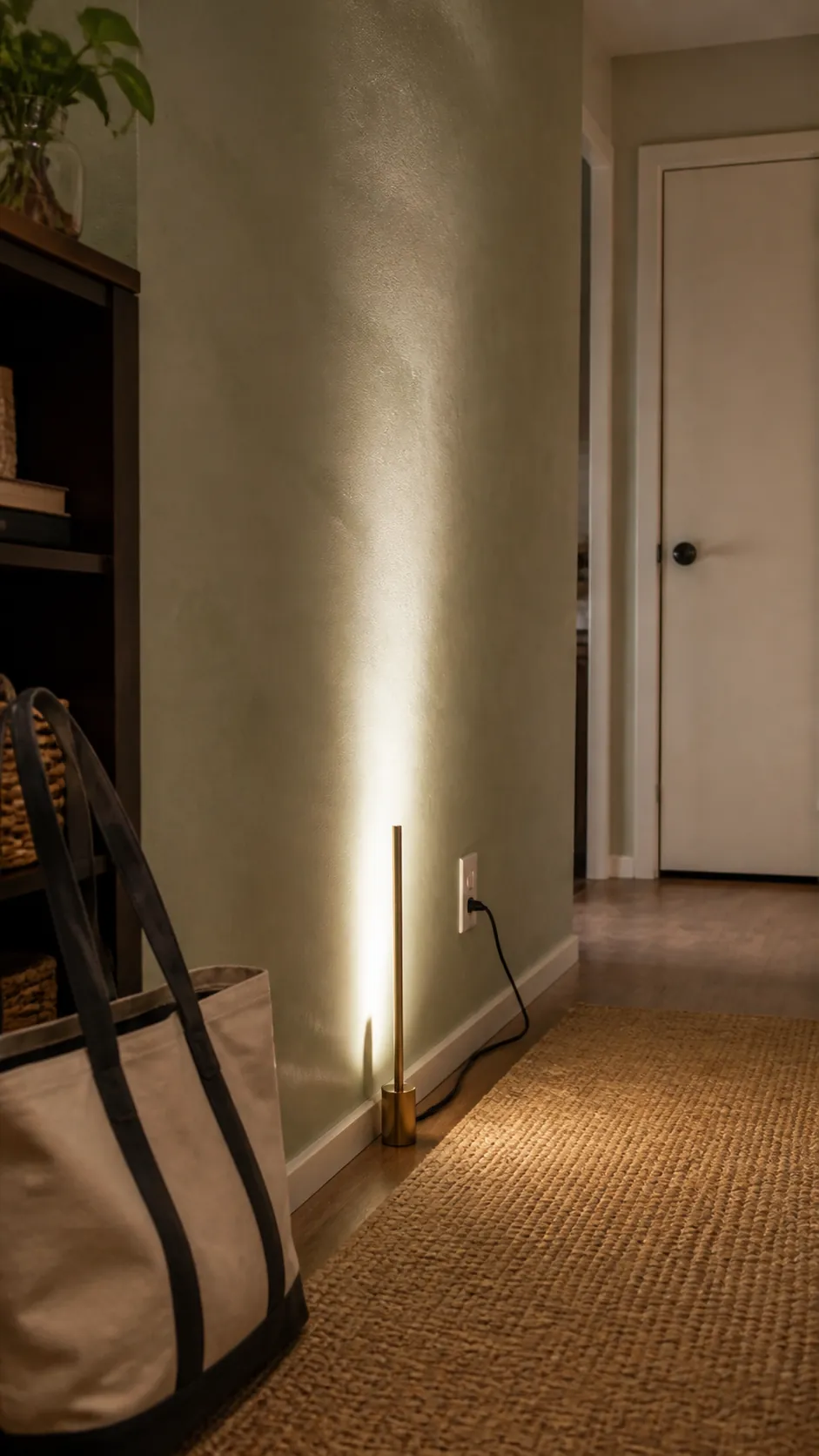
Wash a Blank Wall With a Narrow Floor Light
A narrow floor uplight placed close to a blank wall makes the wall itself carry the ambient glow. Keep the beam grazing the surface so it reveals a subtle limewash texture rather than producing a bright hotspot. This approach visually stretches the corner upward and adds depth behind compact furniture.
Use a warm-neutral bulb that renders the wall color accurately instead of turning cream paint yellow. Because the fixture is visually quiet, it works in a passage corner where a wide shade would be bumped.
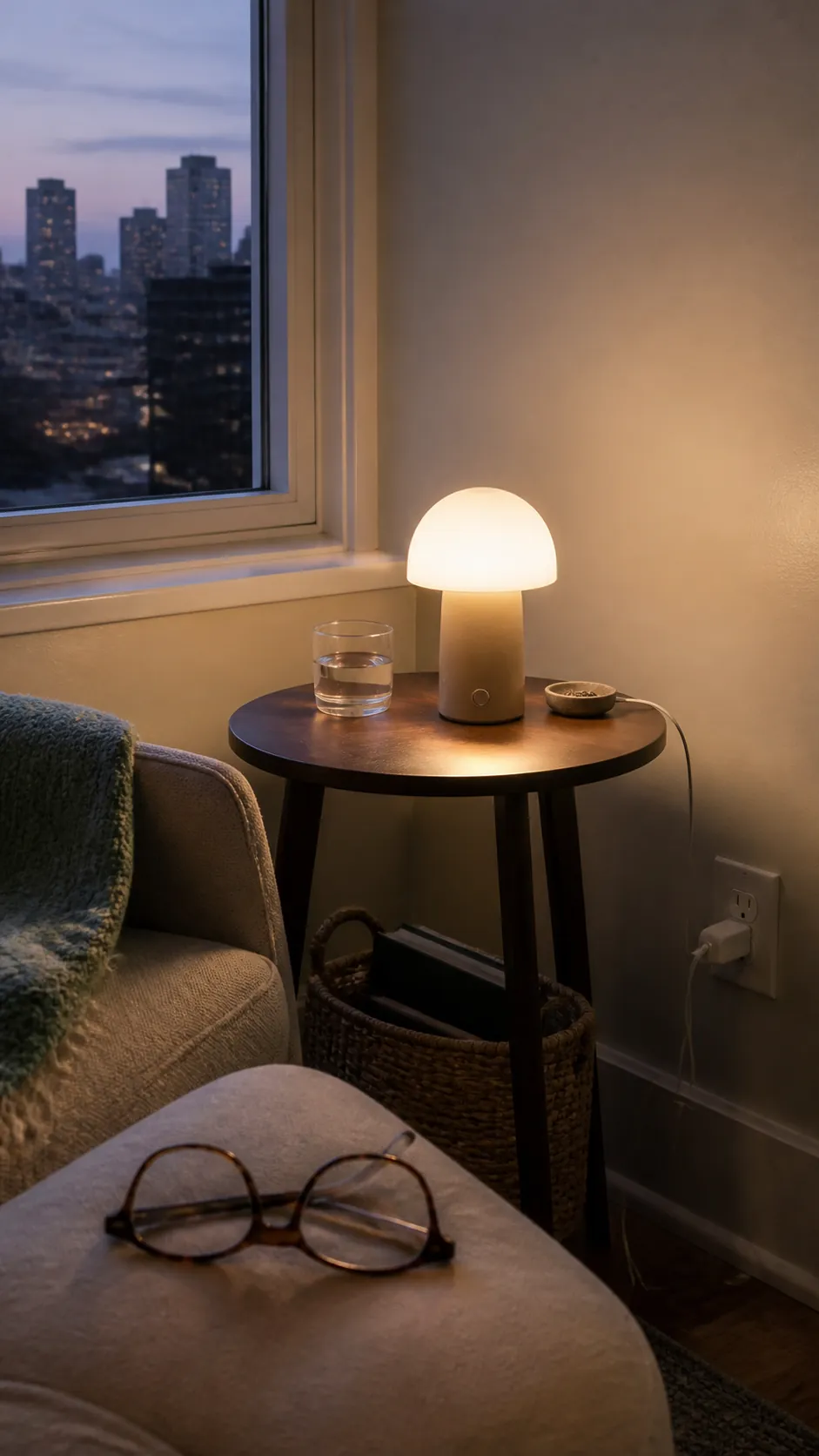
Add a Cordless Lamp to a Tiny Side Table
A rechargeable cordless lamp brings useful light to a corner where an outlet or trailing cable would be inconvenient. Choose a stable weighted base and a shade that directs light downward onto the tabletop.
It is ideal for a narrow drink table, window ledge, or the shallow shelf beside a chair. Treat it as supplemental light and recharge it on a routine rather than expecting a small battery lamp to illuminate the entire room. The result is a flexible cozy lighting layer that can move from reading corner to dinner table.
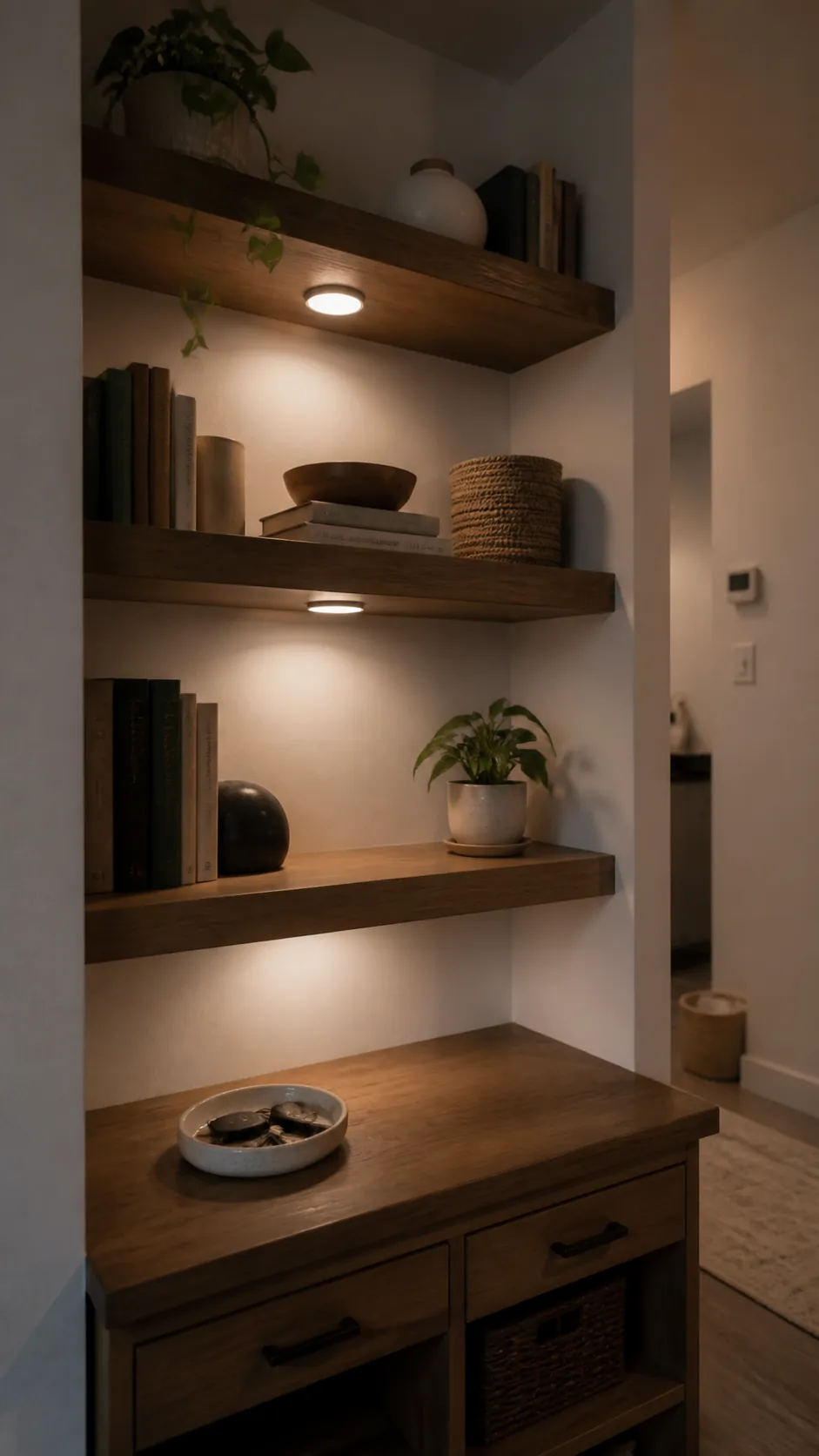
Hide Puck Lights Under Deep Shelves
Small puck lights solve the shadow that the shelf above casts onto books and objects below. Place each light near the front underside edge, not tight against the back panel, so the beam reaches the display instead of making a bright circle on the wall. Even spacing looks calmer than squeezing a puck beneath every object.
For a rental shelf, removable mounting discs make battery replacement easier and reduce damage. Warm dimmable pucks create shelf lighting that reads as a deliberate accent rather than a row of utility dots.
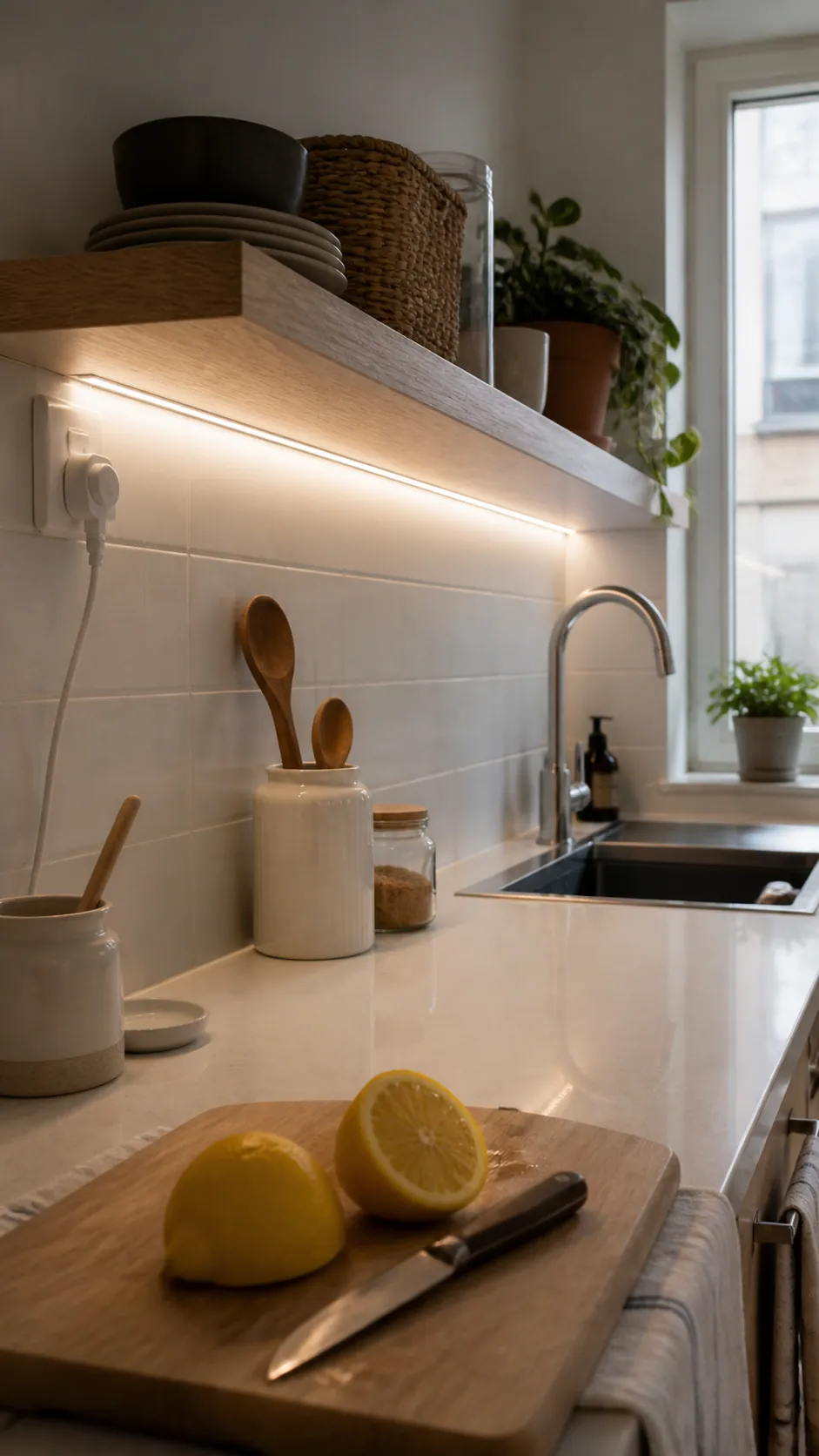
Run a Diffused LED Strip Beneath a Shelf
An LED strip can create a clean line of small space lighting when the individual diodes are hidden inside a diffuser channel. Mount the channel behind the shelf’s front lip so seated viewers see the glow but not the source.
Measure the run first, use the manufacturer’s approved cut points, and keep the power lead on the side closest to an outlet. A continuous warm-white line works better than multicolor effects for everyday interior lighting. The gentle downward wash makes a shelf useful as a landing zone while adding depth after dark.
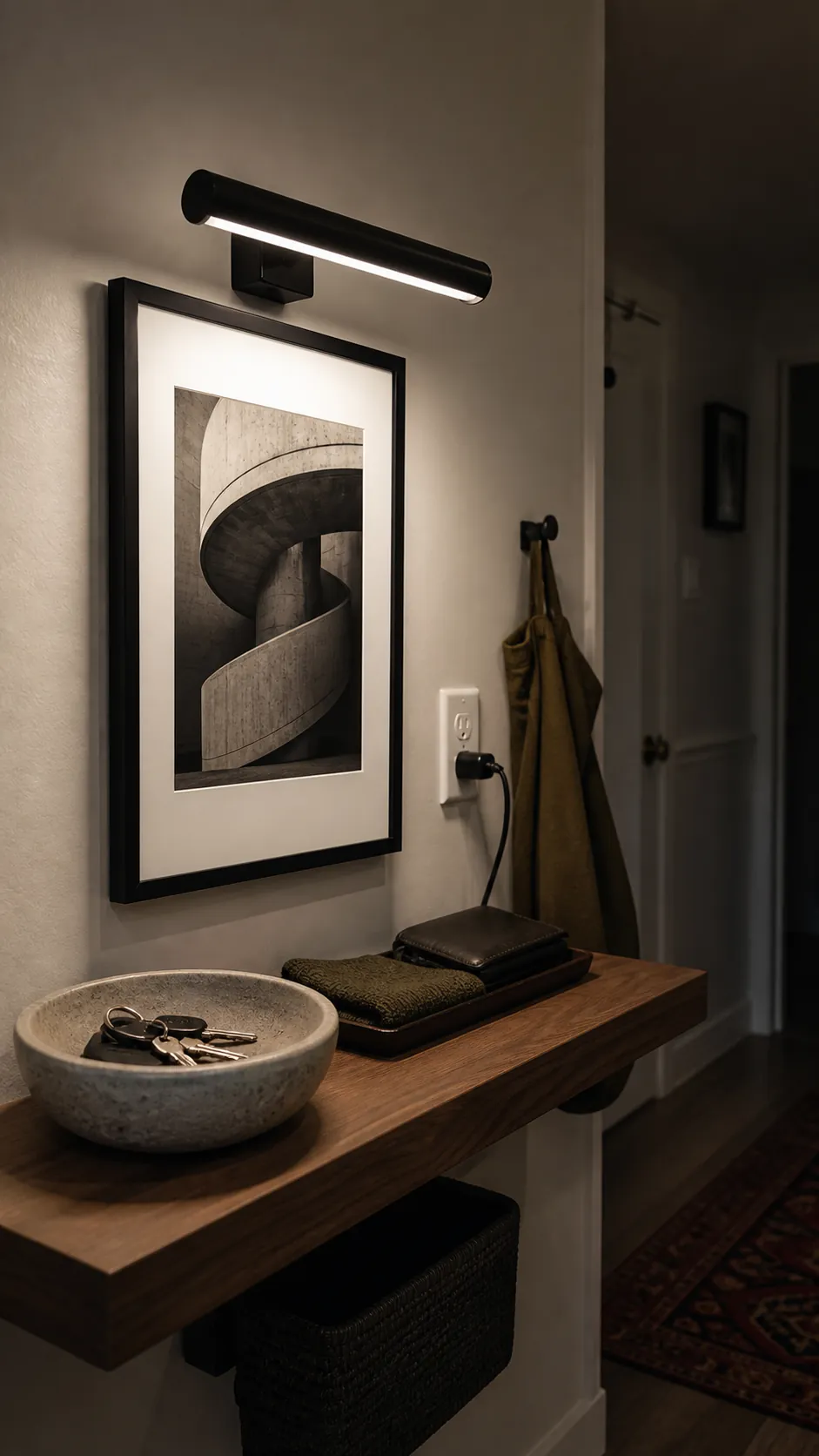
Give One Meaningful Print a Picture Light
A slim picture light can turn a shelf vignette into a focal point without filling the surface with another lamp. Aim it at one small black-and-white architecture photograph rather than trying to illuminate an entire gallery arrangement. The beam should land inside the print edges and avoid reflecting directly off the glazing.
A rechargeable model keeps the wall free from visible cords, although its battery needs regular charging. This focused accent layer draws the eye upward and makes the room feel composed rather than cluttered.
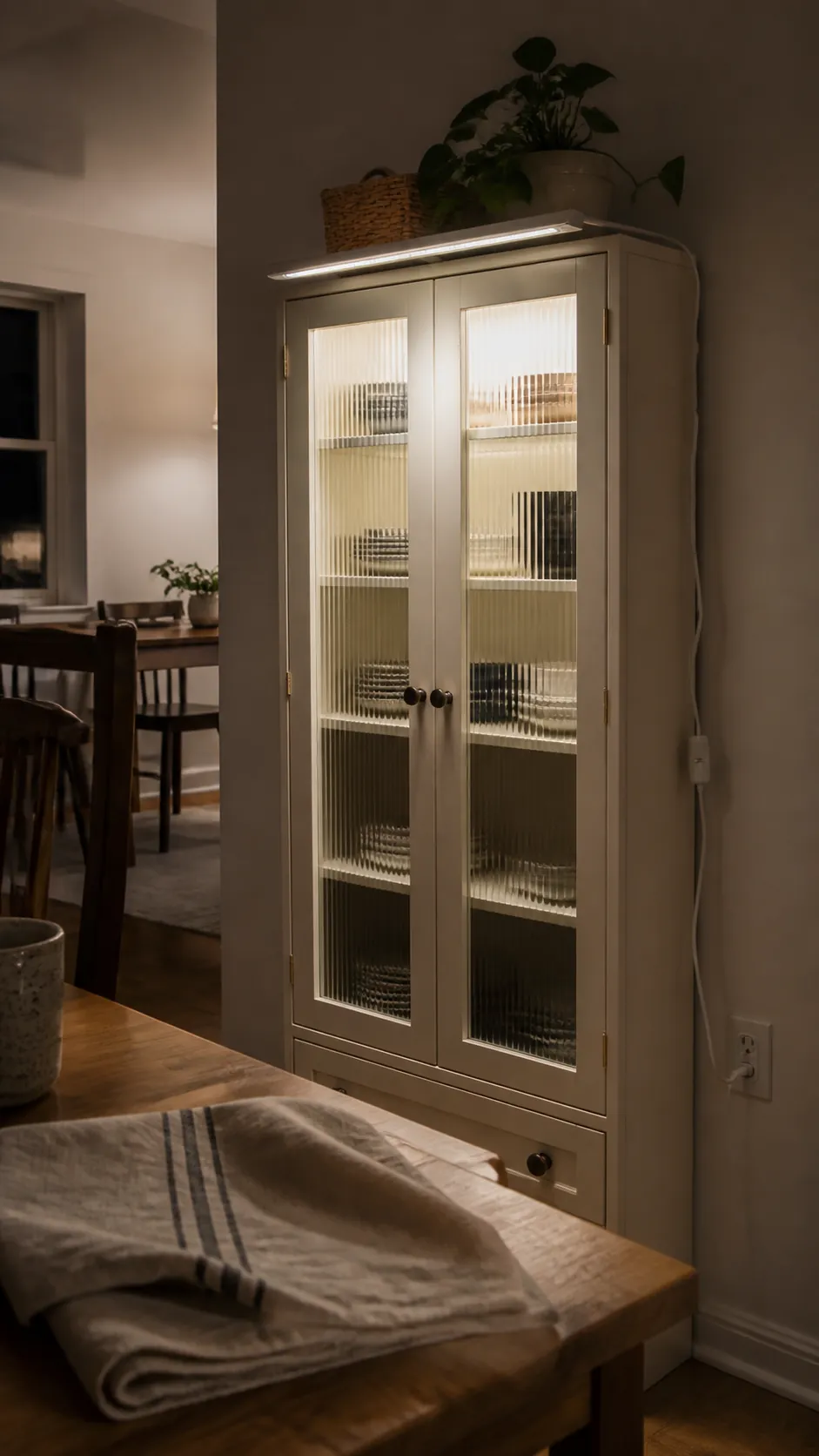
Light a Glass-Front Cabinet From the Top
One concealed light at the top of a glass-front cabinet can reveal stored dishes without turning every shelf into a display case. Use a soft, diffused source and let the light fall through the shelves naturally.
Clear glassware, matte pottery, and ordinary spacing create more sparkle and shadow than an overcrowded cabinet. Keep labels and loose packaging in opaque storage elsewhere so the illuminated cabinet stays visually restful. The glow adds shelf lighting and low-level ambient light at the same time.
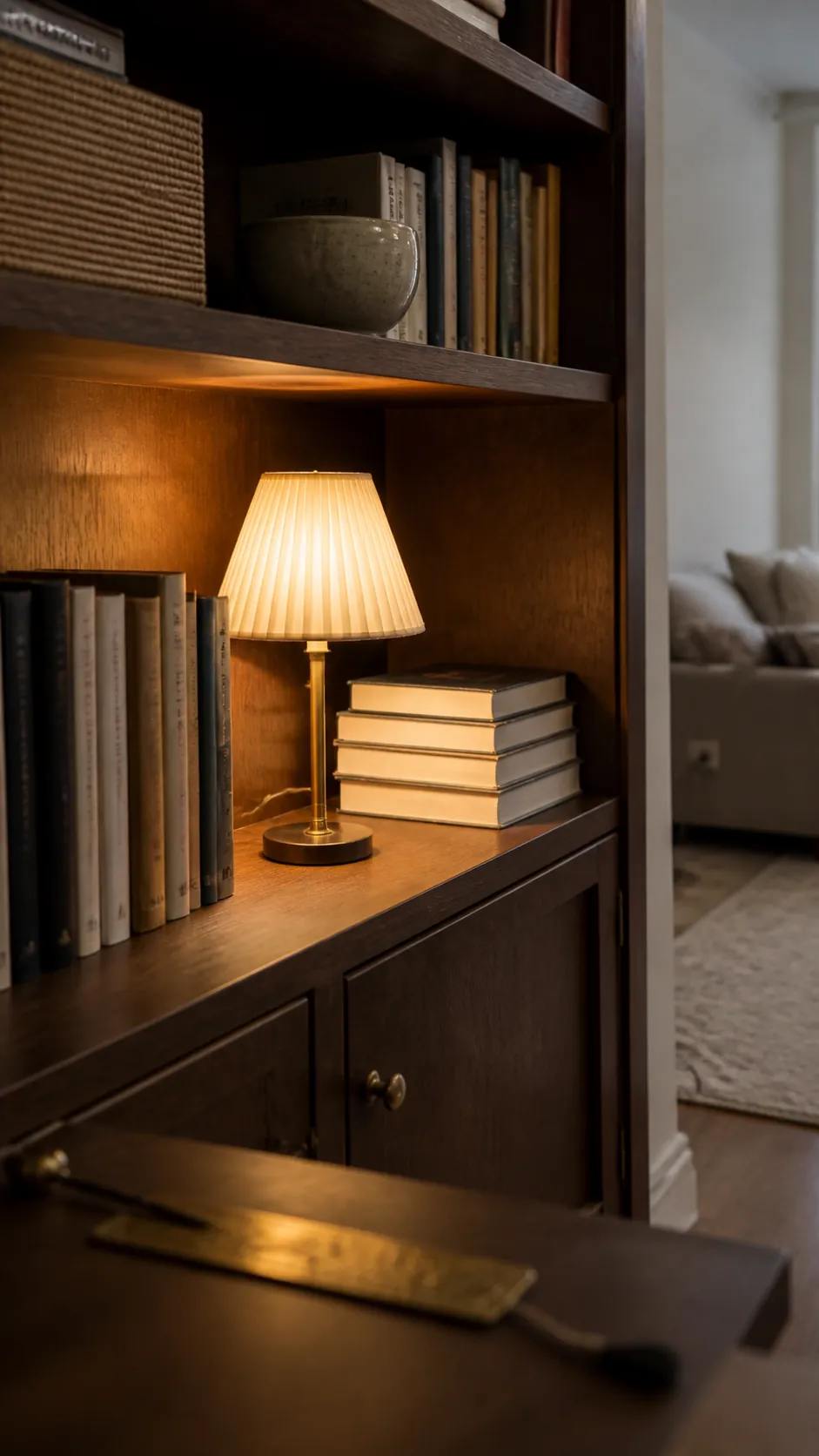
Place a Mini Lamp Inside a Bookcase Bay
A miniature shaded lamp gives a wide bookcase one warm pause among rows of spines. Set it in a bay with enough headroom, beside a short stack of books and away from paper touching the shade. A low-output LED is appropriate because this is accent lighting, not the room’s reading source.
Hide the cord along the back corner with removable clips so it does not snake across the shelf. The small pool of light makes the bookcase feel deeper and more personal after sunset.
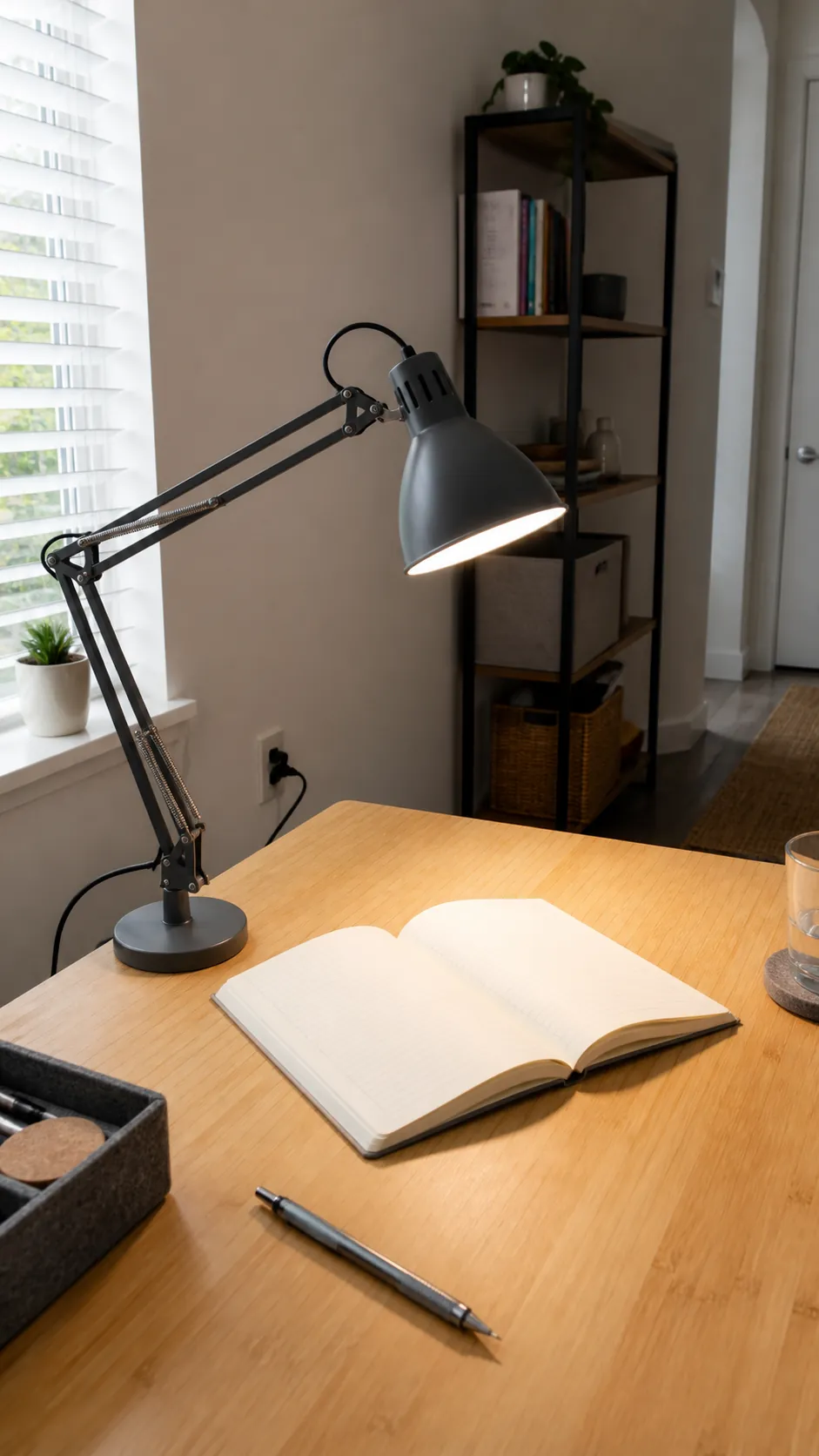
Aim an Adjustable Desk Lamp Across the Work Surface
Good desk lighting should illuminate the task without shining into your eyes or casting your writing hand’s shadow across the page. Right-handed users can start with the lamp on the left, while left-handed users can reverse the setup.
An articulated arm lets the shade sit above the work without consuming the center of a small desk. Choose a broad, diffused beam for paperwork and crafts rather than a tight spotlight. This focused task lighting lets the rest of the room stay comfortably dimmer.
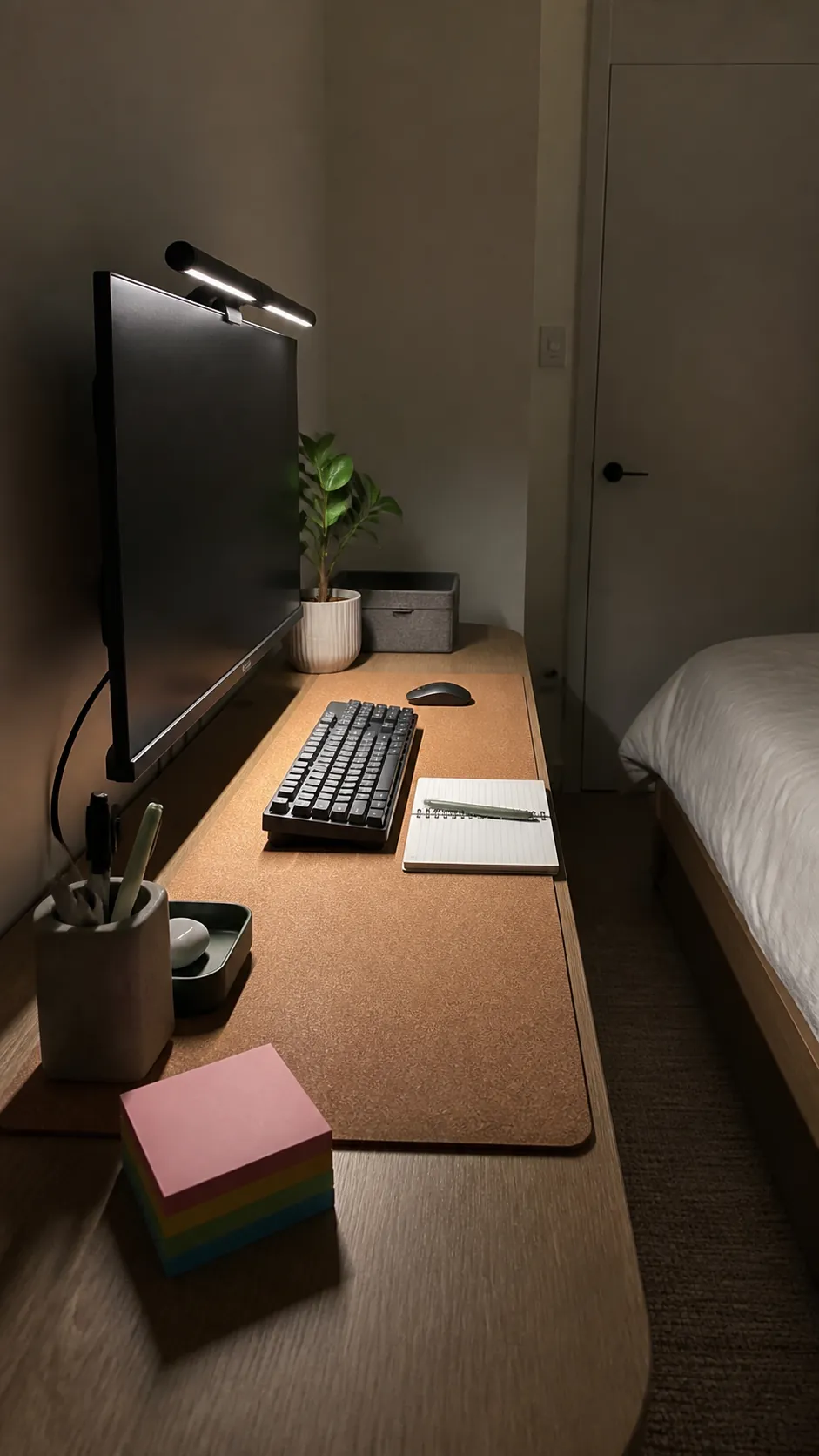
Use a Monitor Light Bar on a Shallow Desk
A monitor light bar is useful when a shallow desk has no spare footprint for a conventional base. It should cast light onto the keyboard and notes while shielding the screen from glare. Check that the clamp fits the monitor shape and does not block a webcam or ventilation slots.
Keep screen brightness and the surrounding ambient lighting reasonably balanced to avoid a bright rectangle floating in darkness. The setup looks tidy because the source sits within the monitor’s existing silhouette.
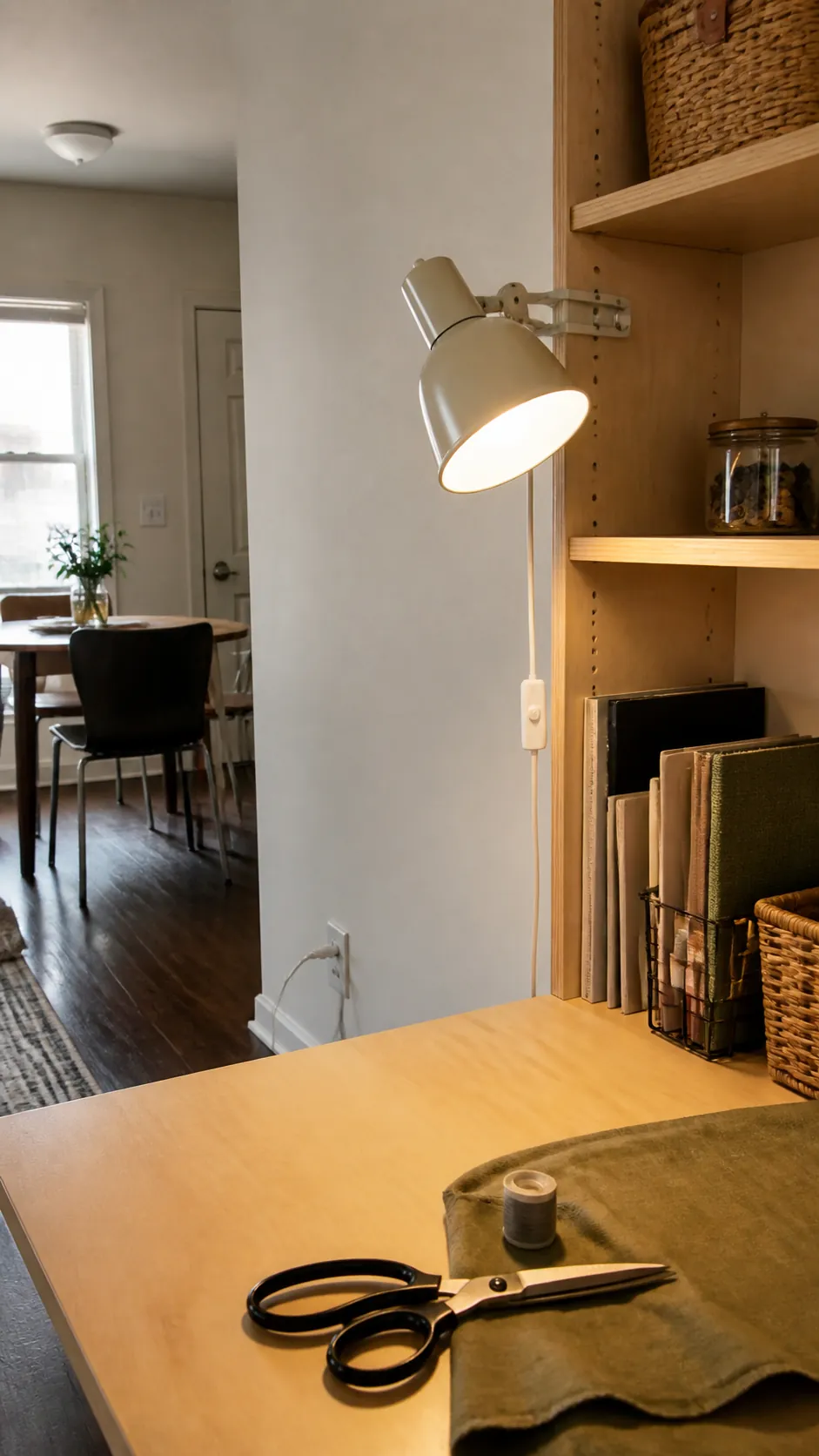
Clamp a Lamp to the Side of a Shelf
A clamp lamp borrows structure from a shelf, freeing a crowded desk or nightstand. Attach it only to a stable edge within the clamp’s stated thickness range and add a protective pad if the finish is delicate.
Point the shade toward the work zone, then secure the cord so adjusting the arm cannot pull it loose. A compact metal shade keeps the beam controlled and prevents spill into a sleeping area. This is one of the most adaptable apartment lighting moves because the fixture can relocate as the room changes.
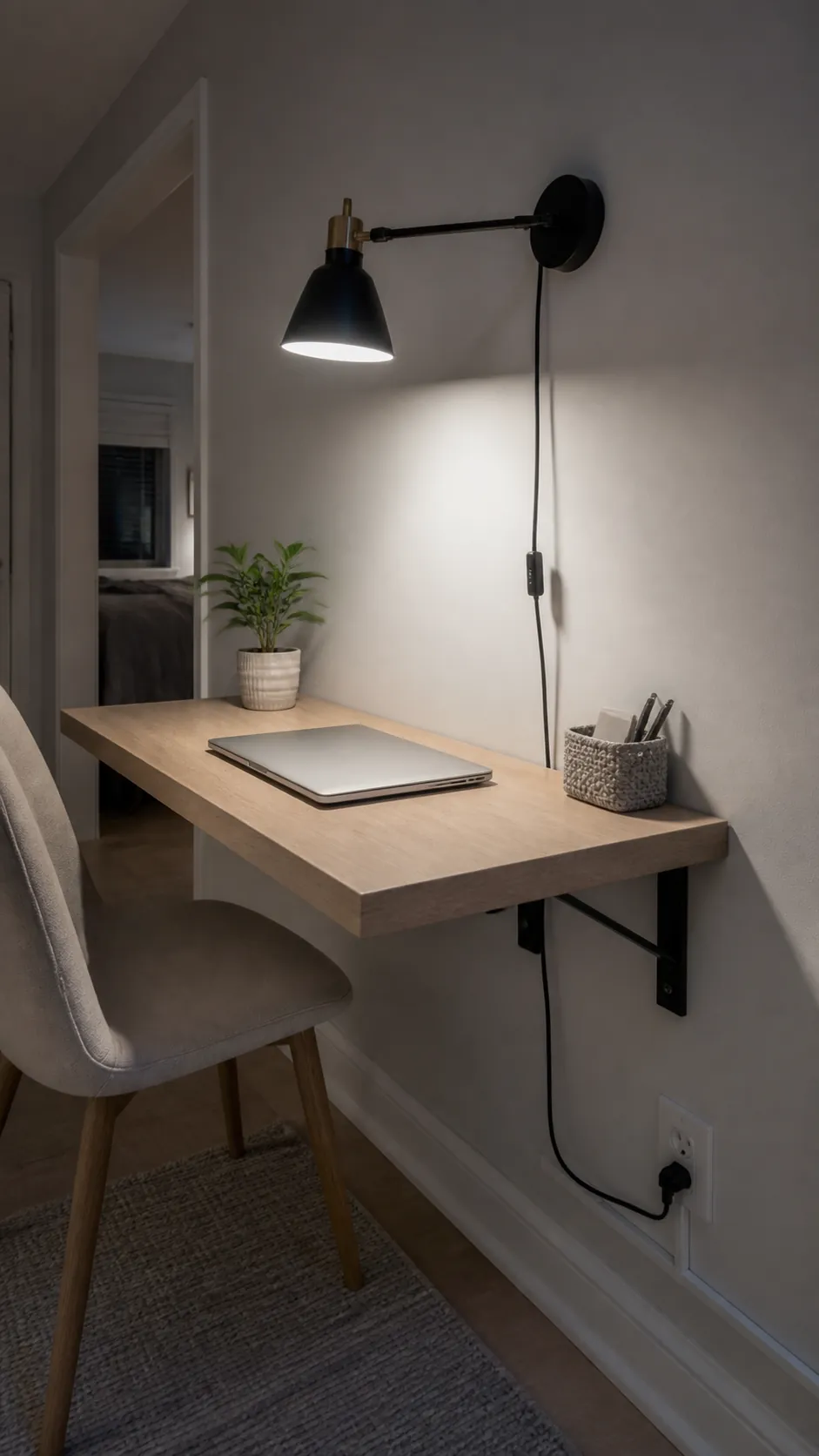
Mount a Plug-In Sconce Above a Floating Desk
A plug-in swing-arm sconce clears the entire desktop and makes a shallow wall-mounted desk practical. Install it to one side so the arm reaches the keyboard without sitting directly above the user’s head. The cord can follow a straight vertical route in a paintable surface channel instead of dangling diagonally.
Choose a shade with a closed or diffused back to prevent a sharp halo on the wall. The result feels built in but remains reversible for a renter.
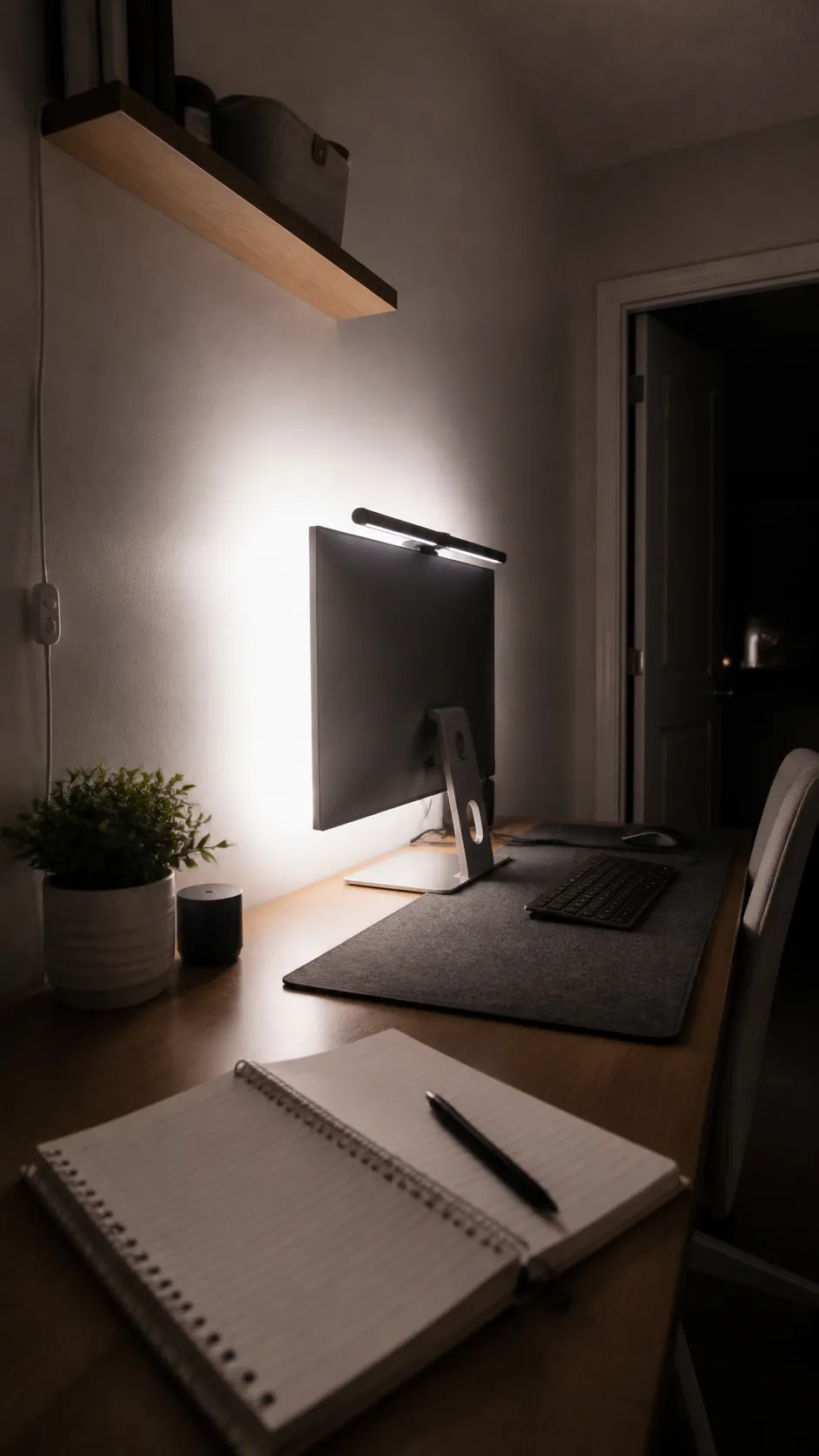
Add Bias Lighting Behind the Monitor
A restrained backlight behind a monitor reduces the harsh contrast between the screen and a dark wall. Use a neutral white strip, keep it hidden from normal viewing angles, and match its brightness to the room rather than making it decorative neon.
The wall should receive an even halo with no visible diode dots. Bias lighting does not replace a desk lamp because it cannot illuminate notes or hands. Used together, the two sources create a more comfortable and layered home-office setup.
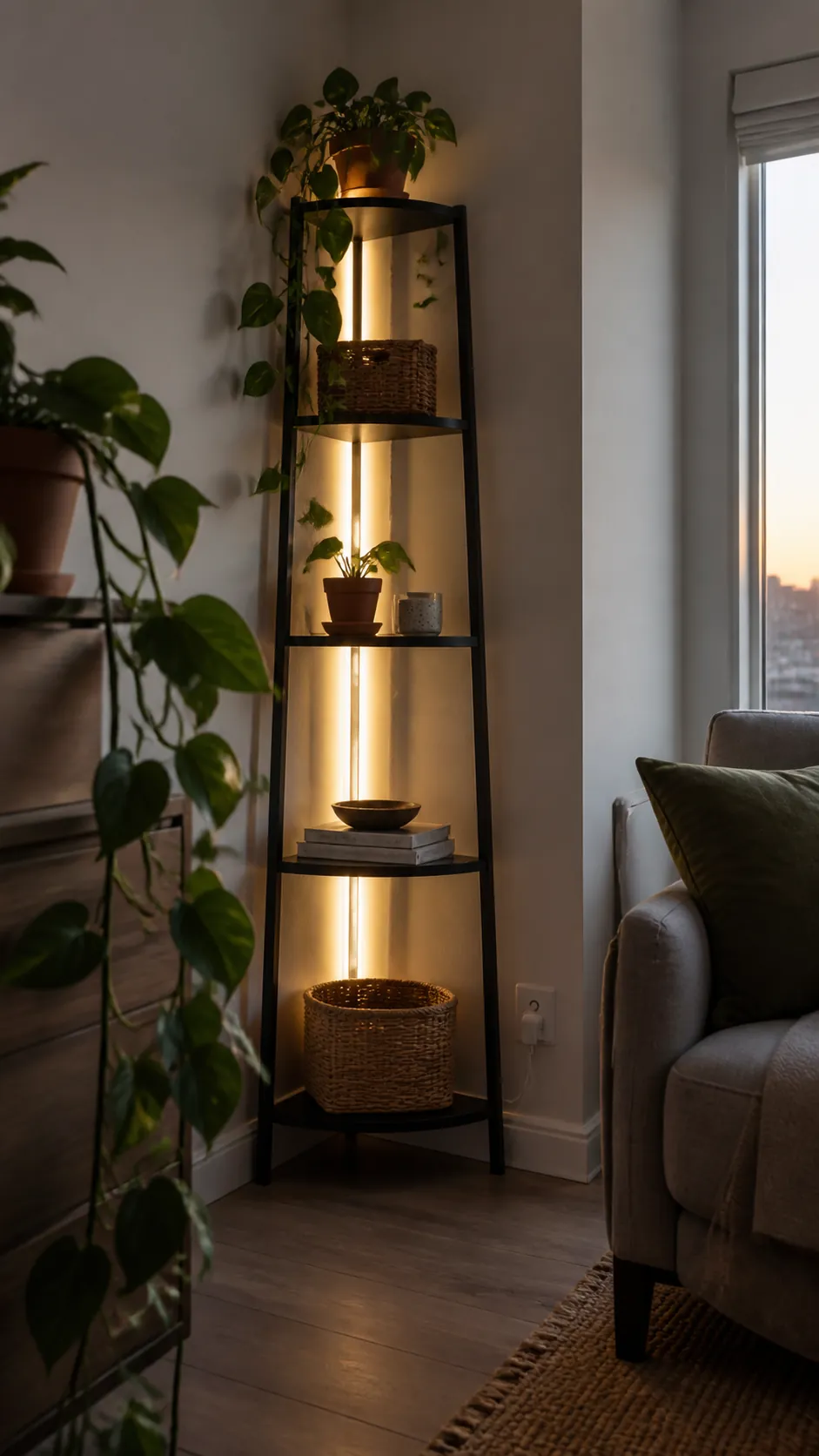
Turn a Corner Shelf Into a Vertical Glow
A tall corner shelf can carry several low-intensity light points upward without adding another floor lamp. Place one concealed strip along the inner rear edge or use a few carefully spaced cordless lights on alternate levels. Leave empty space around baskets, books, and a trailing plant so the light has surfaces to reach.
Avoid illuminating every shelf equally; a gentle rhythm keeps the unit from resembling a retail display. The vertical glow makes the corner feel taller while preserving valuable floor area.
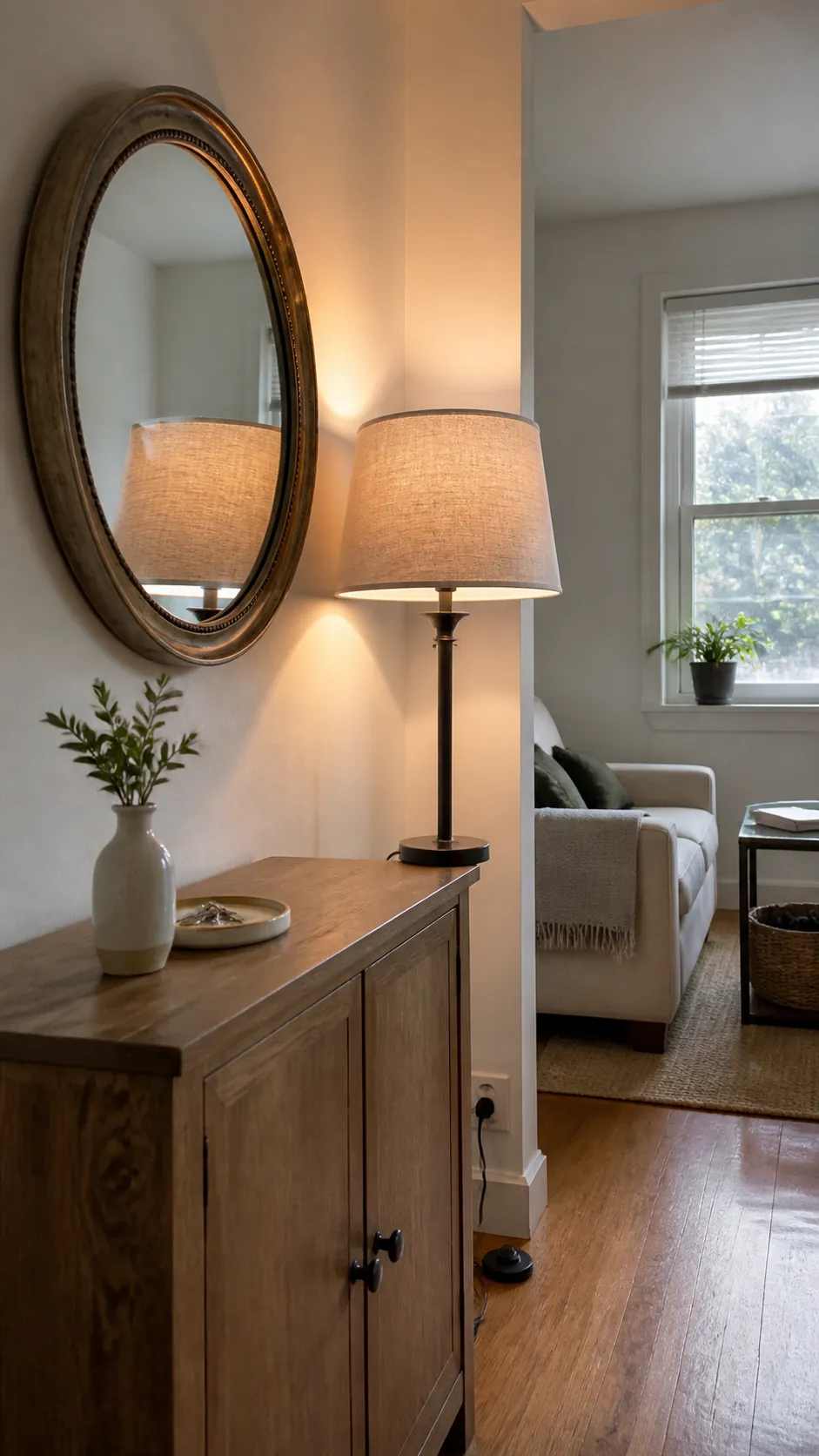
Bounce Lamp Light With a Carefully Placed Mirror
A mirror can extend useful light when it reflects the glow of a shaded lamp rather than the bare bulb. Test the view from the sofa, desk, and doorway before fixing the mirror in place.
A narrow rounded mirror opposite a corner lamp can brighten the adjacent wall and add perceived depth. If the reflection is glaring, shift either object sideways instead of choosing a stronger bulb. This small adjustment uses existing light more efficiently without adding another cord.
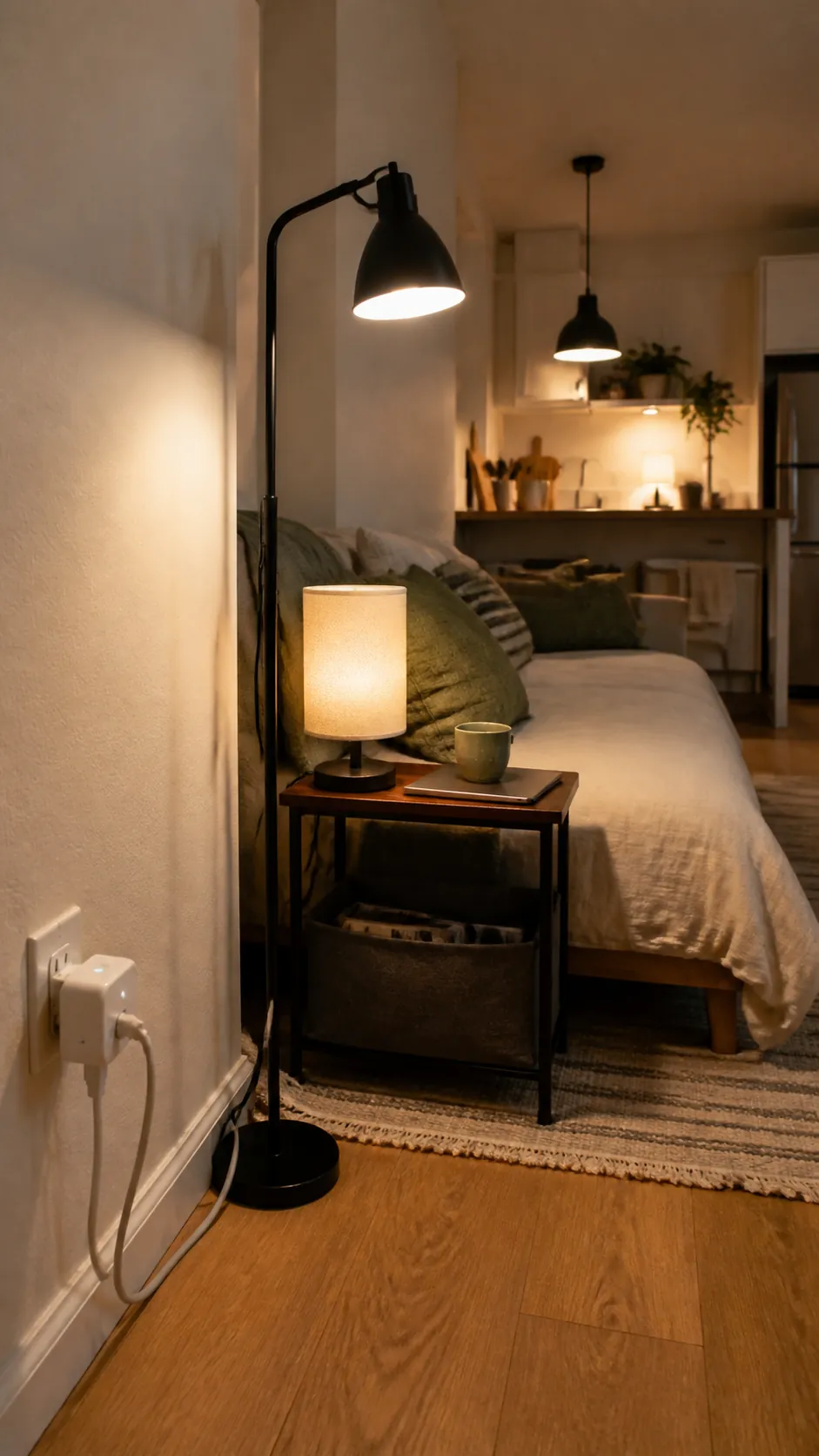
Put Scattered Lamps on One Smart Control
Several lamps are easier to live with when they respond together instead of requiring a lap around the room every evening. Use compatible smart plugs or switched outlets and group only the fixtures that should share a routine. Keep task lamps independently controllable so a work surface can stay bright after the ambient lights dim.
Physical switches should remain accessible for guests and for troubleshooting. One command can then turn dark corners, shelves, and desk backlighting into a coherent evening scene.
Choose Warm Dimmable Bulbs With Consistent Color
Mismatched bulbs can make a small room look patchy even when every fixture is attractive. Select compatible dimmable LEDs with similar color temperature and good color rendering for the lamps visible from one zone.
Warm white suits relaxed evening light, while the desk can use a slightly clearer task source if it does not clash. Check fixture wattage limits and dimmer compatibility rather than judging brightness by wattage alone. Consistency allows multiple small lights to read as one calm plan.
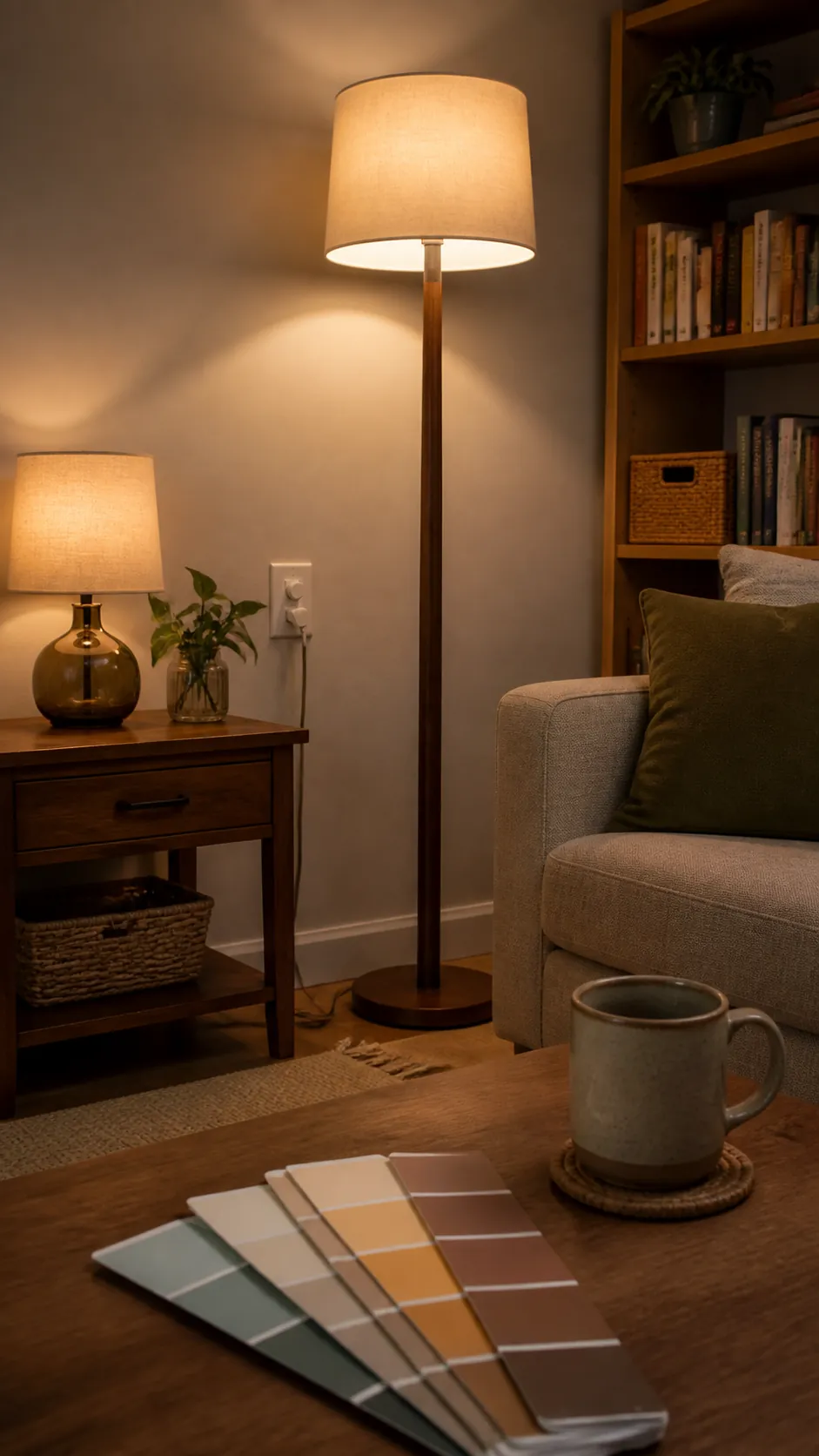
Route Cords as Part of the Lighting Plan
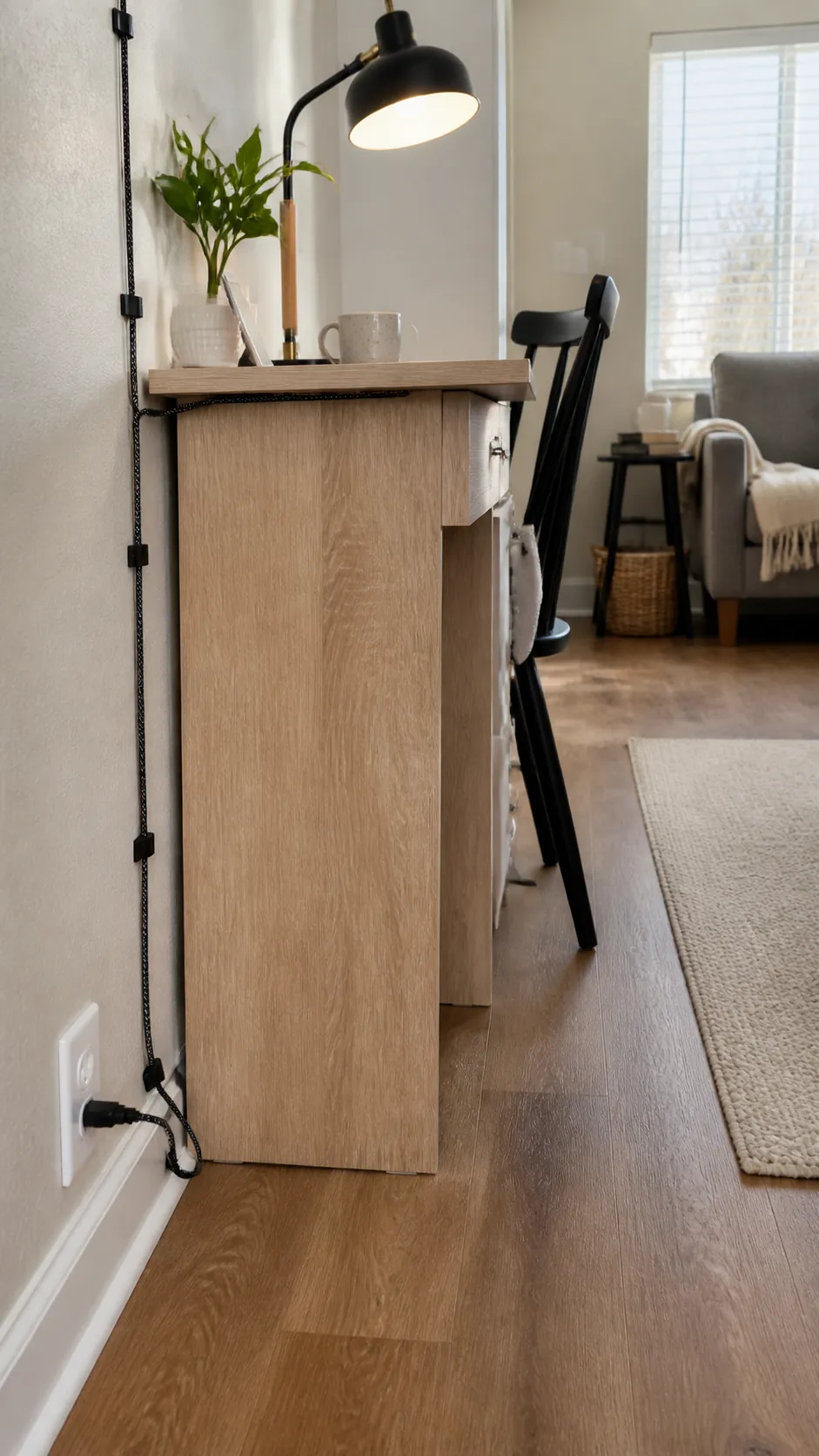
A clever lamp loses its appeal when an exposed cable crosses a walkway or tangles under the desk. Place fixtures near usable outlets, follow furniture edges, and use removable clips or an approved cord cover on open wall runs. Never hide damaged cords under rugs or pinch them behind heavy furniture.
Bundle only the slack that needs controlling and leave plugs ventilated and reachable. Orderly cable routing makes renter-friendly lighting feel intentional and keeps a tiny room safer.
Build One Three-Layer Micro-Zone
The strongest small home lighting plan combines ambient, task, and accent light around one activity instead of trying to brighten every inch equally. A reading corner might use a ceiling-bouncing floor lamp for ambient glow, an adjustable lamp at the chair for the page, and a small shelf light behind it for depth.
Give each source a separate dimmer or control so the mix can change from cleaning to reading to winding down. Keep the fixture footprints narrow and the color temperature related. When one micro-zone works beautifully, repeat the same logic—not the same fixtures—at the desk or shelves.