
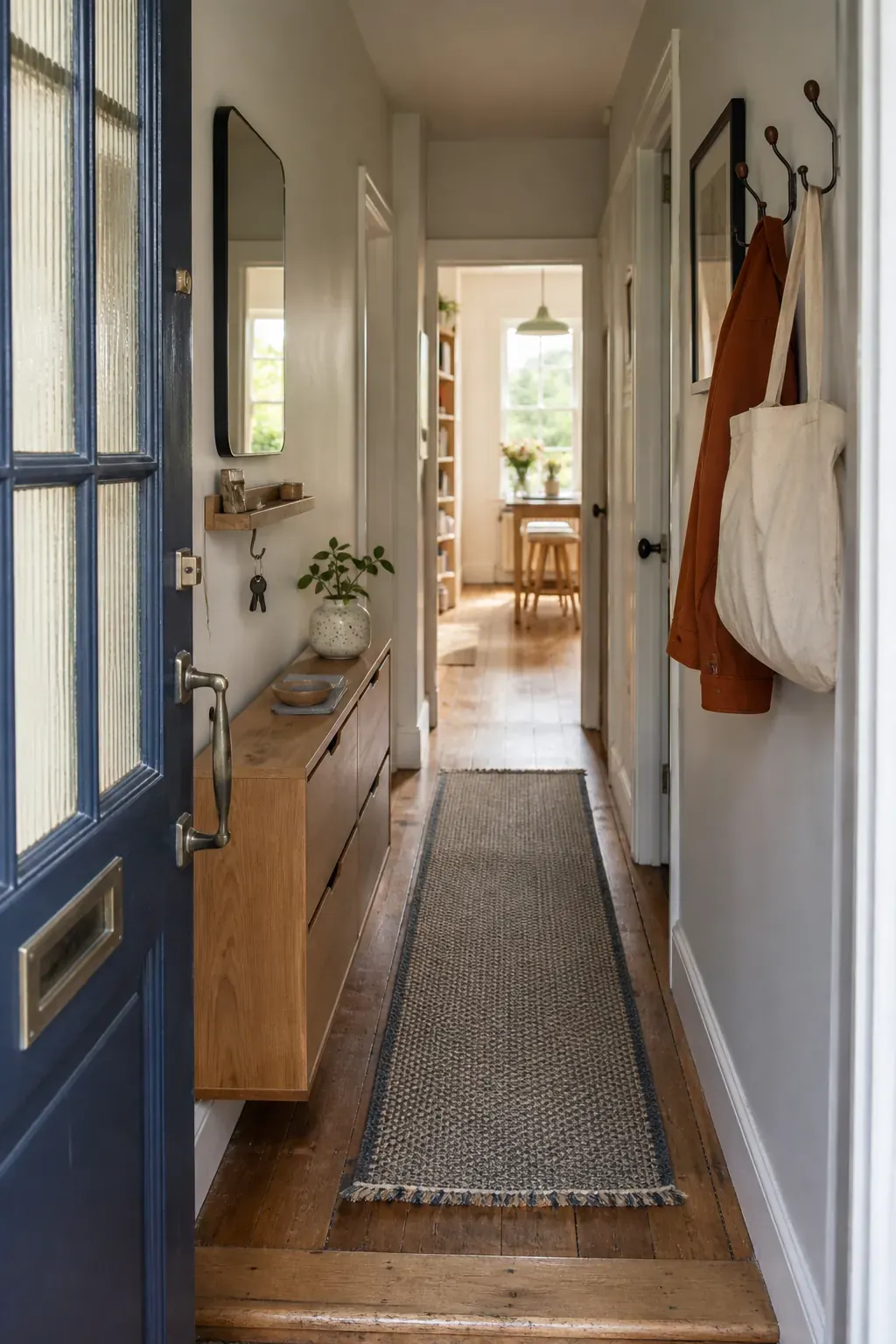
A narrow entryway does not need a full-size console, bench, coat tree, and everyone’s shoes to feel finished. Trying to force all four into a tight passage is usually what makes the space fail. Protect the walking line first, then add one hardworking layer at a time. These 20 narrow entryway decor ideas solve real arrival-zone problems—keys, footwear, bags, dim light, awkward doors, and blank walls—without turning the entrance into an obstacle course.
Start With a Clear Walking Lane
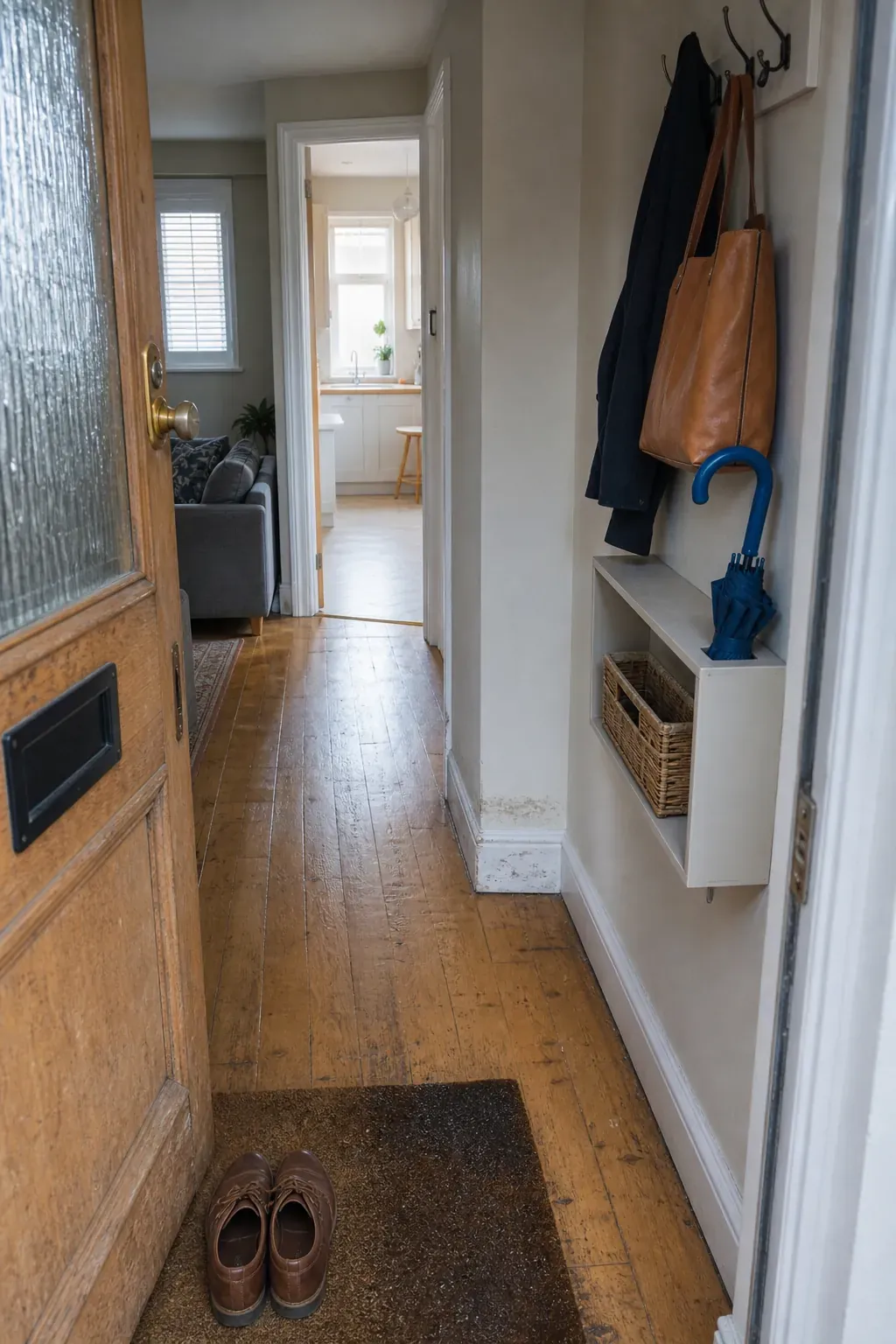
Open the front door fully and trace the route people actually take into the home. Keep that strip free of furniture corners, loose baskets, and rug edges. Use painter’s tape to mark the footprint of a prospective cabinet for a few days. If bags brush it or two people cannot pass comfortably, it is too deep. Empty floor is not wasted space here; it makes every later choice work.
Float a Slim Key Ledge
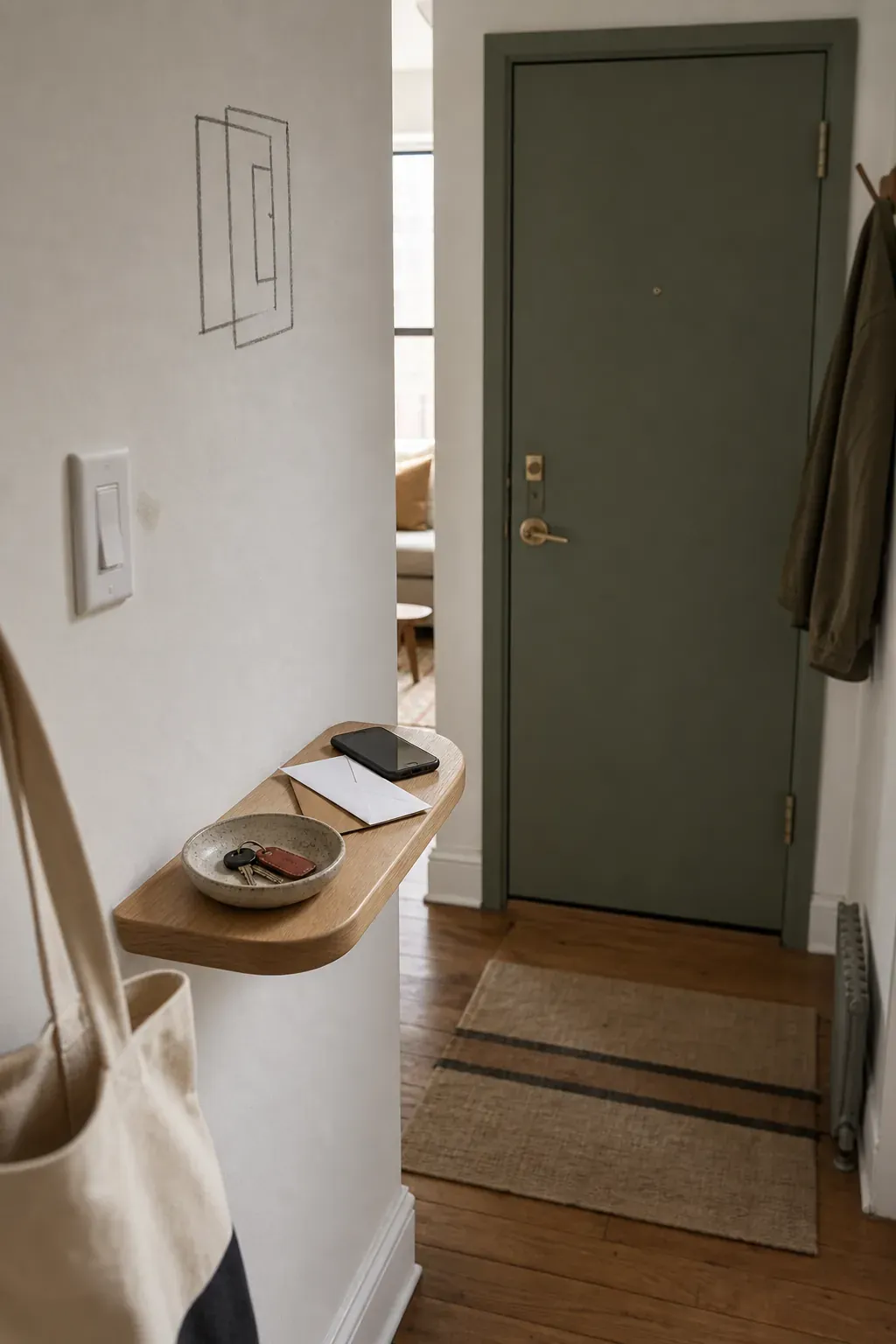
When a shallow console still feels bulky, a wall-mounted ledge creates a landing spot with almost no visual weight. Choose one just deep enough for a small tray, a few letters, and a phone—not deep enough to collect weeks of clutter. Mount it near the latch side so dropping keys becomes automatic. A rounded front edge is friendly in a tight entryway, while concealed brackets and an open floor preserve the hall’s full width.
Choose Tilt-Out Shoe Storage
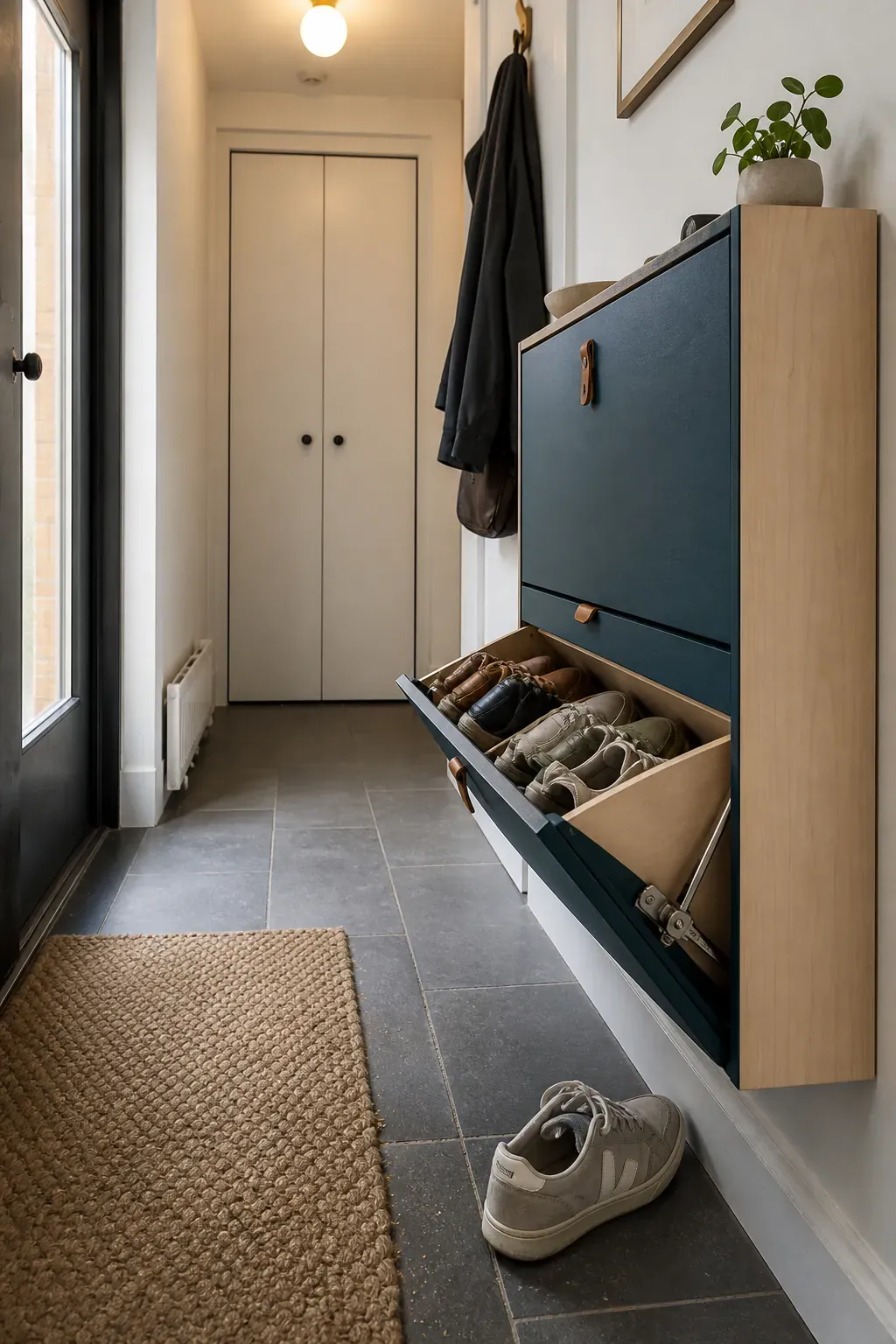
Open shoe racks make a small entrance look busier because every sole, lace, and color remains visible. A shallow tilt-out cabinet stores pairs almost vertically, giving you a cleaner front while using less depth than a dresser. Measure your largest shoes first, and keep only this week’s pairs by the door. Closed storage works when it limits what lives at the entrance, not when it becomes another overfilled cupboard.
Hang Hooks in a Single Orderly Row
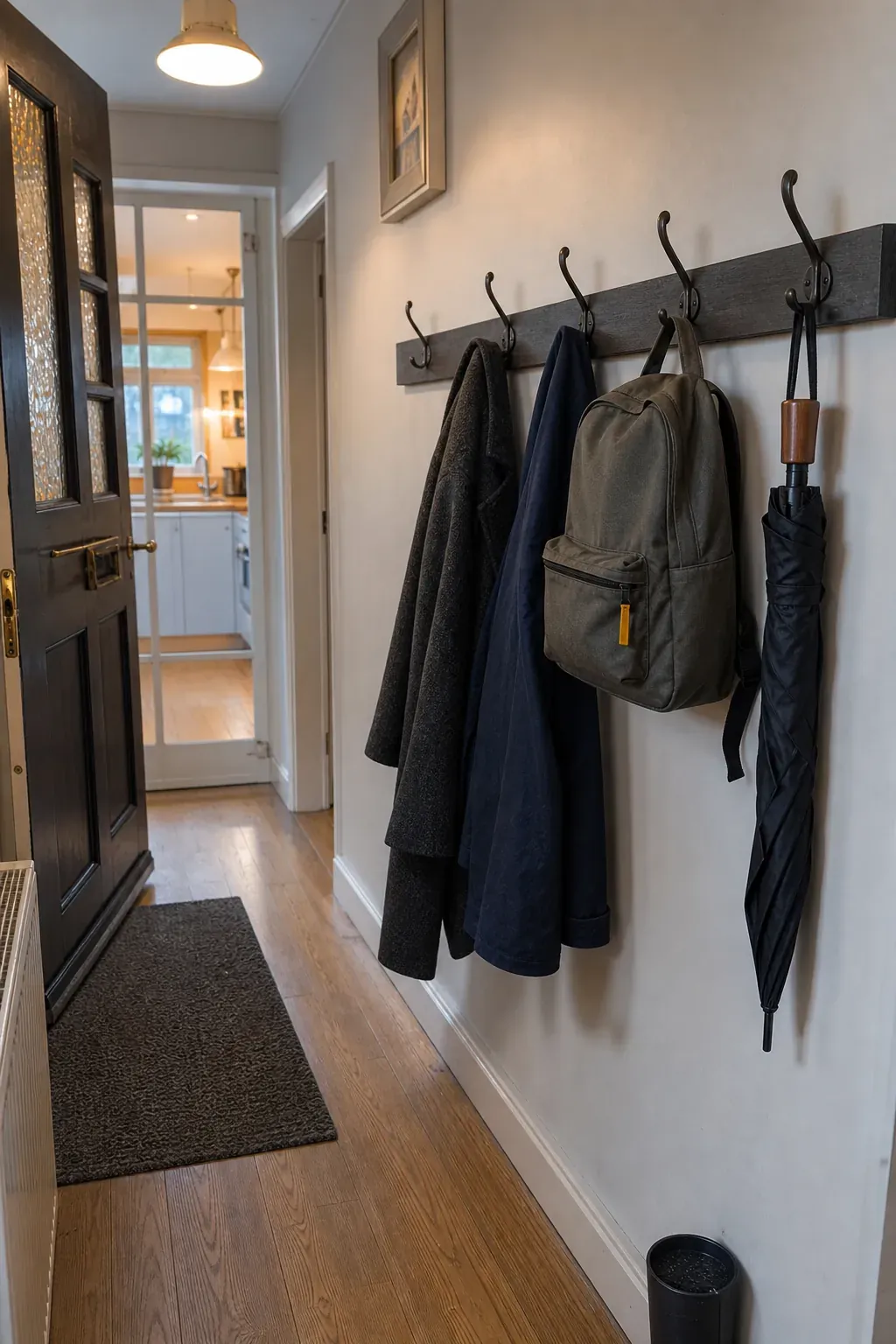
A tall hall tree overwhelms many narrow entrances, but a disciplined row of hooks gives coats and bags a home while preserving the floor. Space hooks so garments do not merge into one bulky mass and keep sleeves clear of the door swing. Add two lower hooks for children rather than lowering the whole row. Limit each person to one current coat and one bag; a painted backing board can protect the wall from wet fabric and scuffs.
Bounce Daylight With a Tall Mirror
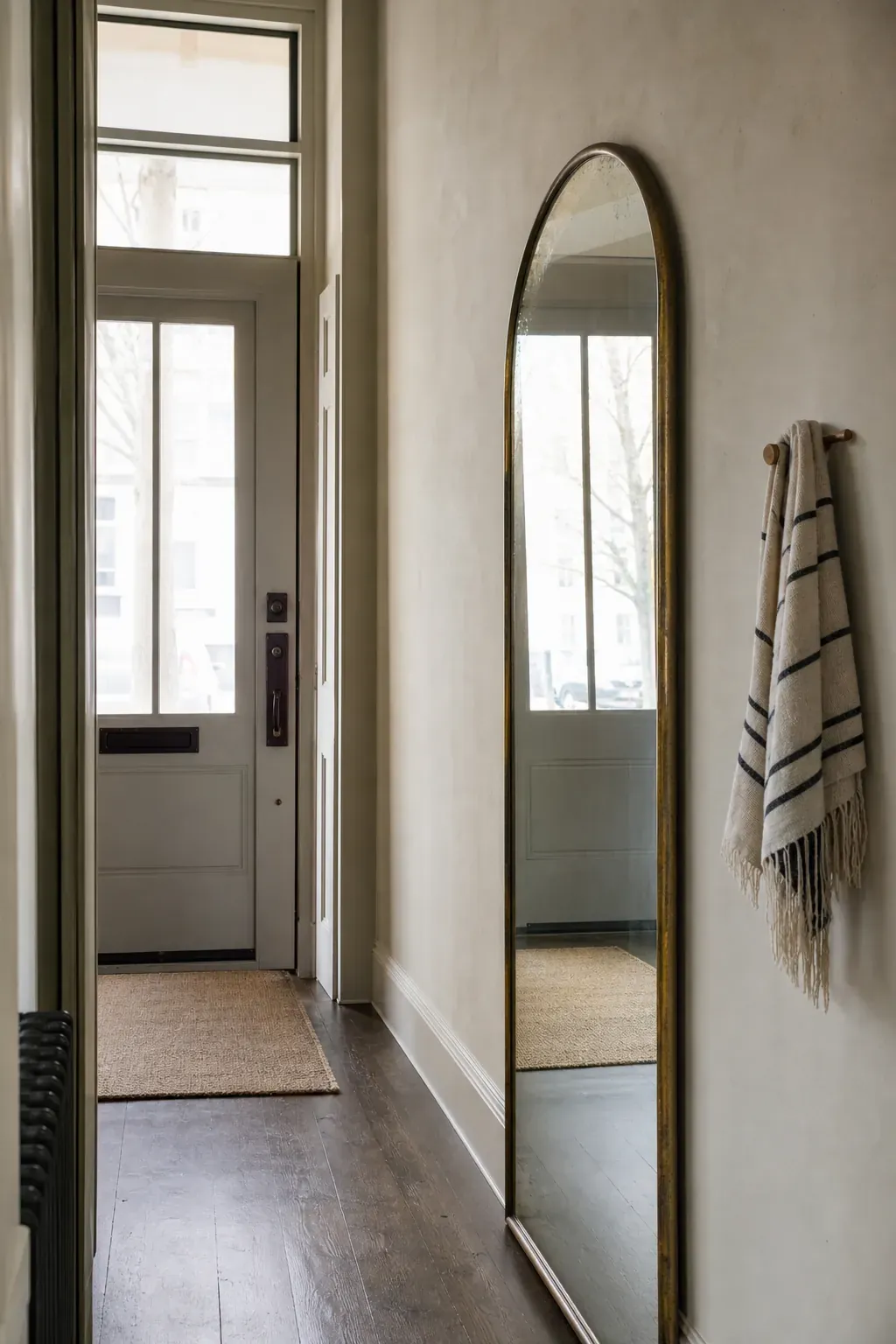
A mirror supports a last check before leaving and carries light farther into a dim passage. Position it to reflect a glazed door, nearby window, or bright adjoining room rather than a heap of coats. A tall narrow shape emphasizes ceiling height and occupies less wall width than a broad round mirror. Secure it properly, keep the frame simple, and allow breathing room around it instead of squeezing it into a busy gallery.
Run One Rug Down the Length
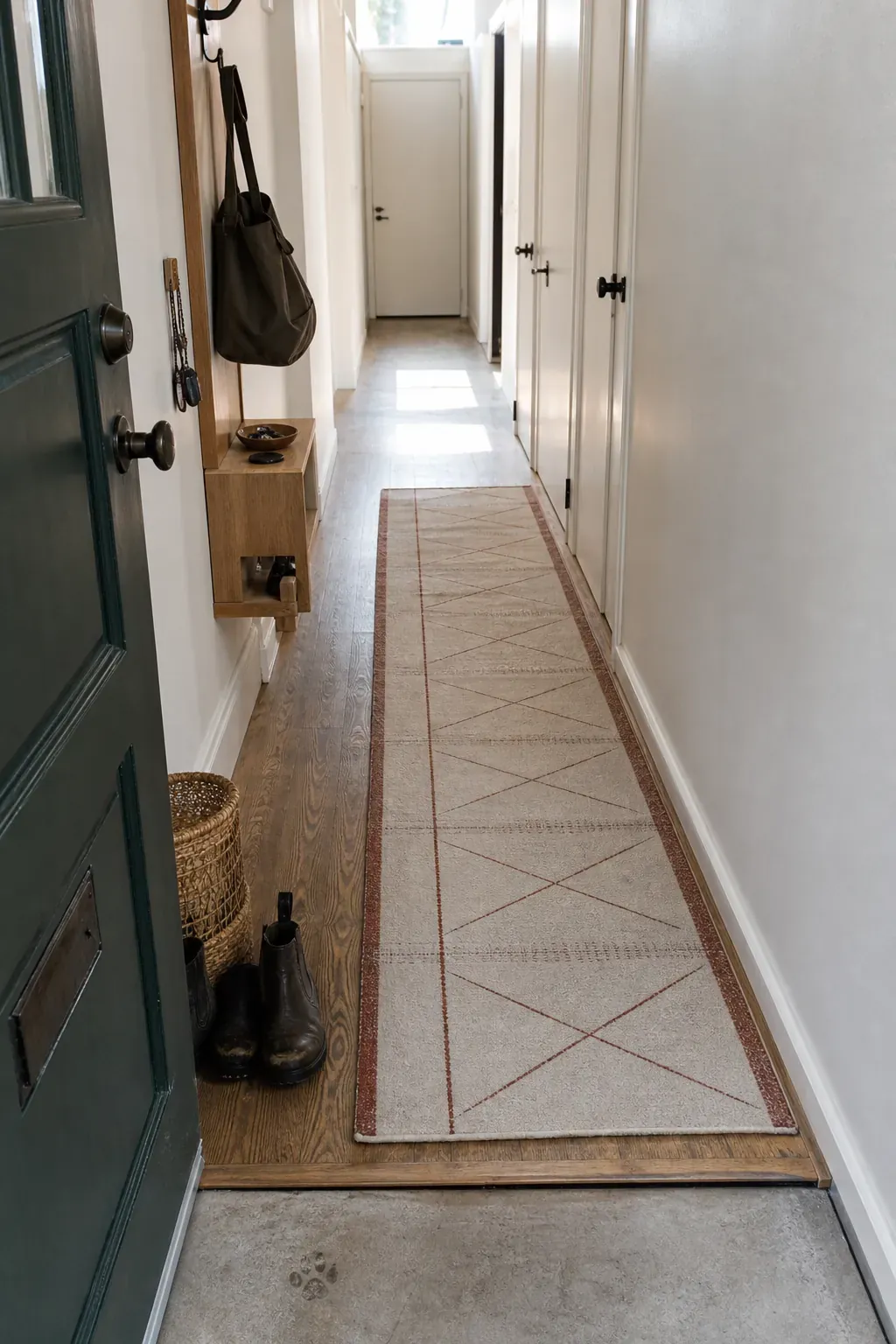
A runner turns an elongated entry into an intentional route, but fit matters more than pattern. Check that the door clears the pile, leave a visible strip of flooring on both sides, and use a non-slip pad. A washable low-profile weave handles wet shoes and grit better than plush wool. Choose a small-scale pattern that disguises marks without creating visual noise, and make certain every edge lies flat.
Build a Recessed Drop Zone
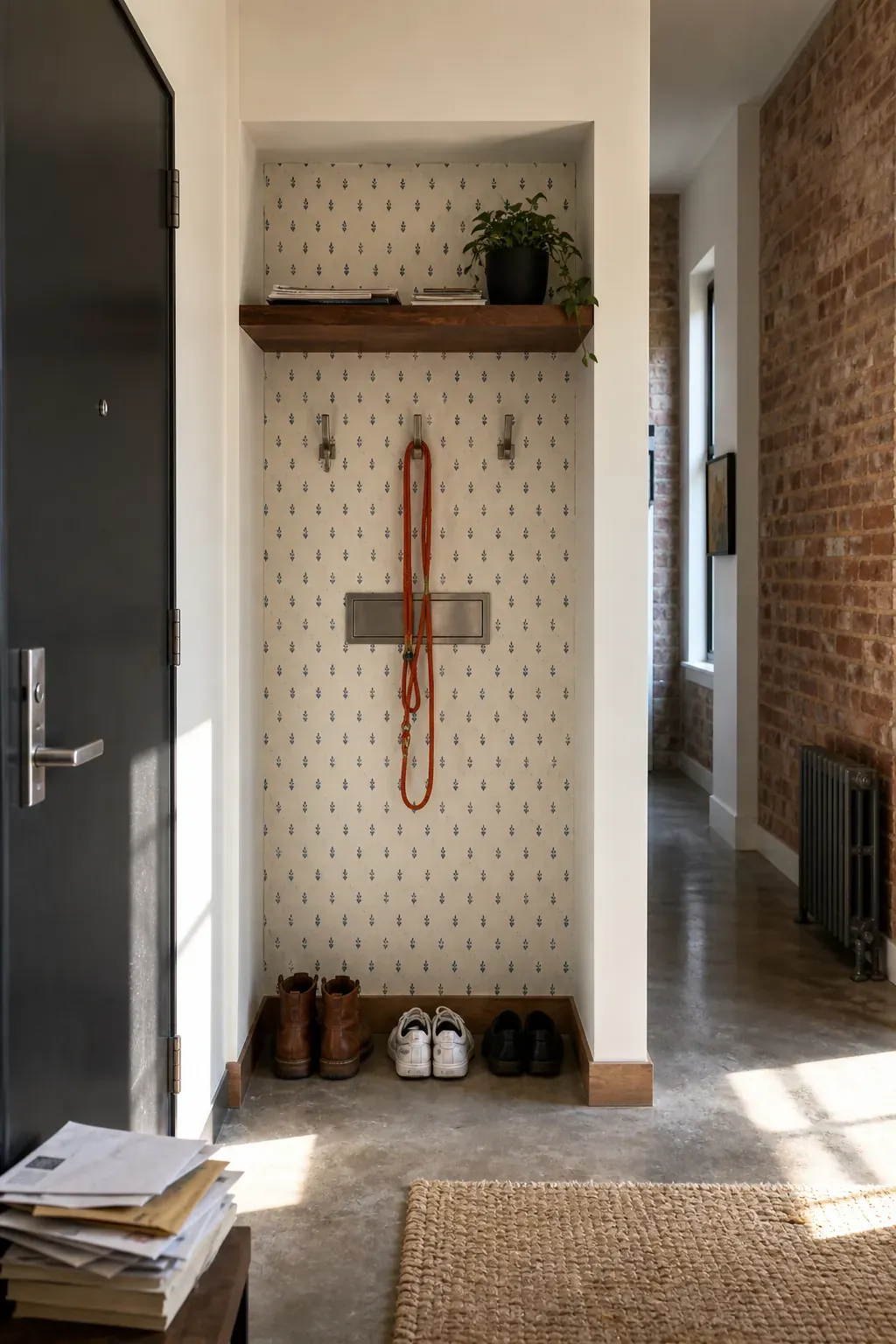
An existing niche, alcove, or gap beside a wall return can provide function without borrowing from the walkway. Fit a small shelf for keys, hooks, and a narrow post tray. Painting the recess a deeper shade gives it definition while surrounding walls stay quiet. Do not fill every inch. If building work is impossible, mimic the idea with a shelf and rail kept within the depth of the wall return.
Use a Bench Only Where the Hall Widens
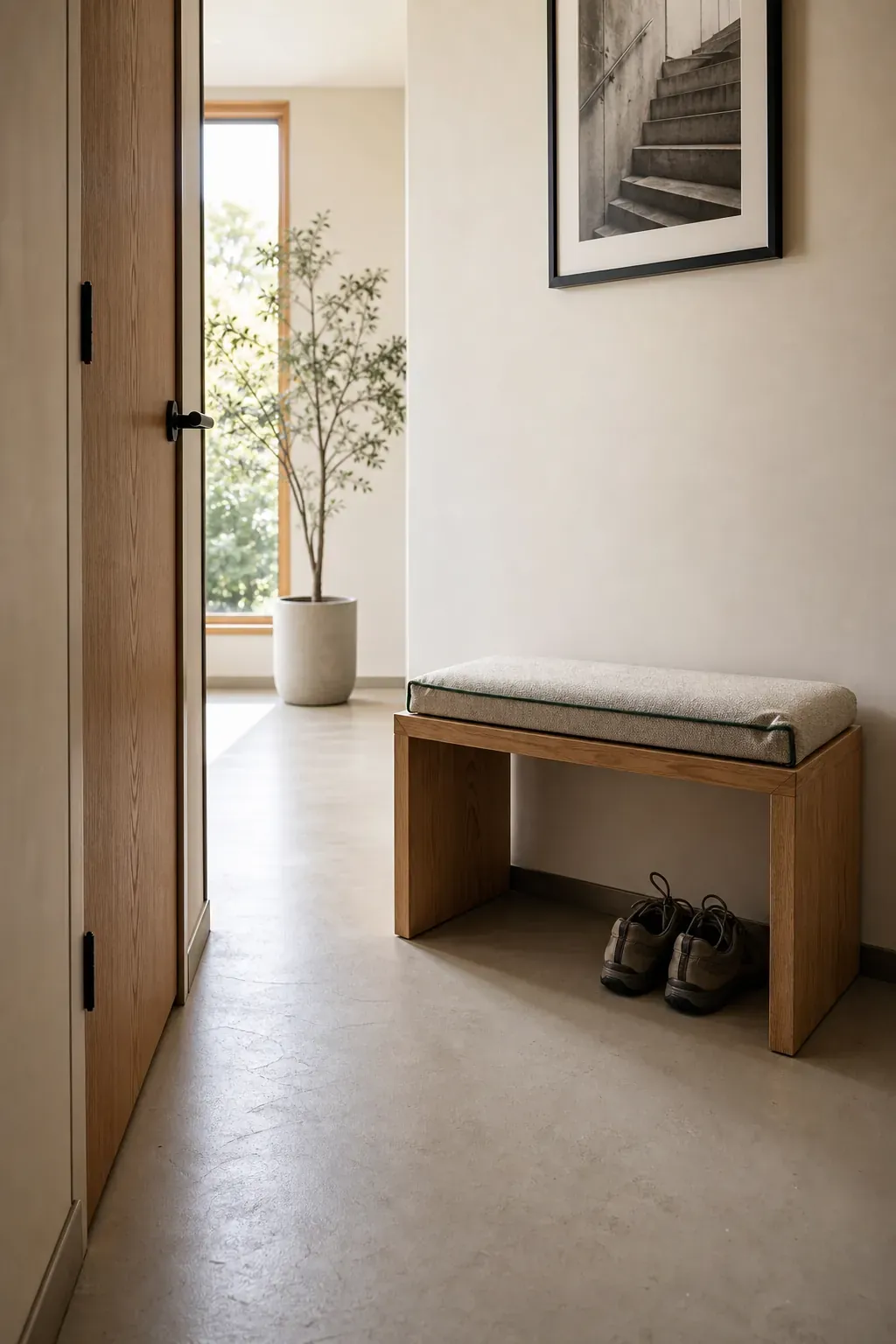
Seating does not have to sit beside the front door. Move a compact bench to the point where a long entry opens into another room or forms a wider landing. This keeps shoe-changing comfortable without creating a threshold bottleneck. Select a backless model with a shallow footprint and avoid deep cushions that slide into the path. A lift-up seat can hide occasional accessories, while everyday footwear belongs in easier-to-reach storage.
Paint Doors and Trim as One Plane
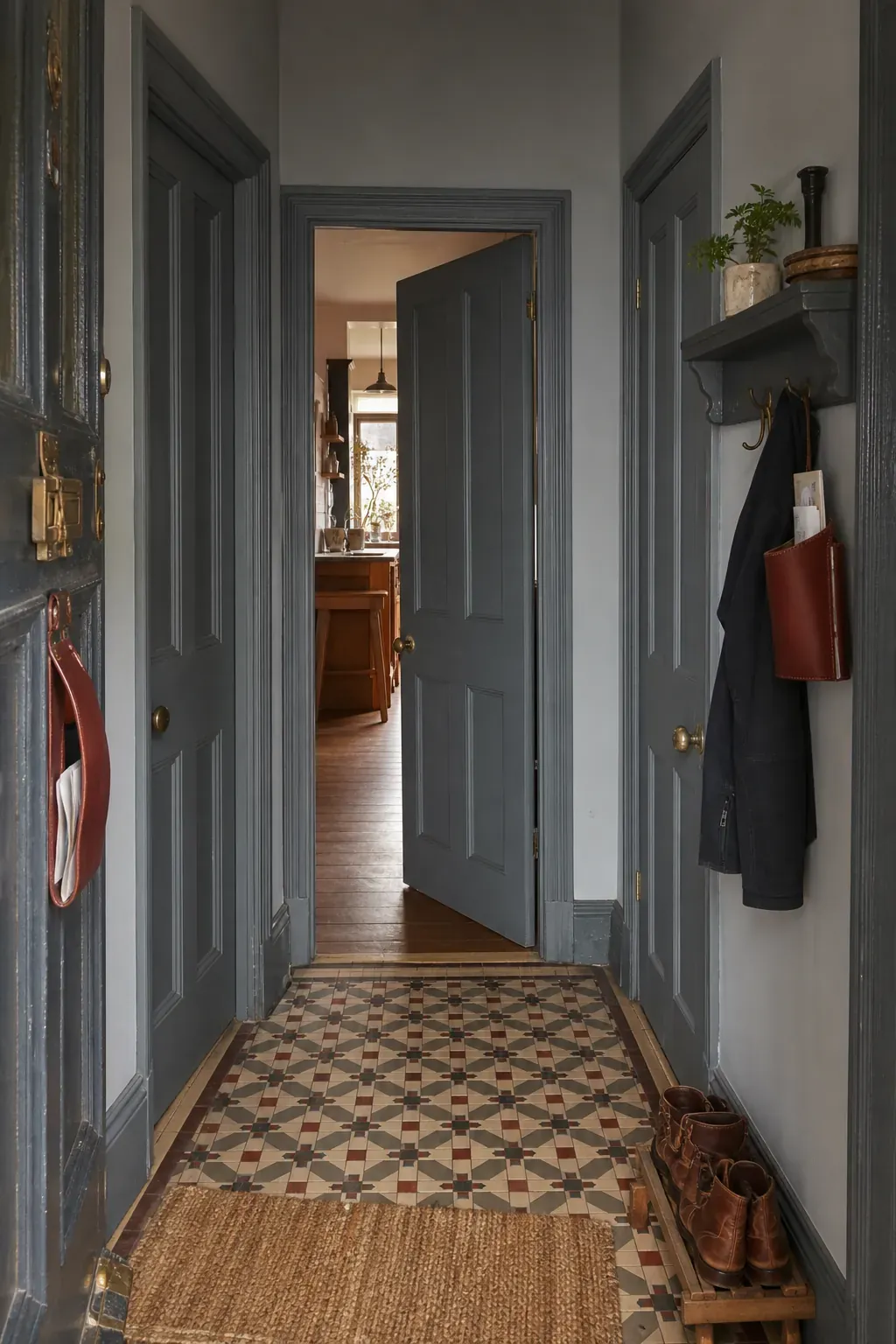
Several doorways, frames, switches, and skirting lines can make a small entrance fragmented. Painting walls, trim, and internal doors in one related color reduces those interruptions so the hall reads as a continuous envelope. Muted clay, soft blue-gray, olive, or deep ink can all work. Test the color under daylight and evening bulbs. Consistency expands the space more reliably than choosing the palest possible paint.
Add Warm Light at More Than One Height
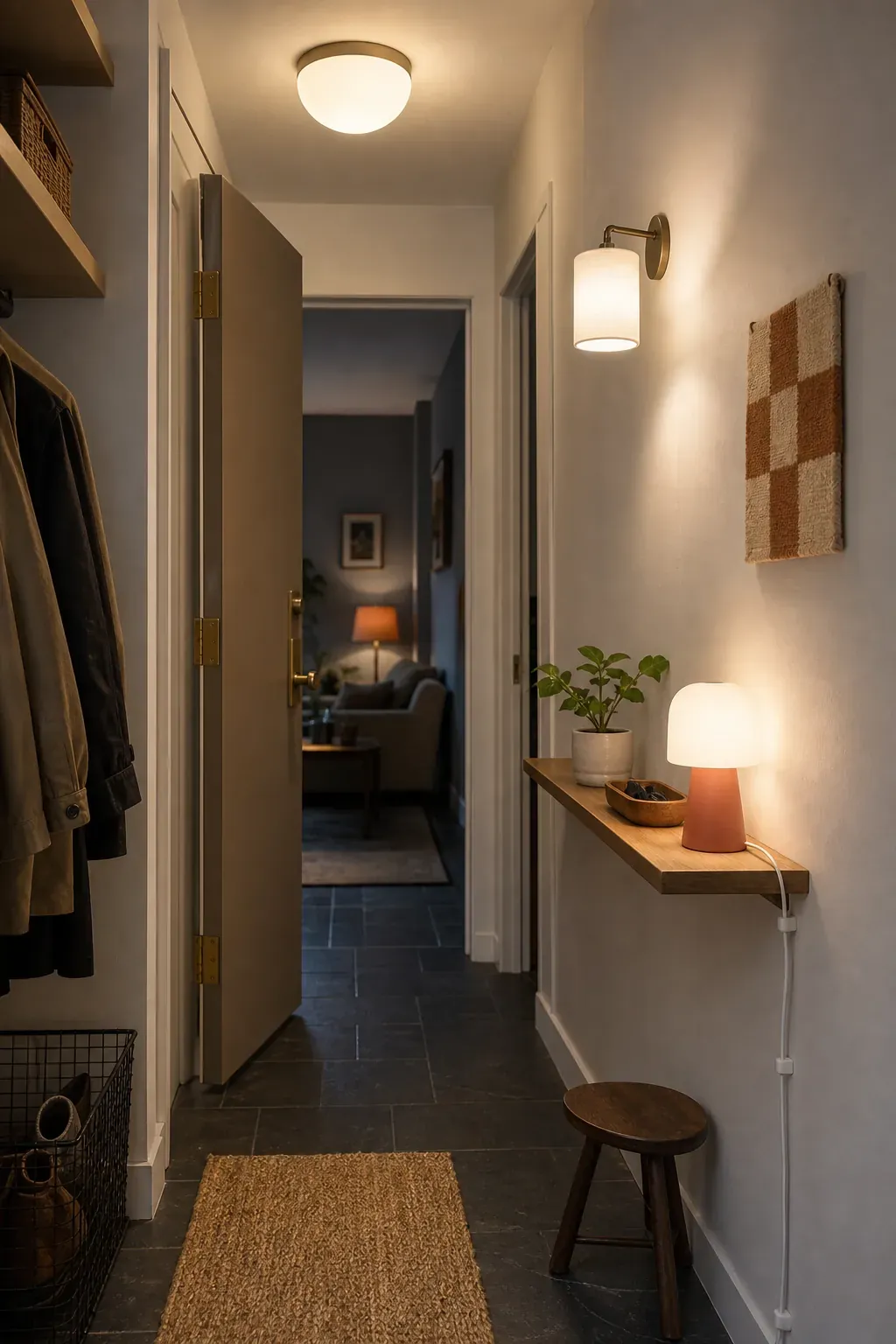
A single ceiling bulb often leaves the door end bright and the hall gloomy. Layer a diffused overhead fixture with a wall light or rechargeable lamp on a ledge. Warm consistent bulbs soften hard surfaces without turning everything orange. Choose a close-fitting ceiling fixture where headroom is limited. Motion activation helps with hands-full arrivals, while a dimmer creates a gentle night route. Secure every cord outside the walking line.
Turn the Far Wall Into a Focal Point
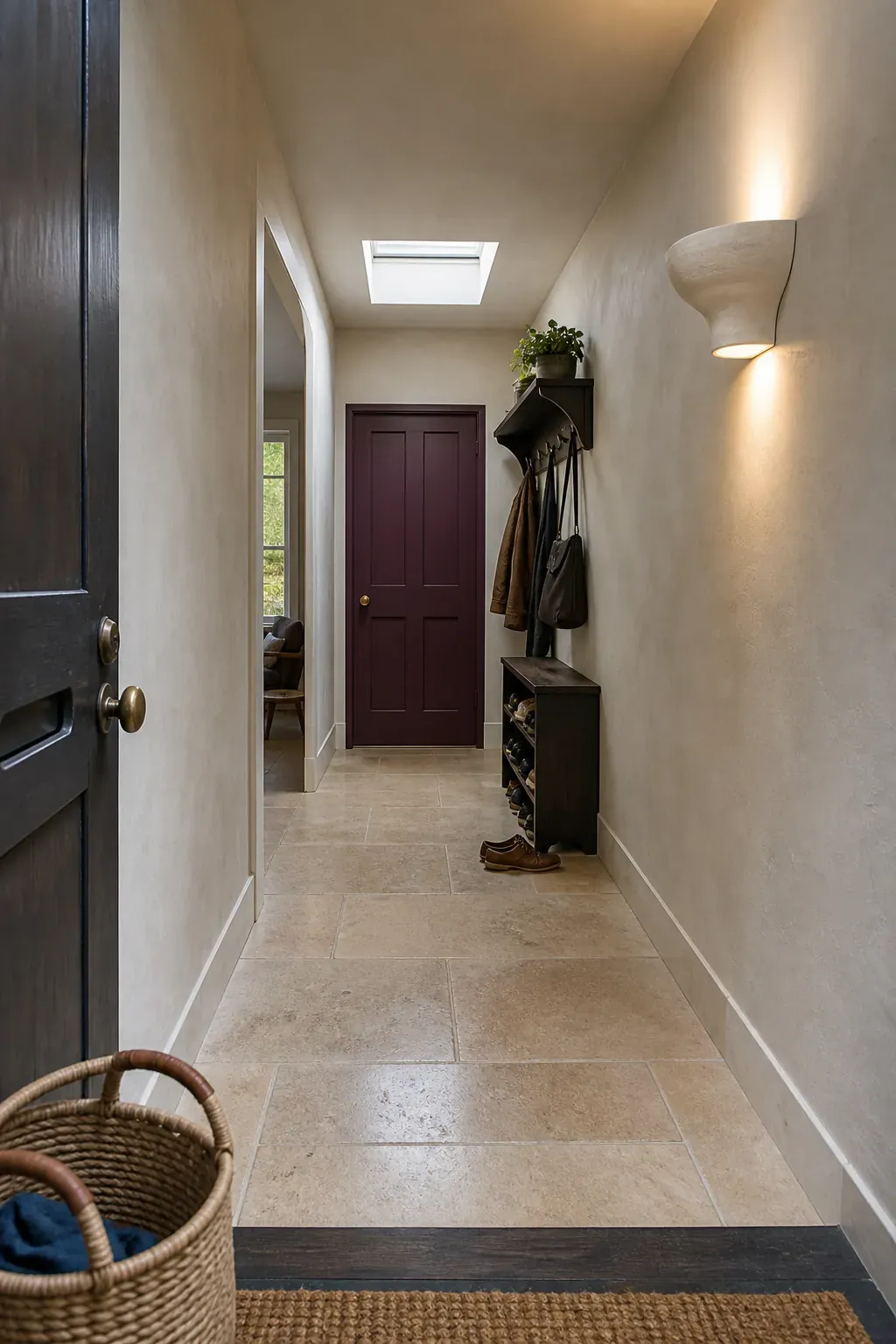
Instead of decorating both long walls, give the eye one destination. A saturated door color, sculptural sconce, distinctive mirror, or single graphic print at the far end pulls attention through the space. Keep side walls quieter so the endpoint has room to work. Choose enough scale to be visible from the front door, but avoid projecting objects at shoulder height. The tunnel becomes a purposeful view rather than a remote blank.
Hide the Utility Panel With Accessible Art
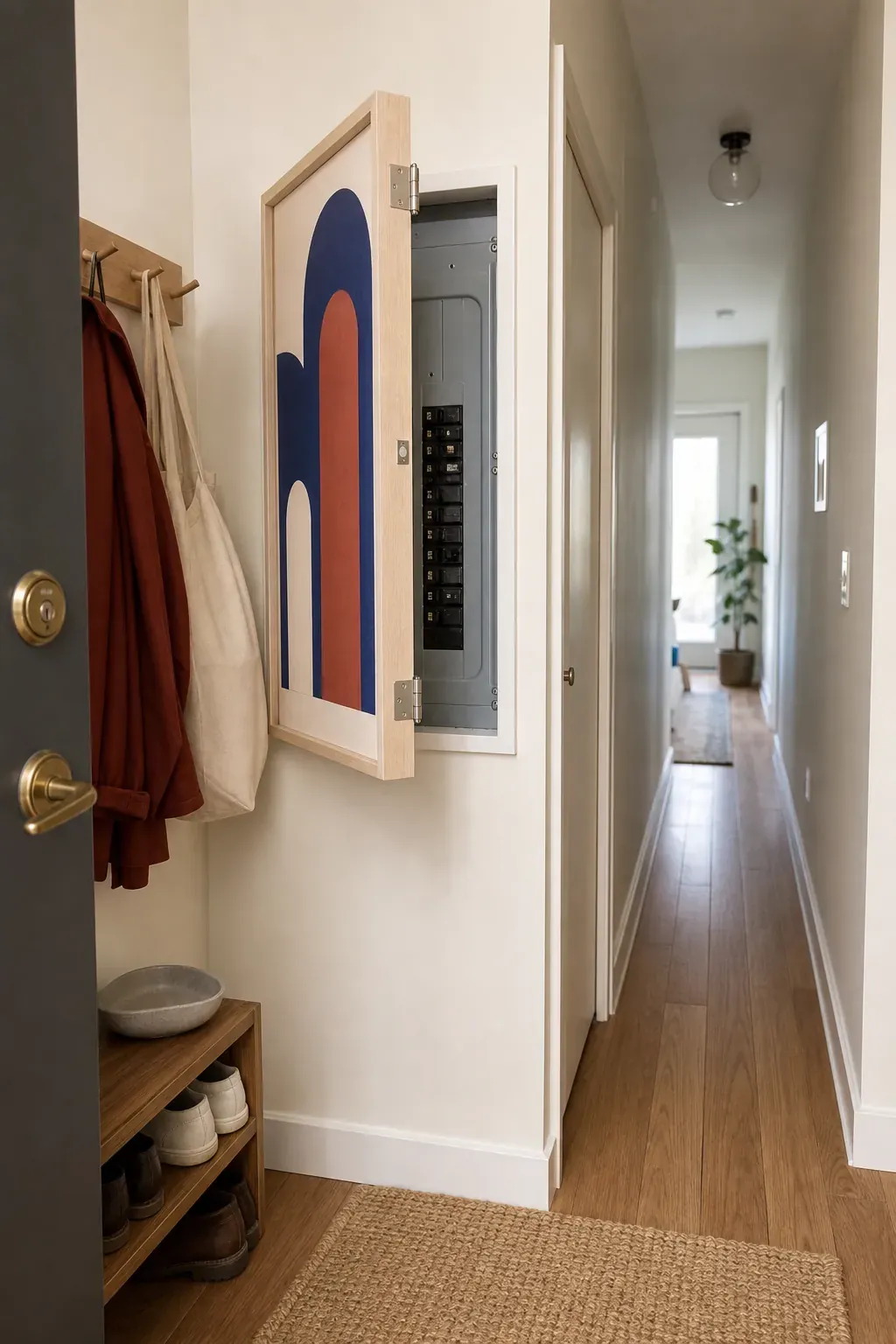
An electrical panel may sit exactly where you want a picture, but access must never be permanently blocked. Use a lightweight hinged frame or properly sized removable cover that opens without tools. Confirm local safety requirements and keep labels, switches, and ventilation clear. The cover should look intentional while remaining quick to move in an emergency. Never disguise a panel so completely that a guest or technician cannot locate it.
Corral Small Items in One Tray
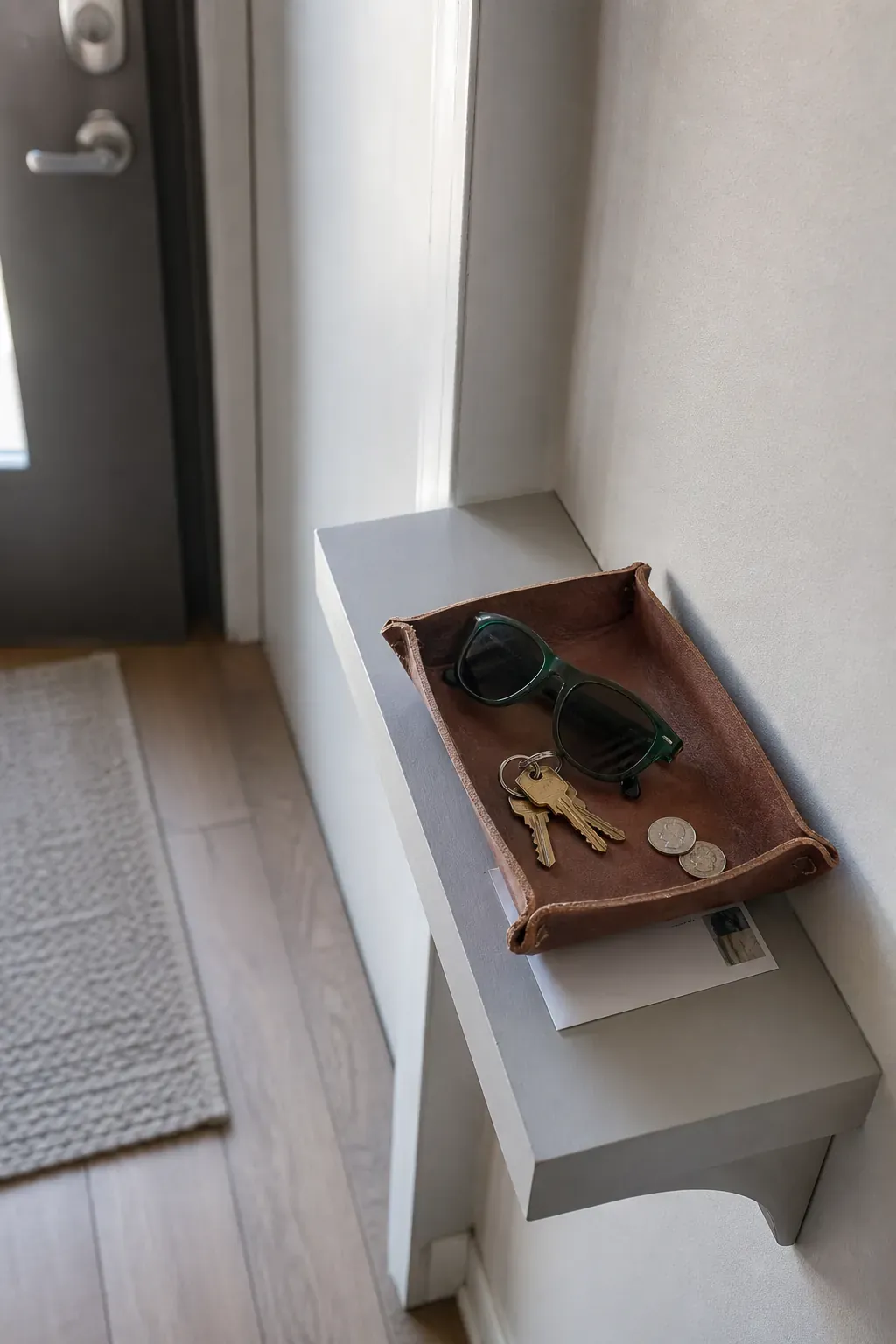
Keys, sunglasses, receipts, and loose change create more visual clutter than their size suggests. Give them one defined tray instead of several bowls. A raised edge protects the surface and makes a fast reset easy. Size it to the habits you want: if it can hold months of mail, it is too large. Add a wall pocket elsewhere for outgoing letters if needed. One container is a boundary; several containers become another collection.
Wrap a Radiator in a Ventilated Cover
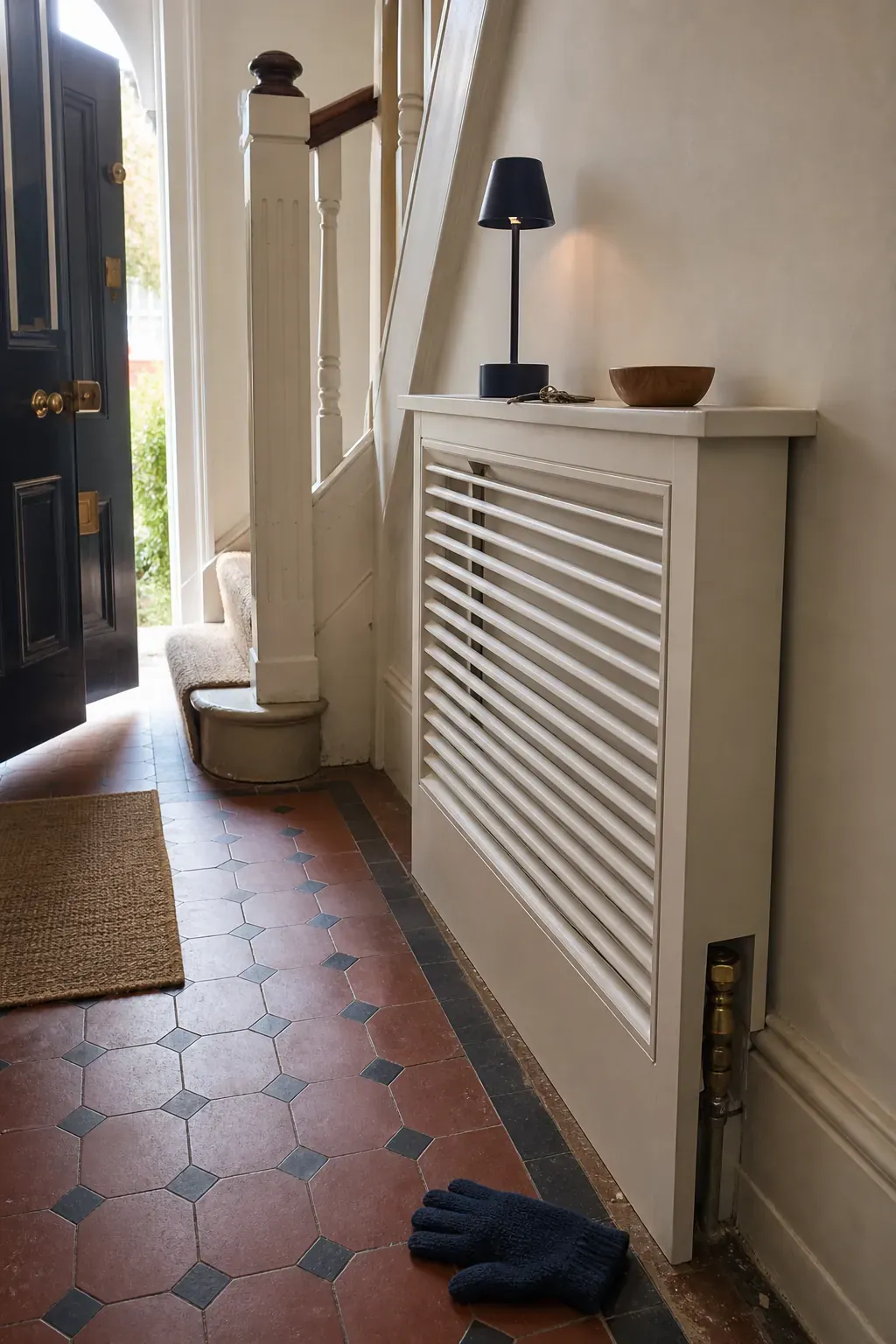
A radiator can occupy the only usable wall in an older entrance. A correctly designed cover calms it visually and adds a narrow top for a tray or cordless lamp. It must allow airflow, valve access, and the clearances specified for the heating system; never improvise around hot equipment. Match the depth closely to the radiator. A slatted front keeps the heat path open, while a washable finish handles door-area scuffs.
Create a Renter-Friendly Vertical Gallery
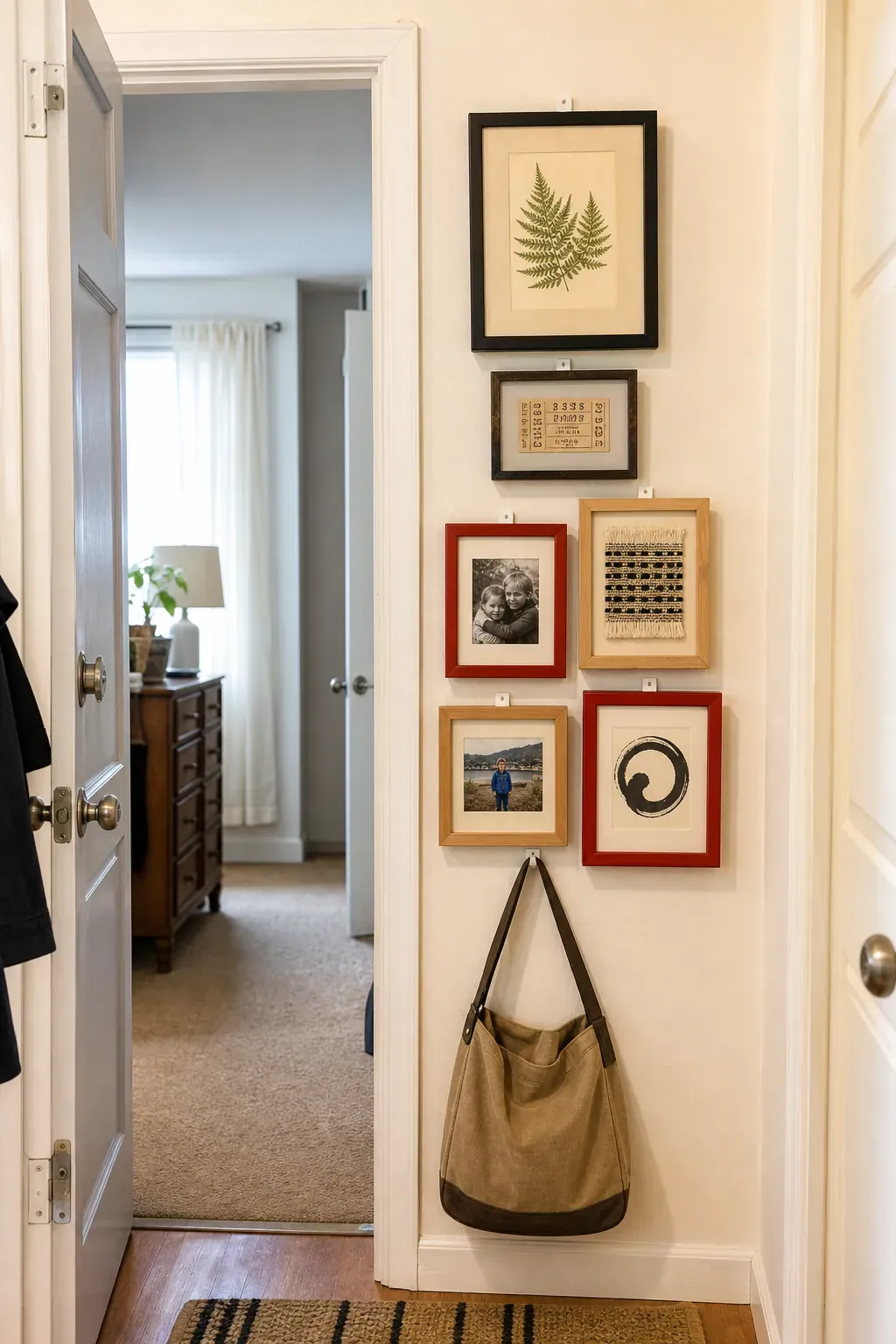
When storage lives elsewhere, a vertical group of lightweight prints adds personality without taking floor space. Build upward rather than across the whole wall, and repeat one frame color or theme to prevent busyness. Paper art, family photographs, and textile samples suit renter-appropriate fixings better than heavy glass. Arrange templates first and keep the lowest piece above bag and shoulder height so traffic does not disturb it.
Bring In One Upright Plant
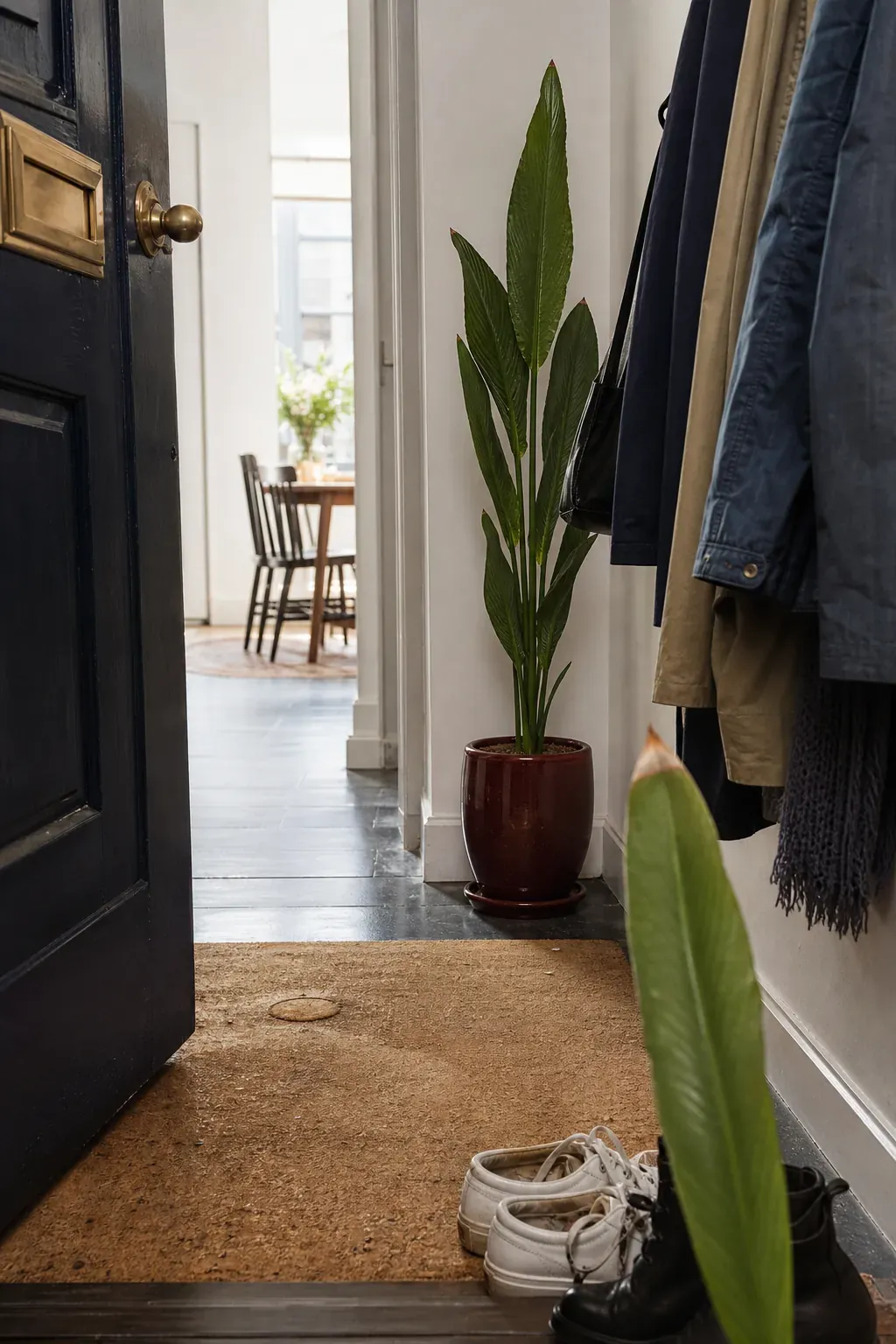
A plant softens hard doors and straight lines, but sprawling foliage becomes annoying in a passage. Choose one upright form in a protected corner beyond the door swing. Match the species to the actual light, use a stable pot with a waterproof saucer, and check pet toxicity. One healthy specimen has more impact than several small pots competing for ledge space. In a windowless hall, a convincing botanical alternative is more responsible than a struggling live plant.
Install a Peg Rail Above a Shallow Shelf
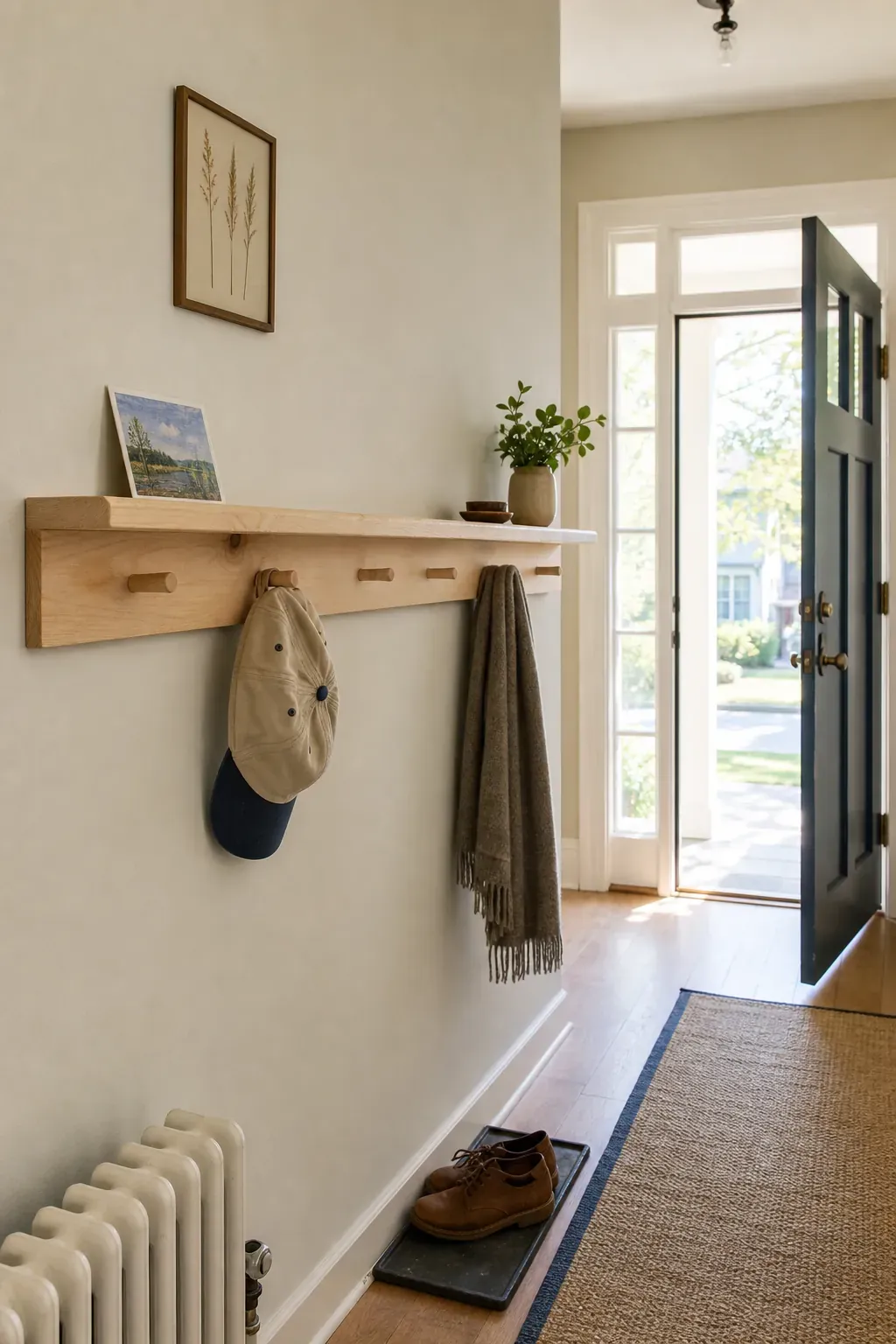
A continuous peg rail combines flexible hanging with a horizontal line that organizes a long wall. Add a shallow shelf above for a small clock, postcards, or seasonal accessories. Keep some pegs empty so coats do not become a dense fabric wall. Mount into suitable structure and use shorter pegs where the corridor is tight. Natural wood adds texture; wall-matched paint makes the system recede among multiple doors.
Use the Back of the Door Carefully
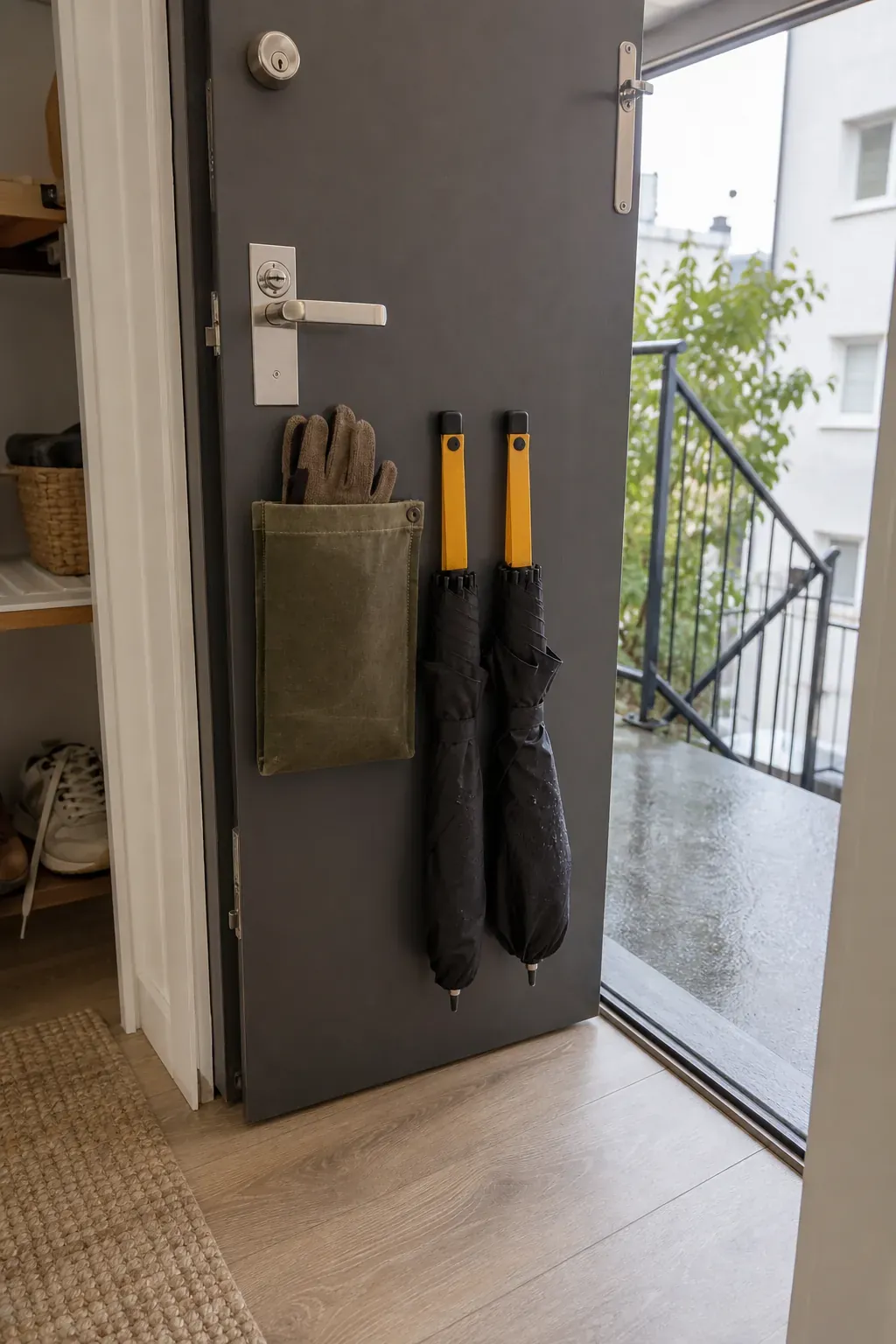
The back of the front door can hold light, flat items when no wall is free, but bulky organizers may damage trim or stop the door opening fully. Use a low-profile umbrella rack, slim pocket for gloves, or secure hooks. Do not interfere with locks, seals, closers, or fire-safety requirements. Load the door lightly so hinges are not strained and nothing rattles. This is seasonal storage, not a household’s entire coat collection.
Repeat One Accent Color
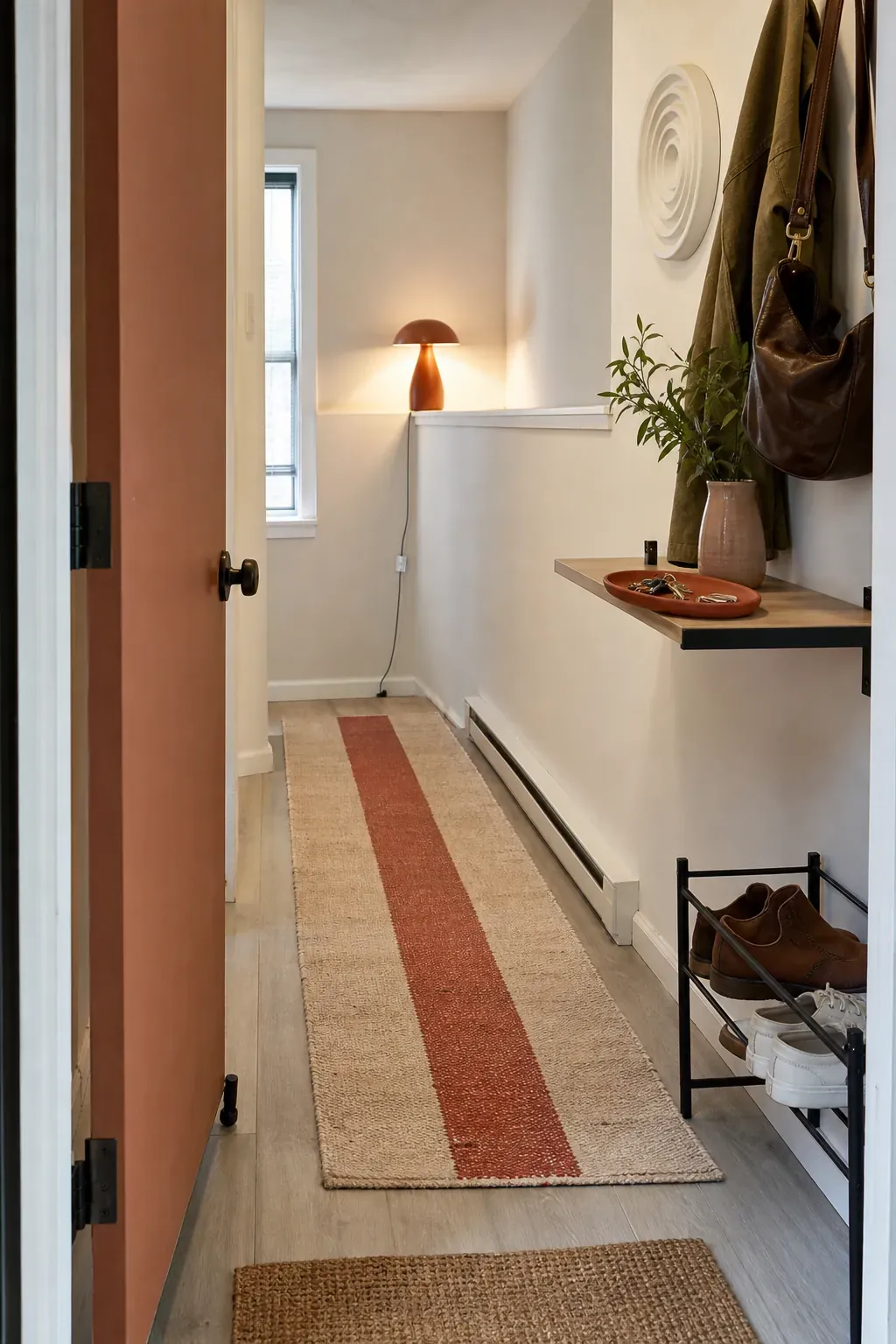
A narrow space looks chaotic when every small object introduces a new color. Pick one accent from the runner or door and repeat it two or three times—in a rail, tray, lamp, or frame. Keep large surfaces quieter so the touches connect instead of compete. This makes mixed practical pieces feel collected, especially in a rental where walls and floors cannot change. Related shades often look more natural than a perfectly matched set.
Finish With a Five-Minute Reset
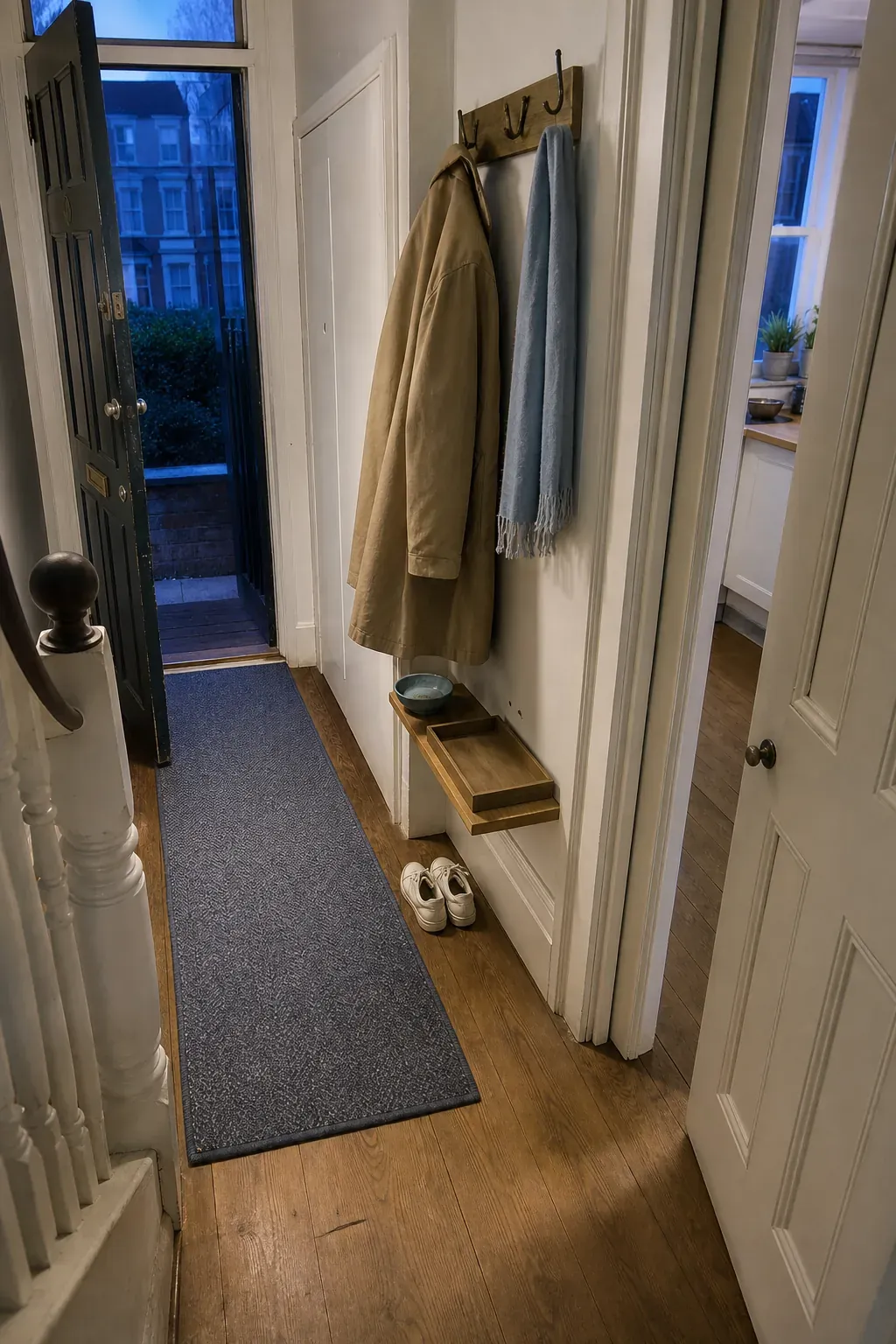
The best narrow entryway design cannot outperform unchecked daily accumulation. Return extra shoes to wardrobes, hang the current coat, empty receipts from the key tray, shake out the runner, and move parcels onward. If the same item lands on the floor every day, it needs a closer hook, shelf, or basket—not more discipline.
Start with the one friction point you notice at every arrival. A clear route and one reliable drop zone will change the entrance more than a complete makeover. Add light, color, and art slowly. A narrow entryway feels generous when every visible object earns its footprint and the path home stays open.