
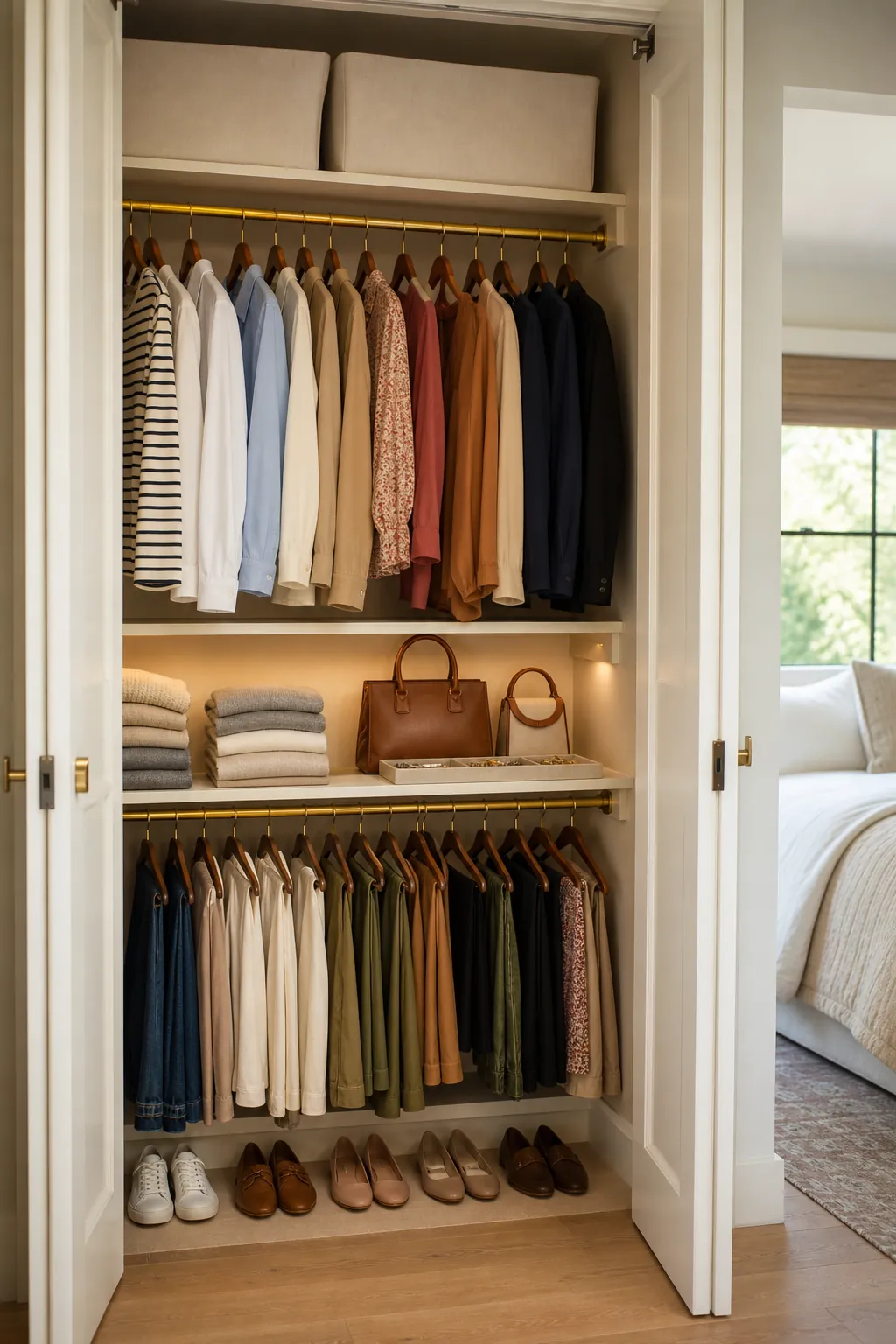
A boutique closet is not defined by glass cabinets or a chandelier. It feels special because the eye can understand it quickly: garments have breathing room, everyday clutter is concealed, colors are easy to read, and one or two beautiful pieces receive attention. The fastest route to boutique closet storage is visual editing, not expensive cabinetry.
That distinction matters in a small bedroom. Adding more baskets to an already packed closet often creates a warehouse of prettier boxes. The goal is to make getting dressed feel calm while keeping the storage realistic enough to survive laundry day.
Edit the visible inventory first
Retail displays look composed because they do not show every item the business owns. Apply the same logic at home. Remove everything that is stained, uncomfortable, the wrong size, or repeatedly passed over. Then separate what must remain visible from what can live behind a drawer front, inside a bin, or in seasonal storage.
Visible space is valuable. Give it to clothes you wear and enjoy seeing. Backup linens, luggage, sentimental pieces, and off-season gear can still stay in the closet, but they should not compete with the current wardrobe. If a shelf is packed to its edge, no amount of color coordination will make it look intentional.
A useful target is a little open space on every rod and shelf. It lets light reach the materials, makes individual pieces easier to remove, and provides somewhere to return clean laundry. Empty space is not wasted storage; it is what makes the storage readable.
Unify the hanger line
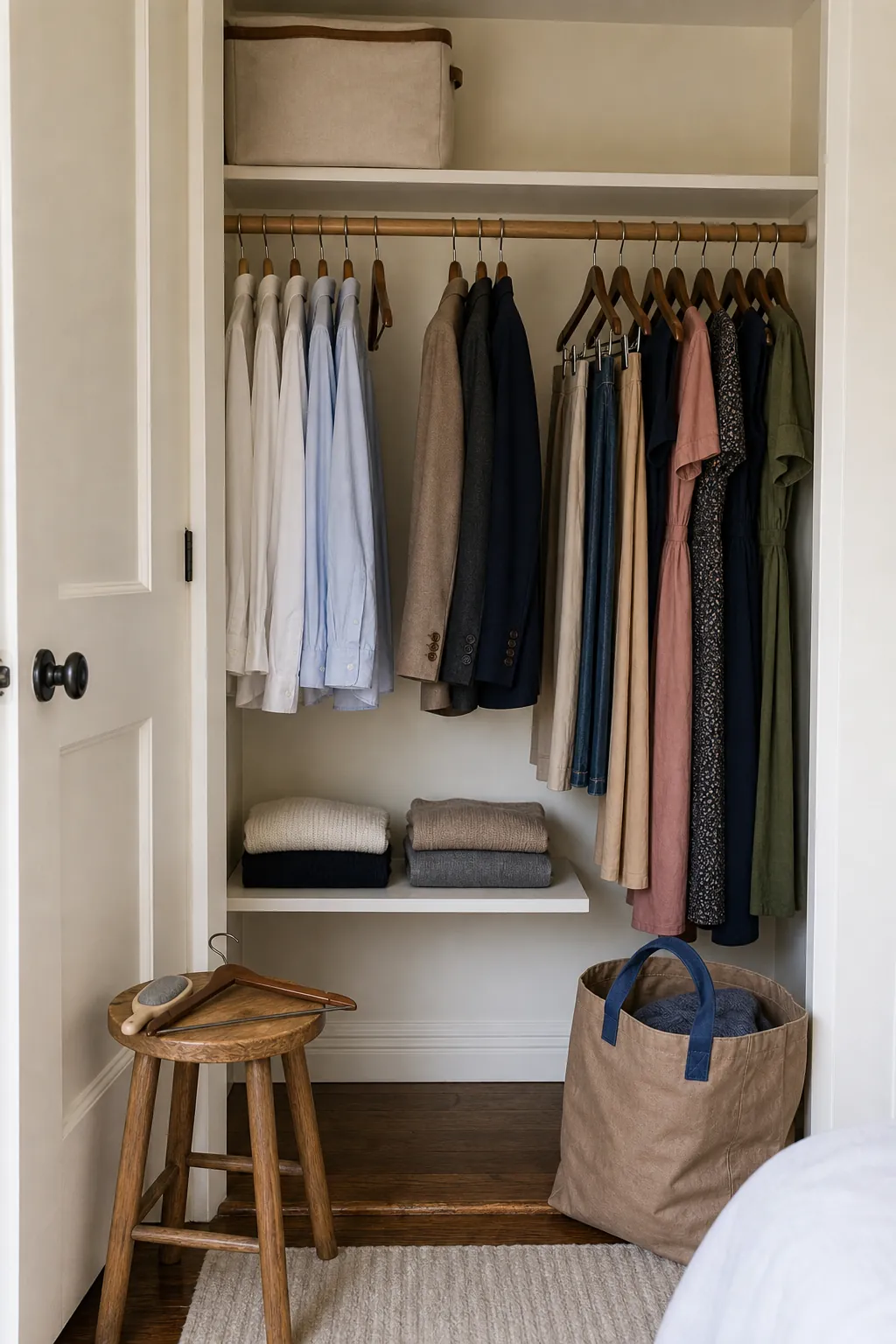
Mismatched plastic, wire, and wood hangers create a jagged horizon that makes clothing look more crowded than it is. Replacing them with one slim style is the highest-impact visual change for most closets. Velvet hangers save space and grip slippery fabric; wood hangers create a warmer, more substantial look but occupy more width.
Face every hook the same direction and keep garment shoulders at a consistent height. Use matching clip hangers for skirts and trousers rather than folding them over random bars. Group by garment type before arranging by color, because a beautiful gradient that mixes coats, shirts, and dresses is frustrating to use.
Do not chase perfect spacing with a closet that is still too full. Small pauses between categories are enough to create rhythm and work like invisible labels. A few empty hangers gathered at one end make laundry return easier than scattering them through the wardrobe.
Separate display storage from working storage
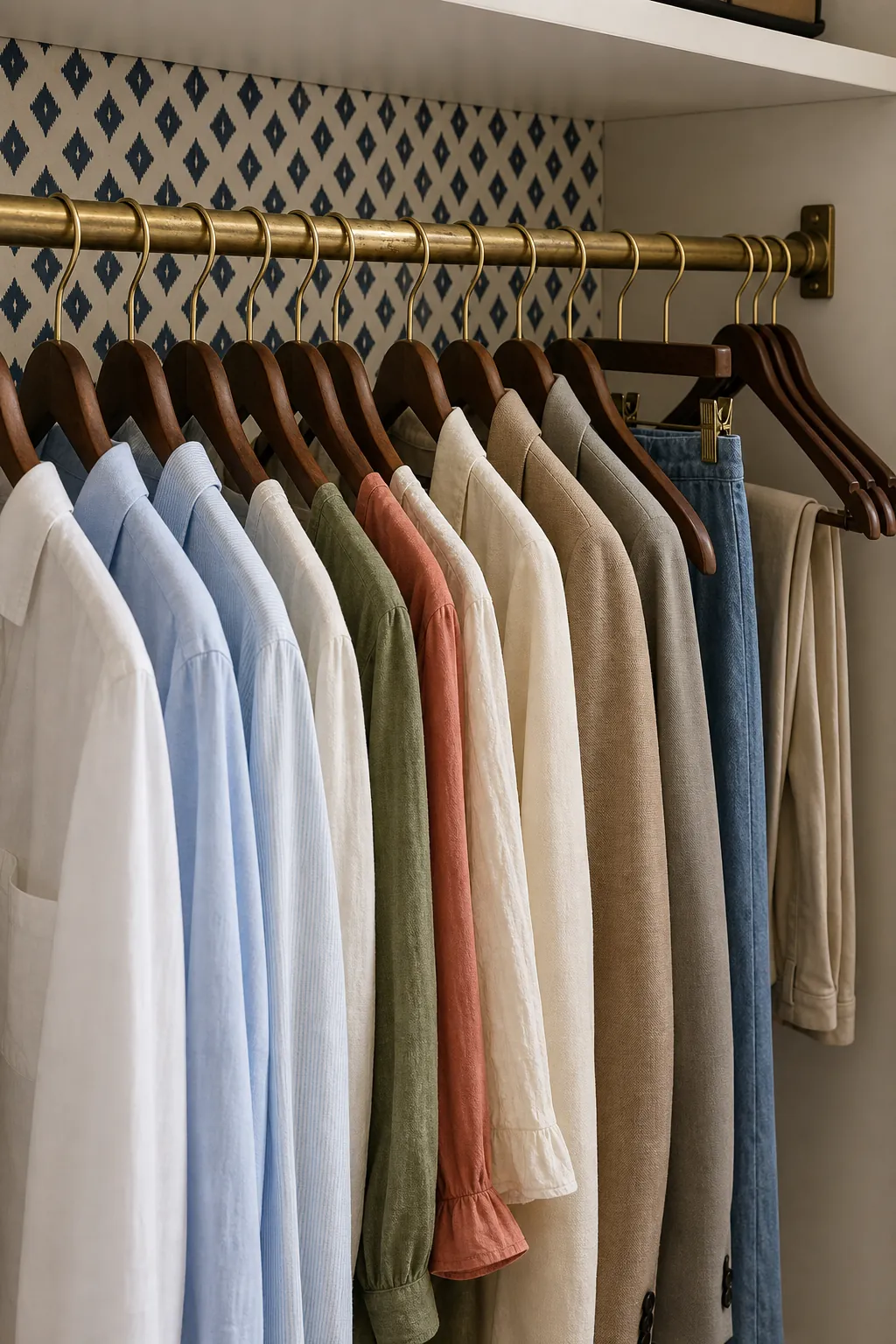
Boutiques display attractive, structured objects and conceal the messy support work. In a home closet, shoes, handbags, and a few folded knits can become the display layer. Socks, underwear, belts, cleaning supplies, and soft accessories usually look better inside drawers, lidded boxes, or opaque bins.
Choose containers based on the contents, not the trend. A shallow tray prevents jewelry from tangling. A divided drawer keeps belts from becoming a knot. A breathable box protects seasonal sweaters. Large baskets are useful for bulky pieces, but they become clutter traps when filled with unrelated small items.
Keep the visible container palette tight—perhaps woven natural fibers, warm white boxes, and one metal finish. Hidden storage does not need to match. Spend visual budget where you can see it and functional budget where hardware takes daily wear.
Fold fewer things, but fold them consistently
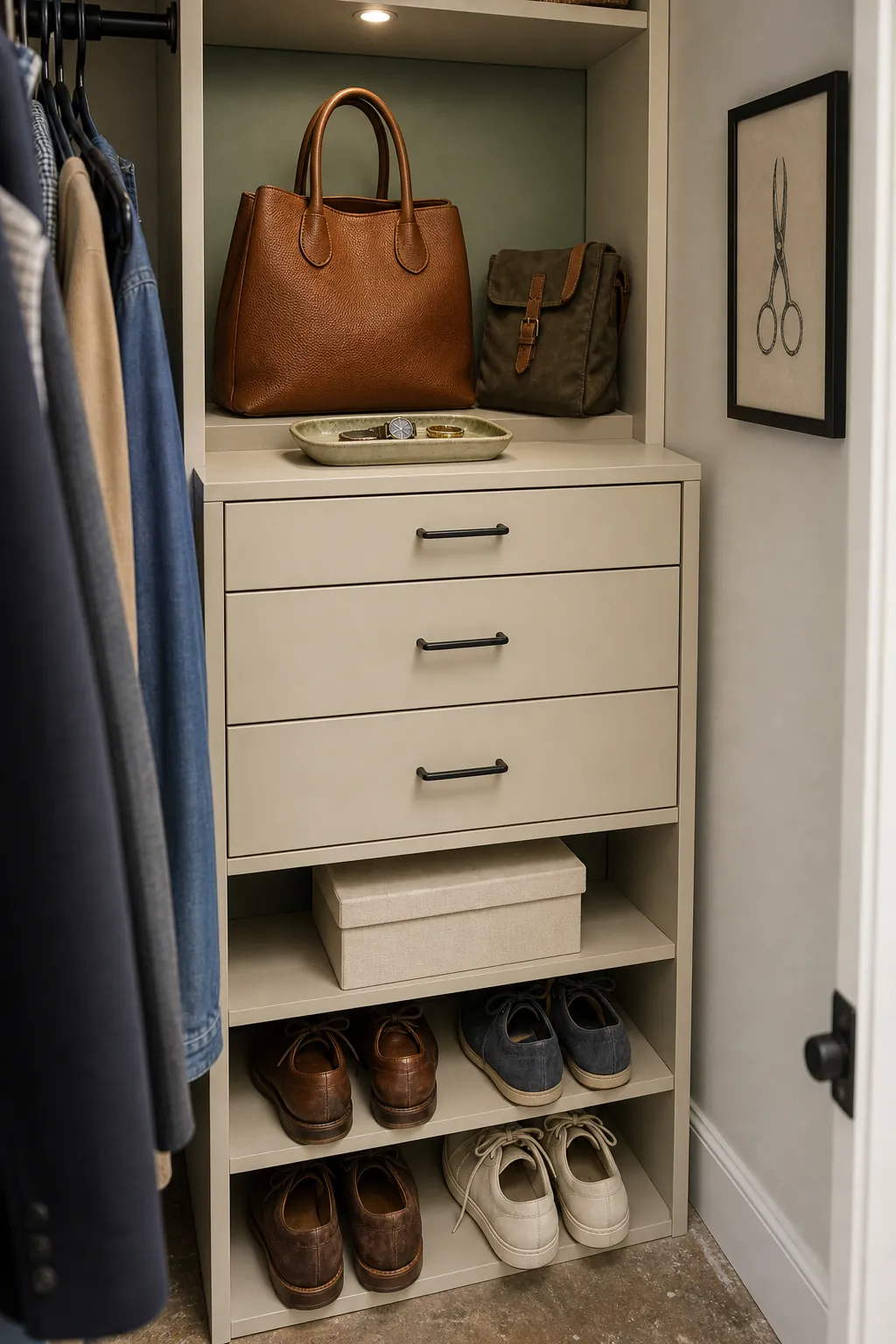
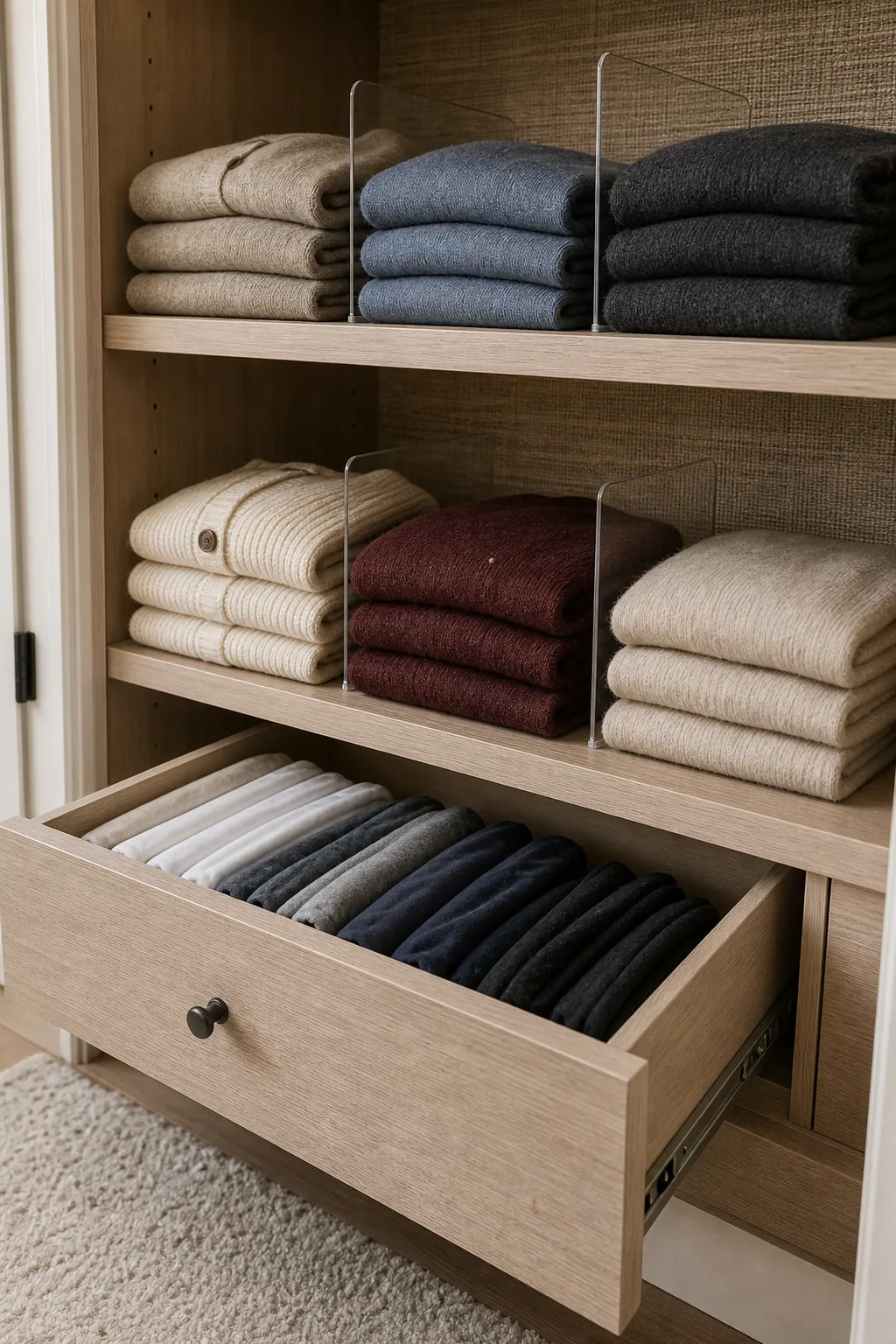
Perfect stacks look luxurious for a day and collapse when the bottom sweater is pulled out. Keep open stacks short—three or four pieces—and give each stack one category. Use shelf dividers where soft clothes lean sideways, or switch frequently disturbed items to drawers.
Fold to the depth of the shelf so sleeves do not hang over the edge. Place the clean fold outward and graduate stacks by color only after categories make sense. Delicate knits should be folded rather than hung, while everyday T-shirts may be easier to file vertically in a drawer.
Leave a palm-width gap above each stack. That small shadow line helps the shelf look composed and lets you remove clothing without scraping the shelf above. Boutique closet styling works when the system respects how hands actually use it.
Light the clothes instead of the back wall
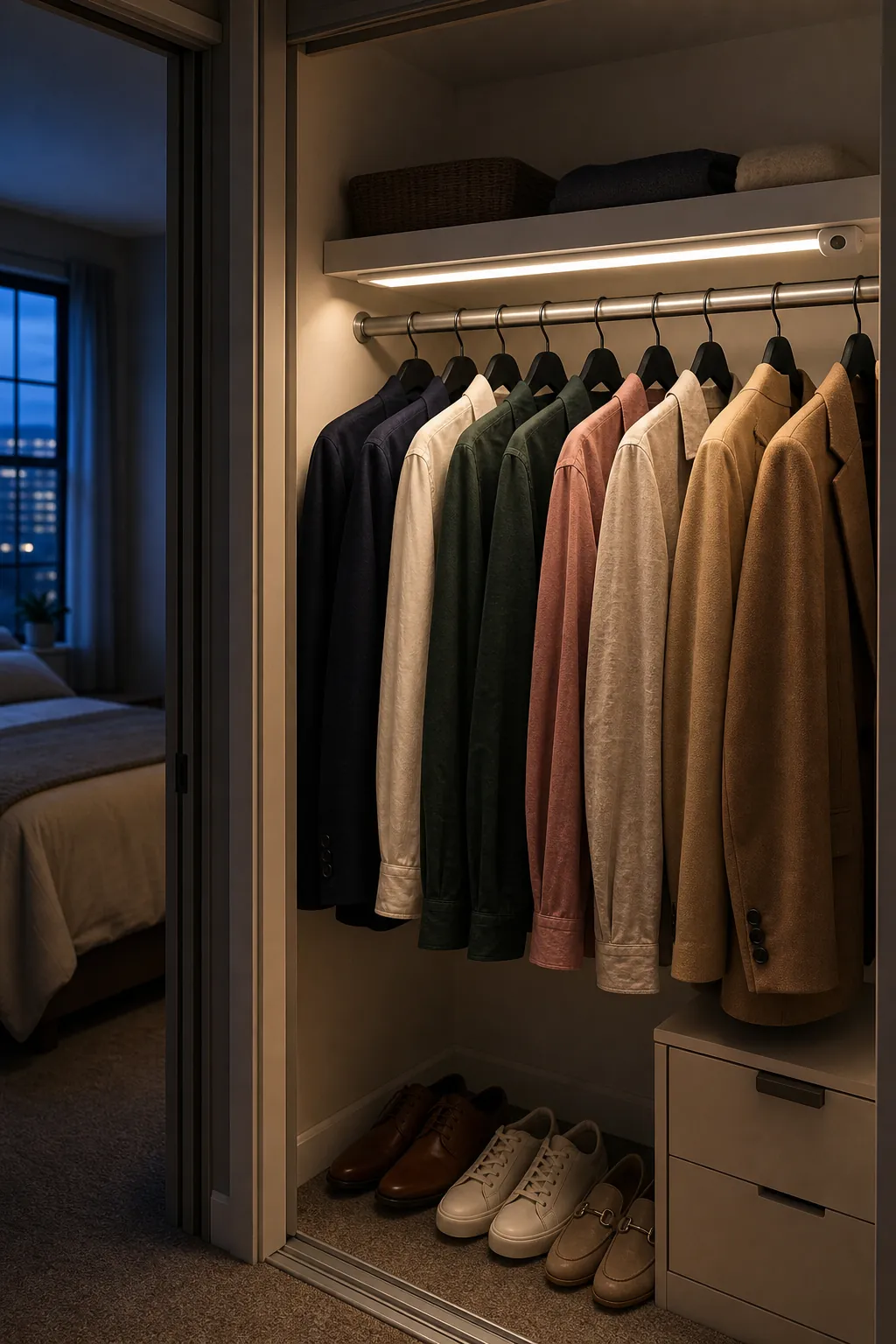
A single ceiling bulb behind the rod leaves garments in shadow and distorts color. Even illumination near the front edge of a shelf is more useful because it falls across hanging clothes. For a renter-friendly update, use a diffused rechargeable motion-sensor light rather than visible bare LED dots.
Choose a warm-neutral color temperature that agrees with the bedroom, and prioritize accurate color rendering so navy does not look black. Hide the fixture from normal sight lines, avoid placing hot lights near fabric, and follow the manufacturer’s clearance and installation requirements.
Lighting should reveal texture rather than create a theatrical glow. Linen, wool, leather, and wood need soft directional light and gentle shadow to feel tactile. A closet that is evenly visible is also easier to keep organized because missing shoes, fallen hangers, and crowded sections are immediately obvious.
Create one quiet focal point
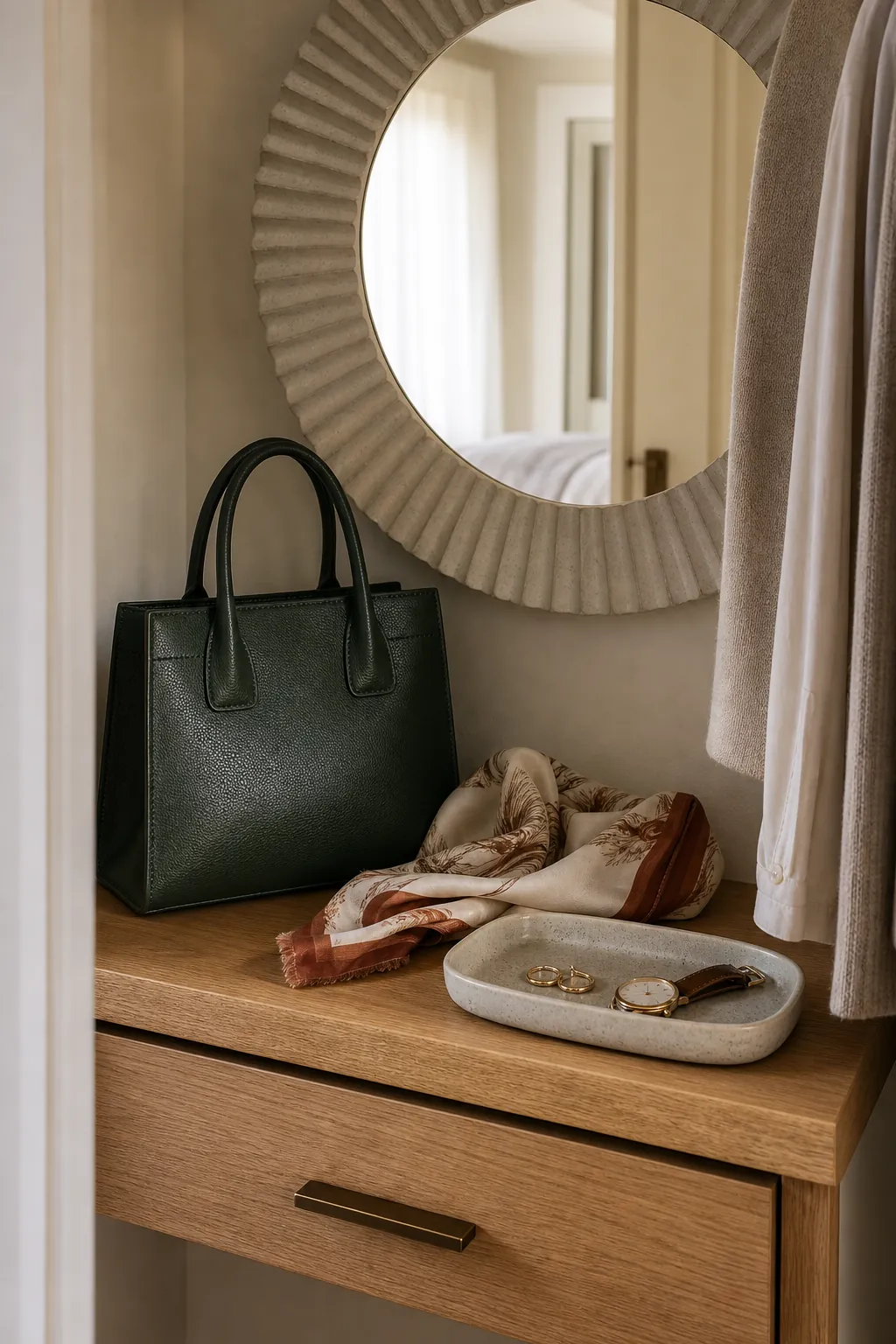
The boutique effect comes from hierarchy. Choose one small area to style intentionally: a favorite handbag on a shelf, a ceramic tray for daily jewelry, or a full-length mirror that reflects light. Do not turn every surface into a display. Five competing vignettes read as clutter.
Use an odd grouping of three when it fits the objects: one structured bag, one folded scarf, and one small tray. Vary height slightly and keep the background simple. Avoid open perfume bottles near fabric, heavy decor on high shelves, and anything that must be moved every time you reach for clothes.
A restrained focal point gives the eye somewhere to land before it reads the rest of the closet. It can also hold the pieces you use while getting dressed, which keeps the styling connected to routine rather than becoming a dust-catching set.
Protect the boutique look with a reset routine
A closet only looks elevated when its system is easier to follow than to ignore. Place the hamper where it does not block doors, keep a donation bag available, and return empty hangers to one end of the rod. Give new purchases a real home before removing the tag.
Spend five minutes each week straightening stacks, pairing shoes, and moving out-of-season pieces. Once a month, question any container that has become a miscellaneous bin. If the closet repeatedly fails at the same point, change the storage method instead of blaming yourself.
A boutique closet is edited, legible, and pleasant to use. Matching hangers, controlled display, short folded stacks, accurate light, and one focal moment can deliver that feeling in a basic reach-in closet—without pretending daily life belongs behind glass.